


Erhalten Sie Zugang zu diesem und mehr als 300000 Büchern ab EUR 5,99 monatlich.
- Herausgeber: Pushkin Press
- Kategorie: Gesellschafts- und Liebesromane
- Sprache: Englisch
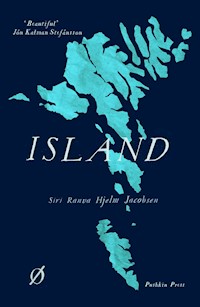
A lyrical, moving tale of love, loss and belonging, across three generations of a Faroe Islands family 'Talks about places as if they were people, of fjords as if they were the wrinkles of our souls' GRAZIA ITALY Family brings the young woman back to the Faroe Islands - the windswept, rocky northern archipelago where she has never lived but which she has always called home. There she finds her stories entwining with those of her ancestors as she searches for a way to connect with the culture and her kin. Is 'home' just a place name, or something more? Split across three generations of a Faroese family, rooted in the wild beauty of the islands and the author's own history, this is a bewitching tale of exile, homecoming, and what it means to belong.
Sie lesen das E-Book in den Legimi-Apps auf:
Seitenzahl: 179
Veröffentlichungsjahr: 2021
Das E-Book (TTS) können Sie hören im Abo „Legimi Premium” in Legimi-Apps auf:
Ähnliche



















iii
v
Come on girl let’s sneak out of this party it’s getting boring
BJÖRK
vii
CONTENTS
SUÐUROY
She stands with her back to the low copse of planted trees, looking down the mountain to the village, blue in the August night, and the sheep that are like stones among unbroken grass. Further off, the sea is sleeping. Vágs Fjord is still, blue on blue against the sky above the ruler-straight horizon, strung taut between the headlands, a line only ghosts and legends can walk.
Now she closes her eyes. Bending all her young will she follows the blue road: past the Shetland Islands and Norway’s compact mountains, across the sea between Sweden and Denmark and then in over the low land, the butter land, the fields, the farms—all the way to the Zealand market town where Fritz must now be sleeping heavily.
Marita, her name is. She’ll be leaving soon, and this is where she starts: Suðuroy, the southernmost island in the Faroes. Here the fjords are deep and the hills rugged. The landscape is knottier and more abrupt than on Marita’s island, Vágar, but it’s the first one you come to from the rest of the world. 2
In the country she’s going to there is a railway. She pictures the tracks sluicing through the inhabited earth. People streaming away. Taking a train. You can get off wherever you like. In a city, perhaps. Another city. A forest.
The trees sit up high in the uncultivated land further away from the village.
The pines are battered and young. Windswept.
She hears the noise.
From up here the village looks tiny. The houses doze, turned towards the fjord. Their roofs catch the blue forelight, shining palely like the crown of an infant’s head.
Vágs Fjord is long and thin, a sausage of water between the mountains, which the currents of the sea have munched at. Au revoir, dollhouse fjord. She thinks it. There’s more to life than this.
She wants to hitch up her dress, take a running jump, sail clear over all of it—the parting, the journey. Now she’s in the new country, now she’s walking down a flat, paved street and into a house that smells of wood, and there stands her fiancé, there stands Fritz, as if no time has passed since they were separated, just turning and saying, ‘Oh, there you are.’ Just like that.
She spits. The taste of resin fills her mouth, tacky on her gums. She bit down on a pine cone; that was earlier. It crunched all the way into her jawbone. Her teeth ground 3and the pine cone crunched, while her hand did what it had to with the steel wire.
The wind pushed at the branches of the trees.
The rust-brown needles fell.
There, on the ground.
It’s later now, she’s on her feet, she’s standing. The sea tussles with the sun behind the horizon. There’s a distant crackle of red. Brooks clink, waterfalls whistle. She has to go, down there. Hesitantly she tilts her pelvis forward. Tenses. One short, stupid moment she’s afraid some of the steel wire has got stuck.
Marita is already in her church clothes. How far ahead, how cold-bloodedly, some might say, she was thinking before she struck out into the darkness. The dress is nice, the cut contemporary, taken from a Danish magazine. Marita sews her own clothes. Reads patterns and comes up with sleeves, bodices, skirt widths by eye. For a long time she’s dressed like someone meant for more than the factory by the harbour and an everyday life among fish. The smell of sour woollen socks in the village hall. Some of them down there think she believes she’s too good for them. The same people also think she isn’t good enough. Marita knows that. She’s fond of them now, in the way you’re fond of people you’re shortly going to leave.
The wind fumbles at her face, her sweaty skin. The first step of the descent is a jolt that runs from the sole of her 4foot through her leg and hips. Her muscles contract, squeezing mucosal membranes, damaged tissue.
She’s got to go now. She goes.
The terrain slopes more gently as she approaches the first houses. Some of the grass in the fields above the village is still high, some raked into heaps. The scent is tart. It sticks to the resting straw. Flicks up and prickles on the tongue. A rolling green scent of bare skin. She walks through it. Her abdomen feels heavy, hard and tight, a ball of small sharp nails.
In the upper village the houses are scattered towards the grassy fields, the open mountains. Many years later, Abbe, my grandfather, will plant his finger on one of these houses in a black-and-white photograph, and ‘There,’ he’ll say, ‘that’s where we lived.’ He’ll explain that the house is enthroned high above the other buildings because it’s old and grand.
Another ten years later, hesitantly, I’ll try out that explanation on Ma and Aunt Ása, in a white-scrubbed kitchen on the very same ground Marita’s walking past in silence now. They’ll laugh a little, those old and knowing women, and Aunt Ása will shake her head. ‘Deary me.’
The house has the mountains at its back, a little round-shouldered, not the grandest place, just solidly built. But the wall on its base of whitewashed stone casts a shadow over Marita. She crumples a little around that red, 5thudding flesh. Now she pinches some colour into her lips. Tries a smile.
The village has awoken. The church bell is calling out across the fjord. From the harbour and the houses people are dribbling towards the church at their customary Sunday trundle. But one person is defying the current, marching, almost, in the wrong direction. Marita sees him. She doesn’t smile. Their paths cross with quick, swift steps. Then, suddenly, afterwards, she finds herself about to giggle.
The man is exceptionally short-legged, even for one of the Vágbingar. He trots on, heading for the foreland west of the village, a fishing rod slung over his shoulder like a rifle. Whereas most people fish with hand lines, Red Ragnar has procured this strange contraption, and now he doesn’t fish with anything else. In the village they say he’s never short of a bright idea.
Ragnar, Abbe’s big brother, is an unskilled joiner like his dad. He’s the village’s only—or certainly its most ardent—communist.
That he never sets foot in church except for christenings and funerals goes without saying. And although he grudgingly forgoes paid work on Sundays, he refuses to waste a whole day on thumb-twiddling and religious piffle.
‘If the fish weren’t allowed to bite,’ he apparently once said, ‘then Jesus would pull out their teeth himself.’ 6
Now he’s reaching the lake on the flat stretch of land between the village and the west-facing rocks. The fishing rod gives an elastic twang. He stomps along beside the grey and quiet water on his stubby legs. His face is closed, the heavy brows drawn down.
Ragnar is shorter and stockier than his siblings. Darker, too. His beard is jet black, and curly chest hair bristles all the way up to his collar. They say he’s really the son of a Spanish sailor who lost his way and ended up, roundabout, on the island, creating all sorts of fuss. Among other odd bits of gossip it’s rumoured that his mother was carried off in the pureness of her youth, vanishing into the mountains and returning home with a changeling in her belly.
It’s true that Ragnar has a head full of strange ideas, and that his big, masculine face possesses a beauty certainly not inherited from his father. The heavy features are a touch anxious now. He turns them up, against the wind.
While Ragnar is passing the lake, Marita joins the thicket of people softly murmuring outside the church. She likes Ragnar’s deep-set eyes, overshadowed by shining black brows. She knows something of the strong mind within. The churning thoughts. His curiosity. His skin is open, his pores small funnels through which all the world is channelled and deposited. He carries it around with him. By now he must be walking the final stretch down the path to the tip of the land, where the terrain rises up a jot 7and the wind softens the grass. He has his own opinion—of course he does—but he doesn’t judge her.
The last Sunday service before Marita is due to leave smells faintly of fresh concrete. The church was consecrated that winter, the cold and damp becoming embedded in the foundations. The pews creak. Once everybody is seated, piety descends.
Now she’s listening to the pulse behind her temples.
The piece of steel wire has cut the opening of her uterus. Sharp little lesions. The pew is hard. The feeling like the stabbing of nails expands, creeping up into her spine and down into her thighs and calves. It penetrates her blood. She needs a piss. Now she wants to shake her feet, slam her shinbone into the pew in front, kick the feeling away.
It won’t be expelled immediately; it takes time. The inflammation does the work. Copenhagen is three days away by boat. Back home her suitcase is packed.
The priest unrolls his heavy blanket of flat, Danish sound across the rows of pews. His voice is a monotone, a solemn dakadakadak.
Before this building and before the one before, the village had a fabled church. Marita has heard it said that a rich widow gifted it to the village folk, that it came drifting on a barge all the way from Norway. You should have 8seen it. The house of the Lord on the sea. Gulls whiten the spire with their wings, and the bell whinnies metallically far and wide as the church bobs over the waves like a cork. Directionless. Free.
There’s nothing very sensational about the new concrete church.
It echoes a little, weighty as a dead cow. Marita keeps a watch on her breath. She smooths her restless legs. Above the bared heads sails the church’s model ship on its two cords. The voices of the congregation, their scarves and woollen shawls drawn around drowsy shoulders, blur into a grey-black dough. The ship is pitching and heaving now, on a shallow, slate-grey hum. ‘In your death is, like a portent,’ sings the congregation, ‘my resurrection nigh,’ Marita mimes along, standing on her raft of nails on the grey sea.
THE ARRIVAL
We landed at Vágar airport in the morning.
Earlier, over the Atlantic, I had listened to the voices in the cabin. To the Icelandic pilot, who spoke Danish and Faroese with the same vaguely moist lisp. To the peculiar Suðingar dialect. The slower one from the north fjords. I strained to understand the sleepy exchanges between the seats. Thought again of the young Faroese musician leaning forward in a smoky Christianshavn bar and saying, ‘You? You can’t even pronounce your own name.’
‘You don’t have to speak Danish,’ Bára had said. ‘My friend’s half Faroese.’
The journey from Kastrup to Vágar is short, but the approach feels endless. The mountains lean heavily against the plane. Green fills the window. Reaches in. I closed my eyes for the last bit. If sheep walk by at the right moment, you glimpse their yellow slitted eyes a split second before the wings scrape past. I’d had a schnapps, then another. There was still a whine in my ears.
As soon as we’d been let off the plane, the Tarantula and I looked for a place to smoke. 10
Ma said something about the bags and disappeared.
Beneath a large NO SMOKING sign a clutch of Faroese were lighting up. One had brought an ashtray. Heavy, creamy white. The conversation drifted with the smoke.
They’d arranged themselves into a circle around the arm holding the outstretched porcelain. I held up my lighter like a plastic orange ticket, and we were ushered in.
Politics was the current topic. A woman in an egg-white pullover was insisting it was a good thing the Faroe Islands had had the wit to keep out of Europe. What a shambles. She puffed authoritatively through her nose. Everyone in the circle nodded. A small lady in a blue windbreaker responded with åhja, which can be a question or unqualified assent, and which here was the latter.
The arrivals hall was a greying white, the way transit dirties walls. Through the pane of glass and beyond the car park I saw the mountains. Deep green. The clouds drifted low along the crash barrier. I needed air. The scent of Faroese air.
The Tarantula coughed. His face bobbed above the hair-dos in the group like a friendly, full-bearded balloon. Now he stooped a little until he was eye level. The Faroe Islands, he objected politely, were in Europe, actually. All of us, when you thought about it, including the people in the airport right now, were in Europe.
The circle of puffing Faroese surveyed him. Not unkindly.
Nobody nodded. 11
Then the authoritative woman spoke up. Switching into Danish, she answered slowly and clearly, almost tenderly, as though to an obstinate sheep.
‘No. We’re not in Europe here.’
The Tarantula’s hand with its cigarette hung poised there for a moment, then made a hesitant salvo. The Faroes weren’t part of the EU, that was clear, it wasn’t Europe in that sense. But purely geographically? If you looked at the atlas?
The woman smiled. I knew that smile from my mother. It’s a freebie women get to claim once most of their life is lived. The circle smiled too, variations on a theme, the women gentle, the men somewhat embarrassed.
‘No,’ she said. ‘You may be right about lots of things, but there you’re mistaken.’
With her Prince 100 she sketched it all in a soft circle: the mountains, the deep fjords, the dark tunnels.
‘This isn’t Europe. This is the Faroe Islands.’
‘Hette er Føroyar,’ repeated a man in a woolly jumper. A mild åhja hummed around the circle.
The Tarantula inhaled. Slowly. I took a little step to the side and aimed my heel at his foot.
We found our suitcases, the rented car. This visit was my mother’s idea. She was longing to go home after all the funerals, she said. All those goodbyes. We could have a holiday together. See the family. She knew quite well that 12the longing was mine. I’d said so. ‘I can’t even pronounce my own name.’ And so she planned the trip.
The moment the wheels hit the landing strip, everybody on the islands knows that you’ve arrived. It’s impossible to say how. Maybe all you do is ring the aunt you’re staying with, or you land incognito and spend the night at a hotel, but knock unannounced at your grandfather’s brother’s house, or your half-uncle’s, on a completely different island, and you get: ‘Well, well. So there you are.’ Though that’s not necessarily true of all families.
Ma had rung Aunt Ása. We were travelling onward to Suðuroy.
Later, in the car, the Tarantula kept giggling.
‘It’s not something you can just decide!’
He said other things, too. Something about big ideas in small communities, something about mountain hobbits. It was affectionate enough, but it was precisely the fondness in his way of joking that made me angry. I felt like kicking the front seat, but didn’t. Instead I muttered. ‘Home isn’t necessarily a question of geography. Not even if you’re looking at an atlas.’
The first tunnel on the way to the ferry slurped us up. My mother leant forward over the wheel. Tightly narrowed. Into the stony darkness.
DEPARTURE
The boat to Denmark sails from Tórshavn.
While the cargo crates are carried on board, Marita senses the town behind her, its proportions. The sod-roofed houses at the top of the cliff, the narrow alleyways, the chicken shit. Parts of the capital are squeezed together into a sooty nervous system, others are green, tufted, farm-like. Many things smell like childhood, including burning peat. Including rotten fish.
She turns her mind to boulevards. Big, open quarters.
The handle of the suitcase is leather-covered; it chafes her hand. She straightens up, still a little slanted. The pain in her abdomen has turned dull. A heaviness. Sharp at the edges.
Now she takes a small step forward. Says, ‘So!’
Among those come to wave her off is Ingrún from up at the hotel. Ragnar. A few of the girls from the factory.
Marita takes their hands, their raw fishy fingers. She wants to free them from that smell, she thinks. Kiss it from every last joint, hold it in her mouth and then, far out on the open sea, spit it straight back where it came from. 14
She breathes in Ingrún’s soap-flake scent, the perfume in the little hollow behind her earlobes.
‘Take care of yourself down there,’ says Ragnar, without sounding very sure. He touches her shoulder with a solid, slightly clumsy hand. Marita kisses his bearded cheek. Her heart is in her mouth a little.
Part of what makes Red Ragnar a topic of conversation in the village are all the books and pamphlets he gets in the post. More than a few people have shared a furtive chuckle over the postmarks from France, England and even the Soviet Union. But Ragnar spells his way laboriously through all of it with his dictionary and his sailor’s English. Where proficiency fails, imagination must suffice, and he claims he understands the greater part of it.
Now he lets his hand fall. Takes a step back and nods. His face looks more than usually dark. Out in the world, things are happening he only just understands. He knows that in the spring, while the March storms howled around the corners and rattled the hinges in Vágur, Spain’s rightful government fell. They are sitting eating consolation croissants now, in Paris. General Franco is sitting on Madrid. Ragnar follows events as best he can, but he doesn’t know everything. He knows that.
The big countries are creaking, giving way. He senses more than understands it. That the continental crust is fissuring, the pus beginning to leak.
But Marita is leaving. 15
He sees her heave her suitcase on board. Narrow hips inside a floral-patterned dress he sees, and hair catching at the headscarf’s edge. Freedom beneath those feet as they tread the deck. Water in the August sun. Death in Marita’s belly.
The sun zigzags, flashing and whirling chaotically on the surface of the water. He sees death in Marita’s belly, and now, in that death, he senses another, altogether greater. It strikes him like the reek of singed bone, of marrow. He blinks. Turns his face momentarily towards Tinganes and the red wooden houses. His eyes don’t see the wood, they see smoke, brown smoke out of the earth, a raging monument, the smoke sated—fat, sated smoke—and scrawny corpses loaf among piles of shoes. He thinks he hears a grinding boom, and now a laughing infant plants its riding-booted foot on a mountain of gilded teeth. Whether the vision can be blamed on too many pamphlets, or whether he caught a quick glimpse through a tear in the world’s undershirt, no one now can say for sure. But everyone knows that when the boat cast off that day in Tórshavn, Red Ragnar cried and cried.
THE HOUSE AMONG THE FIELDS
When omma made up her mind to die, the weather changed. On the winter’s night when she pursed her lips and blinked once for no to the spoonful of mashed potatoes, a cold haze crept across the fields from the north. White, secreting damp ate the stumps and chewed the branches of the trees while Omma starved. The lighter she got, the heavier became the weather.
We girded ourselves. There was nothing else to be done.
I moved into the spare room at my parents’ place. Skived off my geology course. We helped each other live while we waited for Omma to finish dying. The Tarantula worked from home so Ma could have the car. She shuttled between Copenhagen and the care home down by Køge.
Omma’s nails had to be cut and the dust rubbed from her small porcelain figurines: fat cherubs with the worn radiance of gold leaf, English cottages with miniature roses above the doorframe and green felt at the base. Omma’s punctilious world, squeezed into this square 17room with a hoist above the bed, incontinence diapers, a shelf where the hand sanitizer was kept, the odour of oldage sweat.




