


0,99 €
Mehr erfahren.
- Herausgeber: Dolly Connor
- Kategorie: Geisteswissenschaft
- Sprache: Englisch
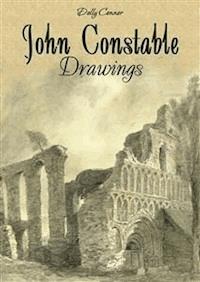
John Constable was English artist, positioned with Turner as one of the greatest British landscape painters. His most excellent paintings are of the places Constable knew, mainly Suffolk and Hampstead, where he lived. He worked broadly in the open air, drawing and sketching, but his finished pictures were produced in the studio. Often completing primary sketches previous to beginning a canvas, Constable would draw and try to capture a moment in occasion, testing the composition first in sketches in a grid formation so that they could be accurately scaled up when the artist started to work on larger paintings later. In England Constable had no real successor and the many imitators (including his son Lionel) turned rather to the formal compositions than to the more direct sketches. In France, on the other hand, he was a major influence on Romantic artists such as Delacroix, on the painters of the Barbizon School, and on the Impressionists.
Das E-Book können Sie in Legimi-Apps oder einer beliebigen App lesen, die das folgende Format unterstützen:
Veröffentlichungsjahr: 2015
Ähnliche
















JohnConstableDrawings
ByDolly Connor
Foreword and AnnotationsbyDolly Connor
First Edition
Copyright © 2015 byDolly Connor
*****
John ConstableDrawings
*****
Foreword
JohnConstablewasEnglishpainter, ranked with Turner as one of the greatest British landscape artists. Although he showed an early talent for art and began painting his native Suffolk scenery before he left school, his great originality matured slowly. He committed himself to a career as an artist only in 1799, when he joined the Royal Academy Schools, and it was not until 1829 that he was grudgingly made a full Academician, elected by a majority of only one vote. In 1816 he became financially secure on the death of his father and married Maria Bicknell after a seven-year courtship and in the face of strong opposition from her family. During the 1820s he began to win recognition: The Hay Wain (National Gallery, London, 1821) won a gold medal at the Paris Salon of 1824 and Constable was admired by Delacroix and Bonington among others. His wife died in 1828, however, and the remaining years of his life were clouded by despondency.
After spending some years working in the Picturesque tradition of landscape and the manner of Gainsborough. Constable developed his own original treatment from the attempt to render scenery more directly and realistically, carrying on but modifying in an individual way the tradition inherited from Ruisdael and the Dutch 17th-century landscape painters. Just as his contemporary William Wordsworth rejected what he called the 'poetic diction' of his predecessors, so Constable turned away from the pictorial conventions of 18th-century landscape painters, who, he said, were always 'running after pictures and seeking the truth at second hand'. Constable thought that 'No two days are alike, nor even two hours; neither were there ever two leaves of a tree alike since the creation of the world', and in a way that was then new he represented in paint the atmospheric effects of changing light in the open air, the movement of clouds across the sky, and his excited delight at these phenomena, stemming from a profound love of the country: 'The sound of water escaping from mill dams, willows, old rotten planks, slimy posts and brickwork. I love such things. These scenes made me a painter.'
He never went abroad, and his finest works are of the places he knew and loved best, particularly Suffolk and Hampstead, where he lived from 1821. To render the shifting flicker of light and weather he abandoned fine traditional finish, catching the sunlight in blobs of pure white or yellow, and the drama of storms with a rapid brush.
Constable worked extensively in the open air, drawing and sketching, but his finished pictures were produced in the studio.Unlike many of his contemporaries Constable painted from nature rather than thinking up a composition in his minds eye prior to beginning a piece. He was excited by the prospect of ever changing nature and the way that no view ever looked the same from one day to the next.
Often completing primary sketches prior to starting a large canvas, Constable would draw on the inspiration nature gave him and try to capture a moment in time, testing his composition first in sketches. Such sketches would be produced in a grid formation so that they could be accurately scaled up when the artist started to work on larger canvases at a later date.
As a young boy Constable would also spend hours sketching clouds in what he referred to as his "skying" sessions. This development and skill is evident in his later works as the artist perfectly recreates cloud formations and sunlight.
In England Constable had no real successor and the many imitators (who included his son Lionel) turned rather to the formal compositions than to the more direct sketches. In France, however, he was a major influence on Romantic painters such as Delacroix, on the members of the Barbizon School, and ultimately on the Impressionists.
Drawings
Cottage among Trees
1795,Graphite and gray wash; verso: graphite on medium, slightly textured, cream laid paper,289x365 mm,Yale Center for British Art




