


3,49 €
Mehr erfahren.
- Herausgeber: CKF Publishing
- Kategorie: Lebensstil
- Sprache: Englisch
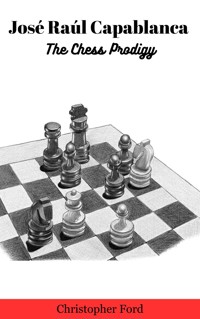
"José Raúl Capablanca: The Chess Prodigy" is a captivating exploration of one of the greatest chess players in history, celebrating his exceptional intellect, revolutionary approach to the game, and enduring impact on the world of chess and beyond.
The book also includes 14 annotated chess games by Capablanca.
Chapters included:
Chapter 1: The Early Years
Chapter 2: Rise to Prominence
Chapter 3: The Unconventional World Champion
Chapter 4: Legendary Matches
Chapter 5: Beyond Chess
Chapter 6: Legacy and Influence
Chapter 7: Personal Life and Challenges
Chapter 8: Lasting Contributions
Chapter 9: Remembering Capablanca
Das E-Book können Sie in Legimi-Apps oder einer beliebigen App lesen, die das folgende Format unterstützen:
Veröffentlichungsjahr: 2023
Ähnliche
















José Raúl Capablanca
The Chess Prodigy
Christopher Ford
2023
Copyright © 2023 by Christopher Ford
Contents
Chapter 1: The Early Years
Introducing the prodigious talent of José Raúl Capablanca
His upbringing in Havana
Demonstrating his exceptional memory and strategic thinking
Chapter 2: Rise to Prominence
Capablanca's rapid rise
Victory at the 1909 Cuban Chess Championship
Challenges and triumphs in international tournaments
Chapter 3: The Unconventional World Champion
Analyzing Capablanca's unique playing style
His approach to openings, middle-game, and endgame strategies
Becoming the World Chess Champion in 1921
Chapter 4: Legendary Matches
Capablanca's rivals & iconic matches
His ability to quickly assess positions and make accurate decisions
Chapter 5: Beyond Chess
Examining Capablanca's interests outside of chess
His contributions to literature, journalism, and bridge
Chapter 6: Legacy and Influence
Discussing Capablanca's impact on the chess world
Analyzing how his strategies and ideas shaped the evolution of chess theory
The enduring significance of his games and teachings in modern chess
Chapter 7: Personal Life and Challenges
Exploring Capablanca's personal relationships & family life
Losing the World Championship title and his efforts to regain it
Chapter 8: Lasting Contributions
Delving into Capablanca's contributions to chess openings and endgame theory
His innovative ideas on positional play, pawn structures, and strategic planning
Chapter 9: Remembering Capablanca
The commemoration of Capablanca's legacy through tournaments, books, and documentaries
A final look at his lasting imprint on the world of chess and strategic thinking
Games annoted by José Raúl Capablanca
GAME 1. QUEEN'S GAMBIT DECLINED
GAME 2. QUEEN'S GAMBIT DECLINED
GAME 3. IRREGULAR DEFENCE
GAME 4. FRENCH DEFENCE
GAME 5. RUY LOPEZ
GAME 6. FRENCH DEFENCE
GAME 7. RUY LOPEZ
GAME 8. CENTRE GAME
GAME 9. QUEEN'S GAMBIT DECLINED
GAME 10. PETROFF DEFENCE
GAME 11. RUY LOPEZ
GAME 12. FRENCH DEFENCE
GAME 13. RUY LOPEZ
GAME 14. QUEEN'S GAMBIT DECLINED
Chapter 1: The Early Years
Introducing the prodigious talent of José Raúl Capablanca
José Raúl Capablanca, a name that resonates through the annals of chess history as a true prodigy, was born on November 19, 1888, in Havana, Cuba. From an early age, his remarkable aptitude for the game was evident. Capablanca's uncanny ability to envision complex positions and devise winning strategies set him apart from his peers. By the time he was a teenager, he had already showcased his incredible potential by defeating seasoned players in Cuba.
His intuitive grasp of chess was astonishing. His precise calculations, innate positional understanding, and effortless mastery of endgames astounded those who crossed paths with him. Capablanca's play was often described as smooth, harmonious, and seemingly effortless, earning him the moniker of the "Chess Machine."
The prodigious talent of José Raúl Capablanca was not just about his exceptional chess prowess, but also about his inherent love for the game. His unquenchable thirst for knowledge, coupled with an insatiable desire to improve, drove him to continuously refine his skills. This dedication culminated in his historic victory at the 1921 World Chess Championship, where he dethroned Emanuel Lasker, becoming the third World Chess Champion.
Capablanca's legacy as a chess prodigy endures through his timeless games, which continue to be studied and admired by chess enthusiasts and grandmasters alike. His contributions to chess theory, particularly in openings, middle-games, and endgames, remain influential even in the modern era. Beyond his exceptional abilities over the board, Capablanca's charm, elegance, and charisma left an indelible mark on the world of chess.
In the pages that follow, we will delve deeper into the life and journey of José Raúl Capablanca, tracing his meteoric rise, his unique approach to the game, and the lasting impact he has left on the chess community and strategic thinking.
His upbringing in Havana
José Raúl Capablanca's upbringing in Havana, Cuba, played a crucial role in shaping his destiny as a chess prodigy. Born into a prominent and wealthy family on November 19, 1888, Capablanca's early years were marked by privilege and a stimulating environment.
At the tender age of four, young Capablanca was introduced to the game of chess by his father, José María Capablanca. The elder Capablanca, recognizing his son's intellectual potential, believed that chess could serve to nurture his natural talents. Little did he know that this initial introduction would set the stage for a lifetime of exceptional achievements.
From the outset, it became evident that José Raúl Capablanca possessed an astonishing affinity for the game. His prodigious memory allowed him to absorb the rules and strategies with remarkable speed. Soon, he was not merely playing, but truly comprehending the intricacies of the game.
Under the guidance of his father and through interactions with Havana's chess-playing community, Capablanca's skills flourished. He honed his abilities in informal matches, often taking on multiple opponents simultaneously. His victories against experienced players at such a young age sent ripples of amazement through the local chess scene.
By the time he was 12 years old, Capablanca's prowess was recognized on a larger scale when he participated in his first official tournament, the Cuban Chess Championship of 1901. Despite his youth and relative inexperience, he finished tied for second place, leaving seasoned players astounded by his potential.
José Raúl Capablanca's upbringing in Havana was a crucial chapter in his remarkable journey. The exposure to chess at a young age, coupled with his natural brilliance and supportive family, paved the way for his rapid ascent in the chess world. As we delve deeper into his story, we will uncover the pivotal moments and encounters that contributed to shaping him into the legend he would become.
Demonstrating his exceptional memory and strategic thinking
During his formative years in Havana, Cuba, José Raúl Capablanca astounded the chess community with his exceptional memory and strategic acumen, particularly during informal games. His ability to quickly analyze positions and devise winning strategies set him apart from his peers and established him as a true prodigy.
In informal matches, often conducted at social gatherings and local chess clubs, Capablanca's memory became a source of amazement. He could effortlessly recall past games, moves, and variations, impressing opponents and spectators alike. This prodigious memory allowed him to learn from every encounter and adapt his approach to suit different situations.
Capablanca's strategic thinking was equally remarkable. His deep understanding of chess principles, even at a young age, allowed him to navigate complex positions with confidence. He had an innate ability to grasp the positional nuances of a position, identifying critical weaknesses and formulating long-term plans. His approach wasn't just about tactical brilliance; it was about creating harmonious positions that maximized his pieces' potential.
These informal games served as a training ground for Capablanca, providing him with the opportunity to refine his skills and experiment with different ideas. He would often take on multiple opponents simultaneously, a feat that demonstrated not only his exceptional memory but also his ability to manage multiple positions and opponents concurrently.
Through these informal games, Capablanca's reputation spread beyond Havana, attracting the attention of chess enthusiasts and players worldwide. His rare combination of memory, strategy, and natural talent laid the foundation for his subsequent rise to prominence on the international chess stage.
As we delve deeper into José Raúl Capablanca's journey, we will explore how these early demonstrations of exceptional memory and strategic thinking paved the way for his eventual conquest of the chess world and his legacy as one of the game's true legends.
Chapter 2: Rise to Prominence
Capablanca's rapid rise
José Raúl Capablanca's rise through the ranks of the chess world was nothing short of meteoric. From his early years in Havana, Cuba, to his emergence as a dominant force on the international stage, his journey was characterized by rapid progress and unprecedented success.
Capablanca's first significant step on the global chess scene came at the 1909 New York International Chess Tournament. Despite being relatively unknown at the time, he finished tied for first place with established masters such as Frank Marshall and Carl Schlechter. This impressive performance garnered attention and marked his arrival on the international chess stage.
Over the next few years, Capablanca continued to demonstrate his exceptional skills in various tournaments. His intuitive understanding of positions, combined with his deep endgame knowledge, consistently led to victories. He excelled against strong opponents, defeating renowned players such as Akiba Rubinstein and Siegbert Tarrasch.
In 1913, Capablanca participated in the legendary St. Petersburg Tournament, one of the strongest gatherings of chess talent in history. Despite being a relatively young and inexperienced player, he finished second only to World Champion Emanuel Lasker, ahead of established masters like Alekhine and Tarrasch. This performance solidified his reputation as a serious contender.
By 1916, Capablanca had earned the title of "Cuban Chess Champion" multiple times and was consistently recognized as one of the world's top players. His unique playing style, characterized by simplicity, clarity, and precision, continued to impress both opponents and spectators.
The pinnacle of Capablanca's rise came in 1921 when he challenged and defeated Emanuel Lasker for the World Chess Championship title. This historic victory marked the first time the championship had changed hands in over two decades. Capablanca's reign as World Champion showcased his dominance, as he defended his title against formidable opponents with ease.
José Raúl Capablanca's rapid ascent through the chess world was a testament to his exceptional talent, strategic brilliance, and dedication to the game. His journey from a prodigious child in Havana to the reigning World Chess Champion captivated the chess community and left an indelible mark on the history of the game.
Victory at the 1909 Cuban Chess Championship
In 1909, at the age of just 20, José Raúl Capablanca achieved a remarkable milestone by winning the Cuban Chess Championship. This victory not only showcased his prodigious talent but also signaled his emergence as a force to be reckoned with in the world of chess.
The Cuban Chess Championship of 1909 was a pivotal moment in Capablanca's career. Despite his young age and relatively limited experience in formal competitions, he demonstrated a level of skill and understanding that surpassed his contemporaries. His ability to assess positions accurately, devise sound strategies, and execute precise moves allowed him to outshine more experienced opponents.
Capablanca's victory was not simply a matter of luck or chance. His deep understanding of chess principles, combined with his natural intuition, enabled him to navigate the complexities of the game with a level of maturity beyond his years. His remarkable endgame technique, a hallmark of his play, played a crucial role in securing his victory in the championship.
This triumph marked the beginning of Capablanca's journey from a promising young talent to a recognized chess prodigy on the international stage. It was a clear indicator of his potential to achieve greatness, foreshadowing his subsequent victories in major tournaments and his eventual ascent to become the World Chess Champion.
The 1909 Cuban Chess Championship victory remains a testament to Capablanca's innate talent, unwavering dedication, and the unique combination of skills that would make him one of the most renowned chess players in history.
Challenges and triumphs in international tournaments
Throughout his career, José Raúl Capablanca faced a series of challenges and achieved remarkable triumphs in international chess tournaments, all of which showcased his unparalleled skill and strategic brilliance.
One of his notable triumphs came in the 1918 New York Chess Masters tournament. Competing against a field of strong players, including the reigning World Champion Emanuel Lasker, Capablanca dominated the event with an impressive score. His victories against elite opponents solidified his reputation as a leading contender for the world title.
In the 1922 London tournament, Capablanca's exceptional endgame technique and intuitive understanding of positions were on full display. He secured a convincing victory with a remarkable performance, finishing ahead of fellow contenders like Alexander Alekhine and Efim Bogoljubov. This win further solidified his claim as a dominant force in the chess world.
Perhaps one of Capablanca's most famous achievements was his victory at the 1924 New York Chess Tournament, widely considered one of the strongest tournaments in history. Facing off against a stellar field that included Alekhine, Richard Réti, and Aron Nimzowitsch, Capablanca's consistency and precision shone through, earning him another remarkable victory.
While Capablanca's successes were numerous, he was not without challenges. His historic rivalry with Alexander Alekhine, culminating in their World Chess Championship matches, highlighted the intensity of his competition. Capablanca's strategic approach often revolved around solid and harmonious positions, while Alekhine brought a more aggressive and dynamic style. Despite facing difficulties, these encounters showcased Capablanca's ability to adapt and maintain his exceptional standards of play.
Throughout his career, Capablanca's participation in international tournaments demonstrated his ability to outthink and outmaneuver his opponents. His intuitive understanding of positions, mastery of endgames, and impeccable technique set him apart as a chess genius. These challenges and triumphs not only solidified his legacy but also contributed to shaping modern chess theory and strategy.
Chapter 3: The Unconventional World Champion
Analyzing Capablanca's unique playing style
José Raúl Capablanca's unique playing style was characterized by its simplicity, elegance, and precision. His approach to the game left a lasting influence on his opponents and the entire chess community, reshaping the way chess was played and understood.
Positional Mastery: Capablanca's emphasis on positional play was one of the defining features of his style. He had an exceptional ability to evaluate positions accurately, identifying critical imbalances, weak squares, and imprecise pawn structures. This approach allowed him to gradually accumulate advantages while minimizing risk.
Endgame Virtuosity: Capablanca's exceptional endgame technique was a hallmark of his style. His deep understanding of pawn endings and minor piece endings enabled him to convert even the slightest advantages into victories. He had a knack for finding the most efficient paths to victory in these often-challenging phases of the game.
Harmony and Simplicity: Capablanca's play was characterized by its harmonious coordination of pieces. He avoided unnecessary complications and preferred straightforward plans that kept his pieces active and working together. His games were often devoid of tactical fireworks, showcasing his ability to gradually improve his position and create long-lasting advantages.
Prophylactic Thinking: Capablanca's prophylactic thinking stood out as a strategic tool. He excelled in anticipating his opponent's plans and thwarting them before they could materialize. This prevented his opponents from gaining counterplay and maintained control over the game's direction.
Natural Intuition: Capablanca's intuition for the game was uncanny. He seemed to instinctively understand which moves would lead to favorable outcomes, even in complex positions. This ability to assess positions quickly and accurately gave him a significant advantage over his opponents.
Reducing Complexity: Capablanca preferred positions with fewer pieces on the board, as this reduced the complexity and allowed him to leverage his superior endgame skills. He was adept at simplifying positions in a manner that favored him while restricting his opponents' options.
Capablanca's style was so effective that it often frustrated his opponents. They found themselves struggling to find weaknesses in his play and counter his seemingly flawless positions. Many of his contemporaries and successors acknowledged his influence, and his ideas on positional play and endgames continue to be studied and admired by chess players of all levels.
In a broader sense, Capablanca's unique playing style helped shift the paradigm of chess strategy. He emphasized a proactive, harmonious approach that focused on controlling key squares, limiting opponents' options, and capitalizing on small positional advantages. His influence can be seen in the subsequent evolution of chess theory and the playing styles of later generations of players.




