


62,99 €
Mehr erfahren.
- Herausgeber: John Wiley & Sons
- Kategorie: Wissenschaft und neue Technologien
- Sprache: Englisch
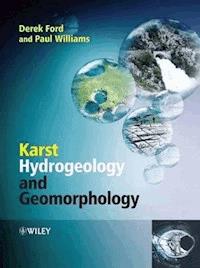
Originally published in 1989, Karst Geomorphology and Hydrology became the leading textbook on karst studies. This new textbook has been substantially revised and updated.
The first half of the book is a systematic presentation of the dissolution kinetics, chemical equilibria and physical flow laws relating to karst environments. It includes details of the many environmental factors that complicate their chemical evolution, with a critique of measurement of karst erosion rates. The second half of the book looks at the classification system for cave systems and the influence of climate and climatic change on karst development. The book ends with chapters on karst water resource management and a look at the important issues of environmental management, including environmental impact assessment, environmental rehabilitation, tourism impacts and conservation values. Practical application of karst studies are explained throughout the text.
"This new edition strengthens the book's position as the essential reference in the field. Karst geoscientists will not dare to stray beyond arm's reach of this volume. It is certain to remain the professional standard for many decades." Journal of Cave and Karst Studies, August 2007
Sie lesen das E-Book in den Legimi-Apps auf:
Seitenzahl: 1468
Veröffentlichungsjahr: 2013
Ähnliche



















Contents
Preface
Acknowledgements
1 Introduction to Karst
1.1 DEFINITIONS
1.2 THE RELATIONSHIPS OF KARST WITH GENERAL GEOMORPHOLOGY AND HYDROGEOLOGY
1.3 THE GLOBAL DISTRIBUTION OF KARST
1.4 THE GROWTH OF IDEAS
1.5 AIMS OF THE BOOK
1.6 KARST TERMINOLOGY
2 The Karst Rocks
2.1 CARBONATE ROCKS AND MINERALS
2.2 LIMESTONE COMPOSITIONS AND DEPOSITIONAL FACIES
2.3 LIMESTONE DIAGENESIS AND THE FORMATION OF DOLOMITE
2.4 THE EVAPORITE ROCKS
2.5 QUARTZITES AND SILICEOUS SANDSTONES
2.6 EFFECTS OF LITHOLOGICAL PROPERTIES UPON KARST DEVELOPMENT
2.7 INTERBEDDED CLASTIC ROCKS
2.8 BEDDING PLANES, JOINTS, FAULTS AND FRACTURE TRACES
2.9 FOLD TOPOGRAPHY
2.10 PALAEOKARST UNCONFORMITIES
3 Dissolution: Chemical and Kinetic Behaviour of the Karst Rocks
3.1 INTRODUCTION
3.2 AQUEOUS SOLUTIONS AND CHEMICAL EQUILIBRIA
3.3 THE DISSOLUTION OF ANHYDRITE, GYPSUM AND SALT
3.4 THE DISSOLUTION OF SILICA
3.5 BICARBONATE EQUILIBRIA AND THE DISSOLUTION OF CARBONATE ROCKS IN NORMAL METEORIC WATERS
3.6 THE S–O–H SYSTEM AND THE DISSOLUTION OF CARBONATE ROCKS
3.7 CHEMICAL COMPLICATIONS IN CARBONATE DISSOLUTION
3.8 BIOKARST PROCESSES
3.9 MEASUREMENTS IN THE FIELD AND LABORATORY: COMPUTER PROGRAMS
3.10 DISSOLUTION AND PRECIPITATION KINETICS OF KARST ROCKS
4 Distribution and Rate of Karst Denudation
4.1 GLOBAL VARIATIONS IN THE SOLUTIONAL DENUDATION OF CARBONATE TERRAINS
4.2 MEASUREMENT AND CALCULATION OF SOLUTIONAL DENUDATION RATES
4.3 SOLUTION RATES IN GYPSUM, SALT AND OTHER NON-CARBONATE ROCKS
4.4 INTERPRETATION OF MEASUREMENTS
5 Karst Hydrogeology
5.1 BASIC HYDROGEOLOGICAL CONCEPTS, TERMS AND DEFINITIONS
5.2 CONTROLS ON THE DEVELOPMENT OF KARST HYDROLOGICAL SYSTEMS
5.3 ENERGY SUPPLY AND FLOW-NETWORK DEVELOPMENT
5.4 DEVELOPMENT OF THE WATER TABLE AND PHREATIC ZONES
5.5 DEVELOPMENT OF THE VADOSE ZONE
5.6 CLASSIFICATION AND CHARACTERISTICS OF KARST AQUIFERS
5.7 APPLICABILITY OF DARCY’S LAW TO KARST
5.8 FRESHWATER-SALTWATER INTERFACE
6 Analysis of Karst Drainage Systems
6.1 THE ‘GREY BOX’ NATURE OF KARST
6.2 SURFACE EXPLORATION AND SURVEY TECHNIQUES
6.3 INVESTIGATING RECHARGE AND PERCOLATION IN THE VADOSE ZONE
6.4 BOREHOLE ANALYSIS
6.5 SPRING HYDROGRAPH ANALYSIS
6.6 POLJE HYDROGRAPH ANALYSIS
6.7 SPRING CHEMOGRAPH INTERPRETATION
6.8 STORAGE VOLUMES AND FLOW ROUTING UNDER DIFFERENT STATES OF THE HYDROGRAPH
6.9 INTERPRETING THE ORGANIZATION OF A KARST AQUIFER
6.10 WATER-TRACING TECHNIQUES
6.11 COMPUTER MODELLING OF KARST AQUIFERS
7 Speleogenesis: The Development of CaveSystems
7.1 CLASSIFYING CAVE SYSTEMS
7.2 BUILDING THE PLAN PATTERNS OF UNCONFINED CAVES
7.3 UNCONFINED CAVE DEVELOPMENT IN LENGTH AND DEPTH
7.4 SYSTEM MODIFICATIONS OCCURRING WITHIN A SINGLE PHASE
7.5 MULTIPHASE CAVE SYSTEMS
7.6 METEORIC WATER CAVES DEVELOPED WHERE THERE IS CONFINED CIRCULATION OR BASAL INJECTION OF WATER
7.7 HYPOGENE CAVES: HYDROTHERMAL CAVES ASSOCIATED CHIEFLY WITH CO2
7.8 HYPOGENE CAVES: CAVES FORMED BY WATERS CONTAINING H2S
7.9 SEA-COAST EOGENETIC CAVES
7.10 PASSAGE CROSS-SECTIONS AND SMALLER FEATURES OF EROSIONAL MORPHOLOGY
7.11 CONDENSATION, CONDENSATION CORROSION AND WEATHERING IN CAVES
7.12 BREAKDOWN IN CAVES
8 Cave Interior Deposits
8.1 INTRODUCTION
8.2 CLASTIC SEDIMENTS
8.3 CALCITE, ARAGONITE AND OTHER CARBONATE PRECIPITATES
8.4 OTHER CAVE MINERALS
8.5 ICE IN CAVES
8.6 DATING OF CALCITE SPELEOTHEMS AND OTHER CAVE DEPOSITS
8.7 PALAEOENVIRONMENTAL ANALYSIS OF CALCITE SPELEOTHEMS
8.8 MASS FLUX THROUGH A CAVE SYSTEM: THE EXAMPLE OF FRIAR’S HOLE, WEST VIRGINIA
9 Karst Landform Development in Humid Regions
9.1 COUPLED HYDROLOGICAL AND GEOCHEMICAL SYSTEMS
9.2 SMALL-SCALE SOLUTION SCULPTURE – MICROKARREN AND KARREN
9.3 DOLINES – THE ‘DIAGNOSTIC’ KARST LANDFORM?
9.4 THE ORIGIN AND DEVELOPMENT OF SOLUTION DOLINES
9.5 THE ORIGIN OF COLLAPSE AND SUBSIDENCE DEPRESSIONS
9.6 POLYGONAL KARST
9.7 MORPHOMETRIC ANALYSIS OF SOLUTION DOLINES
9.8 LANDFORMS ASSOCIATED WITH ALLOGENIC INPUTS: CONTACT KARST
9.9 KARST POLJES
9.10 CORROSIONAL PLAINS AND SHIFTS IN BASELEVEL
9.11 RESIDUAL HILLS ON KARST PLAINS
9.12 DEPOSITIONAL AND CONSTRUCTIONAL KARST FEATURES
9.13 SPECIAL FEATURES OF EVAPORITE TERRAINS
9.14 KARSTIC FEATURES OF QUARTZOSE AND OTHER ROCKS
9.15 SEQUENCES OF CARBONATE KARST EVOLUTION IN HUMID TERRAINS
9.16 COMPUTER MODELS OF KARST LANDSCAPE EVOLUTION
10 The Influence of Climate, Climatic Change and Other Environmental Factorson Karst Development
10.1 THE PRECEPTS OF CLIMATIC GEOMORPHOLOGY
10.2 THE HOT ARID EXTREME
10.3 THE COLD EXTREME: KARST DEVELOPMENT IN GLACIATED TERRAINS
10.4 THE COLD EXTREME: KARST DEVELOPMENT IN PERMAFROZEN TERRAINS
10.5 SEA-LEVEL CHANGES, TECTONIC MOVEMENT AND IMPLICATIONS FOR COASTAL KARST DEVELOPMENT
10.6 POLYCYCLIC, POLYGENETIC AND EXHUMED KARSTS
11 Karst Water Resources Management
11.1 WATER RESOURCES AND SUSTAINABLE YIELDS
11.2 DETERMINATION OF AVAILABLE WATER RESOURCES
11.3 KARST HYDROGEOLOGICAL MAPPING
11.4 HUMAN IMPACTS ON KARST WATER
11.5 GROUNDWATER VULNERABILITY, PROTECTION AND RISK MAPPING
11.6 DAM BUILDING, LEAKAGES, FAILURES AND IMPACTS
12 Human Impacts and Environmental Rehabilitation
12.1 THE INHERENT VULNERABILITY OF KARST SYSTEMS
12.2 DEFORESTATION, AGRICULTURAL IMPACTS AND ROCKY DESERTIFICATION
12.3 SINKHOLES, INDUCED BY DEWATERING, SURCHARGING, SOLUTION MINING AND OTHER PRACTICES ON KARST
12.4 PROBLEMS OF CONSTRUCTION ON AND IN THE KARST ROCKS – EXPECT THE UNEXPECTED!
12.5 INDUSTRIAL EXPLOITATION OF KARST ROCKS AND MINERALS
12.6 RESTORATION OF KARSTLANDS AND REHABILITATION OF LIMESTONE QUARRIES
12.7 SUSTAINABLE MANAGEMENT OF KARST
12.8 SCIENTIFIC, CULTURAL AND RECREATIONAL VALUES OF KARSTLANDS
References
Index
Copyright © 2007 John Wiley & Sons Ltd, The Atrium, Southern Gate, Chichester, West Sussex PO19 8SQ, England
Telephone (+44) 1243 779777
First Edition published in 1989 by Unwin Hyman Ltd.
Email (for orders and customer service enquiries): [email protected] Visit our Home Page on www.wiley.co.uk or www.wiley.com
All Rights Reserved. No part of this publication may be reproduced, stored in a retrieval system or transmitted in any form or by any means, electronic, mechanical, photocopying, recording, scanning or otherwise, except under the terms of the Copyright, Designs and Patents Act 1988 or under the terms of a licence issued by the Copyright Licensing Agency Ltd, 90 Tottenham Court Road, London W1T 4LP, UK, without the permission in writing of the Publisher. Requests to the Publisher should be addressed to the Permissions Department, John Wiley & Sons Ltd, The Atrium, Southern Gate, Chichester, West Sussex PO19 8SQ, England, or emailed to [email protected], or faxed to (+44) 1243 770620.
Designations used by companies to distinguish their products are often claimed as trademarks. All brand names and product names used in this book are trade names, service marks, trademarks or registered trademarks of their respective owners. The Publisher is not associated with any product or vendor mentioned in this book.
This publication is designed to provide accurate and authoritative information in regard to the subject matter covered. It is sold on the understanding that the Publisher is not engaged in rendering professional services. If professional advice or other expert assistance is required, the services of a competent professional should be sought.
Other Wiley Editorial Offices
John Wiley & Sons Inc., 111 River Street, Hoboken, NJ 07030, USA
Jossey-Bass, 989 Market Street, San Francisco, CA 94103-1741, USA
Wiley-VCH Verlag GmbH, Boschstr. 12, D-69469 Weinheim, Germany
John Wiley & Sons Australia Ltd, 42 McDougall Street, Milton, Queensland 4064, Australia
John Wiley & Sons (Asia) Pte Ltd, 2 Clementi Loop # 02-01, Jin Xing Distripark, Singapore 129809
John Wiley & Sons Canada Ltd, 6045 Freemont Blvd, Mississauga, Ontario, L5R 4J3, Cananda
Wiley also publishes its books in a variety of electronic formats. Some content that appears in print may not be available in electronic books. Library of Congress Cataloging-in-Publication Data
Ford, Derek (Derek C.)
Karst hydrogeology and geomorphology / Derek Ford and Paul Williams. – [Rev. ed.] p. cm.
ISBN: 978-0-470-84996-5 (HB : alk. paper)
ISBN: 978-0-470-84997-2 (PB : alk. paper)
1. Karst. 2. Hydrology, Karst. I. Williams, P. W. (Paul W.)
II. Title.
GB600.F66 2007
551.447-dc22 2006029323
Anniversary Logo Design: Richard J. Pacifico British Library Cataloguing in Publication Data A catalogue record for this book is available from the British Library
ISBN 978-0-470-084996-5 (HB)
ISBN 978-0-470-84997-2 (PB)
We dedicate this book to our wives, Margaret Ford and Gwyneth Williams,
who have sustained us throughout our student years
and professional careers.
Preface
This is a substantial revision of our earlier book Karst Geomorphology and Hydrology, which was published in 1989. It has been recast, updated and largely rewritten, taking care to keep what we judge to be the better features of the earlier version, particularly its systems-oriented approach and its integration of hydrology and geomorphology. We have not repeated some historical material in Chapter 1 and have not cited some early authorities, because this information is still accessible to readers in the earlier book.
In Chapter 2 we review pertinent features of the medium, that is the karst rocks and their geological structure. In the following two chapters we attempt comprehensive description of the physics and chemistry of dissolution processes and global dissolution rates. In the past two to three decades the study of hydrogeology and groundwater management has become of major importance in the academic world and in practical man agement. This is recognized in Chapters 5 and 6 with detailed consideration of the karst hydrogeological sys tem, emphasizing here and throughout the later text the most important fact that, in karst, the meteoric waters are routed underground by dissolutionally enlarged channels. Our understanding of the genesis of those channel pat terns, i.e. of underground cave systems, has been much improved in the past two decades by broader international discussion and powerful computer modelling, which is considered in Chapter 7. Cave systems may also function as giant sediment traps, retaining evidence of all natural environmental processes occurring in the soil and vegeta tion above them and in their hydrological catchments. Increasingly it is recognized that caves are important natural archives that contain information on continental and marine climate change and rates of change. These are now being studied intensively because of their relevance to global warming concerns, so a broad review of recent advances in understanding is presented in Chapter 8. Chapters 9 and 10 then consider the variety of dissolutional and depositional landforms created by karst processes on the Earth’s surface, first in humid temperate and tropical environments and then in the arid and cold extremes. The book concludes with broad sketches of the practical applications ofkarst study and the information presented in the previous chapters. Karst water resources are becoming increasingly important globally, and are the focus of Chapter 11. We consider the delineation and management of karst water supplies and the problem of groundwater pollution, which can proceed with horrific rapidity should there be spillage of the many dangerous substances being moved around the land by road, rail and pipeline. In the final chapter we review hazards arising from the juxtaposition of human activities and karst terrain. The very existence of karst forms and processes may pose hazards to construction and other economic activity and, conversely, human activity poses hazards to fragile karst ecosystems, aquifers and landform features. The chapter concludes with a consideration of environmental restora tion, sustainable management and conservation.
During the past 25 years, for a variety of reasons, there has been an explosion of interest in all aspects of karst research on the part of earth scientists, other environ mental scientists, civil engineers, and even in legal prac tice. As a consequence, there has been a huge increase in the number of relevant publications. We find it impossible to read all that is published each year in the English language alone, not to mention the large volumes of important and well-illustrated findings published in other languages. Nevertheless, in this book we have attempted a broad international perspective both in the selection of examples that we present and in the literature that we cite. By necessity, because there is limitation to the number of pages we can use if this volume is to be available at a reasonable price, we have had to work within space constraints, and so we apologize in advance to colleagues where we have not cited – or worse, overlooked – one or more of their favourite publications.
Acknowledgements
Today the international community of karst scholars is large in number, broad in its intellectual scope, vigorous and exciting. We are indebted to a great many individuals whose research, writings, discussions, company in the field and underground, have helped us. The late Joe Jennings (Australia) and Marjorie Sweeting (UK) were our mentors; their enthusiasm, scholarly example, scien tific integrity and wise counsel helped set our standards and inspired our academic careers. We continue to build on the foundations they laid for us.
We deeply regret the passing, in recent years and before their time, of Jim Quinlan (USA) and Song Lin Hua (China) and recall with gratitude what they taught us. Especial appreciation to Henry Schwarcz for 40 years of collaborative study of speleothems, to Peter Crossley for 30 years technical support above and below ground, and to Steve Worthington for critical reading of the groundwater hydrology chapters and much else. Amongst the many others whose research and friendship have enriched our study and experience of karst, we wish especially to thank:
Slava Andreichouk
Tim Atkinson
Michel Bakalowicz
Pavel Bosak
Yuan Daoxian
Wolfgang Dreybrodt
Victor and Yuri Dubljansky
Ralph Ewers
Paolo Forti
Amos Frumkin
Franci Gabrovšek
Ivan Gams
John Gunn
Zupan Hajna
Russell Harmon
Carol Hill
Julia James
Sasha Klimchouk
Andrej Krancj
Wieslawa Krawczyk
Stein-Erik Lauritzen
Joyce Lundberg
Richard Maire
Alain Mangin
Andrej Mihevc
Petar Milanovic’
John Mylroie
Jean Nicod
Bogdan Onac
Art and Peggy Palmer
Jean-Noel Salomon
Jacques Schroeder
Yavor Shopov
Chris and Peter Smart
Tony Waltham
Bette and Will White
Zhu Xuewen and Nadja
Lu Yaoru
Laszlo Zambo
1
Introduction to Karst
Karst is the term used to describe a special style of landscape containing caves and extensive underground water systems that is developed on especially soluble rocks such as limestone, marble, and gypsum. Large areas of the ice-free continental area of the Earth are underlain by karst developed on carbonate rocks (Figure 1.1) and roughly 20–25% of the global population depends largely or entirely on groundwaters obtained from them. These resources are coming under increasing pressure and have great need of rehabilitation and sustainable management. In the chapters that follow, we show the close relationship between karst groundwater systems (hydrogeology) and karst landforms (geomorphology), both above and below the surface. And we explain the place of karst within the general realms of hydrogeology and geomorphology.
Experience shows that many hydrogeologists mistakenly assume that if karst landforms are absent or not obvious on the surface, then the groundwater system will not be karstic. This assumption can lead to serious errors in groundwater management and environmental impact assessment, because karst groundwater circulation can develop even though surface karst is not apparent. Diagnostic tests are available to clarify the situation. The prudent default situation in carbonate terrains is to assume karst exists unless proved otherwise.
We found in our first book (Ford and Williams 1989) that hydrological and chemical processes associated with karst are best understood from a systems perspective. Therefore we will continue to follow this approach here. Karst can be viewed as an open system composed of two closely integrated hydrological and geochemical subsystems operating upon the karstic rocks. Karst features above and below ground are the products of the interplay of processes in these linked subsystems.
1.1 DEFINITIONS
The word karst can be traced back to pre-Indoeuropean origins (Gams 1973a, 1991a, 2003; Kranjc 2001a). It stems from karra/gara meaning stone, and its derivatives are found in many languages of Europe and the Middle East. The district referred to as the ‘Classic Karst’, which is the type site where its natural characteristics first received intensive scientific investigation, is in the north-western corner of the Dinaric Karst, about two-thirds being in Slovenia and one-third in Italy. In Slovenia the word kar(r)a underwent linguistic evolution via kars to kras, which in addition to meaning stony, barrén ground also became the regional name for the district inland of Trieste. In the Roman period the regional name appeared as Carsus and Carso but, when it became part of the Austro-Hungarian Empire, it was germanicized as the Karst. The geographical and geological schools of Vienna during that time exercised a decisive influence on the word as an international scientific term. Its technical use started in the late 18th century and by the mid-19th century it was well-established. The unusual natural features of the Kras (or Karst) region became known as ‘karst phenomena’ and so too, by extension, did similar features found elsewhere in the world.
We may define karst as comprising terrain with distinctive hydrology and landforms that arise from a combination of high rock solubility and well developed secondary (fracture) porosity. Such areas are characterized by sinking streams, caves, enclosed depressions, fluted rock outcrops, and large springs. Considerable rock solubility alone is insufficient to produce karst. Rock structure and lithology are also important: dense, massive, pure and coarsely fractured rocks develop the best karst. Soluble rocks with extremely high primary porosity (~30–50%) usually have poorly developed karst. Yet soluble rocks with negligible primary porosity (<1%) that have later evolved a large secondary porosity support excellent karst. The key to the expression of karst is the development of its unusual subsurface hydrology, the evolution of which is driven by the hydrological cycle – the ‘engine’ that powers karst processes. The distinctive surface and subterranean features that are a hallmark of karst result from rock dissolution by natural waters along pathways provided by the geological structure.
Figure 1.1 Global distribution of major outcrops of carbonate rocks. Accuracy varies according to detail of mapping. Generalization occurs in areas with interbedded lithologies and where superficial deposits mask outcrops. (Map assembled using GIS on Eckert IV equal-area projection from regional maps, many of which were subsequently published in Gunn (2000a)).
The main features of the karst system are illustrated in Figure 1.2. The primary division is into erosional and depositional zones. In the erosional zone there is net removal of the karst rocks, by dissolution alone and by dissolution serving as the trigger mechanism for other processes. Some redeposition of the eroded rock occurs in the zone, mostly in the form of precipitates, but this is transient. In the net deposition zone, which is chiefly offshore or on marginal (inter- and supratidal) flats, new karst rocks are created. Many of these rocks display evidence of transient episodes of dissolution within them. This book is concerned primarily with the net erosion zone, the deposition zone being the field of sedimentologists (e.g. see Alsharhan and Kendall 2003).
Within the net erosion zone, dissolution along groundwater flow paths is the diagnostic characteristic of karst. Most groundwater in the majority of karst systems is of meteoric origin, circulating at comparatively shallow depths and with short residence times underground. Deep circulating, heated waters or waters originating in igneous rocks or subsiding sedimentary basins mix with the meteoric waters in many regions, and dominate the karstic dissolution system in a small proportion of them. At the coast, mixing between seawater and fresh water can be an important agent of accelerated dissolution.
In the erosion zone most dissolution occurs at or near the bedrock surface where it is manifested as surface karst landforms. We refer to forms as being small scale where their characteristic dimensions (such as diameter) are commonly less than ~10m, intermediate scale in the range of 10 to 1000 m, and large scale where dimensions are greater than 1000 m. In a general systems framework most surface karst forms can be assigned to input, throughput or output roles. Input landforms predominate. They discharge water into the underground and their morphology differs distinctly from landforms created by fluvial or glacial processes because of this function. Some distinctive valleys and flat-floored depressions termed poljes convey water across a belt of karst (and sometimes other rocks) at the surface and so serve in a throughput role. Varieties of erosional gorges and of precipitated or constructional landforms, such as travertine dams, may be created where karst groundwater is discharged as springs, i. e. they are output landforms. Residual karstic hills, sometimes of considerable height and abruptness may survive on the alluvial plains below receding spring lines and beside rivers.
Figure 1.2 The comprehensive karst system: a composite diagram illustrating the major phenomena encountered in active karst terrains. Reproduced from Ford, D.C. and Williams, P.W. (1989) Karst Geomorphology and Hydrology.
Some karsts are buried by later consolidated rocks and are inert, i.e. they are hydrologically decoupled from the contemporary system. We refer to these as palaeokarsts. They have often experienced tectonic subsidence and frequently lie unconformably beneath clastic cover rocks. Occasionally they are exhumed and reintegrated into the active system, thus resuming a development that was interrupted for perhaps tens of millions of years. Contrasting with these are relict karsts, which survive within the contemporary system but are removed from the situation in which they were developed, just as river terraces – representing floodplains of the past – are now remote from the river that formed them. Relict karsts have often been subject to a major change in baselevel. A high-level corrosion surface with residual hills now located far above the modern water table is one example; drowned karst on the coast another. Drained upper level passages in multilevel cave systems are found in perhaps the majority of karsts.
Karst rocks such as gypsum, anhydrite and salt are so soluble that they have comparatively little exposure at the Earth’s surface in net erosion zones, in spite of their widespread occurrence (Figure 1.3). Instead, they are protected by less soluble or insoluble cover strata such as shales. Despite this protection, circulating waters are able to attack them and selectively remove them over large areas, even where they are buried as deeply as 1000 m. The phenomenon is termed interstratal karstification and may be manifested by collapse or subsidence structures in the overlying rocks or at the surface. Interstratal karstification occurs in carbonate rocks also, but is of less significance. Intrastratal karstification refers to the preferential dissolution of a particular bed or other unit within a sequence of soluble rocks, e.g. a gypsum bed in a dolomite formation.
Reference is often made in European literature to exokarst, endokarst and cryptokarst. Exokarst refers to the suit of karst features developed at the surface. Endokarst concerns those developed underground. It is often divided into hyperkarst, in which the underground dissolution is by circulating meteoric waters, and hypokarst – dissolution by juvenile or connate waters (Figure 1.2). Some Russian authors further differentiate hypokarst into that dissolved in the soluble rocks by waters that are ascending into them from deeper formations, and that created entirely within a soluble formation by the process of pressure solution that utilizes its contained water. Cryptokarst refers to karst forms developed beneath a blanket of permeable sediments such as soil, till, periglacial deposits and residual clays. Karst barré denotes an isolated karst that is impounded by impermeable rocks. Stripe karst is a barré subtype where a narrow band of limestone, etc., crops out in a dominantly clastic sequence, usually with a stratal dip that is very steep or vertical. Recently there has been an emphasis on contact karst, where water flowing from adjoining insoluble terrains creates exceptionally high densities or large sizes of landforms along the geological contact with the soluble strata (Kranjc 2001b).
Figure 1.3 The global distribution of evaporite rocks (after Kozary, M.T. et al, Incidence of saline deposits in geologic time, Special Paper 88 © 1968 Geological Society of America). See Klimchouk and Andrejchuk (1996) for a global map of areas of gypsum and anhydrite deposition during the Precambrian and through the Palaeozoic.
Karst-like landforms produced by processes other than dissolution or corrosion-induced subsidence and collapse are known as pseudokarst. Caves in glaciers are pseudokarst, because their development in ice involves a change in phase, not dissolution. Thermokarst is a related term applied to topographic depressions resulting from thawing of ground ice. Vulcanokarst comprises tubular caves within lava flows plus mechanical collapses of the roof into them. Piping is the mechanical washout of conduits in gravels, soils, loess, etc., plus associated collapse. On the other hand, dissolution forms such as karren (see section 9.2) on outcrops of quartzite, granite and basalt are karst features, despite their occurrence on lithologies of that are of low solubility when compared with typical karst rocks.
The extent to which karst develops on lithologies other than carbonate and evaporite rocks depends largely on the efficiency of the processes that are competing with dissolution in the particular environment. If the competitors are very weak, the small-scale (karren) solutional landforms such as flutes, pits and pans can develop on monominerallic rocks of lower solubility and even on polyminerallic rocks such as granite and basalt, although rates of development appear to be lower. Quartzites and dense siliceous sandstones can be viewed as transitional, occupying part of the continuum between karst and normal fluvial landscapes. In thermal waters their solubility approaches that of carbonate rocks and regular solutional caves may form. Given sufficient time, under normal environmental temperatures and pressures intergranular dissolution of quartz along fractures and bedding planes can permit penetration of meteoric waters underground. When there is also a sufficient hydraulic gradient, this can give rise to turbulent flow capable of flushing the detached grains and enlarging conduits by a combination of mechanical erosion and further dissolution. Thus in some quartzite terrains vadose caves develop along the flanks of escarpments or gorges where hydraulic gradients are high. The same process leads to the unclogging of embryonic passages along scarps in sandy or argillaceous limestones. Development of a phreatic zone with significant water storage and permanent water-filled caves is generally precluded. The landforms and drainage characteristics of these siliceous rocks thus can be regarded as a style of fluvio-karst, i.e., a landscape and subterranean hydrology that develops as a consequence of the operation of both dissolution and mechanical erosion by running water.
1.2 THE RELATIONSHIPS OF KARST WITH GENERAL GEOMORPHOLOGY AND HYDROGEOLOGY
Geomorphology is concerned with understanding the form of the ground surface, the processes that mould it, and the history of its development. Carbonate and evaporate lithologies displaying at least some karst occur over ~20% of the Earth’s ice-free continental area and occupy a complete range of altitude and latitude. Thus karsts around the world are exposed to the full suite of geomorphological processes – aeolian, coastal, fluvial, glacial, physical and chemical weathering, etc. Hence to understand karst we must consider the same set of natural processes that affect all other rocks and landscape styles, including plate tectonics and climatic change. However, we must also recognize that dissolution is of paramount importance in developing karst compared with its relatively minor role in other lithologies. Chemical solution of karst rocks develops a distinctive suite of features (above and below ground) that reflect the dominance of dissolution and dissolution induced processes, such as collapse, compared with other processes. Even so, under extreme climatic conditions other processes, such as frost-shattering, can totally mask the effects of dissolution. Thus in high mountains, glacial, periglacial, and mass-movement processes are the principal landscape-forming agents. No karst has been reported on Mount Everest (Jolmo Lungma), for example, even though it consists mainly of carbonate rocks, although karst circulation may occur in the more stable regime underground.
Karst groundwater circulation can occur only if subterranean connections are established between uplands and valley bottoms; otherwise runoff will simply flow across the surface. Where bedrock is porous, as in many sandstones, water will infiltrate and circulate underground via interconnected pores, later to discharge at the surface as springs. In such rocks, the movement of water is by laminar flow and chemical solution has no significant effect on storage capacity and transmission of groundwater. Further, long-term circulation of water has no effect on the ultimate transmissivity or storage capacity of the groundwater system. This is not the case in karst, despite the fact that karst rocks are affected by exactly the same set of forces that drive subterranean groundwater circulation in other lithologies. This is because dissolution plays a fundamental role in karst. The very act of groundwater circulation causes progressive solutional enlargement of void space and a commensurate increase in permeability. Thus although initial groundwater flow in karst is laminar, it becomes progressively more turbulent. The karst groundwater system evolves over time, distinguishing it from other groundwater systems. Consequently, the equations that can be used to describe laminar water flow in typically porous aquifers become inapplicable to karst as the flow through large subterranean conduits becomes turbulent and dominates the groundwater throughput.
The progressive evolution of karst groundwater networks and the development of turbulent flow conditions are intimately related to the evolution of karst landforms. Although karst rocks may have primary intergranular porosity and secondary fracture porosity, most water flow through them is transmitted by conduits (tertiary porosity) developed by solution. These systems receive most of their inputs from point recharge sites at the surface, such as enclosed depressions (dolines, etc.) and stream-sinks, which also evolve over time as a consequence of dissolution. Thus both surface landscape and subterranean conduit system evolve together, an unusual circumstance applicable only to karst. For this reason, if one is to understand karst hydrogeology it is also necessary to understand karst geomorphology, and vice versa. This reality determines the structure and content of this book.
1.3 THE GLOBAL DISTRIBUTION OF KARST
The distribution of the principal karst rocks is shown in Figures 1.1 and 1.3. In the aggregate their surface and near-surface outcrops occupy ~20% of the planet’s dry ice-free land. Regional detail depicted on these maps is of variable quality depending on the information available. The mapping is also generalized and approximate; many very small outcrops are omitted, and possibly some large ones. Thus many sites shown on Figure 1.1 in Russia, for example, are areas in which carbonates are common, but not necessarily continuous in outcrop. Carbonates are particularly abundant in the Northern Hemisphere. The old Gondwana continents expose comparatively small outcrops except around their margins, where there are some large spreads of Cretaceous or later age carbonates (post break-up of the supercontinent), such as the Nullarbor Plain in Australia. Not all carbonates display distinctive karst landforms and/or significant karst groundwater circulations because some are impure and their insoluble residues clog developing conduits; thus we estimate carbonate karst to occur over 10–15% of the continental area.
Figure 1.3 shows the maximum aggregate of gypsum, anhydrite and salt known to have accumulated over geological time. Most of it is now buried beneath later carbonate or clastic (detrital) rocks. Also, many occurrences have been partly removed by dissolution or much reduced in geographical extent by folding and thrusting, e.g. in the Andes. More than 90% of the anhydrite/gypsum and more than 99% of the salt displayed here does not crop out; nevertheless, there is gypsum and/or salt beneath ~25% of the continental surfaces. Gypsum and salt karst that is exposed at the surface is much smaller in extent than the carbonate karst, but interstratal karst is of the same order of magnitude. Hydrologically active karst within these evaporite rocks probably covers an area comparable to active carbonate karsts.
1.4 THE GROWTH OF IDEAS
The Mediterranean basin is the cradle of karstic studies. Although ancient Assyrian kings between 1100 BC and 852 BC undertook the first recorded (in carvings and bronzes) explorations of caves in the valley of the Tigris River, Greek and Roman philosophers made the first known contributions to our scientific ideas on karst, as well as contributing to a mythology that, like the River Styx, lives on in the place names given by cavers and others. Pfeiffer (1963) identified five epochs in the development of ideas about karst groundwaters, from the interval 600–400 BC until the early 20th century. Thales (624–548? BC), Aristotle (385–322 BC) and Lucretius (96–45 BC) formulated concepts on the nature of water circulation. Flavius in the first century AD described the first known attempt at karst water tracing, in the River Jordan basin (Milanović 1981). A Greek traveler and geographer of the second century AD, Pausanias, also reported experiments that were interpreted as proving the connection between a stream-sink beside Lake Stymphalia and Erasinos spring (Burdon and Papakis 1963). The conceptual understanding of hydrology established by Greek and Roman scholars remained the basis of the subject until the 17th century, when Perrault (1608–70), Mariotte (1620–84) and Halley (1656–1742) commenced its transformation into a quantitative science, showing the relationships between evaporation, infiltration and streamflow. Also in the 17th century, the understanding of karst caves was being advanced by scholars such as Xu Xiake in China (Yuan 1981; Cai et al. 1993) and Valvasor in Slovenia (Milanović 1981; Shaw 1992).
By the end of the 18th century, the role of carbonic acid in the dissolution of limestones was understood (Hutton 1795). Experimental work on carbonate dissolution in water followed a few decades later (Rose 1837). The concept of chemical denudation was advanced in 1854 by Bischof’s calculation of the dissolved calcium carbonate load of the River Rhine and in 1875 by Good-child’s estimation of the rate of surface weathering of limestone in northern England from his observations of gravestone corrosion (Goodchild, 1890). By 1883, the first modern style study of solution denudation had been completed by Spring and Prost in the Meuse river basin in Belgium.
The mid- to late 19th century was a very significant period for the advancement of our understanding of limestone landforms. In Britain, Prestwich (1854) and Miall (1870) investigated the origin of swallow-holes, while on the European continent impressive progress was made in the study of karren by Heim (1877), Chaix (1895) and Eckert (1895), amongst others. But truly outstanding among the many excellent contributions of that time was the work of Jovan Cvijić. His 1893 exposition, Das Karstphänomen, laid the foundation of modern ideas in karst geomorphology, ranging over landforms of every scale from karren to poljes. His contribution to our understanding of dolines is rightly considered of ‘benchmark’ significance by Sweeting (1981): his thorough investigation of them provides the first instance of morphometry in geomorphology, and his conclusion that most dolines have a solutional origin has withstood the test of time.
The role of lithology became a more explicit theme in some of Cvijić’s later work, best expressed in his 1925 paper in which he introduced the terms holokarst and merokarst. Holokarst is pure karst uninfluenced by other rocks, and is developed on thick limestones extending well below baselevel. It contains the full range of karst landforms and is exemplified by the Dinaric area. By contrast, merokarst (or half karst) is developed on thin sequences of limestones interbedded with other rocks, as well as on less pure carbonate formations. The landscape thus contains both fluvial and karstic elements and may be thickly covered with insoluble residues. The Mammoth Cave-Sinkhole Plain karst of Kentucky is a good example. Cvijić also identified transitional types, such as found in the French Causses, where there is extensive karstic development in thick carbonates above underlying impermeable rocks. Viewed from the perspective of our greater worldwide knowledge in the 21st century it appears that most karsts can be assigned to Cvijić’s transitional type; hence his tripartite division is not particularly helpful. It is clear that as the carbonate sequence becomes thinner and perhaps overlain by and interbedded with clastic lithologies, so transitional landforms on the spectrum between karst and normal fluvial landscapes become more common. Roglić (1960) called such landscapes fluvio-karst. These early ideas are discussed more fully by Sweeting (1972), Roglić (1972) and Jennings (1985). Much of Cvijić’s writing is now available in English translation in Stevanović and Mijatović (2005), together with his publications in French, and reviews by others.
The mid-19th century was also a time of notable advance in our understanding of groundwater flow. Although the experiments of Hagen (1839), Poiseuille (1846) and Darcy (1856) were not specifically related to karst, they nevertheless provided the theoretical foundation for later quantitative explanation of karst groundwater movement. And in 1874 the first attempt was made to analyze the hydrogeology of a large karst area. This was an investigation by Beyer, Tietze and Pilar of the ‘lack of water in the karst of the military zone of Croatia’. Herak and Stringfield (1972) considered their ideas to be the forerunners of those that emerged more clearly in the early 20th century. In particular, they foreshadowed the heated and long-lasting debate that erupted on the relative importance of isolated conduit flow as opposed to integrated regional flow.
In 1903 Grund proposed that groundwater in karst terrain is regionally interconnected and ultimately controlled by sea level (Figure 1.4a). He envisaged a saturated zone within karst, the upper level of which coincides with sea level at the coast, but rises beneath the hills inland (today we call this surface the water table). Only water above sea level in the saturated zone was considered to move, and that was termed Karstwasser. The water body below sea level was assumed stagnant and was called Grundwasser. It was conceived to continue downwards until impervious rocks were ultimately encountered. Grund had a dynamic view of the karst water zone and imagined that its upper surface would rise following recharge by precipitation. Should recharge be particularly great, the saturated zone would in places rise to the surface and cause the inundation of low-lying areas. In this way he explained the flooding of poljes.
However, field evidence showing the lack of synchronous inundation in neighbouring poljes of about the same altitude was used by Grund’s critics to argue against the
Figure 1.4 (a) Essential features of the karst groundwater system according to Grund (1903). He envisaged a fully integrated circulation, although with stagnant water below sea level. (b) The karst water system according to Katzer (1909), who stressed the operation of essentially independent subterranean river networks.
mechanism he proposed. Katzer (1909) observed, for example, that when springs are at different heights, it is not always the upper one that dries up first. He also noted that the responses to rainfall of springs with intermittent flow are unpredictable; some react, others appear not to. On the phenomenon of polje inundation, he stated that during their submergence phase water may sometimes still be seen flowing into adjacent stream-sinks (ponors) even when the flooding of the polje floor is becoming deeper; thus a general explanation of polje inundation through rising Karstwasser cannot hold. Katzer did not accept the division of Karstwasser and Grundwasser. Instead he interpreted karst as consisting of shallow and deep types. In the former, karstification extends down to underlying impermeable rocks, while in the latter it is contained entirely within extensive carbonate formations. Katzer was apparently influenced by results of the impressive subterranean explorations of the Czech speleologist/geographer, Schmidl (1854), and the French speleologist, Martel (1894), who exposed considerable new information on the nature of cave rivers. Deep within karst Katzer imagined water circulation to occur in essentially independent river networks (Figure 1.4b) with different water levels and with separate hydrological responses to recharge. His work therefore represents an important integration of the emerging ideas of groundwater hydrology and speleology.
One may imagine that Cvijić was stimulated by this controversy, as well as by the extra dimension added by Grund’s (1914) publication on the cycle of erosion in karst. Thus we see the appearance in 1918 of another of Cvijić’s now famous papers that drew together his maturing ideas on the nature of subterranean hydrology and its relation to surface karst morphology. He too rejected the division of underground water into Karstwasser and Grundwasser, although he implicitly accepted the occurrence of groundwater as we now understand it. He believed in a discontinuous water table, the level of which was controlled by lithology and structure, and he put forward the notion of three hydrographic zones in karst: a dry zone, a transitional zone, and a saturated zone with permanently circulating water. He maintained that the characteristics of these zones would change over time, the upper zones moving successively downwards and replacing those beneath as the karst develops. The idea of a dynamically evolving karst groundwater system was thus born. The very circulation of water enhances permeability and thereby progressively and continuously modifies the hydrological system. This characteristic in now recognized as an essential and unique feature of karst. Thus over a few decades around the turn of the previous century Cvijić (Figure 1.5) laid the theoretical foundation of many of our current ideas. He synthesized the critical observations of his contemporaries with his own keen insights and thereby became the outstanding figure in the field. Without doubt he must be regarded as the father of modern karstic research.
Figure 1.5 Jovan Cvijić (1865–1927) was a graduate of Belgrade University and a post-graduate of Vienna where he was supervized by A. Penck. The importance of his insights into karst geomorphology and hydrology revealed in his 1893 and 1918 publications were so profound, comprehensive and far-reaching that he is widely regarded as the father of modern karst science. (Photograph provided by Karst Research Institute, Postojna.)
1.5 AIMS OF THE BOOK
The main aim of this book is to demystify karst, which is often perceived to be a separate, difficult or minor (and hence conveniently dismissed) branch of hydrogeology and geomorphology, and to show its place and contribution within the wider fields of hydrology, geomorphology, and environmental science. We set about this by demonstrating that karst is explainable in terms of the same set of natural laws and processes that apply to other landscapes and hydrogeological systems, albeit in a mix in which dissolution has an unusually important role. We place a major emphasis on understanding processes, and show how surface and subsurface karst can be linked within a systems framework. In the course of doing this we aim to reconcile linkages between ‘normal’ hydrogeology and karst hydrogeology, and show when karst aquifers can and should not be analysed using conventional techniques. Nevertheless, our emphasis is on the science and explanation of karst rather than on the technical aspects of its resource exploitation and management, which are expertly covered in other texts (e.g. Milanović 2004; Waltham et al. 2005).
We are well aware from the abundance of modern publications that we will have missed some excellent research, especially when they have been published in languages with which we are not familiar. So we apologize, especially to readers in the non-English speaking world, if we have inadvertently overlooked fundamental work from your country and have failed to discover important data and diagrams. We still have plenty to learn about karst and are well aware of the limitations of our world view.
There has been a vast increase in interest in karst over the past decade or so and a corresponding explosion in the number of publications. It is impossible for one to read all that is relevant in English, let alone the large volumes of work in other languages. Nevertheless, collected essays on karst from many regions of the world edited by Yuan and Liu (1998), and regional studies on karst in China (Yuan et al. 1991, Sweeting 1995), Siberia (Tsykin 1990), and Slovenia (Gams 2003) permit further insight into the rich international literature.
1.6 KARST TERMINOLOGY
Karst resources, especially perennial springs, caves for shelter, and shallow (readily accessible) placer mineral deposits became important in human affairs long before the advent of writing. It is no surprise that there are many different words in many different languages for a given feature such as a doline. New terms are also being introduced from time to time by writers unfamiliar with the older ones. The international karst terminology thus can be very confusing. Recent dictionaries that attempt to provide brief definitions of features, processes, etc., and list the names used for them in some of the major languages include Kósa (1995/6), Panoš (2001) and Lowe and Waltham (2002). The US Environmental Protection Agency (EPA) has also published a general lexicon, in English only (Field 1999).
2
The Karst Rocks
2.1 CARBONATE ROCKS AND MINERALS
Carbonate rocks crop out over approximately 10% of the ice-free continental areas and underly much more. They can accumulate to thicknesses of several kilometres and volumes of thousands of cubic kilometres, accounting for about 20% of all Phanerozoic sedimentary rocks. They are forming today in tropical and temperate seas and are known from strata as old as 3.5 Ga. They host roughly 50% of the known petroleum and natural gas reserves, plus bauxite, silver, lead, zinc and many other economic deposits, even gold and diamonds. They supply agricultural lime, Portland cement, fine building stones, and are the principal source of aggregate for highways, etc. in many regions. As a consequence they are studied from many different perspectives. There are innumerable descriptive terms and many different classifications.
Figure 2.1 gives a basic classification. Carbonate rocks contain > 50% carbonate minerals by weight. There are two common, pure mineral end-members, limestone (composed of calcite or aragonite) and dolostone (dolomite). Most authors neglect ‘dolostone’ and describe both the mineral and the rock as dolomite; we shall follow this practice.
Carbonate rocks are distinctive because their accumulation is highly dependent upon organic activity and they are more prone to post-depositional alteration than other sediments. Ancient carbonate rocks preserved on the continents are mainly deposits of shallow marine platforms (< 30 m depth), including wide tracts of ‘knee deep’ and inter- to supratidal terrain. In areal terms 95% of modern carbonates are accumulating on deeper oceanic slopes and floors (to maximum depths as great as 4 km, below which (the lysocline) calcite is dissolved as fast as it settles from above), but sedimentation rates are highest on the platforms.
Carbonate deposits that are accumulating today consist of approximately equal proportions of calcite and aragonite, plus minor amounts of primary dolomite. Lithified carbonates as young as mid-Tertiary age have little aragonite remaining; it has inverted to calcite. In bulk terms, calcite:dolomite ratios are about 80:1 amongst Cretaceous strata, 3:1 in rocks of Lower Palaeozoic age and ~1:3 in the Proterozoic. However, the ratio is about 1:1 in Archaean rocks, negating any simple time trend.
Lesen Sie weiter in der vollständigen Ausgabe!
Lesen Sie weiter in der vollständigen Ausgabe!
Lesen Sie weiter in der vollständigen Ausgabe!
Lesen Sie weiter in der vollständigen Ausgabe!
Lesen Sie weiter in der vollständigen Ausgabe!
Lesen Sie weiter in der vollständigen Ausgabe!
Lesen Sie weiter in der vollständigen Ausgabe!
Lesen Sie weiter in der vollständigen Ausgabe!
Lesen Sie weiter in der vollständigen Ausgabe!
Lesen Sie weiter in der vollständigen Ausgabe!
Lesen Sie weiter in der vollständigen Ausgabe!
Lesen Sie weiter in der vollständigen Ausgabe!
Lesen Sie weiter in der vollständigen Ausgabe!




