


5,48 €
Mehr erfahren.
- Herausgeber: Riverside Architectural Press
- Kategorie: Wissenschaft und neue Technologien
- Sprache: Englisch
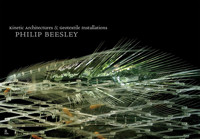
This book documents architectural installations developed by Beesley and collaborators from 1995 through 2007. The collection includes architectural sculptures located in natural sites and works integrating kinetic components and interactive systems. Projects in the past several years have focused on immersive digitally fabricated lightweight ‘textile’ structures, and the most recent generations of his work feature responsive systems that use dense arrays of microprocessor, sensors and actuator systems. With contributions by Jean Gagnon, Eric Haldenby, Christine Macy, Andrew Payne, Robert Pepperell, Michael Stacey and Charles Stankievech.
Das E-Book können Sie in Legimi-Apps oder einer beliebigen App lesen, die das folgende Format unterstützen:
Seitenzahl: 154
Veröffentlichungsjahr: 2020
Ähnliche


















Kinetic Architectures and Geotextile Installations
Philip Beesley
Other publications by Philip Beesley:
Fabrication: Examining the Digital Practice of Architecture ed. Philip Beesley, Nancy Yen-Wen Chen, and R. Shane Williamson AIA/ACADIA, 2004
Responsive Architectures: Subtle Technologies ed. Philip Beesley, Sachiko Hirosue, Jim Ruxton, Marion Tränkle, and Camille Turner Riverside, 2006
Future Wood ed. Oliver Neumann and Philip Beesley Riverside, 2006
Mobile Nation ed. Martha Ladly and Philip Beesley Riverside, 2007
On Growth And Form: Organic Architecture and Beyond ed. Philip Beesley and Sarah Bonnemaison TUNS Press, 2007
Library and Archives Canada Cataloguing in Publication
Beesley, Philip, 1956– Kinetic architectures & geotextile installations / Philip Beesley; with Christine Macy…[et al.].
Includes bibliographical references.
ISBN 978–0–9780978–5–1
1. Beesley, Philip, 1956– —Criticism and interpretation.
2. Kinetic sculpture—Canada.
3. Installations (Art)—Canada.
I. Macy, Christine, 1960– II. Title. III. Title: Kinetic architectures and geotextile installations.
NB249.B42A4 2009 709.2 C2009–906448–0
Design and Production
Eric Bury and Charisma Panchapakesan
Printing by Pandora Press
Kitchener, Ontario
This book is set in Akzidenz Grotesk and Adobe Jenson
Copyright © 2007, 2010 Riverside Architectural Press
All rights reserved by the individual paper authors who are solely responsible for their content. No part of this work covered by the copyright herein may be reproduced or used in any form or by any means - graphic electronic, or mechanical, including photocopying, recording, taping or information storage and retrieval systems without prior permission of the copyright owner.
ACKNOWLEDGMENTS
The projects in this book are collaborations. The contributions of numerous individuals and organizations in the conception and production of this work are gratefully acknowledged. The projects have been made possible by inspired expertise from many different disciplines in design, the arts, engineering and manufacturing. The labour-intensive ‘textile’ methods used in these projects were made possible by the extraordinary support and encouragement of large groups of contributors. Collectively produced elements from earlier projects have been re-used in later works, building upon earlier contributions. There is a large and constantly evolving set of details and patterns in our practice that preserves and expands a host of details from preceding authors. Physical components are often preserved and adapted, and digital machining data used to guide the digital fabrication production methodis copied and re-worked in many cycles. The collective nature of our work makes any question of specific authorship complex, and that question itself is perhaps unnecessarywhen thinking of the layered accretions gathered here. The works might testify instead to the curious, heterogeneous nature of a collective chorus.
Contributions from the academic communities of the School of Architecture at Cambridge, the Faculty of Engineering at the University of Waterloo and the practice of Philip Beesley Architect Inc. are at the core of this work. The project series began with support from the Canada Council for the Arts in the form of a Prix de Rome in Architecture residency in Rome and dialogue with the Philadelphia artist Warren Seelig, and received generous encouragement from esteemed colleagues from schools and embassies in Italy, England, the United States and Canada. Members of the architectural practices of Diamond and Schmitt Architects Inc., Dunker Associates, and Baird Sampson Neuert Inc. have contributed, and the Gardiner Museum of Ceramic Art, Haystacks Mountain School of Crafts, Harbourfront Centre Craft Studio, London Building Centre, Montreal Museum of Fine Art, Royal Ontario Museum, InterAccess Gallery, Subtle Technologies Festival of Art and Science, Textile Museum of Canada, the University of Toronto Faculty of Architecture, Landscape and Design, NSCAD University, Dalhousie University, and University of Manitoba have supported development at key phases of the work. Numerous Textile Museum of Canada, the University of Toronto Faculty of Architecture, Landscape and Design, NSCAD University, Dalhousie University, and University of Manitoba have supported development at key phases of the work. Numerous individuals and institutions within the Association for Computer-Aided Design in Architecture, the Canadian Design Research Network, London’s Digital Fabricators Network, Bartlett School of Architecture and the Architectural Association have provided ongoing discussion and wide-ranging expertise.
Stages of this work have received generous funding from the Canada Council for the Arts, Canada Foundation for Innovation, Graham Foundation, Langlois Foundation for Art, Science and Technology, National Science and Engineering Research Council, Social Sciences and Humanities Research Council, Toronto Arts Council, and Ontario Arts Council.
This book was enriched by contributions from authors Jean Gagnon, Eric Haldenby, Christine Macy, Andrew Payne, Robert Pepperell, Michael Stacey, and Charles Stankievech. It was beautifully produced by Eric Bury, editor Leslie Jen and designerCharisma Panchapakesan.
This work has been made possible by the fundamental support of my beloved partner Anne Paxton, my children, and my dear parents.
Philip BeesleyCambridge and Toronto, November 2007
When archaeology inspires design one anticipates work that invokes first principles, moves on a separate plane from the conventional and touches the mythic possibilities of the art of design. Contemporarytechniques of fabrication have allowed Philip Beesley and his team to produce a work that appears to have brought into being by ageless ritual or organic process. This wonderful piece refreshes, or, even, restores the fundamental relationship between the built and natural environments. The unfathomable complexity of the elemental repetition is as relentless, ungraspable and inevitable as the natural world, both vast and infinitesimally small. The magical animation of the piece is a Pygmalion bridge between the inanimate and animate. The work holds out the promise that there will one day be an architecture this deep, vivid and alive.
Eric HaldenbyDirector, Waterloo Architecture Cambridge
Hylozoic Soil (2007) is the latest in a series of installation works by Philip Beesley that explores interactive geotextiles, reflexive and responsive membranes, networks of actuated objects, and canvases composed of networked systems. In support of Beesley’s continuing research in this area, the Daniel Langlois Foundation for Art, Science and Technology played a contributory role in 2002-2003.
Much of Beesley’s work derives from his research of architectural textiles at the Integrated Centre for Visualization, Design and Manufacturing at the University of Waterloo. Exhibitions of his work document the progressive stages of his research and the increasing mastery of his technique, all of which provoke and challenge comprehension by his viewing audience. They are probes into an aesthetic of reception.
But if architecture is a relationship of societies, groups and individuals with their natural and built environments, then Beesley’s architecture seems highly relevant. His work pursues the reconciliation of natural and human processes with the artificial world. And, it might be said, ‘responsive’ environments should also be responsible environments.
These works attempt the embodiment of McLuhan’s great idea about one of the effects of electric technology: That in the electric era and for electric humanity, there is a multiplication of centres with no periphery. Rather than an opposition between determinism and free will, the relationship of parts is governed by dynamics involving the organism and its environment.
Jean GagnonExecutive Director, Daniel Langlois Foundation
Contents
INTRODUCTION
Philip Beesley
DISINTEGRATING MATTER, ANIMATING FIELDS
Christine Macy
POSTHUMANISM AND THE CHALLENGE OF NEW IDEAS
Robert Pepperell
SEWING/SOWING: CULTIVATING RESPONSIVE GEOTEXTILES
Charles Stankievech
SURFACE: BETWEEN STRUCTURE AND SENSE
Andrew Payne
FROM FLAT STOCK TO THREE-DIMENSIONAL IMMERSION
Michael Stacey
PROJECTS
HAYSTACK VEIL
Maine, 1997
ERRATICS NET
Halifax, 1998
HUNGRY SOIL
Toronto, 2000
ORGONE REEF
Manitoba, 2003
ORPHEUS FILTER
London/Birmingham 2004
REFLEXIVE MEMBRANES
Cambridge, 2004
CYBELE
Cambridge, 2005
IMPLANT MATRIX
Toronto, 2006
HYLOZOIC SOIL
Montreal, 2007
CREDITS
BIOGRAPHIES
… Phosphorences gleam in the moustaches of the seals, shift in the scales of fish. Echini whirl like wheels; ammonites uncoil like cables; oysters make their shell hinges squeak; polypi unfold their tentacles; medusae quiver like balls of crystal suspended; sponges float hither and thither; anemones ejaculate water; wrack and sea-mosses have grown all about.
And all sorts of plants extend themselves into branches, twist themselves into screws, lengthen into points, round themselves out like fans. Gourds take the appearance of breasts; lianas interlace like serpents.
The Dedaims of Babylon, which are trees, bear human heads for fruit; Mandragoras sing-the root Baaras runs through the grass.
__
And now the vegetables are no longer distinguishable from the animals. Polyparies that seem like trees have arms upon their branches. Anthony thinks he sees a caterpillar between two leaves: it is a butterfly that takes flight. He is about to step on a pebble: a grey locust leaps away. One shrub is bedecked with insects that look like petals of roses; fragments of ephemerides form a snowy layer upon the soil.
__
And then the plants become confounded with the stones.
Flints assume the likeness of brains; stalactites of breasts; the flower of iron resembles a figured tapestry.
He sees efflorescences in fragments of ice, imprints of shrubs and shells-yet so that one cannot detect whether they be imprints only, or the things themselves. Diamonds gleam like eyes; metals palpitate.
And all fear has departed from him!
He throws himself down upon the ground, and leaning upon his elbows, watches breathlessly.
__
Insects that have no stomachs persistently eat; withered ferms bloom again and reflower; absent members grow again.
At last he perceives tiny globular masses, no larger than pinheads, with cilia all round them. They are agitated with a vibratite motion.
Gustave Flaubert The Temptation of Saint Anthony
Previous pages
1Palatine Burial(1996)
2Haystack Veil(1997)
3Erratics Net(1998)
4Reflexive Membranes(2004)
5Cybele(2005)
6Implant Matrix(2006)
7Hylozoic Soil(2007)
8Hylozoic Soil(2007)
Introduction
Philip Beesley
Would that I had wings, a carapace, a shell, -that I could breathe out smoke, wield a trunk, -make my body writhe, -divide myself everywhere, -be in everything, -emanate with all the odours, -develop myself like the plants, low like water, -vibrate like sound-shine like light, -assume all forms penetrate each atom-descend to the very bottom of matter, -be matter itself!
- Gustave Flaubert, The Temptation of Saint Anthony
During1995and1996, I worked for several months in collaboration with an archaeological team reconstructing a flank of the Palatine, the labyrinthine artificial mountain that overlooks the ancient Forum of Rome. This work focused on ritual deposits at the fortified boundary of the archaic city. The excavations seemed to confirm canonical texts that describe origins of theEternal City in rituals of sacrifice. During the excavation work I encountered physical traces of mythic history—and the underground became the underworld. The deposits here included building materials, animals, and humans. My work concentrated on traces of a baby that was sacrificed and buried beneath the ancient fortifications. Several years of built and experimental work have developed from this experience.
My compositions since Rome have tended to concentrate on vital, seething qualities built up from intensive repetition of miniature parts.1The work tends to be dominated by practical technology while at the same time poetic cadences are latent: blood, soil. The large-scale field structures offerbodily immersion and wide-flung dispersal of perception.
The textiles in these installations have recently taken the form of interlinking matrices of mechanical components and arrays of sensors and actuators that respond to occupants moving within the environment. Lightweight lattice and geodesic organizations form a structural core, employing digitally fabricated lightweight scaffolds that contain distributed networks of sensors and actuators. The structures are designed at multiplescales including custom components, intermediate tessellations composed of component arrays, and general structural systems. The current work focuses on integrating control systems with decentralized responsive intelligence. The work is based on gradual development moving toward applied architectural environments that include manufactured filtering and shading systems.
Reyner Banham cited a turning point early in the20th century in the ‘relationship of men—especially thinking men—and their machines; both were now stripped for action…’2I think the kind of Existentialist interpretations that Modernist writers such as Banham have favoured tend to isolate figures from their surrounding ‘ground.’ It seems to me that Modern critical voices often prefer a stripped void to the richly rendered sentimental environments of the19th century. My work would doubtless fail those critical readings, because it is emphatically sentimental. In contrast to a modern lineage I find common ground with the heretic scientist Wilhelm Reich in his mid-twentieth century philosophy ofOrgonomy. Reich describedbions, vesicles charged withorgonelife energy representing a transitional stage between non-living and living substance, constantly forming in nature by a process of disintegration of inorganic and organic matter. He said:
All plasmatic matter perceives, with or without sensory nerves. The amoeba has no sensory or motor nerves, and still it perceives. Each organ has its own mode of expression, its own specific language, so to speak. Each organ answers to irritation in its own specific way: the heart with change in heart beat, the gland with secretion, the eye with visual impressions and the ear with soundimpressions. The specific expressive language of an organ belongs to the organ and is not a function of any ‘center in the nervous system’…milliards of organisms functioned for countless thousands of years before there was a brain. The terror of the total convulsion, of involuntary movement and spontaneous excitation is joined to the splitting up of organs and organ sensations. This terror is the real stumbling block…3
STANDING IN THE WORLD
A key term for my pursuit is empathy. My use of this term draws upon aesthetic theory that examines nuanced relationships involving projection andexchange. Combining terms of mechanism and empathy, I hope to develop a stance in an intertwined world that moves beyond closed systems. By drawingupon recent revisionist readings of cultural history, I want to develop a sensitive vocabulary of relationships.4In the terms of figure-ground relationshipsthe figures I compose are riddled with the ground.
A brief review of canonical images can illustrate this. One centuries-old attitude that tends to reinforce boundaries is embodied in Lorenzo di Credi’sAnnunciationtempera painting of1480.5The figure of the Archangel Gabriel and Mary stand against an array of landscape and buildings. Their free, relaxed postures are amplified by drapery that swirls around each figure as if caught in the lightest of breezes. The world stretches away behind them, organized by radiant geometry—an inner shell of buildings, with alternating apertures making a gridwork filter that opens out to the surrounding; and an outer natural world,manicured in ordered arbours and garden rows. Mary and Gabriel are confident actors here, expressing vivid freedom and mastery. To them, the world is a servant that offers a reliable stage for their own action. This view holds striking similarities to a confident, Modern cosmology of progress.
Caspar David Friedrich’s Man and Woman Contemplating the Moon6 embodies an opposite world. Two travellers stand exposed at the edge of a precipice. Around them at the edge of this uncertain space is a turbulent thicket of branches and giant boulders, relics of upheaval in the ground. Heavy clothing pulled tight around them makes dense silhouettes that contrast with glaring light stretching out into the void beyond. Their stark, outward gaze implies great personal resolve, but no certainty. This space contains powers vastly larger than any human domain. However, while Friedrich’s pensive atmosphere might seem opposed to di Credi’s confi contrast with glaring light stretching out into the void beyond. Their stark, outward gaze implies great personal resolve, but no certainty. This space contains powers vastly larger than any human domain. However, while Friedrich’s pensive atmosphere might seem opposed to di Credi’s confident world, the terms of reference that both artists seem to use have some similarity. This Romantic space, like di Credi’s, builds upon distinct divisions between nature and culture and between freedom and order.
A third painting takes a different approach, offering a hybrid world in which those distinct elements combine. The anonymous mid-15th-century artist from the school of Fra Angelico, who created theMadonna and Child,7painted a glittering veil that makes a great sheltering canopy for that scene. In the background and foreground, volatile forces twine together into turbulent clouds that imply the dawn of creation itself. Mother and Child sit sheltered within the veil, their gestures speaking of vulnerable intimacy. The veil is shot through with embroidered patterns in deep relief. The deep red and gold rendering of this textile is almost identical to Mary’s golden hairand crimson inner tunic. The outer blue cloak that flows around that inner layer spreads out below, collapsing and funneling out into the great clouds o and crimson inner tunic. The outer blue cloak that flows around that inner layer spreads out below, collapsing and funneling out into the great clouds of the nascent world beneath. Above, Mary’s inner tunic, golden hair, and encircling halo seem to extend into the brocaded canopy. The veil acts like part of Mary’s body, an extended physiology.
The veil in theMadonna and Childand Wilhelm Reich’s vision are, to me, connected. In similar ways the projects that have developed in this series imply an intertwined world.
NATURE
Perfection is a value that seems to often accompany thinking of nature.For example, the eminent nineteenth-century biologist Ernst Haeckel documented radically new dimensions of natural life by arranging species on his illustration pages in glorious, radiant symmetries that gave a picture of confidence in a balanced, perfected universe. Sometimes, when I am in places that are thriving, I feel full of such confidence. I remember the Puskaskqua wilderness on the north shore of Lake Superior where humidity-thickened atmosphere was shot through with hanging moss and butterflies and where the ground was a succulent sponge, layer upon living layer. The living world swept over me there and rendered me tiny. In such a setting, urban anxiety about adulterating nature seemed self-obsessed, adolescent.
A number of my installations have been inserted into natural environments. They work to catch and inject matter, accumulating density and eventually forming a hybrid turf. Like ill-fitting clothes, this work has an uncomfortable relationship with its natural host. The relationship of these object-assemblies contains layers of violence: the violence of a foreign colony imposed on a living host; the forces of dismembering and consuming; the force of will, violating the ethical boundaries that maintain nature as an untouched sanctuary.
The physical assemblies in these projects employ a series of natural laws involving energy flow, nutrient cycling and dynamic balance expressed in distinct functions.8




