


Erhalten Sie Zugang zu diesem und mehr als 300000 Büchern ab EUR 5,99 monatlich.
- Herausgeber: NYLA
- Kategorie: Gesellschafts- und Liebesromane
- Sprache: Englisch
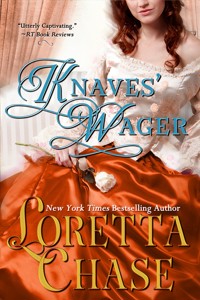
"Live the romance. Read Loretta Chase" -- Christina Dodd The traditional English Regency from New York Times bestselling author, Loretta Chase, is back… Lilith Davenant, has ample reason to detest Julian Wyndhurst, Marquess of Brandon: he's exactly the kind of man who hastened the demise of her profligate husband, and the debt he owed to Julian has forced her to an engagement with a wealthy suitor for the sake of supporting her beloved nieces and nephews. Besides that, Lord Julian somehow manages to ignite disturbing... feelings ... she's never felt before! Lord Julian used his considerable skills and cunning in the war against Napoleon. Now he's obliged to use the same talents to save his young cousin from a disastrous marriage to a scheming mistress — who makes him a wager: If Julian can seduce the famously icy Lady Lilith Davenant, the lady will release his cousin from the engagement. But very quickly, Julian discovers Lilith's hidden warmth, kindness and humor. Will he be able to prove his heart to her before she learns of his recklessly shameless wager?
Sie lesen das E-Book in den Legimi-Apps auf:
Seitenzahl: 369
Veröffentlichungsjahr: 1991
Das E-Book (TTS) können Sie hören im Abo „Legimi Premium” in Legimi-Apps auf:
Ähnliche














Knaves' Wager
Loretta Chase
Contents
Chapter 1
Chapter 2
Chapter 3
Chapter 4
Chapter 5
Chapter 6
Chapter 7
Chapter 8
Chapter 9
Chapter 10
Chapter 11
Chapter 12
Chapter 13
Chapter 14
Chapter 15
Chapter 16
Chapter 17
Chapter 18
Chapter 19
Chapter 20
Author’s Note
Also by Loretta Chase
About the Author
This ebook is licensed to you for your personal enjoyment only.
This ebook may not be sold, shared, or given away.
This is a work of fiction. Names, characters, places, and incidents are either products of the writer’s imagination or are used fictitiously and are not to be construed as real. Any resemblance to actual events, locales, organizations, or persons, living or dead, is entirely coincidental.
Knaves’ Wager
Copyright © 1990 by Loretta Chekani
Ebook ISBN: 9781617508547
ALL RIGHTS RESERVED.
No part of this work may be used, reproduced, or transmitted in any form or by any means, electronic or mechanical, without prior permission in writing from the publisher, except in the case of brief quotations embodied in critical articles or reviews.
NYLA Publishing
121 W 27th St., Suite 1201, NY 10001, New York.
http://www.nyliterary.com
To my husband, Walter
Chapter 1
It was late March 1814. On the Continent, Bonaparte’s once-great Empire lay in smoking ruins about him, his Grand Army reduced to a handful of ragged, starved boys. Yet the Corsican clung stubbornly to his throne, even as the Allied net closed about him.
That was all far away, however. The stretch of English landscape through which Mrs. Charles Davenant travelled this day lay quiet. Though snug and secure in her well-sprung carriage, the widow gazed into the grey distance as unhappily as if she too knew what it was to lose empires. She had, after all, been privileged to rule her own life these last five years. Now that precious sovereignty was slipping from her grasp, and in her sad fancy, she rode in a moving prison to her doom.
A small, wry smile tugged at the corners of her set mouth. Though her tiny kingdom seemed to be in ruins, remarriage was hardly Doom. Her predicament was a mere twist of Fortune, a hard tangle in the thread of one insignificant life.
Without, the darkening sky cast its chill shadow upon the spring countryside. The widow turned from the somber scene to the more heartening one within the carriage: her niece, Cecily Glenwood. Here was the radiant sunshine of golden curl, the clear heaven of wide blue eyes, and the fair blossom of pink and cream complexion. Here was youth and promise, the endless possibilities of a life just beginning, for Cecily Glenwood was travelling to London for her first Season.
Like her sister and cousins before her, Cecily would succeed. She could scarcely help it. All the Davenants and their offspring, male and female, were blessed with abundant good looks. The majority were charming, as Mrs. Davenant’s late husband had been. Some, also like Charles Davenant, had their failings. Selfishness, for instance, was a quality prominent among his siblings. Had these in-laws been otherwise — sensible and trustworthy parents, for example — neither Cecily nor her cousins (there were yet more approaching marriageable age) would have needed Mrs. Charles Davenant’s help at all.
She had already guided three nieces through successful London Seasons and seen each happily wed. Though she loved this niece as dearly as the others, the widow could not help but wish, this once, Conscience would permit her to leave the responsibility where it belonged.
Fortunately, she was suited to her chosen responsibility. She was but eight and twenty. She owned an unexcitable disposition. In physique and character she was built for endurance.
Lilith Davenant was tall, slim, and strong. Her classical features — a decided jaw, a straight, imperious nose, and high, prominent cheekbones — had been carved firmly and clearly upon cool alabaster. Her eyes were an uncompromising slate blue, their gaze direct, assured, and often, chilly. In fact, the only warmth about her was the tinge of red in her thick, shining hair. Still, even that rich, dark auburn mass was resolutely wound in rigid braided coils about her head.
Her character was as uncompromising as her appearance. According to some wags, Mrs. Davenant bore such a stunning resemblance to a marble statue that it was a wonder she had a pulse. Some doubted she had. No one of the masculine gender (excepting her husband, who was reputed to have died, not of consumption, but of slow freezing) dared approach near enough to find out.
This was precisely as Mrs. Davenant preferred, though she’d hardly have said so, if anyone had been audacious enough to ask. Her manner did not invite personal questions. Her feelings were sealed and locked, as secure in her breast as were her funds in the Bank of England. More secure, actually, for Mrs. Davenant was running out of money.
Her former man of business had lost most of it in mad speculations during the last year. His replacement, in reorganizing the widow’s affairs, had come upon an enormous unpaid debt — Charles’s debt — a small fortune lost in wagers to his erstwhile companion in debauchery, the Marquess of Brandon.
Once this last debt was paid, there would remain scarcely enough to keep Lilith. Seasons for her remaining nieces would be out of the question. This prospect was as unendurable as the alternative: to wed again.
The widow had spent the better part of the journey wrestling with Duty and Conscience, as well as a host of other demons she had rather not name. Yet not even her dearest confidante (if she’d had one) would have suspected Mrs. Davenant was troubled. She sat beside her niece, as cool, assured, and marble-like as ever.
“Oh, I do hope he’ll be dark and devilish-looking,” said Cecily.
Lilith slowly turned to examine her niece, who had remained uncharacteristically silent this past hour.
“To whom do you refer, my dear?” she asked.
“Him,” said Cecily. “The husband I am supposed to catch in three months. That is a frightfully short time. There is one fox Papa has been after for seven years, and Papa is a brilliant huntsman. I don’t see how I’m to catch anyone in only three months when I’ve had no experience at all.”
In the seat opposite, Mrs. Davenant’s plump companion suppressed a smile. Emma Wellwicke was older than her employer, and more tolerant — as perhaps a soldier’s wife must be in these tumultuous times. While Mrs. Wellwicke might find Cecily’s outspokenness amusing, the companion knew as well as anyone else that plain speaking would never serve in the Beau Monde. It had best be gently discouraged.
“My dear,” said Lilith, “one does not speak of ‘catching a man’ as though it were a hunt.”
“Oh, I would not say so to them, of course,” Cecily answered. “But I cannot pretend to myself that catching a husband is not what I’m about — and I know I must do it quickly. Otherwise, Mama says she and Papa will be obliged to find me one at home. I know that is a deal more economical way to go about it, but it is not a pleasant prospect. None of the local bachelors are dark and devilish-looking — and I am so tired of blonds. We are all fair. It is so monotonous.”
“Looks are not everything, Cecily,” said Emma.
“Yes, I know. But I daresay you have never met Lord Evershot, whom Papa is so fond of. Such an ancient man — past forty, I think — and such a red, blotchy face. And you have never seen anything so absurd upon a horse. Meanwhile, Mama drops hints about The Honorable Alfred Crawbred, and he has the tiniest little black eyes and the most squashed-down nose, I am certain his nurse must have dropped him repeatedly upon his face. Yet he believes himself an Adonis and is forever waddling after the maidservants.”
Emma bit her lip.
“Cecily, please,” the aunt warned.
“It is quite true. I once spied him chasing a housemaid — and he looked exactly like Papa’s favorite sow, lurching to the trough at feeding time.”
“That will do, Cecily,” Lilith said quietly. “Though I cannot approve Mr. Crawbred’s behavior regarding the maidservants, neither can I countenance uncharitable observations upon his physical attributes. Nature is not so generous with everyone as she has been with my nieces and nephews.”
Cecily gazed at her in surprise. “I did not mean to be uncharitable, Aunt. I only meant I had much rather not become Mr. Crawbred’s wife. Why, you know he will expect to kiss me — and that is not the half of it.”
“Oh, my,” said Emma.
Mrs. Davenant turned with an inward shudder to the window, in order to compose both herself and a suitably quelling yet tactful response.
In an instant, all this was forgotten.
Hastily, she opened the coach window and called to her coachman to stop.
“What is it?” Cecily and Emma asked simultaneously.
“An accident.”
The coach slowly came to a halt, and Lilith climbed out, adjuring the other two women to remain where they were.
Though, somewhat in awe of her queenly aunt, Cecily remained where she was approximately seven seconds before clambering out. Emma followed, to urge the girl back. This was sensible on more than one count, for the rain which had threatened all afternoon had commenced, and the road dust was rapidly turning to mud.
In a ditch by the roadside lay what had once been a dashing black curricle. Cecily’s practiced eye told her the vehicle would never dash again; furthermore, neither would one of the horses. She clutched her aunt’s sleeve.
“The poor animal,” she. cried. “Oh, do please have the coachman put it out of its misery.”
“Yes, yes,” was the impatient answer. “John will see to it, but I fear —”
“A man, missus,” the coachman called out from behind the fallen curricle. “Not dead, I don’t think.”
Lilith ordered her niece back to the coach with Emma. As the girl reluctantly obeyed, the carriage which had been following with servants and luggage neared and halted. Summoning the stronger members of her staff, the widow led them down to the smashed vehicle. They stood patiently waiting in the rain as their mistress joined John.
The injured man lay partly under the curricle. Luckily for him, none of it lay upon him. He was bruised and filthy, and though not conscious, alive, as John had said.
Careless of the mud, Lilith knelt beside him. “Is anything broken?” she asked the coachman.
“Not as I could tell, missus.”
“Try to be certain. I do not like to move him if it will cause damage.”
Cold rain streamed from the coachman’s hat down his neck. He glanced ruefully at the other servants, none of whom seemed any more pleased than he to be summoned to this scene.
“We could leave someone with him and go on to the next inn and send a party after him, missus,” John offered hopefully.
He received an icy glance in answer. “Indeed,” said his mistress. “I hope that was your intention originally. I noted you did not slacken your pace when we came upon this wreck — though it was not so dark then you could have missed it.”
Returning her attention to the injured man, Mrs. Davenant took out her handkerchief and wiped the mud from his face. His eyes opened. They were a rare, arresting shade of green.
“Olympus,” he muttered. “It must be. Hera, is it not? No — Athena. Death, where is thy sting? Athena, where is thy helmet?”
“He is delirious,” said Lilith. “We had better risk it and carry him to the coach.”
She began to rise, but the man grasped her hand with surprising strength.
“Have you appeared at last only to abandon me?” he asked weakly.
“Certainly not,” she answered. “I would never abandon an injured fellow creature — but I cannot climb out of this ditch while you are clutching me.”
He groaned softly and released her hand. Lilith gave him one brief, uneasy glance, then moved aside to let her servants do their work.
After some discussion and difficulty, the man was finally placed in a half-sitting, half-falling position on the carriage seat. Since Mrs. Davenant was at this point nearly as dirty as he, she sat beside him and tried to prop him up as comfortably as possible in a carriage grown exceedingly cramped. He was a large, long-legged man who took up a good deal of room.
Though he managed to keep from tumbling onto the carriage floor, he was too weak to remain fully upright. Eventually he subsided into a drowsing state, his head resting on the widow’s shoulder — and once or twice slipping to her firm bosom, from which he was somewhat ungently ejected.
More than an hour later, he was carried into an inn. It took nearly another hour — and all Mrs. Davenant’s imperious insistence — to obtain a room for him.
It happened that a mill was to take place the following day. The result was a hostelry overrun with noisy, demanding bucks, and a staff run off their feet attending to them.
After attempting in vain to receive further assistance, Mrs. Davenant sent one of her own servants in search of a doctor. Others she dispatched for hot water, clean towels and diverse other necessities. In between giving orders, Lilith became aware of the excessive attention the inn’s male patrons were paying Cecily.
Once again, the widow cornered the innkeeper. Not long after, a pair of noble gentlemen were persuaded to chivalry. They gave up their chamber, and Cecily took refuge there with her maid from the chaos, while Lilith and Emma managed matters for the accident victim.
“Really, Susan,” said Cecily as her maid poured tea, “I cannot understand why Papa says Aunt Lilith is cold and strange. What is cold and strange, I ask you, about giving a lot of silly girls a whole Season in London?”
“I’m sure I don’t know, miss,” said the maid wearily. “But I do wish we was in London now. I never heard such a din, and I can tell you I been pinched more than once — and John says we’ll never get there tonight, not in this weather. He says we should’ve left the man where he was, you know, and sent folks after him —”
“Which is precisely my point,” Cecily interrupted. “If she were cold and strange, she would have done so, wouldn’t she?”
“Yes, miss, and I don’t like to be uncharitable, but I do wish she’d done just that.”
“Well, then, I think you are cold and strange. He is dark and devilish-looking as they come.” Cecily sighed. “But I believe he’s rather old.”
“His injuries are slight,” the doctor told Mrs. Davenant as he left the patient’s room. “His trouble is that he was ill to start and had no business out of bed. I would guess he hasn’t had a proper meal or decent night’s rest in days. One of those too stubborn to admit he’s sick, though I think he might admit it now that he’s made himself weak as a baby. Travelling alone, in his condition,” the doctor muttered. “What are these chaps thinking of? Or do they think of anything, I wonder? Wyndhurst you said his name was?”
“That is what he told my coachman,” said Lilith. “I have not spoken with Mr. Wyndhurst since we arrived. I trust my servants have tended to him adequately?”
“I daresay they did the best they could. I’ve had more cooperative patients, I can tell you.” With that and a few instructions regarding medicine and nourishment, the doctor left.
A while later, Emma appeared with a steaming bowl of broth.
“I will see to that,” said Lilith, recollecting the doctor’s hints regarding the patient’s uncooperativeness. She took the tray from her companion. “You need some sustenance yourself, Emma — and I have had more practice with invalids.”
The patient, to Mrs. Davenant’s surprise, was sitting up in bed. True, he was well propped up with pillows, but he did not appear near death, as she had expected. No dying man could have invested his green-eyed gaze with so much insolence. He boldly surveyed her head to toe, not once, but twice — quickly assessing the first time and lazily considering the second. Lilith’s hands closed a bit more tightly upon the tray handles. This was the only outward manifestation of the acute tension that gripped her as she approached the sickbed.
Mr. Wyndhurst had begun as a muddy, injured mess requiring a great flurry of activity. Thus, beyond noting the rare color of his eyes, she’d not had time to study him before. Now, washed and combed by her servants, he commanded attention.
His hair was black, curly, and luxuriant. The green eyes were fringed with thick black lashes. Their heavy-lidded look, the faint lines at the corners, and the sensual mouth intimated a depraved character. Mrs. Davenant was certain, moreover, that he had been looking down his long, straight nose at everyone his entire life. The strong cheekbones... the stubborn chin... everything about his hard, chiseled features bespoke arrogance. He was pale and ill, yet his entire frame exuded pure masculine power, utter self-assurance. He was devastatingly handsome. Regrettably, he seemed fully aware of this circumstance. He might have been the very model of a bored, dissolute scoundrel.
Lilith set the tray down on his lap and stepped back. “You can feed yourself, I trust?” she asked politely.
He eyed the steaming broth with a pained expression.
“If I could,” he said, “I should also have the strength to hurl this mess out of window. Chicken broth? How could you?” he asked in aggrieved tones. “I thought Athena was wise and just, but she enters the room of a dying man only to poison him. Chicken broth,” he repeated, shaking his head sadly. “Is it come to this? Then fall, Caesar!” He sank back against the pillows, his eyes closed.
“In your state, you will be unable to digest anything more substantial,” said the widow, unmoved.
“Then bring me wine, oh wise and beautiful immortal,” he murmured. He cocked one eye open and added, “Unless you’ve got some ambrosia about. Ambrosia will do as well.”
“It will not do, Mr. Wyndhurst.” Lilith drew a chair close to the bed, sat down, and took up spoon and bowl. “If you cannot feed yourself, I shall feed you — and you will swallow every last drop. You must do so sooner or later, or you will starve to death.”
“A prospect too heartbreaking, I agree.”
“If I had meant to let you die, I might have done so more easily by simply leaving you where you were, instead of inconveniencing myself or my servants.” With the ease of long practice, she administered the first spoonful.
The submissive air Mr. Wyndhurst abruptly assumed was undermined by the gleam of amusement in his eyes.
“You see?” she said, ignoring the mockery she saw there. “It is not as nasty as you thought.”
“It is every bit as nasty,” he answered after swallowing another spoonful, “but I dare not combat the goddess of wisdom. On the other hand, you could contrive to be Aphrodite — and I’m sure you could, if you liked —”
“I do not like, sir. I did not come to flirt with you.”
“Did you not?” He appeared astonished. “Are you quite certain?”
“Quite.”
Mr. Wyndhurst spent some minutes mulling this over while Lilith continued feeding him.
“I understand,” he said at last. “When you found me I must have been a most repellent sight. Naturally, you could not know what lay beneath the grime your servant so conscientiously — painfully so, I must add — removed.”
He was vain, Lilith thought contemptuously. Aloud she said, “I am sorry if Harris was not gentle with you. He is more accustomed to grooming horses.”
“No wonder my hide is raw. It is a miracle he did not try to brush my —”
“There are but a few spoonfuls left,” Lilith cut in. “You had best finish while it is still hot.”
Though he accepted the remaining broth meekly enough, there was no meekness in his steady scrutiny of her face, nor in the occasional glances he dropped elsewhere. He was sizing her up, Lilith knew. Well, if he had any intelligence at all, he must realize he wasted his time. All the same, she was edgy. When at last the bowl was empty, she rose.
“Now I hope you will get some rest,” she said as she took up the tray.
“I’m afraid that’s not possible.” He slumped back among the pillows once more. “Your company has been far too exciting for a sick man. You should not have agitated me so. I shall not sleep a wink.”
“I fed you one small bowl of chicken broth,” Lilith said with a touch of impatience.
“It was not what you did but how you looked when you did it. Such resolution in the face of ingratitude. Such militant charity.” He smiled lazily. “And such eyes, Athena.”
“Indeed. One on either side of my nose. A matching set, quite common in the human countenance.”
“The Hellespont in a summer storm.”
“Blue. A common color among the English.” She moved to the door.
“Really? They seem most uncommon to me. Perhaps you are right — but I cannot be certain unless you come closer.”
“You are short-sighted, Mr. Wyndhurst?” she asked as she opened the door. “Then it is no wonder you drove your curricle into a ditch. Perhaps in future you will remember to don your spectacles.”
She heard a low crack of laughter as the door closed behind her.
To Cecily’s eager enquiries during dinner, her aunt offered depressingly unsatisfactory answers. Yes, Mr. Wyndhurst was well-looking enough, she noted without enthusiasm. He was also shockingly ill-behaved.
“Oh, Aunt, did he try to flirt with you? I was sure he would. He had that look about him.”
“A look?” Emma asked with a smile. “You discerned a look under his impenetrable coating of mud?”
“He had the devil in his eyes,” Cecily said. “I saw him open them when he thought no one was looking. He reminded me of Papa’s prize stallion. The naughtiest, most deceitful, ill-mannered beast you ever saw. But when he moves, he is so graceful that one is persuaded he must have wings, like a bad, beautiful angel.”
Lilith put down her fork. “Whatever Mr. Wyndhurst may be, tending to him has been altogether wearing. I am not decided what to do tomorrow. We cannot leave him here, yet I cannot subject my servants to another night of sleeping in the tap room — or wherever it is the poor creatures will lay their heads. I should have asked his destination. If it were near enough, we might have sent word.”
“You’ve done all you can for one day,” said Emma. “The decision can wait until tomorrow, when you’re rested.” She smiled ruefully. “At least I hope you’ll be rested. I do think you should let me share a bed with Cecily. Having done by far the most work, you have earned the most comfort.” She turned to Cecily. “I promise not to snore.”
“Pray snore all you like, ma’am,” Cecily answered with a grin. “I am a prodigious sound sleeper.”
Though she was eventually persuaded — thanks to Cecily’s threats to sleep on the floor — to accept Mrs. Wellwicke’s offer, Lilith was wakeful long after her companions had fallen asleep.
She had no sooner thrust the obnoxious Mr. Wyndhurst from her mind than another gentleman pushed his way in: Sir Thomas Bexley, her erstwhile friend and, of late, patient suitor. His recent letters indicated he meant to repeat his offer of marriage in the very near future. Though her feelings had not changed since the last time, it seemed her answer must be yes.
Poverty did not frighten Mrs. Davenant. She was disciplined enough to live frugally. She need not and would not in any case accept the charity of Charles’s family. Unfortunately, poverty touched not only herself. Without funds, she could be of no help to her nieces.
She lay staring at the ceiling. The prospect of marriage was repugnant to her. There were reasons, but perhaps these were paltry. She would not be miserable with Thomas. He admired and respected her, and would exert himself to make her happy. Their tastes and personalities suited.
No, she could not be so self-centered as to reject marriage to a perfectly worthy gentleman — not when the consequence was a lifetime of wretchedness for those beautiful, fresh, innocent girls. Cecily, for instance, to be married to that repellent sot, Lord Evershot — or to that obese young lecher, Mr. Crawbred.
It was always the same: whatever wealthy and sufficiently well-born mate was handiest would do. Her in-laws took greater care in mating their precious horses. The children — whom they produced in such shocking abundance — they only wanted off their hands.
Well, it would not be, she told herself. Aunt Lilith would look after them: Cecily now, Diana next year... Emily next... and Barbara after... then it would not be long before Charlotte’s girls came of age... and the eldest nephew, Edward, could do with some guidance – if he’d stand for it.
Thus, counting her beloved nieces and nephews instead of sheep, Mrs. Davenant finally fell asleep.
Chapter 2
Despite inadequate rest Mrs. Davenant was up and about early the following morning. She’d scarcely quit her room when Cecily’s groom, Harris, who’d dutifully looked in on Mr. Wyndhurst, informed her that the man had vanished.
The innkeeper expanded upon the news. “They came for him early,” he told the widow. “Seems his lordship’s relations were expecting him and sent someone to look when he didn’t appear. Must have found the smashed rig and alerted the family because —”
“His lordship?” Lilith interrupted.
“His lordship the Marquess of Brandon, ma’am. On his way to his cousin’s. Lord Belbridge, that is.”
His patron’s countenance grew stony.
The innkeeper went on quickly, “They came for him — the Earl of Belbridge himself and a pack of servants. As I said, it was early — maybe an hour or more before cock-crow — and Lord Brandon was very particular that we wasn’t to disturb you about it. He said to thank you for your kindness and apologize for his hasty leave-taking. I think that was how he put it,” the landlord said with a frown. “Anyhow, he paid your shot, ma’am. Said it was the least he could do in return for all the — What was it he said? He laid such a stress on it, the word — ah, the inconvenience.”
After uttering a few cold words of acknowledgement, Mrs. Davenant turned away, her heart pounding with indignation. The Marquess of Brandon, of all people. Her servants had braved the cold, filthy storm and the muck of the ditch, risking pneumonia. They had spent the night on floors — when they might have slept comfortably, warm and dry in their proper beds in her London town house. All this they had endured for the most foul libertine who had ever trod his polluted step upon the earth.
With her own hands she’d fed the man who had half killed her husband — for was it not Brandon who had mercilessly led Charles on an insatiable pursuit of the lowest sort of pleasure? Finally, when her husband was too ill for pleasure any more, this so-called friend had released what was left of him. Then Charles was hers at last — hers to watch for nearly two years, while he crept slowly and painfully to his grave. Not once in all that long, weary time had this friend deigned to visit him. A letter or two from abroad was all. Then, one curt, condescending note of condolence, two months after the funeral.
Now Brandon patronizingly threw a few pieces of gold her way — when she owed him thousands. She would pay him, Lilith vowed. She would sell the very clothes from her back if necessary. She would not be in his debt, not for so much as a farthing.
Mrs. Davenant stood staring at a small, poorly executed hunting print until she had collected herself. Then she returned to her travelling companions to break the news regarding their patient and urge them to a speedy departure.
She fumed inwardly the entire distance to London. Outwardly, she was as coolly poised and unapproachable as ever.
Even Cecily was eventually daunted in her efforts to penetrate her aunt’s reserve. Questions about the Marquess of Brandon elicited only warnings: He was precisely the sort of man young ladies must scrupulously avoid; he had not been so near death as he pretended; if he could deceive an experienced physician, what hope was there for an innocent young girl — and so on. Cecily would have preferred to be told what she didn’t already know.
As Mrs. Davenant’s carriage was entering London, the subject of her disapprobation was reclining upon a richly upholstered sofa in the cavernous drawing room of a massive country house many miles away. He was being wearied half to death listening — or trying not to listen — to his cousin’s litany of woes.
Julian Vincent Wyndhurst St. Maur, Baron St. Maur, Viscount Benthame, Earl of Stryte, Marquess of Brandon, was a trifle tetchy this afternoon. He was affronted by the behavior of the chill he’d contracted en route to Ostend. He had given it the cut direct. The ailment, instead of humbly taking itself off, had only fastened itself more firmly — and had apparently gathered equally boorish associates.
Though Lord Brandon was not so weak and ill as he had feigned for Mrs. Davenant’s benefit, he was scarcely well. At the moment, he wished he had remained in bed. His inconsiderate cousin might have respected his peace then, instead of pacing agitatedly upon the thick Axminster carpet in a manner viciously calculated to bring on mal de mer.
“Do me the kindness, George, to sit down,” Lord Brandon said at last. “That constant to and fro raises the very devil with my innards.”
Lord Belbridge promptly flopped down upon the sofa by his cousin’s feet. George was a rather stout fellow. The jolt of his heavy frame on the sofa cushions set off a wave of nausea.
“Damn,’’ said Lord Brandon with a grimace.
“Sorry, Julian. Keep forgettin’ you’re ailin’. But I’m half out of my wits, what with Mother at me the livelong day — or goin’ off in hysterics when she ain’t. Even Ellen’s overset — though it’s the children she worries for, and how they’re to hold up their heads —”
“Being attached in the customary way to their necks, I expect their heads will contrive to keep from tumbling off. Really, George, one would think no man had ever kept a mistress before.”
“If he were only keeping’ her, what should any of us care? But he’s been livin’ with her — near two years now.”
“Of course Robert is living with her. You keep him on a short allowance. He cannot afford two sets of lodgings, now, can he?”
George’s jaw set obstinately. “Well, I ain’t goin’ to give him any more. He spends every farthing on her.”
“I see. You would prefer your brother spent his vast sums upon drink or hazard, I suppose. Come, George, you are a man of the world. As I recollect, there was a ballet dancer or two enlivening your salad days while she lightened your purse.”
“That was different. I had my fun for a bit, then got another. I didn’t talk of marryin’ the tarts, Julian.”
Lord Brandon’s half-closed lids fluttered open. “My ailment appears to have affected my hearing. I was certain you mentioned marriage.”
“He means to marry her,” Lord Belbridge grimly confirmed. “He’s only waitin’ ‘til he comes into his money, in less than four months. Can’t touch his trust fund ‘til he’s five and twenty, you know. Then he’s little need of his allowance. Not that it’s any great fortune — but it’s respectable. He wants to make an honest woman of her and set up his nursery.” George groaned. “Expects we’ll welcome her into the family. Can you see my sweet Ellen callin’ a fancy piece ‘sister’? And a damned Frenchie at that. Gad.”
There was a moment or two of silence while George allowed his cousin to digest this piece of information. Lord Brandon pressed his fingers to his temples.
“Robert cannot possibly be so imbecilic as to marry his mistress,” he said finally. “He must know you would seek an annulment if he did. Furthermore, I do not see what prevents you dealing with her yourself. Fill her purse and she will take her charms elsewhere.”
“Tried,” George answered sadly. “Again and again. She won’t leave him. Why should she? She could get a wealthier lover, but not one fool enough to marry her. Not a lord, certainly.” He uttered a heavy sigh. “That ain’t the worst of it.”
“Naturally not,” his listener murmured.
“When she wouldn’t listen to reason,” George went on, “I took to threats. Told her we’d see the wedding never took place, whatever it took to do it. She only looked at me like I was somethin’ pitiful. Then she told me about the letters.”
“Letters,” Lord Brandon repeated, his expression pained. “I might have known.”
“Love letters,” said his cousin. “She showed me one or two and told me there were a score more like ‘em — all beggin’ her to marry him. Callin’ her his ‘dear wife.’ Sickenin’, just sickenin’.”
“Such epistles usually are, except perhaps to the recipient, for whom they undoubtedly must provide many hours of laughter.”
“I went to my solicitor right after that. He hemmed and hawed for an hour before he broke the news. Which is, that if those letters end up in a court of law, they could be worth as much as twenty-five thousand quid in damages.”
“Indeed,” said Lord Brandon. “Robert quite astonishes me. He has fallen in love with his whore, proposed marriage to her, not once but many times, and all in writing, no less. If he marries her, there is a great scandal, his family is dishonored, and he is ruined. If he doesn’t marry her, she sues for breach of promise, there is a great scandal, his family is dishonored, and he is ruined. How very neatly he has arranged matters. I must remember to congratulate him.” Cautiously, he pulled himself upright. “I think I shall go to bed.”
“Is that all you can say?” George cried, jumping up.
“I’m sure you will not wish to hear my feelings regarding being summoned from France — at Prinny’s behest, no less — merely to be informed that my cousin is a besotted fool. This is the ‘urgent family matter’ so desperately requiring my assistance, now of all times? When, finally, Bonaparte is within our grasp, when all the wit and tact we possess will be required to return his obese Bourbon rival to his unloving subjects?”
“They wanted you home anyhow, Julian,” was the defensive answer. “They said you was near collapse — and had done more than your share at any rate.”
“As you say, I have done enough. As to Lord Robert Downs — my young cousin is so unspeakable an idiot that we were all best advised to cease recollecting his existence.”
“But dammit, Julian, he is my brother — and think of the scandal. Think of Ellen Mary. Think of the children.”
“I cannot think of anyone at the moment, George. My head is throbbing like the very deuce. Will you ring for a servant? One with a stout arm and broad shoulders, if you please. I shall require some assistance regaining the sanctity of my bedchamber, where I expect to expire gracefully within the hour. No mourning, I beg of you. Black is not Ellen’s best color.”
“But, Julian —”
“Wash your hands of him, George. I assure you I do.”
Not many days after her return to London, Mrs. Davenant met with her man of business. Mr. Higginbottom who, possessed of the first good news he’d been able to offer his client in some six months, was buoyant. The debt, he told her, was cancelled. Lord Brandon had no wish to take bread from the mouths of widows.
The slate-blue gaze grew so icy that Mr. Higginbottom involuntarily shivered. Congealing within, he soon petrified, to sink into arctic waters as his client expressed not only profound displeasure that the marquess had been apprised in such detail of her private affairs, but also an adamant refusal to accept his lordship’s charity.
It was futile to argue that gentlemen cancelled such debts every day for far more whimsical reasons. It was useless to point out that the Marquess of Brandon didn’t want the money, most assuredly didn’t need the money, and in fact cared so little about it that he had let the matter lie buried these last seven years. It was equally useless to point out that twenty-nine thousand pounds, sensibly invested, would earn such and such a return, that she need not sell both her remaining properties, that in a few years she might expect to see her income return to its previous level or very near.
Mrs. Davenant only coldly retorted that she was not on the brink of starvation.
“You will use the funds from the lease of my Derbyshire residence for the present,” she said. “When the Season is done, we will discuss letting the London house. I wish the debt paid — with appropriate interest — as speedily as possible, though I hope your terms can accommodate certain matters of necessity. As you are aware, a family commitment requires my remaining in town. Still, it will be as economical a stay as can reasonably be expected.”
She paused a moment before adding — and this was her first and only hint of emotion –“I will not be beholden to that man, sir, not for any amount.” She handed the businessman a slip of paper. “You will add this to the sum,” she said. “There was a misunderstanding with an innkeeper.”
“Yes, madam,” said Mr. Higginbottom, and “Yes, madam” was all he said to everything else. Only that evening, to his wife, did he declaim upon the inscrutability of the ruling classes.
Sir Thomas called, as he had promised, at two o’clock. Mrs. Davenant, as she had promised, granted him a private interview.
The baronet knew his offer was expected. He was not, however, confident of an affirmative answer. Though he’d been granted the signal honor of her friendship, he could not be certain he had as yet awakened any softer feelings in the widow’s breast. To be sure, he required only sufficient softening to produce the word “yes.”
Sir Thomas was a widower of nearly forty. He topped his prospective bride by a mere inch or two, his square figure was not so fit as it had once been, and his light brown hair, to his grief, was thinning. Though he was well enough looking — his jaw firm, his brown eyes alert and clear — he had never been sufficiently handsome to break hearts, or even win them without effort. Thus, he had very sensibly concentrated on the winning of hands, and did so for practical reasons.
Though as ambitious as ever, he was no longer the nearly penniless youth he had been at the time of his first marriage. Then, as now, he was content to do without love, though for different reasons. Of his first wife he’d required only money. Of his second, he required strong character, irreproachable reputation, and superior breeding. He wanted, in short, the perfect political hostess.
There was nothing, certainly, of Love in her response. Lilith acknowledged she respected him and was honored by his proposal. So far, so good.
“I should be pleased to be your wife, Thomas,” she continued composedly. “But before we make an irrevocable commitment, I must deal frankly with certain circumstances of which you are at present unaware.”
Sir Thomas’s smile faded into a puzzled frown.
“As you may know, I had a considerable fortune in my own right,” she went on. “As my grandparents’ only living descendant, I inherited everything. The property was not entailed. My grandfather’s title was recent — and the bulk of the property was my grandmother’s.”
“My dear,” he quickly intervened, “I am aware of these matters. All the same, in like frankness I must remind you of my own situation, which is such, I flatter myself, that your finances are irrelevant. Certainly they are and always have been irrelevant to my wish to make you my wife.”
She hesitated a fraction of a moment. Then, her chin a bit higher, she answered, “Nonetheless, I prefer to be quite open with you. My income is sadly depleted. Mistakes have been made — certain investments my previous financial advisor —”
Once more Sir Thomas interrupted. “I am sorry you have been ill-advised,” he said, “but there is no need to weary yourself reviewing the details. In future, I hope you will allow me to see to your comfort — the very near future, if you will excuse my impetuousness, my dear. That is to say, as soon, of course, as your niece is set up.”
“I am telling you,” she said patiently, “that I am no longer a woman of means.”
He smiled and stepped towards her. “And I am telling you, Lilith Davenant, it matters not a whit to me. Will you become Lady Bexley, and make me the happiest man in Christendom?”
If the answering smile was tinged with resignation, Sir Thomas was unaware of it. He heard the quiet “Yes” he had wished for these eighteen months or more, and his heart soared. He did, truly, believe himself the happiest man in Christendom. He had achieved another great ambition and won the hand of the regal Lilith Davenant.
So great was his appreciation of and respect for her queenly reserve that, instead of embracing her as he was fully entitled, he only planted one fervent kiss upon the back of her hand. He did not perceive the way she had steeled herself for the obligatory embrace, nor did he remark the relief that swept her features when he only bent instead over her white hand.
“The good die early,” Mr. Defoe once observed, “and the bad die late.”
Thus it could come as no surprise to any reasonably intelligent person that, despite his relatives’ unflagging efforts to plague him to death, Lord Brandon did not expire. On the contrary, he recovered surprisingly swiftly.
“Small wonder,” his aunt remarked with a sniff. “Even the Old Harry is in no hurry to have you. A more selfish, insufferable, obstinate blackguard of a nephew there never was and never will be.”
“Auntie, your tender affection will unman me,” the nephew replied. “Really, you ought not dote upon me so extravagantly at mealtime. I cannot see my beefsteak for my tears.” All the same, Lord Brandon cut into his beefsteak accurately enough.
He had just come down to breakfast. It was proof of his aunt’s determination that she had risen from her bed before noon, only to be on hand first thing to nag at him.
The Marchioness of Fineholt was a small, fragile-looking woman with a will of iron and a tongue, her relative reflected silently, like a meat axe.
“I had always thought your sire the greatest villain who ever lived,” she went on. “Yet worthless reprobate that he was, my brother Alec at least knew what was due his name and family. Though why I expect you to care about anyone’s name when you don’t trouble with your own —”
“My dearest Auntie, my name came to me when I was born and has remained with me ever since without my bothering about it at all.”
“Thirty-five years old,” she snapped, “and you haven’t got a wife — not to speak of an heir.”
“I can understand your wish not to speak of him,” the marquess answered sadly. “His mama was so misguided as to have been born in Philadelphia — to a haberdasher. I cannot imagine what she was thinking of.”




