


Erhalten Sie Zugang zu diesem und mehr als 300000 Büchern ab EUR 5,99 monatlich.
- Herausgeber: Pitkin
- Kategorie: Geisteswissenschaft
- Sprache: Englisch
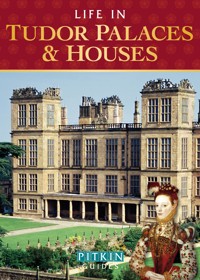
Our nation is a treasury of outstanding palaces and fine merchant houses from this rich period in our past. The Tudor period is one that feels familiar to many of us with famous monarchs such as Henry VIII and Elizabeth I, but we perhaps are not as familiar with the everyday life of the era. Here we uncover what these remarkable buildings can tell us about Tudor lives and times. Alison Sim's guide explores noble to ordinary households, how Tudors cared for their homes, and their daily routines including diet, health and entertainment. This is an informative and entertaining look at the daily reality of life in the Tudor period, from the wealthiest families to the humblest of households. Colour photographs of palaces and homes, accompanied by contemporary portraits and woodcuts give a fascinating insight into the everyday life of the Tudors. Contains a list of related places to visit, including many National Trust properties, and a glossary of key terms used within the guide.
Sie lesen das E-Book in den Legimi-Apps auf:
Seitenzahl: 52
Veröffentlichungsjahr: 2011
Das E-Book (TTS) können Sie hören im Abo „Legimi Premium” in Legimi-Apps auf:
Ähnliche
















Pitkin Publishing
The Mill, Brimscombe Port
Stroud, Gloucestershire, GL5 2QG
www.thehistorypress.co.uk
This ebook edition first published in 2013
All rights reserved
Text © Pitkin Publishing, 2011, 2013
Written by Alison Sim. The right of the Author, to be identified as the Author of this work has been asserted in accordance with the Copyrights, Designs and Patents Act 1988.
This ebook is copyright material and must not be copied, reproduced, transferred, distributed, leased, licensed or publicly performed or used in any way except as specifically permitted in writing by the publishers, as allowed under the terms and conditions under which it was purchased or as strictly permitted by applicable copyright law. Any unauthorized distribution or use of this text may be a direct infringement of the author’s and publisher’s rights, and those responsible may be liable in law accordingly.
EPUB ISBN 978-0-7524-9175-2
MOBI ISBN 978-0-7524-9174-5
Original typesetting by Pitkin Publishing
IMPORTANT DATES
THE TUDOR PEOPLE
The Tudor period is one which feels remarkably familiar to many of us. The striking portraits of Henry VIII, Elizabeth I and their courtiers make a lasting impression. But what of the everyday lives of the Tudor people? What was it like to live in a noble household? After all, the courtiers’ extravagant lifestyle required an army of people to maintain it, with large numbers employed in a wide variety of jobs, from private secretary to washerwoman. How did so many people live together without life turning into chaos? More specifically, how did the washerwomen keep the clothes clean? And how did you manage the catering if Queen Elizabeth I decided to come and stay?
Courtiers were, of course, exceptionally rich and influential people, and were no more typical members of their society than Hollywood stars are today, so if we are to understand the lives of more ordinary Tudors it helps to know the practicalities that lay behind their lives, too. In an age of expanding trade, English merchants frequently spoke several languages and travelled a great deal in Europe. Their wives were often left at home, with considerable responsibilities. The everyday lives of these people reveal a self-confident class who felt quite at ease mingling with the aristocracy.
But ordinary Tudors had skills, too. Although most lacked academic education, this does not mean they were unintelligent. Even a ploughman, so often a figure of fun to the wealthy at the time, could generally perform a huge range of practical tasks on a farm. Housewives, too, might have little or no schooling, but were able to cook under Tudor conditions, as well as brew beer, work a dairy, look after animals, see to the medical needs of a family and servants – all whilst bringing up their families. The incredible amount of hard work and ingenuity that went into the ordinary tasks of daily life certainly makes us appreciate the possibilities of modern life.
NOBLE HOUSEHOLDS
Large households were not simply a luxury to the great – they were a vital demonstration of wealth and power. In Henry VIII’s reign the Earl of Northumberland employed 166 people, and when Elizabeth I was queen William Cecil, as Baron Burghley, employed around 120. Although large numbers of servants were employed to do necessary jobs such as cooking, there were also well-educated administrative servants who looked after the many business interests of, and were gentlemen companions to, the masters they served. Virtually all live-in servants were male, except for ladies’ attendants. Lady Margaret Long of Hengrave Hall in Suffolk employed five maids for herself and her daughters between 1541 and 1564. Women laundresses were also employed but they usually lived outside the household.
Great houses were good places to work as they provided security and opportunities for advancement. Allan King, from a local gentry family, started as a bailiff on one of the Earl of Northumberland’s manors in 1581 and was steward of the household by 1592. Some servants went on to be employed in royal service. Sir John Daccombe became Chancellor of the Duchy of Lancaster after working for the Earl of Salisbury. Even the lower servants could do well: William Wistowe and William Chomeley climbed from obscurity to the highest office in the household of Edward Stafford, 3rd Duke of Buckingham.
Grand houses were run with regard to strict etiquette and worked a filter system of sorts. The surviving Tudor rooms at Hampton Court Palace show how the system worked. Many visitors were allowed into the first room, the large and impressive Great Hall. The aristocracy were allowed to progress through into the next room, the smaller Great Watching Chamber. Access from there to the king’s private rooms was very strictly controlled, open only to those who worked there, and those whom the king wished to see. A similar system even existed inside the king’s apartments.
Lords’ lives revolved around ceremony. Publications such as John Russell’s Boke of Nurture describe how there were ceremonies for all times of the day, from getting an aristocrat up and dressed to putting him to bed. The most effort was lavished on dinner, the main meal of the day, which was eaten around 12 noon–1 p.m. Russell describes how the preparation began with the formal laying of the lord’s tablecloths and setting the tables, and ended with the lord’s withdrawal to his private rooms at the end of the meal. Dinner took around two hours, so it is no surprise that lords ate their supper, their evening meal, in relaxed privacy. As the 16th century progressed, public dining became less common for great lords in their own homes but was still maintained by monarchs as a way of showing themselves to the court.




