


Erhalten Sie Zugang zu diesem und mehr als 300000 Büchern ab EUR 5,99 monatlich.
- Herausgeber: Salt
- Kategorie: Gesellschafts- und Liebesromane
- Sprache: Englisch
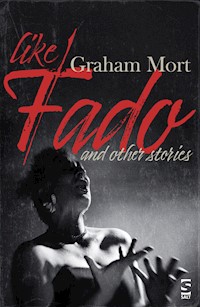
Like Fado consists of thirteen individual stories that culminate in the extended novella-like story, 'Whitethorn'. Each story takes us into the lived experience and psychological dilemmas of its characters, dissolving certitude in favour of richly ambivalent and suggestive endings as storylines merge and diverge, enriching each other through their narrative resonance. The natural world is brought to life in vivid detail in locations that range from the North-West of England to Europe and Africa, whilst the interior lives of characters form the dramatic locus of each piece, rendered in language that is precise, lyrical and evocative.
Sie lesen das E-Book in den Legimi-Apps auf:
Seitenzahl: 430
Veröffentlichungsjahr: 2021
Das E-Book (TTS) können Sie hören im Abo „Legimi Premium” in Legimi-Apps auf:
Ähnliche
















LIKE FADO
AND OTHER STORIES
GRAHAM MORT
for Maggie
CONTENTS
“The famous saudade of the Portuguese is a vague and constant desire for something that does not and probably cannot exist, for something other than the present, a turning towards the past or towards the future; not an active discontent or poignant sadness but an indolent dreaming wistfulness.”
F. G. Bell, In Portugal, 1912
LIKE FADO
EMPORIUM
The woman was leaning on the back of a Victorian chaise longue, beaming at him with those deep-set, dark eyes. Keith hesitated. Her daughters had the same eyes. Bright, but with an agate depth. And there he was, reflected in the window: his silver hair tousled, slim in his new coat. His image was superimposed on hers, like two spirits, neither quite real.
The coat was a size too small, really. He’d bought it in the spring sale from Vijay. Vijay Darvesh, nodding, smiling with approval as Keith tried on the coat he’d fetched from the window. He could sell you anything. Take off your jumper,this is not a coat to wear with a jumper. Then, let me open thepockets. And with a few strokes of the unpicker, he’d released the stitches that held them closed. Until, tilting his head. Itfits perfectly, just perfectly so. And all with a tinge of regret as if he didn’t really want to part with it. Then flashing that perfect smile as he took your credit card, a smile that held just a tincture of pity or triumph. Enjoy the coat, enjoy, my friend.
He’d got it home and then had to move the buttons to make it fit, threading them around a match-stalk as Meg had showed him, so that they didn’t pluck the cloth. Bloody awkward manoeuvre, but he’d managed it. The fabric was twenty per cent wool and eighty per cent cashmere. Or was it the other way around? That was the problem with sales, wishful thinking took over. Chasing a bargain. Not that he needed to. But he could do with losing half a stone, maybe 2 a bit more. Cycling might do that, a spell with the rambling club if he could face them again.
Keith raised his hand to wave or brush her away, the woman. Eunice. Then he changed his mind and was pushing open the door of the shop, the bell jangling over his head. He’d had lunch in The Saracen’s. Game pie with a pint of bitter he didn’t really want, sitting on his own at a side table, feeling conspicuous. Feeling old. He wasn’t used to drinking at lunchtime and felt the flush of alcohol in the overheated shop. Sometimes you did things out of habit. You did things because you didn’t know what else to do.
The shop was one of those self-conscious, shabby chic, cleverly old-fashioned affairs. It was fitted out in dark oak and they’d had the sense not to modernise – unlike the old chemist’s, which had been gutted of all its beautiful hand-fitted mahogany shelves and cupboards. After all, this was a town that bishops retired to. A town that still had local shops, its supermarket discreetly hidden behind the Health Centre. A town that that sat above a salmon river and faced a line of hills across the valley. Stone walls divided them into chequered fields until half-way up, where they lost the battle with gravity. The rest was bracken and outcrops of gnarled limestone. It was early December and the gullies were striped with snow. Above the river was a churchyard that had been used in a few film shoots. Beyond that, a viewing point beloved of local artists and tourists. So it made sense to appeal to people’s sense of nostalgia, some rosy folk-memory of the past. He liked it because everything was close at hand. And Meg liked it because it had an old-world charm. Solidity. They’d moved to an Edwardian town-house on the outskirts when they retired. 3
Keith smiled at the woman, feeling the coat a little tight under his arms, reproaching him. It’d be a crying shame to have to give it to Age Concern. Sod it. The kids could clear it out when he died, the way he’d bundled up Meg’s clothes and taken them out in bin liners to the car. He wasn’t sentimental, not if things could be of use to someone.
The other clever thing about the shop was that it was neither one thing nor the other: part haberdashers, part antique shop, supplier of fine bedding and tablecloths. You could buy old cotton nightdresses edged with lace, new pillow cases and sheets, hand-stitched quilts, re-upholstered chairs and settees, Welsh dressers, willow pattern plates, china tea sets, footrests, stools, linen chests and rugs from Afghanistan and Persia. Prayer rugs. He and Meg used to look for the deliberate mistake, the false stitch that allowed an evil spirit to escape, put there because only God was perfect. The shop was a real emporium and Meg had loved to linger there, marvelling at rich brocades, trying out cushions that were tastefully refurbished in antique patterns. And the three women were always there, quietly in attendance.
The shop was double fronted and there was a border terrier on a cane chair in the window, sleeping away its old age. The rooms ran back, three-deep, so it was like entering the shade of a bazaar, journeying deeper into its mystery. There was something Oriental about it, something of the cultural collision of empire. East meeting West. A sense of opulence. Keith let the brass sneck click behind him with the weight of the door. The shop smelled faintly of floor polish, lavender and joss sticks and something else you could never quite place. The older woman smiled her shrewd smile and met his eyes in that direct way they had. 4
– Good afternoon!
They all spoke with soft Northumbrian vowels. That seemed another quirk of the shop’s special atmosphere. The mother’s teeth were stained with lipstick. Keith had managed a dental practice in Newcastle for twenty years. Free checkups were a perk. It was hard not to zone in.
– Good afternoon.
There was a slightly satirical acknowledgement of this formality on both sides, a playful ritual between old friends. Keith had hardly been out and about in months. Just quick visits to the supermarket and post office, the doctor’s. Partly because he’d turned his ankle at the funeral when Meg’s sister stumbled against him, waving her hanky, milking the occasion for all it was worth. The bruise had gone from blue to yellow, his puffy skin threaded by tiny purple veins. He’d dreaded going out. The awkward questions, the solicitude, the falsity of it all. He’d not been to this shop in over a year. Something in the woman’s gaze had invited him in. Now here he was, not quite knowing how to carry it off.
Eunice. He could never call her that, it was too intimate somehow. She smiled and made way for him. And there were her daughters. Small-boned women who hardly came up to his shoulder. One with page-boy hair, and one who wore it shoulder length. Black hair, finely textured. And those eyes that seemed to glitter in the gloom at the back of the shop. Like the eyes of Turkish women they’d seen at the market in Istanbul. The older one with the short hair wore riding boots and a flared skirt, the younger one had close fitting slacks and an embroidered jacket. They both wore open-necked blouses. There was something about them. He couldn’t think of the right word. Ingenuous? And that was unfair, because they 5 never exhibited the slightest curiosity about him. Why would they when he was almost as old as their mother? But it was uncanny the way the three of them had the same eyes. The way they glowed with inner darkness. The way they followed you around the room.
Keith took an interest in a half-glazed earthenware pot that doubled as an umbrella stand, almost tripping over the rug. Halifax-ware, probably a potato pot originally. But the lid had been broken and the base was chipped. The dog looked up at him, pointing its ears and making a low rumble in its throat.
– Sky, don’t be silly.
Keith chuckled at the dog’s readiness.
– I think I startled him.
– Go back to sleep, you daft thing.
The older woman shushed him and the dog lay back down, putting back its ears, yawning, mooning its eyes. The young women smiled indulgently, showing almost identical white teeth. Small and sharp and slightly backward slanting.
A middle-aged couple emerged from the middle room and pushed past Keith into the street, zipping up their Barbour jackets. You could smell the money on them, but they hadn’t bought anything. He edged into the room where an elderly lady in a pale cream coat was testing some cushions on a settee. Her cheeks were rouged and her legs stuck out like sticks as she sat down and stood up again. She reminded him of a Punch and Judy puppet, her glasses bobbing to the front of her nose. Keith nodded to her and moved into the far room. There were some gilt-framed Victorian prints standing against the wall, a dressing table, a quartet of high-backed chairs and a large reproduction mahogany desk. They’d even spilled ink on the writing pad to make it look authentic. Then 6 a flat-topped display case with silver earrings and brooches, some jet funeral pieces and others studded with garnets, malachite and onyx. Keith pushed up his spectacles and peered into the case, a silver brooch in the shape of a curled fern snaring his eye. It was delicately made with lots of fine detail. He saw his own face in the glass like a ghost in those fake photographs. Then the older of the two sisters was beside him.
– Would you like to see anything?
She wore the key to the cabinet around her neck. She smiled and her eyes were almost black in the dim room. Those neat, even teeth. For a second she reminded him of Meg. How stupid. Keith pointed into the case.
– That brooch, the silver one. It’s unusual.
– The fern design? The Victorian loved them. They crop up everywhere. See?
The young woman pointed to the settee and the upholstery was a pattern of ferns curling into each other.
– Ferns were quite the vogue at one time. Would you like to see it?
Keith nodded and she bent down to unlock the case. There was the faint scent of her perfume. So close. He shut out the thought. She was holding the brooch out to him and he took it. It was beautifully made. Surprisingly heavy for its size. He checked the back for a hallmark.
– It’s real silver.
Her voice was a little sharp, as if he doubted her.
– Yes, I can see. Just about …
He squinted at the markings, pushing up his varifocals, smiling apologetically.
– Anno Domini. Comes to us all …
– Pretty, eh? Your wife would love it. 7
– Yes, she would.
There it was. A lie? Almost. Though a lie was something you told on purpose to deceive. He was just being polite. He’d replied without thinking. But Meg would have loved the brooch. It was just her kind of thing. What was he supposed to say now? To add casually that it was a shame she’d been dead almost a year? What good would that do? He wondered what had drawn him back here. Memory? Habit? A way of stepping back into the past as if what followed had never happened? He’d avoided them so far, their old haunts. He handed the brooch back, his fingers touching the woman’s palm. It felt hot.
– Thank you. I’ll think about it. I’ve got a few things to do …
He sounded more abrupt than he meant to.
– You’re welcome.
A little laugh, then a crimping of lips that were touched with pink gloss. He was flustered now, trapped by his untruth. As the woman locked up the cabinet, Keith pretended to inspect an ornately carved Burmese rocking chair. A family of five – parents and three kids – in wellingtons and fluorescent jackets came in and began fussing around a large oak chest. But can you date it, the blonde woman kept saying, accurately, I mean? He made his escape, tilting his head in farewell he found the door and exited under the chang, chang,chang of the bell. The dog looked up and then went back to sleep.
It was cold. Late afternoon. A bitter little breeze was stirring litter in the town square. His face was flushed and his ears felt hot. As he glanced back through the window, the younger daughter, hand on hip, was asking the older one 8 a question. The older one shrugged, fingering the key and glancing towards the door. He was sure they were talking about him. He’d dreamed about them once. That there was another room deep in the shop with a four-poster bed in which all the women slept in long cotton nightshirts. There were candles and velvet drapes. Weird. He’d forgotten about that until now. It was strange how things came back like that. Random thoughts. Fragments that made no sense. Unless you believed that dreams meant something. He moved on quickly from their line of sight.
Three-thirty. Too early to go home to an empty house and microwave something. Too late to catch the rugby on TV. He was wearing a decent pair of brogues and wondered about the river walk. He could use some exercise after that lunch. It squatted in his stomach, pressing against the coat that was slightly too tight.
Keith went through the village square, past the new outfitters, which catered for all sexes. Quinne & Starkey. A made-up name meant to sound traditional, dependable. In fact, it was run by some middle-aged dandy in tight trousers who dyed his hair and wore paisley-pattern waistcoats. The lane led down to the river walk. There was just time to make the circuit before it went dark. Keith felt a pressure on his bladder from the pint and slipped into the public conveniences. They were few and far between these days. The smell of ammonia and disinfectant stung his nose. He stepped carefully over the wet tiled floor. He’d bought a shirt at that new shop last summer and the man in the waistcoat had offered him a complimentary fragrance. Fragrance? Keith had looked blank. He wasn’t about to start wearing perfume at his time of life. He drew the line at sandalwood shaving cream. There 9 was none of that sort of rubbish about Darvesh. You knew where you stood there.
Keith passed water in one of the cubicles, holding back the wings of his coat with his elbows. He zipped up and flushed the toilet. The plumbing groaned as if there was a demon trapped in the piping. A djinn. Was that what they called them? He washed his hands. No soap, of course. The hand dryer was broken and he dabbed them on the damp roller towel, trying not to think of the germs. He buttoned his coat, his fingers slipping on its tight buttons.
When he left the toilet the dandy in the outfitter’s was reaching into the window for something. His hair was thinning like everyone else’s. You couldn’t hold that back. Vijay knew what a man wanted and he wasn’t about to start stocking handbags and cosmetics – or fragrances, for that matter. Meg would have laughed, of course, flicking back the grey hair she’d started to wear very short, cut into her neck. Whynot, you silly thing? She’d got him pulling his nasal hair and trimming his eyebrows. That was enough. Funny, how all that hair sprouted as you got older.
It was a degree colder if anything. Keith tucked in his scarf and pulled up his collar, leaving the town centre on a path that led past a new housing development. Just boxes, really, each one had a black solar panel on the roof, but not a chimney amongst them. The path dipped down sharply then curved towards the old stone bridge. In summer, kids jumped from the parapet into the river. The pool below was flanked by rocks where couples sunbathed or urged their Labradors into the water. You could see the youngsters daring each other, then there’d be a cheer as one of them found the courage to fall. It had become quite a spectacle, like the dozens of 10 motorcyclists who gathered for tea and bacon sandwiches at the mock Tudor café further along. In summer they made a killing.
Just before the bridge on the left-hand side, there was a kissing gate. Keith went through it to the river path. He held the gate open out of habit, then let it close with a clang. They must have done this walk a hundred times. The river was high. Brown with peat, it surged between boulders and outcrops of limestone. A woman came past with two muddy beagles on a lead, dragging the dogs away from him with an apology. Keith smiled at her, catching their wet tang. He moved on, turning sideways to allow a couple and their kids to get by. The path had been recently gravelled and made for easy walking. His shoes crunched. Satisfying. At one time it would have been a quagmire. The council had got some things in hand, at least. There was the cricket ground on the left with the little timber pavilion. It’d been a good few years since he turned his arm over. He’d played until he was fifty-six, bowling leg-spin and batting low down the order. Coming home late for dinner, falling asleep in the bath with a whisky. Meg hadn’t minded. She understood why he still had to do it. Because there had to be more to life than work. A torn back muscle had put paid to all that. He still felt it when he got in and out of the car.
The path was badly eroded in places, where the river curved and undermined its banks. In different phases of conservation, the council had laid concrete blocks, driven timber piles and dropped wire cages of boulders to protect it. Unchecked, it would wash everything away, eroding the banking, bringing down the town above it. Further on it parted around a little island overgrown with willows, then joined itself again. 11 Sometimes there was a heron waiting in the shallows. In the deep pool at the far end of the walk, salmon and sea trout rose or leapt clear of the water. Fisherman waded out from a gravel bank to stand thigh-deep with their rods and landing nets. But not today.
Light was fading now, the river supple, gleaming like eel skin. Keith went through another gate, stepping down awkwardly over the rocks on the far side. Here there was a house set back from the water – a converted mill of some sort – then the path ended in a row of iron railings where the banking became too dangerous, dropping away to the current. Next to the house was a churned mud paddock. A white horse tapped its hooves against the metal gate, a restless ghost in the dusk. The gate tolled like a bell. Then a long climb of steps led up to the viewing point and the churchyard. Keith set off up them steadily, feeling his heart rate rise. What doesn’t kill you … well, maybe. He paused gallantly to let a stout woman in a purple fleece get past on her way down. Then he made it to the top, chest pounding. The woman had smiled at him, ruefully. As if they were in it together. Old age. But it was in them, really.
The viewing point overhung the banking and showed a perfect view. Picturesque. The river had planed a wide flatland, leaving a curved terrace in the middle distance in front of which nestled a farm. Beyond that, a line of dun-coloured hills with those streaks of snow. The side of the sheet-metal barn was painted in outrageous candy-stripe colours. That was about planning permission being refused, the farmer’s way of hitting back. He’d seen something about it in the local paper, laughing with Meg one Saturday after they’d lain in bed a little longer, then breakfasted on coffee and toast and 12 soft-boiled eggs. One of their rituals now that getting up didn’t matter much. They still fitted together nicely in bed, her face against the pillowslip like the face of a girl in the dim light. Making love gently and without haste. Strange, how he still saw the girl in the woman, as if time hadn’t flowed on at all. Somehow the rainbow-coloured barn had become a local feature, a quirk of humour that people had appreciated and become fond of. After all, it did no harm in the end, upsetting the way things were. The colours glowed now in the setting sun.
Keith turned into the graveyard where a granite church was surrounded by yews. There was a low perimeter wall and beyond it rows of stone-built houses, yellow lights burning. The vicarage was set in a space of its own to the north side, accessed by a cobbled lane. A set of iron gates led back into the main street. The gates had an ingenious self-closing mechanism. Pushing the gates allowed them to rise on rollers that went up a greased iron slope. Gravity made them roll back down and close again. No special effort needed. It all worked beautifully, elegant and simple. He’d pointed them out to Meg whenever they passed this way. He’d probably bored her with it all.
It was gone four-thirty now and the lights were on in the bookshop and cheese factory, the ironmonger’s and the Age Concern shop where he’d taken Meg’s things. Then, without quite realising it, he was crying, sobbing out little spasms of air. He turned back into the graveyard before anyone could see him and made for a bench in the church porch, loosening the buttons on his coat to sit. It could happen anytime. Things working away inside you. Things you weren’t really aware of. Thoughts of the future didn’t go anywhere now. 13 They couldn’t. There was only really one end to it all, to grief, to memories.
Keith sat for a few minutes, catching his breath, feeling the cold strike into his buttocks. There was the stone coffin with its chipped edges. It had been cut for some bishop in the Middle Ages. Meg used to joke that it was about his size. But people were smaller in those days, malnourished, their bones crooked with disease. He was a respectable five foot ten. There was an inscription around the church porch in Latin, but it was eroded and impossible to read. Even if he could have remembered what he’d been taught at school. Centuries of rain had eaten it away. The mower had left clumps of dead grass between the headstones. A thrush was hopping and stabbing for worms, cocking its head, listening to the earth seething. There were tiny pearls of moisture on its back.
Now there was a commotion at the iron gates. A long, high cry without words. A shriek that went right to Keith’s chest, visceral, like the distress of a baby. The thrush took off and perched in a yew tree where it sent out an alarm call, repeating the same phrase. A boy of about fourteen in a red puffer jacket was being led through the gate in a group of five kids and two adults, probably from the special school up the hill. The boy dragged back from the group and called out again. There were mangled words, but Keith couldn’t make them out. The boy had glasses and walked with a jerky gait. One of the adults led him to a bench and he let out another howl of anguish, inconsolable, his hands clenched up in front of his face as he was pulling down on a blind.
Keith hunched back against the stone of the church porch. The other kids stood in a half circle: another lad and three 14 girls. They gazed at the adults as they tried to soothe the boy. Keith was trapped by the boy’s shrieking. It was dredged from the bottom of his lungs. It was another kind of grief. One of the adults tried to take the boy’s arm, but he pulled away, letting out a scream that carried all the way back into the town. People were pausing in the street now, looking anxiously towards the churchyard where the little group was hidden.
Keith rose, buttoning his coat, getting ready to slip away. The paving stones were treacherous with moss. He looped back through the churchyard to the viewing point where he could find another path back into town. That way he wouldn’t have to pass the boy rocking there. Wouldn’t have to feel this helpless shame. He stood for a moment. Frost seemed to crackle in the grass. Dusk was thickening. There was the moon pulling clear of the horizon, huge and white above the line of hills. There was the glimmer of the river, the outline of farm buildings, the candy stripes blurring. And there were the boy’s cries, raising goosebumps on Keith’s neck as he veered down a back lane that took him onto the main street between the wine merchant and Vijay’s.
Back in the shop, he could have sworn they were waiting for him. The mother lingering in the lit window, watching the street. The dog curled on the cane chair, the dark-eyed daughters hovering at the counter. Keith didn’t even speak, he simply nodded at the back room and then followed the eldest daughter there and watched her unlock the cabinet. His glasses misted with the heat in the shop. He could smell her perfume again, stronger this time. Lavender.
She smiled and handed him the silver fern with a faint curtsy. Her eyes seemed to shine. Feverish. When he paid 15 for the brooch, they all gathered around to congratulate him. The older woman in attendance, the daughter who wrapped blue ribbon around Meg’s neat little parcel, the daughter who rang up the till and took his debit card. It was the way they all stood so close together exuding … something … he couldn’t describe what it was, that feeling. The way they were so perfectly demure – not the right word either – and yet seemed to give off a glow of their inner selves, a hint of pleasurable appetite. Perhaps that was pride in what they did, what they knew, a kind of worldliness about things. There was no harm in that, after all. The older woman touched his arm.
– Give my regards to your wife. I hope she enjoys the brooch.
– Thank you. I will.
– Bye! Bye!
A chorus. He half turned in the doorway. That ironic gentility overcoming him again.
– Until next time.
Keith gestured with the package, tipping it up then slipping it into a side pocket of the coat. He smiled at the young women who stood side by side, regarding him inquisitively. Then he was in the street, seeing them drawing down the blinds and locking the shop door, realising he’d kept them past closing time. He wondered if they knew about Meg. If they’d known all the time.
The bell faded as it jangled to a standstill. He tidied his scarf and tucked his hands into his pockets. Then he made for home, flattening his fingers inside the tight fabric, against the little package that fitted snugly there. Cars pulled away from their parking spaces in the town square, swinging the white scythes of their headlights. There was the moon, 16 voyaging above chimneys and roof slates. There was a single star, pulsing with light. A star that might no longer exist. That old illusion of life after death. He’d learned that on one of those TV documentaries. When we look at the night sky we’re really looking back in time. It was unimaginable. Even the mathematics seemed fabulous.
Everything was connected in the end. Salmon and sea trout nosing upstream in the river, leaping the weirs, scenting their birth waters in minute traces of peat. Returning to breed and to die. Their gleaming bodies pinned to the river’s surge. The rainbow colours of the barn fading. Cattle herded into shippens, mired with dung, blowing out gouts of steam, pulling hay from iron mangers. Sheep straying on the hills, white-faced where darkness was falling. Little owls calling from that island where the river forked. It was all going on around him, beyond him. Life was just messiness, really, but we saw patterns in it. Had to.
It’d be Christmas soon. He’d be invited to stay with Katherine or Simon, when what he really wanted … when what he really wanted was somewhere else now. Somewhere in that current of time that they’d trailed their hands in so carelessly.
Keith paused, irresolute, drawing blades of air into his lungs.
Home.
He moved on, his shoes rapping against the paving stones.
Home.
The night pressed a cold mask against his face. He thought he heard the clank of a horse’s hooves tolling against a metal gate.
Homeward.17
There was that cry again. A little lower, like the yelp of a fox carrying towards him from the churchyard where the boy was.
KARÎN
The river flowed through level fields. It went under an iron bridge to her left, a quarter of a mile away. Then it flowed on, a ribbon of crinkled foil. Zoe had left her car in the street at the B&B, then walked. She’d almost collided with a milkman leaving pints of milk and orange juice on the step. She hadn’t seen that in years. The place was chintzy, the landlady fussing over her. She didn’t fancy the breakfast. It was always like that after a trip, that lingering sense of self-sufficiency, self-hate.
Clay was sticking to her boots. She could see the town on the skyline, light catching the windows of tower blocks, the minaret of the new mosque with its crescent moon. The women in the mountains had invoked Allah as they gave her their stories. Praise be upon him. We will meet again, Insh’allah. But they hadn’t met again. She’d walked back to the SUV, following Shamal, her translator. Two days later, there’d been a Turkish airstrike and the village had been bombed into a smear of scree – breeze blocks and plaster, dried blood and thorn-trapped headscarves blowing out over the valley. And shit. Human shit you could tread in if you weren’t careful. She’d been warned to get out of there. It was unpredictable. Which was ironic when you thought about it. It was all too predictable.
Zoe clapped her hands together in fingerless gloves, feeling her palms thud. She sniffed, tasting salt, feeling in her pocket for a tissue. The footpath slipped downhill and she emerged 19 from a stand of sycamores into a stubbled field where heaps of manure had been dumped. It steamed in the air, the earth smouldering. There were crows picking through the dung. One took to the air and gave a call to the others, like a grating manhole cover. One by one, they sighted her and took off, following the river towards the sea. She stood to watch a hare loping between furrows, the dark fur on its face parted by wind. It hunkered down, lowering the tips of its ears, as if it knew to a millimetre the dimensions of its own body.
The woman called Karîn had green eyes, the skin of her face pocked with tiny marks from some childhood illness. One eyelid drooped. She had the strong wrists and swollen knuckles of a woman who’d worked the land. The Ba’athists had taken her husband away and looted their possessions. She told how she sat in the emptied house at night with a knife in her lap to protect the children. How her milk had dried up. How she’d walked into Iran with her sisters. A refugee, imagine! A wanderer. Stepping along the mountain trails with her baby tied to her back, holding the hands of her other two children – a boy and a girl who hadn’t eaten for days. Stumbling from exhaustion, she’d laid her dead baby in the snow and walked on. I felt nothing. I could not feel. At the next village the women met a group of neighbours from Rawanduz and shared the little food they had. Some stragglers joined them, one woman carrying a baby she’d found by the path. It had moved its hand and there it was, alive. A miracle. Praise be. God did not want him to die. He was grown up now, a Peshmerga soldier, an officer. He’d lived and thrived, somehow.
Zoe crossed the field towards a stile, catching the sharp scent of dung. The path was rutted and there was water in the 20 footprints other walkers had left. This was supposed to be a short-cut, but she felt suddenly uncertain. She took out her phone to get a GPS location, but there was no signal. Lost in the English countryside. That was ironic, too. They’d found a group of women and children huddled in a stone enclosure near the Turkish border. A sheepfold. The old men who had struggled up the mountain with them were trying to weigh down a canopy of plastic sheets with rocks, but the wind was defeating them, tearing the sheeting, shredding speech. One of them had spoken with Shamal. But what they said she never knew. The man’s face was etched like stone under his headscarf and she noticed that there were no buttons on his jacket. It was fastened with brass safety pins. They’d left them there, promising to tell the Peshmerga that they needed help. They thought she was a journalist, but that wasn’t why she wanted to hear them speak. She’d come for stories of the past. Al Anfal. Genocide. Now the present was repeating the past, as if time itself had curdled. The Kurds have no friends, only the mountains. That was the saying.
Two days later, she was driving down through limestone gorges, over miles of abandoned farmland to Erbil, racing the weather to catch a flight home. She had their stories on her hand-held recorder. Three weeks of interviews. Snow had fallen into the gloom of the gorge and they had to wait as a shepherd drove his flock of goats past them with two shambling mountain dogs. He’d glanced in at them and the driver had raised his hand to greet him. There was a café opposite a waterfall, a man standing in there alone under a naked strip light. They approached the city through checkpoints, the soldiers hefting Kalashnikovs, peering down at her, a foreigner. Then the suburbs with packs of stray dogs gathered under 21 lampposts where snowflakes whirled. Then security queues, the flight to Istanbul, just in time. Winging through darkness over Turkey, Italy, France. Then England in the rain, patched fields tilting below the plane, drifts of cloud, the runway glistening. Thinking about home and where that might be. Thinking about Emma.
Zoe stepped from the stile to the road. Now there was something familiar in the way the ash trees almost touched together across it. Their branches were tipped with black buds. Emma’s house was down a side lane. It was close by. There was rubbish in the hedgerows, thrown from passing cars: cigarette packets, beer cans, polystyrene takeaway trays. She’s seen that below Korek, where picnickers thought nothing of throwing their empty bottles at the valley, broken glass glinting in scree, under new almond blossom. Grey streams swollen with melted snow. Now there was a tilted signpost and she was sure, stepping past it to find the driveway on her left. Emma’s old Fiesta was there, parked at an angle to the cottage. It was like the houses she’d drawn as a child: four windows and a door, a chimney with a scribble of smoke. The house was still. No smoke. Zoe stamped mud from her boots onto the road. A jackdaw settled on a chimney pot and watched her watching the house.
It was too early to wake Emma and the baby. Although Siobhan wasn’t really a baby any more. She was clinging to the furniture, trying to walk, Emma had said in her last email. She’d sent a picture of her chortling in a yellow Babygro or whatever those all-in-one suits were called. Zoe pushed through the garden gate and sat on a bench under the cherry tree. She found a cigarette and lit it with the lighter she’d bought at the airport in Istanbul. She blew a stream of smoke 22 and the jackdaw jerked its head and looked at her, then took off. The curtains of the house were drawn. Sun was just beginning to glint on its windows. Her B&B was about a mile away, on the edge of town. It was where she’d stayed last time, when Emma was pregnant with Siobhan. When everything else was out of kilter, it was good to repeat things, to retrace her steps, to have some familiarity. The landlady had remembered her, or pretended to, and greeted her like an old friend. Now here she was. She’d found the house again. All she had to do was wait, which was doing nothing really, for once in her life.
Damp began to seep through from the timbers of the seat. Zoe stood up and pulled her jeans away from her thighs. She’d fractured her ankle as a kid and in weather like this it ached. She was grinding the cigarette stub under her heel when the curtains of an upstairs room parted and there was Emma in her pyjamas, startled, then waving down at her. Then someone was unbarring the door and she was there, smiling, her blonde hair unruly with sleep, her arms wide. The pyjamas slipped against her skin as Zoe hugged her. Her body felt fuller, more complicated.
– Brrr! Bloody hell, you’re early!
– Didn’t sleep much. Hang on …
Zoe unlaced her boots and left them in the porch. Now they were the same height. Emma was pushing the door shut, pulling on a cardigan that was slung over the back of a chair as they entered the kitchen.
– You could have stayed with us, I did say …
– I know, I know.
Zoe was pulling off the gloves and stuffing them into her jacket pocket, the same jacket she’d worn at Rawanduz 23 and Sulaymaniyah. She wondered if there were particles of Kurdish soil in the seams or at the bottom of the pockets. There was a Kurdish flag folded in her luggage still, like the one painted on the mountain near Soran. She dropped the jacket over a chair. The house was warm, the radiators heating up. There was an Aga in the kitchen, and she stood with her back to it, watching Emma put the kettle on then find cups.
– Siobhan?
– She’s at my mum’s. We do a sleep-over every Friday night. She’ll bring her round later. Didn’t I say in my email?
Emma turned to smile at her, pulling her hair into a bunch over her shoulder.
– Anyway, it’s nice to see you in one piece! Good trip?
– Yes, pretty good. Amazing, actually …
In one piece. Was she? She felt as if she was in many pieces most of the time. She wanted to kiss Zoe on the neck, just above the collar of her pyjama jacket, against the line of her clavicle where the skin was creamy and smooth and flushed from the kitchen’s heat. She could see the outline of her body through the thin fabric when she turned against the light.
– Jordan?
Emma stiffened but didn’t turn.
– Oh, he comes around when he feels like it. Same old, same old …
– That’s tough.
– That’s Jordan, remember? A river to be crossed.
Emma turned with the spoon in her hand.
– It’s Earl Grey. No sugar?
– No sugar, just a dash of milk.
Emma put the mug of tea on the table.
– I guess I’m getting used to it. Him being fucking useless. 24
And she laughed, a little laugh of abandonment. A blue vein showed for a moment at the side of her throat. Zoe remembered their nickname for him when they’d been students.
– His Excellency?
– His Excellency!
It’d been Emma’s way of dealing with him, even before she got pregnant. His Excellency’s late. Or, His Excellency requests that we meet him at seven. Or, ruefully, when he’d let her down again, simply, His Excellency, eh? Spoken with a mixture of affection and scorn and resignation. He’d been charming with his floppy dark hair and quizzical eyebrows, tight-fitting clothes and Doc Martens. With the public-school erudition that he wore so easily. But he’d been a fuckup from day one. They’d been studying for their PhDs. Before Zoe’s job at the Peace Institute.
Emma sat at the table. The cuffs of the cardigan came over her hands and she rolled them back. Zoe realized it must be Jordan’s.
– Did you get much stuff?
– Lots. It’s all to be translated. We’ve done some of it. But, yeah, lots. Pretty harrowing.
– I’ll bet.
She been interviewing older Kurdish women about their experiences of Al Anfal. Not the women who’d fought, who were on the TV news every day. But the women who’d fled with their children, the woman who’d survived Saddam’s onslaught through the Eighties and early Nineties. But she’d got caught up in a new situation. The Peshmerga fighting ISIS in Syria, the Turks taking their chance to bomb YPG and PPK strongholds. It was only two years since ISIS had murdered thousands of Yazidi men and boys at Sinjar. There 25 were still Yazidi refugees in Soran, where she was based. She told Emma how she’d found them sheltering in the Christian church in Dayana. The way the children had looked at them with their huge, dark eyes. Then she was sobbing ridiculously, and Emma’s hand was on her arm.
– Hey, hey, don’t cry.
Her voice was convulsing in her chest and she couldn’t catch her breath.
– I’m sorry. I don’t usually. Fuck!
She dug in her pocket for a hanky, then remembered she didn’t have one. Emma passed a box of tissues and she blew her nose. After they dropped gas, I came back from the fields and gave them milk, my father and my children. They brought it up like cheese. That was Karîn’s story, which wound in and out of all the others somehow. Flowing through past and present. A river swollen with grief. Emma was waiting, plucking at the sleeves of the cardigan and watching her.
– Sorry.
Emma shook her head.
– It’s OK, don’t …
– It was pretty full-on at times. Amazing women. I’ll tell you some time … when it’s easier.
Zoe smiled, dabbing with the handkerchief.
– Sure. I’d like that.
Emma’s fingers were warm against hers.
– Come here.
Then they were hugging, and Zoe could feel Emma’s body again through the pyjamas, stroking the fabric. Emma giggled.
– Silk! My parents …
Her parents were probably paying the rent as well. Emma’s body had changed. She’d had a baby, after all, had carried it 26 for months, given birth, then fed it from her own breasts. Zoe saw Karîn laying her baby in the snow, a line of refugees trudging on.
– Come on!
Emma was tugging her hand, leading her upstairs to the rumpled bed that was still warm from her sleep. They undressed and slipped between the sheets, their arms and legs entangled. Then the slow kiss that seemed to stop everything and start everything again. Everything Zoe wanted and couldn’t bear. Finding each other again. The lightness of their touch. Skin to skin. Their bodies slipping together like the lost parts of a puzzle. Like they always had. Uncomplicatedly. Making love despite everything. Silencing the things that clamoured. Before Jordan, during Jordan. Now maybe it was after Jordan. Though that was something Emma would never say. She lay against Zoe, smelling of warm skin and sleepiness, her fingers tangled in Zoe’s short hair.
– It’s probably filthy.
– What is?
Emma sounded sleepy.
– My hair.
– I’m sure it isn’t.
Emma pretended to smell it, running her tongue gently around Zoe’s throat, until it was unbearable, and she was laughing and begging for mercy and pinning Emma against the pillows all at the same time. Sunlight was still faint at the windows, as if the morning was leaving them to themselves. The house was still, peaceful, apart from the tick of the Aga downstairs as it heated and cooled.
They rose just before lunchtime. Emma showered and Zoe made coffee and toast and boiled eggs, searching for egg 27 cups and plates. They ate together as a band of light slanted between them, talking freely now. The women’s stories would be translated into English at the Institute where there was a Kurdish-language expert who also knew Sorani. They’d get versions back to Shamal for checking and then they’d form a research archive. Testimony. A record of a particular time and place, bearing witness. The women’s responses to violence and the memory of violence. There’d be a paper to write, but that felt secondary. What mattered most was the women’s stories. Their indelible images, their contradictions and silences. What mattered was not anything she could say about them, but their own words. Zoe remembered jolting down to Erbil in the back of the pickup on the journey home, the radio blaring, the heater full on, snowflakes driven against the windscreen. The driver shouting incomprehensibly in English, adding, Insh’allah! Insh’allah! Everything was in the mind and hands of God. Then the plane rising above city lights and her long flight home through darkness to what little she’d left behind.
Zoe had wanted to see Emma, but she’d deliberately stayed in a B&B, hadn’t wanted the temptation of her. And there was Jordan, of course. Jordan who came and went. Jordan whose patina of charm had worn through to a kind of emotional poverty. She’d thought of Emma on the long flight. She’d longed for her. Now here they were, back in the old complications that touch had made simple once upon a time. Though that wasn’t true, either. And once upon a time was a fairy tale. She remembered Karîn seated on a low settee, a tray of mint tea between them, a bowl of apples and pomegranates, sugar dissolving in swirling veils. God spared us, she’d said, God wanted us to live. She remembered that old lady in Erbil, 28 almost deaf, who spoke of an honour killing when she was a girl. How a cousin had been killed by her own brothers, her bloody ear thrown into her mother’s lap. She’d framed the story as a traditional tale, seen through a window. I looked through a small dalaqua. I saw the man striding in the orchard. It was dawn and the birds were singing brightly. She’d worn a pair of silver earrings, leaning forward to hear Shamal’s replies and confirmations. She could neither read nor write, but her memory had shaped the story.
Emma was glancing at the kitchen clock. Hours had passed as they sat at the table. They rose to go for a walk before the cold closed in again. Zoe’s boots were still damp. They walked arm in arm along a wooded trail. There was a dead pigeon beside the path, rooks calling from tree tops. Then the crackle of pheasants as they came in to roost. A breeze stirred fallen leaves. Lights came on in the town behind them. Emma snuggled her face against Zoe’s shoulder. They met an older couple walking their Labradors, one black and one pale gold. Emma greeted them, but they returned an odd look.
– Spooky pair!
Zoe shrugged.
– What the fuck!
– Question mark or exclamation mark?
– Exclamation mark!
It was an old game. They stopped to kiss, their mouths full of breathlessness and body heat. Then they turned for home through the gaunt trees. Emma skipped on ahead to pick up something she’d seen glinting beside the path. It was a child’s plastic bracelet. Finders keepers! She used to say that when things turned up. Even if it was the last drop of milk in the fridge when they shared digs. Even if it was Jordan, waiting 29 for them at the bus shelter or in some café. They’d made love in Zoe’s attic room with its sloping ceiling, scattered books and papers, the laptop open like a clam, the electric heater filling the air with that dry, dusty smell of winter afternoons. But Zoe had been put down whenever Emma had picked something else up.
The Kurdish women had been fascinated by her short hair. Even the Peshmerga women who fought with Kalashnikovs and rocket launchers wore braided plaits slung over their shoulders. Where is your husband? they asked. You have how many children? Zoe would shake her head, setting up the little recorder, placing it between them, checking the battery. No husband, no children. One day, the women had said, one day he will come to marry you with wedding gifts, Insh’allah! Emma put the bangle in her pocket. Emma who’d kissed her so hard that her lips felt bruised. Now she was looking at her as if she’d never seen her before, a look Zoe remembered too well.
They’d argued about it once. Their situation, as Emma liked to call it. An act of God or nature. Something they found themselves amongst, as if they’d got lost somehow.
– It has to stop, Zoe.
That was Emma, suddenly pulling away from her when they were riding home on the Metro.
– What? What has to stop?
– It. Us. We have to stop.
– Why now. Why all this now?
They were heading back after a seminar. The train had paused at a platform to let a group of commuters off. Office workers with rucksacks, reading their novels and newspapers standing up. Now a group of girls in short frocks and high 30 heels got on, crowding the doors as they hissed shut. Then into the tunnel, their faces stark in the white lights.
– It’s not fair on Jordan, you know it isn’t.
– Jordan? Not fair on Jordan? His Excellency? Are you fucking kidding me?
Silence, Emma stooping to lift her bag.
– Jordan?
They’d got off the train and walked home in silence, through Newcastle where the Tyne threaded under its seven bridges. That time they’d avoided each other, hadn’t spoken more than was necessary for three weeks. Sharing the same house, scrupulously polite. Leaving the bathroom cleaner than usual. Until one day Emma turned up at her door with a bag of apples. James Grieve




