


7,67 €
Mehr erfahren.
- Herausgeber: Seren
- Kategorie: Gesellschafts- und Liebesromane
- Sprache: Englisch
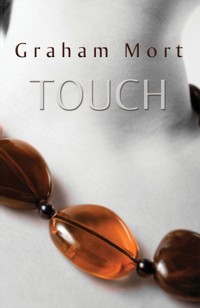
From the heat of Africa to the warmth of France or the snowbound dales of northern England, this is an assured and absorbing collection. Including the Bridport prize-winning story 'The Prince', Touch spans twenty years of short-story writing from author and poet Graham Mort. From a young child adrift on an ice-filled lake to an ageing farmer facing life alone, the twenty-one stories display a deep sensitivity to both the natural world and to human relationships. In skilfully crafted prose, vivid with detail, Mort examines the strength and fragility of life and the ties that hold us within it.
Das E-Book können Sie in Legimi-Apps oder einer beliebigen App lesen, die das folgende Format unterstützen:
Seitenzahl: 420
Veröffentlichungsjahr: 2010
Ähnliche
















Seren is the book imprint of Poetry Wales Press Ltd 57 Nolton Street, Bridgend, Wales, CF31 3AEwww.serenbooks.com
© Graham Mort 2010
ISBN 9-781-85411-636-9 (EPUB edition)
The right of Graham Mort to be identified as the author of this work has been asserted in accordance with the Copyright, Designs and Patents Act, 1988.
A CIP record for this title is available from the British Library.
All rights reserved. No part of this publication may be reproduced, stored in a retrieval system, or transmitted at any time or by any means electronic, mechanical, photocopying, recording or otherwise without the prior permission of the copyright holder.
This book is a work of fiction. Like most fiction it is taken from life; for this reason names and details of characters have been altered to protect actual persons.
Cover photograph: Stewart Dunwell Inner design and typesetting by [email protected] Ebook conversion by Caleb Woodbridge
The publisher works with the financial assistance of the Welsh Books Council.
Versions of these stories have appeared in: Outlook, BBC Radio 3, Krax, BBC Radio Lancashire, Critical Quarterly, Fisheye, The North, GlobalTapestry, Panurge, Northern Short Stories 1989, 1996 (Arc Publications), Metropolitan, Fish Short Story Anthology, London Magazine, Arabesques, The Bridport International Writing Competition Anthology 2007, Riptide, Dreamcatcher.
for Maggie
‘Our skin is what stands between us and the world.’
Diane Ackerman, A Natural History of the Senses
A Walk in the Snow
Snow fell again last night, blowing against the windows, tapping its fingers as we lay huddled up in bed. It fell in huge sweeps. Total. A white anaesthetic dulling the trees and hedgerows. Putting to sleep rabbits and weasels, the badger and the shrew as they hid in the curdled earth. I imagine ice crystals shaken from their fur, nocturnal prints as they snuffle in the snow under a nail clipping of moon. Foraging, surviving, killing. I imagine the deep drift of hibernation, sleep piling against their dimming minds like snow driven against autumn. These are days of hunger. This morning black and white cattle stand grouped in the meadows, heads inward, shoving up gouts of steam from the centre. They trample piss-coloured hay, bellow with sadness or slowly kindling rage. High up on the fells the sheep have almost disappeared. They try to melt the snow with faint identities.
Now you’re at the window, burning peepholes in patterns of frost with your hands. White fronds have stiffened on the glass overnight. You shiver in your nightdress, exclaiming at a wilderness of cold. I call you back to bed, warm your body with mine. It is soft, infinitely caressible, smooth where my lips brush against it. Your hair is tousled like a boy’s and your eyes are dark in this room of frost-filtered light. Our mouths close together with desire, the hunger of touch. Outside, the street holds the silence of the Sabbath. Inside, this other silence thickens under our quick breath.
Downstairs, the dishcloth has frozen to the sink. There is a chink of ice as I lift the teapot. The gas ring blooms, blue with heat; water is brittle in the cheap kettle. I scramble some eggs in the frying pan and we eat them with buttered toast. You’ve kindled a fire from last night’s embers. Fresh flames hollow out the log that has smouldered through hours of darkness and falling snow. The coal sends up twists of yellow smoke. A bubble of tar bursts and plumes with flame. You’re wearing your Herdwick jumper, your breasts sloping inside its coarse wool. For a moment I want to stop everything. To take you and kiss you behind the ears, on the nape of your neck where your hair curls, feathery and dark. Instead, I bend my mouth to the creamy yolks on my plate. Traffic begins to swish past on the road.
On the window seat lies yesterday’s newspaper. On the front page, a photograph from the war in Iraq. No blood or soldiers or weapons. The picture shows a room with distempered walls. The barred windows are set high up. Light is falling through at a steep angle, so it is late morning or noon. The room is striped with shadows. There is a single bed and on the bed a woman sits in her black burka, face covered. Her hands are folded. Beside her, on the stained ticking of the mattress, without a sheet or pillow, lies her small son, a boy of seven years old. His hair stands out in dark tufts; his eyes are closed above black rings, his lips pursed in sleep. The boy’s arms are drawn up above his head and his legs are splayed. Both end in bandaged stumps just below the knee. The bandages are crusty with discharge from his wounds. The light falls, the colour of clear acacia honey, and his mother waits. On her arm are three silver bangles. The boy is called Saddam. Saddam. This means he is a real boy in Mosul in a real war, not just a figure in a photograph. It’s hard to look at him, even though the picture is beautiful: its artful composition of light and shadow, its timeless tableau of suffering, its pietà.
Eager to get out into the miracle that has fallen upon us, we drop our plates into the sink, pull on socks and boots against the cold. We struggle into our coats, catching our jumpers in the zips, then unbar the door to let ourselves out from the room’s warmth. A patch of plaster has fallen from the wall and the horsehair shows through. It’s odd to think of a horse that died so long ago embedded here in the wall. A little heap of snow has sifted against the doorjamb, leaving a clean edge when the timber pulls away. You place the first footprint on the step and blow out a gasp of white air. I lock the door with the iron key, drop it into my pocket, take your hand. It seems lost in its shapeless mitten. We step out together.
Down in the village the thaw has already begun. Pavements are inscribed with interlocking footprints. A big dog has walked along at the very edge of the kerbstones. Melting snow slips from the church roof. It lies curled at the edge then slides into the graveyard where headstones sprawl. Where the names of the dead congregate. The living are already inside, repelling the cold with prayer and hymns, shuffling their feet on the numbing flags.
Snow drops onto the pavement from the eaves of the Black Horse. It is sliding away from all the roofs in the village. Dark slate is pushing through and the centre of the road is already clear. Snow-water floods the gutters and gurgles into grids. In one solitary entry we find undisturbed snow. It peers back at us like a blank page, quiet as a swallowed cry. We walk on up the hill leading out of the village where snow still lies thick on the road. It clings to our boots and trouser bottoms. The school on our right gleams with pale lights. On our left, amongst bare trees, its chapel sticks up dark as a mediaeval tower gutted by fire.
We come across tyre marks that have slewed off the road and then half filled with snow. There are discarded cigarette butts, three crushed beer cans, a pink hair band. There is a mobile phone with its face smashed and frozen into the slush of snow. Here are footprints with their heavy tread. There, a yellow patch where someone pissed in the ditch. Faint light is glimmering on the stained-glass windows of the chapel. The air hums with prayer.
We walk on between crusted hawthorn hedges. The road undulates northwards beneath its immaculate shroud. We hardly talk now. As if words are being pressed back, as if these are the black covers of a bible we are shut between. No birds sing. The day is silent. In the night the earth has slowly crystallised under our dreams. And we are its twin pivots, its speechless megaliths. You take off your gloves and run a finger across a fencing stake. A brindled fur of frost stands up from it. The weather is a white beast. You shudder and smile, but the cold is already stiffening our lips. The thaw has turned back on itself, the temperature falls towards zero.
We’ll sleep in each other’s breath tonight. The overhang of snow on our roof will freeze into a wave and under it we’ll make love again, our mouths moist, our hands amazed at desire, at touch itself. Icicles will bar the bedroom windows, frost fossilise the glass. The earth will turn toward dawn in its caul of ice. And your skin will flow under me like pale cambric, like warm cream tilted from a jug or the freckled petals of foxgloves. Sun will ghost the moon, a spectral eye. The real sun will rise elsewhere, relentless, proud in its tyrannical heat. It will stand molten at its zenith to scorch crops and dry up creeks and burn away sweet hope and future. A flock of rooks rises from a copse across the fields. They turn in the air, a ragged choreography, scraps of soot blown up from a dead fire. The sky is a grey sheet, uniform, heavy with an imponderable weight of snow. Its thin light is amplified by reflection, surviving like the breath of that boy whose life flickers from heartbeat to heartbeat. Saddam. We trudge on through the drifts, feeling our knees slow under their seizure of cold. When we speak our breath vaporises, rises and is gone, air into thinning air.
A limestone boulder squats beside the road. It’s a skull, a brainpan with its huge jaws buried in the earth. It is straining to utterance, holding the speech of centuries. All its thoughts inarticulate or lost. It cannot utter a single syllable for us. Nothing. It is blind to the light that falls around it, that bleaches it day after day, season upon season. It’s deaf to the cry of that carrion crow turning on splayed wings above the fields. It’s deaf to death, blind to life. Absolute.
Now we’re walking downhill. The land is a white quilt stitched with hedgerows. Sheep huddle, yellow against the snow, chewing a bitter cud of grass. The land is smudged with woodland. Its horizons are vague. The river’s meanders gleam in ligatures of light, making for the coast where the invisible sun will set in a few hours’ time.
The air is raw with the scent of coming snow. Wind has begun to whip up flurries of white dust from the drifts. It is stripping the flesh from our faces, replacing it with a numb blubber-mask. Each gust drives a needle of ice through my temple. I see your hand go up to the same place. We are featureless. We daren’t speak, daren’t squander the last warmth in our lungs. In the pockets of our coats our hands are forming into snow. Our lips are dumb, our feet stupid, directionless. Ice crystals are shaping themselves in the bone of our knuckles. We are plumed with breath, struggling like beasts under tremendous loads. The cold is burning us to pillars of steam.
It begins to snow again, drifting at first in a few whirling flakes, then driving into our faces. We try to speak but speech has congealed. Snow smokes across the fields, obliterating them, white dust devils in a frozen desert. When we look up, the sky is a vertigo of black specks. They give the sensation of falling upwards into everything beyond. They whirl inside our eyes, particles of the cascading universe. We are fighting for breath in a vortex of choking flakes. A vacuum drags past our ears. It levers us against the hedgerows, twisting our steps. Twigs scratch our faces. Our hands are cut by thorns that pierce our gloves.
Halting, we try to speak, but words bale out into a slipstream of air. We were heading for the crossroads, but now we’re meeting the snow head on. We gesture towards the village as if there is still a decision left to make that was not written out and erased by snow a thousand years ago. I take your arm and we turn for home. I think of that stifling hospital room in Mosul with its stink of septic flesh. I think of the Tigris flowing, of the ruins at Nineveh that yielded up an ancient poem scored onto baked tablets of clay. Gilgamesh. An epic poem forgotten for centuries, then found again. Like all epics it is a poem of lost life and love.
Now the boy, Saddam. His mother sitting with folded hands, her eyes hidden behind her veil. Saddam, Saddam, Saddam. Her suffering is almost unimaginable. Yet not quite, for anything can be imagined for a moment. Each night she will sit and wait in his ebbing whisper of breath, an electric bulb flickering outside. Sirens screaming. Dogs howling from walled yards across the town. The moon filling out its blister of pus. Each day the sun will rise and fall through those high, barred windows. She knows – against hope – that her son’s life is slipping away in millimetres, in seconds, in creeping shadows and abandoned syllables and motes of slowly spinning dust.
Now light is fading from the sky’s faint incandescence to enclose us in a void of grey. Wind drives us before it, packing snow against our backs, making us stumble into drifts that pile through hedgerows and barred gates. It’s a sheep dog gone mad amongst its own flock; its howl rises and dies like high notes on a church organ. We struggle back up the hill. Numbness takes our limbs, one by one. These flakes are silting up our eyes, clinging to the lashes, closing up their slits. Our hearts will fail here. Breath will falter in the ice-hung caverns of our heads. Our lungs are slowly drifting full of snow. We stumble onwards but our brains are ice-locked. There will be stillness, into which we’ll fall, then sleep. We’ll glisten for a moment, white as sculpted angels of snow, the whole weight of sky pressing upon us, pressing us to the permanence of crystal.
Then we’ll be gone. Snow-wraiths in winter. Meltwater in spring. A draining residue that will find the sump of our tribe and sink there. Except for this fragment. This faint trace of ourselves. These scattered moments set down for you in words of an ever-fragile language. You, who’ll come after us in the wake of our lives, your hands touching the page where we are youthful still and still kiss with hot mouths under drifts of ice and suspended sleep and frozen time. Or lost, maybe, and never found. Our walk in the snow.
Annik and Serge
The smell of the cake frightened him. A smell like hot fried aubergines. He hung up his coat and dropped his briefcase. A smell he’d missed for so long it felt wrong. He’d imagined a restoration. One day. That things would come right. Full circle. Things being what they were. Out of true. After the electric shocks. After the hospital sheets folded like white platinum. After Annik’s shaven head. But Serge had never imagined a cake, the smell of baking, or that it should pull a fine thread of fear from his belly like this.
Annik was sitting at the kitchen table. All the lights were off and a white candle burned in a blue pottery candleholder in front of her. There was the low hum of the fan oven, its lit glass door, the top of the cake crowning like a baby’s head. The candle swayed in the draught of his entry. It threw a shadow up from Annik’s chin onto her mouth. She was wearing a long black dress and twirling a wine glass in her fingers. In the glass was a single flower head: a red carnation.
Serge closed the door. The shadow over her mouth trembled. Silver studs gleamed in her ears as she turned her head.
‘Annik?’
No reply. Just that dipping of her neck. The nothing game.
‘Are you alright?’
Why ask when he knew she wasn’t? Even he could follow that logic. It was nonsense. But he’d learned to stop looking for sense. He was looking for her. She came and went. Pure mystery. Like a childhood scar that a cold day makes visible. Something that has stopped hurting and has become elusive. The reminder of a past hurt. A part of himself. He looked for her on days like that. Clear days branded with frost where everything seemed sharply etched, super real. Days like those in his childhood when icicles had dripped from under the eaves and there had been skaters writing on the pond with steel blades. Days that had probably never existed.
‘Annik?’
She looked up dreamily. She would see him as a configuration of light and dark. Colour. Movement. She’d see him smiling, holding out the paper-wrapped box he’d taken from his coat pocket. He put it on the table in front of her. Annik turned her head away, showing her pale neck again above the dress.
‘Go on. It’s for you.’
She smiled like a child and the candlelight misted her frizzy hair that was the colour of brass wire.
Annik put a finger against her lips then turned to look at the oven. It was lit like a little shrine in the dark kitchen. She touched a hand to the stem of the candle.
‘It’s alright. I’ve made a cake for them.’
‘For who?’
‘For the children, of course!’
He tuned in to the steady hum of the oven, letting it calm him, then tuned out again. These days everything seemed to have to make a noise or to be lit by pilot lights. There was no stillness any more.
‘Oh yes, the children. How are they?’
‘They’re well.’
She smiled again, touching the glass to her face.
‘They’re very well I think.’
He didn’t reply. Didn’t need to. Instead he stood next to her and pressed his face into her hair. It smelled of lemons. Then, faintly, of vinegar. She’d been cleaning the windows again with handfuls of brown paper. To let the light in, she always said. To let it fall.
Annik pushed the glass away and yawned, tilting her head back from the candle.
‘Aren’t you going to open it?’
She stared at the parcel.
‘It’s for me?’
‘Of course.’
Her delighted smile clouded suddenly with doubt.
‘For me, for me, for me, for me!’
She sang the words like rhyming couplets. Like a spell to ward off something. Which he knew it was. Serge went to the sink and ran the tap until the water was cold. He held a glass underneath then held the glass to his mouth and drank. He needed a proper drink.
‘I’m going to the cellar.’
Silence. The gleam of her pale skin, her face downcast. Serge went out of the kitchen and unlatched the cellar door. The cold air soothed his face at once. He switched on the light and went down the steps. He took a bottle of red wine from the rack and ran his finger over the label. Médoc. A decent wine he’d got from Fabier’s shop in the marketplace.
Back in the kitchen, the oven hummed. Annik had still not opened the parcel. Nor had she prepared any food. Some days she did; others she simply forgot. You could never tell. Serge broke a piece from a baguette and cut a wedge of cheese. He poured black olives into a bowl and sliced some tomatoes which he sprinkled with fresh basil and olive oil. He pulled the cork from the bottle and placed it on the table next to Annik’s glass. He imagined racks full of bottles of red carnations, their petals pressed against dusty glass.
‘Hungry?’
Annik shook her head and then her lower lip trembled.
‘Oh I haven’t...’
She trailed off and Serge was behind her touching her neck with his fingers.
‘It’s alright, I’m not hungry tonight. Anyway, you’ve made a cake. Remember?’
He poured some wine for himself and sat down at the table opposite his wife. The bread tasted dry and bland. When he was a child they’d still used the communal oven in the village every year on Bastille Day and the rye loaves had tasted of wood smoke. His mother used to bring them home in a long basket and he and his sisters had been allowed to break off bits of the hot crust. Delicious. Serge took an olive and bit into the flesh, leaving the stone carefully on the side of his plate. Annik was watching him with her head tilted to one side. She began to sob, her tears glinting in the candlelight.
Serge took a hasty gulp of the wine. He leant across the table and gathered Annik’s hand.
‘Don’t cry, darling.’
‘I can’t help it, Serge, I can’t.’
‘I know, but they’ll love it.’
‘Love it?’
‘The cake.’
She looked at him blankly, the tears suddenly stayed.
‘The children, I mean.’
Annik’s face cleared, she leaned back in the chair and sighed.
‘They shan’t have it if they’ve been naughty!’
‘Have they been naughty?’
That old game again. Annik didn’t answer. She giggled then frowned, then leaned forwards with her elbows on the table.
‘Sometimes they are; they’re so naughty!’
Serge drank, watching the wine cover Annik’s face as it tilted in the glass. It burned in his belly, reminding him he was hungry. He took a slice of Cantal and balanced it on the bread. Cheese cost a fortune here, not like in the Auvergne. Things were still reasonable, there. That was city life for you.
He remembered his father shaking his head when the letter came saying that he, Serge Durand, had been accepted into the Civil Service. He’d blown a sigh through the gap in his front teeth, propping his hayfork against the barn.
‘City life, boy! That’s shit!’
That’s all he’d said before spitting on the barn door and going in for his breakfast with the farm dog slinking after him. Serge had stood there as the valley emerged into the light. Mist thinned out above the trees and the sound of cowbells tinkled like a thousand churches calling them to mass. His mother had wept quietly, saying simply, ‘You’ll need a suit now.’
City life. His parents had come to their wedding like shrinking things. Cities were places they’d read about in books. They’d gone back home in the old black Citroën after one night in the hotel. Serge had been terrified that his father would embarrass him by belching at mealtimes or pissing in the street as was the habit of the men at home. He was thankful when they’d gone.
Two years later, when Annik was pregnant, they’d gone home for a visit. Sleeping in the huge mahogany bed his parents had abandoned for single beds. Nestling into the soft mattress and bolster. Even making love, though she was over three months gone. They’d slept like children until the milk wagon woke them at six o’clock, then dozed again until they’d heard his father calling the dogs.
The day before they were due to return he’d walked Annik up to the plateau to show her where the gentians and mountain violets grew. Two of the village dogs had followed them, a golden retriever and a black lurcher. The retriever bitch belonged to the squire’s teenage son and the lurcher to the local postman. It had amused Serge to think of the litter of mongrels they’d produce. They’d been like a comic duo, plunging into horse troughs to cool off from the heat, bounding through the fields, startling the red Salers cattle. They’d stopped at the auberge for a glass of Avèze, a bitter-sweet liqueur made from gentian roots. Annik had screwed up her face at it and the men around the bar had laughed and slapped Serge on the back. He’d felt happy for some reason. The dogs had hung about outside the bar, then followed them all the way home. That night she’d woken with a temperature and there had been blood on the sheets. They’d had to telephone for the doctor.
Serge pushed his plate away. Funny how you could trace things back to one night. As if all sorrow went back to some point that might have been different, or avoided. Annik was watching him. The sound of their breathing was broken by the buzzer ringing on the oven. Annik smiled and rose from the chair. She was a tall woman. Half a head taller than him. Which had puzzled his father.
‘It’s ready. What a surprise!’
Serge watched her take up the oven gloves and put them on luxuriously like gorgeous fur mittens.
‘Be careful!’
She laughed gaily.
‘Careful! I’ve made a thousand cakes and never burnt myself once!’
Annik opened the oven and stood back to let the hot air gush into the kitchen. The light of the oven reddened her hair as she bent down to take out the cake and place it to cool. When she switched the oven off the kitchen fell silent.
Serge remembered how the wasps had swarmed in the Russian vine under their window on the morning of the walk. The wall had hummed like a tremendous electrical current circling them.
Annik stood uncertainly for a moment then shook off the oven mitts and sat back down. She took the carnation from her glass and wiped her finger inside the rim, making a faint squeak.
‘Wine please!’
Serge poured an inch of wine into her glass. He’d spent the day answering emails and processing planning applications. He was dog-tired. And his father had been right, in his way. He’d been right about a few things. Annik put her hand on his wrist, covering the face of his wristwatch. Then she touched the wine to her lips, which parted for a second and closed again, merely breathing across the surface.
‘What a surprise!’
She clapped her hands and shook back her hair.
‘What a wonderful surprise!’
‘But you haven’t opened your present.’
‘Haven’t I? Haven’t I?’
Her eyes were wide with happiness. Annik took the pack-age and opened one end. A little jeweller’s box slid out. She tilted her head.
‘Is it something nice?’
‘It might be.’
He tried to be jolly.
‘Go on, open it!’
‘Ok.’
She said it with a tinkling, silvery tone. Not a word, but a droplet of pure sound spilled from her throat. It made him afraid again, that little thread beginning to unravel and tug him into the unknown. He took another mouthful of wine and topped up his glass.
‘Go on.’
Annik took the box and flipped it open. Serge toyed with the ring of olive stones on his plate. His present was a necklace of amber beads. Annik pulled them from the box and draped them on her neck. She was trying to fasten the clasp.
‘Oh, I’m so clumsy, Serge. Come on, help me!’
He helped her to fasten the clasp, squinting without his glasses. Annik rose from her chair and kissed him softly on the cheek.
‘It’s lovely. I’m sure it’s lovely. I’m going to look!’
She left the kitchen and Serge heard her running upstairs to the mirror. He poured more wine. The bottle was almost empty. Annik’s glass was still untouched. He downed that too and sat back in the chair, rubbing at his eyes. Thank God tomorrow was Saturday. Footsteps scuffled in their bedroom upstairs, then silence.
Serge waited. He began to roam around the kitchen, touching things. The working surfaces, the steel sink, a Mexican plate hung on the wall. Annik had made a sponge cake with almonds arranged into a smiling face on top. He could smell cinnamon and lemon zest. Serge pushed the cake from its tin and peeled off the greaseproof paper. It had risen perfectly. How odd to find perfection here, in a cake. He sat down again and waited, sipping at the wine until the glass was empty and then the bottle was empty. He could hear Annik’s footsteps on the stairs, then in the corridor.
When she stepped from the shadows into the candlelit room Serge felt the tug of fear again. Annik was still wearing the necklace. In front of the bathroom mirror she had slashed her face with lipstick, drawing it down over her cheeks like tribal scars.
‘Serge?’
It was as if she couldn’t see him, even though he was there. Even though he was sitting there. Her voice trembled as she said his name.
‘Serge?’
He couldn’t answer. He was crushed by tiredness.
‘Serge, darling, am I beautiful?’
He said nothing. There was nothing to say...
‘Am I?’
She began to sway in front of him unbuttoning the black dress.
‘Stop it, Annik! For Christ’s sake stop it.’
He was shouting. Annik stepped back, clutching her arms across her chest.
‘Stop it! Stop it! Stop it!’
He crouched on the kitchen floor, pressing his head against the table leg. There was silence, Annik frantically buttoning her dress. She knelt down next to him and took his head in her arms, stroking his hair.
‘It’s alright, it’s alright. I’m here.’
She sat down next to him and rocked him in her arms. Soothed him against her breast, pressing her hair against his face. The candle went out, leaving the kitchen dark except for faint lights from the neighbours’ houses. Somewhere a dog barked and there was an answering yelp. Somebody went out of their house, spoke to the dog, coughed. A door slammed shut. Then a small motorcycle buzzed past. Like that day when the wasps had swarmed in the vine.
Annik stood up slowly and drew Serge into a chair. She brought another candle and set it into the candlestick, lighting it with a silver cigarette lighter. The amber necklace glowed against her skin. The top button of her dress was still undone and Serge could see where her breasts began and smoothly divided. The candlelight showed the lines around her mouth, the violet circles under her eyes. She still wore the scarlet slashes of lipstick on her face and neck. But she had forgotten them. They had happened long ago.
Annik brought two plates and put the cake on the table. She took a knife and stood it up in the middle of the almonds. The weight of her arms pushed the blade down through their smile. The cake still held a faint warmth, like body heat. Annik put a slice down in front of him. She tilted her head, whispering.
‘Don’t worry, Serge. We’re going to eat it all up. All of it.’
Blood from a Stone
I fluffed a gear change taking the last bend into the village and had to brake pretty hard. There were star-shaped yellow flowers under the hedgerows and little stands of snowdrops. The kind my mother used to love. Earlier on we’d seen a rabbit or a hare crossing the road then leaping the ditch. It looked as if it was heading straight back to bed. Rabbit or hare? We couldn’t decide. The tyres skidded a little but held. I heard Carol gasp as if she’d suddenly woken up. She reached for the handle above the passenger door and held it as I pulled into the car park. Milking it. You’d think I’d just missed a multiple pile-up. Anyway, I didn’t say anything. I just got out and pushed some pound coins into the parking meter.
I opened the driver’s door to stick the ticket to the window. Then I put my head back into the car. I could smell Carol’s perfume. Jasmine. I kept meaning to tell her that I’d never really liked it. In fact it made me want to throw up. Especially after a few beers. Not an easy thing to say, that. Not to Carol.
‘You can see the house from here. Look.’
‘Where? Oh, ok.’
She stared up at the grey semi with its red tile roof. It squatted on the hillside where the road climbed out of the village on the other side of the river. Taking a look was all my idea, so she sounded less than delighted. Carol pushed the car door open, put a leg out and shuddered.
‘It looks grim.’
‘It’s a grim day. Couldn’t be worse, really.’
Carol clutched her coat tighter around her. She was five months pregnant and it was starting to show.
‘I know it’s a long shot.’
‘Yeah, yeah, they’re all long shots…’
I helped her out of the car. We’d driven out from the town and over the moors to get to the village. As a kid I’d been able to look out from my bedroom window to where the hills rose up beyond the rubber factory and weaving sheds and the new housing estate and the scrubland behind the house with its stinking brook. Some days they looked close enough to touch. Today they’d been hidden in mist and we’d driven down through skeins of cloud. Thirty-five minutes, so it was do-able. I could still get to work.
We’d met at the hospital. Carol was the ward clerk in orthopaedics and I was in radiography: secure, low-paid jobs, since illness never went out of style. Carol still had a few months to go before her maternity leave. We’d not planned much beyond that. Beyond that was still very hard to imagine.
The car park smelled of soot and the trees were bare. Some of them cradled the silhouettes of old birds’ nests: crows or rooks. They broke from the branches, calling out with rasping cries. The days were starting to lengthen and the birds were taking notice. We had to step over puddles to reach the path. And it was cold, the kind of cold that’s worst in April. The sort that grips your chest: wet and rich with consumption. Last week I’d X-rayed a Zimbabwean refugee with TB. His lungs had looked like rotten rags. A hundred years ago it would have been common in sodden little places like this, when they were still scraping peat from the hills to keep warm and working for a pittance on the estate. I looked at my watch.
‘We’re early. We’ve got almost an hour. What about some lunch?’
‘Ok, let’s. Where?’
Carol wasn’t at her most talkative. We’d both taken some free time from work to look at the house. I guess she might have spent it at home looking through catalogues for baby clothes or maternity wear or something. But here she was dragging through the rain with me on a half-arsed quest for the perfect home.
There was a café next to the car park and a toilet block put there for tourists and weekend visitors. Escapees from tight little north Lancashire towns. It didn’t look promising. Carol shrugged and took my arm. I pulled away.
‘Hold on a sec, I need the gents….’
I stood in the smell of stale piss and disinfectant whilst Carol waited in the cold. My pee stung as it dribbled out, a baleful yellow. The taps were broken and I had to lift the lid from a cistern to wash my hands. They were raw with cold when I caught Carol up and led the way to the Jackdaw Café.
Four bikers sat at tables outside with bacon sandwiches and mugs of tea. Their machines were leaning on side-stands behind our car. A Kawasaki and three Hondas. I’d never fancied Jap bikes much, myself. I’d once had an ancient BMW twin that leaked oil for England. Or Bavaria, to be more accurate. Breaking my wrist playing football put paid to that. I’d never got back into it somehow. Sold it to a real arsehole who knocked me down seventy quid. But for a couple of years I was out every Sunday, up on the A65 to Devil’s Bridge at Kirkby Lonsdale, standing with a mug of tea and a bacon bap, watching those crazy kids leaping off into the river for a dare. It was a kind of freedom, I guess. But with my scabby old Beemer I’d never fitted in.
The lads nodded to us as we came up to them. The café was tiny with a few tables, a chalked Specials board and a chipped Formica counter. Behind that, the kitchen was hazy with bacon smoke. The proprietor was a fat guy, middle aged with wavy grey hair, a silver earring and a striped apron. He waved at us across a couple of customers queuing for tea.
‘There’s room upstairs. Help yourselves.’
I nodded. His fingers were yellow with nicotine, two of them missing from one hand.
‘Thanks. This way?’
He nodded and I guided Carol to the stairs, going up behind her, watching her knuckles whiten and relax as she gripped the rail. I imagined the fat guy losing his fingers in an industrial accident and then setting up the café with the compensation. Lucky bugger. Unless he’d played the violin, that is. It didn’t seem likely, mind you; and all luck is relative.
The upstairs dining room was little more than a landing. But it was crammed with tables and a coal fire burned in an iron Victorian grate. There was a row of alcoves, each one stuffed with dried flowers. The walls were hung with photographs of ancient country folk, teams of shire horses hitched to ploughs, agricultural labourers lined up in front of a steam-driven threshing machine. Myths from the Golden Age of child mortality: diphtheria, measles, galloping consumption and pox. At the back were the toilets and a tiny kitchen with a dumb waiter. Then a real waitress squeezed her arse between the tables towards us. We ordered parsnip and coriander soup and a roll. There wouldn’t be time for much else.
Two elderly couples hunched over their food at separate tables without speaking. I thought of my father after my mother died, riding round the town on his bus pass, eating alone in cafés and chippies and pubs, wondering why his children hardly visited. The way he’d phone up at dawn to ask which day of the week it was. Even now an early morning phone call could crack me from the sheets like a whip. We stared at the river through a square of window. There were black and white birds with long orange beaks whirling over the water. They looked quarrelsome, as if their hormones were raging. I knew a bit about that from Carol. She had two kinds of PMT – pre and post – with maybe a few days respite in the middle. I reached across and took her hand. It felt dry and thin. Her wedding ring was loose against her finger. I wanted to say something reassuring.
‘It’s ok. It’s only a house. It’s not such a big deal.’
‘Only!’
‘Come on, it’s a day out. We could be at work.’
I gave her what I thought was a supportive smile, but she thought it was something else and frowned, looking past me.
Then she jogged my arm.
‘Look out!’
I felt something bump into my chair.
‘I’m sorry, he’s half asleep!’
The waitress was at my elbow with our home-made soup. It was greasy and thin, bland with a coil of cream like a white turd. It came with a granary roll that tasted of nothing. I bent my head to the spoon. If I complained, Carol would say I was a snob. She didn’t have much time for fads. Her idea of cooking was parking a takeaway in the microwave. I did all the fancy stuff in the kitchen. It helped me unwind after work.
By the time we were eating the fire was scorching my back, so that I could smell the hot wool of my jumper. The heat made my scalp itch. It reminded me of having chilblains as a kid in a house with no central heating; the way we clung to the fire and took hot water bottles to bed and burned our feet on them.
Three female cyclists came in, piling their helmets on a chair, sniffing from the cold. They wore tight leotards against their flat bodies. When the waitress presented herself and they ordered their food, I noticed that one of them had an Italian accent overlain with Lancashire vowels. She sounded weirdly cosmopolitan. What was that word Terry used? Other. Which was bollocks, because everyone is. But even those hard cases fell silent in that grim little room. A few spots of rain speckled the window. The birds had disappeared downriver. I thought of them fucking in the wet grass, or whatever birds do when they do it. I thought of Carol stroking me to get me hard that last time, then gasping as I went in. Faking it, probably: I wasn’t that good. But you wouldn’t think it to look at her now. And the old couples must have been like that once, before their skin loosened and crinkled like tissue paper, before whatever it was that had been between them became something else. Companionship. Exasperation. Hatred, even.
One of the old ladies pushed past our table to the toilet, catching her dress on the back of my chair, unhooking it and moving on without a smile. I pushed back the cuff of my jumper and felt a little ball of sweat curl down from my armpit. It was almost time.
It was a five-minute walk to the house, if that. We’d down-loaded the details from the estate agent’s website and I carried them rolled up into a peashooter. The vendor was showing us around, which, as Carol had already observed, is rarely a good idea. A half-timbered suburban semi – even though it was stone-built, even though it was in a desirable village location – wasn’t quite our thing. We just needed a little more space in the house, a spare room for the baby, a garden where it could play out. Maybe space to grow some vegetables. We just needed a bit more of everything. Which you couldn’t get.
Predictably my father had died without leaving a will. My brother and I had to go to probate and, eventually, after months of waiting, we’d been able to split the value of the house. The contents were worth nothing and we’d ended up paying for a house clearance. It didn’t do to think about what my father would have said to see the furniture and knick-knacks he’d collected with my mother treated as junk. There wasn’t much left after paying outstanding bills. Not much to show for his life. But it was something. It was a start. And maybe it could work for us. Terry had banked his and gone back to Kuwait where he taught English to the kids of ex-pats from the US and all over Europe. Cushy, as he often admitted. He was well out of it.
We were keen to move away from the town. Well, to be fair to Carol, I was keen. I’d lived there all my life. She was from Wolverhampton and it never seemed to bother her. She’d have been happy with a new house on one of the estates that made me want to scream.
Here I was, thirty-three, and still shopping in the supermarket where I’d had a holiday job as a teenager. Still seeing lads I’d gone to school with, looking years older than they really were, yelling at their kids in the town centre or trapped against the window in Burger King. Some of them had already got divorced from the teenage girls they’d married. Some had joined the army and came home on leave from wherever and whatever it was they’d learned to kill. You saw them drinking alone in pubs, pulling at a cigarette, staring at the one-armed bandits as they jerked down the lever. They were always glad to see you, glad to bribe you out of a few minutes of your life with a pint. Sometimes you met them jogging down the canal towpath at weekends with their Walkmans and iPods. Occasionally, they turned up in the local papers, injured in a car accident or blown to pieces in Iraq or up in court for kicking somebody’s head in over a girl. Maybe all three, but not in that order.
I hated the feeling of belonging. Today offered a chance to put some distance between the past and me. For a house in the country, this one was suspiciously affordable. It wasn’t the cottage with beams and a tiled kitchen that I’d hoped for, but on the website the rooms had looked spacious and it boasted long views of the valley. Even a wide-angle lens couldn’t fake that. The house faced southwest where it would catch the sun for most of the day. The write-up was ambiguous about the garden and, now we were here, it was definitely close to the road.
We huddled in the little mock-Tudor porch, half turning to the view of slate roofs crouching on the opposite side of the valley. Carol was dabbing on lipstick. Smoke was curling over grey stone houses, crows calling from the copse on the hill behind. There were streaks of white shit down the clay tile roof and the drainpipes were crooked where the fixings were missing. Someone was clearing his throat.
‘Mr and Mrs Peyton? Hi, I’m Martin. Come in, now.’
The ‘now’ was meant to be homely. But it sounded false. We shook hands and he brought us inside. He was a man in his thirties, like me. Medium height, thinning hair, a hollow-cheeked, long-nosed face with broken veins purpling his cheeks. His teeth were stained and when he smiled, his face twisted slightly out of true, as if he’d once had Bell’s palsy. I knew about that because Carol’s mother had suffered from it and it had left her with a drooping eyelid.
Martin walked with a dropped shoulder, a faint lopsidedness. He was wearing a pale blue Reebok tracksuit and tartan bedroom slippers, broken down at the heel. There was a smell in the hallway that leaked through the house. It was the smell you find after a week’s holiday when someone turned the freezer off by mistake – a mixture of forgotten fish and stale cat food. I’d done that once and Carol had gone berserk: coming back from a week’s camping in France, which she’d hated (surprise, surprise) to that.
‘Can I take your coats?’
Carol shook her head. Her tight coral lips told me that her first impressions hadn’t been good. She flicked her hair from her forehead and pulled the coat closer.
‘We’re alright, thanks. This is a lovely space…’ I didn’t really mean that. But you have to try to say something positive, because you’re about to trample through someone’s life and maybe that’s all they have. It doesn’t matter that it isn’t true. Not much is, after all.
Martin’s face brightened up at once and he led us into the front room, where there was a white leather three-piece suite, a bright rag rug – red, orange and purple – and a fire licking at some damp logs in the grate. I noticed a copy of LancashireLife left out on the coffee table. Martin’s wife – presumably he had one – was nowhere to be seen. I wondered if she was waiting upstairs or if she’d gone out and just left him to it. More likely, she was simply at work. I pictured her as a receptionist at the medical practice in the village. Her blonde hair was pulled back and her fingernails painted with an efficient, pearly sheen.
What Martin did was hard to figure. Whatever he did, the house was their unfinished project. We’d seen a few of those, had almost got used to staring at half-built dreams. ‘It’s a nice property,’ (never merely a house) the estate agent would say, but it was another empty nest, another gloomy mausoleum where another old couple had gradually slipped away from half-life to death.
This house had stripped floors and big bay windows. High ceilings with plaster mouldings. Lots of light. They’d even tried to retain or replace the original thirties features: panes of stained glass above the windows and heavy brass door handles. The kitchen still had the original green-painted cabinets and a solid fuel Rayburn. It looked like a lot of work to get hot water. Everything there was original from the pantry with its slate shelves to the downstairs toilet with its Royal Worcester hand basin and grubby roller towel.
Carol was looking pale and impatient by now. Martin led us upstairs, limping ahead. In the smallest bedroom was Disneyland wallpaper and a miniature chest of drawers. A giant purple tortoise made of stuffed fabric lay on the bed; the kind you keep your nightdress or pyjamas in. The other medium-sized bedroom was full of boxes of books. A computer was still switched on at the small desk where he’d been working before we knocked. There were a couple of badminton rackets and what looked like a wetsuit hanging out of a tea chest. In the main bedroom, the iron-framed bed was tightly made up under a pink tasselled coverlet. Apart from one pair of men’s black shoes, an alarm clock and a box of tissues on the bedside cabinet, it was empty. There were a couple of freestanding, oak-veneered wardrobes, depressingly like the ones my parents had. We didn’t pry inside. The beige carpet was shiny and felt too soft, oddly furtive beneath our feet. Martin moved us on quickly, muttering something about the light coming in each morning.
It was when he led us through the back door that my heart sank. We’d hoped for some garden space, but apart from the strip of rockery that wrapped round the front of the house, creating a barrier from the road, there was only a yard. The space to build the house had been hewn from the hillside and a fifteen-foot cliff of cement wept water a few feet from the back door. Lined up against the wall were a series of wire cages and some bags of sawdust. He must have seen us exchanging glances.
‘Andorra rabbits… and guinea pigs. We used to breed them for shows.’
I smiled in what I hoped was a fascinated way. It would be good to get away without doing him too much damage. The look on Carol’s face said RATS.
‘Blimey, you must have had quite a few!’
‘Yes, my daughter loved them…’




