


9,59 €
Mehr erfahren.
- Herausgeber: Pushkin Press
- Kategorie: Gesellschafts- und Liebesromane
- Sprache: Englisch
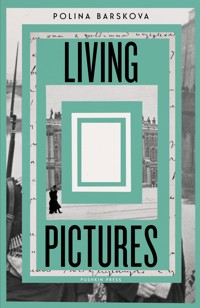
Growing up in Leningrad, Polina Barskova saw no trace of the estimated million people who died in the city during the Nazi blockade of 1941-44. As one of Russia's most admired and controversial contemporary writers, she has repeatedly returned to the archive of texts still being recovered from the siege, finding creative ways to commemorate these ghosts from her home city's past.A chorus of their voices and stories appears in Living Pictures, a breathtakingly inventive literary collage of memoir, archival material and fiction. With blazing immediacy and wit, Barskova delves into traumas historical and personal, writing of memories from a Soviet childhood, her foundational relationships and losses, and a life spent excavating vital fragments from under Leningrad's official history. Ending with a stunning chamber drama about two real people who died while sheltering in the Hermitage Museum during the siege, this is a rich, polyphonic work of living history.
Das E-Book können Sie in Legimi-Apps oder einer beliebigen App lesen, die das folgende Format unterstützen:
Veröffentlichungsjahr: 2022
Ähnliche



















CONTENTS
INTRODUCTION
Dying Pictures
Polina Barskova was born and brought up in Saint Petersburg when it was called Leningrad. Like all the children of that city—I was one—she grew up in the long shadow of the war, and especially of the blokada, the German siege that lasted from September 1941 to January 1944. How does a child grow up in the shadow of an event that had taken place decades earlier? A popular children’s book for our generation was a photographic narrative of the siege that abounded in pictures of dead and starving people. Around the age of three I had thoughtfully scratched a swastika into the red seat of my wooden potty chair. By the age of eight I knew which war monument commemorated what. Across the street from my school there was a tiny preserved bomb shelter. The blockade was everywhere: in the missing buildings, in the walls still scarred by shell fragments, in commemorative inscriptions, in courtyard games. It was there naturally, as the background of the day, as the source of the day, for anyone growing up in that city at the end of the seventies.
One of Saint Petersburg’s identifying symbols is the face of the Medusa that repeats on the neoclassical fence of the Summer Garden. The private sensation that an unspeakable horror had occurred here was covered over and reshaped by the mendacities of Soviet public remembrance. It was not individual suffering that the monuments commemorated viiibut collective heroism, the harmony between the intrepid masses and their selfless leadership. Official discourse recast suffering as sacrifice, as voluntary contributions towards the purchase of victory. For whose sake? Naturally, for “our” sake. The state put itself down as the beneficiary of all attempts to remember, in order that any lack of obedience be framed as ingratitude towards those who died so that we may live. “No one is forgotten, nothing is forgotten,” wrote the blockade poet Olga Berggolts, but the claim was more aspirational than factual. Uncontrolled private memory threatened to deprive suffering of the lofty purpose it bore in state myths. Left to its own devices, memory might dredge up the mistakes and crimes committed by the state before, during, and after the event.
The state had been completely unprepared for the attack. Officials in charge exhibited no interest in minimizing losses among soldiers or civilians. The police intensified political arrests and the arrests of Soviet Germans as the city was being encircled. Food was taken out of the city lest it fall to the enemy on surrender. Starvation rations for civilians contrasted with the relatively normal diet of the Party cadres. And after the war, in the so-called Leningrad Affair, the local bosses who did prevent the city from being taken were killed in a massive purge as Moscow reasserted control.
Private memory might connect the blockade to the class purges, to ethnic cleansing, to collectivization, to the Molotov-Ribbentrop Pact, to the war with Finland, to the gutting of the officer corps by Stalin, to the gulags, to the monumental violence of the whole Soviet experience. It might recall the deliberate starvation of two and a half million Soviet POWs in German custody, a Nazi crime encouraged by the Soviet refusal to sign the Geneva Convention ixof 1929. It might remember the deaths of more than seven million peasants in the Soviet famine of 1932 through 1933, centered in Ukraine, caused by forced collectivization and intensified by state refusal to provide aid. Private memory might put the blockade into Soviet context.
I am trying to explain why Barskova’s book of short stories mixes personal reminiscence with stories about Leningrad writers and artists who lived and died in the siege. The author brings them back to life on the basis of letters and diaries. The second story, “The Forgiver,” epitomizes the montage structure of Living Pictures. Barskova’s personal memories intermingle with scenes involving survivors of the Holocaust and the blockade in a reflection on writing and the psychology of survival in general. This montage of historical fiction and autofiction persists throughout the book, switching sometimes between stories and sometimes inside them. Why is it that children and grandchildren of blockade survivors cannot keep the siege out of their lives, just as they cannot shield their personalities from being shaped by Soviet history? Why not let the dead bury the dead?
Historians of the blockade sometimes see it as a uniquely modern war crime. But it was a traditional city siege in modern dress. Inducing famine among civilians has always been the principal method of subduing fortified cities. Those citizens of Leningrad who still had Bibles could read about what was happening to them in the book of Lamentations, five poems bearing witness to the destruction of Jerusalem and the First Temple by Nebuchadnezzar: “the children and the sucklings swoon in the streets of the city,” “the young children ask bread, and no man breaketh it unto them.” The xancient poet lists the symptoms of what blockade medicine termed “alimentary dystrophy”: “Their visage is blacker than a coal; they are not known in the streets: their skin cleaveth to their bones; it is withered, it is become like a stick.” Perhaps the most haunting trope of the famine in the insistently feminized Jerusalem of the Lamentations is that of mothers eating their own children: “The hands of the pitiful women have sodden their own children: they were their meat in the destruction of the daughter of my people.”
Stories of maternal cannibalism appear in other biblical sieges, no doubt as the most rhetorically effective expression of famine horrors. Josephus calls it “a deed for which there is no parallel” in his description of the savaging of Jerusalem and the Second Temple by the Romans under the noble Titus of Racine’s Bérénice and Mozart’s La clemenza di Tito (Josephus on dystrophy: “With dry eyes and grinning mouths those who were slow to die watched those whose end came sooner.”) The Renaissance ethnographer Jean de Léry, in his account of the Catholic siege of the Huguenot city of Sancerre—famous today for its sauvignon blanc—avers to have been more terrified by Christian parents cooking their dead three-year-old daughter than by the eating of enemies which he had witnessed among the Tupinamba Indians of Brazil.
Perhaps it is to express the unnaturalness of the dystrophic body feeding upon itself that starvation narratives so often involve cannibalism, especially of children. In the period between December 1, 1941, and February 15, 1942, Leningrad authorities arrested a total of 866 people on charges related to the eating of dead bodies and even to the murder of the living with the intent to eat them. Some of this activity was said to be organized. The overwhelming majority of the accused were refugees from the countryside, largely women. xiDid any of them commit the crimes they were charged with? One cannot trust accusations made by the Soviet police. Cannibalism was certainly more present in fear than in practice. Far more numerous were the murders carried out in order to steal food. My father’s uncle is said to have been killed for a day’s ration of bread.
There were gross and systemic inequalities in access to nutrition. The first to die were refugees from the countryside, who lacked residence permits and, therefore, ration cards. Ration cards divided citizens into industrial workers, office workers, and dependents. When food was scarcest, between November 20 and December 25, 1941, most civilians were allotted 125 grams of bread per day. Some people received a little extra at workplace cafeterias—more when the Party regarded their occupation as particularly valuable. Needless to say, Party officials valued their own labor the most. They rewarded themselves with meat. In December 1941, a pastry factory was pumping out baba au rhum for elite eaters. I have heard it argued that, if not for those imposed inequalities, no one in the city would have died of hunger.
The black market flourished. The starving would exchange all of their valuables for a handful of groats. By October 1, 1942, more than three thousand individuals had been arrested and tried for embezzlement or black marketeering. A military prosecutor reported that “the main contingent of those arrested for speculation and theft of socialist property are employees of the trade-supply organizations (retail, warehouses, bases, canteens). The main object of theft and speculation is food and other scarce and rationed goods.” The attached list of confiscated valuables is impressive. Some of the perpetrators were making a fortune. Many of them were shot. The problem continued.xii
The winter of 1941–1942 was exceptionally cold. In January, the temperature fell to negative forty. Electricity did not work, nor heating. Water and sewage pipes burst. Public transport did not run. Apartment houses gaped like anatomical illustrations. The starving tottered slowly from house to house along streets choked in rubble, snowdrifts, and frozen garbage. Those who died in the street lay under ice and snow until defrosting in the spring. Of all the circles of the Inferno, Leningrad looked like the lowest—the ninth—with its sinners frozen into the ice of lake Cocytus.
Barskova is not only a poet and a writer of fiction but also a scholar of the literature and art of the blockade. She wants to know how people responded to and made sense of that kind of catastrophe, and what new artistic languages emerged to convey it. She also wants to know how people lived with one another in those conditions. The blockade proved a laboratory for extreme experiments in family life. Family members had to divide insufficient resources among themselves while face-to-face with each other’s suffering. Sophie’s choice situations were not uncommon.
Living Pictures subsumes the blockade under the more general theme of trauma. Whether set in the blockade or not, its stories focus on the cruelties people visit on each other in close coexistence, even on those they love. The author explores the long-term psychological effects of those cruelties on the survivors, who are then saddled with the task of forgiveness. It is hard to forgive those who are, like Hamlet’s uncle, still possessed of those effects for which they did the murder.
Most of Barskova’s protagonists had been the friends and xiiicolleagues of the poet Daniil Kharms. Arrested on the charge of spreading defeatist rumors, Kharms feigned insanity to avoid the firing squad and starved to death in the prison asylum. His widow, Marina Malich (later Durnovo), appears in “Hair Sticks” and “Brothers and the Brothers Druskin.” The philosopher Yakov Druskin rescued Kharms’s archive and preserved his writings, as well as those of the poet Alexander Vvedensky, another victim of the Soviet police. Evgeny Shvarts, a playwright and children’s author, worked with Kharms at the children’s publishing house that also employed Vitaly Bianki, the protagonist of “Reaper of Leaves.” Druskin and Shvarts survived the first winter. Bianki spent some days as a journalist in the city. The poet Berggolts was a prominent voice at the Leningrad Radio House throughout the siege; she appears in “Eaststrangement.”
Dmitry Maximov, the literary scholar who secretly wrote poems about his siege experience, takes part in “The Forgiver.” Barskova published his poems in Written in the Dark, her anthology of six blockade poets in translation. She also includes the poetry of the future science-fiction writer Gennady Gor and the painter Pavel Zaltsman. None of the poems in Written in the Dark was intended for publication: Soviet censors would never have given them the pass. Many were composed for no circulation at all, not even among the writers’ closest intimates. The difference between the life they recorded and the life they were surrounded by was too great.
A kind of traumatic hypocrisy appears when what people say to others does not correspond to what they say to themselves. As a writer and scholar, Barskova is most interested in individuals leading a double life—in authors who created texts meant to be shown to everyone and texts meant to be shown to no one, whose private writings contradict their xivpublic writings. Her fiction commemorates Leningrad literature as a two-tongued, duplicitous literature, a literature with a false bottom. It is a literature whose central event is the blockade—the blockade flanked by NKVD purges.
The unofficial side of Leningrad literature came to light mainly at the end of the Soviet period. The poems in Written in the Dark, the earlier poetry of Daniil Kharms and Alexander Vvedensky, the philosophy of Leonid Lipavsky and Yakov Druskin, the prose of Lydia Ginzburg, the countless volumes of blockade diaries by writers and nonwriters—none of these was read by the authors’ contemporaries, none had any effect on other literature of its time. Entering public life belatedly, these private writings of long ago remain strangely contemporary. We, the future readers for whom they were composed, have not yet absorbed what they have to tell us. We are absorbing it now, and Living Pictures shows the process of making the past ours.
A soft Stalinism is making a comeback in Russia today. The state has intensified its attacks on the remaining civil-society institutions, branding critical press outfits, human-rights NGOs, anticorruption centers, and even individual dissenters with the status of “foreign agents,” whose activity may be declared “extremist” and punished. The authorities are targeting not only activists concerned with the future but also historians concerned with the past. Associations commemorating the victims of Stalinist purges have been forced to close. Led by former employees of the Soviet political police, the state is on a campaign to justify and idealize the activities of their Stalin-era predecessors. Exhibit A of the conservative nostalgia for Stalinism is the Soviet victory over Germany in World War II. Hence the official discourse around the war, and the blockade in particular, xvhas returned to the mendacity and kitsch of the Soviet period. Serious historical or artistic investigation of the blockade has again become oppositional and subversive. This is why the blockade writings of Polina Barskova—as a poet, as a scholar, and now as an author of fiction—are still politically vital and ideologically relevant, unfortunately so.
—Eugene Ostashevsky
My blockade statistics and quotations were drawn from Leningrad v osade: Sbornik dokumentov o geroicheskoi oborone Leningrada v gody Velikoi Otechestvennoi voiny, ed. A.R. Dzeniskevich (Saint Petersburg: Liki Rossii, 1995). One million is a number usually given for total civilian deaths.xvi
EASTSTRANGEMENT
All a person had to do was say “death” or “victim,” and they’d beat him mercilessly. The Germans let us know we were supposed to call the corpses Figuren, i.e. “marionettes,” “mannequins,” or Schmattes, i.e. “rags.”
—from Claude Lanzmann’s Shoah
The traveler differs from the non-traveler only in that she chooses—to see. Sometimes, when you’ve just returned from far-off places, you look around, amazed, and delay switching off your traveler’s vision; you notice that things are the same but not quite the same in your familiar world. A cup in the garbage drips an oily stream of coffee, and something about this dripping grabs at your heart no less than the sight of a statue, a beautiful woman, a viaduct. The fish market on the corner emits an icy, end-of-day stench, and it’s as though you’re briskly walking past death and might, if you felt like it, say hello: I’m back.
Of course, it’s not the urge to change places but the urge to change times that overpowers us, drives us to get over our fear and embarrassment about joining the herd: the airport searches and disrobings, the water torture of the bus, the centaur-like fusing with the limo. But once you’re there, once you get off the drug of your usual life and crawl out of your snakeskin, a completely different experience of time awaits.4
What new slowness takes over when traveling, and who knows what unexpected thing might happen? If you’re lucky, a new trace, a new scar, will appear on your skin: You’ll see something unforgettable, something that won’t ever disappear.
(For my purposes, I’ll call this “estrangement,” a reckoning with my country. Now you laugh: It’s Eaststrangement, an effect of my trip to the East and back to the great Western cities.)
1. SURFACES
In Berlin the walls of buildings are covered with the acne of an old war’s explosions and gunfire.
A pockmarked surface, whose texture makes you anxious. You want to plaster over, erase it. You want to smooth it out, restore it, and fix it up like new. Mainly, you want not to know. But Berlin’s walls, like its squares, and doorsteps, and alleys … refuse forgetting. Berlin fights and claws and does not allow historical being, historical consciousness, to slumber.
I landed in Berlin after a short double visit to the city of Petersburg, where my professional obligations included showing the Leningrad blockade to American students—its commemoration, anguish, legacy, what have you. Meaning that I, we, were on a quest to part the curtains of time and enter its recesses without, of course, damaging anything.
It turned out the task was not so simple: Petersburg is no Berlin. This city has done everything to ward off, to cordon off, what happened here. The blockade is hidden; it seems to generate not so much new forms of discreetness as total muteness. (How depressed I was to learn that I’ve lived my life not knowing there’s a monument to the blockade tram.) 5The ponderous monument that greets people entering the city was dedicated, it turns out, not to the nominal event but to something completely different: Leningrad’s designation as a Hero City. The walls of the small, perfectly empty underground museum are hung with ordinances, draped in frayed velvet. Later on, once I understood what a nasty dogfight they had over that designation, did I reflect that it truly deserved the decor! …
Only after I and my twenty students, with their sharp young eyes, attentively studied the mosaic panno did we discover in one corner a chastely and, I would say, elegantly wrapped corpse—one of the “mummies.” We also found in one of the display cases, among the weapons and attestations of military valor (and feeling a bit embarrassed in this company), a crumpled, blackened piece of blockade bread, which is not bread: It’s the great ersatz life-or-death. This is how, when guests arrive and ring the doorbell, the host remembers at the last minute to shove the filthy boot or rag into a corner, out of sight. Likewise, this museum pushes out of sight the blockade body, the body of a human being, the body of bread, while earnestly, solicitously offering up euphemisms: Figuren, marionettes, medals, no people.
After our tour of the monument and the delights of blockade sublimity (the phrase belongs to Fadeev, who was expertly flown into the city and hastily evacuated in the spring), we decided to go to Victory Park, near the highway to Moscow.
Bumblebees were humming, children were shrieking, like they used to when Katya and I would go there. We walked and raced, we skated, we swung, we bought ice cream, it melted, our firm adolescent legs gleamed. We had no way of knowing the park was haunted, the forest was haunted, a forest from a terrifying folktale. As far as I remember (that’s 6the big question, whether you forget something like that), no one ever mentioned how the park got its name, no one told us this was the place they unloaded and burned the weightless transparent glassy tender rigid bodies of the starving, the dystrophics: thousands and thousands and thousands of bodies. Some victory.
These days my sagacious interviewers love to ask me, Why and where did you get your blockade mania, your continual blahblahkade: Maybe you’re avenging history for the grand-parents you lost? No, it’s nothing personal. The answer is clear! I’m sure that while Katya and I were twisting on our winged swings, and Katya’s light-brown braid was flying into her mouth, on these same swings, flying along with us, were those somber blockade children, the ones who, in a 1942 documentary reel, were played by self-satisfied pink cupids/butterballs. As ten-year-olds we knew nothing about the blockade children. We never saw them, but they had to be somewhere: A million people can’t just disappear. A million (the conservative, falsified estimate)—that’s a lot of people.
What did I want to show my students in the park? The nothing? The emptiness? The well-maintained, lilac-filled garden? Me with my skinned knee escorted by a battalion of ghosts? I wanted to show them one of many possible answers to the question of why you can’t escape the blockade in this city, though it’s nowhere to be found. It’s nowhere and everywhere, like a riddle in a folktale.
2. IN A SUBTERRANEAN VOICE
The Leningrad blockade is unfinished and infinite, it is not buried, the final word on it has not been said, but even so, 7what a multitude, what an absurd quantity of words it has produced! You could fill rooms, storage lockers of memory with the diaries alone … I’ve asked friends who are just as devoted to the subject, Where do I go, where do I find it, where is it now?
And my friend told me: The blockade is underground, it lives, it goes on under our feet, look for it there. My friend, my Cheshire cat: a sad, wry, colorful fairy out of Kosheverova’s Cinderella, perhaps the most important film about the horrors of mid-century Leningrad (Shvarts quivers, Ranevskaia bares her teeth, the aging Zheimo sparkles). My fairy, showing me the next fruit, the next crossroad, in our ancient fairy tale, said: “Beneath the earth, it is hidden in a cave beneath the earth, there you shall find it.”
Go to Akhmatova’s courtyard. Go to the courtyard of Berggolts.
In the courtyard of Fountain House, where during the first weeks of the blockade Akhmatova for some reason still held out, they discovered gaps. I read about these gaps in a dozen blockade diaries but saw them for the first time that day in the museum in a photograph and felt terrified: A gap is an entrance to the underground, a living person goes underground to wait out death, but also to spend time in its company.
Having pried open and visited these gaps, Anna Andreyevna Akhmatova drew one step closer to her Leningrad horror. The gap was a test of nerves, a rehearsal. From there we proceeded to the next courtyard, the next blockade writer, the one who refused to evacuate, wanting to see everything with her own eyes, to taste/know it with her own mouth, and, it must be said, she tasted and knew.
To me, one of the most horrifying episodes in Berggolts’s 8fascinating diary was her false pregnancy: Berggolts (by this time having lost three children) believed she was pregnant from her blockade affair with Georgy “the Matador” Makogonenko.




