



0,49 €
Niedrigster Preis in 30 Tagen: 1,99 €
Niedrigster Preis in 30 Tagen: 1,99 €
Mehr erfahren.
- Herausgeber: Booksell-Verlag
- Kategorie: Geisteswissenschaft
- Sprache: Englisch
In "Machiavelli," John Morley offers a captivating exploration of the controversial figure Niccolò Machiavelli, intertwining biographical details with an insightful analysis of his political philosophy. Employing a clear and engaging literary style, Morley dissects Machiavelli's masterworks, notably "The Prince" and "Discourses on Livy," situating them within the tumultuous political landscape of Renaissance Italy. The book transcends mere biography, acting as a critical commentary on the nature of power, ethics in governance, and the relationship between morality and statecraft, making it a vital text in understanding both Machiavelli and modern political thought. John Morley, a distinguished British statesman and writer, was deeply engaged with the political discourse of his time. His extensive background in politics, coupled with a profound interest in philosophy and history, informed his interpretation of Machiavelli, allowing him to present the Florentine thinker not solely as a cold-hearted opportunist but as a revolutionary thinker reflecting the complexities of governance and human nature. Morley's authoritative examination draws on his own experiences in political arenas, bridging historical and modern debates. This book is highly recommended for scholars, students, and readers interested in political philosophy. Morley's analysis envelops readers in the intricate web of Machiavelli's ideas, inviting them to challenge prevailing perceptions and engage with the deeper implications of power and ethics in political structures. A must-read for anyone seeking a nuanced understanding of one of history's most provocative figures. In this enriched edition, we have carefully created added value for your reading experience: - A succinct Introduction situates the work's timeless appeal and themes. - The Synopsis outlines the central plot, highlighting key developments without spoiling critical twists. - A detailed Historical Context immerses you in the era's events and influences that shaped the writing. - A thorough Analysis dissects symbols, motifs, and character arcs to unearth underlying meanings. - Reflection questions prompt you to engage personally with the work's messages, connecting them to modern life. - Hand‐picked Memorable Quotes shine a spotlight on moments of literary brilliance. - Interactive footnotes clarify unusual references, historical allusions, and archaic phrases for an effortless, more informed read.
Das E-Book können Sie in Legimi-Apps oder einer beliebigen App lesen, die das folgende Format unterstützen:
Veröffentlichungsjahr: 2021
Ähnliche

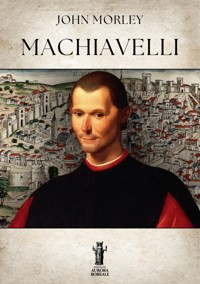











Machiavelli
Table of Contents
Introduction
At once historical inquiry and moral interrogation, John Morley’s Machiavelli asks how power can be understood without dissolving responsibility.
Machiavelli is a concise work of nonfiction by John Morley, a nineteenth-century British liberal essayist and statesman, offering a biographical and critical study of the Florentine thinker. The book situates Niccolò Machiavelli in Renaissance Italy—particularly the civic turbulence of Florence—and reads his ideas against that political landscape. Published in the Victorian era, it reflects a period when British intellectuals were reassessing the foundations of political authority, secular ethics, and historical progress. Within this context, Morley presents a clear, disciplined examination that bridges life-writing, intellectual history, and political theory without succumbing to legend or invective.
Morley’s premise is straightforward: to understand Machiavelli’s notorious reputation, one must first understand the world he inhabited and the texts he actually wrote. The book guides readers through the broad outlines of Machiavelli’s public service, subsequent displacement from power, and the major works that emerged from those experiences. It offers a measured, analytic voice, favoring clarity over flourish and explanation over condemnation. Readers can expect a thoughtful, historically grounded account rather than a polemical verdict, with attention to how Machiavelli’s arguments take shape on the page and why those arguments have proven so enduring, troubling, and frequently misunderstood.
Central themes include the relationship between politics and morality, the idea of necessity in public life, and the tension between republican citizenship and princely rule. Morley explores how Machiavelli’s thinking connects civic virtue to institutional design, and how judgments about character, fortune, and circumstance can guide or distort statecraft. He considers the gap between ethical idealism and urgent political decision-making, asking what happens when the demands of security, stability, or independence collide with conventional norms. The result is a study that probes the limits of moral counsel in perilous times, yet resists caricaturing Machiavelli as a mere apostle of expediency.
A hallmark of the book is its close reading of Machiavelli’s principal writings alongside their historical moment. Morley keeps the analysis grounded in the texts themselves, while explaining how particular arguments respond to the volatile geometry of Italian city-states, factionalism, and foreign intervention. The prose is lucid, the structure economical, and the tone steady, inviting readers to consider what Machiavelli meant before passing judgment on what he is said to have meant. Without jargon or doctrinaire scaffolding, Morley builds a picture of a thinker wrestling with practical governance and the frailties of human ambition, rather than a detached theorist spinning abstractions.
For contemporary readers, the book’s relevance lies in its insistence that political judgment is forged where ideals meet constraints. Morley’s Machiavelli raises questions that remain urgent: How should leaders balance prudence and principle? When do institutions require firmness, reform, or restraint? What risks arise when public language about virtue hides private calculations of power? By disentangling Machiavelli from stereotype, the study equips readers to see beyond the casual label “Machiavellian” and to evaluate real-world leadership with sharper tools—historical awareness, conceptual precision, and a wary eye for the costs of necessary action.
As an introduction, this book offers an accessible portal to Machiavelli’s world and a disciplined model for reading him well. It neither sensationalizes nor sanitizes, preferring a careful mapping of arguments to grand pronouncements. Students of political theory, intellectual history, and Renaissance studies will find a compact guide that clarifies core debates while leaving room for independent judgment. General readers will meet a writer who speaks plainly about peril and prudence, and a subject whose legacy has shaped centuries of thought. Morley’s study endures because it respects its reader, its evidence, and the stubborn complexity of political life.
Synopsis
John Morley introduces Machiavelli by setting him within the political and cultural conditions of Renaissance Italy. He aims to separate legend from record, describing a world of contending city-states, mercenary warfare, and shifting alliances, in which practical statecraft was prized. Morley outlines his method: to read the works in light of the life and offices Machiavelli held, and to test judgments against contemporary practice rather than abstract morals. He sketches the author as a civil servant and observer, not an isolated theorist, and signals the book's plan to follow the sequence of career, writings, and influence.
Morley recounts Machiavelli's early years in Florence, born in 1469 to a modestly placed family with humanist interests. After Savonarola's fall, Machiavelli entered the Florentine Republic's Second Chancery in 1498. The post combined routine administration with diplomatic drafting and missions. Morley describes the republican institutions, factional pressures, and the challenges posed by foreign powers in Italy. He emphasizes the training Machiavelli gained in correspondence, negotiation, and analysis of reports. Through letters and records, Morley reconstructs a career rooted in public service, clarifying the practical orientation that later shaped the author's historical and political writings.
Detailed attention is given to the embassies that formed Machiavelli's experience. Morley follows missions to the French court of Louis XII, to Rome, and especially to Cesare Borgia in the Romagna. He presents the memoranda and dispatches as evidence of close observation of power, logistics, and the use of force. The episode of Borgia provides material for Machiavelli's reflections on virtu and fortuna, and for his critique of mercenary arms. Morley also narrates the attempt to organize a citizen militia for Florence, describing its rationale and limits within a divided republic and a volatile peninsula.
The narrative then turns to the collapse of the Republic in 1512 and the Medici restoration. Machiavelli is dismissed, implicated, imprisoned, and briefly tortured, before being released into enforced retirement at San Casciano. Morley uses the correspondence with Francesco Vettori to portray this period of exclusion and inward work. Here, Machiavelli composes the treatise later known as The Prince, alongside other projects. Morley presents the circumstances of dedication and the hope of employment, while noting the continuity of analysis from earlier dispatches. The exile frames a shift from official activity to systematic reflection on modes of rule.
Morley summarizes The Prince as a compact manual addressing the acquisition, maintenance, and loss of states. He outlines the classification of principalities, the assessment of arms, and the evaluation of cruelty, clemency, and deception in relation to public security. Cesare Borgia appears as an instructive example, not as an ideal. Morley attends to the themes of virtu, fortune, and necessity, emphasizing the insistence on native forces over mercenaries. He presents the dedication to a Medici as a practical bid for service, while arguing that the book's core is a general analysis of political constraints in new states.




