


46,99 €
Mehr erfahren.
- Herausgeber: John Wiley & Sons
- Kategorie: Wissenschaft und neue Technologien
- Sprache: Englisch
Providing a guide for marine conservation practice, Marine Conservation takes a whole-systems approach, covering major advances in marine ecosystem understanding. Its premise is that conservation must be informed by the natural histories of organisms together with the hierarchy of scale-related linkages and ecosystem processes. The authors introduce a broad range of overlapping issues and the conservation mechanisms that have been devised to achieve marine conservation goals. The book provides students and conservation practitioners with a framework for thoughtful, critical thinking in order to incite innovation in the 21st century.
"Marine Conservation presents a scholarly but eminently readable case for the necessity of a systems approach to conserving the oceans, combining superb introductions to the science, law and policy frameworks with carefully chosen case studies. This superb volume is a must for anyone interested in marine conservation, from students and practitioners to lay readers and policy-makers."
—Simon Levin, George M. Moffett Professor of Biology, Department of Ecology & Evolutionary Biology, Princeton University
Sie lesen das E-Book in den Legimi-Apps auf:
Seitenzahl: 1198
Veröffentlichungsjahr: 2013
Ähnliche



















Table of Contents
Frontispiece
Title page
Copyright page
Dedication
Contributors
Preface
About the Companion Website
CHAPTER 1: In Pursuit of Marine Conservation
1.1 The Emergence of Modern Marine Conservation
1.2 Defining “Marine Conservation”
1.3 Marine Conservation's Scope
1.4 Adapting Marine Conservation to the 21st Century
CHAPTER 2: Marine Conservation Issues
2.1 Igniting Marine Conservation Concern
2.2 Primary Issues: Loss of Marine Biodiversity
2.3 Secondary Issues: Human Activities
2.4 Tertiary Issues: Emergent and Unintended Consequences
2.5 The Challenge for the 21st Century
CHAPTER 3: Marine Conservation Mechanisms
3.1 The Toolkit
3.2 Biological Conservation
3.3 Spatially Explicit Conservation
3.4 Governance: Policy, Strategy, Tactics
3.5 Policy Instruments for Marine Conservation
3.6 Management Concepts
3.7 Agents for Conservation
3.8 Conclusion
CHAPTER 4: Marine Systems: The Base for Conservation
4.1 A Systems Approach
4.2 Dynamic Planetary Forces
4.3 Major Ocean Structures and Conditions
4.4 Planetary Cycles
4.5 Major Planetary Interfaces
4.6 The Dynamic Coastal Realm
4.7 The Coastal Realm: An Ecosystem of Global Importance
4.8 The Ecosystem Concept
4.9 Ecosystem Base for Conservation
CHAPTER 5: Natural History of Marine Organisms
5.1 What Is Natural History?
5.2 Darwinian Evolution
5.3 Diversity of Marine Life
5.4 Life History
5.5 Biological Associations
5.6 Biogeographic Patterns in Space and Time
5.7 Biotic Functional Diversity
5.8 “Seascape” as an Organizing Principle
5.9 Natural History: The Basis for Conservation
CHAPTER 6: Chesapeake Bay: Estuarine Restoration with an Environmental Debt
6.1 The Great Shellfish Bay
6.2 Ecological Linkages to Natural Wealth
6.3 Eastern Oyster: Quintessential Estuarine Species
6.4 From Resource Abundance to Ecosystem Change
6.5 Bay Restoration: Chartering a Course
6.6 People Shall Judge
CHAPTER 7: Bering Sea Seals and Walruses: Responses to Environmental Change
7.1 A Short History of Dramatic Change
7.2 Biophysical Setting
7.3 Marine Mammals of the Southeastern Bering Sea
7.4 Ice-Dependent Pinnipeds of the Northern Bering Sea
7.5 Do Large Marine Mammals Matter?
7.6 The Conflict Arena
7.7 Cultural Factors: Subsistence Hunting, Traditional Knowledge, and Community Well-Being
7.8 Are Beringian Pinnipeds and the Bering Sea Ecosystem at Risk?
CHAPTER 8: The Bahamas: Conservation for a Tropical Island Nation
8.1 A Nation of Islands
8.2 Biophysical and Social Setting
8.3 Conservation Issues
8.4 Governance for Sustainability
8.5 Island System at a Crossroads
CHAPTER 9: The Isles of Scilly: Sustaining Biodiversity
9.1 Setting the Scene
9.2 Physical and Biogeographic Setting
9.3 Measuring and Measures of Biodiversity
9.4 Sustaining Biodiversity from Possible Threats
9.5 Conservation Legislation, Mechanisms, and Voluntary Actions
9.6 The Conservation Status of Scilly
CHAPTER 10: Gwaii Haanas: From Conflict to Cooperative Management
10.1 Nation-to-Nation Pursuit of Land-Sea Conservation
10.2 Natural Heritage
10.3 Cultural and Commercial Heritage
10.4 Integrating Land-Sea Conservation
10.5 Crucible for Ecosystem-Based Management
CHAPTER 11: South Africa: Coastal-Marine Conservation and Resource Management in a Dynamic Socio-Political Environment
11.1 A Challenge for Governance
11.2 South Africa's Coastal Realm: Physical, Biotic, and Human Setting
11.3 Major Conservation Issues of South African Coasts
11.4 Coastal Resource Management: Past and Present
11.5 In Pursuit of the Kogelberg Biosphere Reserve
11.6 The Future of Coastal Management in South Africa
CHAPTER 12: Species-Driven Conservation of Patagonian Seascapes
12.1 Darwin's Patagonia
12.2 A Conservation Dilemma
12.3 Oceanographic and Biogeographic Settings
12.4 Conservation Setting: The Status of a Non-Pristine Ocean
12.5 Seascape Species: A First Approach to Setting Conservation Priorities
12.6 From Seascape Spaces to Important Foraging Areas
12.7 The Concept of “Large Ocean Reserves”
12.8 A First Step Towards a Patagonian Sea LOR: Candidate Areas for Conservation
12.9 Making Slow Progress
CHAPTER 13: From Being to Becoming: A Future Vision
13.1 The New Normal
13.2 From Being …
13.3 … To Becoming
13.4 Emerging Concepts for Marine Conservation
13.5 Look to the Future
Species Index
Subject Index
The land-sea coastal realm from the tropics to polar regions, where the majority of marine conservation issues lie. See Chapters 2 and 4 for physical and biological/ecological characterization. Illustration © Robert L. Smith, Jr.
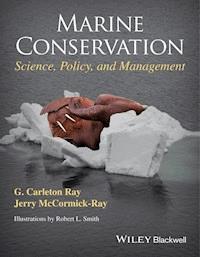
Cover image: created in Photoshop by Robert L. Smith, Jr., from separate pictures of the walrus and the ice floe, Bering Sea. Photographs © Ray & McCormick-Ray.
This edition first published 2014 © 2014 by G. Carleton Ray and Jerry McCormick-Ray
Registered office: John Wiley & Sons, Ltd, The Atrium, Southern Gate, Chichester, West Sussex, PO19 8SQ, UK
Editorial offices: 9600 Garsington Road, Oxford, OX4 2DQ, UK
The Atrium, Southern Gate, Chichester, West Sussex, PO19 8SQ, UK
111 River Street, Hoboken, NJ 07030-5774, USA
For details of our global editorial offices, for customer services and for information about how to apply for permission to reuse the copyright material in this book please see our website at www.wiley.com/wiley-blackwell.
The right of the author to be identified as the author of this work has been asserted in accordance with the UK Copyright, Designs and Patents Act 1988.
All rights reserved. No part of this publication may be reproduced, stored in a retrieval system, or transmitted, in any form or by any means, electronic, mechanical, photocopying, recording or otherwise, except as permitted by the UK Copyright, Designs and Patents Act 1988, without the prior permission of the publisher.
Designations used by companies to distinguish their products are often claimed as trademarks. All brand names and product names used in this book are trade names, service marks, trademarks or registered trademarks of their respective owners. The publisher is not associated with any product or vendor mentioned in this book.
Limit of Liability/Disclaimer of Warranty: While the publisher and author(s) have used their best efforts in preparing this book, they make no representations or warranties with respect to the accuracy or completeness of the contents of this book and specifically disclaim any implied warranties of merchantability or fitness for a particular purpose. It is sold on the understanding that the publisher is not engaged in rendering professional services and neither the publisher nor the author shall be liable for damages arising herefrom. If professional advice or other expert assistance is required, the services of a competent professional should be sought.
Library of Congress Cataloging-in-Publication Data
Ray, G. Carleton.
Marine conservation : science, policy, and management / G. Carleton Ray and Jerry McCormick-Ray.
pages cm
Includes bibliographical references and index.
ISBN 978-1-118-71444-7 (cloth) – ISBN 978-1-4051-9347-4 (pbk.) 1. Marine resources conservation–Textbooks. I. McCormick-Ray, Jerry. II. Title.
GC1018.R39 2014
333.91'6416–dc23
2013014734
A catalogue record for this book is available from the British Library.
Wiley also publishes its books in a variety of electronic formats. Some content that appears in print may not be available in electronic books.
To Sally Lyons Brown for her vision and support, and to Raymond F. Dasmann and F. Herbert Bormann who continue to inspire us.
Contributors
Mark A. Albins
Marine Fish Laboratory
Auburn University
Fairhope, Alabama, USA
Alan B. Bolten
Department of Biology
Archie Carr Center for Sea Turtle Research
University of Florida
Gainesville, Florida, USA
Karen A. Bjorndal
Department of Biology
Archie Carr Center for Sea Turtle Research
University of Florida
Gainesville, Florida, USA
Robert L. Brownell, Jr.
NOAA Southwest Fisheries Center
Pacific Grove, California, USA
Claudio Campagna
Wildlife Conservation Society
Buenos Aires, Argentina
Randolph M. Chambers
Department of Environmental Science and Policy
College of William and Mary
Williamsburg, Virginia, USA
Mark R. Christie
Department of Zoology
Oregon State University
Corvallis, Oregon, USA
Philip J. Clapham
National Marine Mammal Laboratory
National Oceanic and Atmospheric Administration
Seattle, Washington, USA
Barry Clark
Zoology Department
University of Cape Town
South Africa
Paul K. Dayton
Scripps Institution of Oceanography
University of California, San Diego
San Diego, California, USA
Hon. Earl D. Deveaux
[Retired, Minister of the Environment, The Bahamas]
Nassau, Bahamas
Robert J. Diaz
Department of Biological Sciences
Virginia Institute of Marine Sciences
College of William and Mary
Gloucester Point, Virginia, USA
David B. Eggleston
Department of Marine, Earth and Atmospheric Sciences
North Carolina State University
Raleigh, North Carolina, USA
R. Michael Erwin
[Retired, Department of Environmental Sciences, University of Virginia]
Weaverville, North Carolina, USA
James A. Estes
Center for Ocean Health
University of California, Santa Cruz
Santa Cruz, California, USA
Valeria Falabella
Wildlife Conservation Society
Buenos Aires, Argentina
Michael Garstang
[Retired, Department of Environmental Sciences, University of Virginia]
Charlottesville, Virginia, USA
J. Frederick Grassle
Institute of Marine and Coastal Sciences
Rutgers University
New Brunswick, New Jersey, USA
Allan Heydorn
[Retired CEO, World Wildlife Fund, South Africa]
Stellenbosch, South Africa
Mark A. Hixon
University of Hawai'i at Manoa
Honolulu, Hawai'i, USA
Edward D. Houde
Center for Environmental Science
University of Maryland
Solomons, Maryland, USA
Gary L. Hufford
[Retired National Weather Service]
National Oceanic and Atmospheric Administration
Eagle River, Alaska, USA
Brian J. Huntley
[Retired Director, Kirstenbosch National Botanical Garden]
Capetown, South Africa
Yulia V. Ivashchenko
National Marine Mammal Laboratory
National Oceanic and Atmospheric Administration
Seattle, Washington, USA
Steven Kohl
Department of the Interior
Fish and Wildlife Service
Washington, D.C., USA
Igor Krupnik
Arctic Studies Center
National Museum of Natural History
Smithsonian Institution
Washington, D.C., USA
Craig A. Layman
Department of Applied Ecology
School of Agriculture
North Carolina State University
Raleigh, North Carolina, USA
Romuald N. Lipcius
Department of Fisheries Science
Virginia Institute of Marine Science
College of William and Mary
Gloucester Point, Virginia, USA
Thomas R. Loughlin
[Retired, NOAA National Marine Mammal Laboratory]
Redmond, Washington, USA
John C. Ogden
Florida Institute of Oceanography
St. Petersburg, Florida, USA
James E. Perry
Department of Coastal and Ocean Policy
Virginia Institute of Marine Science
College of William and Mary
Gloucester Point, Virginia, USA
Eleanor Phillips
The Nature Conservancy
Northern Caribbean Office
Nassau, The Bahamas
James H. Pipkin
[Retired, U.S. Department of State Special Negotiator for Pacific Salmon (1994 to 2001); U.S. federal Commissioner on the bilateral Pacific Salmon Commission (1999 to 2002); Counselor to the U.S. Secretary of the Interior (1993 to 1998); and Director of the Interior Department's Office of Policy Analysis (1998 to 2001)]
Bethesda, Maryland, USA
Robert Prescott-Allen
[Retired, International Union for Conservation of Nature and Natural Resources, author of The Wellbeing of Nations, co-author of Blueprint for Survival, World Conservation Strategy, and Caring for the Earth: a Strategy for Sustainable Living]
Victoria, British Columbia, Canada
Brandon J. Puckett
Department of Marine, Earth and Atmospheric Sciences
North Carolina State University
Raleigh, North Carolina, USA
Sam Ridgway
[Retired, U.S. Navy Marine Mammal Program, and Professor of Comparative Pathology, Veterinary Medical Center, University of California, San Diego]
San Diego, California, USA
Rutger Rosenberg
Kristineberg Marine Research Station
University of Gothenburg
Sweden
Brian R. Silliman
Division of Marine Science and Conservation Nicholas School of the Environment
Duke University
Durham, North Carolina, USA
N. A. Sloan
Gwaii Haanas National Park Reserve, National Marine Conservation Area Reserve, and Haida Heritage Site
Haida Gwaii, British Columbia, Canada
Paul Snelgrove
Ocean Sciences Centre and Biology Department
Memorial University of Newfoundland
St. John's, Newfoundland, Canada
Amber J. Soja
NASA National Institute of Aerospace
Hampton, Virginia, USA
William T. Stockhausen
Alaska Fisheries Science Center
National Marine Fisheries Service, NOAA
Seattle, Washington, USA
Lori A. Sutter
Virginia Institute of Marine Science
College of William and Mary
Gloucester Point, Virginia, USA
Richard M. Warwick
Plymouth Marine Laboratory
Plymouth, Devon, UK
Kirk O. Winemiller
Texas A&M University
Department of Wildlife and Fisheries Sciences
College Station, Texas, USA
Victoria Zavattieri
Wildlife Conservation Society
Buenos Aires, Argentina
Preface
We are at a time in history when science allows us better to understand our global environment, and when human societies are beginning to recognize the urgency of marine conservation and the need for sustainable use of marine resources. As John A. Moore (1993) has put it: “We have reached a point in history when biological knowledge is the sine qua non for a viable human future … A critical subset of society will have to understand the nature of life, the interaction of living creatures with their environment, and the strengths and limitations of the data and procedures of science itself. The acquisition of biological knowledge, so long a luxury except for those concerned with agriculture and the health sciences, has now become a necessity for all.”
During the past century, humans have acquired the ability to intrude, exploit, and better understand the last, previously unexplored portion of Earth—the contiguous global oceans. The rates and magnitude of change brought on by the Marine Revolution (Ray, 1970) followed 5–10,000 years of the Agricultural Revolution and two centuries of the Industrial Revolution, with dangers of repeating errors of the past. Observation of the quickening pace of change and the way that humans behave and manage themselves, and increasing knowledge of the way marine ecosystems function have made apparent major ecosystem instabilities and management incongruences. Approaches deemed feasible when marine conservation was emerging only a half-century ago no longer fulfill needs of the 21st century. That the world has become “hot, flat, and crowded” (Friedman, 2008) makes clear the need for new marine conservation approaches.
Our previous book, Coastal-Marine Conservation: Science and Policy (Blackwell Science, 2004) called attention to the fundamental role natural history and ecosystem-based science play in conservation policy and management planning. That is, conservation must be informed by the natural histories of organisms together with the hierarchy of scale-related linkages and ecosystem processes. This book continues that focus on a whole-systems approach to marine conservation, taking account of major advances in marine ecosystem understanding to guide marine conservation practice. Our objective is to expose students and other readers to the broad range of overlapping issues (Chapter 2) in the context of present conservation mechanisms that have been devised to achieve marine conservation goals (Chapter 3). Achieving these goals depends on understanding basic marine ecosystem science (Chapter 4) and the natural histories of marine organisms (Chapter 5), that is, how organisms make a living in dynamic and often stressful environments. In that process, we call attention to emergent and unexpected properties that are changing coastal and marine systems—climate change, ocean acidification, dead zones, and loss of biodiversity—that challenge the resilience of coast-ocean systems, hence also governance and human well-being. We present seven “real-world” case studies that exemplify coastal and marine conservation in action, each presenting a central issue or issues in the context of its biogeographic and social setting. Each combines theoretical (“pure”) and applied science, and each concludes with challenges to governance that are not yet fully resolved.
A final synthesis chapter looks to the future, to transition coastal and marine conservation from the being of traditional, fragmented, protection, and management to the becoming of ecosystem-based approaches, intertwined in a social-ecological system, that propel marine biodiversity and society into the future. Overall, this book is an attempt to provide a framework for thoughtful, critical thinking in order to incite innovation in the new Anthropocene Era of the 21st century.
References, scientific terms, Latin names, and units. This book provides readers with a window into a massive literature on conservation science, policy, and management as a context for understanding the present state of knowledge of marine ecosystems, their life, and their current conservation and management. The language of science is enormous and similar terms often have different, even contradictory, meanings among disciplines. We have attempted to explain these terms by defining some of them in the text. We do not include a glossary, as definitions can be accessed in science dictionaries or through search engines on the Internet. We use the International System of Units (SI units) and metric measurements (e.g., m = meters, mt = tonnes, km = kilometers, nmi = nautical miles, etc.) throughout the text.
Species are referred to by their vernacular (“common”) names (blue crab, herring, porpoise, etc.) with Latin names for proper identification. Care must be taken with vernacular names because for the great majority of species these names are not standardized (mammals, birds, and some fishes are notable exceptions). For example, “cod” is a common name for a valuable Atlantic fish of the cod family (Gadidae), but “cod” in Australia refers to groupers of the sea bass family (Serranidae), and for some species of the Southern Ocean “cod” refers to ice fishes of the family Nototheniidae; similarly, “rockfish” may refer to a number of fishes from a half dozen families of fishes; and, the “Dover sole” of the north eastern Pacific is not the highly valued Dover sole of the eastern Atlantic. Therefore, scientific names are essential for identification, and are given with the vernacular the first time the species is mentioned in each chapter, or if far separated.
Acknowledgements and permissions. We first wish to thank the Curtis and Edith Munson Foundation and The Henry Foundation of Washington, D.C., for generous support for the writing and publication of this book in full color, as well as other donors to the University of Virginia Global Biodiversity Fund. We remain deeply grateful to the late Sally Lyons Brown and the W. L. Lyons Brown Foundation for encouragement and support of the 2004 edition, without which the writing of the present book would have been far more arduous.
We especially wish to thank all co-authors and contributors of boxes for volunteering their time and expertise and for their patience during the four-year preparation of this book; these persons are identified accompanying their contributions, and their affiliations are given under Collaborating Authors following this Preface. Acknowledgements to persons and publications who provided photographs and figures are given as those materials appear. Chapters that list no authors, and photographs acknowledged as “the authors” are ours.
We are especially indebted to persons who have influenced our thinking during past decades: Frederick B. Bang, Raymond F. Dasmann, Francis H. Fay, J. Frederick Grassle, Starker Leopold, John A. Moore, Kenneth S. Norris, John C. Ogden, Fairfield Osborn, C. Richard Robins, William E. Schevill, William A. Watkins, and Sir Peter Scott. Others have been especially helpful by providing information specific to individual chapters: David Argument, Pat Bartier, Peter Berg, Charles Birkeland, Peter Boveng, Michael Braynen, Michael Cameron, Eric Carey, Mark H. Carr, Roger Covey, Jon Day, Terri Dionne, Catlyn Epners, D. Fedje, Lynn Gape, Robert Ginsburg, E. Gladstone, Samuel H. Gruber, Bruce P. Hayden, William J. Hargis, Nick Irving, Paula Jasinski, Victor S. Kennedy, Bjorn Kjerfve, Casuarina Lambert McKinney, Jeffrey Lape, Ian G. Macintyre, Dennis Madsen, Karen McGlathery, Pericles Maillis, John D. Milliman, Mary Morris, Roger Newell, Rick Parish, David Pollard, Cliff Robinson, Yvonne Sadovy, Rodney V. Salm, Neil E. Sealey, Kenneth Sherman, Herman H. Shugart, Richard Starke, Ann Swanson, Brent and Robin Symonette, Hillary Thorpe, Brian Walker, Douglas Wartzok, Maire Warwick, and Pat Wiberg. Mark Hixon, Mark Albins, and Mark Christie acknowledge support from the U. S. National Science Foundation for their research on reef-fish larval connectivity, as reviewed in Chapter 5 (grants OCE-00-93976 and OCE-05-50709), and the lionfish invasion in Chapter 6 (grants OCE-08-51162, OCE-12-33027, and a Graduate Research Fellowship). Norm Sloan (Ch. 10) also expresses thanks to those who contributed to the 2006 technical overview of Gwaii Haanas Marine: Pat Bartier, John Broadhead, Lyle Dick, Catlyn Epners, Daryl Fedje, Debby Gardiner, John Harper, Anna-Maria Husband, Greg Martin, Mary Morris, Trevor Orchard, Marlow Pellatt, Cliff Robinson, Ian Sumpter, and Ian Walker. Finally, we thank students who have taken our marine conservation courses at the University of Virginia for their often-insightful comments.
We also wish to thank the authors, illustrators, journals, and publishers who have given permission to use their work, as noted in captions to figures and tables.
We are grateful for the encouragement of funding organizations and agencies for which we have been granted support or have served an advisory or consultancy role, most particularly: ICSU (International Council for Science), IUCN (International Union for the Conservation of Nature and National Resources), NASA (National Aeronautics and Space Administration), National Geographic Society, National Oceanic and Atmospheric Administration, National Science Foundation, New York Aquarium (Wildlife Conservation Society), Office of Naval Research, UNESCO, U.S. Man and the Biosphere Program, Bahamas National Trust, U.S. Marine Mammal Commission, and U.S. National Park Service.
We are indebted to Ward Cooper, Izzy Canning, Kelvin Matthews, Delia Sandford, Carys Williams, Kenneth Chow and Audrie Tan of Wiley Blackwell for their efficiency and positive encouragement, as well as Ian Sherman and his co-workers who worked with us on the 2004 edition, without whom this new edition would not have been possible. We finally wish to thank Ruth Swan, project manager for Toppan Best-set, and Mark Ackerley, freelance copyeditor, for their diligent and thorough proofing, and freelancer Elizabeth Paul for her arduous permission seeking.
G. Carleton Ray and Jerry McCormick-Ray
References
Friedman TL (2008) Hot, Flat, and Crowded: Why We Need a Green Revolution—and How it Can Renew America. Farrar, Straus and Giroux, New York.
Moore JA (1993) Science as a Way of Knowing: The Foundation of Modern Biology. Harvard University Press, Cambridge, Massachusetts.
Ray C (1970) Ecology, law, and the “marine revolution.” Biological Conservation 3, 7–17.
About the Companion Website
This book is accompanied by a companion website:
www.wiley.com/go/ray/marineconservation
The website includes:
Powerpoints of all figures from the book for downloadingPDFs of tables from the bookCHAPTER 1
In Pursuit of Marine Conservation
There is a tide in the affairs of men
Which, when taken at the flood, leads on to fortune …
On such a full sea are we now afloat;
And we must take the current when it serves
Or lose our ventures.
William Shakespeare Julius Caesar
Open-ocean systems may seem not to be so disturbed at their surface, but signs of ecological disruption are apparent. The lone walrus on our cover is a metaphor for Planet Earth's fragmented habitats, disrupted ecosystems, and diminished biodiversity. As oceans change, tropical reefs die, polar regions lose sea ice, and marine life that we hardly know is increasingly becoming vulnerable to extinction. Nowhere is this change more apparent than in the land-sea coastal realm (Frontispiece), where the majority of humanity lives, ecosystems are most productive, and biodiversity is greatest.
During the rise of human civilizations, societies have inherited the economics of resource exploitation from an ocean perceived as “limitless.” Fisheries, shipping, and coastal settlement as old as civilization, have increasingly expanded to force conservation into defense of species and spaces. And as the ecosystems upon which species depend have changed, scientists have become increasingly involved. Modern science, which had moved from studies in natural history to environmental modeling and statistics to better understand marine systems, is returning to natural history, recognizing that it forms the basis for environmental and evolutionary science itself (Box 1.1). The advancing state of knowledge and the increasing need for sustainable ecosystems are forcing marine conservation science to become more proactive and to expand its scope to encompass whole regional seas. Recognition of depleted fisheries, coastal catastrophes, and consequences of natural events tied to human activities have led to new ways of thinking about how marine conservation may modify society's relentless pursuit of ocean wealth.
Paul K. Dayton
Scripps Institution of Oceanography, University of California, San Diego, USA
The most basic rules of the world—the ones we all live by—are ecological rules. You can't study them or even perceive them very well in a classroom or laboratory. It is imperative to go out on the mountainside, watch the rain fall over a valley, dig into the earth beneath a fallen tree, or wade a creek for cobbles with sources upstream. The best work in the natural disciplines all starts with observations in nature.
Kenneth S. Norris, in Dayton (2008)
Ken Norris wrote this, in late 1960, making a pitch to the University of California Regents to create a natural reserve system. He was successful and the UC Natural Reserve System has grown into the best such system in the world. But to what avail are patches of nature if people do not immerse themselves in those natural systems?
In the past few decades the powerful tools of molecular biology and capacity of modern computers have joined with technical advances that allow us to monitor and analyze the world around us with unprecedented precision. These new and powerful tools have seduced would-be ecologists into the comfortable idea that they can do good ecology in the laboratory or at a computer terminal without bothering to actually study nature. Indeed, the tools are so complicated that there has been strong selection for ecologists to become increasingly specialized with a laser-like focus. We have thus deprived ourselves of a sense of place of nature that comes from personal experiences, smelling, feeling, and seeing important if episodic relationships. Many ecologists and especially universities have lost respect for the broad view of nature, the understanding of the components and processes of the whole natural world or “natural history” of the systems we study. These specialists fail to perceive the critical relationships and ecosystem workings that their powerful machines were not designed to study. Deprived of personal experience in nature, many forget natural history and accept habitats and systems that are a pale shadow of their former selves and substitute simplistic models for understanding of nature.
Here we are concerned with the conservation of these habitats. We understand that we are reducing populations and losing species, and we are disrupting the important relationships that define our ecosystems. As populations decline, the relationships that define the ecosystems are lost long before the species go extinct, and it is precisely these relationships that we most need to protect. The damage to these relationships and ecosystems is often so persuasive that it may be impossible to understand what has been lost because generations of biologists have reduced expectations of what is natural. This sliding baseline of reality is exacerbated by the lack of personal experience in nature. Without a deep understanding of the history of their systems, ecologists can be beguiled by short-term events or introduced, inappropriate imposters that replace and mask the traces of the natural systems we hope to study and protect. The natural relationships simply disappear, leaving no conspicuous evidence of what has been lost. This loss is paralleled by the loss of human cultures and languages with the passing of elders; we, too, have lost the ecological cultural wisdom of the ages as well as the evolutionary wisdom found in intact ecosystems.
Conservation biologists face extremely difficult problems much more complex than most realize. For example, we need to understand ecosystem stability, recoverability, and resilience. How do we define stability, and what processes maintain it? What spatial and temporal scales are optimal for the analyses of trends? How do we define ecosystem stress? How can we understand when “natural” disturbances ratchet into new “stable states” that resist recovery? What relationships are most critical, what processes define strong and weak interactions, and how do we evaluate the most critical interactions? How do we define multispecies relationships important to ecosystem resilience? Can we predict thresholds in these relationships?
Sustainable ecosystem-based management is an ecological mantra, but how does “single-species management” morph into ecosystem-based management? What do we need to protect and how can we prioritize the relationships? People perturb all ecosystems, but how do we evaluate cumulative effects and understand how much is too much? That is, all ecological relationships have thresholds defined in the context of ongoing natural interactions, but which thresholds are most critical and how do we measure them?
The above questions focus on difficult science that cannot be done without a very deep sense of place that only comes from intimate familiarity with the natural world. But consider also the great importance of social values in addition to the natural sciences. The scientific focus is on important relationships critical for management, but how do we evaluate the value of species? Do we also need to protect weak interactions? Ecologists lose credibility when they claim that every species and interaction is critical to the ecosystem, because this assertion simply is not true. Most systems are comprised of many populations that can be altered without much ecosystem effect. There are many rare and very obscure species with no discernible interactions, and there are charismatic species such as pandas or leatherback sea turtles with roles that are hard to evaluate. Thus, we are asked whether some species are expendable, and we must learn to shift seamlessly from our scientific value systems to cultural value systems that define human values. It is very hard to argue for aesthetic or cultural values for nature without having an intimate understanding of the natural world. If you have not experienced first hand the awe and wonder of nature, it is very hard to communicate it!
Finally, you went into biology because you love nature, and this involves regular contact with nature. The intuitive sense of place so very important to ecological understanding must come from personal experience—smelling, feeling, and seeing the important lessons nature offers an open and prepared mind. It is easy to be seduced by the demands of everyday life and to forget to visit nature and fuel your passion and sense of self as well as a sense of place necessary for your science.
The past decades' tendency to compartmentalize marine conservation issues has changed. Marine conservation is now forced to embrace the totality of issues together, because the oceans are interconnected, dynamic, and complex. Knowing how marine life makes a living is fundamental in the vast, bio-energetic marine environment undergoing continual change. And the dynamic features of the global ocean and of the coastal realm make the pursuit of marine conservation different from that for the land.
1.1 The Emergence of Modern Marine Conservation
Modern marine conservation arose after World War II when the oceans took on greater political, economic, and social importance. The oceans became viewed as a “supplier” to meet expanding human wants for food, resources, and wealth. Humans rapidly began to acquire the ability to explore and exploit this last, previously unavailable portion of Earth—the oceans—to fish and seek petroleum and minerals facilitated by new technology that allowed humans to invade, and also better to understand the oceans to their utmost depths. We call this era of emerging ocean importance the “Marine Revolution” (Ray, 1970). It followed the Industrial Revolution of about two centuries before, which had expanded the human footprint with the invention of the steam engine, electric power, industrialization, and urbanization. And the Industrial Revolution followed the Agricultural Revolution, circa 10,000 to 5000 bp, that transformed landscapes into patches of farmland on such massive scales as to alter Earth processes, including climate (Ruddiman, 2005). Each successive revolution promoted human well-being and population growth as it also depleted natural resources, and as land resources became depleted and consumption grew, societies looked to the oceans for food, energy, and economic benefits. Today, human activities are globally pervasive, marked by resource shortages and the need to conserve what remains in the new age of the Anthropocene (Crutzen and Stoermer, 2000; Steffen et al., 2007).
The economic value that humans place on coastal and marine systems and their workings no doubt arose during the earliest of human cultures. The need for conservation that scientists and writers called attention to focused on over-exploited commercial species as early as the 18th and 19th centuries with the squandering of Steller sea cows, fur seals, and others. George Perkins Marsh's Man and Nature (1864) was first to link culture with nature, science with society, and landscape with history, and spearheaded nature conservation by leading to forest conservation and establishment of the first U.S. Commissioner of Fish and Fisheries. But only since the 1940s did conservation become an ethic among the wider public. Aldo Leopold's Sand County Almanac (1960), Fairfield Osborn's Our Plundered Planet (1947) and Limits of the Earth (1953), Raymond Dasmann's A Different Kind of Country (1968) and No Further Retreat (1971), and others inspired a conservation movement that saw the founding of governmental agencies and non-governmental organizations dedicated to wildlife management and environmental protection. Rachel Carson's Silent Spring (1962)—on the New York Times' bestseller list for 31 weeks—served as an indictment of the pesticide industry and helped to catalyze ecological awareness and action. However, opposition to ocean abuse—a major feature of the Marine Revolution—has been relatively new.
Little had been said for the marine world until Rachel Carson's The Sea Around Us (1951) and, especially, Jacques-Yves Cousteau and Frédéric Dumas' The Silent World (1953) made the oceans and their life familiar to the public. Cousteau and Dumas' invention of the “Aqualung” (self-contained underwater breathing apparatus or scuba) allowed anyone in reasonably good health to explore and find value in the sea and marine life “up-close and personal.” This self-conscious awareness of the sea's value, beyond only “resources,” had immense, global impact. Under a new sense of urgency, Marine Protected Areas began to be established and charismatic species to be protected. Whales, sea turtles, and others that had suffered from over-exploitation, and dolphins and killer whales that were displayed in oceanaria became icons of the ocean's value.
The immediate responses for ocean protection were based on practices that had long proved appropriate for terrestrial environments, namely protection of species—overwhelmingly charismatic ones deemed threatened or endangered—and protection of spaces that served as habitats for unique, endemic, or threatened plants and animals, or as scenic inspirations. Marine conservation had finally joined an era of environmental concern that reached a climax, fervently expressed on Earth Day, 1970, that aroused the necessary social and political will to make transformational change (Graham, 1999): “In 1965 the environment was not a leading issue. Five years later it was the national problem Americans said they worried about most, second only to crime. Earth Day 1970, celebrated just as that crescendo in public concern was reaching its peak, became the lasting symbol of past frustrations and future hopes.” Increased awareness of coastal impacts and recognition of failures to conserve marine resources brought on a quickening pace of change. The public opposed the ruthless slaughter of marine mammals, impacts of polluted water, and shores tarnished by oil spills. The result was a suite of environmental legislation, particularly in the U.S., that set standards that became adopted globally. U.S. legislation centered on species protection, coastal zone management, fisheries management, curbing ocean dumping, and establishment of marine sanctuaries. Marine Protected Areas became institutionalized, albeit operationally stalled by difficulties of designating environmentally or legally defensible boundaries, sizes, and locations, compounded by jurisdictional conflicts, established national priorities, and deficiencies of international ocean law. Internationally, the first effort (mid-1970s) specifically directed towards marine conservation became the Marine Programme of the International Union for the Conservation of Nature and Natural Resources (IUCN), which persists to this day. This program helped direct efforts towards regional-seas agreements organized and promoted by the United Nations Environmental Program (UNEP). Conservation focus remained on charismatic marine species—whales, seals, walruses, albatrosses, sea turtles, etc.—and natural areas of high biodiversity (coral reefs) and/or scenic beauty, which served to promote marine conservation to the vast majority of humankind that had little direct experience in the sea.
However, these programs lacked appropriate mechanisms for addressing new and emergent issues, which made obvious the enormity of the task confronting marine conservation. A cadre of non-governmental organizations (NGOs) began to expand, each with its own interests and goals. At this same time, marine ecology was advancing, generated by new technologies for undersea exploration; satellites allowed “world views” of the coasts and oceans, computers analyzed large data sets, and models revealed insights into system-level phenomena. A principal finding was that change is a fundamental property of ecosystems, at all scales from local to global, and that such change responds to ecological and social domains beyond protected-area boundaries. That is, “protection” of valued or threatened species and spaces—presumably isolated from harm—would not suffice. Marine boundaries are continuously on the move.
From about 1980 to the turn of the 21st century, human-caused ocean change deepened, grew wider, and became more complex, along with the public recognition that “biodiversity” was seriously under threat (Wilson and Peter, 1988). Conservation gradually began to take on a new role—that of protecting biodiversity “hot spots” and restoring diminished natural systems in a shrinking world dominated by human needs. Additionally, a host of independent initiatives arose, but too many individually directed and often-conflicting laws, regulations, agreements, and treaties added up to challenge conservation—a “tyranny of small decisions” (Odum, 1982). By protecting one part of a whole system, another part unexpectedly reacts, often resulting in consequences that no one wanted or intended, including species depletion and ecological degradation.
We are now at a time in history when science allows better opportunities to understand our global environment and to more clearly recognize the limits of the oceans and the urgency of marine conservation. The need for a comprehensive “systems” approach to protect species and spaces has become increasingly apparent. Coherent national ocean policies are being called for, and international policies are being formulated, but the challenge of implementing comprehensive conservation policy remains. But as Graham (1999) warned: “A generation later, the political and economic ground has shifted … The public's sense of crisis has been replaced with enduring support for improving pollution control and conservation, but also with a frequent reluctance to pay the public costs of increased protection or to change everyday habits.”
1.2 Defining “Marine Conservation”
Marine conservation is an elusive concept to grasp. What exactly is it? “Conservation,” as defined in Webster's Third New International Dictionary, is “deliberate, planned, or thoughtful preserving, guarding, or protecting … planned management of a natural resource to prevent exploitation, destruction, or neglect … wise utilization of a natural product … a field of knowledge concerned with coordination and plans for the practical application of data from ecology, limnology, pedology, or other sciences that are significant to preservation of natural resources.” These definitions presume a basic understanding of natural-resource science and illustrate that conservation is an issue-directed activity towards which science can provide a guide to inform decision-makers at all levels. However, solutions to sector-based conservation problems have proved elusive for reasons that are not always straightforward, not for want of a plethora of laws, regulations, agreements, organizations, and procedures that have been adopted, but for their applications in a society divided by priorities. Many difficulties also relate to recognizing the differences between land and sea and their respective conservation needs.
The oceans are not like the land. Physically, the three-dimensional ocean is driven by interactions of fluid dynamics, light, nutrients, and temperature. Biologically, ocean volume exceeds the land by almost two orders of magnitude, being dominated by small, non-charismatic microbes and plankton that support larger invertebrates and fishes and a few highly developed, charismatic air-breathing reptiles, birds, and mammals. Phyletic diversity and total biomass in the sea far exceeds that of the land, although large plants are few and restricted to shallow, nearshore waters. Functionally, marine ecosystems are continuous and connected across huge spatial extents, as exhibited by planktonic larvae, billfishes, sharks, sea turtles, and whales. Yet the ocean has boundaries to which species respond. Many widely distributed species exhibit taxonomic and genetic differences in biogeographic patterns and in metapopulations (Ch. 5). Ocean boundaries can move, and can change unexpectedly and unpredictably over decadal time scales or less, and at spatial scales rarely known for terrestrial environments. Such boundary changes are difficult to know, often being observed through natural history and genetic studies of species. Furthermore, the distributions and behaviors of species depend not only on the physical environment, but also on species that can affect and change environments. Species–environment feedbacks modify ecosystems and create conditions that support many other species. Many marine species are opportunistic, depending on chance or changes in response to highly dynamic marine systems. Furthermore, species and environments are interdependent and may coevolve. Such relationships are particularly difficult to observe in the moving fluid of the marine environment. Thus, defining species–environmental interdependencies under conditions of continual change and lack of natural-history knowledge for most of them remains a critical conservation arena. As Levin (2011) put it: “Sustainable management requires that we relate the macroscopic features of communities and ecosystems to the microscopic details of individuals and populations.” But how?
1.3 Marine Conservation's Scope
The rise of ecology, globalization, and the ubiquity of human activities makes obvious the fact that by the later 20th century humans had so altered global ecosystems that the rapidly decreasing number of natural spaces on Earth left to defend may soon be few. This raises the ambiguous issue of “scope.” Does scope simply mean size, as established through spatially designated protected or managed areas, i.e., that the larger the boundaries or percentage of protected areas designated means that more is protected? Conversely, should preference be given to those species that we believe to be “charismatic”? Or does scope imply a greater suite of procedures, regulatory or otherwise, which translates to how conservation is conducted? Answers are not as simple as they may seem.
Currently, marine conservation draws public support and legislative action more from emotional and personal preferences and less from scientifically based information on marine system processes. Hardly anyone would not wish to save a whale, but what about its food supply of very small copepods and krill? And how do ocean processes operating over huge scales support those foods? Clearly, marine conservation is drawn into a large spatial context, as well as being subject to socio-economic conflicts. If marine conservation is to be about biodiversity maintenance, resource sustainability, and human well-being—and all at once—it should become fundamentally hierarchical, from protecting the rarest and most valued (in human and ecological terms) species and spaces, to sustainable use, and to enable the resilience of ecosystems; that is, conservation needs to become “systemic” in its approaches. The crisis is this: as the increasing human population demands ever more marine natural resources, the environmental deficit also grows (Ch. 13; Bormann, 1990). The objective of marine conservation, then, is to slow and eventually stop the ecological cascades resulting from social/ecological imbalances by protecting, restoring, and sustainably using resilient ocean systems and their living components as Earth's last frontier. This objective requires a better understanding of the living and physical components that marine conservation aims to address holistically. As Franklin (1993) has said in another context: “We must see the larger task—stewardship of all the species on all of the landscape with every activity we undertake as human beings—a task without temporal and spatial boundaries.”
1.4 Adapting Marine Conservation to the 21st Century
The 21st century is much different from preceding centuries. The Earth is now “hot, flat, and crowded” (Friedman, 2008) and marine issues are converging, thus requiring new approaches. As this century advances, a systems approach is needed for improving society's ability to take effective action through improved understanding of the physical and biological worlds under an accelerating pace of environmental change (Forrester, 1991). Such an approach requires identifying and understanding the components in the system, and how system behavior arises from their interactions over time (Sweeney and Sterman, 2000).
Marine management institutions that arose in the 20th century are today challenged by the interactions among resources, the environment, critical habitats, and conflicts among institutions that undermine their mandated goals. The organisms that institutions aim to protect inhabit a dynamic world in which feedbacks and complex interdependencies sustain them. While the history of ecology is firmly grounded in natural history, understanding ecological patterns and being able to conserve resources requires understanding dynamics (Levin, 2011). This understanding requires a process that starts with a problem to be solved, and advances with better knowledge about the situation and the wealth of information available (Forrester, 1991). For conservation to advance, this wealth of information needs to: (i) place conservation issues in the context of environmental-social systems; (ii) connect species natural history to interconnected natural and human systems; and (iii) place ecosystem resilience in the forefront of conservation action (Walker and Salt, 2012). These goals relate to the art of systems thinking, which involves the ability to represent and assess dynamic complexity. Implicit in thinking about systems is the ability to have good science and quantitative data in order to see relationships between the issue to be addressed and the conservation tools to address it.
Marine conservation is confronted by an overwhelming array of complex issues and an astonishing amount of information. Categories of issues confronting marine conservation are introduced in Chapter 2 to help sort out this complexity. While solutions to many issues are being sought (Ch. 3), most of them have been addressed singly, as if in isolation. Yet some issues are emergent, have arisen suddenly and unexpectedly to catch both science and society unprepared, notably climate change, ocean acidification, and anoxia. Such issues relate to the nature and properties of the ocean's ecological systems, the natural histories of marine species, and their interactions, which requires relating dynamics and linkages of organisms to each other and to their environment. A conceptual level of ecosystem understanding helps make these connections real (Chs. 4, 5).
The book introduces seven case studies that exemplify pursuit of marine conservation. They illustrate an array of attempts to address specific conservation issues in geo-social-ecological contexts. Implicit in each case study is the relationship of social and ecologic systems to each other and to the task of conservation.
Some questions to consider along the way:
How can marine conservation be framed to protect, restore, and accommodate both a dynamic marine environment and expanding human needs?How does systems thinking relate the environmental debt to social well-being and economics?How can a focus on “charismatic” iconic species be expanded to encompass biodiversity protection?How big, how many, and where should Marine Protected Areas be placed to maximize benefits for marine conservation?What lessons can be learned from real-world cases that can be extrapolated to other situations?How do 21st century needs fit within 20th century mandates?Ecosystem approaches to marine conservation focus on issues holistically, rather than repeating fragmented approaches that fail to account for unexpected changes that arise from complex system behavior. Maintaining the status quo through sector-based decisions (e.g., fishing, coastal development, water quality, and energy) needs reconsideration, which requires thinking differently about solutions in order to better fit future policies with procedures. Successful alternatives are being sought (Ch. 13) to protect and sustain biodiversity and the species that both serve society's needs and refresh human minds. As complex systems defy intuitive solutions, it is time to explore new frontiers for marine conservation practice.
Marine conservation itself is now at a crossroads, transitioning from “protection” and sector-based regulations to a wider context. That marine conservation has lagged behind its terrestrial counterpart gives it the potential to be innovative by devising a “best mix” of old ways to new ones, taking historic successes and failures into account. Aware that the oceans are no longer “out of sight, out of mind” to most people, as in the recent past, and armed with “science as a way of knowing,” as John Moore put in the title of his seminal book (1993), marine conservation should be capable of avoiding future pitfalls. Humans are not to be faulted for lack of caring. Rather, future progress lies in perceiving connectedness and feedbacks to and from the environment and human societies, leading to the hopeful well-being of both.
References
Bormann FH (1990) The global environmental deficit. BioScience 40, 74.
Carson R (1951) The Sea Around Us. Oxford University Press, Oxford, UK.
Carson R (1962) Silent Spring. Houghton Mifflin Company, Boston, Massachusetts.
Cousteau J-Y, Dumas F (1953) The Silent World: A Story of Undersea Discovery and Adventure (ed. Dugan J). Harper Brothers (HarperCollins), New York.
Crutzen PJ, Stoermer EF (2000) The “Anthropocene”. Global Change Newsletter 41, 17–18.
Dasmann RF (1968) A Different Kind of Country. The MacMillan Company, New York.
Dasmann RF (1971) No Further Retreat: The Fight to Save Florida. The MacMillan Company, New York.
Dayton P (2008) Why nature at the University of California? Transect 26(2), 7–14.
Forrester JW (1991) System dynamics and the lessons of 35 years. In The Systemic Basis of Policy Making in the 1990s (ed. De Greene KB). MIT Press, Cambridge, Massachusetts.
Franklin JF (1993) Preserving biodiversity: Species, ecosystems, or landscape. Ecological Applications 3, 202–205.
Friedman TL (2008) Hot, Flat, and Crowded. Farrar, Straus and Giroux, New York.
Graham M (1999) The Morning after Earth Day. The Brookings Institute, Washington, D.C.
Leopold A (1960) A Sand County Almanac and Sketches Here and There. Oxford University Press, New York.
Levin SA (2011) Evolution at the ecosystem level: On the evolution of ecosystem patterns. Contributions to Science 7.
Marsh GP (1864) Man and Nature: Or, Physical Geography as Modified by Human Action. President and Fellows of Harvard College, Cambridge, Massachusetts.
Moore JA (1993) Science as a Way of Knowing: The Foundation of Modern Biology. Harvard University Press, Cambridge, Massachusetts.
Odum WE (1982) Environmental degradation and the tyranny of small decisions. BioScience 32, 728–729.
Osborn F (1947) Our Plundered Planet. Little, Brown and Company, Boston, Massachusetts.
Osborn F (1953) Limits of the Earth. Little, Brown and Company, Boston, Massachusetts.
Ray GC (1970) Ecology, law, and the “marine revolution.” Biological Conservation 3, 7–17.
Ruddiman WF (2005) Plows, Plagues, and Petroleum: How Humans Took Control of Climate. Princeton University Press, Princeton, New Jersey.
Steffen W, Crutzen PJ, McNeill JR (2007) The Anthropocene: are humans now overwhelming the great forces of nature. Ambio 36, 614–621.
Sweeney LB, Sterman JD (2000) Bathtub dynamics: initial results of a systems thinking inventory. System Dynamics Review 16(4), 249–286.
Walker B, Salt D (2012) Resilience Practice: Building Capacity to Absorb Disturbance and Maintain Function. Island Press, Washington, D.C.
Wilson EO, Peter FM (1988) Biodiversity. National Academy Press, Washington, D.C.
CHAPTER 2
Marine Conservation Issues
… man has greatly reduced the numbers of all larger marine animals, and consequently indirectly favored the multiplication of the smaller aquatic organisms which entered into their nutriment. This change in the relations of the organic and inorganic matter of the sea must have exercised an influence on the latter. What that influence has been, we cannot say, still less can we predict what it will be hereafter; but its action is not for that reason the less certain.
George Perkins Marsh (1864) Man and Nature: Or Physical Geography as Modified by Human Action.
2.1 Igniting Marine Conservation Concern
Issues attract conservation concern for changes threatening marine biological richness and ecosystem function. Marine ecosystems sustain the largest species on Earth (blue whale), the fastest swimmers (mako shark, marlins), the most bizarre (octopus), most serene (kelp forests, coral reefs), most intriguing (dolphins, orcas, sea horses), most fearsome (great white shark), and most tasty (shellfish, salmon). Depletion of some species, overabundance of others, ill health, and degradation of habitats are primary issues for concern, followed by secondary issues that illustrate the concentration of human activities impinging on marine ecosystems. Tertiary issues focus on fundamental changes in marine ecosystems that are global in scope and propelling marine ecosystems toward unexpected and unintended outcomes. These issues, largely hidden beneath the undulating waves, contrast with a seemingly resilient ocean undergoing change, with major social and economic consequences.
2.2 Primary Issues: Loss of Marine Biodiversity
Scientific evidence makes clear that marine ecosystems are losing some of their largest, most charismatic and most productive species. Overabundance of nuisance and toxic species, ill health and pandemics, abnormal behaviors, and deteriorating critical habitats highlight biological changes in the marine environment. This set of issues focuses conservation concern on the ethical and ecological loss of species and marine biological diversity, moving marine environments increasingly toward biological homogenization with consequences for ecosystem integrity and function.
2.2.1 Species extinctions and depletions
Many of the largest and most charismatic marine species, the icons of the oceans, are being depleted worldwide and/or risk extinction. The IUCN 2008 Red List of Threatened Species documents about 1500 marine species (Polidoro et al., 2008; Fig. 2.1). Documented extinctions of less obvious species are few (e.g., sediment fauna; Snelgrove et al., 1997), but ramifications could be significant (Emmerson et al., 2001). The ability of scientists to anticipate extinction is elusive, and understanding the causes is a central problem in biology (Ludwig, 1999).
Fig. 2.1 Percent marine species in taxonomic groups are listed in the Red List of Threatened Species as Critically Endangered, Endangered, and Vulnerable to extinction (IUCN, 2012). The number of marine species assessed for extinction lags far behind those on land. Percents of Red-Listed species of sharks and rays, groupers, reef-building corals, seabirds, marine mammals, and sea turtles have been calculated from data in Polidoro et al. (2008).
Of the more than 120 species of marine mammals, at least a quarter is presently depleted (Polidoro et al., 2008), and a few have gone extinct. The Steller sea cow (Hydrodamalis gigas) was wastefully hunted to extinction 27 years after its discovery in 1741 (Stejneger, 1887; Fig. 2.2); its living Sirenian relatives, the dugongs (Dugong dugon) and manatees (Trichechus spp.), face potential extinction. Whaling drastically reduced the great whales and recovery of some is slow. The North Atlantic gray whale (Eschrichtius robustus) population went extinct in the 18th century, but the relatively rare, iconic blue whale (Balaenoptera musculus) appears to be recovering. Right whales (Eubalaena glacialis) remain at risk in the North Atlantic and North Pacific (the latter was victim of illegal whaling, Box 3.1), but the Southern Hemisphere population is rapidly recovering (FAO, 2011). The sperm whale (Physeter macrocephalus) of Moby Dick fame has recovered to 32% of pre-whaling levels (Whitehead, 2002). A declining population of the iconic orca or “killer” whale (Orcinus orca) in Washington State is in danger of extinction due to reduced prey and toxic pollution (Wiles, 2004). The Gulf of California porpoise (Phocoena sinus) and all river dolphins (family Platanistidae) are greatly depleted and near extinction; the Chinese Yangtze River dolphin (Lipotes vexillifer) is considered extinct (Turvey et al., 2007). The seriously depleted Mediterranean (Monachus monachus) and Hawaiian monk (M. schauinslandi) seals may be following the now extinct Caribbean monk seal (M. tropicalis) that was last reliably sighted in the 1950s near Jamaica. International protection of fur seals (Callorhinus and Arctocephalus spp.) and sea otters (Enhydra lutris) prompted their recovery from near-extinction during the 19th century's fur and oil exploitation, although some are currently declining for unknown reasons (Ch. 7). Atlantic walruses (Odobenus rosmarus rosmarus) remain depleted to this day, following a centuries-long period of exploitation; the Pacific subspecies (O.r. divergens) recovered following the collapse of Bering Sea whaling, but appears now to be declining (Ch. 7).
Fig. 2.2 Extinct Steller sea cow (Hydrodamalis gigas) as conceived from existing sources. This herbivorous marine mammal, exploited to extinction, was the largest member of the order Sirenia, a group that includes dugongs (Dugon dugon) and manatees (Trichechus spp.). All four extant species of this group are listed by IUCN as Vulnerable to extinction. Illustration © R. L. Smith, Jr.
Many seabirds are in serious decline. Some 312 species (albatrosses, penguins, puffins, auks, etc.) in 17 families are vulnerable to extinction due to their dual dependence on land and sea, which subjects them to both terrestrial development and marine fishing activities (Ballance, 2007). Of particular concern are petrels and albatrosses that migrate over great ocean distances to feed and return to land to breed. Coastal pollution and climate change increase the threat.
Sea turtles are also threatened with extinction due to dual dependence to breed on sandy beaches and long-life ocean feeding (NRC, 2010a). Their sea migrations cover whole ocean basins (Ch. 8) where fisheries bycatch is an especially serious form of mortality. All seven species of these air-breathing reptiles face direct and indirect human impacts: loggerhead (Caretta caretta); green (Chelonia mydas); hawksbill (Eretmochelys imbricata); Kemp's ridley (Lepidochelys kempii); olive ridley (Lepidochelys olivacea); leatherback (Dermochelys coriacea); and flatback (Natator depressus).
Fishes are by far the most diverse and numerous of vertebrates, and the list of threatened and depleted species is long and growing. Many of the largest are targeted by commercial and sports fisheries, and examples are many. The largest and fastest tuna and billfish are depleted as a result of high market value that encourages overfishing. The largest of them, the Atlantic bluefin tuna (Thunnus thynnus; Fig. 2.3), is subject to intense fishing pressure and may be on the path to extinction (IUCN, 2012). The depleted great white shark (Carcharodon carcharias) has a low reproductive potential (Smith et al., 1998). Other sharks (e.g., scalloped hammerhead (Sphyrna lewini), thresher shark (Alopias vulpinus), etc.) have declined more than 75% just in the last 15 years (Baum et al., 2003); coastal sand tiger sharks (Carcharias taurus) of the Atlantic, Caribbean, and Gulf of Mexico are threatened by poor water quality, fishing, and fisheries bycatch (Meadows, 2009). Sawfishes (Pristis spp.) and some species of skates and rays (order Rajiformes) are threatened worldwide due to fisheries bycatch and gill-net fishing. The 5.5 m shallow-water smalltooth sawfish (P. pectinata) is in a critical state. Estuarine fishes that travel between land and sea to breed and feed (salmons, sturgeons, anguillid eels) are particularly vulnerable; natural populations of Atlantic salmon (Salmo salar) are seriously depleted, as are southerly northwest Pacific populations of five species of salmon (Oncorhynchus spp.). Groupers as a whole, especially the tropical West Atlantic Nassau grouper (Epinephelus striatus), are much depleted (Ch. 8). Deep-living ocean fish are also especially vulnerable; the slow-growing, late-to-mature orange roughy (Hoplostethus atlanticus), which lives below 200 m in the deep sea, is especially vulnerable to fishing, due to a low reproductive rate, and is greatly depleted.
Fig. 2.3 Atlantic bluefin tuna (Thunnus thynnus), is the largest of tuna (4 m long and weighing up to nearly 900 kg), a prime target for game and longline fishing, and a favorite for sushi. This highly migratory, top predator has declined more than 80% since the 1970s and is listed by IUCN as “Endangered” (IUCN, 2012). Illustration © R. L. Smith, Jr.
Invertebrates are particularly difficult to assess due to their overwhelming numbers, variety, and lack of high conservation priority. Iconic corals and some shellfish are approaching extinction from a variety of causes. Tropical corals, especially the historically abundant Caribbean reef-building elkhorn (Acropora palmata) and staghorn (A. cervicornis) corals are now much reduced (Ch. 8). Two rare endemic coral species of the Galápagos Archipelago (Tubastraea floreana and Rhizopsammia wellingtoni) are declining, presumably due to climate change. Abalone, in particular white (Haliotis sorenseni) and black (Haliotis cracherodii) abalones of the Northwest Pacific, as well as the perlemoen (Haliotis midae) of South Africa (Ch. 11), are prized food items and key members of coastal ecosystems, and face high risk of extinction.
2.2.2 Overabundant species
Conversely to depletion, some species are flourishing beyond expected levels. Overabundance reflects a species' ability to dominate a natural community and become a nuisance or harmful. This situation is often the result of an unnatural (deliberate or accidental) transfer of a species (termed alien, exotic, invasive) into a new location, where it can thrive with few natural controls, and outcompete native species. Even relatively uncommon species in their native environments can prove successful in changed environments or when their predators are absent, reproducing in such massive numbers that they can deplete their own food resources (e.g., sea urchin “barrens”; VanBlaricom and Estes, 1988). And some native species may thrive, for example, the common reed (Phragmites) in North American wetlands (Box 2.1). Others may transform ecosystems into monocultures, later to crash and leave barren seascapes.
Randolph M. Chambers
College of William and Mary, Williamsburg, Virginia, USA
Wetlands are often sites of invasion by non-native species of plants (Zedler and Kercher, 2004). In the U.S., one of the most abundant, conspicuous, and notorious invaders is common reed, Phragmites australis, a grass that grows in dense stands up to 3–4 m tall, effectively blocking the growth of other potential plant competitors (Meyerson et al., 2009). Phragmites is considered a “cryptic invader” (Saltonstall, 2002) because an invasive genotype, introduced from Europe around the advent of the Industrial Revolution (Saltonstall




