


2,49 €
Mehr erfahren.
- Herausgeber: Madeley publishing
- Kategorie: Lebensstil
- Sprache: Niederländisch
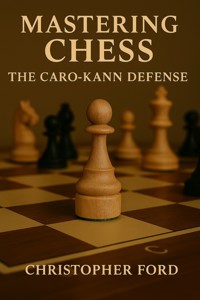
Mastering Chess: The Caro-Kann Defence is the definitive guide for players who want to dominate 1.e4 games with one of the most solid, versatile, and strategically rich openings in chess. Trusted by World Champions like Karpov, Anand, and Carlsen, the Caro-Kann is more than a defense—it’s a complete system that allows Black to neutralize White’s initiative, control the center, and transition into favorable middlegame and endgame positions.
This comprehensive guide provides:
- Step-by-step explanations of all major Caro-Kann lines: Classical, Advance, Panov-Botvinnik, Tartakower, Two Knights, and modern sidelines.
- Deep strategic insights into pawn structures, typical middlegame plans, and key tactical motifs.
- Endgame mastery techniques showing how to convert small advantages into wins.
- Model games by World Champions illustrating practical application of theory.
- A complete, practical repertoire for Black, with detailed advice on move orders, sidelines, and counterplay.
- Structured training plans to help you internalize openings, practice middlegames, and refine endgame skills.
Take control of your 1.e4 games, neutralize your opponents, and master one of chess’s most enduring defenses—move by move, plan by plan, from opening to endgame.
Das E-Book können Sie in Legimi-Apps oder einer beliebigen App lesen, die das folgende Format unterstützen:
Veröffentlichungsjahr: 2024
Ähnliche









Mastering Chess
The Caro-Kann Defence
––––––––
Christopher Ford
2025
Copyright © 2025 by Christopher Ford
“For my Chess mentor, Simon Elliot”
Contents
Preface
Chapter 1: Introduction to the Caro-Kann
Chapter 2: Strategic Themes in the Caro-Kann
Chapter 3: Move-by-Move Basics
Chapter 4: The Classical Caro-Kann
Chapter 5: The Advance Variation (3.e5)
Chapter 6: The Panov-Botvinnik Attack
Chapter 7: The Tartakower / Modern Variation
Chapter 8: The Two Knights Variation
Chapter 9: The Bronstein–Larsen Variation
Chapter 10: Rare Lines and Sideline Systems
Chapter 11: Typical Middlegames and Plans
Chapter 12: Endgames from the Caro-Kann
Chapter 13: Model Games by World Champions
Chapter 14: Building a Complete Caro-Kann Repertoire
Chapter 15: Training Plans and Practical Improvement
Preface
Chess is a game of infinite possibilities, a battlefield of ideas where every move tells a story. Among the countless defenses available to Black, the Caro-Kann Defense—1.e4 c6—is a unique blend of solidity, resilience, and subtle dynamism. Unlike the sharp and tactical wildness of the Sicilian, or the locked and strategic tension of the French, the Caro-Kann occupies a rare middle ground: it is both safe and ambitious, quiet yet full of latent energy. For decades, it has been the weapon of choice for some of the greatest champions, from Capablanca and Botvinnik, to Karpov and modern grandmasters like Anand and Carlsen.
The purpose of this book is to give the reader a complete understanding of the Caro-Kann, from the fundamental ideas to the most cutting-edge theory, blending classical strategy with modern dynamic approaches. Whether you are a club player seeking a reliable defense, a tournament player aiming for a competitive edge, or an advanced player looking to deepen your strategic and tactical understanding, this book is designed to meet your needs.
Why the Caro-Kann?
Many players choose openings based on popularity or surprise value. The Caro-Kann, however, demands a different kind of appreciation. Its charm lies not in flashy attacks or immediate tactical fireworks, but in its soundness and flexibility. With it, Black can often survive the opening comfortably, avoid early weaknesses, and gradually outmaneuver the opponent in the middlegame.
At its core, the Caro-Kann is about control and timing: controlling the center with pawns, preparing piece development behind a solid structure, and striking at the right moment with pawn breaks like ...c5 or ...f6. The defense encourages careful thought, deep planning, and understanding of positional nuances—skills that elevate a player’s overall chess strength, beyond just memorizing moves.
How This Book Is Structured
This book is divided into six major parts, reflecting the journey from fundamental principles to practical application:
Foundations of the Caro-Kann:
We start with the ideas, move orders, typical pawn structures, and strategic concepts that underlie the opening. This section ensures that every reader understands not just what moves to play, but
why
those moves work.
Main Variations:
Here, we explore every major line of the Caro-Kann: the Classical, Advance, Panov-Botvinnik, and Tartakower variations. Each variation is broken down into move-by-move explanations, annotated with plans, tactics, typical middlegame ideas, and model games.
Lesser-Known Lines and Sidelines:
Even seasoned players can be caught off guard by unusual approaches. This section covers rare but dangerous sidelines, including the Fantasy Variation, early bishop or knight moves, and tricky move-order nuances.
Middlegame Plans and Pawn Structures:
The Caro-Kann is more than an opening—it is a
strategic framework
. Here, we study typical pawn structures, piece maneuvers, timing of breaks, and planning in both open and closed positions.
Endgames and Conversion:
Many games in the Caro-Kann reach endgames where small structural advantages decide the outcome. This section teaches how to convert favorable positions and hold difficult ones.
Practical Advice and Training:
Finally, we address repertoire building, handling opponents’ deviations, recognizing traps, and using modern tools such as engines and databases effectively.
Who This Book Is For
This book is written for players of all levels who wish to play the Caro-Kann with confidence:
Beginner and club players:
To build a reliable foundation and understand the “why” behind every move.
Tournament players:
To sharpen their repertoire, avoid common pitfalls, and gain practical advantages over opponents.
Advanced and aspiring masters:
To explore deep strategic plans, learn subtle move-order nuances, and integrate modern theoretical developments.
Regardless of your level, the Caro-Kann rewards patience, planning, and precision. It is not a defense you play to win instantly with tactics, but a defense that grows in strength as you learn its secrets.
How to Use This Book
To get the most out of this work, it is essential to study actively:
Don’t just memorize moves—study the ideas behind them.
Play out exercises on a board or digital interface to internalize plans.
Review model games to see how grandmasters translate opening principles into middlegame and endgame success.
Revisit lines regularly as your understanding deepens; the Caro-Kann is a living opening that rewards continuous study.
By the end of this journey, you will not only know the moves of the Caro-Kann, but you will think like a Caro-Kann player—anticipating threats, choosing the right pawn breaks, and navigating complex middlegames with confidence.
Chapter 1: Introduction to the Caro-Kann
The Caro-Kann Move Order
The Caro-Kann begins with the moves:
e4 c6
d4 d5
At first glance, these moves may seem deceptively simple. Black does not immediately challenge the center with 1...e5 (as in the Open Game) or aim for counterattack with 1...c5 (Sicilian Defense). Instead, Black plays 1...c6, preparing ...d5, which directly challenges White’s e4 pawn.
This opening is classified as semi-open: White has the first-move advantage, while Black maintains a solid, resilient pawn structure. Unlike other e4 defenses, the Caro-Kann is hypermodern-friendly, allowing Black to develop behind the pawns while planning for a central break at the right moment.
Why the Caro-Kann Works
The Caro-Kann’s strength comes from its combination of solidity, flexibility, and strategic depth:
Solid Pawn Structure
After 1.e4 c6 2.d4 d5, the pawn on c6 supports d5, making it difficult for White to break the center.
Black often avoids early weaknesses that appear in other defenses, such as the King’s Gambit or Scandinavian.
Safe King
Development behind the c6/d5 pawn structure allows Black to castle safely and prepare piece activity.
Flexible Piece Placement
Knights typically develop to f6 and d7, bishops often find activity on f5 or g4 before committing the e-pawn.
The light-squared bishop can avoid being trapped behind the pawn chain, which is a common issue in the French Defense.
Counterattack Potential
Black maintains latent central breaks with ...c5 or ...f6, often striking at the right moment to undermine White’s pawn center.
Historical Background
The Caro-Kann Defense has a rich history:
Horatio Caro (1862–1920)
and Marcus Kann (1820–1886)
analyzed and promoted this defense in the late 19th century.
Jose Raul Capablanca
, the third World Champion, often employed the Caro-Kann for its strategic solidity.
Botvinnik and Karpov
refined the defense, creating modern systems like the
Tartakower Variation
and demonstrating the opening’s latent tactical potential.
Today, top grandmasters like
Anand, Carlsen, and Caruana
continue to use it as a reliable weapon at the highest level.
Strategic Goals for Black
Unlike sharp openings that seek immediate tactical skirmishes, the Caro-Kann emphasizes long-term strategic planning. Black has several central goals:
Maintain a solid pawn structure
Typical pawns: c6, d5, e6 (or e5 in some variations)
Avoid weaknesses like isolated pawns or backward pawns early in the game.
Develop pieces efficiently
Knight to f6 and/or d7, bishop to f5 or g4, queen to c7 or b6.
Coordinate rooks on open or semi-open files.
Control the center while avoiding premature pawn moves
The tension in the center allows Black to respond flexibly to White’s plans.
Strike at the center at the right moment
Typical pawn breaks: ...c5 to attack the d4 pawn, or ...f6 to challenge e5.
Timing is crucial; attacking too early can backfire, while waiting too long can cede the initiative.
Strategic Goals for White
White, by contrast, aims to exploit the first-move advantage:
Build a strong pawn center
Common structures involve pawns on e4 and d4, sometimes extended with c4 (Panov-Botvinnik).
Develop pieces to active squares
Knights to c3 and f3; bishops to d3 or e2; queen to e2, c2, or b3.
Prepare kingside attacks or central pressure
Depending on Black’s move order, White can opt for space-gaining lines (Advance Variation) or open tactical play (Panov-Botvinnik).
Exploit underdeveloped Black pieces
For instance, if Black delays development of the light-squared bishop, White can play Bd3 and Qc2, pressuring h7 after castling.
Typical Pawn Structures
Understanding pawn structures is key to mastering the Caro-Kann. Some common structures include:
Classical Structure (Exchange/Closed)
White: pawns on d4 and e4
Black: pawns on c6 and d5
Symmetrical, solid, strategic battles are typical.
Black often aims for ...c5 to challenge d4.
Advance Structure
White: pawns on d4 and e5
Black: pawns on c6 and d5
White gains space; Black must undermine the e5 pawn with ...c5 or ...f6.
Isolated Queen’s Pawn (IQP) Structures (Panov-Botvinnik)
White: pawns on c4, d4, e4
Black: pawns on c6, d5
Open lines favor White’s piece activity; Black plays for blockades and counterattacks.
Typical Piece Placements for Black
Knight on f6:
Targets e4, defends key central squares.
Knight on d7:
Supports e5 or c5 breaks; flexible to jump to b6 or f8.
Bishop on f5:
Outside the pawn chain, active on diagonals.
Queen:
Often moves to c7 or b6, supporting pawns and preparing rooks to occupy the c- or e-files.
Rooks:
Usually on c8 and e8, ready to support central or queenside play.
Typical Plans for Black
Depending on White’s response, Black can adopt different plans:
Classical / Main Line:
Play ...Bf5, ...e6, ...Nd7, ...Ngf6, castle kingside.
Wait for White to overextend, then strike with ...c5 or ...f6.
Advance Variation:
Challenge e5 pawn with ...c5 and ...f6.
Prepare piece development behind the pawn chain.
Panov-Botvinnik Attack:
Focus on blockading the IQP.
Exchange pieces to reach favorable endgames.
Tartakower Variation:
Play ...Nd7, ...Ngf6, keeping a flexible pawn structure.
React to White’s setup without committing too early.




