


Erhalten Sie Zugang zu diesem und mehr als 300000 Büchern ab EUR 5,99 monatlich.
- Herausgeber: MustRead
- Kategorie: Lebensstil
- Sprache: Englisch
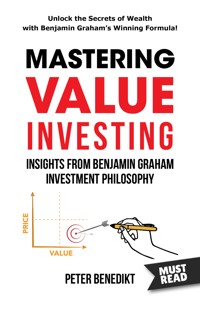
Ready to invest like a pro? "Mastering Value Investment" distills the legendary strategies of Benjamin Graham— “the father of value investing”—to give you an edge in the stock market and secure lasting financial success!
Why Mastering Value Investment?
• Graham’s Winning Principles: Dive into key concepts like “margin of safety” and intrinsic value. Say goodbye to guesswork and start making smart, calculated investments!
• Look Beyond the Market Noise: Cut through market hype and discover a company’s real worth with insights on analyzing profits, assets, and economic fundamentals.
• Master Emotional Control: Learn how to stay cool during market swings, spot psychological traps, and avoid rash decisions. Think strategically, act confidently!
• Build Wealth for the Long Run: This isn’t about quick wins; it’s about sustainable growth! With Graham’s principles, you’ll create a solid, adaptable investment strategy for life.
Whether you’re just starting out or a seasoned investor, Mastering Value Investment is your guide to navigating the markets with precision, confidence, and a vision for the future. Get ready to take charge of your financial journey—your path to wealth starts here!
ABOUT THE AUTHOR
Peter Benedikt is a seasoned entrepreneur, investor, and business strategist with an extensive background in management.
Sie lesen das E-Book in den Legimi-Apps auf:
Seitenzahl: 150
Veröffentlichungsjahr: 2025
Das E-Book (TTS) können Sie hören im Abo „Legimi Premium” in Legimi-Apps auf:
Ähnliche














Couverture
Titre
Mastering Value investing: insights from Benjamin Graham investment philosophy
I. Introduction
Value investing is a strategy focused on buying assets that are seen as undervalued. It has strong roots in the work of Benjamin Graham, who is often called the father of value investing. His key ideas are found in important books, like The Intelligent Investor and Security Analysis. These texts share valuable information on how to find a company’s true worth and stress the need for a margin of safety—a concept aimed at protecting investors from big losses. By carefully analyzing a company’s finances, market situation, and overall economy, people can better handle the challenges of the stock market and set themselves up for long-term success. Understanding Graham’s principles helps investors build a disciplined strategy, encouraging patience and resilience during market ups and downs. The importance of a value-centered investment approach goes beyond just financial figures; it reflects a mindset that requires thorough analysis and a practical view. Graham points out the weakness of depending only on market trends and public opinion, urging a closer look at a company’s fundamentals, such as profits, dividends, and asset worth. This careful analysis helps investors spot the difference between speculation and real investment chances. By sticking to a disciplined plan, investors can reduce risks tied to market changes and develop an essential skill—recognizing the psychological influences that can cause irrational market actions. Spotting these factors allows value investors to stay steady during uncertainty, leading to smart choices based on facts instead of short-lived feelings. Basically, following Graham’s investment philosophy means committing to ongoing learning and understanding market functions. His ideas have remained relevant over time, offering a framework for investors focused on long-term gains instead of quick profits. Focusing on both emotional and analytical sides of investing prepares individuals to engage with the market in a balanced way. As new investors explore value investing details, they should work on developing an investment strategy that reacts to today’s trends while also considering historical context and economic facts. This broad approach, based on Graham’s teachings, sets the stage for investors to excel in value investing, creating a lasting strategy for success in a constantly changing financial world.
A. Definition of Value Investment
A key principle of value investment is avoiding speculative trading, which focuses on the actual value of an asset instead of its market price changes. Value investors carefully review financial statements and look at indicators like earnings, book value, and dividends. This method is based on the idea that the market might misprice assets because of emotional reactions, crowd behavior, or broader economic conditions, creating chances for smart investors. By insisting on a margin of safety—buying stocks for much less than their estimated intrinsic value—risk is lowered. This strategy needs patience and discipline, as value investors often face times of poor performance before their investments show their actual value in the marketplace. Furthermore, value investing includes a broader philosophy that goes beyond just choosing stocks. Key to this method is the focus on long-term perspectives, emphasizing the growth potential of companies instead of temporary market trends. Investors should adopt a mindset of simplicity and logic, steering clear of speculative crazes or media hype. This careful approach highlights the significance of research and thorough investigation, as successful value investors not only spot undervalued stocks but also carefully evaluate the economic basics of each firm. By doing this, they create a strong portfolio that can handle market ups and downs while providing reliable returns over time (Wesley R. Gray et al.). Finally, looking at the history of value investing shows it works well in different market conditions, opposing the idea of market efficiency. The lessons from Benjamin Graham, often seen as the founder of value investing, emphasize the consistent nature of irrational market behavior, confirming that emotionally driven choices can lead to mispriced assets. Graham’s ideas carry on through the years, as they support the idea that a careful, value-focused method can achieve better long-term results than more speculative tactics. For modern investors trying to navigate a complicated financial environment, his wisdom remains not only useful but essential, reinforcing that true value comes from carefully analyzing a company’s fundamentals, rather than temporary market feelings (Wesley R. Gray et al.).
B. Importance of Benjamin Graham in Investment History
Benjamin Graham is known as the father of value investing, and his influence on investment methods is very significant. His innovative ideas pushed investors to look at the real value of securities instead of just reacting to market ups and downs. By introducing fundamental analysis—an approach that looks at a company’s financial statements, management quality, and market position—Graham gave investors a way to make informed decisions. His important books, especially The Intelligent Investor, highlighted the need to handle risk by being careful in choosing stocks and diversifying portfolios. This focus on intrinsic value over speculative strategies remains a key rule for those wanting to build wealth over time, even in fluctuating markets. Additionally, Graham’s methods have significantly influenced many prominent investors, like Warren Buffett and Mohnish Pabrai, ensuring that his ideas are still relevant in today’s investing world. Besides creating a structured method for investing, Graham also stressed the psychological side of investment choices. He thought that investor behavior could often lead to unwise decisions, caused by emotions like fear and greed. This is especially true in today’s unpredictable market, where behavioral finance is crucial for investment results. To address these issues, Graham suggested an investing strategy based on logical thinking and discipline, stressing the importance of patience and understanding market dynamics well. His lessons, shown in his detailed studies of market cycles and valuations, deeply impact the investment field. By explaining these ideas, Graham not only taught investors but also gave them tools to handle the mental traps of investing, a lasting influence that still affects investing behavior. Graham’s ideas also affect not just individual investors but also institutional practices and the wider financial market. Financial analysts and portfolio managers often apply his valuation tools, like the Price-to-Earnings (P/E) and Price-to-Book (P/B) ratios, to evaluate investment choices accurately. His ideas have helped form key investment guidelines used by investment firms and individual investors. Moreover, as seen in Investment Policy Statements (IPS) for clients like Mr. Bing, elements of Graham’s philosophy, such as risk analysis and capital preservation, are crucial in today’s investment strategies. Through his thorough methods and focus on solid investment principles over speculative approaches, Graham has permanently changed the finance field, leaving a legacy that still guides investors through the complexities of the stock market today.
C. Overview of the Essay Structure
A good essay structure is very important for writing that is academic, helping readers to follow complex ideas clearly. Usually, an essay has three parts: an introduction, body paragraphs, and a conclusion. In “Mastering Value investing: Insights from Benjamin Graham’s Investment Philosophy,” the introduction explains why value investing matters and introduces Graham’s philosophy as a key to good investment practices. This part captures the reader’s attention and lays out the main argument, which is needed to set the stage for what follows. By presenting Graham’s main ideas early, the introduction gets the audience ready for a detailed look at these concepts, encouraging deeper engagement with the material. The body of the essay breaks down and analyzes Graham’s investment philosophy within the wider financial field. Each paragraph should focus on a specific aspect of his philosophy, like intrinsic value or market psychology. A clear structure improves the essay’s readability and helps the reader understand complicated ideas better. For example, as mentioned in (Lon Alton Graham), parallels can be drawn, such as Ryland’s view of visible unity, which can help clarify investment strategies. Such comparisons deepen the exploration, showing that Graham’s ideas are relevant beyond just investment strategies and are connected to basic economic theories. This layered method allows readers to engage more meaningfully with the material and see how Graham’s insights are interconnected. Lastly, the conclusion wraps up the main points and highlights how Graham’s philosophies are still relevant today. It should briefly touch on how value investing, as Graham described, remains an important guideline for investors currently. By restating the thesis and summarizing key ideas, the conclusion strengthens the main message of the essay. It might also suggest implications for today’s investors or propose areas for future research, promoting ongoing discussion about Graham’s impact. As pointed out in (Eric Arthur Blair), a good conclusion not only helps the reader understand better but also highlights the importance of maintaining high standards in writing. By following these principles, the essay aims to leave a strong impression, emphasizing the lasting wisdom found in Benjamin Graham’s investment philosophy.
II. The life of Benjamin Graham
Throughout his life, Benjamin Graham was a key person in investing, known as the father of value investing. He was born in 1894 in London and grew up in New York City. Graham faced many personal and work challenges that shaped his thoughts on investing. His early financial struggles during the Great Depression led him to learn a lot about market behavior and economics. Graham’s idea of intrinsic value became an important principle; he believed the market often mispriced stocks, creating chances for wise investors to buy undervalued companies. This basic view set the stage for much of his later work, showing he had a keen understanding of both statistics and behavior, making him a forward-thinking presence in finance. Graham’s influence went beyond his own trading; he became a respected teacher, guiding many well-known investors, including Warren Buffett. In 1934, he co-wrote Security Analysis, which was a significant event in financial writing by offering detailed methods for assessing investment securities. This important book highlighted the need for analytical rigor and value measures, introducing ideas like margin of safety, which are now essential to modern investment methods. Graham’s teachings pushed for a methodical approach to investing, inspiring many to engage with the market carefully and with curiosity. His philosophy encouraged not just wealth growth but also ethical investing, stressing that investors should understand what they buy and the businesses they represent (Jason Zweig). Later in his life, Graham stayed involved in the investment world through lectures, writings, and mentoring. He adapted to more practical methods, recognizing that markets were changing and that investment strategies needed to be flexible. His later works, such as The Intelligent Investor, emphasized ongoing self-education and maintaining a balanced outlook, arguing that mental strength was just as crucial as analytical skills in managing market ups and downs. Graham’s legacy lives on in the lasting principles of value investing that urge investors to focus on long-term success rather than give in to short-term market changes. His strategies continue to impact both individual investors and large institutions, highlighting the importance of fundamental analysis and investor education in a constantly evolving financial environment (Jason Zweig).
A. Early Life and Education
His early years were important in forming his character and investment ideas. He was born in 1894 in London and moved to the United States with his family when he was just one year old. Growing up in New York City, Benjamin Graham encountered the busy world of business and finance, which deeply affected his future goals. His family faced poverty and financial hardships, making him deeply aware of economic challenges. This situation developed a strong work ethic and a wish for financial independence, encouraging him to follow a serious academic path to improve his situation. Graham’s early life led him to the strong belief that financial success could be achieved through careful study and wise investment strategies, which became the base of his later teachings and practices in value investing. A key moment in Graham’s education happened when he started studying at Columbia University at 17 years old. His time there provided him with vital analytical skills and connected him with important figures in economics and finance, like John Maynard Keynes. With the help of Columbia’s respected faculty, Graham gained a solid understanding of market behaviors and economic theories that later shaped his investment philosophy. He graduated summa cum laude in 1914, showing his hard work and intelligence. This educational background was vital, giving him the analytical tools to examine financial markets in detail. The mix of theoretical knowledge and practical experience during these early years solidified Graham’s commitment to an investment approach focusing on fundamental analysis—a key principle in the value investing community even today (Benjamin Graham). After graduating, Graham’s career path was filled with successes and challenges that further shaped his investment philosophy. He started as a stockbroker, where he refined his skills in market analysis while handling the complexities of stock trading. His experiences during the 1929 stock market crash were especially crucial, prompting him to rethink traditional investment methods. Graham’s firsthand experience with market swings highlighted the need for a value-focused strategy that emphasizes long-term fundamentals instead of speculative trading. This insight led him to co-write Security Analysis in 1934, a landmark book that laid out important principles of value investing. The lessons from his early life and education deepened his market understanding, reinforcing the idea that informed, strategic investment choices could protect against economic uncertainty—an idea that is still impactful in his lasting legacy (Benjamin Graham).
B. Career Milestones
As people move through their careers, they face important moments that play a key role in their growth and development. These moments, like promotions, finishing important projects, or receiving major awards, mark significant achievements. In value investing, as promoted by Benjamin Graham, these career events can also showcase a person’s grasp of concepts related to how markets work and investing ideas. Such experiences not only create feelings of success but also offer lessons that influence how one makes investment choices and manages risks. Thus, acknowledging and thinking about these milestones is crucial for ongoing progress in a career path. Shifting from one level of responsibility to another often leads to a need to reassess goals and methods, both personally and professionally. Career milestones urge individuals to adjust, rethink their strategies, and often ignite the desire for more learning and skill growth. For example, an investment analyst who finds undervalued stocks might experience a big career change when their suggestions lead to steady good returns, confirming their analytical skills. Each success lays the groundwork for future achievements, helping to create a mindset that aligns with Graham’s views on thorough research and disciplined investing. By combining insights gained from various milestones, individuals can better navigate the unpredictable nature of financial markets and make meaningful contributions to their organizations. In the end, moving through career milestones is not only about acknowledging past successes but also about imagining future goals. Each achievement is both a conclusion and a starting point, boosting confidence and drive to face more challenging tasks ahead. In investing, lessons learned from previous wins and losses can greatly impact an investor’s strategy, promoting a thoughtful approach similar to Graham’s philosophy. Viewing these milestones as vital parts of professional growth helps in building a robust and knowledgeable investment practice. This ongoing cycle of reflection and anticipation is crucial for matching career goals with the changing needs of the financial sector, highlighting the significance of value investing principles in one’s career story (Frederick K. Martin et al.).
C. Influence on Modern Investing
The ideas of Benjamin Graham have greatly influenced how people invest today, shaping how investors look at different assets’ potential. Graham’s idea of intrinsic value means checking a company’s true worth instead of just its market price, promoting a more careful way to invest. This method helps investors make smart choices based on fundamental analysis, such as earnings, dividends, and growth prospects. In a time when speculative trading can cause big swings in the market, Graham’s views act as a stabilizer, pushing for careful research and a long-term outlook that sharply contrasts with the fast-paced methods often seen in today’s financial markets. Additionally, Graham’s focus on a margin of safety has fostered a cautious mindset among modern investors, leading them to find opportunities where risks are reduced. This principle means that many investors prefer undervalued stocks that could grow significantly while also shielding themselves from unexpected market drops. This careful yet hopeful investment approach has become increasingly important in today’s uncertain economic climate. As unstable markets and global issues create doubt, Graham’s teachings remind investors of staying rational and making choices based on evidence. By combining detailed analysis with a focus on safety, Graham’s insights help modern investors handle complexities with greater confidence (Janet Lowe). Moreover, the rise of technology and data analysis has added new layers to Graham’s investment philosophy, making his ideas easier for more people to understand. Online platforms and smart algorithms now let individual investors do detailed analyses more easily, applying Graham’s strategies to newer assets like cryptocurrencies and exchange-traded funds. This widespread access to investment tools matches Graham’s goal of enabling individual investors to control their financial futures. With more educational resources available online, new investors can develop a value-focused mindset, encouraging smarter and more informed investing. The blending of Graham’s core ideas with today’s technology shows a lively change in the investment world, ensuring his impact lasts into the future (Janet Lowe).




