


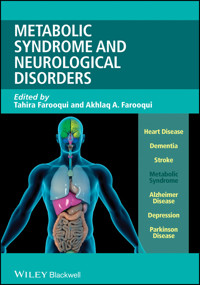
Metabolic Syndrome and Neurological Disorders E-Book
187,99 €
Mehr erfahren.
- Herausgeber: John Wiley & Sons
- Kategorie: Wissenschaft und neue Technologien
- Sprache: Englisch
Metabolic Syndrome and Neurological Disorders brings together information on the cluster of common pathologies which cause metabolic syndrome - abdominal obesity linked to an excess of visceral fat, insulin resistance, dyslipidemia and hypertension - to provide a comprehensive and cutting edge exploration of the link between metabolic syndrome and neurological disorders. Metabolic syndrome is recognized to play a role in neurological disorders such as stroke, Alzheimer's disease, and depression. For the first time in book form, Metabolic Syndrome and Neurological Disorders covers the molecular mechanisms thought to underlie this mirror relationship, as well as how lifestyle and other factors such as oxidative stress and inflammation may play a role in the disease. Grounded in a series of epidemiological studies of metabolic-cognitive syndrome, this book will be a valuable reference for researchers, dietitians, nutritionists, and physicians.
Sie lesen das E-Book in den Legimi-Apps auf:
Seitenzahl: 1537
Veröffentlichungsjahr: 2013
Ähnliche




















Contents
Cover
Title Page
Copyright
Dedication
Epigraph
Foreword
Preface
Acknowledgments
Contributors
Chapter 1: Insulin Resistance and Metabolic Failure Underlie Alzheimer Disease
1.1 INTRODUCTION
1.2 MEDIATORS OF INSULIN SIGNALING
1.3 INSULIN RESISTANCE AND NEURODEGENERATION
1.4 THE NEUROPATHOLOGY OF AD IS CAUSED BY BRAIN INSULIN/IGF RESISTANCE
1.5 BRAIN METABOLIC DERANGEMENTS IN OTHER NEURODEGENERATIVE DISEASES
1.6 UNDERLYING CAUSES OF BRAIN INSULIN RESISTANCE IN AD
1.7 MECHANISTIC HYPOTHESES REGARDING AD PATHOGENESIS
1.8 CONCLUSION
ACKNOWLEDGMENTS
REFERENCES
Chapter 2: Insulin Receptor and the Pathophysiology of Alzheimer Disease
2.1 INTRODUCTION
2.2 INSULIN RECEPTOR SIGNALING PATHWAY
2.3 INSULIN RECEPTOR SIGNALING IN THE BRAIN
2.4 INSULIN RECEPTOR AND ALZHEIMER DISEASE
2.5 CONCLUSION
REFERENCES
Chapter 3: Contribution of Insulin Resistance in Pathogenesis of Alzheimer Disease
3.1 INTRODUCTION
3.2 SYNOPSIS OF INSULIN SIGNALING RELATED WITH AD
3.3 WNT/β-CATENIN SIGNALING LINKED WITH IR/AD
3.4 AMPK SIGNALING FOR THE ENERGY AND REDOX HOMEOSTASIS
3.5 ATM SIGNALING AS ANOTHER REDOX REGULATOR
3.6 SIRTUINS RELATED WITH IR/AD PATHOGENESIS
3.7 IMPORTANCE OF CDK5-CALPAIN INTERACTION IN IR/AD
3.8 AUTOPHAGY-LINKED TO IR/AD
3.9 OXIDATIVE STRESS IS IN THE VERY HEART OF IR/AD PATHOGENESIS
3.10 A NOVEL INTEGRATING MODEL FOR IR AND AD
3.11 CONCLUSION
DEDICATION
REFERENCES
Chapter 4: Insulin–Leptin Signaling In The Brain
4.1 INTRODUCTION
4.2 LEPTIN- AND INSULIN-RELATED SIGNALING IN THE CENTRAL REGULATION OF ENERGY HOMEOSTASIS
4.3 CROSS-TALK BETWEEN INSULIN AND LEPTIN SIGNALING IN THE BRAIN
4.4 CENTRAL LEPTIN AND INSULIN RESISTANCE: CLINICAL IMPLICATIONS
4.5 CONCLUSION
ACKNOWLEDGMENTS
REFERENCES
Chapter 5: The Janus Face of Insulin in Brain
5.1 INTRODUCTION
5.2 CONCLUSION
ACKNOWLEDGMENTS
REFERENCES
Chapter 6: Modulation of Cognition By Insulin and Aging: Implications for Alzheimer Disease
6.1 INTRODUCTION
6.2 INSULIN, INSULIN RECEPTOR SIGNALING, AND INSULIN ACTION IN THE BRAIN
6.3 BRAIN INSULIN RESISTANCE
6.4 BRAIN INSULIN RESISTANCE AND PROTEIN ANORMALITIES
6.5 BRAIN INSULIN RESISTANCE, OXIDATIVE STRESS, MITOCHONDRIAL DYSFUNCTION, AND INFLAMMATION IN AZHEIMER'S DISEASE
6.6 CONCLUSION
REFERENCES
Chapter 7: Contribution of Phospholipid, Sphingolipids, and Cholesterol-derived Lipid Mediators in the Pathogenesis of Metabolic Syndrome and Neurological Disorders
7.1 INTRODUCTION
7.2 FATTY ACIDS IN METABOLIC SYNDROME
7.3 EICOSANOIDS AND OTHER ARACHIDONIC ACID-DERIVED METABOLITES IN METABOLIC SYNDROME
7.4 DIACYLGLYCEROLS IN METABOLIC SYNDROME
7.5 CERAMIDE IN METABOLIC SYNDROME
7.6 ENDOCANNABINOIDS IN METABOLIC SYNDROME
7.7 CHOLESTEROL AND OXY/HYDROXYSTEROL IN METABOLIC SYNDROME
7.8 FATTY ACIDS IN NEUROLOGICAL DISORDERS
7.9 EICOSANOIDS IN NEUROLOGICAL DISORDERS
7.10 4-HYDROXYNONENAL IN NEUROLOGICAL DISORDERS
7.11 DIACYLGLYCEROL IN NEUROLOGICAL DISORDERS
7.12 CANNABINOIDS IN NEUROLOGICAL DISORDERS
7.13 CERAMIDE IN NEUROLOGICAL DISORDERS
7.14 OXY/HYDROXYCHOLESTEROL IN NEUROLOGICAL DISORDERS
7.15 INTERACTIONS AMONG LIPID MEDIATOR IN METABOLIC SYNDROME AND NEUROLOGICAL DISORDERS
7.16 CONCLUSION
REFERENCES
Chapter 8: Lipids, Cholesterol, and Oxidized Cholesterol in Alzheimer Amyloid Beta-mediated Neurotoxicity
8.1 INTRODUCTION
8.2 MODEL MEMBRANE SYSTEMS
8.3 AMYLOID BETA INTERACTION WITH MEMBRANES
8.4 AMYLOID BETA, CHOLESTEROL, AND MEMBRANE SYSTEMS
8.5 CHOLESTEROL OXIDATION
8.6 OXIDIZED CHOLESTEROL AND AMYLOID BETA
8.7 CONCLUSION
ACKNOWLEDGMENTS
REFERENCES
Chapter 9: Of Sound Mind and Body: Dietary Lifestyles, Promotion of Healthy Brain Aging, and Prevention of Dementia in Healthy Individuals
9.1 INTRODUCTION
9.2 ALZHEIMER DISEASE DEMENTIA
9.3 ROLE OF GRAPE-DERIVED POLYPHENOLS IN THE PREVENTION OF AD: A MODIFIABLE LIFESTYLE FACTOR DURING AGING
9.4 AD IS PREVENTABLE THROUGH MODIFIABLE LIFESTYLE INTEVENTIONS: PRIMARY, SECONDARY, AND TERTIARY INTERVENTIONS
9.5 EPIGENETIC MODIFICATIONS AND ITS ROLE IN DIABETES
9.6 CONCLUSION: THE FUTURE OF TRANSLATIONAL SCIENCE IN DIETARY LIFESTYLE APPLICATIONS AS A FUNCTION OF PATHOLOGICAL COGNITIVE DECLINE
ACKNOWLEDGMENTS
REFERENCES
Chapter 10: Metabolic Syndrome as an Independent Risk Factor of Silent Brain Infarction
10.1 INTRODUCTION
10.2 EPIDEMIOLOGY AND CHARACTERISTICS OF SBI
10.3 CLINICAL IMPACTS OF SBI
10.4 METABOLIC SYNDROME AND SBI: CURRENT EVIDENCES
10.5 POSSIBLE MECHANISMS OF SBI IN MetS
10.6 IS SBI REALLY SILENT?
10.7 CONCLUSION
REFERENCES
Chapter 11: Neurochemical Linkage Among Metabolic Syndrome, Alzheimer Disease, and Depression
11.1 INTRODUCTION
11.2 METABOLIC SYNDROME IS AN INFLAMMATORY CONDITION
11.3 VAGUS IS THE MESSENGER BETWEEN THE LIVER AND THE BRAIN
11.4 HYPOTHALMIC NEUROPEPTIDES AND METABOLIC SYNDROME
11.5 HYPOTHALMIC INFLAMMATION OCCURS IN METABOLIC SYNDROME IN WHICH BDNF AND PUFAs HAVE A ROLE
11.6 ALZHEIMER DISEASE, BDNF, AND PUFA
11.7 OXIDATIVE STRESS AND INFLAMMATION IN AD
11.8 CHOLINERGIC SYSTEM AND AD
11.9 PUFAs AND BDNF INTERACT WITH EACH OTHER
11.10 DEPRESSION IS A LOW-GRADE SYSTEMIC INFLAMMATORY CONDITION
11.11 PUFAs IN DEPRESSION
11.12 CONCLUSION
ACKNOWLEDGMENTS
REFERENCES
Chapter 12: Alterations in the Endocannabinoid System as a Link Between Unbalanced Energy Homeostasis, Neuroinflammation, and Neurological and Neuropsychiatric Disorders
12.1 INTRODUCTION: THE ENDOCANNABINOID SYSTEM
12.2 ENDOCANNABINOID SYSTEM ALTERATIONS IN METABOLIC DISORDERS
12.3 ENDOCANNABINOID SYSTEM ALTERATIONS IN NEUROINFLAMMATION AND ALZHEIMER DISEASE
12.4 ENDOCANNABINOID SYSTEM ALTERATIONS IN STRESS, DEPRESSION AND PSYCHIATRIC DISORDERS
12.5 CONCLUSION
REFERENCES
Chapter 13: Metabolic Syndrome, Alzheimer Disease, Schizophrenia, and Depression: Role for Leptin, Melatonin, Kynurenine Pathways, and Neuropeptides
13.1 INTRODUCTION
13.2 TRYPTOPHAN CATABOLITE (TRYCAT) PATHWAYS
13.3 LEPTIN AND TRYCATs
13.4 TREATMENT IMPLICATIONS
13.5 CONCLUSION
REFERENCES
Chapter 14: Binge Eating and Metabolic Syndrome
14.1 INTRODUCTION
14.2 DEMOGRAPHICS
14.3 EATING- AND WEIGHT-RELATED BEHAVIORAL CORRELATES
14.4 DIETING, BINGE EATING, AND METABOLIC SYNDROME
14.5 METABOLIC IMPACT OF BINGE EATING
14.6 EATING DISORDERS AND DEVELOPMENT OF METABOLIC SYNDROME
14.7 BRAIN AND ENERGY BALANCE
14.8 THE ROLE OF SOME PSYCHOPHYSIOLOGICAL MECHANISMS
14.9 CONCLUSION
REFERENCES
Chapter 15: Phytochemical Principles in the Traditional Indian System of Medicine Used for the Management of Metabolic Syndrome
15.1 INTRODUCTION
15.2 ROLE OF MEDICINAL PLANTS IN THE MANAGEMENT OF METABOLIC SYNDROME
15.3 CONCLUSION
REFERENCES
Chapter 16: Oxidative Stress and Obesity: Their Impact on Metabolic Syndrome
16.1 INTRODUCTION
16.2 OBESTY AND OXIDATIVE STRESS IN ADIPOSE TISSUE
16.3 OXIDATIVE STRESS AND ADIPOCYTOKINES
16.4 OVERNUTRITION AND OXIDATIVE STRESS
16.5 OXIDATIVE STRESS AND INSULIN RESISTANCE
16.6 SYSTEMIC OXIDATIVE STRESS AND METABOLIC SYNDROME
16.7 OXIDATIVE STRESS AND CLINICAL TREATMENTS
REFERENCES
Chapter 17: The Relationship Among Obesity, Inflammation, and Insulin Resistance
17.1 INTRODUCTION
17.2 INFLAMMATION IN OBESITY
17.3 INFLAMMATION AND INSULIN RESISTANCE PATHWAYS
17.4 ENDOPLASMIC RETICULUM STRESS AND INSULIN RESISTANCE
17.5 THE ROLE OF THE COMMENSALLY FLORA OR MICROBIOTA IN THE METABOLIC INFLAMMATION
17.6 CONCLUSION
REFERENCES
Chapter 18: Involvement of Adipocytokines in Pathogenesis of Insulin Resistance, Obesity, and Metabolic Syndrome
18.1 INTRODUCTION
18.2 ADIPONECTIN
18.3 RESISTIN
18.4 RETINOL-BINDING PROTEIN 4 (RBP4)
18.5 LEPTIN
18.6 VISFATIN
18.7 THERAPEUTIC INTERVENTIONS IN RELATION TO ADIPOCYTOKINES
ACKNOWLEDGMENTS
REFERENCES
Chapter 19: Obesity, Inflammation, and Vascular Disease: Novel Insight in the Role of Adipose Tissue
19.1 INTRODUCTION
19.2 ADIPOSE TISSUE AS AN ENDOCRINE ORGAN
19.3 ADIPOCYTOKINE AND CARDIOVASCULAR RISK
19.4 EFFECTS OF WEIGHT LOSS
19.5 CONCLUSION
REFERENCES
Chapter 20: Is Diabetes a Risk Factor for Parkinson Disease?
20.1 INTRODUCTION
20.2 PARKINSON DISEASE
20.3 TYPE 2 DIABETES
20.4 IS THERE ANY MOLECULAR LINK BETWEEN TYPE 2 DIABETES AND PARKINSON DISEASE?
20.5 CONCLUSION
REFERENCES
Chapter 21: Role of Iron in the Pathogenesis of Diabetes and Metabolic Syndrome
21.1 INTRODUCTION
21.2 IRON HOMEOSTASIS, BIOLOGICAL FUNCTION AND TOXICITY
21.3 IRON DEFICIENCY
21.4 IRON OVERLOAD
21.5 POSSIBLE MECHANISMS BY WHICH IRON INVOLVES IN THE PATHOGENESIS OF DIABETES AND DIABETIC COMPLICATIONS
21.6 POSSIBLE THERAPY FOR DIABETES AND DIABETIC COMPLICATIONS USING IRON CHELATORS
21.7 CONCLUSION
ACKNOWLEDGMENTS
REFERENCES
Chapter 22: Contributions of AMP Kinase to the Pathogenesis of Type 2 Diabetes and Neurodegenerative Diseases
22.1 INTRODUCTION
22.2 BACKGROUND
22.3 AMPK AND HUMAN HEALTH
22.4 DIABETES MODULATES FUNCTIONS OF THE NERVOUS SYSTEM
22.5 AMPK AND NEURODEGENERATIVE DISEASES
22.6 CONCLUSION: AMPK—A COMMON MOLECULAR TARGET FOR THE TREATMENT OF DIABETES AND NEURODEGENERATIVE DISEASES?
ACKNOWLEDGMENTS
REFERENCES
Chapter 23: Aβ Deposition, Insulin Signaling, and Tau Phosphorylation in Animal Models of Alzheimer Disease and Diabetes
23.1 INTRODUCTION
23.2 AD AND DIABETES
23.3 AD MODELS WITH DIABETES
23.4 CONCLUSION
ACKNOWLEDGMENTS
REFERENCES
Chapter 24: IN VIVO Evidence of the Convergence of Type 2 Diabetes and Alzheimer Disease
24.1 INTRODUCTION
24.2 STUDIES IN DIABETES MELLITUS MODELS (TABLE 24.1)
24.3 STUDIES WITH AD MODELS (TABLE 24.2)
24.4 THERAPEUTIC TRIALS WITH ANTI-DIABETIC AGENTS WITH AD MODELS (TABLE 24.3)
24.5 CONCLUSION
24.6 ACKNOWLEDGMENTS
REFERENCES
Chapter 25: Metabolic Syndrome and Its Impact on Cardiovascular Disease
25.1 INTRODUCTION
25.2 BRIEF HISTORY OF METABOLIC SYNDROME
25.3 BRIEF OVERVIEW OF THE ATHEROSCLEROSIS MECHANISMS
25.4 METABOLIC SYNDROME AND THE RISK OF CARDIOVASCULAR DISEASE
25.5 ATHEROSCLEROSIS ORIGINATES IN OUR YOUTH
25.6 FEATURES OF METABOLIC SYNDROME AND THEIR IMPACT ON ATHEROSCLEROSIS DEVELOPMENT
25.7 IS METABOLIC SYNDROME A USEFUL CONCEPT WHEN IT COMES TO CARDIOVASCULAR DISEASE PREVENTION?
25.8 CONCLUSION
REFERENCES
Chapter 26: Contribution of Inflammation, Adiponectin, and Obesity in Cardiovascular Diseases
26.1 INTRODUCTION
26.2 ATHEROSCLEROSIS
26.3 ADIPONECTIN
26.4 CONCLUSION
ACKNOWLEDGMENTS
REFERENCES
Chapter 27: Brain and Cardiovascular Diseases: Molecular Aspects
27.1 INTRODUCTION
27.2 NEUROANATOMY AND NEUROCHEMISTRY OF THE CARDIOVASCULAR REGULATION
27.3 CONVENTIONAL NEUROTRANSMITTERS
27.4 NONCONVENTIONAL NEUROTRANSMITTERS
27.5 DISTURBANCES IN CARDIOVASCULAR REGULATION
27.6 CENTRAL REGULATION OF THE CARDIOVASCULAR SYSTEM IN THE CARDIOVASCULAR DISEASES
27.7 CONCLUSION
ACKNOWLEDGMENT
REFERENCES
Chapter 28: Molecular Aspects of Dietary–Exercise Regimen for the Prevention of Metabolic Syndrome
28.1 INTRODUCTION
28.2 EVIDENCE FOR THE BENEFICIAL EFFECTS OF EXERCISE
28.3 THE EFFECT OF EXERCISE ON METABOLIC CAPACITY IN OTHER METABOLIC ORGANS
28.4 CONCLUSION
REFERENCES
Chapter 29: Ghrelin, Lipid Metabolism, and Metabolic Syndrome
29.1 INTRODUCTION
29.2 GHRELIN: A STOMACH-DERIVED PEPTIDE MODULATING ENERGY BALANCE
29.3 GHRELIN EFFECTS ON FOOD-INTAKE ARE MEDIATED BY THE OREXIGENIC NPY/AGRP NEURONS
29.4 TRANSCRIPTIONAL MACHINERY MEDIATING THE HYPOTHALAMIC ACTIONS OF GHRELIN
29.5 HYPOTHALAMIC FATTY ACID METABOLISM AND AMPK MEDIATE GHRELIN'S ACTIONS ON FOOD INTAKE
29.6 GHRELIN AND THE HYPOTHALAMIC SIRTUIN1 (SIRT1)/P53 AXIS
29.7 DOES GHRELIN ACT ON ALTERNATIVE CANONICAL ENERGY SENSORS BESIDES AMPK AND SIRT1?
29.8 CENTRAL GHRELIN ACTIONS ON PERIPHERAL LIPID METABOLISM
29.9 CONCLUSION
ACKNOWLEDGMENTS
REFERENCES
Chapter 30: Leptin and Cognitive Function
30.1 INTRODUCTION
30.2 LEPTIN
30.3 LEPTIN EXPRESSION IN THE BRAIN
30.4 LEPTIN RECEPTOR
30.5 SUPPRESSOR OF CYTOKINE SIGNALING (SOCS)-3
30.6 THE mTOR PATHWAY
30.7 LEPTIN TRANSPORT TO THE BRAIN
30.8 LEPTIN REGULATION OF HIPPOCAMPAL FUNCTION
30.9 LEPTIN AND DEVELOPMENT
30.10 LEPTIN AND AGING
30.11 LEPTIN AND NEURODEGENERATIVE DISORDERS
30.12 LEPTIN AND NEUROPROTECTION
30.13 LEPTIN AND AMYLOID BETA
30.14 CONCLUSION
ACKNOWLEDGMENTS
REFERENCES
Chapter 31: Fructose, Sugar Consumption, and Metabolic Diseases
31.1 INTRODUCTION
31.2 FOOD ENERGY: THE ROLE OF THE LIVER IN PROCESSING ENERGETIC SUBSTRATES
31.3 SPLANCHNIC FRUCTOSE METABOLISM
31.4 METABOLIC EFECTS OF HIGH FRUCTOSE DIETS IN ANIMAL MODELS
31.5 EFFECTS OF FRUCOSE ON HUMAN HEALTH
31.6 FRUCTOSE AND HUMAN OBESITY
31.7 EFFECT OF FRUCTOSE ON BLOOD LIPIDS IN HUMANS
31.8 FRUCTOSE AND NONALCOHOLIC FATTY LIVER DISEASE
31.9 EFFECTS OF FRUCTOSE ON INSULIN SENSITIVITY AND GLUCOSE HOMEOSTASIS
31.10 EFFECTS OF FRUCTOSE ON BLOOD PRESSURE AND URIC ACID CONCENTRATIONS
31.11 EFFECTS OF FRUCTOSE ACCORDING TO GENDER
31.12 CONCLUSION
REFERENCES
Chapter 32: Inflammation-Mediated Cognitive and Emotional Alterations in Experimental Models of Metabolic Syndrome
32.1 INTRODUCTION
32.2 METABOLIC SYNDROME AND NEUROPSYCHIATRIC SYMPTOMS
32.3 ANIMAL MODELS OF METABOLIC SYNDROME
32.4 MECHANISMS UNDERLYING THE ASSOCIATION BETWEEN METABOLIC SYNDROME AND NEUROPSYCHIATRIC SYMPTOMS
32.5 INFLAMMATION, SICKNESS BEHAVIOR, AND NEUROPSYCHIATRIC SYMPTOMS
32.6 ROLE OF INFLAMMATION IN EMOTIONAL AND COGNITIVE ALTERATIONS ASSOCIATED WITH METABOLIC SYNDROME
32.7 CONCLUSION
REFERENCES
Chapter 33: Summary and Perspective
33.1 INTRODUCTION
33.2 EFFECT OF DIET ON MetS AND NEUROLOGICAL DISORDERS
33.3 NEUROCHEMICAL LINKS BETWEEN MetS AND NEUROLOGICAL DISORDERS
33.4 CONCLUSION
REFERENCES
Index
This edition first published 2013 © 2013 by John Wiley & Sons, Inc.
Editorial offices: 2121 State Avenue, Ames, Iowa 50014-8300, USA The Atrium, Southern Gate, Chichester, West Sussex, PO19 8SQ, UK 9600 Garsington Road, Oxford, OX4 2DQ, UK
For details of our global editorial offices, for customer services and for information about how to apply for permission to reuse the copyright material in this book please see our website at www.wiley.com/wiley-blackwell.
Authorization to photocopy items for internal or personal use, or the internal or personal use of specific clients, is granted by Blackwell Publishing, provided that the base fee is paid directly to the Copyright Clearance Center, 222 Rosewood Drive, Danvers, MA 01923. For those organizations that have been granted a photocopy license by CCC, a separate system of payments has been arranged. The fee codes for users of the Transactional Reporting Service are ISBN-13: 978-1-1183-9527-1/2013.
Designations used by companies to distinguish their products are often claimed as trademarks. All brand names and product names used in this book are trade names, service marks, trademarks or registered trademarks of their respective owners. The publisher is not associated with any product or vendor mentioned in this book.
Limit of Liability/Disclaimer of Warranty: While the publisher and author(s) have used their best efforts in preparing this book, they make no representations or warranties with respect to the accuracy or completeness of the contents of this book and specifically disclaim any implied warranties of merchantability or fitness for a particular purpose. It is sold on the understanding that the publisher is not engaged in rendering professional services and neither the publisher nor the author shall be liable for damages arising herefrom. If professional advice or other expert assistance is required, the services of a competent professional should be sought.
Library of Congress Cataloging-in-Publication Data
Metabolic syndrome and neurological disorders / Tahira Farooqui and Akhlaq A. Farooqui, editors. p. ; cm. Includes bibliographical references and index. ISBN 978-1-118-39527-1 (cloth : alk. paper) -- ISBN 978-1-118-39528-8 (Epub) -- ISBN 978-1-118-39529-5 (Epdf) -- ISBN 978-1-118-39530-1 (Emobi) -- ISBN 978-1-118-39531-8 (ebook) I. Farooqui, Tahira, editor of compilation. II. Farooqui, Akhlaq A., editor of compilation. [DNLM: 1. Metabolic Syndrome X--etiology. 2. Metabolic Syndrome X--metabolism. 3. Nervous System Diseases--etiology. 4. Nervous System Diseases--metabolism. WK 820] RC629 616.3′99--dc23 2013029484
A catalogue record for this book is available from the British Library.
Wiley also publishes its books in a variety of electronic formats. Some content that appears in print may not be available in electronic books.
Cover image: body image © angelhell Cover design by Nicole Teut
Dedicated to our late parents
For their unconditional love, support and understanding.
“Every human being is the author of his own health or disease.”
Siddhārtha Gautama Buddha
FOREWORD
Metabolic syndrome (MetS) is a pathologic state that most often results from a chronic positive energy balance due to an excessive energy intake (particularly refined sugars and saturated and trans fats) and a sedentary lifestyle. The defining clinical features of MetS are insulin resistance, central obesity, dyslipidemia, and hypertension. It was established several decades ago that MetS is prodromal to diabetes and that individuals with MetS have a high risk of myocardial infarction and stroke. However, within the past ten years it has become clear that MetS adversely affects brain structure and function and is a risk factor for Alzheimer disease (AD) and stroke. In Metabolic Syndrome and Neurological Disorders Tahira and Akhlaq Farooqui have drawn upon the knowledge of experts in the fields of neuroscience, neurology, endocrinology, cardiovascular disease, obesity, and diabetes to compile a timely review of the impact of MetS on the brain and its vulnerability to neurological disorders. This is a critically important area of research for four major reasons: (1) there is an ongoing epidemic of overweight, obesity, and MetS in modern societies; (2) due to advances in the early diagnosis and treatment of cancers and cardiovascular disease, large numbers of individuals are reaching their seventh, eighth, and ninth decades of life, the “danger zones” for AD and stroke; (3) there are no effective drugs to counteract the neuronal damage that occurs in AD and stroke; and (4) AD patients and stroke patients often require a decade or more of constant care, and therefore place a greater personal and economic burden on society than many other major diseases. Although less profound, emerging evidence also suggests that, in addition to AD and stroke, the MetS may predispose to a broader range of neurological disorders including Parkinson disease, depression, and possibly schizophrenia.
Because of its adverse effects on essentially all organ systems including the brain, an understanding of the molecular and cellular alterations that cause the MetS, and the mechanisms by which the MetS promotes dysfunction and degeneration of brain cells, will be required to develop novel approaches for preventing and treating MS and associated diseases. As detailed in Metabolic Syndrome and Neurological Disorders, alterations resulting from a chronic positive energy balance that are involved in the genesis of the MetS include oxidative stress and inflammation and associated dysregulation of lipid (sphingolipids, cholesterol, and others) metabolism. As a result, signaling pathways that normally protect brain cells and promote their optimal functionality are impaired, including pathways activated by the hormones insulin, leptin, adiponectin, and brain-derived neurotrophic factor (BDNF). In addition, oxidative stress, inflammation, and abnormal lipid metabolism can increase the production and/or reduce the removal of the neurotoxic amyloid beta-peptide, which likely contributes to the dysfunction and degeneration of neurons in AD. With regards to the pathogenesis of stroke, hypertension, dyslipidemia, and local oxidative stress and inflammation in cerebral blood vessels result in a narrowing and weakening of the vessels.
The good news for those with motivation is that the MetS can be effectively prevented and treated by adherence to prescriptions for exercise and dietary energy restriction. Exercise and energy restriction (particularly intermittent fasting) can prevent or reverse MetS by enhancing insulin sensitivity, increasing utilization of fats, stimulating antioxidant and anti-inflammatory pathways, and enhancing parasympathetic tone, which decreases blood pressure. Recent findings from animal research, and epidemiological and clinical studies, suggest that AD and stroke may also be prevented or delayed by regular exercise and moderation in energy intake during adult life. In addition to protecting the brain by reversing all of the peripheral manifestations of the MetS, exercise and energy restriction have been shown to have direct effects on brain cells that optimize brain function and may forestall AD and stroke. These include increased production of neurotrophic factors, improved cellular bioenergetics, and reduced oxidative stress.
For those unwilling or unable to exercise regularly and restrict their calorie intake so as to maintain a normal body weight Metabolic Syndrome and Neurological Disorders reviews potential dietary and drug interventions that are being developed and tested in clinical studies. As with research toward understanding disease mechanisms, translational research for MetS and neurodegenerative disorders is accelerated by the use of animal models. Studies of animal models of AD and stroke have demonstrated beneficial effects of insulin, leptin, incretin peptides such as glucagon-like peptide 1 analogs, and PPAR-γ agonists that are insulin-sensitizing agents such as metformin and rosiglitazone. Many of these drugs are now in clinical trials in patients with mild cognitive impairment or early AD. Targeting lipid metabolism is also being pursued via studies of dietary supplementation with omega-3 fatty acids or the use of cholesterol-lowering drugs. Other approaches that might prove beneficial for protecting the brain in subjects with MetS include drugs that suppress appetite, such as cannabinoid receptor antagonists. This book will provide a valuable resource to guide future research projects to disentangle the complex cellular and molecular underpinnings of MetS-related neuropathologies, and to thereby inform the development of novel therapeutic interventions for neurological disorders.
MARK P. MATTSON National Institute on AgingIntramural Research ProgramBaltimore, MD
PREFACE
At the end of 2011, the United Nations declared for the first time in the history of humanity that non-communicable diseases had outpaced infectious diseases as the main global threat to human health. Among non-communicable diseases, metabolic syndrome (MetS), cardiovascular diseases, and Alzheimer disease (AD) are of paramount importance. MetS is a condition characterized by clustering of insulin resistance, hyperinsulinemia, hypertension, dyslipidemia, impaired glucose disposal, type 2 diabetes, abnormal blood fat levels, fatty liver disease, and abdominal obesity. Changes in human dietary habits in recent decades have led to the consumption of hypercaloric diets that are rich in saturated fats and simple sugars (sucrose, glucose, and fructose). The MetS is a highly prevalent pathological condition that affects a considerate number of adult humans. Approximately one-fourth of European, American, and Canadian adults suffer from MetS. Clustering of insulin resistance, hyperinsulinemia, hypertension, dyslipidemia, impaired glucose disposal, type 2 diabetes, and abdominal obesity reflects over-nutrition, sedentary lifestyles, physical inactivity, and resultant excess adiposity. At the molecular level, MetS is accompanied not only by dysregulation in the expression of adipocytokines and chemokines, but also by increase in levels of lipids and lipid mediators (free fatty acids, di- and triacylglycerols, and ceramide). These changes modulate immune response and inflammation that lead to alterations in the hypothalamic body-weight/appetite/satiety set point, resulting in the initiation and development of MetS.
MetS is a risk factor for neurological disorders such as stroke, depression, and AD. The molecular mechanism underlying the relationship between MetS and neurological disorders is not fully understood. However, major mechanisms through which MetS may influence stroke, AD, and depression include insulin resistance, impairment in insulin receptor, and insulin growth factor signaling, glucose toxicity, elevated levels of phospholipid-, sphingolipid-, and cholesterol-derived lipid mediators, generation of advanced glycation endproducts, activation of receptor for advanced glycation endproducts, cerebrovascular injury, and vascular inflammation that may represent a pathological bridge between MetS and neurological disorders such as stroke, AD, and depression.
Information on molecular links between MetS and neurological disorders is scattered throughout the literature mainly in the form of original papers and some reviews. Although, many books are published on biochemistry of MetS and neurological disorders separately, at present there are no books on the relationship between MetS and neurological disorders. As the Baby Boomer generation grows older, enormous impact of MetS on neurological disorders will be felt by American society. The projected cost to Medicare for treating stroke, Alzheimer disease, and depression is estimated to be about 5 trillion dollars by 2050. This number does not include other visceral and neurological diseases, or various types of cancers. Such an amount will not only burst NIH budget, but also will seriously affect US economy. Although available drugs may not reverse the stroke, AD, and depression, healthy diet, regular exercise, and retardation of MetS may produce beneficial effects not only on motor and cognitive functions, but also on memory deficits that occur to some extent during normal aging and to a large extent in stroke, AD, and depression. This edited book provides readers with a comprehensive and cutting-edge description of the links among MetS, stroke, AD, and depression in a manner that is useful not only to students and teachers but also to researchers, dietitians, nutritionists, and physicians.
This edited book presents research activities related to MetS and neurological disorders from 16 countries within 33 chapters. Chapters 1–6 are devoted to insulin signaling in the brain and its implications on aging and neurological disorders. Chapters 7 and 8 are focused on cutting-edge information on the contribution of lipid and cholesterol-derived mediators in the pathogenesis of MetS and neurological disorders. Chapters 9–15 provide information on the effect of dietary lifestyle on MetS and neurological disorders. Chapters 16–19 discuss the biochemical impact of oxidative stress and obesity on MetS. Chapters 20–24 deal with the relationship between diabetes and neurodegenerative diseases. Chapters 25 and 26 describe MetS and its impact on heart disease. Chapter 27 explores a perspective on molecular aspects of brain and cardiovascular diseases. Chapter 28 discusses molecular aspects of dietary–exercise regimen in prevention of MetS. Chapters 29–31 address the contribution of two hormones (Leptin and Ghrelin) that have a major influence on energy balance and sugar consumption in metabolic diseases. Chapter 32 elegantly reviews inflammation-mediated cognitive and emotional alterations in experimental models of MetS. Finally, Chapter 33 provides readers with an in-depth perspective on current progress that will be important for future research work to understand the relationship between MetS and neurological disorders.
We have tried to ensure uniformity and mode of presentation as well as a logical progression from one topic to another and have provided extensive bibliographies. For the sake of simplicity and uniformity, a large number of figures with chemical structures of drugs used for the treatment of metabolic syndrome and neurological disorders along with line diagrams of colored signal transduction pathways are included. We hope that our attempt to integrate and consolidate the knowledge on metabolic links among MetS, stroke, Alzheimer disease, and depression will initiate more studies on molecular mechanisms that link metabolic syndrome with neurological disorders. This knowledge may be useful in developing treatments of MetS-mediated neurological disorders.
TAHIRA FAROOQUI AKHLAQ A. FAROOQUI Columbus, OH
ACKNOWLEDGMENTS
We thank all the authors of this book who shared their expertise by contributing chapters of a high standard, thus making our editorial task easier. We are grateful for the cooperation and patience of Justin Jeffryes, Executive Editor at Wiley-Blackwell Publishing, for the professional handling of the manuscript. We are also thankful to Stephanie Dollan for suggestions and recommendations during compilation of this book and our Project Manager Shikha Sharma for managing the proof trafficking and maintaining the quality of this book. This book would not have been possible without the help and patience of our authors and publisher.
TAHIRA FAROOQUI AKHLAQ A. FAROOQUI
CONTRIBUTORS




