


147,99 €
Mehr erfahren.
- Herausgeber: John Wiley & Sons
- Kategorie: Wissenschaft und neue Technologien
- Sprache: Englisch
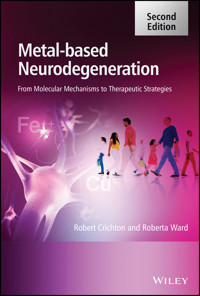
Neurodegenerative diseases of the human brain appear in various forms, resulting in disorders of movement and coordination, cognitive deterioration and psychiatric disturbances. Many of the key factors leading to neurodegenerative diseases are similar, including the dysfunction of metal ion homeostasis, redox-active metal ions generating oxidative stress, and intracellular inclusion bodies.
Metal-based Neurodegeneration presents a detailed survey of the molecular origins of neurodegenerative diseases. Each chapter is dedicated to a specific disease, presenting the latest scientific findings, including details of their biochemical actors (proteins or peptides), their normal and pathological conformations, and a description of the diseases characteristics, with an emphasis on the role of metal-induced oxidative stress, which can result in the production of intracellular aggregates of target proteins and peptides.
Topics covered include:
- Brain function, physiology and the blood-brain barrier
- Immune system and neuroinflammation
- Aging and mild cognitive impairment, MCI
- Parkinson’s Disease
- Alzheimer’s Disease
- Creutzfelt-Jakob and related prion diseases
- Alcoholic Brain Damage
- Therapeutic strategies to combat the onset and progression of neurological diseases
This extensively updated, full colour, second edition of Metal-based Neurodegeneration is an essential text for research scientists and clinicians working in gerontology, neuropathology, neurochemistry, and metalloprotein mechanisms.
Sie lesen das E-Book in den Legimi-Apps auf:
Seitenzahl: 795
Veröffentlichungsjahr: 2013
Ähnliche


















Contents
Cover
Title Page
Copyright
Preface
Chapter 1: Brain Function, Physiology and the Blood–Brain Barrier
1.1 Introduction – An Overview of Brain Structure and Function
1.2 The Cell Types of the Brain
1.3 The Blood–Brain Barrier
References
Chapter 2: Role of Metal Ions in Brain Function, Metal Transport, Storage and Homoeostasis
2.1 Introduction – The Importance of Metal Ions in Brain Function
2.2 Sodium, Potassium and Calcium Channels and Pumps
2.3 Calcium and Signal Transduction
2.4 Zinc, Copper and Iron
2.5 Zinc
2.6 Copper
2.7 Iron
References
Chapter 3: Immune System and Neuroinflammation
3.1 General Introduction
3.2 Apoptosis
References
Chapter 4: Oxidative Stress in Neurodegenerative Diseases
4.1 Introduction – The Oxygen Paradox
4.2 Reactive Oxygen Species
4.3 Reactive Nitrogen Species
4.4 Cellular Defence Mechanisms against Oxidative Stress
4.5 ROS, RNS and Cellular Signalling
4.6 ROS, RNS and Oxidative Damage
4.7 Epigenetics
4.8 Misfolded Protein Aggregates in Neurodegenerative Diseases
4.9 The Amyloid State – Structure, Nucleation and Aggregation
References
Chapter 5: Ageing and Mild Cognitive Impairment (MCI)
5.1 Introduction
5.2 Prevalence of MCI
5.3 Brain Regions Involved
5.4 Proteostasis
5.5 Conclusion
References
Chapter 6: Parkinson's Disease
6.1 Risk Factors for PD
6.2 Genetics of PD
6.3 SNCA
6.4 LRRK2
6.5 Parkin
6.6 DJ-1
6.7 PINK1: PTEN-Induced Kinase
6.8 Epigenetics
6.9 miRNA
6.10 Proteins Involved in PD
6.11 Synucleins
6.12 LRRK2 or PARK 8
6.13 PINK1 or PARK 6
6.14 Parkin or PARK 2
6.15 Synphilin-1
6.16 UCHL 1 or PARK 5
6.17 DJ-1 or PARK 7
6.18 Metal Involvement in Parkinson's Disease
6.19 Neurotransmitters Involved in PD
6.20 Mitochondrial Dysfunction
6.21 PD and Inflammation
6.22 Receptors Involved in the Inflammatory Response
6.23 Oxidative Stress and PD
References
Chapter 7: Alzheimer's Disease
7.1 Introduction
7.2 Epidemiology and Risk Factors for AD
7.3 Genetics of AD
7.4 Proteins Involved in Alzheimer's Disease
7.5 Metal Involvement in Alzheimer's Disease
7.6 Zinc Homoeostasis in AD
7.7 Copper Homoeostasis in AD
7.8 Iron Homoeostasis in AD
7.9 Neurotransmitters Involved in AD
7.10 Mitochondrial Function in Alzheimer's Disease
7.11 Neuroinflammation and AD
7.12 Oxidative Stress
References
Chapter 8: Huntington's Disease and Polyglutamine Expansion Neurodegenerative Diseases
8.1 Introduction
8.2 An Overview of Trinucleotide Expansion Diseases
8.3 Poly-Q Diseases
8.4 Poly-Q Protein Aggregation and Poly-Q Disease Pathogenesis
8.5 Huntington's Disease
8.6 Other Poly-Q Disease Proteins
8.7 Spinocerebellar Ataxias
References
Chapter 9: Friedreich's Ataxia and Diseases Associated with Expansion of Non-Coding Triplets
9.1 Incidence and Pathophysiology of Friedreich's Ataxia
9.2 Molecular Basis of the Disease: Triplet Repeat Expansions
9.3 Molecular Basis of the Disease: Frataxin and Its Role in Iron Metabolism
9.4 Other Diseases Associated with Expansion of Non-Coding Triplets
References
Chapter 10: Creutzfeldt–Jakob and Other Prion Diseases
10.1 Introduction
10.2 A Brief History of Prion Diseases
10.3 Structural Aspects of the Cellular Form of PrPC
10.4 ‘Prion’ or ‘Protein-Only’ Hypothesis – Conformation-Based Prion Inheritance
10.5 Models of PsPC to PsPSc Conversion
10.6 Formation of Prion Aggregates
10.7 Pathways of Prion Pathogenesis
References
Chapter 11: Amyotrophic Lateral Sclerosis
11.1 Introduction
11.2 Major Genes Involved in ALS
11.3 Superoxide Dismutase and ALS
11.4 Contributors to Disease Mechanisms in ALS
11.5 Excitotoxicity and Decreased Glutamate Uptake by Astroglia
11.6 Endoplasmic Reticulum Stress
11.7 Inhibition of the Proteasome
11.8 Mitochondrial Damage
11.9 Aberrant Secretion of Mutant SOD1
11.10 Extracellular Superoxide Generation
11.11 Axonal Disorganization and Disrupted Transport
11.12 Microhaemorrhages of Spinal Capillaries
11.13 Glial Cells in ALS
11.14 ALS and Apoptosis
11.15 Prion-Like Phenomena in ALS
11.16 Conclusions
References
Chapter 12: Alcoholic Brain Damage
12.1 General Introduction
12.2 Anatomy of Alcohol-Induced Damage
12.3 Genetics of Alcohol-Induced Brain Damage
12.4 Factors Associated with Alcohol Brain Damage
12.5 Factors Involved in Alcohol-Induced Brain Damage
References
Chapter 13: Other Neurological Diseases
13.1 Introduction
13.2 Wilson's and Menkes Diseases
13.3 Neurodegeneration with Brain Iron Accumulation
13.4 Aceruloplasminaemia
13.5 Neuroferritinopathy
13.6 Other Neurodegenerative Disorders with Brain Iron Accumulation
13.7 Multiple Sclerosis
13.8 HIV-Associated Neurocognitive Disorder
References
Chapter 14: Therapeutic Strategies to Combat the Onset and Progression of Neurological Diseases
14.1 Introduction
14.2 Chelation of Excessive Metal Ions
14.3 Ageing and Cognitive Decline
14.4 Parkinson's Disease
14.5 Alzheimer's Disease
14.6 Huntington's Disease and Other Poly-Q Diseases
14.7 Friedreich's Ataxia and Other Non-Coding Nucleotide Repeat Diseases
14.8 Creutzfeld–Jakob and Other Prion Diseases
14.9 Amyotrophic Lateral Sclerosis
14.10 Alcohol Abuse
14.11 Other Neurological Diseases
14.12 Multiple Sclerosis
14.13 HIV-Associated Neurocognitive Disorder
References
Chapter 15: Concluding Remarks
15.1 New Innovative Therapeutics
15.2 Biochemical Biomarkers of Neurodegenerative Diseases
References
Index
This edition first published 2014
© 2014 John Wiley & Sons, Ltd
First Edition published in 2005
Registered office
John Wiley & Sons Ltd, The Atrium, Southern Gate, Chichester, West Sussex, PO19 8SQ, United Kingdom
For details of our global editorial offices, for customer services and for information about how to apply for permission to reuse the copyright material in this book please see our website at www.wiley.com.
The right of the author to be identified as the author of this work has been asserted in accordance with the Copyright, Designs and Patents Act 1988.
All rights reserved. No part of this publication may be reproduced, stored in a retrieval system, or transmitted, in any form or by any means, electronic, mechanical, photocopying, recording or otherwise, except as permitted by the UK Copyright, Designs and Patents Act 1988, without the prior permission of the publisher.
Wiley also publishes its books in a variety of electronic formats. Some content that appears in print may not be available in electronic books.
Designations used by companies to distinguish their products are often claimed as trademarks. All brand names and product names used in this book are trade names, service marks, trademarks or registered trademarks of their respective owners. The publisher is not associated with any product or vendor mentioned in this book. This publication is designed to provide accurate and authoritative information in regard to the subject matter covered. It is sold on the understanding that the publisher is not engaged in rendering professional services. If professional advice or other expert assistance is required, the services of a competent professional should be sought.
The publisher and the author make no representations or warranties with respect to the accuracy or completeness of the contents of this work and specifically disclaim all warranties, including without limitation any implied warranties of fitness for a particular purpose. This work is sold with the understanding that the publisher is not engaged in rendering professional services. The advice and strategies contained herein may not be suitable for every situation. In view of ongoing research, equipment modifications, changes in governmental regulations, and the constant flow of information relating to the use of experimental reagents, equipment, and devices, the reader is urged to review and evaluate the information provided in the package insert or instructions for each chemical, piece of equipment, reagent, or device for, among other things, any changes in the instructions or indication of usage and for added warnings and precautions. The fact that an organization or Website is referred to in this work as a citation and/or a potential source of further information does not mean that the author or the publisher endorses the information the organization or Website may provide or recommendations it may make. Further, readers should be aware that Internet Websites listed in this work may have changed or disappeared between when this work was written and when it is read. No warranty may be created or extended by any promotional statements for this work. Neither the publisher nor the author shall be liable for any damages arising herefrom.
Library of Congress Cataloging-in-Publication Data
Crichton, Robert R.
Metal-based neurodegeneration : from molecular mechanisms to therapeuticstrategies / Robert Crichton and Roberta Ward. – 2nd ed.
p. ; cm.
Includes bibliographical references and index.
ISBN 978-1-119-97714-8 (cloth)
I. Ward, Roberta J. II. Title.
[DNLM: 1. Neurodegenerative Diseases–etiology. 2. NeurodegenerativeDiseases–metabolism. 3. Brain–physiology. 4. Metals–adverse effects. 5. Oxidative Stress. WL 358.5]
616.8′0471–dc23
2012048288
A catalogue record for this book is available from the British Library.
Cloth ISBN: 9781119977148
Preface
In the Preface to the 1st edition of this book, we began by insisting on the extraordinary increase in life expectancy over the past few decades. Many readers would be incredulous if we assert (BBC Radio 4) that life expectancy in the United Kingdom today is increasing by 5 months per year. This is illustrated in Figure P.1 for France, second only to Japan in terms of life expectancy in the world, which presents life expectancy from 1740 to 2005. The steady evolution during 1900–1960 (4.4 months/year), with obvious negative peaks caused by the two World Wars, is impressive, but the acceleration between 1960 and 2011 (6.5 months/year) is even more striking. However, hidden behind these apparently encouraging statistics lies a deeply worrying factor: with the increase in life expectancy, the incidence of neurodegenerative disorders, including dementia such as Alzheimer's disease, has also increased. Neurological diseases affecting motor function, like Parkinson's disease and multiple sclerosis, are also to some extent age related. Dementia, defined as the loss or impairment of mental powers, is characterized by a decline in cognitive faculties and occurrence of behavioural abnormalities which interfere with the capacity of an individual to carry out the activities of normal daily life. It usually affects elderly individuals, but may occur in individuals younger than 65 years of age (early-onset dementia). There are many different forms of dementia among which Alzheimer's disease is the most common. Dementia disorders are chronic, progressive, long-lasting and, so far, incurable. There are currently over six million people with dementia in the European Union (Alzheimer Europe, 2008) and it is predicted that this number will double in the next 20 years along with the increasing ageing of the population.
Figure P.1 Life expectancy in France from 1740 to 2005. [Taken from INED (Institut national d'études démographiques); www.ined.fr. Accessed on Dec. 26, 2012.]
In the World Alzheimer Report 2009, Alzheimer's Disease International estimated that there are 36 million people worldwide living with dementia, with numbers doubling every 20 years to reach 66 million by 2030 and 115 million by 2050. The worldwide costs of dementia, estimated at US$604 billion in 2010, now represent more than 1% of global GDP, according to the World Alzheimer Report 2010. As is pointed out, to put this figure in context, if dementia care were a country, it would have been the world's 18th largest economy (Alzheimer's Disease International, 2011).
In our 1st edition we suggested that in concrete terms, we must pursue, with the greatest urgency the following three objectives: (i) endeavour to find out what are the causes of these age-related neurodegenerative diseases, (ii) seek to find therapeutic measures which will slow down the onset of these disorders and (iii), ultimately, find ways and means of preventing them.
In this brief introduction, we can ask the same fundamental questions again, and try to ascertain how far we have come in the past 7 years. With regard to the first of our objectives, we can underline the following areas in which our understanding of how neurodegenerative diseases are caused has clearly progressed.
The importance of the glial cells in normal brain homoeostasis has now become a factor of paramount importance. Although the concept that neurons were the most important cells in the neural function was dominant, it has become increasingly obvious in the past few years that microglia, astrocytes and oligodendrocytes not only interact with neurons with the interconnection not simply related to supporting neurons, feeding them, cleaning up and looking after them when they are sick. The direct involvement of micoglia in both health and neurodegenerative diseases has become more widely understood (Fields, 2010). Activated microglia clearly play an important role in many neurodegenerative diseases, in some cases even driving the progression of the disease. Furthermore, microglial activity can be altered by lifestyle factors such as repetitive exercise and environmental enrichment, which could support proneurogenic responses.
Normal ageing, in the absence of infection or injury, is associated with increased microglia activity and development of low-grade chronic inflammation. Exactly how this may alter the normal functioning of the brain remains unknown. It could be the consequence of the increasing deposition of transition metal ions, such as copper, iron and zinc, in the ageing brain, which, in susceptible individuals, contribute to the development of neurodegeneration. Future research will be needed to understand exactly why the immune system becomes less efficient with ageing. However, in addition to the correlation between oxidative stress and neurodegeneration highlighted in the 1st edition, we also need to highlight the now frequently observed involvement of the innate immune system and neuroinflammation in many neurodegenerative diseases.
With the sequencing of the human genome, it was hoped that there would be substantial progress in understanding the intricacies of the way in which specific genes were involved in neurodegenerative diseases. This has however been tempered by the observation that when studies are carried out on gene expression in large cohorts of patients with a particular neurodegenerative disease, they often involve the expression of a great many individual genes, that is they are polygenic rather than monogenic.
However, we have also become increasingly aware of the importance of epigenetics in neurodegenerative diseases. Epigenetics is defined as the study of heritable changes in gene expression and/or cellular phenotype caused by mechanisms other than changes in the underlying DNA sequence. These changes in gene expression occur as a consequence of the way in which protein binding affects the expression of DNA, without involving changes in nucleotide sequences. Both methylation of the DNA itself and the enzyme-catalysed chemical modification of histones, the proteins which bind to eukaryotic DNA, constituting 50% of the mass of chromatin, appear to be intimately involved in this process. In DNA methylation, the methyl group can tag DNA, mostly at CpG sites, to convert cytosine to 5-methylcytosine, and activate or repress its expression. Histones are highly conserved and highly basic proteins which are wound around eukaryotic DNA, enabling its compaction into chromatin, but which can also affect gene regulation. The modification of the unstructured N-terminal tail of histones by acetylation/deacetylation, methylation and so on can alter the extent to which they wrap around the DNA, thereby altering gene expression.
With regard to our second objective, namely our search to find therapeutic measures which will slow down the onset of these diseases, it is clear that most of the therapeutic measures at best treat symptoms rather than alter the course of the disease. However, we are beginning to develop both non-invasive spectroscopic methods and biochemical and cognitive assessment protocols to identify a number of neurodegenerative diseases earlier than was previously possible.
Finally, with regard to our third objective, to uncover ways of preventing neurodegenerative diseases, we still have a long way to go. However, some approaches which have shown great promise in animal models, such as the use of antisense oligonucleotides and stem cell therapy are beginning to find clinical applications.
So all is not gloom, doom and despondency, and we hope that this quite dramatic update on a subject which generates more and more passionate research efforts across the entire planet will prove helpful to the reader.
Robert R. Crichton
Roberta J. Ward
References
Alzheimer Europe (2008) Dementia in Europe Yearbook, Luxembourg, 176 pp.
Fields, R.D. (2010) Change in the brain's white matter: the role of the brain's white matter in active learning and memory may be underestimated. Science, 330, 768–769.
Alzheimer's Disease International (2011) World Alzheimer Report, 72 pp.
1
Brain Function, Physiology and the Blood–Brain Barrier
1.1 Introduction – An Overview of Brain Structure and Function
The brain is by far the most complex organ of the human body, and is responsible for our every thought, action, memory and feeling. Weighing only about 1.4kg, protected by the bones of the skull and suspended in cerebrospinal fluid (CSF), this mass with the consistency similar to that of soft gelatine contains about 1011 specialized nerve cells, called neurons. Each neuron can form as many as 103–104 connections with other neurons via synapses. It also contains nearly 10 times more cells of a different type, called glial cells (the different classes of neurons and glial cells will be described in detail later in the chapter). Although it constitutes just 2% of the human body mass, it receives 15% of cardiac output, consumes 20% of our total O2 consumption and accounts for 25% of total body glucose utilization.
The human brain is conventionally considered as being made up of three principal parts – the forebrain, midbrain and hindbrain (Figure 1.1a and b). The forebrain is made up of the cerebral cortex (or cerebrum), and, buried within the cerebral cortex beneath the corpus callosum, the thalamus, hypothalamus, amygdala and hippocampus (part of the limbic system, often referred to as the ‘emotional brain’). The midbrain is the smallest region of the brain, functioning as a relay station for the transmission of auditory and visual information. Finally, the hindbrain is made up of the cerebellum, pons and medulla. Often the midbrain, pons and medulla are referred to as the brainstem.
Figure 1.1 (a) Drawing and (b) cross section of the human brain showing several important structures. (Reproduced from Wikipedia, “Alzheimer's disease: unraveling the mystery”, available from the National Institute for Aging.)
1.1.1 The Forebrain
In the course of evolution, the mammalian cerebral cortex has expanded disproportionately compared to total brain volume. The human brain is distinctively larger than that of any other primate, mainly due to great expansion of the cerebral cortex, particularly the frontal lobes that are associated with executive functions such as reasoning, planning, abstract thought and self-control. The portion of the cerebral cortex devoted to vision is also greatly enlarged in human beings. The cerebral cortex is a huge sheet of neural tissue, profusely convoluted and folded to generate a vast surface area. It encompasses about two-thirds of the brain mass and lies over and around most of the other structures of the brain. It is the most highly developed part of the human brain and is also the most recent structure in the history of brain evolution. The cerebral cortex is made up of up to six horizontal layers, each with a different composition in terms of neurons and connectivity. This layer of the brain is often referred to as grey matter – in fact, the cortex is grey because nerves in this area lack the insulation that makes most other parts of the brain appear to be white. In contrast to the grey matter that is formed from neurons and their non-myelinated fibres, the white matter below them is formed predominantly by myelinated axons interconnecting neurons in different regions of the cerebral cortex with each other and also with neurons in other parts of the central nervous system (CNS). The phylogenetically most recent part of the cerebral cortex, the neocortex, is differentiated into six horizontal layers; whereas the more ancient part of the cerebral cortex, the hippocampus, has at most three cellular layers.
The cerebral cortex is divided into right and left hemispheres. Although their appearance is symmetrical, motor functions are directed by the opposite cerebral hemisphere (Figure 1.2). Thus, the right side of the brain controls muscles on the left side of the body and the left side of the brain controls muscles on the right side of the body. While the left hemisphere is associated with logic, the right hemisphere is associated with creativity.
Figure 1.2 The four topographically defined lobes of the cerebral cortex: frontal lobe (blue), parietal lobe (yellow), temporal lobe (green) and occipital lobe (pink). (Reproduced from Wikipedia, from Gray's Anatomy.)
The corpus callosum is a wide, flat bundle of neural fibres beneath the cortex in the eutherian brain at the longitudinal fissure. It connects the left and right cerebral hemispheres and facilitates interhemispheric communication. It is the largest white matter structure in the brain, consisting of 200–250 million contralateral axonal projections.
The thalamus is a large mass of grey matter situated deep within the forebrain between the cerebral cortex and the midbrain. It has sensory and motor functions, relaying sensory and motor signals to the cerebral cortex. The hypothalamus, located below the thalamus and just above the brainstem, is involved in functions including homoeostasis, emotion, thirst, hunger, circadian rhythms and control of the autonomic nervous system. In addition, it controls the pituitary, linking the nervous system to the endocrine system via the pituitary gland, by the synthesis and secretion of a number of neurohormones (hypothalamic releasing hormones), which stimulate or inhibit the secretion of pituitary hormones. The amygdala located just beneath the surface of the front part of the temporal lobe is involved in memory, emotion and fear. The is situated in the temporal lobe adjacent to the amygdala, and is important for learning and memory. In particular, it appears to be important in the consolidation of new memories, emotional responses, navigation and spatial orientation. The hippocampus is one of the first regions of the brain to suffer damage in mild cognitive impairment, with problems of memory initially, which, in some individuals, may develop to Alzheimer's disease, with enhanced memory loss and disorientation. It can also be easily damaged by hypoxia, and people with extensive damage to the hippocampus often suffer from anterograde amnesia, the inability to form or retain new memories.
Lesen Sie weiter in der vollständigen Ausgabe!
Lesen Sie weiter in der vollständigen Ausgabe!
Lesen Sie weiter in der vollständigen Ausgabe!
Lesen Sie weiter in der vollständigen Ausgabe!
Lesen Sie weiter in der vollständigen Ausgabe!
Lesen Sie weiter in der vollständigen Ausgabe!
Lesen Sie weiter in der vollständigen Ausgabe!
Lesen Sie weiter in der vollständigen Ausgabe!
Lesen Sie weiter in der vollständigen Ausgabe!
Lesen Sie weiter in der vollständigen Ausgabe!
Lesen Sie weiter in der vollständigen Ausgabe!
Lesen Sie weiter in der vollständigen Ausgabe!
Lesen Sie weiter in der vollständigen Ausgabe!
Lesen Sie weiter in der vollständigen Ausgabe!
Lesen Sie weiter in der vollständigen Ausgabe!




