


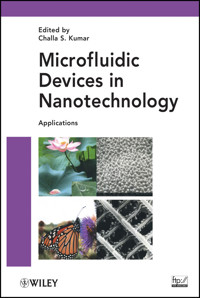
Microfluidic Devices in Nanotechnology E-Book
149,99 €
Mehr erfahren.
- Herausgeber: John Wiley & Sons
- Kategorie: Wissenschaft und neue Technologien
- Sprache: Englisch
Explores the latest applications arising from the intersection of nanotechnology and microfluidics
In the past two decades, microfluidics research has seen phenomenal growth, with many new and emerging applications in fields ranging from chemistry, physics, and biology to engineering. With the emergence of nanotechnology, microfluidics is currently undergoing dramatic changes, embracing the rising field of nanofluidics.
This volume reviews the latest devices and applications stemming from the merging of nanotechnology with microfludics in such areas as drug discovery, bio-sensing, catalysis, electrophoresis, enzymatic reactions, and nanomaterial synthesis. Each of the ten chapters is written by a leading pioneer at the intersection of nanotechnology and microfluidics. Readers not only learn about new applications, but also discover which futuristic devices and applications are likely to be developed. Topics explored in this volume include:
-
New lab-on-a-chip systems for drug delivery
-
Integration of microfluidics with nanoneuroscience to study the nervous system at the single-cell level
-
Recent applications of nanoparticles within microfluidic channels for electrochemical and optical affinity biosensing
-
Novel microfluidic approaches for the synthesis of nanomaterials
-
Next-generation alternative energy portable power devices
References in each chapter guide readers to the primary literature for further investigation of individual topics. Overall, scientists, researchers, engineers, and students will not only gain a new perspective on what has been done, but also the nanotechnology tools they need to develop the next generation of microfluidic devices and applications.
Microfluidic Devices for Nanotechnology is a two-volume publication, the first ever to explore the synergies between microfluidics and nanotechnology. The first volume covers fundamental concepts; this second volume examines applications.
Sie lesen das E-Book in den Legimi-Apps auf:
Seitenzahl: 797
Veröffentlichungsjahr: 2010
Ähnliche




















Contents
Cover
Title Page
Copyright
Preface
Contributors
Chapter 1: Microfluidics For Nanoneuroscience
1.1 Introduction
1.2 PDMS Microfluidic Design and Fabrication
1.3 Designs and Devices for Neuroscience Applications
1.4 Neurophysiology Experiments Using Microfluidic Chips
1.5 Discussion and Future Perspectives
Acknowledgment
References
Chapter 2: Nanoporous Membrane-Based Microfluidic Biosensors
2.1 Introduction
2.2 Need for Real-Time Measurements
2.3 Basic Concepts of Biosensors
2.4 Applications of Nanoporous Membrane-Based Microfluidic Biosensors
2.5 Types of Nanoporous Materials
2.6 Fabrication and Integration of Nanoporous Membranes into Microfluidic Device
2.7 Functionality of Membrane in Biosensors
2.8 Detection Mechanism
2.9 Porous Membrane-Based Biosensor for Detection of Living Organism
2.10 Microfluidic Biosensor Systems
2.11 Summary and Future Perspective
References
Chapter 3: Nanoparticle-Based Microfluidific Biosensors
3.1 Introduction
3.2 Fundamentals of Biosensors
3.3 Conclusions and Future Trends
References
Chapter 4: Microfluidic Enzymatic Reactors Using Nanoparticles
4.1 Introduction
4.2 Enzyme Immobilization Techniques
4.3 Fabrication Methods of Immobilized Microfluidic Enzymatic Reactors
4.4 Application of Immobilized Microfluidic Enzymatic Reactors
4.5 Summary and Future Perspective
References
Chapter 5: Microfluidic Devices for Nanodrug Delivery
5.1 Introduction
5.2 Microfluidic Devices
5.3 Nanodrug Delivery
5.4 Bio-MEMS Applications
5.5 Conclusions and Future Perspective
References
Chapter 6: Microchip and Capillary Electrophoresis Using Nanoparticles
6.1 Introduction
6.2 Microchip Electrophoresis
6.3 Application of Nanoparticles in CE and MCE
6.4 Conclusions
References
Chapter 7: Pillars and Pillar Arrays Integrated in Microfluidic Channels: Fabrication Methods and Applications in Molecular and Cell Biology
7.1 Introduction
7.2 Patterning Techniques
7.3 Other Fabrication Aspects
7.4 Application Examples
7.5 Conclusion and Future Outlook
Acknowledgments
References
Chapter 8: Nanocatalysis in Microreactor for Fuels
8.1 Introduction
8.2 Design of Microchannel Reactors: Micromixing
8.3 Fabrication of Microchannel Reactor
8.4 Nanocatalyst Deposition on the Microchannels
8.5 Hydrogen Production and Purification in a Microreactor
8.6 Microreactor for Gas-to-Liquid Technology
8.7 Parallel Microreactor System for Nanocatalyst Screening
8.8 Summary
Acknowledgments
References
Chapter 9: Microfluidic Synthesis of Iron Oxide and Oxyhydroxide Nanoparticles
9.1 Introduction
9.2 Main Bulk Procedures for the Synthesis of Iron Oxide Nanoparticles
9.3 Microfluidic Synthesis of Iron Oxyhydroxide Nanoparticles
9.4 Perspectives
References
Chapter 10: Metal Nanoparticle Synthesis in Microreactors
10.1 Introduction
10.2 Mechanism of Metal Nanoparticle Formation
10.3 NP Product and Process Characterization
10.4 Metal NP Synthesis in Homogeneous Fluids
10.5 Metal NP Synthesis Under Segmented Flow Conditions
10.6 Challenges of Metal NP Synthesis in Microreaction Technology
10.7 Conclusions
Acknowledgment
References
Index
Copyright © 2010 by John Wiley & Sons, Inc. All rights reserved
Published by John Wiley & Sons, Inc., Hoboken, New Jersey
Published simultaneously in Canada
No part of this publication may be reproduced, stored in a retrieval system, or transmitted in any form or by any means, electronic, mechanical, photocopying, recording, scanning, or otherwise, except as permitted under Section 107 or 108 of the 1976 United States Copyright Act, without either the prior written permission of the Publisher, or authorization through payment of the appropriate per-copy fee to the Copyright Clearance Center, Inc., 222 Rosewood Drive, Danvers, MA01923, (978) 750-8400, fax (978) 750-4470, or on the web at www.copyright.com. Requests to the Publisher for permission should be addressed to the Permissions Department, John Wiley & Sons, Inc., 111 River Street, Hoboken, NJ 07030, (201) 748-6011, fax (201) 748-6008, or online at http://www.wiley.com/go/permission
Limit of Liability/Disclaimer of Warranty: While the publisher and author have used their best efforts in preparing this book, they make no representations or warranties with respect to the accuracy or completeness of the contents of this book and specifically disclaim any implied warranties of merchantability or fitness for a particular purpose. No warranty may be created or extended by sales representatives or written sales materials. The advice and strategies contained herein may not be suitable for your situation. You should consult with a professional where appropriate. Neither the publisher nor author shall be liable for any loss of profit or any other commercial damages, including but not limited to special, incidental, consequential, or other damages.
For general information on our other products and services or for technical support, please contact our Customer Care Department within the United States at (800) 762-2974, outside the United States at (317) 572-3993 or fax (317) 572-4002.
Wiley also publishes its books in a variety of electronic formats. Some content that appears in print may not be available in electronic formats. For more information aboutWiley products, visit our web site at www.wiley.com.
Library of Congress Cataloging-in-Publication Data:
Microfluidic devices in nanotechnology. Applications / edited by Challa S. Kumar.
p. cm.
Includes bibliographical references and index.
ISBN 978-0-470-59069-0 (cloth)
1. Microfluidic devices. 2. Nanofluids. 3. Nanotechnology. 4. Fluidic devices. I. Kumar, C. S. S. R. (Challa S. S. R.)
TJ853.4.M53M5325 2010
620.1'06–dc22
2009051009
Preface
I hope you had an opportunity to go through the first volume. It gives me immense satisfaction in placing the second volume of the two-volume book series—Microfluidic Devices for Nanotechnology: Applications—in your hands. The second volume is the first book ever to be published that covers nanotechnology applications using microfluidics in a broad range of fields, including drug discovery, biosensing, catalysis, electrophoresis, enzymatic reactions, and synthesis of nanomaterials. While the first volume, Microfluidic Devices for Nanotechnology: Fundamental Concepts, in its combined form provides readers an up-to-date knowledge of the fluid and particle kinetics, spatiotemporal control, fluid dynamics, residence time distribution, and nanoparticle focusing within microfluidics, the second volume primarily captures up-to-date applications. The book fills in a long-term gap that existed for the real-time measurement of biomolecular binding in biosensors and justification for incorporating nanoporous membranes into “lab-on-a-chip” biosensing devices. Focusing on lab-on-a-chip systems for drug delivery (also called bio-MEMS), separating bioanalytes using electrophoresis, genomics, proteomics, and cellomics, the book is a must for biologists and biochemists. Highlighting the importance of nanoneuroscience, the book educates the reader on the discipline of microfluidics to study the nervous system at the single-cell level and decipher physiological processes and responses of cells of neural origin. For a nanomaterials chemist interested in novel approaches for synthesis of nanomaterials, this book is an excellent source of information covering a wide variety of microfluidic-based approaches for synthesis of metallic and nonmetallic nanomaterials. Finally, opening a window for the next-generation alternative energy portable power devices, nanocatalyst development for industrially useful reactions in silicon-based microreactors is discussed especially in the context of syngas conversion to higher alkanes, which could solve current difficulties of storage and transportation by converting natural gas into liquid fuels. Overall, the book contains reviews by world-recognized microfluidic and nanotechnology experts providing strong scaffolding for futuristic applications utilizing synergy between microfluidics and nanotechnology.
Chapter 1 by Drs. Pamela G. Gross and Emil P. Kartalov focuses on the application of microfluidic devices to study the nervous system at single-cell level using nanotechnologies. This chapter describes various aspects of microfluidic chips used to decipher physiological processes and responses of cells of neural origin with examples of novel research not previously possible. Continuing on a similar theme, Chapter 2 by Professor Shalini Prasad et al. provides a detailed account of real-time biomolecular sensing through incorporation of nanoporous membranes, man-made as well as natural, into “lab-on-a-chip” biosensing devices. In addition to nanoporous membranes, simple spherical nanoparticles are finding novel applications when incorporated within the microchannels. Chapter 3 by Professor Giovanna Marrazza reviews the most recent applications of nanoparticles within microfluidic channels for electrochemical and optical affinity biosensing, highlighting some of their technical challenges and the new trends. Chapter 4 by Professors Chunhui Deng and Yan Li presents the recent advances in the field of immobilized microfluidic enzymatic reactors (IMERs), which constitutes a new branch of nanotechnology. In view of the increasing use of lab-on-a-chip systems in the healthcare industry, there is a growing demand for discovery, development, and testing of active nanodrug carriers within the microfluidic environment for controlled drug delivery. Chapter 5 by Professor Clement Kleinstreuer and Jie Li provides a comprehensive treatise on fundamentals and applications of microfluidics and bio-MEMS with respect to nanodrug targeting and delivery.
Capillary electrophoresis (CE) and microchip electrophoresis (MCE) are two promising separation techniques for analyses of complex samples, in particular, biological samples. Not surprisingly, these techniques have been profoundly influenced by the advances in nanotechnologies. Chapter 6 by Muhammad J. A. Shiddiky and Professor Yoon-Bo Shim covers the recent developments and innovative applications of nanomaterials as stationary and/or pseudostationary phases in CE and MCE. This chapter illustrates the importance of various types of nanomaterials, including metal and metal oxide nanoparticles, carbon nanotubes, silica nanoparticles, and polymeric nanoparticles, in enhancing the separation of biological samples using CE and MCE. The examples we have seen so far involve externally fabricated nanomaterials, which are later on utilized for a number of applications within the microfluidic channels. Chapter 7 by Drs. J. Shi and Yong Chen discusses pillars and pillar arrays integrated into microfluidic chips in the fabrication process itself. This chapter demonstrates how such an approach provides a large variety of functionalities for molecule and cell biology studies.
The applications we have seen so far in the first seven chapters range from biology to drug delivery. Chapter 8 by Shihuai Zhao and Professor Debasish Kuila is uniquely placed in the book as it brings out the recent recognition for microreactor as a novel tool for chemistry and chemical process industry, such as fuel industry. This chapter presents silicon-based microreactors for the development of nanocatalysts for industrially useful reactions. For example, methanol steam reformer to produce H2 and CO purifier is described in detail for potential microreactor applications in the next generation of alternative energy for portable power devices.
The last example that the book provides is the application of microfluidic reactors for the synthesis of nanomaterials. With the increase in the demand for high-quality metal nanoparticles with narrow size, shape distribution, and homogeneous composition, the continuous-flow microfluidic processes are gaining attention as they are particularly suited for realizing constant mixing, reaction, and quenching conditions necessary for production of high-quality metallic nanomaterials. Chapter 9 by Dr. Ali Abou-Hassan et al. reviews the recent scientific literature concerning the use of microfluidics for the synthesis of the iron oxides nanomaterials. Chapter 10 by Professor J. Michael Köhler and coworkers is a fitting conclusion to the book delineating a number of promising opportunities and challenges for the application of microreaction technology for the synthesis and manipulation of metallic nanoparticles. In combination with the Chapter 9 in Volume 1, this will provide a strong platform from both theoretical and experimental perspectives on synergism between microfluidics and nanotechnology for automated microreactor-based controlled synthesis and engineering of nanomaterials for a number of applications.
In conclusion, the two volumes bring out a clear understanding of theoretical and experimental concepts of microfluidics in relation to nanotechnology in addition to providing a seamless transition of knowledge between and micro- and nanofluidics. The contributors for both the volumes are world-renowned experts exploiting the synergy between microfluidics and nanotechnology. I am very much grateful to all of them for sharing my enthusiasm and vision by contributing high-quality reviews, on time, keeping in tune with the original design and theme of both the volumes. You will not be having this book in your hand but for their dedication, perseverance, and sacrifice. I am thankful to my employer, the Center for Advanced Microstructures and Devices (CAMD), who has been supporting me in all my creative ventures. Without this support, it would be impossible to make this venture of such magnitude a reality. No words can express the understanding of my family in allowing me to make my home a second office and bearing with my spending innumerable number of hours in front of the computer. It is impossible to thank everyone individually in this preface; however, I must make a special mention of the support from Wiley in general and the publishing editor Anita Lekhwani in particular, who has been working closely with me to ensure that this project becomes a reality. I am grateful for this support.
Note: Additional color versions of selected figures are available on ftp://ftp.wiley.com/public/sci_tech_med/microfluidic_devices_concepts
Baton Rouge, LA, USA
November 15, 2009
Challa S. S. R. Kumar
Contributors
Ali Abou-Hassan, Laboratoire de Physicochimie des Electrolytes Colloÿdes et Sciences Analytiques (PECSA), UMR 7195, Equipe Colloÿdes Inorganiques, UniversitÕ Paris 6, Paris Cedex 5, France
Manish Bothara, Department of Electrical and Computer Engineering, Portland State University, Portland, OR, USA
Valérie Cabuil, Laboratoire de Physicochimie des Electrolytes Colloÿdes et Sciences Analytiques (PECSA), UMR 7195, Equipe Colloÿdes Inorganiques, Université Paris 6, Paris Cedex 5, France
Yong Chen, Institute for Integrated Cell-Material Sciences, Kyoto University, Kyoto, Japan
Chunhui Deng, Department of Chemistry, School of Pharmacy, Fudan University, Shanghai, China
Pamela G. Gross, Student Health and Wellness Center, University of Nevada at Las Vegas, Las Vegas, NV, USA
Peter Mike Günther, Department of Physical Chemistry and Microreaction Technology, Institute of Micro- and Nanotechnologies, Ilmenau University of Technology, Ilmenau, Germany
Emil P. Kartalov, Keck School of Medicine, University of Southern California, Los Angeles, CA, USA
Clement Kleinstreuer, Department of Mechanical and Aerospace Engineering and Department of Biomedical Engineering, North Carolina State University, Raleigh, NC, USA
Andrea Knauer, Department of Physical Chemistry and Microreaction Technology, Institute of Micro- and Nanotechnologies, Ilmenau University of Technology, Ilmenau, Germany
Johann Michael Köhler, Department of Physical Chemistry and Microreaction Technology, Institute of Micro- and Nanotechnologies, Ilmenau University of Technology, Ilmenau, Germany
Debasish Kuila, Institute for Micromanufacturing, Louisiana Tech University, Ruston, LA, USA; Department of Chemistry, North Carolina A&T State University, Greensboro, NC, USA
Vindhya Kunduru, Department of Electrical Engineering, Arizona State University, Tempe, AZ, USA
Jie Li, Department of Mechanical and Aerospace Engineering, North Carolina State University, Raleigh, NC, USA
Yan Li, Department of Chemistry, School of Pharmacy, Fudan University, Shanghai, China
Giovanna Marrazza, Dipartimento di Chimica, UnivesitÁ di Firenze, Via della Lastruccia, Sesto Fiorentino, Italy
Sriram Muthukumar, Intel Corporation, Chandler, AZ, USA
Shalini Prasad, Department of Electrical Engineering, Arizona State University, Tempe, AZ, USA
Olivier Sandre, Laboratoire de Physicochimie des Electrolytes Colloÿdes et Sciences Analytiques (PECSA), UMR 7195, Equipe Colloÿdes Inorganiques, Université Paris 6, Paris Cedex 5, France
Jian Shi, Ecole Normale Supérieure, Paris, France
Muhammad J. A. Shiddiky, Department of Chemistry and Institute of Biophysio Sensor Technology, Pusan National University, Busan, South Korea
Yoon-Bo Shim, Department of Chemistry and Institute of Biophysio Sensor Technology, Pusan National University, Busan, South Korea
Yamini Yadav, Department of Electrical and Computer Engineering, Portland State University, Portland, OR, USA
Shihuai Zhao, Institute for Micromanufacturing, Louisiana Tech University, Ruston, LA, USA; Tianjin University, Tianjin, China
Chapter 1
Microfluidics For Nanoneuroscience
Pamela G. Gross
Student Health and Wellness Center, University of Nevada at Las Vegas, Las Vegas, NV, USA
Emil P. Kartalov
Keck School of Medicine, University of Southern California, Los Angeles, CA, USA
1.1 Introduction
The nervous system of an organism is like the information technology department of an organization. Each of the billions of building blocks of the nervous system, called neurons, is a multistate device similar to the transistors of a microprocessor. But while transistors are binary state devices, neurons are capable of being in many thousands of states, and this adds many orders of magnitude to the complexity of possible connections within a nervous system. In addition, each neuron has multiple connections with other neurons, and some of these connections are bundled into tracts and nerves that travel within brain and spinal cord, and out to peripheral locations. In computers, disconnection of one network cable, or disabling of the electronic circuits in the server, can seriously compromise the function of the organization. Similarly, traumatic injuries or neurodegenerative processes such as multiple sclerosis, Alzheimer's disease, or Parkinson's disease can significantly impair the functionality of an individual by damaging the neurons, tracts, and nerves. However, unlike computer systems, medical repair processes do not yet exist because we do not yet understand how the system operates in the healthy state. This may change in the near future as cell biologists pursue stem cell interventions to regenerate or remodel damaged areas of the nervous system. Simultaneously, engineers are teaming up with biologists to design electronic implants and prostheses that can interface with functioning tissue on either side of a damaged connection and act as a bridge to allow restoration of injured neuronal circuits. Pharmaceutical researchers are using nanotechnologies to create novel systems capable of delivering targeted drugs and other agents across the previously impenetrable blood–brain barrier,1,2 a feature of nervous systems that chemically separates the system from the rest of the organism.
All these advances may be accelerated by knowledge derived from studies of cellular physiology using tools designed to study biological processes at the single cell level. As our ability to fabricate tools on the micro- and nanoscale levels has progressed, we can now study cellular processes at a scale compatible with cell size, and this is revealing new information about their operational responses, including how they respond to physical and chemical cues from their immediate environment. It is important that neuroscience researchers be aware of these new technologies, so that their use can be optimized.
Recent advances in biological applications of micro- or nanotechnology have included novel micro- or nanoscaled carriers for drug delivery,3–6 quantum dots that operate as nanoscaled sensors at the cellular level,7–11 and nanoelectrodes.12 In addition, self-assembled monolayers and scaffolding, as well as carbon nanotubes, have been used as artificial nanotechnology matrices for cell culture.13–19 In neuroscience specifically, nanoparticles have been used for free radical scavenging in ischemic and neurodegenerative diseases.20 Scaffolds made of self-assembling nanofibers are being developed to enhance neuroregeneration.21 The blood–brain barrier has been successfully breached by drugs attached to special nanoparticles.22 High-resolution studies of the topography and material properties of live nervous system cells are being carried out by atomic force microscopy (AFM) (Figure 1.1).23,24 Single-molecule tracking using quantum dots has revealed details about the structure and function of membrane receptors.10,25,26 Finally, nanotubes, nanowires, and nanoneedles are being developed for use as relatively nontraumatic intracellular electrodes.12,27,28 On a slightly larger scale, microfabrication technology has been used to create microfluidic platforms that have been employed for a variety of nanoneuroscience studies, and these platforms will now be discussed.
Figure 1.1 Atomic force microscopy images of neural lineage cells. (a) Three-dimensional rendering of an oligodendrocyte differentiated from a murine neural stem cell. Fixed sequentially with 100% ethanol and 4% PFA, air dried, and then imaged on an Asylum Research MFP 3D AFM using an Olympus AC160 cantilever in AC mode in air. Note the detailed process formation. Scan size is 90 μm × 90 μm. (b) Three-dimensional rendering of a portion of a living astrocyte derived from a human embryonic stem cell on a polyornithine/laminin-coated substrate, imaged in media, in AC mode with an Olympus Biolever, and on an Asylum Research MFP 3D AFM. The image shows cytoskeletal fibrous elements visible through the cell membrane in the proximal thicker area of the cell as they enter a broad, flat attachment area. Scan size is 30 μm × 30 μm (unpublished data, Pamela G. Gross).
Microfluidics refers to a technology that utilizes microscale channels to manipulate fluid and suspended objects in a controlled manner at the nanoliter scale. Most microfluidic chips are designed and constructed using the same techniques as used in the development of microelectronic circuitry. Microfluidics has been advancing rapidly over the past decade and has progressed from basic devices, for example, a channel,29 a valve,30 and a pump,30 to large-scale two-dimensional integration of components,31 three-dimensional architectures,32 and nonlinear autoregulatory systems.32 Simultaneously, the development of the fundamental technology has enabled the advent of a plethora of specialized devices that have miniaturized important macroscale applications such as protein crystallization, DNA sequencing, and PCR (polymerase chain reaction), a technique for DNA detection and amplification. The same development has also enabled the advent of novel techniques to conduct fundamental research in a scale that was never previously possible. More recently, some microfluidic chips incorporate other microtechnology and nanotechnology hardware, such as electrodes, magnetic coils, and surface-emitting lasers, to enhance their capabilities beyond fluid handling.
Lesen Sie weiter in der vollständigen Ausgabe!
Lesen Sie weiter in der vollständigen Ausgabe!
Lesen Sie weiter in der vollständigen Ausgabe!
Lesen Sie weiter in der vollständigen Ausgabe!
Lesen Sie weiter in der vollständigen Ausgabe!
Lesen Sie weiter in der vollständigen Ausgabe!
Lesen Sie weiter in der vollständigen Ausgabe!
Lesen Sie weiter in der vollständigen Ausgabe!
Lesen Sie weiter in der vollständigen Ausgabe!
Lesen Sie weiter in der vollständigen Ausgabe!




