


Erhalten Sie Zugang zu diesem und mehr als 300000 Büchern ab EUR 5,99 monatlich.
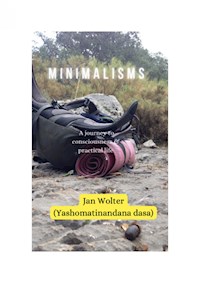
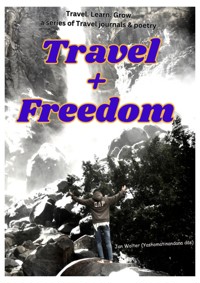
During the composition of this book, the author travelled with a small belly bag and three dozen utensils, such as passport, smartphone, prayer beads and hygiene articles for 10 days through Scandinavia and back across the Baltic States, once around the Baltic Sea, back to the capital Berlin. Exemplary minimal, and first of all, to underline what is written, the author says: Anyone can do that! This book is conducted in a series called "Travel, learn, grow" with many other books in hand, we aim to help the individual to live a life plus. PLUS means peaceful living uniting spiritual and mundane. Going green, living happy relationship and giving our soul the freedom to search. It is inspired by countless individuals and projects around the world. The author, a Bhakti-yoga practitioner, not only draws from seven years of world travel but of the wisdom texts of this world as well as from sages and saints whom one can trust. Living an example and bringing food to the world, that is the mission. In this instalment of travel, learn, grow special attention is given to renunciation and putting everything in the service of the good world, in God consciousness, one can do good for all. This minimalistic approach more or less came spontaneously to the author and helped him to develop good habits. With great help of master renunciates like monks and sages, the author followed along a journey of detachment and freedom to help others into a more conscious and holistic life. That is the practice of yoga. Plus, one can attain loving devotion to this perfect process of service to God, that in regards is called Bhakti. Peace, Love and Unity in the Spirit for the World, Amen, Om tat sat Your humble author
Sie lesen das E-Book in den Legimi-Apps auf:
Seitenzahl: 58
Veröffentlichungsjahr: 2022
Das E-Book (TTS) können Sie hören im Abo „Legimi Premium” in Legimi-Apps auf:
Ähnliche









Minimalism
Foreword
During the composition of this book, the author travelled with a small belly bag and three dozen utensils, such as passport, smartphone, prayer beads and hygiene articles for 10 days through Scandinavia and back across the Baltic States, once around the Baltic Sea, back to the capital Berlin.
Exemplary minimal, and first of all, to underline what is written, the author says: Anyone can do that!
It is the practice that makes a master, says an old saying, and not only the theory and speculation that lead to the success of such a (life) journey.
The exercise of minimalism is extraordinary and important, especially at this time. Why, this book answers that.
Are you aware that nature is gradually weakening? Can you imagine that the earth will soon be used up, without further ado?
Taking it seriously that we are all in one boat, and this continues to steer until provisions and fuel are empty.
Each and every one of the passengers is responsible for taking on a moderate role in living moderately.
Moderate eating, sleeping, travelling, and working are points that affect everyone and everyone can do something to preserve the precious earth.
Travelling with Mother Earth is of course a life's task and man does not want to leave Earth without giving her due thanks.
Thus, this book should stimulate rethinking and, of course, possibly inspire minimalism to live in order to preserve the earth not only for 50 years, but for 5000 and longer.
This is compatible with the future generation, and of course it is in every individual's responsibility to act consciously and wisely.
Homo sapiens, the wise man, is still on the way to learning, but original stories and courageous personalities give us an outlook on hope.
This hope should also resonate here in these lines, because minimalism is timely, historically authorised, and the first step towards improvement.
Man can change and stand for good, no matter where in the world. This book shows how everyone can take a small step towards a beautiful future.
Life has so many peculiarities, and so this book should illuminate these topics:
How can the individual live practically minimally?
What problems can be solved by minimalism?
What side effects does the individual experience as a result?
How does simplicity live in minimalism?
Which diet, travel habits and lifestyles are particularly sustainable?
Where is the joy of this practice?
Please take a moment and remember your childhood mentally.
Please come to the present moment and look inside.
Look to the future and smile, let the journey begin.
Dedication
This book is dedicated to the future generation especially the bright and happy children that are growing up.
To my niece and nephew, to my family, physical and spiritual, especially to my spiritual masters.
Contents:
◦Less is more: Principles behind the practice of minimalism
◦A better world: examples and stories of minimalistic personalities
◦We are coming with nothing and leaving this world equally: mental Minimalism
◦The not-collecting-more-than-necessary principle: „Atyahara“, the practice of detachment
◦An even better world: Sustainability through Minimalism
◦Daily minimalism, with cream on top
◦Simple values in modern times: spiritual communities, digital Nomads & Protection of the cow
◦The perfection of human life: a win-win for all
◦Everyone can do! How the individual can change the world minimalistically
◦Simple living, higher thinking - Minimalism as hope against hope
Less is more: Principles behind the practice of minimalism
The person and the thing
Have you ever thought about, or even written down, what you really need?
Maybe you recognise a pattern?
On one's life journey, accumulation becomes a daily sport. Anyone who has found the child in himself knows immediately; we need little to be happy.
Around the age of five, when children go to a stage called the initiative stage, "the thing" suddenly plays an important role.
The object of love is tested, tested and also taken apart. This often creates shame, envy and anger, which the child feels internally and can pass on externally.
The parents are in the process of curbing the first urges and making things meaningful.
First musical instruments, education, learning, writing, arithmetic, all these serve as a balance for the reification of love.
This love is primerly motherly love, which detaches itself and drifts into the wide world.
Freud and Erikson describe this phase in the eight-step model as initiative versus shame.
This describes the beginnings of our love for things, and the accumulation of unnecessary goods.
Perhaps the question arises, what is necessary?
World traveller and adventurer Rüdiger Nehberg planned a trip from Hamburg to the Alps, on foot, with less than a dozen objects:
Pants, underpants, a top, a hat, shoes, a protective blanket and a box of matches.
He managed the one thousand kilometres, and thirty days walk in the simplest manner.
Is this essential? Does the traveller show what is possible? Are hardship and virtue so close together?
With growing up, life is increasingly shaped by the urges and hormonal urges. Sex and the body become the object of desire, whereby consumer goods also play along to convey an expression of yearning. This avarice is also curiosity.
Who am I? Boy, girl, or already man or woman? Am I the beautiful jeans, or the shoes?
Our ego, subconscious and emotional forces play with each other, and more and more impressions, experiences, and things accumulate.
Society presses that everyone needs a house, a car and a garden with a tree. Where do you think that comes from? New-fashioned invention or cultural feelings of belonging? Both, but humans only settled down just over a millennium ago, for example in cities like Trier (approximately eleventh century) and before in communities and municipalities, such as on the river (Rhine tribes about the fifth century).
This development called migratory nomads to stay and promoted social structures in which people could live in exchange.
Security, cooperation, and prosperity make it possible to get together on a peaceful basis, but is one happy and fulfilled as a result?
Is this kind of life even conducive to the well-being of the earth and nature, let alone human's nature?
What will happen in the future if even more people colonise the earth and flee to the cities?
There is a certain material ambiguity here. A thick fog is rising, and the visibility is short.
Leave these questions unanswered, and don't be surprised, rescue is approaching.
Origins of minimalism
An understanding is needed. An attitude of reality. The right visual aid, which allows insight.
It is important to understand that minimalism is something completely natural and that man lives imperfectly in materialism.
Basically, no one is perfect. All people are endowed with fundamental characteristics, such as flawed sensory organs, the tendency to lie, to make mistakes and to cheat. We are all characterised by nature. This is the basis for pride, greed and other vices which make the 'wise man' look unwise.




