


104,99 €
Mehr erfahren.
- Herausgeber: John Wiley & Sons
- Kategorie: Wissenschaft und neue Technologien
- Serie: IEEE Press Series on Power and Energy Systems
- Sprache: Englisch
Comprehensive reference exploring fundamentals of power systems analysis and operation through a unique blend of traditional and modern concepts
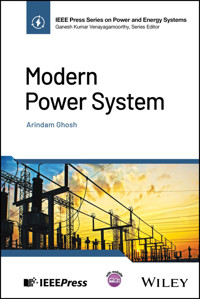
Modern Power System explains the fundamentals of power systems analysis and operation, the latest developments with regard to transformation of energy sources from the conventional synchronous generators to the inverter-based sources, and the techniques and hardware used for this purpose. The book includes information on traditional power system concepts such as load flow, fault studies, protection, and stability as well as modern concepts including reactive power control, Flexible AC Transmission Systems (FACTS), HVDC transmission, renewable energy, and smart grids.
Readers will find insights on topics such as phasor measurement unit (PMUs), wide-area measurements and control, and SCADA systems as well as distribution side aspects such as smart meters, demand management, and energy trading. Readers will also learn about point-to-point HVDC transmission using line commutated converters and multiterminal HVDC transmission.
Additional topics discussed in include:
- Power system components such as transmission line parameters, transformer models, per-unit representation, and modeling of transmission lines
- Economic operation of power plants and systems, with information on unit commitment and automatic generation control
- Power system protection through instrument transformers, protective relays, and overcurrent relay coordination
- Reactive power compensation, covering voltage stability and ideal reactive compensation
- Water, solar, wind, hydrogen, and nuclear fusion as alternative energy sources
Modern Power System is an excellent textbook for undergraduate and graduate students in electrical engineering with a power engineering specialization, as well as practicing power system engineers seeking to keep up with the latest developments in the field.
Sie lesen das E-Book in den Legimi-Apps auf:
Seitenzahl: 741
Veröffentlichungsjahr: 2025
Ähnliche


















IEEE Press445 Hoes LanePiscataway, NJ 08854
IEEE Press Editorial BoardSarah Spurgeon, Editor‐in‐Chief
Moeness Amin
Ekram Hossain
Desineni Subbaram Naidu
Jón Atli Benediktsson
Brian Johnson
Yi Qian
Adam Drobot
Hai Li
Tony Quek
James Duncan
James Lyke
Behzad Razavi
Hugo Enrique Hernandez Figueroa
Joydeep Mitra
Thomas Robertazzi
Albert Wang
Patrick Chik Yue
Modern Power System
Arindam Ghosh
Curtin UniversityAustralia
IEEE Press Series on Power and Energy SystemsGanesh Kumar Venayagamoorthy, Series Editor
Copyright © 2026 by The Institute of Electrical and Electronics Engineers, Inc. All rights reserved.
Published by John Wiley & Sons, Inc., Hoboken, New Jersey.
No part of this publication may be reproduced, stored in a retrieval system, or transmitted in any form or by any means, electronic, mechanical, photocopying, recording, scanning, or otherwise, except as permitted under Section 107 or 108 of the 1976 United States Copyright Act, without either the prior written permission of the Publisher, or authorization through payment of the appropriate per‐copy fee to the Copyright Clearance Center, Inc., 222 Rosewood Drive, Danvers, MA 01923, (978) 750‐8400, fax (978) 750‐4470, or on the web at www.copyright.com. Requests to the Publisher for permission should be addressed to the Permissions Department, John Wiley & Sons, Inc., 111 River Street, Hoboken, NJ 07030, (201) 748‐6011, fax (201) 748‐6008, or online at http://www.wiley.com/go/permission.
The manufacturer's authorized representative according to the EU General Product Safety Regulation is Wiley‐VCH GmbH, Boschstr. 12, 69469 Weinheim, Germany, e-mail: [email protected].
Trademarks: Wiley and the Wiley logo are trademarks or registered trademarks of John Wiley & Sons, Inc. and/or its affiliates in the United States and other countries and may not be used without written permission. All other trademarks are the property of their respective owners. John Wiley & Sons, Inc. is not associated with any product or vendor mentioned in this book.
Limit of Liability/Disclaimer of Warranty: While the publisher and the authors have used their best efforts in preparing this work, including a review of the content of the work, neither the publisher nor the authors make any representations or warranties with respect to the accuracy or completeness of the contents of this work and specifically disclaim all warranties, including without limitation any implied warranties of merchantability or fitness for a particular purpose. No warranty may be created or extended by sales representatives, written sales materials or promotional statements for this work. The fact that an organization, website, or product is referred to in this work as a citation and/or potential source of further information does not mean that the publisher and authors endorse the information or services the organization, website, or product may provide or recommendations it may make. This work is sold with the understanding that the publisher is not engaged in rendering professional services. The advice and strategies contained herein may not be suitable for your situation. You should consult with a specialist where appropriate. Further, readers should be aware that websites listed in this work may have changed or disappeared between when this work was written and when it is read. Neither the publisher nor authors shall be liable for any loss of profit or any other commercial damages, including but not limited to special, incidental, consequential, or other damages.
For general information on our other products and services or for technical support, please contact our Customer Care Department within the United States at (800) 762-2974, outside the United States at (317) 572-3993 or fax (317) 572-4002.
Wiley also publishes its books in a variety of electronic formats. Some content that appears in print may not be available in electronic formats. For more information about Wiley products, visit our web site at www.wiley.com.
Library of Congress Cataloging-in-Publication Data
Names: Ghosh, Arindam authorTitle: Modern power system / Arindam Ghosh.Description: Hoboken, New Jersey: Wiley‐IEEE Press [2026] | Series: IEEEPress series on power and energy systems | Includes index.Identifiers: LCCN 2025031906 (print) | LCCN 2025031907 (ebook) | ISBN 9781394289912 cloth | ISBN 9781394289936 adobe pdf | ISBN 9781394289929 epubSubjects: LCSH: Electric power systemsClassification: LCC TK1001.G47 2026 (print) |LCC TK1001 (ebook)LC record available at https://lccn.loc.gov/2025031906LC ebook record available at https://lccn.loc.gov/2025031907
Cover Design: WileyCover Image: © xuanhuongho/Shutterstock
Dedicated tomy wife, Supriya, and son, Aviroop, andto all my students
About the Author
Arindam Ghosh has held academic positions at the Indian Institute of Technology Kanpur for over two decades, at the Queensland University of Technology in Brisbane, and is currently a Research Professor at Curtin University in Perth, Australia. His work has focused on power systems, power electronics and controllers that enhance the reliability and sustainability of electricity networks.
He has been recognized internationally as a Fulbright Scholar at the University of Illinois at Urbana–Champaign, elected a Fellow of both the Indian National Academy of Engineering and the IEEE, and awarded the IEEE PES Nari Hingorani Custom Power Award in 2019. He earned his Ph.D. in Electrical Engineering from the University of Calgary, Canada, in 1983.
Passionate about bridging theory and practice, he continues to inspire students, researchers, and professionals working to shape the future of energy systems.
Preface
The electric power industry is a cornerstone of global infrastructure, vital for modern society and economic development. According to the International Energy Agency report on world energy employment in 2023, the power sector employed over 68 million people worldwide. Of these, over 36 million people were employed in the clean energy sector, while over 32 million people were employed in the fossil fuel‐based power industry. According to the US Bureau of Labor Statistics report of 2023, 17,870 electrical engineers were employed in the power sector. Amongst all the technical societies of the Institute of Electrical and Electronic Engineers (IEEE), the Power and Energy Society (PES) is the second largest, having around 42,000 members worldwide.
Given its vast impact, the power industry requires a multidisciplinary approach for its secured operation and continues to evolve, a journey that I have followed with fascination. My early studies of foundational texts like W. D. Stevenson's book [1] have deeply influenced the structure and focus of this book, blending traditional principles with modern advancements. Most of the topics covered in Stevenson's book are still valuable to gain knowledge in the area. However, the power sector has seen a sea of changes since the time the fourth edition of the book appeared in 1982. These days, power electronic technology plays a crucial role in both power transmission and distribution systems. Thyristor‐based high voltage DC (HVDC) transmission systems started appearing in the 1970s. Subsequently, voltage source converter (VSC)‐based HVDC systems were adopted on a large scale at the turn of this century. Currently, VSC‐HVDC systems are used for offshore windfarms. Moreover, point‐to‐point HVDC systems have given way to multiterminal HVDC systems for offshore wind collection systems.
Also, thyristor‐based static var compensators (SVCs) also started appearing in large scales during the 1970s to enhance voltage stability in long transmission lines, as well as, for power oscillation damping. There were hundreds of SVCs installed throughout the world. Fixed series compensation of transmission lines to enhance power flow was initially hindered by incidents at Mojave power station, where resonance issues caused turbine damage in the early 1970s. These were caused due to the resonance between the series capacitors and line reactors at frequencies that are below the synchronous frequency. However, the initial hesitation was overcome using thyristor‐controlled series compensators (TCSCs), which can effectively change the series reactance to avoid the subsynchronous oscillations reaching the rotor shafts. Moreover, other thyristor‐based devices have become common like voltage regulator, phase angle regulator, etc.
With the advancement in power electronic technology, voltage source converter‐based flexible AC transmission (FACTS) devices have found their applications in both voltage regulation and power flow control in long transmission systems. Shunt compensation was achieved using static compensators (STATCOMs), which started replacing the SVCs. On the other hand, static synchronous series compensators were placed in series with the lines to replace TCSCs. Both shunt and series compensations can be achieved simultaneously using a unified power flow compensator.
Due to the rising concerns of climate change and the resultant global temperature rise, more and more renewable energy generators are getting integrated into both power transmission and distribution systems. This has caused disruptions in the traditional operations of power systems. Most of the renewable energy generators are connected to power systems through power converters, which cannot provide inertia to maintain stability margins required in bulk power transmission systems. These systems require smarter converter controls and storage devices. In distribution systems, for instance, rooftop photovoltaics introduce challenges like voltage imbalances, voltage rises, and reverse power flow. Furthermore, there is a concern that renewable generators are intermittent and thus they cannot supply the required baseload.
To modernize the power system, the concept of the smart grid has been introduced, through which the power system is integrated with information and communication technology (ICT) to facilitate a smooth two‐way power flow and to provide near instantaneous balance between generation and consumption. Power transmission systems can have modern energy management systems integrating phasor measurement units, which can be used in load control centers for more accurate state estimation and power dispatch. Distribution systems will be equipped with smart meters, through which the load demand can be managed. Parts of distribution systems can form virtual power plants or can have several microgrids. Substations can be modernized using tailored computer programs that can communicate between different protective relays without the complicated layout of cables. Since the smart grid relies heavily on ICT, measures must be taken to ensure that the communication and computation devices are cybersecure.
Against the backdrop of all the changes that have occurred in the power systems over the last three decades, this book aims to combine the traditional power systems with the newer technologies that are increasingly appearing in power systems. The materials covered in the book have been taught over several years over different courses at four different universities. The book can be used for a basic course on power systems on the undergraduate level, as well as, for a higher‐level undergraduate course or a first‐level graduate course on power engineering. For example, Chapters 2–7 (excluding Sections 3.4, 6.6, 7.2, and 7.3) can be used for a first‐level course, and the rest of the book can be used for a second‐level course.
The book is organized into 12 chapters. Chapter 1 introduces the book. Most of us take the use of electricity for granted – for comfort and household appliances, for entertainment, for knowledge, for medical treatment, or for transportation. However, the history of how we came to this stage is fascinating. In Section 1.1, a brief history of electricity is presented. In the subsequent sections, the development stages leading to the modern power systems are discussed, including interconnections of electric grids, deregulations, blackouts, and smart grid.
Chapter 2 discusses the main components of power systems. It begins with discussions on transmission system parameters. It is easy to comprehend that transmission lines will have resistance. However, how they are represented by line inductance and capacitance is derived using the laws of magnetics. Following these, simplified models of synchronous generators and transformers are presented. A power system may contain different power equipment with different voltage and power levels connected together through various step‐up or step‐down transformers. The presence of different voltage levels makes power system calculations extremely difficult. To simplify this, a power system is represented in its per unit form where all quantities are normalized to a common base. The final section of this chapter discusses different ways of modeling a power transmission system depending on its length and how they can be simplified for power system calculations.
Chapter 3 discusses load flow techniques. A power system is a network of transmission lines, loads and generators. Even though such a system can be visualized as an RLC circuit, the network is so complicated that the node voltage and loop current analyses are impossible to perform. For a set of given loads and generations, the complex bus voltages and power flow through different lines are determined using load flow (or power flow) studies. The first step in this process is to combine all the elements of the power system in a bus admittance matrix. Then, step‐by‐step iterative procedures are executed for the accurate determination of the bus voltages. Three different load flow procedures – Gauss–Siedel, Newton–Raphson, and fast decouples – are presented. Furthermore, the DC load flow is also presented, through which rough estimates of bus voltage magnitudes and angle can be computed using a simplified noniterative procedure. However, power flow calculations may not be accurate due to erroneous measurements. Power system state estimation, on the other hand, is a mixture of load flow and statistical estimation theory that can provide a much more accurate snapshot of the power system status. This is discussed in Section 3.4.
A power system may contain several generators. How these generators must be scheduled to cater to load demands economically is discussed in Chapter 4. Economic operations depend on the most economically efficient generators catering for a higher portion of load demand. Furthermore, the method of committing a particular number of units to serve the load demand is also discussed in the chapter. The basic concepts of automatic generation control and load frequency control are also discussed in the chapter.
Power system fault studies are presented in Chapter 5. Power system faults can be balanced or unbalanced. For balanced faults, it is assumed that all the three phases have been short‐circuited to the earth at the same location. These faults can be analyzed using the single‐line diagram assuming the balanced operation of the faulted circuit. For unbalanced faults, however, the circuit becomes unbalanced, which is resolved into three balanced components that are called symmetrical components. Delta‐ and wye‐connected loads and transformers have different characteristics for different symmetrical components. These are analyzed separately to form three balanced sequence networks under unbalanced conditions. Unbalanced faults can be single‐line‐to‐ground, double‐line‐to‐ground, or line‐to‐line faults. How the fault current can be calculated for these three different types of faults using the sequence networks is presented at the end of this chapter.
The purpose of the fault studies is to find the levels of fault current that must be interrupted by the protective devices. Chapter 6 discusses power system protection. Specifically, the protective elements like circuit breakers and fuses, instrument transformers that are used for reducing the fault currents and/or voltages to be used in protective relays, and different types of protective relays are discussed. It is possible that a particular protective relay or device may malfunction. Therefore, a backup must be provided for each protective relay so that they not only protect a certain segment of the network, but also provide a backup for its neighboring segments. The traditional way of protection was designed for power distribution systems assuming unidirectional flow of power – from substations down to the line feeding loads. However, with the advent of renewable energy generators that are connected throughout distribution networks, the unidirectional feature will be lost. Moreover, power converter‐interfaced renewable generators are not capable of feeding the required amount of fault current to trip the relays. Therefore, alternative protection strategies must be developed for such situations. These are also discussed in the chapter.
Chapter 7 discusses power system stability. First, the transient stability problem for a single‐machine, infinite bus system is discussed. Two important aspects, namely, critical clearing angle and critical clearing time, are introduced. The transient stability concept is then extended to finding the transient behavior in a multimachine power system using bus admittance matrices. Transient stability deals with the response of the power system with respect to a fault or a large disturbance in a power network. However, the so‐called dynamic stability occurs in an interconnected power system due to excitation control. These pertain to low‐frequency oscillations that can grow unless proper actions are taken. A power system stabilizer (PSS) is used for damping these oscillations. The design of PSS using small signal model is also discussed in the chapter.
Power system bus voltage can be progressively depressed due to the lack of reactive power resulting in voltage stability. Chapter 8 begins with a brief discussion on voltage stability. Reactive power can be compensated to avoid this problem. Ideal reactive power compensation is discussed in this chapter. These compensators can be connected in parallel (shunt) to a transmission line or in series with a line. In the ideal mode, the compensators can be represented by ideal current or voltage sources. Interestingly, these ideal compensators can not only improve the voltage profile, they also can improve the power transfer and can damp power systems oscillations, as have been explained in the chapter.
Chapter 9 is an extension of Chapter 8, where the physical power electric devices that can be used for shunt and series compensators are presented under the FACTS umbrella. Additionally, other FACTS devices that can enhance power system stability or increase power flow are also discussed. Generally, FACTS devices are of two types – either thyristor‐based or power converter‐based. The fundamental characteristics of the thyristor‐based devices are discussed. Some of the high‐power converter topologies are discussed that can be used for the realization of STATCOMs and SSSC. Also, subsynchronous oscillations that can result in a series‐compensated power system are also discussed.
HVDC transmission is discussed in Chapter 10. In the first portion of the chapter, HVDC systems using line‐commutated converters are discussed. This is followed by an introduction to VSC‐based HVDC systems. Two different control structures of VSC‐HVDC systems are discussed. Following this, multiterminal HVDC systems, their features, and controls are discussed. A brief discussion on DC system protection is presented at the end of the chapter.
A review of different renewable energy technologies is presented in Chapter 11. The topics covered are hydropower, solar power, wind power, hydrogen, and nuclear fusion. Different hydropower technologies such as pumped hydro, tidal, and wave energy are discussed briefly. Both solar photovoltaic systems and concentrated solar power are introduced, along with the maximum power point tracking that is used for getting the maximum benefit from solar irradiance. Regarding wind power, concepts such as tip speed ratio and pitch angle control, along with different wind power collector systems are discussed. Hydrogen production, storage, transmission, and utilization are discussed in Section 11.4. Some of the issues of integration of renewable sources in power transmission and distribution are discussed in Sections 11.6 and 11.7. Particularly, topics such as fault ride through, voltage rise, and line loss in distribution feeders and reverse power flow are also covered.
Fundamental concepts in smart grid are presented in Chapter 12. Diverse topics such as phasor measurement units, smart meters, demand response, cybersecurity, electric vehicles, smart grid communications, and standards are discussed, followed by the features of smart distribution grids. A smart grid is a very vast field of study, most of the topics are still in the research and development domains. This chapter presents a summary of different aspects of smart grid. However, several components of smart grid are discussed in the previous chapters of the book in terms of power systems monitoring, operation, and control.
Arindam Ghosh
November 2024
Reference
1
Stevenson, W.D. Jr.
Elements of Power Systems Analysis
. New York: McGraw‐Hill, 1982.
Acknowledgments
Numerous students who attended my lectures at four different universities have posed various queries related to the subjects presented in the book. These questions have helped me to develop the general idea of the book. I thank all of them, especially all my students at the Indian Institute of Technology Kanpur whose queries were challenging and very thought‐provoking.
I thank my wife, Supriya, for carefully proofreading the entire manuscript and my son, Aviroop, for making critical comments about several technical elements in the book. I am particularly grateful to Aviroop for his inputs on the smart grid communication section. I also thank both Supriya and Aviroop for their moral support and continuous encouragement during the preparation of the manuscript.
Finally, I thank the Wiley editorial team for their professional and helpful approach to the preparation of the manuscript.
About the Companion Website
This book is accompanied by a companion website:
www.wiley.com/go/ghoshpowersystem
The website includes Solution Manuals.
1Introduction
The electric energy industry ranks among the largest global industries. As per [1], the electric energy generated in 2022 was close to 30,000 TWh. The main sources of electricity generation are coal, gas, oil, hydro, nuclear, wind, and solar. Table 1.1 shows the worldwide energy mix for the years 2014 and 2022 [1]. Fossil fuel‐based greenhouse gas emitting generation sources have reduced their share from 67% in 2014 to 61.26% in 2022. The share of low‐carbon‐emitting sources such as hydro and nuclear has also declined from 26.95% to 24.14%. However, to offset these, the share of wind and solar power generation has increased from 3.88% to 11.89%. Wind and solar power generation are projected to experience rapid growth over the next 10–15 years. The percentage energy mix is shown in Figure 1.1.
A better picture of the generation mix is given in Table 1.2, where the total energy generation is shown for the years 2014 and 2022. It can be seen from this table that energy generation has increased by about 4,898 TWh between 2014 and 2022, where the energy output from all the sources has increased, except for oil, which has decreased. Another important statistic that has been reported in [1] is the share of electricity from low‐carbon sources, including nuclear, hydro, wind, solar, biomass, geothermal, wave, and tidal. The total share of these sources has increased from 32.99% in 2014 to 38.73% in 2022.
1.1 A Brief History of Electricity
The use of electric energy is ubiquitous these days with applications in every facet of human endeavor. However, to reach this stage, it has taken several centuries and spanned many countries. The history of electricity is really interesting with many geniuses and talented individuals contributing to its development. In this section, a brief history of the modern discovery and origin of electricity is presented.
Table 1.1 Worldwide energy mix in percentages.
Source: Adapter from Ritchie and Rosado [1].
Energy sources
Percentage share
2014
2022
Coal
40.61
35.63
Gas
21.61
22.48
Hydropower
16.43
14.96
Nuclear
10.52
9.18
Wind
3.04
7.32
Solar
0.84
4.57
Oil
4.78
3.15
Bioenergy
1.84
2.36
Other renewables
0.33
0.34
Figure 1.1 Comparison of energy mix percentage between the years 2014 and 2022.
Source: Adapter from Ritchie and Rosado [1].
Table 1.2 Worldwide energy mix in TWh.
Source: Adapter from Ritchie and Rosado [1].
Energy sources
2014 (TWh)
2022 (TWh)
Coal
9,226.71
10,212.22
Gas
5,402.71
6,443.60
Hydropower
3,872.76
4,288.59
Nuclear
2,504.73
2,632.06
Wind
828.60
2,098.46
Solar
255.79
1,310.02
Oil
1,120.57
904.15
Bioenergy
470.66
675.11
Other renewables
80.30
96.80
Total
23,762.83
28,660.98
1.1.1 The Dawn of Electricity
In the beginning, the early pioneers carried out experiments to satisfy their intellectual curiosity. William Gilbert was a Doctor of Medicine who was the personal physician of Queen Elizabeth I of England. Despite being a physician, he is known for his work on the Earth's magnetic field because he speculated that the magnetic north pole attracts compasses. He was the first one to propose that the Earth is a giant magnet. However, about 1,000 years before Gilbert, ancient Indian philosopher Varhamihira, described the effects of the Earth's magnetic field, even though he could not predict the Earth's magnetic field like Gilbert. Interestingly, Gilbert studied static electricity using amber, which is called elektron in Greek. Thus, Gilbert called its effects electric force. The term electricity was coined in 1646 by English polymath Sir Thomas Browne using Gilbert's work.
Benjamin Franklin was an American statesman and one of its founding fathers. He is known for his role in several administrative capacities and with the Declaration of American Independence (his picture can be seen on $100 bills in the USA). He was a multitalented person who has been credited for several inventions such as the lightning rod, bifocal lens, and flexible urinary catheter. In 1752, he flew a kite with a metal key attached; possibly even a metallic rod to see sparks being generated from clouds. To temper scientific curiosity, he risked his life by flying a kite in cloudy conditions. Franklin is credited with the discovery of static electricity. Other notable individuals such as Charles‐Augustin de Coulomb discovered electrostatic force attractions and repulsion (Coulomb's law) in 1785. Meanwhile, Italian physician and scientist Luigi Galvani studied the effects of electricity on living organisms. He discovered that the muscles of dead frogs twitch when electricity is passed through them, therefore inspiring many high school experiments today. Galvanic isolation (which refers to the isolation between two electrical systems) and galvanometer (for measuring electric current) are named after him. Alessandro Volta invented a voltaic pile by putting alternate layers of zinc and copper with isolation between them. This inspired the development of electric batteries.
Hans Christian Ørsted and André‐Marie Ampère made significant strides in recognizing that there is a relationship between electricity and magnetism. In 1820, Ørsted discovered that a compass needle deflects in the near vicinity of an electric current. In his honor, the unit of the magnetic field is named Oersted. Building on this, Ampère demonstrated that parallel wires carrying electric currents attract or repel each other depending on the direction of current flow. Today, the unit of electric current, Ampere or Amp bears his name, recognizing his contributions to electromagnetism.




