


7,19 €
Mehr erfahren.
- Herausgeber: Luath Press
- Kategorie: Bildung
- Sprache: Englisch
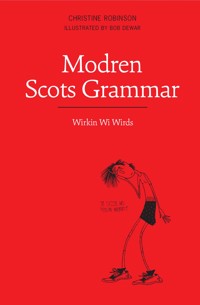
Dealing with grammar in a modern way, with modern terminology, this book gives readers an understanding of the way language works. Providing readers with the vocabulary to think about and discuss Scots, English and other Modern languages, Modren Scots Grammar fits with the Curriculum for Excellence in that it provides the grounding for readers to undertake further exploration and discover language for themselves. Furthermore, this book aims to give readers confidence in using the Scots language. It is important for young Scots today to realise that Scots is not just bad English, but a language in its own right. Increasing understanding of the differences between the two will improve the use of both. EXCERPT: Whit is grammar? It is whit we ken aboot the wey wirds are pit thegither. The wee dug bit the muckle man is no the same as The wee man bit the muckle dug. We ken that because o the order the wirds gaes in. The laddie lowps that dyke is different fae The laddies lowpit thae dykes. We ken fae the form o the wirds. That's grammar. REVIEW: This useful addition to the study of urban Scots dialects opens up the filed of linguistics to the general reader, combining the expertise of a linguist and a voice coach. Pronunciation in Aberdeen, Glasgow and Dundee are considered, offering insights into how Scots is spoken today. SCOTS MAGAZINE
Das E-Book können Sie in Legimi-Apps oder einer beliebigen App lesen, die das folgende Format unterstützen:
Seitenzahl: 114
Veröffentlichungsjahr: 2013
Ähnliche



CHRISTINE ROBINSON MA PhD has taught Scots at the University of Edinburgh for many years. She lectures on Scots for the University of the Highlands and Islands Millennium Institute and is Director of Scottish Language Dictionaries (SLD). SLD is the organisation dedicated to the lexicography of Scots and Scottish English with stewardship of theScottish National Dictionary, A Dictionary of the Older Scottish Tongueand the onlineDictionary of the Scots Languagewww.dsl.ac.uk. In addition to lexicographical work, SLD has a lively outreach programme, supporting Scots in the community and in education.
Brought up in Perth, of Kincardineshire parents, and now living in West Lothian she has first hand knowledge of a range of Scots dialects and has carried out a number of dialect research projects. She also has an interest in Older Scots. She is a committee member of the Scots Language Society, a Trustee of The Scots Language Centre, Chair of the Association for Scottish Literary Studies Language Committee, a member of the Literature Forum and a regular attendee at the Parliamentary Cross Party Group on Scots.
This Buik wis scrievit in celebration o the first ten years o Scottish Language Dictionaries (SLD).
SLD wis formed in 2002 and brocht thegither the staff oA Dictionary of the Older Scottish Tongue(dost) and The Scottish National Dictionary Association. We inheritit awmaist a century o wark, 12 muckle volumes odostan 10 o theScottish National Dictionary. Thir dictionars are online as theDictionar o the Scots Leidat www.dsl.ac.uk. Noo SLD bigs on the thae braw foonds tae hain the record o spoken and written Scots fae aw the airts.We are unnertakkin the wechty darg o editin a saicont edition o theConcise Scots Dictionaryand are ettlin tae improve theDictionar o the Scots Leid.
Sen 2009 we hae been maistly fundit by the Scottish Government. We wad like tae thank them an aw oor memmers an generous supporters that help us tae tak tent tae the future o Scots lexicography.
Christine Robinson
Director, Scottish Language Dictionaries
Modren Scots Grammar
by Christine Robinson
with illustrations by Bob Dewar
LuathPress Limited
EDINBURGH
www.luath.co.uk
First published 2012
Reprinted 2013
ISBN (print): 978-1-908373-39-7
eBook 2013
ISBN (eBook): 978-1-909912-19-9
The author’s right to be identified as author of this work under the Copyright, Designs and Patents Act 1988 has been asserted.
© Scottish Language Dictionaries
Contents
Introductory Notes
For awbodie
For Lairners
For Teachers
Nouns
Singular and Plural
Possessives
Coont Nouns and Mass Nouns
Collective Nouns18
Proper Nouns
Verbs
Nummer, person and tense
Aspect
Modal Verbs
Active and Passive
Adjectives
Comparison o Adjectives
Adjectives in similes
Adverbs
Jyned up thinkin
Prepositions
Pronouns
Personal pronouns
Demonstrative pronouns
Relative pronouns
Reflexive pronouns
Conjunctions
Co-ordinatin conjunctions
Subordinatin conjunctions
Determiners
Negatives
Interrogatives
Makkin Phrases
The Noun Phrase
The Verb Phrase
The Adjective Phrase
The Adverb Phrase
The Prepositional Phrase
Makkin Clauses
Intransitive Verbs
Transitive Verbs
Objects
Complements
Adverbials
Jynin Clauses
Subordinate Clauses
Direct and Indirect Speech
Common Errors and Guid Style
Punctuation
Makkin New Wirds
Leet o Noun Plurals
Leet o Verbs
Leet o Numers
Answers and Discussion
Glossary o Grammatical Terms
Mair Reading
Introductory notes
For awbodie
This buik is in Scots and aboot Scots, but whit is Scots? Whither ye speak Shetland Dialect, the Doric, Dundee, Glasgwegian, Borders Scots, Ulster Scots or onie ither variety, they are aw dialects o the same leid, descendit fae Northern Middle Inglis wi a fair skelp o Auld Norse, French, Latin and Gaelic, wi a guid bit o Dutch or Flemish as weel. For aw that we hae very different accents, which maks us spell differently, and for aw that we hae mony wirds that are weel kent in ae place an nae heard in anither, we aw speak the ae leid. We hae mair things in common than we hae keepin us apairt. Ane o thae things is grammar. There are wee differences in grammar fae place tae place in Scotland, but nae that mony. Sae this is a grammar buik for awbodie that speaks Scots.
There is nae wey that A can scrieve Scots in awbodie’s dialect at aince. A hae tried tae avoid very local wirds or aff-pittin spellins and A howp that ye’ll read it in yer ain accent onywey. If ye come across a wird ye dinnae ken, mind it’s aye guid tae extend yer vocabulary. Maybe, if we aw stert tae read and write in Scots a bit mair, we will come tae a consensus aboot whit is the best wey tae spell in Scots and we’ll aw hae a grand vocabulary. Then we can say we hae a standard Scots. Until that time, we jist hae tae keep an open mind, nae fash ower muckle ower spellin and enjoy lairnin fae ane anither. We micht hae mony dialects but ilkane is jist as guid Scots as the ither.
For lairners
Whit is grammar? It is whit we ken aboot the wey wirds are pit thegither.The wee dug bit the muckle manis no the same asThe wee man bit the muckle dug. We ken that because o the order the wirds gaes in.The laddie lowps that dykeis different faeThe laddies lowpit thae dykes.We ken fae the form o the wirds. That’s grammar.
As explained abune, we dinnae aw speak the same wey (we dinna aa spikk e same wey). That is hoo in this buik ye will find a wheen o things in brackets. The brackets gie the maist likely options, but gin ye dinnae find yer ain wey o speakin there, dinnae let it pit ye aff. Discuss it wi yer cless and yer teacher.
Ye will find some examples that stert wi an asterisk *. That tells ye the example is something maist speakers wadnae be comfortable wi. It is an example o a thing that jist isnae yaised in ordinary speakin an scrievin.
Maist folk yaisin this buik will ken baith Scots an Inglis. By the time ye hae feenished the buik, ye will be able tae wirk oot whit wey they differ and whit wey they are alike and ye will be able tae talk aboot language and unnerstand whit wey it wirks.
For teachers
We hae ettelt tae cover as mony dialects as possible athoot makkin the buik ower complicatit. Jist acause a grammatical construction isnae in the buik disnae mean it is wrang. This isnae intendit as a prescriptive grammar. It accords wi Curriculum for Excellence in that it ettles tae gie readers an unnerstandin o the wey language wirks and tae gie them the vocabulary tae think aboot an discuss Scots, Inglis an ither Modren Languages. It also ettles tae encourage discovery in language, suggestin areas whaur further exploration cuid be cairried oot. Mair importantly, it ettles tae gie readers confidence in their ain leid and tae help them see that whit differs fae Inglis isnae bad Inglis but a different leid in its ain richt. If they can distinguish tane fae tither, they will be better at baith. The relevance o this buik tae Studying Scotland lies in wirkin wi the leid itsel and in the better unnerstannin o Scottish Literature that familiarity wi the grammar can foster.
The buik deals wi grammar in a modren wey, wi modren terminology. It can be yaised progressively, muivin fae the basic pairts o speech tae mair complex grammatical structures. This will allou a naitral transition tae mair advanced grammar buiks sic asUnderstanding Grammar in Scotland Todayby John Corbett and Christian Kay. The vocabulary yaised in this text is maistly in theEssential Scots Dictionary. TheConcise Scots Dictionarywill supply the remainder. The intention haes been tae mak the language accessible tae Scots speakers, makkin yiss o lexical items shared wi Inglis but at the same time extendin the lairners’ Scots vocabulary.
Nouns
A noun is a namin wird. It tells ye the name o a thing, a person or a place.
They can beconcrete nouns(physical things that ye micht see or touch, likehoose, tree, sausage) orabstract nouns(things that are jist in yer mind, likeboredom, arithmetic, fascination).
Nouns can dae things and be things. Then we say they are thesubjecto the sentence:
Thedugis daft.
Sandyswam.
Edinburghrocks.
Nouns can hae things done till them. Then we say they are theobjecto the sentence:
The dug cockit itslugs.
Mary singsopera.
Glasgae walcomestourists.
Exercise 1
Wale oot the nouns and say whether they aresubjectsorobjects:
Harry biggit a hoose.
The hoose haed twa doors and echt windaes.
The hoose fell doon.
Maggie bocht a tent.
She erectit the tent.
The tent steyed up.
Check yer answers
Singular and plural
Maist nouns are the names o things ye can coont:
ae(yin, yae, ane)neb
twa(twae, twaw)een
fower legs
ten taes
Gin we jist hae the ae thing, we yaise asingularnoun. Gin we hae mair nor ane, we yaise apluralnoun.
Whit wey dae we mak a singular noun intae a plural noun?
a. Maistlikes we add–sor–es.
pencil > pencils
desk > desks
chair > chairs
match > matches
Challenge: Whit wey dae we ken whether tae add–sor–es?
Horses, buses, rashes, walruses, stitches, crutches, riches, boxes, buzzes, fizzes.
(clue: whit soonds comes at the end o the singular?)
Anither challenge: Whit happens wi singulars endin in–y?
ladies, airmies, spies, babbies, stories.
b. Whiles we chynge the vowel soond:
fit(fuit)> feet
guse > geese
c. Jist noo an again we add–en.
ee > een,
d. A puckle wirds dae mair nor ane o thae things. Whit happens wi thir anes?
shae > shin(sheen)
ox > owsen
child > children
e. Whiles we dae naethin ava:
sheep > sheep
deer > deer
f. In Inglis, mony wirds endin in–for–feturn thefintaevafore addin–es. Ye can dae this in Scots tae, or mak it easy and jist add–s.
leafs, shelfs, loafs, wifes
Exercise 2
Gie the plural o
moose
hoof
gless
salmon
poppy
Check yer answers.
Gie the singular o
pokes
men
craws
teeth
gases
Check yer answers.
Possessives
Nouns can hae things o their ain. Whan we hae apossessivenoun, we need tae add–’sor jist–’. Whit wey dae we ken whit tae dae?
Gin ye hae a singular noun, ayewis add–’s.
Gin ye hae a plural noun ye need tae ask yersel ‘Daes the plural end in–s?’
Ay? Add–’:the coos’ tails, the teachers’ tempers.
Naw? Add–’s:the men’s breeks.
Easy! A skoosh! But whit aboot sheep? Spot the difference atweenthe sheep’s heidandthe sheeps’ heids.
Can ye wirk that ane oot for yersel? Is ane o them wrang? Wad it mak sense tae yaise it onywey?
Exercise 3
The cat haes whiskers: The cat’s whiskers.
The cats hae whiskers: The cats’ whiskers.
Dae the same for the phrases ablow:
The wifie haes a peenie:
The men hae bunnets:
The bairn haes breeks:
The salmon hae tails:
The troot haes twa een:
Check yer answers.
Coont nouns and mass nouns
We said that maist nouns can be coontit. We cry themcoont nouns. Some nouns, likeinformationorpneumoniacannae be coontit. Ye cannae say
*ae information, *twa informations, *three informations
or
*fower pneumonias.
Thir nouns that we cannae coont are criedmass nouns. We think about hoo much o them we hae, no hoo mony. They come in quantities, no nummers. We micht say:
a drappie soup
a wee tate sugar
much snaw
some rain
a pint o milk
Tak tent tae the wey thae nouns are yaised in a particular sentence. Gin ye order three teas,teais a coont noun. Gin ye ask for mair tea, it is a mass noun.
Exercise 4
Sort oot the mass nouns fae the coont nouns.
I skelt ma soup ower the table. Aa the spuins on the table-cloth wis clartit wi draps o bree. Ma lugs wis burnin wi embarrassment an ma mither wis beelin wi rage, but the waiter wis affa guid. He got watter and a clout an wiped the mess up. Then he brocht me anither plate o broth.
Check yer answers.
Some mass nouns dae a strange thing in Scots. Ye micht hear auld people say,Thae are braw soupswhan they meanThat is good soup. Uncle Ebenezer tells David Balfour in Robert Louis Stevenson’sKidnapped‘They’re fine, halesome food – they’re grand food, parritch’.
Collective Nouns
Thir are nouns that include a hale wheen o folk, craiturs or things, likecommittee, staff, flock. Grammatically, collective nouns are singular but aftimes folk yaise them wi a plural verb. This gies ye the option o seein the collective noun either as a group or as a collection o individuals.
The committee wis unanimousemphasises their unity butthe committee were in disagreementemphasises their separation. Whit is the difference atween
The congregation wis unusually lairgeandThe congregation were unusually lairge?
Proper Nouns
The names o particular people, places, months, days, festivals, buiks and siclike are cried proper nouns and they aye hae a capital letter:Raymond, Stonehaven, Setterday, Diwali, Sunset Song.




