


9,99 €
Mehr erfahren.
- Herausgeber: Daniel Zaborowski
- Sprache: Englisch
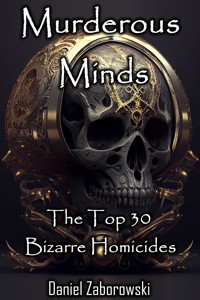
"Murderous Minds: The Top 30 Bizarre Homicides" is an e-book that delves into some of the most intriguing and captivating unsolved murder cases in history. The book covers a wide range of cases, including The Black Dahlia Murder, The Boy in the Box, The Isdal Woman, The Axeman of New Orleans, The Alphabet Murders, and much more.
The book provides an in-depth look at each case, including background information, details of the crime and the investigation, and any suspects or theories that have been proposed. The book also includes a conclusion and thank you section, which acknowledges the victims and their families, and the dedication and hard work of the investigators and law enforcement officials. The book serves as a reminder that even the most bizarre and seemingly unsolvable cases can be cracked with persistence and dedication, and it is a tribute to the victims of these heinous crimes.
Das E-Book können Sie in Legimi-Apps oder einer beliebigen App lesen, die das folgende Format unterstützen:
Veröffentlichungsjahr: 2023
Ähnliche

















Table of Contents
Murderous Minds: The Top 30 Bizarre Homicides
Introduction
Case 1: The Black Dahlia Murder
Case 2: The Hinterkaifeck Murders
Case 3: The Boy in the Box
Case 4: The Isdal Woman
Case 5: The Axeman of New Orleans
Case 6: The Alphabet Murders
Case 7: The Lonely Hearts Killers
Case 8: The Lipstick Killer
Case 9: The Boston Strangler
Case 10: The Cleveland Torso Murders
Case 11: The Zodiac Killer
Case 12: The Axeman of Juarez
Case 13: The Monster of Florence
Case 14: The Yorkshire Ripper
Case 15: The Keddie Cabin Murders
Case 16: The Somerton Man
Case 17: The Axeman at the Henderson
Case 18: The Colonial Parkway Killer
Case 19: The Beaumont Children
Case 20: The Redhead Murders
Case 21: The Night Stalker
Case 22: The West Mesa Murders
Case 23: The Texarkana Moonlight Murders
Case 24: The Long Island serial Killer
Case 25: The Black Widows
Case 26: The Smiley Face killer
Case 27: The Green River Killer
Case 28: The BTK Killer
Case 29: The Lady of the Dunes
Case 30: The San Francisco Witch Killer
Bonus Case 31: The Freeway Phantom
Bonus Case 32: The Lake Bodom murders
Bonus Case 33: The Stillwater Killings
Inside the mind of a serial killer
Conclusion
Table of contents
Introduction
Case 1: TheBlackDahliaMurder
Case 2: TheHinterkaifeckMurders
Case 3: TheBoyintheBox
Case 4: TheIsdalWoman
Case 5: TheAxemanofNewOrleans
Case 6: TheAlphabetMurders
Case 7: TheLonelyHeartsKillers
Case 8: TheLipstickKiller
Case 9: TheBostonStrangler
Case 10: TheClevelandTorsoMurders
Case 11: TheZodiacKiller
Case 12: TheAxemanofJuarez
Case 13: TheMonsterofFlorence
Case 14: TheYorkshireRipper
Case 15: TheKeddieCabinMurders
Case 16: TheSomertonMan
Case 17: TheAxemanattheHenderson
Case 18: TheColonialParkwayKiller
Case 19: TheBeaumontChildren
Case 20: TheRedheadMurders
Case 21: TheNightStalker
Case 22: TheWestMesaMurders
Case 23: TheTexarkanaMoonlightMurders
Case 24: TheLongIslandserialKiller
Case 25: TheBlackWidows
Case 26: TheSmileyFacekiller
Case 27: TheGreenRiverKiller
Case 28: TheBTKKiller
Case 29: TheLadyoftheDunes
Case 30: TheSanFranciscoWitchKiller
BonusCase 31: TheFreewayPhantom
BonusCase 32: TheLakeBodommurders
BonusCase 33: TheStillwaterKillings
Insidethemindofaserialkiller
Conclusion
Introduction
Murder is one of the most heinous crimes that a person can commit, and when a murder is particularly bizarre or inexplicable, it can capture the public's attention for decades. "Murderous Minds: The Top 30 Bizarre Homicides" is an e-book that delves into some of the most intriguing and unsolved murder cases in history. These cases have captivated the public's imagination, and many of them remain unsolved to this day. This e-book aims to provide readers with an in-depth look at these cases, including background information on the victims and the crime, details of the investigation, and theories surrounding the case.
The cases covered in this e-book span several decades and locations, from the United States to Europe and beyond. Some of the cases are well-known, such as the Black Dahlia murder and the Zodiac killer, while others are lesser-known but no less intriguing, such as the Villisca Axe Murders and the Hinterkaifeck Murders. Each case has its own unique set of circumstances, and readers will find themselves drawn into the details of each crime, trying to make sense of the motives and methods behind them.
The book will cover some of the most infamous serial killers such as the Black Dahlia, The Zodiac Killer, The Boston Strangler, The Night Stalker, The Long Island serial killer, and The Smiley Face killer. It will also cover cases that are considered unsolved such as The Boy in the Box, The Isdal Woman, The Haunting of the Black Dahlia, The Alphabet Killer, The Phantom Killer, and much more.
The book will examine each case individually, exploring the background of the victims, the details of the crime, and the theories that have been proposed to explain the killings. The e-book will also provide readers with an update on the current status of the case and where possible, the progress that has been made in solving the crime.
This e-book is not intended to glorify or sensationalize the crimes described within its pages. Instead, it aims to provide readers with a deeper understanding of the cases and the impact they have had on society. By examining these cases, readers may gain a better understanding of the criminal mind and the motivations behind these heinous acts.
It is important to note that the information provided in this e-book is based on publicly available sources and research, and may not always be entirely accurate or up-to-date. The e-book is written with the understanding that new information may come to light in the future that could change our understanding of these cases.
Case 1: The Black Dahlia Murder
Elizabeth Short photo from police bulletin - Photo credit: Los Angeles Police Department, Public domain
The Black Dahlia murder case is one of the most infamous unsolved cases in American history. On January 15, 1947, the body of 22-year-old Elizabeth Short was found brutally murdered in a vacant lot in Los Angeles, California. The gruesome nature of the crime, as well as the victim's nickname, "The Black Dahlia," earned the case widespread media coverage and public attention.
Elizabeth Short, also known as The Black Dahlia, was born in Boston, Massachusetts, in 1924. She moved to California in the 1940s to pursue a career in acting. However, her dreams were never realized, and she struggled to make ends meet, working a series of odd jobs and living in various boarding houses. On January 9, 1947, Short was last seen alive at the Biltmore Hotel in downtown Los Angeles. Six days later, her body was found in a vacant lot in the Leimert Park neighborhood.
The crime scene was gruesome, and the police were unable to determine the cause of death. Short's body had been cut in half at the waist, and her face had been severely mutilated. The murder weapon was never found, and the crime scene showed no signs of a struggle. The police initially believed that the killer must have had medical knowledge, as the cuts on the body were precise and clean.
The investigation into the Black Dahlia murder was one of the largest in Los Angeles history. Over 150 suspects were questioned, and several people came forward with false confessions. However, the police were unable to find any concrete evidence linking any of the suspects to the crime. In the years following the murder, several theories have been proposed to explain the crime, but none have been proven.
One theory is that the murder was committed by a doctor or someone with medical knowledge. This theory is based on the precise and clean cuts on the body, which suggest that the killer had knowledge of anatomy. Another theory is that the murder was the work of a sadistic sexual predator. The mutilation of the victim's face and the removal of her clothing suggest that the killer may have had a twisted desire to degrade and humiliate the victim.
The Black Dahlia murder case has also been linked to other unsolved murders that occurred in the Los Angeles area during the 1940s. The police have investigated the possibility that the Black Dahlia murder was committed by the same person responsible for the murder of several other women. However, no concrete evidence has been found to support this theory.
In the decades since the murder, many books and films have been made about the case, and the public's fascination with the crime has not waned. However, the case remains officially unsolved, and the identity of the killer remains a mystery.
In recent years, the LAPD has reopened the case, and DNA testing has been performed on evidence from the crime scene. In 2019, the LAPD announced that they had identified a person of interest in the case, using DNA analysis. However, they have not publicly disclosed the individual's name, citing the ongoing investigation.
Some of the most notable suspects in the case include:
George Hodel
: A former doctor, who was investigated by the police for the murder. He was a prime suspect due to his connection to Elizabeth Short, as she had reportedly visited his house in the weeks leading up to her death. He was also known for his sadistic and violent behavior.
Leslie Dillon
: A former patient of George Hodel who had a history of mental illness and criminal behavior. He had been arrested for a similar crime and was known to have been in the area at the time of the murder.
Robert Manley
: A soldier who had been discharged from the army and had a history of violence. He had a strong resemblance to the police sketch of the suspect and had been seen with Elizabeth Short in the weeks leading up to her murder.
Jack Anderson Wilson
: A man who claimed to have killed Elizabeth Short. He was a convicted criminal and had been arrested for a similar crime. He also had a history of mental illness.
Mark Hansen
: A Hollywood nightclub owner and a friend of Elizabeth Short. He was investigated by the police for the murder due to his behavior and possible motives, but was never charged.
Dr. Walter Bayley
: A dentist who had been treating Elizabeth Short before her death. He was investigated by the police but was cleared due to lack of evidence.
––––––––
The Black Dahlia murder case is a chilling reminder of the evil that can exist in the world and the impact it can have on society. The brutal nature of the crime and the fact that it remains unsolved have made it one of the most infamous unsolved murders in American history. The case continues to capture the public's imagination and raises questions about the criminal mind and the motivations behind such heinous acts.




