


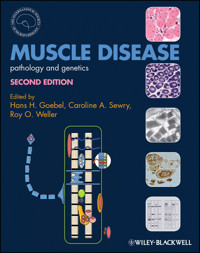
Muscle Disease E-Book
239,99 €
Mehr erfahren.
- Herausgeber: John Wiley & Sons
- Kategorie: Fachliteratur
- Sprache: Englisch
Written by more than 60 international experts in the field, Muscle Disease embodies the explosion of new concepts and information on the pathology and genetics of muscle disease that has occurred in recent years.
In order to accommodate the new complex principles involved, the book is organized around the motor unit and the inherited disorders, in particular, are centered on the ultrastructure and organelles within the muscle fiber. In this way, the wide spectrum of muscle diseases, ranging from neurogenic and inflammatory disorders to those involving defects in a single gene, can be expressed in a logical sequence. For example, disorders that principally involve specific organelles or particular metabolic processes are grouped together, with sections on disorders of the sarcolemma, mitochondria, myofibrils, glycogen and lipid metabolism, etc. Firm reference to clinical aspects and classification of muscle diseases has been maintained throughout the book with an initial clinical overview and with specific clinical sections in each chapter. For ease of navigation through the complex variety of muscle diseases, each chapter has been organized in a standard pattern that allows the reader to easily locate information on individual disease entities in different chapters.
This new edition of Muscle Disease: Pathology and Genetics will be a very valuable resource for clinicians, pathologists, geneticists and basic neuroscientists involved in diagnosis, research, treatment and management of patients with muscle disease.
Sie lesen das E-Book in den Legimi-Apps auf:
Seitenzahl: 1057
Veröffentlichungsjahr: 2013
Ähnliche




















Table of Contents
Advisory Editors
Title page
Copyright page
List of Contributors
Preface
List of Abbreviations
1: Introduction to Muscle Disease: Pathology and Genetics
Introduction
Structure of the book
Conclusion
Section 1: Assessment of Muscle Disease
2: Clinical Features of Muscle Disease
Introduction
Clinical history and examination
Conclusion
3: General Pathology of Muscle Disease
Introduction
Selection of muscle to biopsy
Biopsy technique
Tissue preparation
Use of other tissues for diagnosis
Development of human muscle
Histological and histochemical features of normal muscle
Histological and histochemical defects in pathological muscle
Structural abnormalities
Absence of an enzyme
Storage of a product
Immunohistochemistry
Electron microscopy
Future perspectives
4: Genetics of Muscle Disease
Introduction
Discovery of genes causing muscle disease
Benefits of finding the mutation causing a disease in a patient
Types of DNA mutations
Blurring of traditional clinical classifications – parallel nosologies
Mutations within the same gene can cause a spectrum of phenotypes (as classified by classic nosology)
One disease-related pathology can be caused by mutations in different genes
Some genes are to date only implicated in one disease
Some muscle proteins have not yet been associated with human disease
Interesting recent developments
The way forward, addressing the grand challenges in the genetics of muscle disease
Conclusions and future perspectives
Section 2: Neurogenic Muscle Disease
5: Neurogenic Muscle Pathology
Defining denervation
Clinical features
Pathophysiology
Pathological changes
Fetal and infantile denervation
Differential diagnosis
Section 3: Diseases of Neuromuscular Transmission
6: Autoimmune Myasthenias
Introduction
Incidence
Clinical features
Investigations
Treatment and prognosis
Pathology
Genetics
Differential diagnosis
Animal models
Lambert–Eaton myasthenic syndrome
7: Congenital Myasthenic Syndromes
Introduction
The neuromuscular junction
Clinical features of congenital myasthenic syndromes
Conclusions and future perspectives
Section 4: Sarcolemma: Muscular Dystrophies and Related Disorders
8: Dystrophin and Its Associated Glycoprotein Complex
Introduction
Incidence
Clinical features
Pathology
Genetics
Animal models
Conclusions and future perspectives
9: Proteins of the Extracellular Matrix
Introduction
Congenital muscular dystrophies
Laminin α2 primary deficiency
Collagen VI-related myopathies
Perlecan-related disorders
Laminin β2 and agrin-related disorders
Animal models for extracellular matrix-related disorders
Conclusions and future perspectives
10: Plasma Membrane Proteins: Dysferlin, Caveolin, PTRF/Cavin, Integrin α7, and Integrin α9
Introduction
Dysferlin
Caveolin-3
Polymerase I and transcript release factor/cavin-1
Integrin α7 and integrin α9
11: Sarcolemmal Ion Channelopathies
Introduction and classification
Prevalence, genetics, and pathophysiology
Clinical features
Histopathology
Magnetic resonance imaging
Therapy
Differential diagnosis
Animal models
Conclusions and future perspectives
Section 5: Disorders of Nuclear Proteins and Nuclear Positioning
12: Proteins of the Nuclear Membrane and Matrix
Introduction
Clinical features
Muscle pathology associated with defects in nuclear membrane proteins
Genetics
Animal models
Conclusions and future perspectives
13: Centronuclear Myopathies
Introduction
Clinical, histopathological, immunocytochemical, and electron microscopy features
Genetic bases of centronuclear myopathies
Differential myopathological diagnosis
Animal models
Section 6: Early- and Late-Onset Disorders of Myofibrils
14: Thin Filament Proteins: Nemaline and Related Congenital Myopathies
Introduction
Sarcomeric thin filaments
α-Skeletal actin (ACTA1)
Tropomyosins
Troponins (TNNT1, TNNT3, and TNNI2)
Cofilin-2 (CFL2)
Conclusions and future perspectives
15: Nebulin: Nemaline Myopathies and Associated Disorders
Introduction
Incidence
Clinical features
Pathology
Genetics
Differential myopathological diagnosis
Animal models
Conclusions and future perspectives
16: Myosins
Introduction
Autosomal dominant myosin heavy chain IIa myopathy, inclusion body myopathy 3
Autosomal recessive myosin heavy chain IIa myopathy
Myosin storage myopathy
Laing early-onset distal myopathy
Scapuloperoneal and limb-girdle syndromes
Distal arthrogryposis syndromes
Animal models
Conclusions and future perspectives
17: Disorders Caused by Mutant Z-disk Proteins
Definitions of entities
Clinical features
Pathology
Genetics and pathophysiology
Differential myopathological diagnosis
Future directions
18: Titin-related Distal Myopathies
Introduction
Epidemiology
Clinical features
Pathology
Genetics
Differential myopathological diagnosis
Animal models
Conclusions and future perspectives
19: Scapuloperoneal Disorders and Reducing Body Myopathy Associated with the Four and Half LIM Domain Protein 1
Introduction
Scapuloperoneal disorders
Reducing body myopathy
Genetics of FHL1opathies
Conclusion
Section 7: Disorders Associated with Intermediate Filaments
20: Desminopathies
Introduction
Incidence, sex, age, and geographical distribution
Clinical features
Pathology
Genetics
Differential myopathological diagnosis
Molecular pathogenesis and animal models
Conclusions and future perspectives
21: Plectinopathies
Introduction
Incidence, sex, age, and geographical distribution
Clinical features
Pathology
Genetics
Molecular pathogenesis and animal models
Conclusions and future perspectives
Section 8: Mitochondria
22: Mitochondrial Myopathies
Introduction
Incidence and prevalence
Clinical features
Pathology
Genetics
Structural abnormalities of mitochondria in other disorders
Animal models
Conclusions and future perspectives
Section 9: Sarcoplasmic Reticulum and T-tubules
23: Core Myopathies, Malignant Hyperthermia Susceptibility, and Brody Disease
Introduction
Incidence
Clinical features
Pathology
Genetics
Differential diagnosis
Animal models
Conclusions and future perspectives
Section 10: Cytoplasmic Proteins
24: Enzymes: Cytosolic Proteins Calpain-3, SEPN1, and GNE
Introduction
Calpain-3
SEPN1
Pathology
GNE
25: Proteins of Autophagy: LAMP-2, VMA21, VCP, and TRIM32
Introduction
LAMP-2 and Danon disease
Other myopathies with autophagic vacuoles with sarcolemmal features
Inclusion body myopathy with Paget disease of bone and frontotemporal dementia, a neurodegenerative disease due to valosin-containing protein mutation
Tripartite motif protein 32 mutations in limb-girdle muscular dystrophy 2H or sarcotubular myopathy
Other relevant proteins implicated in autophagy
Conclusion
26: Chaperone Proteins
Introduction
Incidence
Clinical features
Pathology
Genetics
Differential myopathological diagnosis
Animal models
Conclusions and future perspectives
27: Kelch Proteins
Kelch protein myopathies
Section 11: Metabolic and Storage Disorders
28: Disorders of Muscle Glycogen Metabolism
Introduction
Clinical overview
Muscle pathology
Overview of genetics and prevalence
Glycogenoses with exercise-induced symptoms
Glycogenoses associated with muscle weakness and atrophy
29: Disorders of Lipid Metabolism
Introduction
Carnitine palmitoyltransferase 2 deficiency
Very long-chain acylcoenzyme A dehydrogenase deficiency
Mitochondrial trifunctional protein deficiency
Phosphatidic acid phosphatase (lipin) deficiency
Primary carnitine deficiency
Multiple acylcoenzyme A dehydrogenase deficiency
Neutral lipid storage disease with ichthyosis or myopathy
Conclusions and future perspectives
Section 12: Muscle Diseases with DNA Expansions
30: Myotonic Dystrophies Type 1 and 2
Introduction
Incidence
Clinical features
Histopathology of congenital and childhood myotonic dystrophies
Histopathology and electron microscopy of myotonic dystrophy type 1
Histopathology and electron microscopy of myotonic dystrophy type 2
Genetics
Differential clinical and pathological diagnosis
Animal models
Conclusions and future perspectives
31: Oculopharyngeal Muscular Dystrophy
Definition of entities
Molecular genetics and pathophysiology
Structural changes
Genotype-phenotype correlation
Future perspectives
Section 13: Facioscapulohumeral Dystrophy
32: Facioscapulohumeral Dystrophy
Introduction
Incidence, gender, age, and geographic distribution
Clinical features
Therapy
Pathology
Myopathological differential diagnosis
Pathogenesis: genetics, epigenetics, transcriptional factors
The current facioscapulohumeral muscular dystrophy pathogenesis model: genetic abnormalities permit epigenetic and transcriptional defects leading to facioscapulohumeral muscular dystrophy
Animal models
Conclusions and future perspectives
Section 14: Inflammatory Myopathies
33: Polymyositis, Dermatomyositis, and Inclusion Body Myositis
Introduction and classification
Treatment
Epidemiology
Investigation
Polymyositis
Dermatomyositis
Juvenile dermatomyositis
Clinically amyopathic dermatomyositis
Sporadic inclusion body myositis
Autoantibodies
Genetic susceptibility to idiopathic inflammatory myopathies
Histological differential diagnosis
Animal models of disease
Conclusions and future perspectives
34: Muscle Involvement in Connective Tissue Disorders: Polyarteritis, Rheumatoid Arthritis, Systemic Lupus Erythematosus, Systemic Sclerosis, and Sjögren Syndrome
Definition
Incidence
Clinical features
Pathology
Genetics
Differential myopathological diagnosis
35: Granulomatous and Other Immune-mediated Myopathies
Introduction
Neuromuscular sarcoidosis
Immune-mediated necrotizing myopathy
Eosinophilic fasciitis
Wegener’granulomatosis and Churg–Strauss syndrome
Macrophagic myofasciitis
36: Muscle Disorders Associated with Infections
Introduction
Viral myositis
Bacterial myositis
Fungal myositis
Parasitic myositis
Future perspectives
Section 15: Toxic Myopathies
37: Reactions of Muscle to Toxins and Drugs
Introduction
Approach to diagnosis
Necrotizing myopathy
Inflammatory myopathy
Focal myopathy
Mitochondrial myopathy
Chronic alcoholic myopathy
Steroid myopathy
Critical illness myopathy
Vacuolar myopathy
Myofibrillar myopathy
Section 16: Aging and Systemic Disease
38: Muscle Disease Associated with Age and Systemic Disorders
Aging and muscle
Cancer-related muscle disease
Amyloid myopathy
Endocrine myopathies
Disorders of calcium and vitamin D metabolism
Vitamin E abnormalities
Section 17: Rare Structural Abnormalities
39: Disorders of Muscle with Rare Structural Abnormalities
Introduction
Tubular aggregate myopathies
Cylindrical spirals myopathy
Myopathy with hexagonally cross-linked crystalloid inclusions
Other myopathies with crystalloid inclusions
Fingerprint body myopathy
Differential myopathological aspects
Animal models
Other rare myopathies
Conclusions and future perspective
Index
Advisory Editors
Carsten Bönnemann, Washington, DC, USA
Marianne de Visser, Amsterdam, The Netherlands
Romain K. Gherardi, Paris, France
Janice Holton, London, UK
Nigel Laing, Perth, Australia
Steven Moore, Iowa City, IA, USA
Ichizo Nishino, Tokyo, Japan
Anders Oldfors, Gothenburg, Sweden
Hannes Vogel, Stanford, CA, USA
This edition first published 2013; © 2013 by International Society of Neuropathology
Wiley-Blackwell is an imprint of John Wiley & Sons, formed by the merger of Wiley's global Scientific, Technical and Medical business with Blackwell Publishing.
Registered office: John Wiley & Sons, Ltd, The Atrium, Southern Gate, Chichester, West Sussex, PO19 8SQ, UK
Editorial offices: 9600 Garsington Road, Oxford, OX4 2DQ, UK
The Atrium, Southern Gate, Chichester, West Sussex, PO19 8SQ, UK
111 River Street, Hoboken, NJ 07030-5774, USA
For details of our global editorial offices, for customer services and for information about how to apply for permission to reuse the copyright material in this book please see our website at www.wiley.com/wiley-blackwell
The right of the author to be identified as the author of this work has been asserted in accordance with the UK Copyright, Designs and Patents Act 1988.
All rights reserved. No part of this publication may be reproduced, stored in a retrieval system, or transmitted, in any form or by any means, electronic, mechanical, photocopying, recording or otherwise, except as permitted by the UK Copyright, Designs and Patents Act 1988, without the prior permission of the publisher.
Designations used by companies to distinguish their products are often claimed as trademarks. All brand names and product names used in this book are trade names, service marks, trademarks or registered trademarks of their respective owners. The publisher is not associated with any product or vendor mentioned in this book. This publication is designed to provide accurate and authoritative information in regard to the subject matter covered. It is sold on the understanding that the publisher is not engaged in rendering professional services. If professional advice or other expert assistance is required, the services of a competent professional should be sought.
The contents of this work are intended to further general scientific research, understanding, and discussion only and are not intended and should not be relied upon as recommending or promoting a specific method, diagnosis, or treatment by physicians for any particular patient. The publisher and the author make no representations or warranties with respect to the accuracy or completeness of the contents of this work and specifically disclaim all warranties, including without limitation any implied warranties of fitness for a particular purpose. In view of ongoing research, equipment modifications, changes in governmental regulations, and the constant flow of information relating to the use of medicines, equipment, and devices, the reader is urged to review and evaluate the information provided in the package insert or instructions for each medicine, equipment, or device for, among other things, any changes in the instructions or indication of usage and for added warnings and precautions. Readers should consult with a specialist where appropriate. The fact that an organization or website is referred to in this work as a citation and/or a potential source of further information does not mean that the author or the publisher endorses the information the organization or website may provide or recommendations it may make. Further, readers should be aware that internet websites listed in this work may have changed or disappeared between when this work was written and when it is read. No warranty may be created or extended by any promotional statements for this work. Neither the publisher nor the author shall be liable for any damages arising herefrom.
Library of Congress Cataloging-in-Publication Data
Muscle disease : pathology and genetics / edited by Hans H. Goebel, Caroline A. Sewry, Roy O. Weller. – Second edition.
p. ; cm.
Preceded by (work): Structural and molecular basis of skeletal muscle diseases / volume editor, George Karpati. Basel : ISN Neuropath Press, c2002.
Includes bibliographical references and index.
ISBN 978-0-470-67205-1 (hardback : alk. paper) – ISBN 978-1-118-63546-9 – ISBN 978-1-118-63547-6 (Mobi) – ISBN 978-1-118-63548-3 (ePub) – ISBN 978-1-118-63549-0
I. Goebel, H.-H., editor of compilation. II. Sewry, Caroline A., editor of compilation. III. Weller, Roy O., editor of compilation. IV. International Society of Neuropathology, issuing body. V. Structural and molecular basis of skeletal muscle diseases. Preceded by (work):
[DNLM: 1. Muscular Diseases–pathology. 2. Muscular Diseases–genetics. WE 550]
RC927
616.7'4–dc23
2013010900
A catalogue record for this book is available from the British Library.
Wiley also publishes its books in a variety of electronic formats. Some content that appears in print may not be available in electronic books.
Cover design by Meaden Creative
List of Contributors
Eleonora Aronica
Department of (Neuro) Pathology
Academisch Medisch Centrum
Amsterdam, The Netherlands
Email:[email protected]
Rita Barresi
NSCT Diagnostic & Advisory Service for Rare Neuromuscular Diseases
Muscle Immunoanalysis Unit, Dental Hospital
Newcastle upon Tyne, UK
Email:[email protected]
Alan H. Beggs
Division of Genetics and Program in Genomics
The Manton Center for Orphan Disease Research Boston Children's Hospital
Harvard Medical School
Boston, MA, USA
Email:[email protected]
Carsten G. Bönnemann
Neuromuscular and Neurogenetic Disorders of Childhood
National Institute of Neurological Disorders and Stroke
National Institutes of Health
Bethesda, MD, USA
Email:[email protected]
Antje Bornemann
Department of Pathology and Neuropathology
Division of Neuropathology
University of Tübingen
Tübingen, Germany
Email:[email protected]
Bernard Brais
Departments of Neurology and Neurosurgery and Human Genetics
Faculty of Medicine, McGill University
Montreal Neurological Institute
Montreal, Canada
Email:[email protected]
Susan C. Brown
Department of Comparative Biomedical Sciences
Royal Veterinary College
London, UK
Email:[email protected]
Amina Chaouch
Institute of Genetic Medicine
Newcastle University
Newcastle upon Tyne, UK
Email:[email protected]
Leila Chimelli
Federal University of Rio de Janeiro
Division of Pathology
National Cancer Institute
Rio de Janeiro, Brazil
Email:[email protected]
Kristl G. Claeys
Department of Neurology and Institute of Neuropathology
University Hospital RWTH Aachen
Aachen, Germany
Email:[email protected]
Christoph S. Clemen
Institute of Biochemistry I
Medical Faculty
University of Cologne
Cologne, Germany
Email:[email protected]
Marianne de Visser
Department of Neurology
Academic Medical Centre
University of Amsterdam
Amsterdam, The Netherlands
Email:[email protected]
Liesbeth De Waele
Department of Paediatric Neurology
University Hospitals Leuven
Leuven, Belgium
Email:[email protected]
Isidro Ferrer
Institute of Neuropathology
Department of Pathology and Neuromuscular Unit
IDIBELL-Hospital Universitari de Bellvitge
University of Barcelona
Hospitalet de Llobregat
Barcelona, Spain
Email:[email protected]
Kevin M. Flanigan
Center for Gene Therapy
Nationwide Children's Hospital
Ohio State University
Columbus, OH, USA
Email:[email protected]
A. Reghan Foley
Dubowitz Neuromuscular Centre
Institute of Child Health and Great Ormond Street Hospital
London, UK
Email:[email protected]
Romain K. Gherardi
Neuromuscular expert centre
Henri Mondor Hospital, Créteil;
Paris-Est University & INSERM U955 E10
F-94010 Créteil cedex, FRANCE
Email:[email protected]
Hans H. Goebel
Department of Neuropathology
Charité -Universitätsmedizin Berlin
Berlin, Germany;
Department of Neuropathology
Johannes Gutenberg University
Mainz, Germany
Email:[email protected]
Lev G. Goldfarb
National Institute of Neurological Disorders and Stroke
National Institutes of Health
Bethesda, MD, USA
Email:[email protected]
Michael G. Hanna
MRC Centre for Neuromuscular Diseases
UCL Institute of Neurology
London, UK
Email:[email protected]
Scott Q. Harper
Center for Gene Therapy
Nationwide Children's Hospital
The Ohio State University
Columbus, OH, USA
Email:[email protected]
Janice L. Holton
Department of Molecular Neuroscience
UCL Institute of Neurology
London, UK
Email:[email protected]
Saiju Jacob
Queen Elizabeth Neuroscience Centre
University Hospitals of Birmingham
Birmingham, UK
Email:[email protected]
Cecilia Jimenez-Mallebrera
Neuromuscular Unit
Department of Neuropaediatrics
Hospital Sant Joan de Déu
Barcelona, Spain
Email:[email protected]
Heinz Jungbluth
Department of Paediatric Neurology Neuromuscular Service
Evelina Children's Hospital
St Thomas’ Hospital;
Randall Division of Cell and Molecular Biophysics
Muscle Signalling Section
King's College London, UK
Email:[email protected]
Karin Jurkat-Rott
Division of Neurophysiology
University of Ulm
Ulm, Germany
Email:[email protected]
Hannu Kalimo
Department of Pathology
Haartman Institute, University of Helsinki Helsinki, Finland
Email:[email protected]
Nigel G. Laing
Centre for Medical Research
The University of Western Australia and
Western Australian Institute for Medical Research
Nedlands, WA;
Neurogenetic Unit
Department of Anatomical Pathology
Royal Perth Hospital
Perth, WA, Australia
Email:[email protected]
Martin Lammens
Department of Pathology
University of Antwerp
University Hospital Antwerp
Antwerp, Belgium
Email:[email protected]
Phillipa J. Lamont
Neurogenetic Unit
Department of Anatomical Pathology
Royal Perth Hospital
Perth, WA, Australia
Email:[email protected]
Jocelyn Laporte
Department of Translational Medicine and Neurogenetics
Institut de Génétique et de Biologie Moléculaire et Cellulaire
Université de Strasbourg
Strasbourg, France
Email:[email protected]
Michael W. Lawlor
Division of Pediatric Pathology, Department of Pathology and Laboratory Medicine
Medical College of Wisconsin
Milwaukee, WI, USA
Email:[email protected]
Frank Lehmann-Horn
Division of Neurophysiology
University of Ulm
Ulm, Germany
Email:[email protected]
Wen-Chen Liang
Department of Neuromuscular Research
National Institute of Neuroscience
National Center of Neurology and Psychiatry
Tokyo, Japan;
Department of Pediatrics
Kaohsiung Medical University Hospital
Kaohsiung, Taiwan
Email:[email protected]
Hanns Lochmüller
Institute of Genetic Medicine
Newcastle University
Newcastle upon Tyne, UK
Email:[email protected]
May Christine V. Malicdan
Department of Neuromuscular Research
National Institute of Neuroscience
National Center of Neurology and Psychiatry
Tokyo, Japan;
Medical Genetics Branch, National Human Genome Research Institute
National Institutes of Health
Bethesda MD, USA
Email:[email protected]
Steven A. Moore
Department of Pathology
The University of Iowa
Iowa City, IA, USA
Email:[email protected]
Ichizo Nishino
Department of Neuromuscular Research
National Institute of Neuroscience
National Center of Neurology and Psychiatry
Tokyo, Japan
Email:[email protected]
Kristen J. Nowak
Centre for Medical Research
The University of Western Australia and
Western Australian Institute for Medical Research
Nedlands, WA, Australia
Email:[email protected]
Anders Oldfors
Department of Pathology
Sahlgrenska University Hospital
Gothenburg, Sweden
Email:[email protected]
Montse Olivé
Institute of Neuropathology
Department of Pathology and Neuromuscular Unit
IDIBELL-Hospital Universitari de Bellvitge
University of Barcelona
Hospitalet de Llobregat
Barcelona, Spain
Email:[email protected]
Norma Beatriz Romero
Morphology Neuromuscular Unit of the Myology Institute
University UPMC – Paris
GHU Pitié-Salpêtrière
Paris, France
Email:[email protected]
Elisabeth J. Rushing
UniversitätsSpital Zürich
Institut für Neuropathologie
Zürich, Switzerland
Email:[email protected]
Joachim Schessl
Friedrich-Baur Institute
Department of Neurology
Ludwig-Maximilians University of Munich
Munich, Germany
Email:[email protected]
Benedikt Schoser
Friedrich-Baur Institute
Department of Neurology
Ludwig-Maximilians University Munich
Munich, Germany
Email:[email protected]
Rolf Schröder
Institute of Neuropathology
University Hospital Erlangen
Erlangen, Germany
Email:[email protected]
Caroline A. Sewry
Dubowitz Neuromuscular Centre
Institute of Child Health and Great Ormond Street Hospital
London, UK;
Wolfson Centre for Inherited Neuromuscular Diseases
RJAH Orthopaedic Hospital
Oswestry, UK
Email:[email protected]
Mehar C. Sharma
Department of Pathology
All India Institute of Medical Sciences
New Delhi, India
Email:[email protected]
Werner Stenzel
Department of Neuropathology
Charité-Universitätsmedizin Berlin
Berlin, Germany
Email:[email protected]
Volker Straub
Institute of Genetic Medicine
Newcastle University
Newcastle upon Tyne, UK
Email:[email protected]
Ana Lia Taratuto
Department of Neuropathology
Institute for Neurological Research, FLENI
Buenos Aires, Argentina
Email:[email protected]
Bjarne Udd
Neuromuscular Research Center
Department of Neurology
Tampere University and University Hospital
Tampere;
Folkhälsan Institute of Genetics
Department of Medical Genetics
University of Helsinki
Helsinki, Finland
Email:[email protected]
Angela Vincent
Nuffield Department of Clinical Neurosciences
John Radcliffe Hospital
Oxford, UK
Email:[email protected]
John Vissing
Neuromuscular Research Unit
Department of Neurology
Rigshospitalet, University of Copenhagen
Copenhagen, Denmark
Email:[email protected]
Hannes Vogel
Department of Pathology
Stanford University School of Medicine
Palo Alto, CA, USA
Email:[email protected]
Carina Wallgren-Pettersson
Department of Medical Genetics
Haartman Institute
University of Helsinki and
The Folkhälsan Institute of Genetics
Helsinki, Finland
Email:[email protected]
Lucy R. Wedderburn
Rheumatology Unit
UCL Institute of Child Health
London, UK
Email:[email protected]
Joachim Weis
Institute of Neuropathology
University Hospital RWTH Aachen
Aachen, Germany
Email:[email protected]
Roy O. Weller
Clinical Neurosciences
University of Southampton School of Medicine
Southampton General Hospital
Southampton, UK
Email:[email protected]
Gerhard Wiche
Department of Biochemistry and Cell Biology
Max F. Perutz Laboratories
University of Vienna
Vienna, Austria
Email:[email protected]
Lilli Winter
Department of Biochemistry and Cell Biology
Max F. Perutz Laboratories
University of Vienna
Vienna, Austria
Email:[email protected]
Kyle S. Yau
Centre for Medical Research
The University of Western Australia and
Western Australian Institute for Medical Research
Nedlands, WA, Australia
Email:[email protected]
Preface
The International Society of Neuropathology (ISN) has a major role in promoting education and improving standards of diagnosis and research in diseases of the nervous system. In this activity, the ISN works closely with clinicians, geneticists, basic neuroscientists, biochemists, and immunologists to maintain a broad spectrum of knowledge for the care and treatment of patients with neurological disease. In order to fulfill this objective, the ISN sponsors the research journal Brain Pathology, and a series of books devoted to maintaining and improving the standard of neuropathology worldwide.
The initial series of ISN neuropathology books was initiated by Paul Kleihues and published between 2001 and 2005 under the general editorship of Ynvge Olsson. The books comprised Developmental Neuropathology edited by Geoffrey A. Golden and Brian Harding (2004), and Pathology and Genetics of Cerebrovascular Diseases edited by Hannu Kalimo (2005) and were preceded by the first edition of Structural and Molecular Basis of Skeletal Muscle Diseases, edited by George Karpati (2002) and the first edition of Neurodegeneration: the Molecular Pathology of Dementia and Movement Disorders, edited by Dennis Dickson (2003). In parallel with the ISN books has been the publication of a series entitled WHO Classification of Tumours of the Central Nervous System published by WHO Press. The fourth edition of the brain tumor book, edited by David N. Louis, Hiroko Ohgaki, Otmar D. Wiestler and Webster K. Cavenee, was published in 2007.
With the present series editor, the second edition of Neurodegeneration: the Molecular Pathology of Dementia and Movement Disorders was published in 2011 with Dennis W. Dickson and Roy O. Weller as editors; the book was subsequently translated into Spanish as Neurodegeneración: Patología molecular de la demencia y los trastornos del movimiento and published by Editorial Médica Panamericana, S.A.
The publication of the second edition of the book on muscle disease, the present volume, entitled Muscle Disease: Pathology and Genetics, is in response to the very rapid and significant advances in the field of muscle disease that have occurred over the last decade. For this volume, edited by Hans H. Goebel, Caroline A. Sewry and Roy O. Weller, a team of authors was appointed from an international field of experts after consultation with the Advisory Editors. One of the major challenges has been to assemble a coherent text that reflects the mood of this rapidly changing field of medical science. The main objective of the book is to offer the reader a modern view of the pathology and genetics of muscle disease that will integrate the requirements of clinicians, pathologists, geneticists, and other neuroscientists involved in the investigation, diagnosis, research, management, and treatment of muscle disorders.
Although the clinical classification of muscle disease is extremely valuable in diagnosis and management, such a classification does not allow the adequate expression of modern concepts in the pathology and genetics of muscle disorders. For this reason, the present book has been organized in such a way that the whole spectrum of muscle disease from neurogenic and inflammatory disorders to diseases based upon mutations in a single gene can be covered in a logical sequence. The structure of the present book is based upon the motor unit; the inherited disorders in particular are related to the ultrastructure of the muscle fiber, its organelles, and associated connective tissue elements.
Following an introductory chapter, the first section of the book is devoted to general introductions to the clinical, pathological, and genetic aspects of muscle disease. Subsequent sections detail the pathology and genetics of neurogenic muscle disease and disorders of neuromuscular transmission. Then follows a series of sections based upon the subcellular structures and organelles in the muscle fiber, for example, disorders of the sarcolemma focusing on muscular dystrophies and related diseases; disorders of nuclei, myofibrils, intermediate filaments, and mitochondria. Subsequent sections cover diseases of sarcoplasmic reticulum and T-tubules, cytoplasmic proteins, metabolic and storage disorders and muscle diseases associated with DNA expansions and facioscapulohumeral dystrophy. All-important sections on inflammatory myopathies, toxic myopathies, muscle diseases associated with age, systemic disorders and rare structural abnormalities are grouped together at the end of the book. For ease of navigation through the complex variety of muscle diseases, individual chapters have been organized in a standard format that allows the reader to easily locate information on individual disease entities in different chapters. Each chapter covers the clinical, pathological, and genetic aspects of each disorder and includes data on experimental muscle disease and, where possible, a vision of future developments and treatment of each disorder.
I would like to thank Professors Hans Goebel and Caroline Sewry for their inspiration in the planning and their efforts in the preparation of the book; their breadth of knowledge and contacts within the field of muscle disease has been outstanding. I would also like to thank the Advisory Editors for their counsel and, wholeheartedly, the authors of individual chapters for the high quality of their contributions. Dr Herbert Budka, as president of ISN, Dr Seth Love as past General Secretary of ISN and Dr David Hilton as the present General Secretary have all been sources of valuable advice and inspiration. The book would not have been possible without the skill and commitment of the staff of the publishers, Wiley-Blackwell, especially Martin Sugden, Jennifer Seward, Rob Blundell and Helen Harvey, whom I sincerely thank.
Finally, who is most likely to benefit from reading and consulting this book? With its integrated approach, the book will be a valuable asset to clinicians, pathologists, geneticists, and neuroscientists involved in the investigation, diagnosis, research, treatment, and management of muscle disease.
Roy O. Weller
Series Editor
List of Abbreviations
1
Introduction to Muscle Disease: Pathology and Genetics
Lesen Sie weiter in der vollständigen Ausgabe!
Lesen Sie weiter in der vollständigen Ausgabe!
Lesen Sie weiter in der vollständigen Ausgabe!
Lesen Sie weiter in der vollständigen Ausgabe!
Lesen Sie weiter in der vollständigen Ausgabe!
Lesen Sie weiter in der vollständigen Ausgabe!
Lesen Sie weiter in der vollständigen Ausgabe!
Lesen Sie weiter in der vollständigen Ausgabe!
Lesen Sie weiter in der vollständigen Ausgabe!
Lesen Sie weiter in der vollständigen Ausgabe!
Lesen Sie weiter in der vollständigen Ausgabe!
Lesen Sie weiter in der vollständigen Ausgabe!
Lesen Sie weiter in der vollständigen Ausgabe!
Lesen Sie weiter in der vollständigen Ausgabe!
Lesen Sie weiter in der vollständigen Ausgabe!
Lesen Sie weiter in der vollständigen Ausgabe!
Lesen Sie weiter in der vollständigen Ausgabe!
Lesen Sie weiter in der vollständigen Ausgabe!
Lesen Sie weiter in der vollständigen Ausgabe!
Lesen Sie weiter in der vollständigen Ausgabe!
Lesen Sie weiter in der vollständigen Ausgabe!
Lesen Sie weiter in der vollständigen Ausgabe!
Lesen Sie weiter in der vollständigen Ausgabe!
Lesen Sie weiter in der vollständigen Ausgabe!
Lesen Sie weiter in der vollständigen Ausgabe!
Lesen Sie weiter in der vollständigen Ausgabe!
Lesen Sie weiter in der vollständigen Ausgabe!
Lesen Sie weiter in der vollständigen Ausgabe!
Lesen Sie weiter in der vollständigen Ausgabe!
Lesen Sie weiter in der vollständigen Ausgabe!
Lesen Sie weiter in der vollständigen Ausgabe!
Lesen Sie weiter in der vollständigen Ausgabe!
Lesen Sie weiter in der vollständigen Ausgabe!
Lesen Sie weiter in der vollständigen Ausgabe!
Lesen Sie weiter in der vollständigen Ausgabe!
Lesen Sie weiter in der vollständigen Ausgabe!
Lesen Sie weiter in der vollständigen Ausgabe!
Lesen Sie weiter in der vollständigen Ausgabe!
Lesen Sie weiter in der vollständigen Ausgabe!




