


Museum Practice E-Book
55,99 €
Mehr erfahren.
- Herausgeber: John Wiley & Sons
- Kategorie: Geisteswissenschaft
- Sprache: Englisch
MUSEUM PR ACTICE Edited by CONAL MCCARTHY
Museum Practice covers the professional work carried out in museums and art galleries of all types, including the core functions of management, collections, exhibitions, and programs. Some forms of museum practice are familiar to visitors, yet within these diverse and complex institutions many practices are hidden from view, such as creating marketing campaigns, curating and designing exhibitions, developing fundraising and sponsorship plans, crafting mission statements, handling repatriation claims, dealing with digital media, and more.
Focused on what actually occurs in everyday museum work, this volume offers contributions from experienced professionals and academics that cover a wide range of subjects including policy frameworks, ethical guidelines, approaches to conservation, collection care and management, exhibition development and public programs. From internal processes such as leadership, governance and strategic planning, to public facing roles in interpretation, visitor research and community engagement and learning, each essential component of contemporary museum practice is thoroughly discussed.
Sie lesen das E-Book in den Legimi-Apps auf:
Seitenzahl: 1406
Veröffentlichungsjahr: 2020
Ähnliche




















Table of Contents
Cover
Title page
Copyright
LIST OF ILLUSTRATIONS
EDITOR
GENERAL EDITORS
CONTRIBUTORS
ACKNOWLEDGMENTS
EDITORS’ PREFACE TO MUSEUM PRACTICE AND THE INTERNATIONAL HANDBOOKS OF MUSEUM STUDIES
INTRODUCTION: Grounding Museum Studies: Introducing Practice
PART I: Priorities
1 THE ESSENCE OF THE MUSEUM: Mission, Values, Vision
Mission statements
Museum missions
Conclusion
Vision and Beliefs
Notes
References
Further Reading
2 GOVERNANCE: Guiding the Museum in Trust
Literature on governance
Modes of museum governance
New directions in the governance of civil society institutions
Note
References
Further Reading
3 POLICIES, FRAMEWORKS, AND LEGISLATION: The Conditions Under Which English Museums Operate
Intentional and unintentional legislation and regulation
Conservatives, 1979–1997
New Labour, 1997–2010
The Coalition Government, 2010–
Conclusions
Notes
References
Further Reading
4 RECONCEPTUALIZING MUSEUM ETHICS FOR THE TWENTY-FIRST CENTURY: A View from the Field
The new museum ethics: why is change needed, and why now?
Analysis and discussion: key ideas from the network workshops
Reflections on the processes of the research network: what was most valuable?
Conclusion
Note
References
5 MUSEUM MEASUREMENT: Questions of Value
Setting the agenda
Questions of value
National approaches to measuring value
Conclusion
Notes
References
Further Reading
6 DEVELOPING AUDIENCES FOR THE TWENTY-FIRST-CENTURY MUSEUM
The “traditional” museum visitor is changing
Reaching out to new audiences
Conclusions
References
Further Reading
PART II: Resources
7 BALANCING MISSION AND MONEY: Critical Issues in Museum Economics
To charge or not to charge? The debate on admission charges
What comes in: other revenue centers
What goes out: operating expenses
Working together: collaborations
Conclusion
Notes
References
Further Reading
8 TATE AND BP – OIL AND GAS AS THE NEW TOBACCO?: Arts Sponsorship, Branding, and Marketing
Artists protesting Tate’s summer party
BP and Tate: two brands in partnership
The wider context of business and the arts
Hans Haacke and institutional critique
One year later
Concluding questions
Notes
References
Further Reading
9 FROM IDIOSYNCRATIC TO INTEGRATED: Strategic Planning for Collections
Collections planning: what and why?
Developing a collections plan
The intellectual framework
Challenges to planning
Conclusion: implementation and after
References
10 COLLECTION CARE AND MANAGEMENT: History, Theory, and Practice
Historical overview
Literature review
Theory: objects and meanings
Ethics: best practices for museum professionals
Legal aspects of collections management
Theoretical foundations of collections management
Preventive conservation
Risk management
Acquisitions, accession, registration, and cataloging
Deaccessioning and disposal
The future of collections management
Notes
References
Further Reading
11 THE FUTURE OF COLLECTING IN “DISCIPLINARY” MUSEUMS: Interpretive, Thematic, Relational
Disciplinary museums
Should we collect?
Collecting comprehensively and collecting scientifically
New scientific collecting: interpretive, thematic, and relational
Making it work in practice: the Trees project at Manchester Museum
Conclusion
Notes
References
Further Reading
12 MANAGING COLLECTIONS OR MANAGING CONTENT?: The Evolution of Museum Collections Management Systems
The early history of collections management systems
Integrating collections management and pest management
Collections management systems in the gallery
Publishing collections management data online
Sharing data locally, nationally, and internationally
Online cataloging and knowledge creation
Developing a museum for the future: new initiatives at the Hunterian
Conclusion
References
Further Reading
13 CONSERVATION THEORY AND PRACTICE: Materials, Values, and People in Heritage Conservation
Conservation practice
Recent shifts
Careful management of change
Simplifying the conservation object
Conservation concepts
Materials-based conservation
Values-based conservation
Devaluing values-based conservation
Peoples-based conservation
Conclusion
Notes
References
Further Reading
PART III: Processes
14 FROM CARING TO CREATING: Curators Change Their Spots
Museums on the move
Spaces and places
Collections and exhibitions
Research and scholarship
New and social media
Audiences and evaluation
New curatorship
Curators as political activists
Curators as artistic directors
Curators as public investigators
Conclusion
Notes
References
Further Reading
15 THE PENDULUM SWING: Curatorial Theory Past and Present
A challenging subject
Historical perspectives
Curatorial theory now
Conclusion: Reflections
Notes
References
Further Reading
16 PLANNING FOR SUCCESS: Project Management for Museum Exhibitions
Exhibition development and project management
Team building for success
The project model: structure and clarity
Phases and stages: reaching the goal
Conclusion
References
Further Reading
17 MUSEUM EXHIBITION TRADECRAFT: Not an Art, but an Art to It
Tradecraft in a changing and complex field
The museum is an experience
The museal sensorium
High-context, low-context, anti-context
Coherence
Cynosures, scale, and chains of engagement
The Advent calendar, buffet table, and highlighter pen analogies
Conclusion: Rules and rule-breaking
References
Further Reading
18 MUSEUM EXHIBITION PRACTICE: Recent Developments in Europe, Canada, and Australia
Re-presenting Indigenous culture in Australian museums at the turn of the twenty-first century
Transnationality and difficult history: new exhibition practice in German and European museums
Writing national art histories in Canadian museums
Notes
References
Further Reading
19 A CRITIQUE OF MUSEUM RESTITUTION AND REPATRIATION PRACTICES
Current practices
Recent research on restitution and repatriation
A new way forward: museums as loci of deliberative democracy
Conclusion
References
20 REWARDS AND FRUSTRATIONS: Repatriation of Aboriginal and Torres Strait Islander Ancestral Remains by the National Museum of Australia
The Australian context
The National Museum of Australia
Issues in current repatriation practice
Conclusion
Notes
References
PART IV: Publics
21 THE “ACTIVE MUSEUM”: How Concern with Community Transformed the Museum
Community and museum studies
Community and agency within the museum
Museums, community, and evolving practices
Conclusion: the “active museum”
Notes
References
Further Reading
22 VISITOR STUDIES: Toward a Culture of Reflective Practice and Critical Museology for the Visitor-Centered Museum
A history of the field
Basics of current practice
Literature review
Overview of key developments and challenges
Conclusion
Notes
References
23 TRANSLATING MUSEUM MEANINGS: A Case for Interpretation
History and theory: a brief overview of interpretation
The function of the interpreter
Interpretation in exhibition development
Conclusion: a case for the interpreter
Note
References
Further Reading
24 LEARNING, EDUCATION, AND PUBLIC PROGRAMS IN MUSEUMS AND GALLERIES
The core of museum and gallery learning
Improving the UK framework for museum learning
A wider perspective
Programming for leisure and learning
Evaluation and research
A balancing act
Conclusions: a sustainable future?
Note
References
Further Reading
25 REVIEWING THE DIGITAL HERITAGE LANDSCAPE: The Intersection of Digital Media and Museum Practice
Defining digital heritage
The past is prologue: historicizing the field
Museum computing and the “cultural turn”
The digital horizon: new technologies
Key issues and controversies
Content, representation, and control
Conclusion
Notes
References
AFTERWORD: The Continuing Struggle for Diversity and Equality
MUSEUM PRACTICE AND MEDIATION: An Afterword
Index
End User License Agreement
List of Illustrations
Introduction
0.1 Integrated model of museum studies incorporating research, practice, trainin...
Chapter 3
3.1 Policy, funding, and accountability cascade: a map of central government’s s...
Chapter 4
4.1 Participant responses to the question: “Why this change in museum ethics now...
4.2 The three spheres of contemporary ethics discourse
4.3 Participant responses to “Key issues that museums are grappling with in the ...
4.4 Participant responses to “The moral agency of museums”
4.5 Participant responses to “Hopes and aspirations for shared guardianship”
4.6 Reflections on the most insightful elements of the five workshops
4.7 Reflections on the most challenging issues from the five workshops
Chapter 6
6.1 Music in the foyer at Tel Aviv Museum of Art, Israel
6.2 Rehanging one of the sixteenth-century Gideon Tapestries at the National Tru...
6.3 Collection of ceramics at the Stoke Potteries Museum
6.4 Local participants in the Moving Here project visit New Walk Museum, Leicest...
Chapter 8
8.1 Invitation to Tate Britain Summer Party, June 21, 2010. From Not If But When...
8.2 “Human Cost” by Liberate Tate, 2010. Photo from front cover of Not If But Wh...
Chapter 10
10.1 The x-axis (collection order and disorder)
10.2 The x-axis (collection order and disorder) and y-axis (collection growth an...
10.3 The x-axis (collection order and disorder), y-axis (collection growth and l...
Chapter 11
11.1 The Ancient Worlds gallery, Manchester Museum
11.2 A botany assortment from the collections of the Manchester Museum
11.3 A “bioblitz” or collecting expedition for the Trees project, Whitworth Park...
Chapter 12
12.1 Interactive pest viewer, KE EMu database
12.2 An example of interpretive content on the “Variety of Life,” part of a free...
12.3 Results for a search on “Captain Cook” from Collections Online, Museum of N...
12.4 Matches for “William Hunter Ramsay” from the Europeana project, harvested f...
12.5 Screen shot of the Your Paintings Tagger showing an oil painting of Sir Ian...
12.6 Screen shot of YouTube clip on the investigation of Lindow Man, Collective ...
Chapter 13
13.1 The Burra Charter process, with its sequence of investigations, decisions, ...
Chapter 14
14.1 The exhibition Sleeping and Dreaming at Wellcome Collection, London
Chapter 16
16.1 A view of the vertebrate paleontology gallery after completion. The exhibit...
16.2 Life cycle of a product or system
16.3 Rolled-out model, 2011
16.4 Linear model
Chapter 17
17.1 Image from ART/artifact: African Art in Anthropology Collections, Center fo...
17.2 Image from ART/artifact: African Art in Anthropology Collections, Center fo...
17.3 “Taking Care” section of the Families exhibition. Minnesota History Center ...
17.4 “F is for Fire Engine” in Minnesota A to Z, Minnesota History Center Museum...
17.5 Minnesota’s Greatest Generation exhibit in the form of a crashed World War ...
Chapter 18
18.1 Model of Professor Baldwin Spencer, biologist, anthropologist, and honorary...
18.2 Exhibition Hitler and the Germans. Nation and Crime, Berlin 2010. View of t...
18.3 Exhibition Hitler and the Germans. Nation and Crime, Berlin 2010. View of t...
18.4 Exhibition The Image of the “Other” in Germany and France from 1871 to the ...
18.5 Exhibition The Image of the “Other” in Germany and France from 1871 to the ...
18.6 Rebecca Belmore, Rising to the Occasion, 1987. Art Gallery of Ontario.
18.7 Montreal Museum of Fine Arts, Founding Identities gallery, 2011
Chapter 19
19.1 Alison Brown and Andy Black Water examining the draft manuscript of a book ...
19.2 Tom Tettleman and Richard LeBeau in front of the Ghost Dance Shirt after it...
Chapter 20
20.1 Dancers provide a traditional ceremonial “Welcome to country” upon the retu...
20.2 Larrakia families welcome the remains of their ancestors, Mindil Beach, Dar...
Chapter 21
21.1 Detail of a panel from the My Treasure community exhibition (Mid-Antrim and...
Chapter 23
23.1 The “Arrivals” display in the exhibition Blood, Earth, Fire | Whāngai Whenu...
23.2 The computer interactive in the “Arrivals” display in the exhibition Blood,...
Chapter 24
24.1 Formal education versus learning through participation: the Victorian class...
24.2 Two participants examining a traditional coffee pot as a part of the Asian ...
24.3 Older men with dementia in a day center using archive photographs of footba...
24.4 Year 9 students (aged 13/14) in the British Museum using a Samsung tablet t...
24.5 Youth forum/paid young consultants group discussing exhibitions, interpreta...
Museum Practice and Mediation: An Afterword
A2.1 Walk among Worlds, an installation by Máximo González, October 12 – Novembe...
A2.2 Opening performance of the community-based collaborative exhibition Death I...
A2.3 Museum, Academia Sinica, Taipei
A2.4 Atrium, Capital Museum, Beijing
A2.5 Exhibit Gallery, Kokdu Museum, Seoul
A2.6 Box of Promises, collaborative work between George Nuku (Māori) and Cory Do...
A2.7 Entrance to The Marvellous Real: Art from Mexico 1926-2011, Audain Gallery,...
A2.8 Imprint, choreographed by Henry Daniel and Owen Underhill. Great Hall, Muse...
List of Tables
Chapter 3
TABLE 3.1 Heritage Lottery Fund financial and staffing profile 2005/6–2009/10
TABLE 3.2 Heritage Lottery Fund – distribution of awards by size of grant
Chapter 4
TABLE 4.1 Methods used in applied ethics: their benefits and challenges
Chapter 5
TABLE 5.1 Benefits generated by engagement in culture and sport
Chapter 7
TABLE 7.1 Visits to museums that formerly charged admission (2010/11)
TABLE 7.2 Admission charges at US museums
Chapter 10
TABLE 10.1 Organization systems used in museums
Chapter 13
TABLE 13.1 Materials-, values-, and peoples-based conservation approaches
TABLE 13.2 Definitions of minimal intervention within materials-, values-, and p...
Guide
Cover
Table of Contents
Begin Reading
Pages
v
iii
iv
ix
x
xi
xii
xiii
xiv
xv
xvi
xvii
xix
xx
xxi
xxii
xxiii
xxiv
xxv
xxvi
xxvii
xxviii
xxix
xxx
xxxi
xxxii
xxxiii
xxxiv
xxxv
xxxvi
xxxvii
xxxviii
xxxix
xl
xli
xlii
xliii
xliv
1
3
4
5
6
7
8
9
10
11
12
13
14
15
16
17
18
19
20
21
22
23
24
25
27
28
29
30
31
32
33
34
35
36
37
38
39
40
41
42
43
44
45
46
47
48
49
50
51
52
53
54
55
56
57
58
59
60
61
62
63
64
65
66
67
68
69
70
71
72
73
74
75
76
77
78
79
80
81
82
83
84
85
86
87
88
89
90
91
92
93
94
95
96
97
98
99
100
101
102
103
104
105
106
107
108
109
110
111
112
113
114
115
116
117
118
119
120
121
122
123
124
125
126
127
128
129
130
131
132
133
134
135
136
137
138
139
140
141
142
143
144
145
146
147
148
149
150
151
153
155
156
157
158
159
160
161
162
163
164
165
166
167
168
169
170
171
172
173
174
175
176
177
178
179
180
181
182
183
184
185
186
187
188
189
190
191
192
193
194
195
196
197
198
199
200
201
203
204
205
206
207
208
209
210
211
212
213
214
215
216
217
218
219
220
221
222
223
224
225
226
227
228
229
230
231
232
233
234
235
236
237
238
239
240
241
242
243
244
245
246
247
249
250
251
252
253
254
255
256
257
258
259
260
261
262
263
264
265
267
268
269
270
271
272
273
274
275
276
277
278
279
280
281
282
283
284
285
286
287
288
289
290
291
292
293
294
295
296
297
298
299
300
301
302
303
304
305
306
307
308
309
310
311
312
313
314
315
317
318
319
320
321
322
323
324
325
326
327
328
329
330
331
332
333
334
335
336
337
338
339
341
342
343
344
345
346
347
348
349
350
351
352
353
354
355
356
357
358
359
360
361
362
363
364
365
366
367
368
369
370
371
372
373
374
375
376
377
378
379
380
381
382
383
384
385
386
387
388
389
390
391
392
393
394
395
396
397
398
399
400
401
402
403
404
405
406
407
408
409
410
411
412
413
414
415
416
417
418
419
420
421
422
423
424
425
426
427
428
429
431
432
433
434
435
436
437
438
439
440
441
442
443
444
445
446
447
448
449
450
451
452
453
455
456
457
458
459
460
461
462
463
464
465
466
467
468
469
470
471
472
473
474
475
476
477
478
479
481
482
483
484
485
486
487
488
489
490
491
492
493
494
495
496
497
498
499
500
501
502
503
504
505
506
507
508
509
510
511
512
513
514
515
516
517
518
519
520
521
522
523
524
525
526
527
529
530
531
532
533
534
535
536
537
538
539
540
541
542
543
544
545
546
547
548
549
551
552
553
554
555
556
557
558
559
560
561
562
563
564
565
566
567
568
569
570
571
572
573
574
575
577
578
579
580
581
582
583
584
585
586
587
588
589
590
591
592
593
594
595
596
597
598
599
600
601
602
603
604
605
606
607
608
609
610
611
613
614
615
616
617
618
619
620
621
622
623
624
625
626
627
628
629
630
631
632
633
634
635
636
637
638
639
640
641
642
643
644
645
646
647
648
649
650
651
652
653
Museum Practice
Edited by
Conal McCarthy
General Editors
Sharon Macdonald and Helen Rees Leahy
This paperback edition first published 2020
© 2015 John Wiley & Sons Ltd
Edition history: John Wiley and Sons Ltd (hardback, 2015)
All rights reserved. No part of this publication may be reproduced, stored in a retrieval system, or transmitted, in any form or by any means, electronic, mechanical, photocopying, recording or
otherwise, except as permitted by law. Advice on how to obtain permission to reuse material from this title is available at http://www.wiley.com/go/permissions.
The right of Conal McCarthy, Sharon Macdonald, and Helen Rees Leahy to be identified as the authors of the editorial material in this work has been asserted in accordance with law.
Registered Offices
John Wiley & Sons, Inc., 111 River Street, Hoboken, NJ 07030, USA
John Wiley & Sons Ltd, The Atrium, Southern Gate, Chichester, West Sussex, PO19 8SQ, UK
Editorial Office
The Atrium, Southern Gate, Chichester, West Sussex, PO19 8SQ, UK
For details of our global editorial offices, customer services, and more information about Wiley products visit us at www.wiley.com.
Wiley also publishes its books in a variety of electronic formats and by print?on?demand. Some content that appears in standard print versions of this book may not be available in other formats.
Limit of Liability/Disclaimer of Warranty
While the publisher and authors have used their best efforts in preparing this work, they make no representations or warranties with respect to the accuracy or completeness of the contents of this work and specifically disclaim all warranties, including without limitation any implied warranties of merchantability or fitness for a particular purpose. No warranty may be created or extended by sales representatives, written sales materials or promotional statements for this work. The fact that an organization, website, or product is referred to in this work as a citation and/or potential source of further information does not mean that the publisher and authors endorse the information or services the organization, website, or product may provide or recommendations it may make. This work is sold with the understanding that the publisher is not engaged in rendering professional services. The advice and strategies contained herein may not be suitable for your situation. You should consult with a specialist where appropriate. Further, readers should be aware that websites listed in this work may have changed or disappeared between when this work was written and when it is read. Neither the publisher nor authors shall be liable for any loss of profit or any other commercial damages, including but not limited to special, incidental, consequential, or other damages.
Library of Congress Cataloging?in?Publication Data
Museum Practice – The international handbooks of museum studies / edited by Conal McCarthy / general editors: Sharon Macdonald, Helen Rees Leahy. – First edition.
pages cm
Includes bibliographical references and index.
ISBN 978-1-4051-9850-9 (cloth) | ISBN 978-1-119-64207-7 (pbk.)
1. Museums. 2. Museum exhibits. I. Macdonald, Sharon. II. Leahy, Helen Rees. AM5.I565 2015
069-dc23
2015003407
Cover Design: Wiley
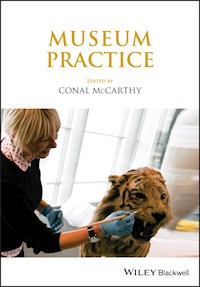
Cover Image: Tiger and conservator. Photo: Courtesy of Manchester Museum,
The University of Manchester
Set in 11/13 pt Dante by SPi Global, Pondicherry, India
Printed and bound by CPI Group (UK) Ltd, Croydon, CR0 4YY
10 9 8 7 6 5 4 3 2 1
LIST OF ILLUSTRATIONS
Color plate section
6.1 Music in the foyer at Tel Aviv Museum of Art, Israel
6.2 Rehanging one of the sixteenth-century Gideon Tapestries at the National Trust’s Hardwick Hall, Derbyshire
6.3 Collection of ceramics at the Stoke Potteries Museum, UK
11.1 The Ancient Worlds gallery, Manchester Museum
14.1Sleeping and Dreaming exhibition at Wellcome Collection in London
17.4 “F is for Fire Engine” in Minnesota A to Z, Minnesota History Center Museum, St. Paul
18.1 Model of Professor Baldwin Spencer, biologist, anthropologist, and honorary director of the National Museum of Victoria (1899–1928) on display in the exhibition Bunjilaka, 2001.
18.3 Exhibition Hitler and the Germans. Nation and Crime, Berlin 2010. German Historical Museum
18.4 Exhibition The Image of the “Other” in Germany and France from 1871 to the present, Paris 2008, Berlin 2009. German Historical Museum
18.6 Rebecca Belmore, Rising to the Occasion, 1987. Art Gallery of Ontario
18.7 Montreal Museum of Fine Arts, Founding Identities gallery
20.1 Dancers provide a traditional ceremonial “Welcome to country” upon the return of Larrakia ancestral remains, Mindil Beach, Darwin, Northern Territory, November 2002. National Museum of Australia
21.1 Detail of a panel from the My Treasure community exhibition (Mid-Antrim and Causeway Museum Service) displayed at Coleraine Town Hall, Northern Ireland, July–August 2013
23.1 The “Arrivals” display in the exhibition Blood, Earth, Fire | Whāngai Whenua Ahi Kā, which opened in 2006 at the Museum of New Zealand Te Papa Tongarewa, Wellington
24.1 Formal education versus learning through participation: the Victorian classroom and teacher at the Ragged School Museum, London
24.2 Two participants examining a traditional coffee pot as a part of the Asian Women’s Documenting the Home project at the Geffrye Museum, London
A2.1Walk among Worlds, an installation by Máximo González, October 12 – November 10, 2013, at the Fowler Museum, UCLA
A2.2 Opening performance of the community-based collaborative exhibition Death Is Just Another Beginning, National Museum of Taiwan, Taipei
A2.5 Exhibit Gallery, Kokdu Museum, Seoul
A2.6Box of Promises, collaborative work between George Nuku (Māori) and Cory Douglas (Squamish/Haida) in the exhibition Paradise Lost? Great Hall, Museum of Anthropology, UBC, Vancouver
A2.8Imprint, choreographed by Henry Daniel and Owen Underhill. Great Hall, Museum of Anthropology, UBC, Vancouver
Chapter illustrations
0.1 Integrated model of museum studies incorporating research, practice, training, and education
3.1 Policy, funding, and accountability cascade: a map of central government’s support for the cultural sector
4.1 Participant responses to the question: “Why this change in museum ethics now?”
4.2 The three spheres of contemporary ethics discourse
4.3 Participant responses to “Key issues that museums are grappling with in the twenty-first century”
4.4 Participant responses to “The moral agency of museums”
4.5 Participant responses to “Hopes and aspirations for shared guardianship”
4.6 Reflections on the most insightful elements of the five workshops
4.7 Reflections on the most challenging issues from the five workshops
6.1 Music in the foyer at Tel Aviv Museum of Art, Israel
6.2 Rehanging one of the sixteenth-century Gideon Tapestries at the National Trust property Hardwick Hall, Derbyshire
6.3 Collection of ceramics at the Stoke Potteries Museum
6.4 Local participants in the Moving Here project visit New Walk Museum, Leicester
8.1 Invitation to Tate Britain Summer Party, June 21, 2010. From Not If But When: Culture beyond Oil, Platform, November 29, 2010
8.2 “Human Cost” by Liberate Tate, 2010. Photo from front cover of Not If But When: Culture beyond Oil, Platform, November 29, 2010
10.1 The x-axis (collection order and disorder)
10.2 The x-axis (collection order and disorder) and y-axis (collection growth and loss)
10.3 The x-axis (collection order and disorder), y-axis (collection growth and loss), and z-axis (preservation and deterioration)
11.1 The Ancient Worlds gallery, Manchester Museum
11.2 A botany assortment from the collections of the Manchester Museum
11.3 A “bioblitz” or collecting expedition for the Trees project, Whitworth Park, Manchester
12.1 Interactive pest viewer, KE EMu database
12.2 An example of interpretive content on the “Variety of Life,” part of a free smart phone and tablet application for the Living Worlds gallery, Manchester Museum
12.3 Results for a search on “Captain Cook” from Collections Online, Museum of New Zealand Te Papa Tongarewa
12.4 Matches for “William Hunter Ramsay” from the Europeana project, harvested from the UK’s Culture Grid
12.5 Screen shot of the Your Paintings Tagger showing an oil painting of Sir Ian Colquhoun of Luss (ca. 1933) by Herbert James Gunn, from the collection of the West Dunbartonshire Council
12.6 Screen shot of YouTube clip on the investigation of Lindow Man, Collective Conversations project, Manchester Museum
13.1 The Burra Charter process, with its sequence of investigations, decisions, and actions
14.1 The exhibition Sleeping and Dreaming at Wellcome Collection, London
16.1 A view of the vertebrate paleontology gallery after completion. The exhibition is titled A Changing World: Dinosaurs, Diversity, and Drifting Continents. Museum of Texas Tech University
16.2 Life cycle of a product or system
16.3 Rolled-out model, 2011
16.4 Linear model
17.1 Image from ART/artifact: African Art in Anthropology Collections, Center for African Art, New York, 1988
17.2 Image from ART/artifact: African Art in Anthropology Collections, Center for African Art, New York, 1988
17.3 “Taking Care” section of the Families exhibition. Minnesota History Center Museum, St. Paul
17.4 “F is for Fire Engine” in Minnesota A to Z, Minnesota History Center Museum, St. Paul
17.5Minnesota’s Greatest Generation exhibit in the form of a crashed World War II aircraft. Minnesota History Center Museum, St. Paul
18.1 Model of Professor Baldwin Spencer, biologist, anthropologist, and honorary director of the National Museum of Victoria (1899–1928) on display in the exhibition Bunjilaka, 2001
18.2 Exhibition Hitler and the Germans. Nation and Crime, Berlin 2010. View of the section “Hitler and the Germans 1933–1945.” German Historical Museum
18.3 Exhibition Hitler and the Germans. Nation and Crime, Berlin 2010. View of the section “Hitler and the Germans 1933–1945.” German Historical Museum
18.4 Exhibition The Image of the “Other” in Germany and France from 1871 to the present, Paris 2008, Berlin 2009. German Historical Museum
18.5 Exhibition The Image of the “Other” in Germany and France from 1871 to the present, Paris 2008, Berlin 2009. German Historical Museum
18.6 Rebecca Belmore, Rising to the Occasion, 1987. Art Gallery of Ontario.
18.7 Montreal Museum of Fine Arts, Founding Identities gallery, 2011
19.1 Alison Brown and Andy Black Water examining the draft manuscript of a book on the Kainai Photos Project. Pitt Rivers Museum
19.2 Tom Tettleman and Richard LeBeau in front of the Ghost Dance Shirt after its return by Glasgow Museums to the Lakota Sioux, at South Dakota State Historical Society Museum
20.1 Dancers provide a traditional ceremonial “Welcome to country” upon the return of Larrakia ancestral remains, Mindil Beach, Darwin, Northern Territory, November 2002. National Museum of Australia
20.2 Larrakia families welcome the remains of their ancestors, Mindil Beach, Darwin, Northern Territory, November 2002. National Museum of Australia
21.1 Detail of a panel from the My Treasure community exhibition (Mid-Antrim and Causeway Museum Service) displayed at Coleraine Town Hall, Northern Ireland, July–August 2013
23.1 The “Arrivals” display in the exhibition Blood, Earth, Fire | Whāngai Whenua Ahi Kā, which opened in 2006 at the Museum of New Zealand Te Papa Tongarewa, Wellington
23.2 The computer interactive in the “Arrivals” display in the exhibition Blood, Earth, Fire | Whāngai Whenua Ahi Kā, 2006, Te Papa, Wellington
24.1 Formal education versus learning through participation: the Victorian classroom and teacher at the Ragged School Museum, London
24.2 Two participants examining a traditional coffee pot as a part of the Asian Women’s Documenting the Home project at the Geffrye Museum, London
24.3 Older men with dementia in a day center using archive photographs of footballers to recall their past memories of playing and watching
24.4 Year 9 students (aged 13/14) in the British Museum using a Samsung tablet to access an interactive Augmented Reality activity
24.5 Youth forum/paid young consultants group discussing exhibitions, interpretation, marketing, and event-planning, Geffrye Museum, London
A2.1Walk among Worlds, an installation by Máximo González, October 12 – November 10, 2013, at the Fowler Museum, UCLA
A2.2 Opening performance of the community-based collaborative exhibition Death Is Just Another Beginning, National Museum of Taiwan, Taipei
A2.3 Museum, Academia Sinica, Taipei
A2.4 Atrium, Capital Museum, Beijing
A2.5 Exhibit Gallery, Kokdu Museum, Seoul
A2.6Box of Promises, collaborative work between George Nuku (Māori) and Cory Douglas (Squamish/Haida) in the exhibition Paradise Lost? Great Hall, Museum of Anthropology, UBC, Vancouver
A2.7 Entrance to The Marvellous Real: Art from Mexico 1926-2011, Audain Gallery, Museum of Anthropology, UBC, Vancouver
A2.8Imprint, choreographed by Henry Daniel and Owen Underhill. Great Hall, Museum of Anthropology, UBC, Vancouver
EDITOR
Conal McCarthy is Professor and Director of the Museum and Heritage Studies program at Victoria University of Wellington, Aotearoa New Zealand. Conal has degrees in English, Art History, Museum Studies, and Māori language and has worked in galleries and museums in a variety of professional roles: educator, interpreter, visitor researcher, collection manager, curator, and exhibition developer, as well as sitting on the boards and advisory groups of a number of institutions. He has published widely on museum practice, including the books Museums and Māori: Heritage Professionals, Indigenous Collections, Current Practice (2011), and Curatopia: Museums and the Future of Curatorship (2019).
Professor Conal McCarthy
Director Museum & Heritage Studies programme
Stout Research Centre
Victoria University of Wellington
Wellington
New Zealand
GENERAL EDITORS
Sharon Macdonald is Alexander van Humboldt Professor in Social Anthropology at the Humboldt University Berlin where she directs the Centre for Anthropological Research on Museums and Heritage – CARMAH. The centre works closely with a wide range of museums. Sharon has edited and coedited volumes include the Companion to Museum Studies (Blackwell, 2006); Exhibition Experiments (with Paul Basu; Blackwell, 2007); and Theorizing Museums (with Gordon Fyfe; Blackwell, 1996). Her authored books include Behind the Scenes at the Science Museum (Berg, 2002); Difficult Heritage: Negotiating the Nazi Past in Nurembergand Beyond (Routledge, 2009); and Memorylands: Heritage and Identity in Europe Today (Routledge, 2013). Her current projects include Making Differences. Transforming Museums and Heritage in the 21st Century.
Professor Sharon Macdonald
Alexander van Humboldt Professor in Social Anthropology
Institute for European Ethnology
Humboldt University of Berlin
Berlin, Germany
Helen Rees Leahy is Professor Emerita of Museology at the University of Manchester, where, between 2002 and 2017 she directed the Centre for Museology. Previously, Helen held a variety of senior posts in UK museums, including the Design Museum, Eureka!, The Museum for Children, and the National Art Collections Fund. She has also worked as an independent consultant and curator, and has organized numerous exhibitions of art and design. She has published widely on practices of individual and institutional collecting, in both historical and contemporary contexts, including issues of patronage, display and interpretation. Her Museum Bodies: The Politics and Practices of Visiting and Viewing was published by Ashgate in 2012.
Professor Emerita Helen Rees Leahy
Centre for Museology
School of Arts, Languages and Cultures
University of Manchester
Manchester, UK
CONTRIBUTORS
Ken Arnold, Wellcome Collection, London, UK
Rosmarie Beier-de Haan, German Historical Museum, Berlin, Germany
Piotr Bienkowski, independent consultant, and Co-Director, International Umm al-Biyara Project, Petra, Jordan
Graham Black, Nottingham Trent University, UK
Malcolm Chapman, University of Glasgow, UK
Derrick Chong, Royal Holloway, University of London, UK
Elizabeth Crooke, University of Ulster, Northern Ireland, UK
Lee Davidson, Victoria University of Wellington, New Zealand
Stuart Davies, Stuart Davies Associates, UK
David K. Dean, Texas Tech University, USA
Gail Lord, Co-President, Lord Cultural Resources Inc., Canada
Jocelyn Dodd, University of Leicester, UK
David Fleming, National Museums Liverpool, UK
James B. Gardner, US National Archives, Washington, DC, USA
Rina Gerson (née Zigler), Canada
Kerry Jimson, Victoria University of Wellington, New Zealand
Ceri Jones, University of Leicester, UK
Barry Lord, Co-President, Lord Cultural Resources Inc., Canada
Janet Marstine, University of Leicester, UK
Nick Merriman, Manchester Museum, UK
Eithne Nightingale, independent consultant, writer, and researcher, UK
Halona Norton-Westbrook, Toledo Museum of Art, Ohio, USA
Gillian Oliver, Victoria University of Wellington, New Zealand
Michael Pickering, National Museum of Australia, Canberra, Australia
John Reeve, University of London, UK
Carol A. Scott, Director, Carol Scott Associates, UK
Sara Selwood, independent cultural analyst and consultant, UK
Anthony Alan Shelton, Museum of Anthropology at the University of British Columbia, Vancouver, Canada
Ted Silberberg, Senior Principal, Lord Cultural Resources Inc., Canada
John E. Simmons, Museologica, USA
Dan Spock, Minnesota History Center, USA
Dean Sully, University College London, UK
Shannon Wellington, Victoria University of Wellington, New Zealand
Anne Whitelaw, Concordia University, Montreal, Canada
Vicky Woollard, consultant and researcher, UK
Linda Young, Deakin University, Melbourne, Australia
ACKNOWLEDGMENTS
Ahakoa he iti te matakahi, ka pakaru i a ia te tōtara
[Although the wedge is small, it fells the great tōtara tree]
(Māori proverb)
A book of this size and complexity is the work of many hands, and I would like to acknowledge everyone who helped me complete it.
Thanks to the general editors, Helen Rees Leahy and Sharon Macdonald, for the opportunity to tackle the topic, the support to compile the contents, and the encouragement to get it completed.
Thanks to all the contributors who have made this volume possible by writing these diverse and accessible chapters on the contemporary museum at work – your labour, patience, and commitment have made a persuasive case for current museum practice.
In particular I would like to thank Gill Whitley, the Project Editor, for her many efforts large and small, which made it all happen.
Lastly, thanks to my partner Bronwyn Labrum for waiting for me to finish the project. Now we can get on to our book!
Conal McCarthy
January 2015
EDITORS’ PREFACE TO MUSEUM PRACTICE AND THE INTERNATIONAL HANDBOOKS IN MUSEUM STUDIES
Museum Practice
As general editors of The International Handbooks in Museum Studies, we – Sharon Macdonald and Helen Rees Leahy – are delighted that Museum Practice is now appearing in paperback, as a self-standing volume. So too are the other volumes, which is testament to the strength of these volumes individually, as well as collectively, and to the importance of the issues that they each address. Museum Practice clearly concerns a fundamental area of museum studies – without such practice, there would be no museums. Nevertheless, there has not yet developed an established consensus on precisely what might be covered under the label ‘museum practice’, and, in particular, more extensive and theorised accounts and analyses of practice – going beyond ‘how to’ guides – are still far from numerous. One reason for this is the relative recency of museum studies as a field. A second reason is that museum studies draws on a wide range of disciplines, each themselves renewing their toolkits in various ways, resulting in new impulses for thinking about museum practice – so challenging the formation of a fixed canon. In addition, and perhaps of most significance, is the fact of changing museum practice in response to wider challenges and opportunities, be they in relation to issues of funding, communities or new media possibilities, to name but a few. This results in the need to think afresh about practice – to take a critical perspective on how things are done, as well as to take inspiration from the most intriguing and promising instances of practice in order to develop new modes of working.
In light of the considerable change underway, the editor of Museum Practice, Conal McCarthy, in consultation with us as general editors, faced a task of how to achieve a volume that would cover topics that have become central to consideration of museum practice, while also being sure to include as much as possible of the new directions and ideas that have been emerging in recent years. That this was achieved so well is evident from the resulting volume. The range of topics included and the ways in which they are tackled, provide a sound and also cutting- edge coverage of museum practice.
The International Handbooks in Museum Studies
Collectively, The International Handbooks in Museum Studies include over a hundred original, state-of-the-art chapters on museums and museum studies. As such, they are the most comprehensive review to date of the lively and expanding field of museum studies. Written by a wide range of scholars and practitioners – newer voices as well as those already widely esteemed – The International Handbooks provide not only extensive coverage of key topics and debates in the museum field, but also make a productive contribution to emerging debates and areas, as well as to suggest how museum studies – and museums – might develop in the future.
The number of excellent contributors able and willing to write on museum topics is itself testimony to the state of the field, as was recognition by the publishers that the field warranted such a substantial work. Bringing together such a range and quantity of new writing about museums was accomplished through the deep knowledge, extensive networks, and sheer labour of the volume editors – Andrea Witcomb and Kylie Message, Museum Theory; Conal McCarthy, Museum Practice; Michelle Henning, Museum Media; and Annie E. Coombes and Ruth B. Phillips, Museum Transformations. All enthusiastically took up the mandate to go out and recruit those they thought would be best able to write useful and timely essays on what they defined as the most important topics within their area of remit. Their brief was to look widely for potential contributors, including unfamiliar, as well as familiar, names. We – and they – were especially interested in perspectives from people whose voices have not always been heard within the international museum studies conversation thus far. This breadth is also a feature of the expanded and expanding field itself, as we explain further below.
Diversification and democratization
The editors of the four volumes that constitute The International Handbooks are based in four different countries – Australia, New Zealand, the United Kingdom, and Canada; and contributors have their institutional homes in over a dozen more. Yet these numbers alone do not fully convey the trend to diversification that we see in these volumes, and in museum studies more widely. “Internationalization” is a term that might be used but does not, we think, adequately characterize what is involved. Certainly, there is more traffic between nations of ideas about museums and about how to study them. Debates travel from one part of the globe to another, with museums and exhibitions in one location being used as models for emulation or avoidance in another. The massive expansion of professional training in museum studies that has taken place over the past three decades helps establish a shared discourse, not least as many students study away from their home countries or those in which they will later work. So too do texts in and about the field, certain key ones often being found on reading lists in numerous countries and also republished in successive readers. Such developments establish the basis for a conversation capable of transcending borders.
It is evident from the contents of The International Handbooks of Museum Studies, however, that the democratization runs deeper than the traffic of discourse and practice across national borders, and, in particular, that the traffic is more multi- directional than it was previously. Not only do contributors have their primary work bases in a range of different countries, and not only do many have experience of training or working in others, they also often give attention – sometimes through the direct engagement of collaborative work or study – to a wide range of groups and populations in a variety of countries, including their own. In doing so, they strive not merely to incorporate but also to learn from and be challenged by people and perspectives that have not been part of mainstream museological debate. The attention to the (not unproblematic) category of the indigenous is especially marked in these International Handbooks, most notably in the Transformations volume, although it also finds its way into the others. Like attention to other forms of absence from the existing mainstream museum conversation, this is symptomatic of a broader move toward finding alternative ways of seeing and doing, ways that both add to the range of existing possibilities and also, sometimes, unsettle these by showing how, say, particular theorizing or practice relies on unspoken or previously unrecognized assumptions.
Diversification takes other forms too. These volumes are not organized by type of museum – a format that we think restrictive in its lack of recognition of so many shared features and concerns of museums – and do not use this as a classification of content. Nevertheless, it is easy to see that the volumes include a great range of museum kinds, and even of forms that might not always be considered museums, or that challenge the idea of the museum as a physical space. Museums of art, history, and ethnography – and also those more general and eclectic museums that have sometimes been described as encyclopedic – have powered a good deal of museum theorizing and debate, and they are amply represented here. But they are accompanied also by examples from museums of natural history, science, technology, and medicine, as well as heritage sites and out-of- gallery installations. Alongside national museums, which were the backbone of much important theorizing of the role of museums in the making of national identity and citizenship, are numerous examples of smaller museums, some of which are devoted to a specific topic and others of which have a regional or local foundation and focus. These museums may be less well endowed with staff, buildings, or funds, but are nevertheless doing important, even pioneering, work that deserves attention from museum studies. That attention contributes not only to extending the range of types and cases but also helps to illuminate the variety of specific features of museums that need to be taken into account in formulating more comprehensive approaches. As many chapters across the volumes show, one size does not fit all – or, to put it better perhaps, one theoretical perspective or set of guidelines for practice, one apt choice of media or transformative activity, does not fit all types and sizes of museums. Adding more to the mix does not just provide greater coverage or choice but also helps to identify better what is at stake and what might be possible in different kinds of situations, constellations, or conjunctures (to use a word favored in Museum Theory). As such, it helps those of us engaged in and with museums to get a better grasp on what is and what might be shared, as well as on what is distinctive and needs to be understood in more fine-grained ways.
Another feature of diversification that deserves comment here is the temporal. There has been a considerable amount of outstanding historical research undertaken in museum studies and the International Handbooks both review some of this and contribute further to it. Such work is important in its own terms, helping us to understand better the contexts in which museums emerged and have operated, and the concerns, constraints, personalities, and opportunities in evidence in particular times and places. It also contributes in vital ways to contemporary understandings, both by adding to the range of cases available for analysis and by showing the longer historical trajectories out of which various current approaches and practices emerged. Sometimes – and there are examples in all of the volumes here – their message is salutary, showing that what seemed like an innovation has been tried before, and perhaps with the distance of time allowing a more critical perspective than might feel comfortable today. The past shows change but also continuities and the re-emergence, or even repackaging, of what has gone before.
Disciplinarity and methodology
Research on past museum innovation and practice shows the importance of historical method, and of history as a discipline, within museum studies. This brings us to the wider issue of disciplinarity and methodology. To talk of museum studies as interdisciplinary has become a truism. The volumes here are a clear illustration that those involved in museum studies have been trained in and may have primary institutional locations in a wide range of disciplines and areas of study, including anthropology, archaeology, architecture, area studies, cultural studies, economics, education, geography, literature, management, media studies, political science, and sociology, as well as history and art history. Beyond that, however, they are also carving out new niches, sometimes institutionally recognized, sometimes not, in areas such as digital curation and creative technologies, as well as in art gallery, museum, and heritage studies, in various combinations or alone. Moreover, in addition to disciplines and a multitude of academic specialisms, practitioner contributors bring diverse professional expertise in areas including exhibition design, community engagement, conservation, interpretation, and management.
Alongside the diversity of concepts and methodologies offered by various disciplines and diverse forms of practical expertise, is also the distinctive feature of museum studies – its engagement with the past, present, and future world of museums. Such work, to varying extents, confronts researchers and academics with the actual concerns, predicaments, objects, spaces, media, and people all, in various ways, involved in museum collections and exhibitions. Increasingly, this means actual collaboration, and the development of methodological approaches to enable this. Examples in these volumes include those who consider themselves to be primarily academics, artists, or activists being directly involved in the production of collections, media (e.g., new media apps or forms of display), and exhibitions. The nature of museum work is, inevitably, collaborative, but in some cases it also involves more explicit attempts to work with those who have had little previous engagement in museum worlds and draws on methodology and ethical insight from disciplines such as social and cultural anthropology to do so. Such actual engagement – coupled with what we see as more fluid traffic between academia and museums also powers new forms of theorizing and practice. This productive mobility affords museum studies its characteristic – and, in our view, especially exciting – dynamic.
Organization of the International Handbooks
As we originally planned these International Handbooks, dividing their coverage into the four volumes of Theory, Practice, Media, and Transformations made good sense as a way of grouping key areas of work within the field. Our idea was that Theory would bring together work that showed central areas of theorizing that have shaped museum studies so far, together with those that might do so in the future. We envisaged Practice as attending especially to areas of actual museum work, especially those that have tended to be ignored in past theorizing, not in order to try to reinstate a theory/practice division but, rather, to take the opportunity to transcend it through theorizing these too. We saw Media as the appropriate label to cover the crucially important area for museums of their architecture, spaces, and uses of diverse media primarily, though not exclusively, for display. Transformations was intended to direct its attention especially to some of the most important social, cultural, political, and economic developments that are shaping and look likely to reshape museums in the future.
In many ways, what has resulted fits this original remit. We always knew that there would inevitably be areas of convergence: in particular, that theory can derive from practice, and vice versa; that the development and expansion of social media is propelling some of the most significant transformations in museums, and so forth. Yet it is probably true to say that there are more synergies than we had imagined, perhaps because museum work has itself become more open to change, new ideas and practice, and unconventional practitioners and participants, from what would previously have been considered outside. To make distinctions between practitioners and theorists continues to make sense in some contexts. What we see, however, is an increasing band of critical practitioners and practice- based researchers – those who operate in both worlds, drawing inspiration for new practice from areas of theorizing as well as from adaptations of cases from else-where. Equally they use practice to think through issues such as the nature of objects, the role of media, or sensory potentials.
It is interesting to note that at an analytical level, the volumes all contain chapters that give emphasis to specific cases and argue for the importance of paying close attention to grounded process – what actually happens, where, who, and what is involved. Although not all are informed by theoretical perspectives of actor network theory or assemblage theory, there is much here that recognizes the significance of material forms not just as objects of analysis but as agents in processes themselves. There is also much work across the volumes that gives explicit attention to the affective dimensions of museums, exploring, for example, how different media or spaces might afford certain emotional engagements. The sensory is also given new levels of consideration in what we see as, collectively, a more extensive attempt to really get to grips with the distinctiveness of museums as a medium, as well as with their sheer variety.
Various forms of collaborative engagement with specific groups – sometimes called communities – as well as with individual visitors, is also a notable theme cutting across the various volumes. Certainly, the idea of a generic “audience” or “public” seems to be less present as a central but abstract focus than in the past. Divisions along lines of gender or class are made less frequently than they might have been in earlier critical perspectives – though when they are, this is often done especially well and powerfully, as, for example, in some contributions to the discussion of museum media. Interestingly, and this is a comment on our times as well as on social and political developments in which museums are embroiled, the work with “communities” is framed less in terms of identity politics than would probably have been the case previously. No longer, perhaps, is the issue so much about making presence seen in a museum, increasingly it is more about mutually enriching ways of working together, and about pursuing particular areas or issues of concern, such as those of the environment or future generations. Yet politics is certainly not absent. Not only is the fundamental question about whose voice is represented in the museum a thoroughly political one, the chapters also show political concerns over relatively subtle matters such as methodology and reformulations of intimacy, as well as over questions of sponsorship, money-flow in the art world, the development of mega-museums in Gulf states, environmental destruction, and so forth. Indeed, there is a strong current of work that positions the museum as an activist institution and that shows its potential as such – something perhaps indicative of at least one future direction that more museums might take.
One thing that is clear from these volumes, however, is that there is no single trajectory that museums have taken in the past. Neither is there a single track along which they are all heading, nor one that those of us who have contributed would agree that they should necessarily all take. The diversity of museums them-selves, as well as of those who work in, on, and with them, and of the perspectives that these volumes show can be brought to bear upon them – as well as their very various histories, collections, contexts, personnel, publics, and ambitions – has inspired the diversified museum studies represented in these International Handbooks. Our hope is that this more diversified museum studies can contribute not only to new ways of understanding museums but also to new, and more varied, forms of practice within them – and to exciting, challenging futures, whatever these might be.
Acknowledgments
Producing these International Handbooks of Museum Studies has probably been a bigger and more demanding project than any of us had anticipated at the outset. Assembling together so many authors across four different volumes, and accommodating so many different timetables, work dynamics, styles, and sensitivities has been a major task over more years than we like to recall for both us as general editors, and even more especially for the editors of our four volumes: Andrea Witcomb, Kylie Message, Conal McCarthy, Michelle Henning, Annie E. Coombes, and Ruth B. Phillips. As general editors, our first thanks must be to the volume editors, who have done a remarkable task of identifying and eliciting so many insightful and illuminating contributions from such a wide field, and of working with authors – not all of whom were experienced in academic writing and many of whom were already grappling with hectic schedules – to coax the best possible chapters from them. We thank our volume editors too for working with us and what may sometimes have seemed overly interventionist assistance on our part in our push to make the volumes work together, as well as individually, and for all contributions, as well as the International Handbooks as a whole, to be a substantial contribution to the field. We also thank our volume editors for sharing so much good humor and so many cheering messages along the way, turning what sometimes felt like relentless chasing and head-aching over deadlines into something much more human and enjoyable. All of the contributors also deserve immense thanks too, of course, for joining the convoy and staying the journey. We hope that it feels well worth it for all concerned. Without you – editors and contributors – it couldn’t have happened.
There is also somebody else without whom it couldn’t have happened. This is Gill Whitley. Gill joined the project in 2012 as Project Editor. In short, she transformed our lives through her impeccable organization and skillful diplomacy, directly contacting contributors to extract chapters from them, setting up systems to keep us all on track with where things were up to, and securing many of the picture permissions. She has been a pleasure to work with and we are immensely grateful to her.
The idea for a series of International Handbooks of Museum Studies came from Jayne Fargnoli at Wiley Blackwell and we are grateful to her for this and being such a great cheerleader for the project. She read a good deal of the work as it came in and knowing that this only increased her enthusiasm for the project boosted everyone’s energy as we chased deadlines. We also thank other staff at Wiley Blackwell for their role in the production processes, including, most recently, Jake Opie, for helping to at last allow us to bring out the individual volumes in paperback format.
Because of its extended nature and because things don’t always happen according to initial timetables, editorial work like this often has to be fitted into what might otherwise be leisure time or time allocated for other things. Luckily, both of our Mikes (Mike Beaney and Mike Leahy) were sympathetic, not least as both have deeply occupying work of their own; and we thank them for being there for us when we needed them.




