


14,99 €
Mehr erfahren.
- Herausgeber: Charles Verlag
- Kategorie: Poesie und Drama
- Sprache: Englisch
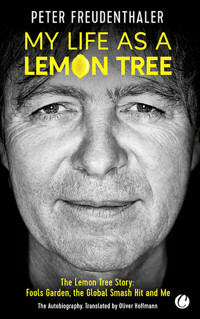
The catchy pop song "Lemon Tree" was a global hit for the German band Fools Garden in the mid-90s. For singer and songwriter Peter Freudenthaler, born in 1963, the song opened the door to the international music world and a career that he could never have dreamed of. In his autobiography, he takes us on this journey with him: From his sheltered childhood and youth in Pforzheim and his beginnings in a school band to the origins of "Lemon Tree", from his sudden success as a pop star and chart-topper and life on tour to current songs. Between many magical moments and inspiring encounters with international stars and fans from all over the world, it's always Lemon Tree. Fools Garden have received countless gold and platinum awards as well as music prizes all over the world. To this day, Peter Freudenthaler successfully performs on stage with Fools Garden and in other musical projects and writes his own songs. My Life as a Lemon Tree is a very personal account of over 33 years of band and music history – and an exciting and warmly sympathetic look behind the scenes of the music scene.
Das E-Book können Sie in Legimi-Apps oder einer beliebigen App lesen, die das folgende Format unterstützen:
Seitenzahl: 393
Veröffentlichungsjahr: 2025
Ähnliche

















Peter Freudenthaler, Michaela Frölich
My Life As A Lemon Tree
Die Lemon Tree-Story: Fools Garden, the Global Hit and Me
Freudenthaler, Peter; Frölich, Michaela: The Lemon Tree Story: Fools Garden, the Global Smash Hit and Me. Germany, Hamburg, Charles Verlag 2025
1. Auflage 2025 / 1st Edition 2025
ePub-eBook: 978-3-910408-26-5
Dieses Buch ist auch als Print erhältlich und kann über den Handel oder den Verlag bezogen werden / This book is also available as a print edition and can be purchased from retailers or the publisher.
ISBN: 978-3-910408-25-8
Übersetzung / Translation: Oliver Hoffmann, textmenschen, Mannheim
Lektorat / Editing: Angela Rieger, textpalast, Oldenburg
Satz / Layout: Sarah Schwerdtfeger, Charles Verlag, Hamburg
Umschlaggestaltung / Cover Design: © Sabine Dunst, Guter Punkt, München
Umschlagbild / Cover Image: © Tine Acke Foto, Hamburg
Bibliografische Information der Deutschen Nationalbibliothek:
Die Deutsche Nationalbibliothek verzeichnet diese Publikation in der Deutschen Nationalbibliografie; detaillierte bibliografische Daten sind im Internet über https://dnb.d-nb.de abrufbar / Bibliographic information from the German National Library: The German National Library lists this publication in the German National Bibliography; detailed bibliographic data is available online at https://dnb.d-nb.de.
Der Verlag behält sich das Text- und Data-Mining nach § 44b UrhG vor, was hiermit Dritten ohne Zustimmung des Verlages untersagt ist.
Der Charles Verlag ist ein Imprint der Bedey & Thoms Media GmbH,
Charles Verlag is an imprint of Bedey & Thoms Media GmbH,
Hermannstal 119k, 22119 Hamburg, Germany
E-Mail: [email protected]
© Charles Verlag, Hamburg 2025
Alle Rechte vorbehalten.
All rights reserved.
https://www.charles-verlag.de
Inhalt
Peter Freudenthaler, Michaela Frölich
My Life As A Lemon Tree
Die Lemon Tree-Story: Fools Garden, the Global Hit and Me
PROLOG
WHEN DREAMS COME TRUE, THE PROBLEMS START.
A (Very) Brief Foreword
A call from Peter.
1. We Storm the Charts
Leipzig Airport, Monday, February 26, 1996
2. How it all began …
A Vision in Berlin
The First Official Album
The First Video Clip
Our First TV Appearance
3. Management, Media & Co.
A new manager
Something‘s in the Air
4. 1996 – An Incredible Year
Waiting and rushing
Gold and Platin
On to South Africa
Bambi Blackout
Between the Hospital Corridor and a TV Award
From Pretzel Rolls to the World Stage
5. Music in My Blood
Not From This World
Survival and the Knowledge That I Would Show Them All
Of Boredom, Spaceships, and Cross-eyed Lions
My First Band
Of Pianos, Planning, and Good Old Marx
Stumbling Blocks Help You Move Forward
6. The World of Fool‘s Garden Keeps Turning
Go and ask Peggy: The Second Album – Between Euphoria and Pressure
An album, an Island, a Story
Football, International Understanding, and a Lemon Tree in Siberia
MEANWHILE
Melodies from Offstage
To the Caribbean and Back – with a Stopover on the Ice!
A Childhood Dream Comes True
7. The Dark Side of Success
Life in the Public Eye
Looking Back on an Incredible Success
8. Of New Freedom
We Rediscover Ourselves
Tour Stories and a Song Called Komisch
Lesson with a Guitar Case
When the Russians Came, Closer Suddenly Felt Very Close
Kaliningrad
How Rolling Home Found its Way Back
Shades of Copper
9. A New Country and Crazy Ideas
Earthquake in China
A Tribute to the Beatles
Final Stap – Glitz, Glamour, and No Room for Vanity
Menschenskinder – Music, Humanity, and Bobby Baumeister
Knighted by Deep Strings!
Of Potato Beetles and Movie Screens
10. Lemon Tree Covers
11. Learning To Let Go
When Life Says Goodbye
Farewell to My Mother
12. Crossover Projects
The Sound of Large Spaces – Our Crossover Concerts
And Announcement with an Echo
Between Liszt and LindenbergImportant Names, Weak Knees – Sound Check at the Castle
13. All We Need Is What We Are
Flashback: A Look Back With a Future
Storm-proof and Weather-beaten
14. Time For Life
When You Travel, You Never Come Back the Same Way You Left.
When in Doubt, Always Up
15. Where We’re Heading
Farewell, Lemonade Music
THANK YOU!
Seitenliste
1
2
3
4
5
6
7
8
9
10
11
12
13
14
15
16
17
18
19
20
21
22
23
24
25
26
27
28
29
30
32
33
34
35
36
37
38
39
40
41
42
43
44
45
46
47
48
49
51
52
53
54
55
56
57
58
59
60
61
62
63
64
65
66
67
68
69
70
71
72
73
74
75
76
77
78
79
80
81
82
83
84
85
86
87
88
89
90
91
92
93
94
95
96
97
98
99
100
101
102
103
104
105
106
107
108
109
110
111
112
113
114
115
116
117
118
119
120
121
122
123
124
125
126
127
128
129
130
131
132
133
134
135
136
137
138
139
140
141
142
143
144
145
146
147
148
149
150
151
152
153
154
155
157
158
159
160
161
162
165
167
168
169
170
171
172
173
174
175
176
177
178
179
180
181
182
183
185
186
187
188
189
190
191
192
193
194
195
196
197
198
199
200
201
203
204
205
206
207
208
209
210
211
212
213
214
215
216
217
218
219
220
221
222
223
224
225
226
227
228
230
231
232
233
234
235
236
237
238
239
240
241
242
243
244
245
246
247
248
249
250
251
252
253
254
255
256
257
258
259
260
261
262
263
264
Navigationspunkte
Cover
PROLOG
I am often asked when I was happiest in my life.
Many assume it must have been when Lemon Tree was number one in the charts. But that wasn‘t the case at all. On the contrary, that was more of a moment of terror.
I just thought, ‘Oh my God, what‘s happening here?’
We had worked so long for this success, and suddenly there it was, completely real: we were pop stars. There they were, right in front of me, the ghosts I had summoned. Goethe‘s words echoed in my head.
The dream had come true, but it overwhelmed me – stronger and faster than I could ever have imagined.
Peter Freudenthaler
WHEN DREAMS COME TRUE, THE PROBLEMS START.
‘You have to make an effort!‘ my wife said, not looking up from the frying pan. ‘No, I don‘t,‘ I thought, ‘because I‘m feeling deep satisfaction about the chance to write a few lines about this book.‘ I‘d known Fools Garden for a long time thanks to ‘Lemon Tree‘, but I‘d dismissed the band as a ‘one-hit wonder‘, which is no surprise when you don‘t know anything else by them.
However, I must change that assessment now, because after meeting Peter and Volker at a photo and video shoot with my brother, they gave me a copy of Who Is Jo King? as a farewell gift. I now know that there is much more to them than just another lemon tree.
I think Fools Garden is one of the most musically underrated German bands. They define themselves through their musical diversity and their refusal to conform to today‘s music market and short-lived trends. They have a love of melodies and create complex albums at a time when songs must be close to the 2-minute mark to secure a place on digital marketers‘ playlists.
This book tells the story of a man who goes to great lengths to achieve his dream without knowing where it will lead. It is about moments of joy and moments of doubt. It‘s about dreams that come true and all the problems that come with them.
While reading, I often wondered how Peter Freudenthaler could remain so grounded.
Perhaps it is because he is grateful for the life he can lead, exactly as he always wanted. Or maybe it is because he knows that being able to support his family through his passion is a gift. When you read this book, you realize that Peter Freudenthaler‘s passion is music.
‘My Life as a Lemon Tree‘ tells the story of a man, a band, a global hit and its impact on the protagonist‘s life in an honest and non-exaggerated way. It‘s about fears and highs, right and wrong decisions, and how the Native American saying, ‘When dreams come true, the problems start‘, is probably true.
I know how most people imagine life as a ‘pop star‘, but that‘s exactly why I would recommend this book to anyone curious about the inner lives of people in the spotlight. Many have been burned by their one big hit, but Peter has grown from the experience, and this book proves that perfectly.
Kai Wingenfelder – Fury in the Slaughterhouse
A (Very) Brief Foreword
A call from Peter.
I return the call as soon as possible – this has been customary between us for years.
Peter‘s ideas are often amazing and exciting. So, obviously, I wanted to know what was going on. Turns out he wants me to write a brief foreword for his autobiography.
Phew! Song lyrics come more easily to me than prose. So first, I read it.
It was fun!
Peter is someone who really has something to say. There are lots of loving memories of familiar things and shared experiences. But there were also lots of new things, which made me realize even more why I‘ve liked Peter so much for so many years.
He‘s imaginative, authentic, straightforward, warm-hearted, curious and has a good sense of humor and a tendency towards self-deprecation. He‘s always been modest in a good way – that‘s how I‘ve known him since we first met in the mid-90s, with and without a lemon tree.
I‘m looking forward to our next duet on stage, but even more to our next good conversation over a roast – Peter already knows where!
Enjoy the book!
All the best,Hartmut Engler – PUR
1. We Storm the Charts
Leipzig Airport, Monday, February 26, 1996
Little did we know this was the day that would turn our lives upside down. Tiredly we sat in the departure lounge, waiting for the plane that would take us back to Pforzheim. We didn‘t talk much, each of us lost in our own thoughts: The promotional tour was finally over, and after such an exhausting time, we all just wanted to go home.
Why had we had been here in the first place? RADIO PSR, Saxony‘s first private radio station, had invited us, Fool‘s Garden, for an interview. For months, our song had been playing on radio stations across the country, including here in eastern Germany. In recent weeks, Lemon Tree had not only reached number one in Radio PSR‘s listener charts but also shot up the charts.
Suddenly, Angelo Mendez – the radio promoter for our record company, Intercord – came around the corner. He had been driving us from one radio station to another and from one interview to the next for the last few days. He appeared beaming like a comet in the sky, with a bottle of champagne in his hand, which he held aloft like a trophy. ‘Guys, we have to celebrate!’ he shouted, grinning so broadly that it was almost eerie. ‘Your single and album are number one on the German charts!’
Silence. Shock. A shiver ran down my spine. I had goosebumps as if I had just hugged an electric fence. Then, everything started spinning in my head: ‘Wait a minute. What does that mean? What happens now?’ My bandmate Volker and I stared at each other, both feeling a bit helpless. It was as if we had just been cast in the lead roles of a movie but had no idea of the script. Instead of jumping for joy, we just sat there, stunned by the news. What should have been a reason to cheer ecstatically now seemed frightening and completely surreal. We, five guys from Germany’s wild south, had reached the musical peak of over 80 million people. It was crazy.
Angelo was still standing in front of us, holding the champagne bottle high in the air – and us? No reaction. No happiness hormones catapulting us into the sky. Instead, we just stared at him, completely speechless. He later said that we looked pale as ghosts.
The single Dish of the Day at number 1 in the Top 100 charts on March 11, 1996 © Keller Verlag
The album Dish of the Day at number 1 in the Top 100 charts on March 11, 1996 © Keller Verlag
Only gradually did I realize what he had just told us. Lemon Tree had been in pole position for two weeks, knocking Spaceman by Babylon Zoo off the top spot. But now, our album Dish of the Day was number one in the German charts? Unbelievable!
When we entered the charts in December 1995, the record company had warned us that the upswing would slow down again between Christmas and New Year’s. The opposite was true. We had overtaken all the superstars: Michael Jackson with Earth Song, the Backstreet Boys, Oasis, they were all behind us now. We went from number 70 to number 1 in record time. Suddenly, the world was spinning differently.
Back home in Pforzheim, our home city in the federal state of Baden-Württemberg in the southwest of Germany, the phone wouldn‘t stop ringing. Journalists had heard the news from Media Control, just as we had. Friends and family commended us and shared our joy. Our record company sent everyone a case of champagne. It was as if we were all celebrating our birthdays together for days on end – a real frenzy that immediately sent the initial shock into oblivion. I suspected that the next few weeks would also be packed with appointments. At that point, however, none of us could have even remotely imagined the ‘huge rush’ that the future had in store for us.
Shortly afterwards, Herbert Kollisch, the managing director of Intercord, congratulated us personally. In his letter, he expressed how delighted he was to be able to celebrate such great success with us in such a short time. The single was on its way to going gold, and it wouldn‘t be long before we would be holding the album in our hands. Gold meant 250,000 copies sold. What musical heaven had we landed in? I stared at the letter in my hands, unable to believe it. Two hundred and fifty thousand copies? What a number! Incredible.
During that time of euphoria, we began the long-planned Dish of the Day tour, playing 17 concerts in March 1996 only. We traveled from one end of the country to the other. Every day, we were in a new place.
Now Kollisch was congratulating us not only on the top positions for the single and album, but also, as predicted, on gold and platinum trophies, at the very moment when we were on our way to Munich for a concert at the legendary ‘Alabama,’ which was to be broadcast live by Bayerischer Rundfunk, BR3. Just a few months earlier, we had played in Munich once before, in a club called Feierwerk, in front of exactly 20 (!) people, and had gone home with a hefty loss. Nevertheless, we were incredibly proud to have performed in Munich and were sure that we would tell our grandchildren about it someday.
Alabama, a true cult venue in Munich and long known to all of us as an important concert location, was sold out and we were all excited. On top of that, it was the premiere of the live recording – we had never done that before.
Backstage, we could already hear the murmurs from the audience. Then, at 21:45, it was showtime. Our hearts pounding, we took our places on stage as the curtain opened, and the audience greeted us with frenetic applause. It carried us through the evening as if we were on cloud nine. We started with Ordinary Man, the opening song on our album, and we were immediately overwhelmed by the love coming our way. Three songs later, it was Lemon Tree‘s turn. We played the first chords, and the audience went wild. ‘So this is what it feels like to have a hit,’ I thought. It was what we had all dreamed of – we had a song that everyone knew, that everyone sang along to at the top of their lungs, and that no one could stay still to. Arms were in the air, everyone was dancing, and at the end of the song, the hall was lost in thunderous applause. Now, we felt it firsthand – this was what it felt like to have a real, genuine hit! We laughed and grinned at each other, simply overjoyed by the atmosphere surrounding us.
Then came Finally, a rather quiet song, during which the lighters suddenly flared up – cell phones with flashlight functions didn‘t exist back then. I closed my eyes and enjoyed the wonderful feeling of singing and letting go, thinking of nothing else. During the next songs – The Seal, The Tocsin, Pieces, and Wild Days – the adrenaline shot up to unprecedented heights for all of us, because the audience knew all the songs and sang along just like they had with all the others before. It was enormous, almost impossible to describe. It still felt like a dream – our big dream – in which we had just arrived.
Afterwards, people told us that we looked like we were on drugs. But it was just our bodies‘ own endorphins that had made us feel so ‘high.’
This performance, the entire evening, was like a huge rush – which was followed just a few days later by the first cold shower and disillusionment. An editor from Musikexpress, a monthly German magazine that mainly writes about the rock and pop music, had attended the concert and, to put it mildly, tore us apart in his review. He described our songs as ‘well-intentioned compositions’ and wrote that our bassist, Thomas, looked ‘like he‘d been borrowed from the Schürzenjäger’ (a volksmusik band from Austria). He also wrote that I had the ‘charisma of a clerk at the DMV.’ Phew, that hurt! I must admit that this sentence really hit me hard at the time, which is probably why it stuck in my memory. As if that weren‘t enough, he commented that he hadn‘t been to a rock concert, but rather ‘a staid party for Catholic rural youth,’ and that it wasn‘t hurtful but ‘infinitely boring and simple-minded.’ Of course, we knew that not everyone would like us. But this difference between our perception of ourselves and how others perceived us was stark, because we had experienced nothing but enthusiastic audiences, nothing more and nothing less. Moreover, the fact that he insulted not only us but also the audience was outrageous.
We received the review just before one of our next concerts in Linkenheim, a town in the district of Karlsruhe, Baden-Württemberg, Germany. Steffen, our manager, put the Musikexpress on the table. We skimmed through the article and were shocked. I was angry, mostly at Steffen: ‘Are you stupid? Showing us something like that before we go on stage? Now I‘m really motivated, thanks a lot!’
It hurt. We couldn‘t understand it because the concert had gone so well, and the audience had loved it. It took a while, but we eventually found an explanation. We were suddenly number one, and there were obviously people who couldn‘t handle the success of five ‘guys from the village’ who didn‘t even speak proper standard German. Maybe the journalist was just jealous because his girlfriend liked us. Who knows? Shortly afterwards, however, the then editor-in-chief of Musikexpress, Ernst Hofacker, called me personally to apologize for the article. That was nice of him and not at all what I had expected.
Looking back, the article was quite well written and, in a way, if we hadn‘t been the subject of the criticism, it would’ve been funny. Of course, we couldn‘t see that at the time. Perhaps some journalists simply expected more from a number one band. In terms of the charts, we were, but not yet in terms of our live performances or our confidence in dealing with the audience. That was all still to come. Ultimately, we learned to deal with all the reactions and criticism, both positive and less pleasant.
Fool’s Garden – Live at the Alabama, Munich, 1996
https://www.youtube.com/watch?v=Zv_Rvon66lY
With success, our audience also changed: in the beginning, the people who attended Fool‘s Garden concerts in the region were our age, between mid-20s and early 30s. The audience was now significantly younger because youth media outlets such as Bravo and Popcorn were also reporting on us. The music channels, MTV and VIVA, did the rest. Suddenly, 15- and 16-year-olds were attending the concerts, frequently accompanied by their parents. After the concert in Linkenheim, for example, a mother came up to me while I was smoking a cigarette backstage and said, ‘I think it‘s unacceptable that you smoke! You should be a role model for the kids!’ I was totally shocked and thought: ‘What does she want from me? Am I really supposed to be a role model?’ It was certainly not our intention to negatively influence any teenagers with our behavior. However, the idea that every step and every action would now be observed and evaluated, potentially eliciting a reaction, was still new and completely unfamiliar to us.
Shortly afterwards, we held our first promotional event abroad in Zurich, Switzerland, at TV Megaherz, a Swiss family quiz show. There we met our German colleagues from the Rödelheim Hartreim Projekt, Moses Pelham and Martin Haas. Moses sized us up, grinned, and asked dryly, ‘Hey, what are you guys doing here?’ Not knowing what to say, we obediently answered like schoolchildren on their first day of school: ‘Promoting our album!’ He just shook his head and said, ‘Hey, you guys are number one – you don‘t do ‘promotion‘!’ One more lesson learned.
As we left the studio, something took us completely by surprise: we were recognized in the street. In Switzerland! It was the first time, and it felt a bit spooky. Of course we were happy, but it also felt a bit surreal. It was as if our anonymity was slowly but surely dissolving into a fine mist, even though we were still trying to comprehend it all. Thanks to our regular appearances in youth magazines and on TV shows such as VIVA, MTV and VH1, not to mention BRAVO TV with Heike Makatsch who is now a popular German actress, we suddenly became what we had never planned to be: a teen band.
The problem? We were all around 30 at the time, well past our teens. The older members of the audience probably looked around in confusion, wondering what on earth was going on, when 14-year-olds next to them started screaming as though were Take That.
Suddenly, everything was happening at high speed. It was appointment after appointment, interview after interview. Sometimes I didn‘t even know in the morning where I had fallen asleep the night before, or if I had slept at all. It felt as if an enormous turbo had catapulted us into another hemisphere. Of course, we loved the hustle and bustle, the excitement and success around us, but honestly? It was also extremely exhausting. It was a non-stop tour de force, with breaks consisting of a sandwich and, at best, five minutes of peace and quiet in the bathroom.
The previous year, before all this hype had emerged, we had at least managed to secure a decent run of concerts for the first half of 1996. The fees were more symbolic than anything else, but we didn‘t care. If our expenses were covered, we saw it as a sensible investment in our musical future.
Of course, what we couldn‘t have known at the time was that in spring of 1996, we would be embarking on a promotional tour of all the radio and TV stations, with additional gigs to play due to our sudden success, while at the same time all the ‘old dates’ from the previous year were still scheduled. For those, we only received the previously agreed fees, which were better than what a busker would have made in bad weather. In hindsight, we could have renegotiated, but we didn‘t want to. Ethics and all that.
At the beginning of April 1996, we spent two days in Vienna filming the music video for Wild Days, the second single from our successful album Dish of the Day. We had already produced a video for this song two years earlier, back then on our own with Zeno Moser and Tina Müller. It was a low-budget production, but even more heartfelt for it. It’s a beautiful, charming video that is still very dear to us today. Tina, who later also designed the artwork for the Dish of the Day album, lovingly crafted sunflowers and gave the whole thing a wonderfully dreamy late hippie look. Zeno, her partner, director, cameraman and musician, had crossed our path during a SAT.1 shoot.
What started as a spontaneous collaboration grew into a genuine connection over the years. Our paths continue to cross to this day, whether for video and artwork projects, concerts, or private events. It was one of those happenstances that became more than just a ‘joint project’: a friendship that continues to bear creative fruit to this day. Zeno has also created a wonderful documentary about Fools Garden for our 33rd band anniversary in 2024. The videos for Beautiful and Electrify from our latest album Captain … Coast Is Clear also bear his signature.
In 1996, Intercord wanted the video for Wild Days to be bigger and more professional than the previous one. Above all, they wanted it to be more expensive: the production budget was 200,000 German marks. It was filmed at DoRo Productions in Vienna, a company that had previously worked with superstars such as Michael Jackson, Queen, David Bowie, Miles Davis, Whitney Houston, and the Rolling Stones. Other German-speaking artists who had worked with them included Falco, Udo Lindenberg, and Die Toten Hosen – and now us:Fool‘s Garden. To be honest, it felt a bit surreal … This was especially the case because the two founders, Rudi Dolezal and Hannes Rossacher, took on the directing duties themselves. This was highly unusual and akin to being knighted!
The idea was ambitious: dressed in Jackson Five outfits and Beatles suits complete with mop-top wigs, we acted out various scenarios, sometimes in costume and sometimes as ourselves. Technically, it was flawlessly executed – no question about it. But when we saw the result, we asked ourselves: Who are these guys? Somehow, it just didn‘t really feel like us. Perhaps the video was just ahead of its time. Today, I like it quite a bit, not least because we all looked so incredibly young.
The first Wild Days video shooting 1994: Jette and me (left) and the band (below) with Tina Müller and Zeno Moser (above)© Jochen Richter
The second Wild Days video shooting by DoRo at Vienna: The band dressed up as Beatles and Jackson Five, lower right with Rudi Dolezal (left) and Hannes Rossacher © Steffen Koch
Working with DoRo was exciting and a highlight. Our record company had high hopes for the video, as did we. However, unlike Lemon Tree, MTV and VIVA only played it sporadically, and there was no sign of it being in heavy rotation. It‘s a shame, but at least we got to feel like we were in a big music video cinema for two days. That‘s what remains in our memories.
We were on the road a lot, but at least the car rides became much more relaxed. Whereas I used to drive to shows in my green Citroën 2CV, we now had two Mercedes estate cars at our disposal. They were modern, comfortable, and perfect for increasingly long distances. It‘s crazy to think that we could have afforded cars like these ourselves with the first advance from Intercord. Instead, we got them for free. It was almost absurd: the more you get, the more you get, and at some point, you wonder if it‘s all necessary. But we enjoyed using them anyway.
Next on the agenda was the five-week Germany-wide Karstadt tour: Twenty cities, from Augsburg to Bremen and Frankfurt to Stuttgart, playing in the subsidiaries of said department store chain. The principle was always the same: the department stores showed our music videos on monitors in advance, and in the afternoons, we played, sometimes unplugged, in the sales rooms or open air in front of the stores. Afterwards, we gave autographs and interviews, and in the evenings, we performed at concerts. These days were also filled with appointments from morning until late at night.
A particularly memorable stop on our Karstadt tour was in Darmstadt, a Hesse city. The plan was for a relaxed autograph session outside the department store. They had set up some tables, the weather was nice, and everything seemed to be going well. However, when we looked down at the square from the third-floor window beforehand, we realized that this was not going to be a normal afternoon. The crowd was enormous – 3,000 or even 4,000 fans had gathered. When we briefly appeared at the window, a chorus of screams erupted below, as if the Beatles themselves had announced their arrival. For a moment, we felt like the Pope on the balcony of St Peter‘s Basilica, appearing for the first time after the white smoke had risen.
Feeling somewhat nervous, we left our haven, descended the stairwell into the thick of the action, and took our places at the autograph tables, accompanied by deafening screams. However, as soon as we sat down, it became clear that this was not a controlled fan encounter, but rather an emotional volcanic eruption. The crowd pushed forward relentlessly. Our tables wobbled menacingly. We quickly decided that fleeing was the only sensible option. We ran into the underground car park, closely followed by a horde of unleashed autograph hunters. It was like a revival of Beatlemania, complete with an adrenaline rush and panic – awesome and crazy, and kind of cool, but also scary and dangerous.
We really didn‘t want to experience that again. That same evening, our manager called Intercord and made it very clear: ‘If you want my boys to show up anywhere tomorrow, it won‘t be without security!’ The message got through – the next day in Munich, there were twenty security guards on duty. Twenty! The problem was that there were only 80 fans. A quick calculation revealed that there was one guard for every four autograph hunters. Had one of the young people asked a slightly sassy question, they would probably have been discreetly removed immediately. But that‘s how it was back then. Those weeks were like a wild rollercoaster ride: one minute you were hurtling towards pop stardom. The next, you were crashing back down to earth. We laugh about it today, but back then we stood there with our mouths open, thinking, ‘What on earth is going on here?’
Looking at this tour schedule from 1996 today, I still feel dizzy. We were in a different place every day, first in Germany and then, from the summer onwards, in other countries and on other continents. Our dream had come true: we were genuine pop stars and could make a living from music.
Lemon Tree spent an impressive 36 weeks in the German charts, four of them at number one. We remained in the top ten until mid-May, and both the single and the album Dish of the Day remained in the top 100 until autumn. But that was just the start. Our success also took off internationally. The song reached the top spots in Austria, Switzerland, Denmark, Finland, Norway, Sweden, and Ireland, sometimes reaching number one. We also entered the charts in Spain, Italy, Mexico, South Africa, Thailand, Taiwan, and Malaysia, sometimes reaching number one.
Those first weeks and months of 1996 truly marked the beginning of our worldwide success. While people in Germany were still wondering how long it would last, people in Bangkok, Cape Town, and Guadalajara were already singing along. Lemon Tree – ‘ … I wonder how, I wonder why …’ ;)
2. How it all began …
A Vision in Berlin
My father had a sister called Aunt Mimi. She lived in Berlin, not far from the legendary Waldbühne concert venue. When we visited her in the early ‘90s, I noticed posters all over the city one morning: Bruce Springsteen was going to play at the Waldbühne that evening as part of his world tour. However, I knew we were invited to a barbecue at a neighbor‘s house that evening, and I thought, ‘OK, I‘ll just go there later and hopefully I‘ll be able to hear something from outside!’ That was on 14 May 1993. No sooner said than done: At around ten o‘clock that evening, I arrived at the Waldbühne, and, to my complete surprise, I was able to just walk in. There were no ticket checks or resistance – it was as if fate itself had opened the door for me.
The concert was fantastic. Bruce Springsteen played until half past midnight and afterwards, I sat in the rotunda for ages, daydreaming about standing on that stage myself one day. A little bit of megalomania never hurt anyone. Still in this euphoric mood, I saw a lighter lying on the seat next to me. I didn‘t smoke anymore, but I thought that if I found a pack of Marlboros, I‘d have one. I got up and walked down the aisle, where I found a pack of Marlboros on the floor right in front of me. I kicked it and felt that it wasn‘t empty. Picking it up and found that it was an almost full pack of cigarettes. Taking it as a second sign from fate that evening. I lit one up. ‘How stupid am I?’ I thought after smoking half of it. I put it out again. Unfortunately, that was the ‘nicotine welcome back moment’ after finally quitting two years earlier. For the next few weeks, I only smoked occasionally, but nicotine addiction soon had me firmly in its grip again for many years.
Nevertheless, I never regretted that cigarette, because it was a special one, and so was the moment. What I had secretly dreamed of that night came true: three years later, in 1996, Fool‘s Garden and I were standing on that stage ourselves. Indeed, we were only the opening act for PUR, the immensely popular German pop band also hailing from Baden-Württemberg, but that didn‘t spoil the feeling. The concert was an incredible experience for us, and the audience welcomed us with such enthusiasm as if we were the stars of the evening. To me, we weren‘t just the support act. It was a dream come true. When I left the stage, my father was waiting for me backstage. He didn‘t say a word – he didn‘t need to. His eyes said it all: pride, excitement and maybe even a hint of disbelief. Seeing him so moved was one of the best moments of my life.
A fateful encounter
Even though it might not have sounded like it so far, music wasn‘t the only thing in my life. In the early 90s, when I was in my late twenties, I enrolled on a media technology program in Stuttgart. On the surface, it was a step in a completely new direction. That‘s where I met my future bandmate, Volker Hinkel. When he entered the seminar room, my first impression was: ‘Who on earth is that?’ He had a headband and an idiosyncratic style that was somehow out of sync with the times. But, as it turned out, we were neighbors in more ways than one. He was from Münklingen, and I was from Neuhausen – two villages three kilometers apart, separated only by the invisible border between the territories of Baden and Württemberg. Yet we had never met before. He moved in Stuttgart circles, while I was spending more time in Karlsruhe and Pforzheim. We each orbited in our own circles.
What brought us together was what still connects us: music. In the car park in front of the technical college, he played to me songs on tape in his car that he had recorded with two friends in his home studio. I was blown away. ‘Damn, that sounds good, really good!’ I thought, swallowing secretly. His music sounded so much more professional than anything I had to offer. I was almost too scared to play him my songs. But Volker had a keen ear and good instincts. He could immediately tell that there was something special about them. Volker liked my voice and the tunes, and so he asked me if I‘d like to record a few songs with him in his studio. Of course I did!
A few days later, we were sitting together in the small home studio in his parents‘ house. The first songs we recorded were Sandy and Tell Me Who I Am. We used an eight-track tape recorder, a guitar, a keyboard, programmed drums, and my vocals. It was magical. The songs came alive as if they had been waiting for this moment and had finally been switched on for the first time.
Then Volker played a backing track for which he still needed a tune. Suddenly, the melody was there. At first it was accompanied by gibberish that sounded like English but wasn‘t yet – I still had to write the right lyrics. That‘s how Lena came about: a song with a lot of drive, a guitar solo to die for, and my voice, into which I poured all the old heartbreak that was easily reactivated for that moment. We both sensed it: something was happening! Our strengths complemented each other perfectly.
Technically, he was way ahead of the curve: Volker Hinkel in his home recording studio in 1992. © Private photo
Even today, when I think about it, I still get goosebumps. Back then, I knew right away that this was the beginning of a new chapter for us both. I played the songs for friends, acquaintances and my family, and everyone said, ‘Wow, that sounds like it‘s on the radio!’ They were right. For that era, our recordings were of amazing quality. This was not only because the songs were good, but also because there was something about the way they were made that went far beyond the aesthetics of home-recorded tapes.
Looking back, meeting Volker came at just the right time. I had already been in a few bands and hence had moved away from the idea of becoming a professional musician. Instead, I wanted to finish my studies and perhaps make music videos. But life makes its own plans. What’s meant to be yours will always come knocking. Sometimes softly, sometimes with full force.
I had matured. At school, I would never have stood up in front of an audience. Now, however, I was presenting group projects in lecture halls without panicking too much, and I realized that I could grow if I just dared to. It was during this time that my old dream of becoming a singer resurfaced. I remembered a moment in high school: The music class hadn‘t started yet. I was sitting at the piano playing to myself and completely lost in my own world. When I got up, some of my classmates approached me. They had been listening to my playing the whole time and told me how much it had moved them. It was a small compliment, but it touched me deeply. For the first time, I felt recognized for something that meant so much to me. That feeling stayed with me. It became an inner compass that told me: ‘There‘s more to you. There‘s something else out there.”
After Volker and I had recorded a few more songs, we were so hooked that we could hardly stop. Volker noticed an ad in a music magazine for a company that could produce CDs in small quantities. That was exactly what we needed. No more tapes, but real, shiny gold discs! We sent them our master tape and had six copies made for the price of 160 German marks each. CD burners for personal use did not exist back then.
I remember exactly how Volker came to my place after receiving the envelope containing the CDs, to give me my copy. It was an overwhelming moment when I inserted the CD, saw the individual tracks, and pressed ‘play.’ Moments like these are when visions are born, and I could already see it clearly in front of me: our album on CD, us on stage with cheering audiences, songs on the radio and lots of record sales!
Before I started recording with Volker, Claus-Dieter Wissler was his musical partner in the studio. He was an engineer who was already well established in his career, but he was just as passionate about music as we were. I liked him from the moment we met, and he was happy to have another creative mind join the studio family. Under the name MAGAZINE, Volker and Claus had spent several years producing tapes, distributing them to friends and family for a small fee and diligently acquiring new studio equipment.
Claus-Dieter, a real tech aficionado, was bursting with creativity. He would have liked to be the vocalist himself, but he knew very well that singing was not one of his strengths. Rather than getting upset about it, he was selflessly happy that I could do it, and he increasingly devoted himself to organizational tasks. He also immediately recognized the special chemistry between Volker and me, investing all his energy in the areas that would advance our shared dream.
In the end, he became our first manager, our very own Brian Epstein. He was a reliable supporter with a vision, and we really owe him a lot – even if he did go a little overboard at times by promoting us to the outside world as if we were world stars. This could be a little embarrassing sometimes, simply because we weren‘t. But in his world, there was no reason for modesty, and that was probably a good thing.
Claus-Dieter was also a passionate squash player with an offensive style of play, both on and off the court, and a regular at the Squash Temple in the municipality of Magstadt. One day, he gave Steffen Koch, the owner, one of our tax: ‘Play this every now and then, I‘m sure it‘ll be good!’ he said. Steffen, who later became our manager, took him up on his offer. He enjoyed the music, and soon our tape was playing regularly in the changing rooms and corridors.
At some point, the type ended up with Steffen‘s brother Gunter. Although he was a police officer, he was just as crazy about music as we were. In his own way, he was a real pioneer. He took the tape to a party, where it was surprisingly well received – the guests celebrated the punch and our music alike. Shortly afterwards, Gunter called us and asked if he could visit the studio. ‘Sure!’ we replied. By that point, Volker and I had already decided that the studio project MAGAZINE should become a real band. With actual gigs and everything that goes with it. So, Gunter came to our little studio, looked around, listened, and then said with a twinkle in his eye, ‘Let‘s make a CD! I‘ll finance it!’ He suggested producing a thousand copies. To us, that sounded like gold coinage in Nashville. He presented us with an option and band takeover agreement. We had no idea what that meant exactly or how the music business worked. But Claus-Dieter was enthusiastic, and so were we. So, we signed. Eyes closed and full steam ahead!
Now it was time to put the last pieces of the puzzle together by finding musicians who suited us and wanted to play with us. At the time, I was working at Schlaile, a music store in Karlsruhe, tuning pianos to finance my studies. I also tinkered with old pianos in the workshop on Hennebergstraße every now and then, breathing new life into them. The piano workshop was in the basement while the upper floor was used to sell keyboards and drums. One day, during my lunch break, I went upstairs to see what new synthesizers had arrived. As you might expect, I had a tape with our latest recordings with me. I knew Michael Hahn, the salesman in that department, well and handed him the tape: ‘Listen to this, we recorded it last week!’
He put the tape in and played Sandy over the big PA system. Hearing our song on such a big sound system completely fascinated me. Michael was also thrilled and amazed. ‘That‘s breathtaking!’ I didn‘t realize at the time that this small act would lead to us gaining another band member. In the next room, among the drum kits, another young was man working. Michael called out to him: ‘Ralf, you want to be famous, don‘t you? You must play with us if you want to be successful!’ That‘s how I met Ralf Wochele, who I immediately invited to the next rehearsal. He had played with several bands in the Karlsruhe area and recorded three CDs. Ralf was a qualified toolmaker, an enthusiastic hobby diver, and, as it turned out, our new drummer. Michael was right: he did indeed become famous with us.




