


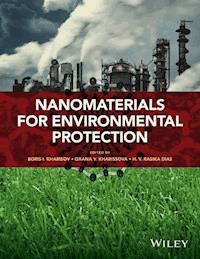
Nanomaterials for Environmental Protection E-Book
136,99 €
Mehr erfahren.
- Herausgeber: John Wiley & Sons
- Kategorie: Wissenschaft und neue Technologien
- Sprache: Englisch
This book is divided into four main sections thoroughly analyzing the use of nanomaterials for water, air and soil solutions, and emphasizing environmental risks. Providing background on nanomaterials' two-decade study, it discusses the characterization and application of unconventional disinfectants, called antimicrobial nanomaterials, which fall into three categories and, while seemingly harmless, have potential hazards if applied improperly. Special attention is given to the process of remediation, synthetics techniques, and properties of nanomaterials, with examples to which new and trained readers in the field can relate and understand.
- an interdisciplinary approach, aimed at scientists in physical chemistry, nanotechnology, and environmental sciences
- includes applications of non-conventional techniques in environmental protection
- furthers the development of applied nanoscience and nanotechnology
- suggests new industrial projects and university courses addressing nanotechnology in and for the environment
- includes applications for water, air and soil protection
Sie lesen das E-Book in den Legimi-Apps auf:
Seitenzahl: 1636
Veröffentlichungsjahr: 2014
Ähnliche




















CONTENTS
Cover
Title page
Copyright page
Preface
List of Contributors
List of Abbreviations
Part I: Remediation with Use of Metals, Metal Oxides, Complexes and Composites
1 Groundwater Water Remediation by Static Diffusion Using Nano-Zero Valent Metals (Fe
0
, Cu
0
, Al
0
), n-FeH
n+
, n-Fe(OH)
x
, n-FeOOH, n-Fe-[O
x
H
y
]
(
n+/−
)
1.1 Introduction
1.2 Contaminants Removed by n-Fe
0
, n-Cu
0
, and n-Al
0
1.3 Remediation Mechanisms
1.4 Remediation Market
1.5 Conclusions
Appendix 1.A: List of Abbreviations and Equation Symbols
Appendix 1.B: Ions (Oxides, Hydrides, Peroxides, and Hydroxides) Removed by Precipitation Due to the Alteration of Eh and pH in Groundwater by ZVM
Appendix 1.C: Half Reactions and Redox Potentials Associated with ZVM
References
2 Nanostructured Metal Oxides for Wastewater Disinfection
2.1 Introduction
2.2 Photoactive Metal Oxides
2.3 Kinetics and Reaction Mechanisms
2.4 Visible Light Absorbing Semiconductors
2.5 Slurries or Immobilized Photocatalyst
2.6 TiO
2
Particles and Nanotubes
2.7 Photocatalysis on TiO
2
Nanotubes
2.8 Photoelectrocatalysis on TDN
2.9 Other Nanostructured Metal Oxides
2.10 Conclusions
References
3 Cu
2
O-Based Nanocomposites for Environmental Protection
3.1 Introduction
3.2 Structural Feature and Cu
2
O Modification
3.3 Cu
2
O-Based Nanocomposites for Environmental Protection
3.4 Conclusions and Outlook
Acknowledgments
References
4 Multifunctional Nanocomposites for Environmental Remediation
4.1 Introduction
4.2 Multifunctional Nanocomposites Development: From Fabrication to Processing
4.3 Characterization and Property Analysis of Multifunctional Nanocomposites
4.4 Environmental Remediation through Multifunctional Nanocomposites
4.5 Summary
References
5 Nanomaterials for the Removal of Volatile Organic Compounds from Aqueous Solutions
5.1 Introduction
5.2 NMs for BTEX Removal
5.3 Nanomaterials for Chlorobenzene Removal
5.4 NMs for Chlorinated Alkenes Removal
5.5 NMs for Phenol Removal
5.6 The Impact of NMs on VOC Removal by Other Processes
5.7 Challenges in the Use of NMs for VOC Remediation
References
6 Hybrid Metal Nanoparticle-Containing Polymer Nanofibers for Environmental Applications
6.1 Introduction
6.2 Challenges of Environmental Nanotechnology
6.3 Electrospinning Technology
6.4 Fabrication of Hybrid Metal NP-Containing Polymer Nanofibers
6.5 Environmental Applications of Hybrid Metal NP-Containing Polymer Nanofibers
6.6 Conclusions and Outlook
References
7 Nanomaterials on the Basis of Chelating Agents, Metal Complexes, and Organometallics for Environmental Purposes
7.1 Introduction
7.2 Elemental Metals Functionalized with Chelating Ligands
7.3 N-Containing Ligands
7.4 O-Containing Ligands
7.5 N,O-Containing Ligands
7.6 S-Containing Ligands
7.7 P-Containing Ligands
7.8 Nanocomposites on the Basis of Organometallic Compounds
7.9 Conclusions
References
Part II: Remediation with Use of Carbon Nanotubes
8 Carbon Nanotubes: Next-Generation Nanomaterials for Clean Water Technologies
8.1 Introduction
8.2 Modification of CNTs
8.3 Adsorption of Heavy Metals
8.4 Adsorption of Bacterial Pathogens
8.5 CNT-Based Membranes
8.6 Lifecycle Assessment of CNTs
8.7 Conclusion
Acknowledgment
References
Part III: Photocatalytical Remediation
9 New Advances in Heterogeneous Photocatalysis for Treatment of Toxic Metals and Arsenic
9.1 Introduction
9.2 Basic Principles of HP
9.3 Arsenic
9.4 Chromium
9.5 Uranium
9.6 Lead
9.7 Mercury
9.8 Conclusions
References
10 Nanostructured Titanium Dioxide for Photocatalytic Water Treatment
10.1 Introduction
10.2 Photocatalytic Reaction
10.3 Synthesis Techniques
10.4 Strategies for Increasing Photoreactivity
10.5 Particle Shape Calculation
10.6 Controlled Crystal Growth
10.7 Application of Photocatalysis in Water Treatment
References
11 Destruction of Chloroorganic Compounds with Nanophotocatalysts
11.1 Introduction
11.2 Principle of the Method
11.3 Materials and Equipment
11.4 Results and Discussions
11.5 Conclusions
References
12 Semiconductor Nanomaterials for Organic Dye Degradation and Hydrogen Production via Photocatalysis
12.1 Introduction
Acknowledgments
References
Part IV: Nanoadsorbents and Nanofiltration
13 Advanced Oxidation Processes, Nanofiltration, and Application of Bubble Column Reactor
13.1 Introduction
13.2 Vision of AOP
13.3 Vision of Nanofiltration and the Wide Domain of Membrane Science and Its Impact on Scientific Research Pursuit
13.4 Further Research Endeavor in the Field of nanofiltration
13.5 Research Thrust Areas in the Field of AOPs and the Vision toward Effective Ozonation Procedures
13.6 Man's Scientific Mind toward Novel Environmental Engineering Procedures
13.7 Application of a Bubble Column Reactor and Vision of Innovative Ideas
13.8 Doctrine of Heat and Mass Transfer Characteristics of a Bubble Column Reactor
13.9 Doctrine of Hydrodynamics of Bubble Column Reactor and Multiphase Flow
13.10 Hidden Truth in the Domain of Environmental Engineering and Nanofiltration
13.11 Future Vision and Future Flow of Thoughts
Acknowledgment
References
14 Carbon Nanomaterials as Adsorbents for Environmental Analysis
14.1 Introduction
14.2 CNMs for Environmental Analysis
14.3 Adsorption on CNMs
14.4 CNMs for Preconcentration of Environmental Pollutants
14.5 Chromatographic Applications of CNMs
14.6 Membranes Applications of CNMs
14.7 Other Applications of CNMs
14.8 Conclusions and Future Vision
References
Suggested Websites
15 Application of Nanoadsorbents in Water Treatment
15.1 Introduction
15.2 Nanoadsorbents in Water Treatment
15.3 Conclusions
References
16 Organo-Clay Nanohybrid Adsorbents in the Removal of Toxic Metal Ions
16.1 Introduction
16.2 Organo-Modification with Small Molecules
16.3 Polymer Modification
16.4 Conclusions and Prospects
References
Part V: Membranes on Nanomaterials Basis
17 Water Remediation Using Nanoparticle and Nanocomposite Membranes
17.1 Introduction
17.2 Nanoparticles in Water Remediation
17.3 Nanocomposite Membranes in Water Remediation
17.4 Conclusions
Acknowledgments
References
Part VI: Green Methods in Nanomaterials Synthesis
18 Green Methodologies in the Synthesis of Metal and Metal Oxide Nanoparticles
18.1 Introduction
18.2 Biosynthesis Methods
18.3 Microwave-Assisted Nanoparticle Synthesis
18.4 Sonochemical Synthesis of Nanoparticles
18.5 Electrochemical Synthesis of Nanoparticles
18.6 Sonoelectrochemical Reduction
18.7 Supercritical Solvents for Nanoparticle Synthesis
18.8 Solar Energy
18.9 Concentrated Solar Energy
18.10 Conclusion
References
19 An Environmentally Friendly and Green Approach for Synthesis and Applications of Silver Nanoparticles
19.1 Introduction
19.2 The Story of Silver NPs
19.3 Why Microbial Synthesis?
19.4 Biogenerators of Silver NPs
19.5 Principle of NP Biosynthesis
19.6 Mechanism of Silver NP Synthesis
19.7 Peptides
19.8 Enzymes
19.9 External Factors Affecting NPs Production
19.10 Purification of NPs
19.11 Applications of NPs
19.12 Medicinal Applications
19.13 Environmental Applications
19.14 Rising Concern over Nanosilver Toxicity
19.15 Conclusion
References
20 Green Synthesis of Nanomaterials Using Biological Routes
20.1 Introduction
20.2 Bioremediation
20.3 Metal Nanoparticles
20.4 Metal Oxide Nanoparticles
20.5 Metal Sulfide Nanoparticles
20.6 Metal Carbonate Nanoparticles
20.7 Bioleaching: A Truly “Green” Biological Approach
20.8 Novel Approach toward Biosynthesis
20.9 Outlook
References
Part VII: CO
2
Adsorption
21 Nanomaterials for Carbon Dioxide Adsorption
21.1 Introduction
21.2 CO
2
Storage and Sequestration
21.3 Novel Technologies
References
Part VIII: Intelligent Nanomaterials
22 Development of Intelligent Nanomaterials as a Strategy to Solve Environmental Problems
22.1 Environmentally Responsive Materials as Mechanical Actuators
22.2 Thermally Responsive Polymers (PNIPAM)
22.3 Noble Metal Nanoparticles
22.4 Calculus of Extinction Spectra in Metallic Nanoparticles using Mie Theory
22.5 Energy Conversion of Metallic Nanoparticles
22.6 Synthesis Routes of Environmentally Sensitive Polymer–Metal Nanoparticle Hybrids
22.7 Conclusions
References
Part IX: Desalination
23 Engineered Nanomaterials for Purification and Desalination of Palatable Water
23.1 Introduction
23.2 Desalination
23.3 Aquaporins
23.4 Ferritins
23.5 Single Enzyme Nanoparticles
23.6 Carbon Nanotubes
23.7 Porous Media and Ceramics
23.8 Nanofiltration
Lesen Sie weiter in der vollständigen Ausgabe!
Lesen Sie weiter in der vollständigen Ausgabe!
Lesen Sie weiter in der vollständigen Ausgabe!
Lesen Sie weiter in der vollständigen Ausgabe!
Lesen Sie weiter in der vollständigen Ausgabe!
Lesen Sie weiter in der vollständigen Ausgabe!
Lesen Sie weiter in der vollständigen Ausgabe!
Lesen Sie weiter in der vollständigen Ausgabe!
Lesen Sie weiter in der vollständigen Ausgabe!
Lesen Sie weiter in der vollständigen Ausgabe!
Lesen Sie weiter in der vollständigen Ausgabe!
Lesen Sie weiter in der vollständigen Ausgabe!
Lesen Sie weiter in der vollständigen Ausgabe!
Lesen Sie weiter in der vollständigen Ausgabe!
Lesen Sie weiter in der vollständigen Ausgabe!
Lesen Sie weiter in der vollständigen Ausgabe!
Lesen Sie weiter in der vollständigen Ausgabe!
Lesen Sie weiter in der vollständigen Ausgabe!
Lesen Sie weiter in der vollständigen Ausgabe!
Lesen Sie weiter in der vollständigen Ausgabe!
Lesen Sie weiter in der vollständigen Ausgabe!
Lesen Sie weiter in der vollständigen Ausgabe!
Lesen Sie weiter in der vollständigen Ausgabe!
Lesen Sie weiter in der vollständigen Ausgabe!
Lesen Sie weiter in der vollständigen Ausgabe!
Lesen Sie weiter in der vollständigen Ausgabe!
Lesen Sie weiter in der vollständigen Ausgabe!
Lesen Sie weiter in der vollständigen Ausgabe!
Lesen Sie weiter in der vollständigen Ausgabe!
Lesen Sie weiter in der vollständigen Ausgabe!
Lesen Sie weiter in der vollständigen Ausgabe!
Lesen Sie weiter in der vollständigen Ausgabe!
Lesen Sie weiter in der vollständigen Ausgabe!
Lesen Sie weiter in der vollständigen Ausgabe!
Lesen Sie weiter in der vollständigen Ausgabe!
Lesen Sie weiter in der vollständigen Ausgabe!
Lesen Sie weiter in der vollständigen Ausgabe!
Lesen Sie weiter in der vollständigen Ausgabe!
Lesen Sie weiter in der vollständigen Ausgabe!
Lesen Sie weiter in der vollständigen Ausgabe!
Lesen Sie weiter in der vollständigen Ausgabe!
Lesen Sie weiter in der vollständigen Ausgabe!
Lesen Sie weiter in der vollständigen Ausgabe!
Lesen Sie weiter in der vollständigen Ausgabe!
Lesen Sie weiter in der vollständigen Ausgabe!
Lesen Sie weiter in der vollständigen Ausgabe!
Lesen Sie weiter in der vollständigen Ausgabe!
Lesen Sie weiter in der vollständigen Ausgabe!
Lesen Sie weiter in der vollständigen Ausgabe!
Lesen Sie weiter in der vollständigen Ausgabe!
Lesen Sie weiter in der vollständigen Ausgabe!
Lesen Sie weiter in der vollständigen Ausgabe!
Lesen Sie weiter in der vollständigen Ausgabe!
Lesen Sie weiter in der vollständigen Ausgabe!
Lesen Sie weiter in der vollständigen Ausgabe!
Lesen Sie weiter in der vollständigen Ausgabe!




