


56,99 €
Mehr erfahren.
- Herausgeber: John Wiley & Sons
- Kategorie: Wissenschaft und neue Technologien
- Sprache: Englisch
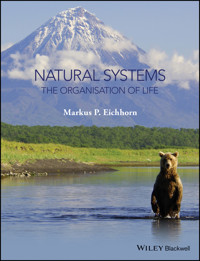
Organised into four sections, this text discusses the organisation of the living world.
- Links Ecology, Biodiversity and Biogeography
- Bridges modern and conventional Ecology
- Builds sequentially from the concept and importance of species, through patterns of diversity to help consider global patterns of biogeography
- Uses real data sets to help train in essential skills
Sie lesen das E-Book in den Legimi-Apps auf:
Seitenzahl: 874
Veröffentlichungsjahr: 2016
Ähnliche




















Table of Contents
Cover
Title Page
Copyright
Preface
To students
To instructors
References
Acknowledgements
Abbreviations
Chapter 1: Introduction: defining nature
1.1 How little we know
1.2 Pressing questions
1.3 The hierarchy of nature
1.4 Biodiversity
1.5 Myths to bust
1.6 Further information
References
Part I: Species
Chapter 2: What is a species?
2.1 The big question
2.2 Species concepts
2.3 Solving the riddle
2.4 Coda: Species richness
2.5 Conclusions
References
Chapter 3: The history of life
3.1 The big question
3.2 Sources of evidence
3.3 A brief history of diversity
3.4 Uneven diversity
3.5 Conclusions
References
Chapter 4: How many species are there?
4.1 The big question
4.2 How can we not know?
4.3 Discovery rates
4.4 Scaling
4.5 Sampling-based methods
4.6 Other organisms
4.7 Wrapping up
4.8 Conclusions
References
Part II: Diversity
Chapter 5: Measuring diversity
5.1 The big question
5.2 Scales of diversity
5.3 Species richness
5.4 Believing in estimates
5.5 A SAD story
5.6 Diversity of species
5.7 Other measures of diversity
5.8 diversity
5.9 Case study: The Binatang project
5.10 Conclusions
References
Chapter 6: Niches
6.1 The big question
6.2 Historical background
6.3 Back to basics
6.4 Birth and death rates
6.5 The ZNGI
6.6 Impact vectors
6.7 Supply points
6.8 Coexistence
6.9 The evidence
6.10 Implications
6.11 Conclusions
References
Chapter 7: Patterns in species richness
7.1 The big question
7.2 Area
7.3 Local and regional species richness
7.4 Local patterns in species richness
7.5 Congruence
7.6 Assembling a model
7.7 Conclusions
References
Chapter 8: Drivers of diversity
8.1 The big question
8.2 Coexistence or co-occurrence?
8.3 Energy and resources
8.4 Diversity begets diversity
8.5 Disturbance
8.6 Top-down control
8.7 Expanding our model
8.8 Conclusions
References
Chapter 9: Does diversity matter?
9.1 The big question
9.2 Ecosystems
9.3 What shape is the relationship?
9.4 Field experiments
9.5 Other measures of diversity
9.6 Multifunctionality
9.7 The real world
9.8 species richness and productivity
9.9 Conclusions
References
Part III: Communities
Chapter 10: Organisation at the community scale
10.1 The big question
10.2 Definitions
10.3 Communities in the field
10.4 Quantitative approaches
10.5 Community structure
10.6 Food chains
10.7 Food webs
10.8 Complexity and stability
10.9 Trophic cascades
10.10 SAD again
10.11 Complex systems
10.12 Unified neutral theory
10.13 Metabolic theory of ecology
10.14 Conclusions
References
Chapter 11: Stability
11.1 The big question
11.2 Stable states
11.3 Changing environments
11.4 Hysteresis
11.5 Predicting changes
11.6 Coral reefs
11.7 Shifting baselines
11.8 Conclusions
11.9 Coda: the seduction of Gaia
References
Chapter 12: Changes through time
12.1 The big question
12.2 Succession
12.3 Succession and niche theory
12.4 Examples of succession
12.5 Disturbance
12.6 Modelling succession
12.7 Regeneration
12.8 Plants and animals
12.9 Case study: Mpala, Kenya
12.10 Conclusions
References
Chapter 13: Changes through space
13.1 The big question
13.2 Community assembly
13.3 Metacommunities
13.4 Dispersal limitation
13.5 Combining environment and dispersal
13.6 Conclusions
References
Part IV: Biogeography
Chapter 14: Global patterns of life
14.1 The big question
14.2 Biogeography
14.3 Phytogeography
14.4 Ecoregions
14.5 Empirical approaches
14.6 The oceans
14.7 Fresh water
14.8 Conclusions
References
Chapter 15: Regional species richness
15.1 The big question
15.2 Climate and productivity
15.3 Other processes
15.4 Scale and productivity
15.5 Latitudinal gradients
15.6 Centres of origin
15.7 Regional species–area relationships
15.8 Confounding effects
15.9 Conclusions
References
Chapter 16: Latitudinal gradients
16.1 The big question
16.2 Hypotheses
16.3 Geographic area
16.4 Climatic stability
16.5 Productivity
16.6 Niche size
16.7 Evolutionary speed
16.8 Out of the tropics
16.9 Conclusions
References
Chapter 17: Earth history
17.1 The big question
17.2 Geological history
17.3 Continental drift
17.4 Echoes of Pangæa
17.5 Climatic effects
17.6 Ice ages
17.7 Sea level
17.8 Extinctions
17.9 Conclusions
References
Chapter 18: Dispersal
18.1 The big question
18.2 Range expansion
18.3 Mechanisms of dispersal
18.4 Barriers
18.5 Case studies
18.6 Conclusions
References
Chapter 19: Life on islands
19.1 The big question
19.2 Types of island
19.3 Island biotas
19.4 Evolution of endemics
19.5 Size changes
19.6 Reproduction and dispersal
19.7 Super-generalists
19.8 Endemic communities
19.9 Disharmony
19.10 Assembly rules
19.11 Island species richness
19.12 The equilibrium model of island biogeography
19.13 Testing the theory
19.14 Conclusions
References
Chapter 20: Reinventing islands
20.1 The big question
20.2 A critique of EMIB
20.3 Rival hypotheses
20.4 Disturbance
20.5 Relaxation
20.6 Extinctions
20.7 Invasions
20.8 A new theory?
20.9 Evolution
20.10 Conclusions
References
Chapter 21: What is a natural system?
21.1 The big question
21.2 Lessons learnt
21.3 Processes not systems
References
Appendix A: Diversity analysis case study: Butterfly conservation in the Rocky Mountains
A.1 Software resources
A.2 Calculations
A.3 Synthesis
A.4 Conclusions
References
Glossary
Index
End User License Agreement
Pages
xv
xvi
xvii
xviii
xix
xxi
1
2
3
4
5
7
9
10
11
12
13
14
15
16
17
18
19
20
21
22
23
24
25
26
27
29
30
31
32
33
34
35
36
37
38
39
41
43
44
45
46
47
48
49
50
51
52
53
54
55
56
57
58
59
61
62
63
64
65
66
67
68
69
70
71
72
73
74
75
76
77
78
79
80
81
82
83
84
85
86
87
88
89
90
91
92
93
95
96
97
98
99
100
101
102
103
104
105
106
107
108
109
110
111
112
113
114
115
116
117
118
119
120
121
122
123
124
125
126
127
128
129
131
133
134
135
136
137
138
139
140
141
142
143
144
145
146
147
148
149
150
151
152
153
154
155
156
157
158
159
161
162
163
164
165
166
167
168
169
170
171
172
173
174
175
176
177
178
179
180
181
182
183
184
185
186
187
188
189
190
191
193
194
195
196
197
198
199
200
201
202
203
204
205
206
207
208
209
210
211
212
213
215
216
217
218
219
220
221
222
223
224
225
226
227
228
229
230
231
233
234
235
236
237
238
239
240
241
242
243
244
245
246
247
248
249
250
251
252
253
254
255
256
257
258
259
260
261
262
263
264
265
266
267
268
269
270
271
272
273
274
275
276
277
278
279
280
281
282
283
284
285
287
288
289
290
291
292
293
294
295
296
297
298
299
300
301
302
303
304
305
306
307
308
309
310
311
312
313
314
315
316
317
318
319
320
321
322
323
324
325
326
327
328
329
330
331
332
333
334
335
336
337
338
339
340
341
342
343
344
345
346
347
348
349
350
351
352
353
354
355
356
357
358
359
360
361
362
363
364
365
366
367
368
Guide
Cover
Table of Contents
Begin Reading
Preface
Begin Reading
List of Illustrations
Chapter 1: Introduction: defining nature
Figure 1.1 The hierarchical organisation of life on Earth. Components are linked by arrows where each level is a spatially-nested element of that above. Biomes are divided into ecoregions which are spread across the globe; likewise communities are made up of species which are not exclusive to any single community.
Chapter 2: What is a species?
Figure 2.1 Global lists of primate species published between 1965 and 2005.(
Source
: Isaac, Mallet and Mace (2004). Reproduced with permission from Elsevier.)
Figure 2.2 Breeding range of greenish warblers in Asia. Shades represent distinct subspecies, with gradations indicating change in morphology. The hatched area in central Siberia is the overlap zone between two distinct subspecies. Sampling sites are indicated by symbols corresponding to mitochondrial clades. (
Source
: Irwin et al. (2005). Reproduced with permission from American Association for the Advancement of Science.)
Figure 2.3 The Sundaland clouded leopard
Neofelis diardi
. (
Source
: WWF—Canon/Alain Compost. Reproduced with permission from Alain Compost.)
Figure 2.4 Provisional
Apanteles
wasp species within the morphological species
Apanteles leucostigmus
. Asterisks indicate wasps with more than one closely related host species. (
Source
: Smith et al. (2008). Reproduced with permission from the National Academy of Sciences, USA.)
Chapter 3: The history of life
Figure 3.1 Number of genera of marine invertebrates since the Cambrian, grouped into 11 My bands with 95% confidence intervals. Periods: Cm, Cambrian; O, Ordovician; S, Silurian; D, Devonian; C, Carboniferous; P, Permian; Tr, Triassic; J, Jurassic; K, Cretaceous; Pg, Paleogene; Ng, Neogene.
Figure 3.2 An artistic reconstruction of a Carboniferous rain forest dominated by lycopsids.
Lesen Sie weiter in der vollständigen Ausgabe!
Lesen Sie weiter in der vollständigen Ausgabe!
Lesen Sie weiter in der vollständigen Ausgabe!
Lesen Sie weiter in der vollständigen Ausgabe!
Lesen Sie weiter in der vollständigen Ausgabe!
Lesen Sie weiter in der vollständigen Ausgabe!
Lesen Sie weiter in der vollständigen Ausgabe!
Lesen Sie weiter in der vollständigen Ausgabe!
Lesen Sie weiter in der vollständigen Ausgabe!
Lesen Sie weiter in der vollständigen Ausgabe!
Lesen Sie weiter in der vollständigen Ausgabe!
Lesen Sie weiter in der vollständigen Ausgabe!
Lesen Sie weiter in der vollständigen Ausgabe!
Lesen Sie weiter in der vollständigen Ausgabe!
Lesen Sie weiter in der vollständigen Ausgabe!
Lesen Sie weiter in der vollständigen Ausgabe!
Lesen Sie weiter in der vollständigen Ausgabe!
Lesen Sie weiter in der vollständigen Ausgabe!
Lesen Sie weiter in der vollständigen Ausgabe!
Lesen Sie weiter in der vollständigen Ausgabe!
Lesen Sie weiter in der vollständigen Ausgabe!
Lesen Sie weiter in der vollständigen Ausgabe!
Lesen Sie weiter in der vollständigen Ausgabe!
Lesen Sie weiter in der vollständigen Ausgabe!
Lesen Sie weiter in der vollständigen Ausgabe!
Lesen Sie weiter in der vollständigen Ausgabe!
Lesen Sie weiter in der vollständigen Ausgabe!
Lesen Sie weiter in der vollständigen Ausgabe!
Lesen Sie weiter in der vollständigen Ausgabe!
Lesen Sie weiter in der vollständigen Ausgabe!
Lesen Sie weiter in der vollständigen Ausgabe!
Lesen Sie weiter in der vollständigen Ausgabe!
Lesen Sie weiter in der vollständigen Ausgabe!
Lesen Sie weiter in der vollständigen Ausgabe!




