2
ISSN 0003-8504
ISBN 978 1119 685371
Neuroarchitecture
06/2020
About the
Guest-Editor
05
Ian Ritchie
06
Introduction
Why Do People Feel More
Comfortable in One Space
than Another?
Ian Ritchie
Le Corbusier and
Iannis Xenakis,
Couvent Sainte-Marie
de la Tourette,
Éveux-sur-l’Arbresle,
France, 1959
14
Mind in Life
in Architecture
Ian Ritchie
A Conversation with
Architectural Historian
Alberto Pérez-Gómez
50
Designing for
People
with Dementia
Níall McLaughlin
Losing Myself
60
Mind
Landscapes
Navigation, Habitat
and Imagination
James Corner
Níall McLaughlin and Yeoryia Manolopoulou,
Losing Myself,
Venice Architecture Biennale,
2016
Sergei Gepshtein
Species
of Space
36
Charles Spence
Designing for the
Multisensory Mind
42
Resonant
Bodies in
Immersive
Space
Sarah Robinson
28
Stage Left, Stage
Right – The
Heavens & Hell
Embodied Meaning &
Memory in Performance
Michael Boyd
22
3
Guest-edited by
Ian Ritchie
Fact and Fiction and Design
Implications
Light Regulation of
Circadian Rhythms
Russell G Foster
66
72
A Conversation with
Psychobiologist Vittorio Gallese
Disembodied Worlds
– Body, Brain and
Architecture in the
Digital Age
Ian Ritchie
Towards an Architecture
of Expanded Kinship
Plant
Consciousness
Andrew Todd
100
128
From Another Perspective
Architect Manqué
Michael Sandle
Contributors
134
Studio Andrew Todd,
Château d’Hardelot Elizabethan
Theatre, Condette, France,
2016
Museums and the
Embodied Mind
Barry C Smith
Sensory Engagement with
Artworks and Architecture
88
Neuroscience
Does Design
What the Brain’s Architecture
Can Teach Architects
Danbee Kim and Adam R Kampff
94
Visual Neuroscience
for Architecture
Seeking a New Evidence-
Based Approach to Design
Thomas D Albright, Sergei Gepshtein
and Eduardo Macagno
110
80
A Biological Reading
Harry Francis Mallgrave
News from
Nowhere
118
Wicked
Neuroarchitecture
Fiona Zisch
Reciprocity, Shapeshifting
Problems and a Case for
Embodied Knowledge
Neil Spiller
4
ARCHITECTURAL DESIGN
Profile No.
November/December
2020
268
Editorial Offices
John Wiley & Sons
9600 Garsington Road
Oxford
OX4 2DQ
T +44 (0)1865 776 868
Editor
Neil Spiller
Managing Editor
Caroline Ellerby
Caroline Ellerby Publishing
Freelance Contributing Editor
Abigail Grater
Publisher
Paul Sayer
Art Direction + Design
CHK Design:
Christian Küsters
Barbara Nassisi
Production Editor
Elizabeth Gongde
Prepress
Artmedia, London
Printed
in Italy by Printer
Trento Srl
EDITORIAL BOARD
Denise Bratton
Paul Brislin
Mark Burry
Helen Castle
Nigel Coates
Peter Cook
Kate Goodwin
Edwin Heathcote
Brian McGrath
Jayne Merkel
Peter Murray
Mark Robbins
Deborah Saunt
Patrik Schumacher
Ken Yeang
Journal Customer Services
For ordering information,
claims and any enquiry
concerning your journal
subscription please go to
www.wileycustomerhelp
.com/ask or contact your
nearest office.
Americas
T: +1 877 762 2974
Europe, Middle East
and Africa
T: +44 (0)1865 778315
Asia Pacific
T: +65 6511 8000
Japan
(for Japanese-
speaking support)
T: +65 6511 8010
Visit our Online Customer
Help available in 7 languages
at www.wileycustomerhelp
.com/ask
Print ISSN: 0003-8504
Online ISSN: 1554-2769
Prices are for six issues
and include postage and
handling charges. Individual-
rate subscriptions must be
paid by personal cheque or
credit card. Individual-rate
subscriptions may not be
resold or used as library
copies.
All prices are subject to
change without notice.
Identification Statement
Periodicals Postage paid
at Rahway, NJ 07065.
Air freight and mailing in
the USA by Mercury Media
Processing, 1850 Elizabeth
Avenue, Suite C, Rahway,
NJ 07065, USA.
USA Postmaster
Please send address changes
to
Architectural Design,
John Wiley & Sons Inc.,
c/o The Sheridan Press,
PO Box 465, Hanover,
PA 17331, USA
Rights and Permissions
Requests to the Publisher
should be addressed to:
Permissions Department
John Wiley & Sons Ltd
The Atrium
Southern Gate
Chichester
West Sussex PO19 8SQ
UK
F: +44 (0)1243 770 620
All Rights Reserved. No
part of this publication
may be reproduced, stored
in a retrieval system or
transmitted in any form or
by any means, electronic,
mechanical, photocopying,
recording, scanning or
otherwise, except under
the terms of the Copyright,
Designs and Patents Act
1988 or under the terms
of a licence issued by the
Copyright Licensing Agency
Ltd, 5th Floor, Shackleton
House, Battle Bridge Lane,
London SE1 2HX, without the
permission in writing of the
Publisher.
Subscribe to
1
2
is published bimonthly
and is available to purchase
on both a subscription basis
and as individual volumes
at the following prices.
Prices
Individual copies:
£29.99 / US$45.00
Individual issues on
2
App for iPad:
£9.99 / US$13.99
Mailing fees for print
may apply
Annual Subscription Rates
Student: £93 / US$147
print only
Personal: £146 / US$229
print and iPad access
Institutional: £346 / US$646
print or online
Institutional: £433 / US$808
combined print and online
6-issue subscription on
2
App for iPad: £44.99 /
US$64.99
Disclaimer
The Publisher and Editors cannot be held responsible
for errors or any consequences arising from the use
of information contained in this journal; the views and
opinions expressed do not necessarily reflect those of
the Publisher and Editors, neither does the publication
of advertisements constitute any endorsement by
the Publisher and Editors of the products advertised.
06/2020
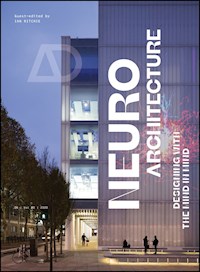
Front cover:
Ian Ritchie
Architects, Sainsbury
Wellcome Centre for Neural
Circuits and Behaviour,
University College London
(UCL), London, 2016. ©
Adam Scott/Ian Ritchie
Architects. Neuron-firing
image projected onto
the facade ©The Margrie
Laboratory, SWC.
Inside front cover:
Ian
Ritchie Architects, Farsons
Old Brewhouse and Trident
Park, Mrie¯hel, Malta, due
for completion 2021. © Ian
Ritchie
Page 1:
Iannis Xenakis,
Polytope of Cluny, Thermes
de Cluny, Paris, 1972
Acknowledgement
Ian Ritchie acknowledges
Eva Menuhin’s dedicated
assistance in the preparation
of this edition.
5
GUEST-EDITOR
ABOUT THE
IAN RITCHIE
Professor Ian Ritchie is director of Ian Ritchie Architects.
Founded in 1981, it is one of the world’s leading practices,
with a long-standing and consistent reputation for delivering
innovative, environmentally ethical designs that are cutting-
edge in terms of materials and techniques. The practice has
won over 100 national and international awards. In 1981
he also co-founded the design engineering firm Rice Francis
Ritchie (RFR) in Paris.
His interest in neuroscience in relation to architecture
stems from an invitation in 1994 to give a lecture on ‘Touch
in Architecture’ for an exhibition programme on the five
senses at the Kunst- und Ausstellungshalle der Bundesrepublik
Deutschland in Bonn. Later he expanded beyond ‘touch’,
addressing the other haptic qualities of buildings – sound,
warmth, smell and taste – for example in his ‘senses
narrative’ that accompanied his winning design submission
for ‘Scotland’s Home of Tomorrow’, the 1998 international
competition for social housing in Glasgow. In 2009 he
presented a research-and-delivery programme that enabled
his practice to win the international competition for the
Sainsbury Wellcome Centre for Neural Circuits and Behaviour
at University College London (2016). This led to a deeper
engagement and rapport with many leading neuroscientists
across the globe, including Fred ‘Rusty’ Gage, Richard Axel,
Eric Kandel, Richard Morris, John O’Keefe and Peter Dayan.
Ritchie’s practices have realised and contributed to
major new planning, architectural and engineering works
throughout Europe, including the Reina Sofia Museum of
Modern Art in Madrid (1990), Leipzig Messe Glass Hall
(1995), Louvre Sculpture Courts and Pyramids (1993) and
La Villette Cité des Sciences (1986) in Paris, the Dublin Spire
(2003), and the temporary Royal Shakespeare Company
Courtyard Theatre in Stratford-upon-Avon (2006). Recent
landmark projects include the Royal Academy of Music’s
Susie Sainsbury Theatre and Angela Burgess Recital Hall
in London (2018). Current work includes a new theatre
in Cairo, a bridge in Dublin, masterplanning in Belfast
Docklands and Merthyr Tydfil in Wales, large residential
developments, the London School of Hygiene and Tropical
Medicine transformation, and a new business park and visitor
centre in Malta.
He is a Royal Academician and member of the Akademie
der Künste, Berlin, recipient of the Commonwealth
Association of Architects Award for Innovation, and was
the first foreign architect to receive the French Académie
d’Architecture Grand Silver Medal for Innovation.
1
Text © 2020 John Wiley & Sons Ltd. Image © Ian Ritchie
Why Do People Feel
More Comfortable
in One Space
than Another?
Louis Kahn,
Salk Institute for
Biological Studies,
La Jolla,
San Diego, California,
1964
In 1957, Jonas Salk, developer of the first
safe and effective polio vaccine, began
his quest to fulfil his dream of creating
a collaborative environment where
researchers could explore the basic
principles of life and contemplate the
wider implications of their discoveries
for the future of humanity. Salk
partnered with architect Louis Kahn to
design such a research centre. Their
close collaboration resulted in what
is not only one of the great structures
of the 20th century, but also one of
the most important centres for
biological research on the planet.
Salk and Kahn’s foresight in the design
of the laboratories has also allowed
the Institute to remain a functioning
facility for advanced research.
6
INTRODUCTION
IAN RITCHIE
Architecture is a uniquely multifaceted discipline
integrating perception, imagination and artistic
expression with the physical world of space, light and
form – construction and its materiality – to create the
buildings in which humans live and, ideally, thrive.
Until very recently little has been known about how our
brains, bodies and buildings interact. Although architects
for centuries have depended on intuition and experience
to create environments that influence the people who
use a space, we know we have much to learn about
human responses to environmental stimuli.
Neuroscience is beginning to provide us with an
understanding of how the brain controls our bodily
activities, affecting how we think, move, perceive, learn
and remember. There is now concrete evidence that one
of the properties of the human brain is ‘neural plasticity’
– that our brains change as we learn – and that the brain
changes partly in response to our environment.
Architecture is imagined and, when built, shapes us.
This was recognised by the Academy of Neuroscience
for Architecture (ANFA), which was established under
the auspices of the 2003 American Institute of Architects
(AIA) Convention held in San Diego, home of the
Salk Institute for Biological Studies. The newly coined
discipline united the fields of anatomy, physiology,
pharmacology, psychology, medicine and behaviour
with biology, immunology, genetics, molecular biology,
chemistry, physics, electronics and artificial intelligence.
ANFA’s stated mission is to ‘promote and advance
knowledge linking neuroscience research to a growing
understanding of human responses to the built
environment’.
1
In his address to the AIA convention in
2003, Salk Institute President Fred ‘Rusty’ Gage made the
following observations, which are the core premise for
this issue of
2:
‘(1) The brain controls our behaviour; (2)
Genes control the blueprints for the brain’s design and
structure; (3) Environment can modulate gene function
and, ultimately, the brain’s structure; (4) Changes in
the environment change the brain; (5) Consequently,
changes in the environment change our behaviour; and
(6) Therefore, architectural design can change our brain
and our behaviour.’
Architecture Meets Philosophy Meets Art Meets
Neuroscience
Ian Ritchie Architects’ longstanding engagement with
neuroscience blossomed during the design process
of the Sainsbury Wellcome Centre for Neural Circuits
and Behaviour at University College London (UCL),
when, during discussions at the Salk Institute about the
practice’s recent commission, Rusty Gage offered wise
insights into a research approach. As a result, the centre,
completed in 2016, was one of the world’s first buildings
‘designed with the mind in mind’, and its design process
unique because it proceeded ‘from the inside out’.
Before designing the building, the architects spent a
year visiting neuroscientists worldwide to understand
the state of their art and what they could envisage
their laboratories requiring years from now. Architects
and neuroscientists – in particular John O’Keefe (who
7
Ian Ritchie Architects,
Sainsbury Wellcome Centre for
Neural Circuits and Behaviour,
University College London (UCL),
London,
2016
right:
Spatial flow concept drawing. The
scientists stressed their desire for flexible,
interconnected spaces that can be adapted over
time to create a dynamic place in which to study
science. When spaces flow into each other,
people cannot help but meet during the day,
blurring the boundaries between different areas
of scientific research. Turquoise is lab space,
yellow is write-up, red is satellite clinical space,
and purple is interaction space.
below:
Two wavelengths and amplitudes create
the undulating facade and introduce a gentle
vertical rhythm to the streetscape. The wall is
composed of a unique assembly of prefabricated
modules of low-iron toughened structural cast
glass. These insulated and light-transmitting
modules carry integrated windows with their
own cast-glass louvres, which can be opened
and closed as desired to provide privacy and
to reflect the evening light. The white colour of
the translucent glass reflects light into the street
without creating glare.
8
was interim director of the centre, discovered place
cells in the hippocampus, and shared the Nobel Prize
in Physiology or Medicine in 2014 with May-Britt
Moser and Edvard Moser) and Peter Dayan (Director
of the Gatsby Computational Neuroscience Unit at
UCL from 1998 to 2018 and now Director at the Max
Planck Institute for Biological Cybernetics in Tübingen,
Germany) – embraced the idea of collaborating closely
throughout the building’s entire three-year design
period to ensure that their spatial and research needs
were planned with function and atmosphere well into
the future.
Most scientific innovations or discoveries occur
when creative people from diverse fields of study work
together and exchange ideas and perspectives. The
Sainsbury Wellcome Centre was designed specifically
to assist this process by subtly enabling scientists to
meet easily, every day, encouraging conversations and
collaborations while still allowing individuals to be
private and in control of their own environments. This
was done by incorporating the results of neuroscientific
research to inform the spatial structure of the interior
architecture: about how people interact with the
space around them, the importance of adaptability,
the nature of light and its wavelengths in the working
environment, and how the spaces in which we live
and work affect our mood and behaviour. The nature
and organisation of the resulting interior spaces with
long, short and vertical views and varying volumes was
described by one of the scientists as akin to the scale-
free nature of the brain itself.
This issue of
2
aims to encourage a broader
understanding of how these research and design
disciplines can guide the design process for the
better, to clarify what we know at present about what
neuroarchitecture can bring to the quality of design
thinking and application, and what design can bring to
neuroscientific research. It draws together some of the
latest research in these fields, offering an accessible
overview of the discipline of neuroarchitecture.
Scale-free networks are characterised by the presence of large hubs or nodes that are
highly connected to other nodes in the network. The interior spaces of the Sainsbury
Wellcome Centre are composed of a multitude of different spaces that flow into and link
with each other, creating an interlinked composition of spatially and organisationally
different scales. Here, double-height laboratories and write-up areas are illuminated by
the translucent cast-glass facade.
The centre’s theoretical computational unit’s spaces link to the experimentalists’ working
areas, and include this zenithally lit double-height space. There is a connecting gallery
alongside at the upper level with windows that open to allow discussions taking place
below to be shared, simultaneously acknowledging our human preference for long vistas
and catering to our innate curiosity.
The neuroscientists who were going to be working in the building explained that
chance conversations often sparked ideas, and that this can happen anywhere,
and how important it was that the building should support such serendipity. As
a result, the scientists are free to write on any glass surface within the building,
including the inside of the cast glass cladding.
9
10
Loops and Connections
The contributions to the issue stand alone while looping
back and connecting with others, as do the disciplines
within neuroarchitecture. Readers are invited to sample,
explore and perhaps discover, at the end, architect and
neuroscientist Fiona Zisch’s presentation of ‘wickedness’
as a natural consequence of deep and broad pan-
disciplinary thinking.
To inform and underpin the theme of ‘designing
with the mind in mind’, the theoretical background to
the subject is introduced in a brief conversation with
architectural historian Alberto Pérez-Gómez from Mexico,
now a Canadian citizen at McGill University, about the
historical evolution of our understanding of the mind
and life, the brain and body, and the body and space.
James Corner is an English landscape architect
practising mostly in America and Asia. He brings an
international perspective, exploring how landscape
engages the alternating simultaneity of prospect and
refuge, foreground and background, intimacy and
immensity, and fear and security – ancient needs and
fears that form part of our DNA.
The same DNA provides us with both inherited
concepts and acquired concepts
2
from the collective
experience of our shared biosphere. Behaviour drove
the evolution of our brain and the brain then affected
our behaviour – a neuro-behavioural loop. Architecture
is imagined and created, and when built shapes us – a
neuro-design loop. Harry Mallgrave, from the Illinois
Institute of Technology, explains how the biological
field of niche construction relates to the future of
design practice and how, as we alter our designed
environments, these transform our genetic, cognitive
and social patterns. The designed environment becomes
attuned with the embodied and multisensory
human organism.
Understanding the dynamic, multidimensional,
extended and interdependent body that neuroscience
describes means understanding it in terms of
multisensory awareness. Architect Sarah Robinson
writes about how vision’s predominance reinforces and
perpetuates an impoverished geometric idealisation
of the body, and how understanding our responses to
sound and touch expands not only our conventional
sense of the body, but also our traditional sense of space.
Charles Spence, Professor of Experimental Psychology
at the University of Oxford, illustrates how our senses
affect each other simultaneously, highlighting some
ways in which the rules of multisensory integration and
crossmodal influence are being revealed by neuroscience
and the potential relevance of a multisensory approach
to architectural practice.
Ian Ritchie Architects,
Sainsbury Wellcome Centre for
Neural Circuits and Behaviour,
University College London (UCL),
London,
2016
Access to the natural world is a critically
important psychological amenity for human
physical and mental well-being. The Sainsbury
Wellcome Centre’s extensive roof garden is
accessible to everyone working there, as well as
being a biodiverse habitat.
Ian Ritchie,
Touch and the Human Body,
1995
The human body is here depicted as
a sensory homunculus showing the
proportional representation of the
concentration of touch cells in the
human skin.
Understanding the
dynamic, multi-
dimensional, extended
and interdependent
body that neuroscience
describes means
understanding it in
terms of multisensory
awareness
11
Current developments in social and natural sciences
emphasise our connectedness and affinity with systems
of cooperation and communication often occluded by
pre-existing paradigms. Andrew Todd, an English architect
practising mostly in France, explains how neuroscience
and phenomenology are valuable tools for architects
wishing to address our social nature and interdependence
with the ‘natural’ world to reduce alienation in a
world increasingly designed on screens for mediated
consumption on other screens.
The challenges posed by using 2D screen-based
artificial and disembodied worlds as design tools are
discussed in a conversation with psychobiologist Vittorio
Gallese, in the context of understanding how our 3D/4D
minds and biological bodies relate to the environments
we design with them.
Sergei Gepshtein, who directs research into adaptive
sensory technology at the Salk Institute, reviews mental
concepts of space in the arts and sciences which are
related yet distinct because they are viewed through
radically different lenses. He argues that it is important to
appreciate differences between these concepts of space,
learn about them in their contexts and then understand
how they mix in practice.
An example of the way actors and audience conceive
of space, how space can embody both meaning and
memory, and how both thought and feeling are linked with
spatial directionality is described by Michael Boyd, former
artistic director at the Royal Shakespeare Company.
Danbee Kim and Adam R Kampff are experimental
research neuroscientists at the Sainsbury Wellcome
Centre, studying how the brain builds a mental model
of its environment. They present basic knowledge about
biological evolution and areas within the brain responsible
for certain effects, written and illustrated with wit. They
imagine ‘built environments’ derived from these mental
models and have the welcome temerity to suggest how
neuroscientists would design these spaces.
The embodied mind in the context of museum
space is addressed by Barry C Smith, who has directed
UCL’s Institute of Philosophy at the School of Advanced
Study since 2008 and is a brilliantly creative pioneer
of collaborative research between philosophers,
psychologists and neuroscientists. We once shared a
public event presenting and discussing how we design
and how our senses, when experienced together – at
this event it was taste (wine), smell (wine) and hearing
(live music) – affect each other. He describes how
understanding the multisensory factors that modulate
people’s experiences of artworks in their settings offers
museum curators and architects opportunities to enhance
an audience’s sensory engagement with the collection.
Níall McLaughlin, an Irish architect practising mostly
in the UK, reflects on the role of architecture in providing
coherent environments for people with dementia,
describing the insights gained from his experience of
researching and designing a respite centre for people with
Alzheimer’s disease. His essay dovetails with the solid
evidential work on space and object visual perception
from Thomas D Albright, Sergei Gepshtein and Eduardo
Ian Ritchie Architects,
Trident Park,
Malta,
2020
Designing for the interplay of light
and shadow as a device to introduce
softness and interest to the facade of
these office buildings prevents them
from being monolithic for passersby.
It also responds to shading
requirements as part of the low-
energy, naturally ventilated spaces
with windows that open. These
allow people working inside to feel
and smell natural air perfumed by
the courtyard garden landscape
between every building.
12
Text © 2020 John Wiley & Sons Ltd. Images: pp 6-7, 8(t), 9(br), 10 © Ian Ritchie
Architects; pp 8(b), 9(t&bl) © Grant Smith; p 11 © Ian Ritchie; pp 12-13 © Karl Borg
Macagno. Albright, Director of the Vision Center
Laboratory at the Salk Institute, and Macagno, Founding
Dean, Division of Biological Sciences, University of
California, San Diego, were founding members of
ANFA’s Advisory Board in 2003. They review several
complementary experimental approaches that have been
developed in different branches of visual neuroscience,
and consider how these can be used in support of
evidence-based architectural and urban design.
The work of Russell G Foster, Professor of Circadian
Neuroscience at Oxford University, on light and its
wavelengths and their effect on our biorhythms, is
known among lighting designers and some architects.
He summarises what we know about the biology of
photoreception and the effect of lighting on circadian
entrainment, and explains that developing evidence-
based artificial lighting to create human-centric lighting
design is far from straightforward.
Measuring the Ineffable
Intuitive design, a phenomenal performance in itself, is
probably the main area where neuroscientific research
has the potential to help architects create environments
that support thriving human lives, by providing us with
a previously unimaginable level of physiological insight
into how we navigate and respond to our surroundings.
Yet neuroscientists are only beginning to learn and
understand about the huge complexity of the brain in
relation to its environment.
There is a tendency, particularly in the press, to
suggest that quantitative rigour and evidence-based
design can justify architectural quality. That is: design
based on measuring stimuli, sensory inputs and
perception rather than on empathic resonance. It is
hoped that this issue’s exploration of a tiny part of the
extraordinarily complex spectrum of human physical and
mental attributes as they relate to the built environment
has made clear that such reductionism is a blind alley.
At the time of writing, the Covid-19 pandemic is
in the process of changing how we appreciate our
biosphere. We are discovering the strength of our social
connections, and the extent of our deleterious effect
on the natural world as skies clear and we realise how
different our cities could be. It is difficult to imagine that
architecture will not be changed as a result. Architects
have a major stake in the discussion of how the city
is going to evolve. The knowledge emerging from
neuroscience is a new, potentially powerful tool. We
have the concomitant responsibility to use it wisely.
1
Notes
1.www.anfarch.org/.
2. Semir Zeki,
Splendors and Miseries of the Brain:
Love, Creativity and the Quest for Human Happiness,
Wiley-Blackwell (London and NewYork), 2009.
13
Mind in
Life in
Architecture
Ian Ritchie
A Conversation
with Architectural Historian
Alberto Pérez-Gómez
14
Ian Ritchie,
Vitruvius’s Qualities of Architecture,
2000
In his treatise
De Architectura,
the Roman architect Vitruvius asserted that there
are three principles of good architecture:
Firmitas
(Durability) – It should stand up
robustly and remain in good condition;
Utilitas
(Utility) – It should be useful and
function well for the people using it; and
Venustas
(Beauty) – It should delight
people and raise their spirits. The drawing illustrates some of the ways these
qualities are expressed and integrated.
15
For the eminent architectural historian Alberto Pérez-
Gómez, architecture offers us something specific
that distinguishes it from other disciplines – its basic
capacity to create places that provide us with meaningful
and resonant environments. The synthetic polarity
between form and function that often still characterises
discussions of architecture denies what we are learning
about the complexity of our physical and emotional
interactions with the architecture we produce and live
with. It is vital to remember that architecture is above all
lived space, intertwined with the temporality of human
action, and that its materiality matters greatly because
human consciousness is embodied and ‘enactive’
(enactive cognitive science is a new understanding of
what happens during an interaction between an (acting)
organism and its environment, whereby we selectively
create the latter). As a consequence, the physical spaces
that we make really do matter. They contribute to our
mental and physical well-being and our pathologies.
The Relationship Between Mind and Body
On the historical evolution of our understanding of how
the mind, brain, body and space interact in architecture,
and the relationship between the mind and life, Pérez-
Gómez says this ‘involves what is usually known as the
“hard problem” in neuroscience – one to which there
is no universally accepted answer. How is it that mind
arises from our biology?’
Andreas Vesalius,
Drawing from
De Humani
Corporis Fabrica,
1543
Andreas Vesalius is considered the father
of modern anatomy. The
Fabrica,
as it is
commonly known, is the anatomical textbook
he had published at the age of 28. It consists
of seven volumes, and was a major advance
in the history of anatomy. One of the book’s
iconic images is this skeleton contemplating
its own death, represented by the skull
beneath its right hand. The narrative frame
alludes to philosophical issues surrounding
death and existence, and references the fact
Vesalius derived his knowledge from the
corpses of the humans he dissected.
Alberto Pérez-Gómez
In a wide-ranging interview,
Guest-Editor
Ian Ritchie
asks
Alberto Pérez-Gómez,
the Saidye
Rosner Bronfman Professor
of the History and Theory of
Architecture at McGill University,
Montreal, about architecture and
human perception. Architecture,
Pérez-Gómez explains, operates
as a communicative setting
for societies; its beauty and its
meaning lie in its connection
to human health and self-
understanding.
16
Contemporary neurophenomenology (which studies
consciousness and mind as an embodied experience)
and so-called third-generation enactive cognitive
science indicate that ‘mind’ is both embodied – shaped
by aspects of the entire organism – and a function of the
organism’s interaction with its environment. However,
Pérez-Gómez believes ‘this position is controversial,
as it is critical of the most radical assumptions of
artificial intelligence and “intelligent architecture”’.
It also challenges historical theories of mind–body
relationships: ‘Contrary to Aristotle, for whom mind and
the living body were always united – since “soul” is the
capacity of the organism to act in manifold ways from
vegetative nourishment, sentience, motion and volition
to intellectual conceptualisation
1
– the 17th-century
French philosopher René Descartes must be held
responsible for imagining and promoting the separation
of consciousness and life, transforming the former into
an inner experience accessible to the intellect, the
ego
cogitans
– the soul.’