


Neuroinflammation and CNS Disorders E-Book
88,99 €
Mehr erfahren.
- Herausgeber: John Wiley & Sons
- Kategorie: Wissenschaft und neue Technologien
- Sprache: Englisch
The last decade has seen an upsurge of information on the role of immune responses in neurodegenerative disorders. In many of these diseases it is still unclear whether the innate and adaptive responses are pathogenic or play a role in repair, and thus understanding their precise roles is key to controlling these diseases by designing immune-therapeutic approaches.
The connection between many neurological diseases is the realisation that the immune and nervous systems are inextricable linked, and that perturbations in this delicate balance are involved in many disorders. This has opened up new avenues for therapeutic approaches to treatment of CNS inflammatory and neurodegenerative disorders. Neuroinflammation and CNS Disorders brings together the very latest information on the interactions between the immune system and central nervous system. The first section of the book highlights the basic concepts in the field whilst the second section, the main body of the book, covers the role of the immune response in specific disorders of the central nervous system.
Neuroinflammation and CNS Disorders will provide an invaluable guide for both researchers and clinicians working in this complex and dynamic field.
Sie lesen das E-Book in den Legimi-Apps auf:
Seitenzahl: 817
Veröffentlichungsjahr: 2014
Ähnliche




















Neuroinflammation and CNS Disorders
Edited by
Nicola Woodroofe
Sheffield Hallam University
Sandra Amor
VU Amsterdam
This edition first published 2014 © 2014 by John Wiley & Sons, Ltd
Registered office: John Wiley & Sons, Ltd, The Atrium, Southern Gate, Chichester, West Sussex, PO19 8SQ, UK
Editorial offices: 9600 Garsington Road, Oxford, OX4 2DQ, UK The Atrium, Southern Gate, Chichester, West Sussex, PO19 8SQ, UK 111 River Street, Hoboken, NJ07030-5774, USA
For details of our global editorial offices, for customer services and for information about how to apply for permission to reuse the copyright material in this book please see our website at www.wiley.com/wiley-blackwell.
The right of the author to be identified as the author of this work has been asserted in accordance with the UK Copyright, Designs and Patents Act 1988.
All rights reserved. No part of this publication may be reproduced, stored in a retrieval system, or transmitted, in any form or by any means, electronic, mechanical, photocopying, recording or otherwise, except as permitted by the UK Copyright, Designs and Patents Act 1988, without the prior permission of the publisher.
Designations used by companies to distinguish their products are often claimed as trademarks. All brand names and product names used in this book are trade names, service marks, trademarks or registered trademarks of their respective owners. The publisher is not associated with any product or vendor mentioned in this book.
Limit of Liability/Disclaimer of Warranty: While the publisher and author(s) have used their best efforts in preparing this book, they make no representations or warranties with respect to the accuracy or completeness of the contents of this book and specifically disclaim any implied warranties of merchantability or fitness for a particular purpose. It is sold on the understanding that the publisher is not engaged in rendering professional services and neither the publisher nor the author shall be liable for damages arising herefrom. If professional advice or other expert assistance is required, the services of a competent professional should be sought.
Library of Congress Cataloging-in-Publication Data
Neuroinflammation and CNS disorders / [edited by] Nicola Woodroofe and Sandra Amor. p. ; cm. Includes bibliographical references and index. ISBN 978-1-118-40641-0 (cloth) I. Woodroofe, Nicola, editor of compilation. II. Amor, Sandra, editor of compilation.
[DNLM: 1. Neurodegenerative Diseases–immunology. 2. Autoimmune Diseases– physiopathology. 3. Central Nervous System Diseases–immunology. 4. Central Nervous System Diseases–physiopathology. 5. Inflammation–physiopathology. WL 358.5] RC521 616.8′3–dc23
2013049796
A catalogue record for this book is available from the British Library.
Wiley also publishes its books in a variety of electronic formats. Some content that appears in print may not be available in electronic books.
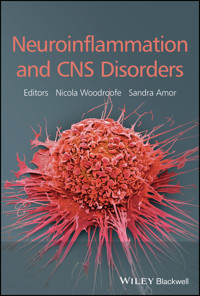
Cover image: Courtesy of Steve Gschmeissner www.theworldcloseup.com
CONTENTS
List of Contributors
Preface
Introduction: Interactions between the Immune and Central Nervous Systems
Origins
By invitation only
Cross-talk between the immune system and CNS
Of mice and men
Immune responses and neurodegenerative disorders
Acknowledgements
References
About the Companion Website
1
Immune Privilege of the Brain
Introduction
The original experiment
Mechanisms of the brain's immune privilege
Concluding remarks
Acknowledgements
References
2
Innate Immunity in the CNS – A Focus on the Myeloid Cell
Introduction to concepts of innate immunity
Cells of the innate immune system
Innate immune cell receptors
Innate immune responses in the CNS
Summary
Conflict of interests
References
3
Adaptive Immune Responses in the CNS
Introduction to concepts of adaptive immunity
Leukocyte populations in the CNS
T cell populations
T lymphocyte subsets
Mediators of the adaptive immune response
MHC expression on cells of the CNS
Antigen presentation in the CNS
Suppression of immune responses in the CNS
Allografts and cytotoxic T cell responses
Summary
References
4
Ageing and the Immune Response in the CNS
Gene expression in the ageing brain
Inflammation as a hallmark of the ageing brain
Microglia
Microglia in the ageing brain
Microglia in the neurogenic niche
Changes in regulation of microglial activation with ageing
Neural contribution to age-associated brain inflammation
Role of astrocytes in age-associated neuroinflammation
Immune cells in the aged brain
Implications of altered neuroinflammation for the ageing brain
References
5
Brain Repair: The Role of Endogenous and Transplanted Neural Stem Cells
Introduction
The homeostatic regulatory role of endogenous NPCs
NPC transplantation as a therapeutic tool to promote brain repair
The bystander effect of transplanted NPCs
Immunomodulatory effects of transplanted NPCs
Neurotrophic effects of transplanted NPCs
Conclusions and perspectives
Acknowledgements
References
6
Neuroinflammation in Alzheimer's, Parkinson's and Huntington's Diseases
General introduction
Alzheimer's disease
Neuroinflammation in Parkinson's disease
Neuroinflammation in Huntington's disease
Conclusions
References
7
CNS Infections
Introduction
Herpes viruses
Picornaviruses
Retroviruses
JC polyoma virus
Prion diseases
Conclusions
References
8
Neuroimmunology of Amyotrophic Lateral Sclerosis
Overview of amyotrophic lateral sclerosis
Mutant superoxide dismutase animal model of ALS
TDP43 animal model of ALS
Proposed mechanisms of motoneuron injury in ALS
Neuroinflammation and mSOD1 mice
Immunologic aspects of ALS: part 1 – microglia
Immunologic aspects of ALS: part 2 – T cells
Immunologic aspects of ALS: part 3 – B cells
Immunologic aspects of ALS: part 4 – astrocytes
Immunologic aspects of ALS: part 5 – cytokines, chemokines and other markers of inflammation in ALS
Immunologic aspects of ALS: part 6 – dendritic cells
Conclusions
References
9
Demyelinating Disorders of the CNS
Introduction
Specific diseases
Conclusion
Conflict of interest
Acknowledgements
References
10
Other Autoimmune Disorders: Systemic Lupus Erythematosus, Primary Sjögren's Syndrome, Gluten-related Neurological Dysfunction and Paraneoplastic Neurological Syndromes
Systemic lupus erythematosus
Primary Sjögren's syndrome
Gluten-related neurological dysfunction
Paraneoplastic neurological syndromes
References
11
Inflammation in the Pathogenesis of Depression
Introduction
A role for the immune system in depressive illness – what is the evidence?
Evidence for activation of the immune system in depressed patients
Stress as a trigger for activating the immune system in depressed patients
Conclusion
Acknowledgements
References
12
Immune Responses in the CNS in Epilepsy
Introduction
Innate immunity in epilepsy
Adaptive immunity in epilepsy
Conclusions
References
13
Inflammatory Mediators and Dysfunction of the Neurovascular Unit following Ischaemia Reperfusion
Focal ischaemia and early mechanisms of injury
Calcium ion homeostasis
Free radical formation
The ischaemic inflammatory response
The neurovascular unit
Blood–brain barrier permeability
References
14
Spinal Cord Injury
Overview of neuroinflammation and spinal cord injury
Role of the innate immune response: neutrophils
Role of the innate immune response: astrocytes
Role of the innate immune response: macrophages
Role of the adaptive immune response: T and B cells
Current clinical approaches
Conclusion
References
15
Immune Responses to Tumours in the CNS
Tumours of the CNS
The inflammatory infiltrate in CNS tumours
Biology of immune responses to CNS tumours
Immunotherapy of CNS tumours
Conclusions
Acknowledgements
References
Index
End User License Agreement
List of Tables
Introduction
Table I.1
Table I.2
Chapter 2
Table 2.1
Chapter 3
Table 3.1
Table 3.2
Chapter 4
Table 4.1
Table 4.2
Chapter 7
Table 7.1
Chapter 9
Table 9.1
Table 9.2
Table 9.3
Table 9.4
Table 9.5
Chapter 10
Table 10.1
Table 10.2
Chapter 12
Table 12.1
Chapter 13
Table 13.1
Guide
Cover
Table of Contents
Preface
Introduction
Chapter
Pages
iii
iv
vii
viii
ix
x
xi
xiii
xv
xvi
xvii
xviii
xix
xx
xxi
1
2
3
4
5
6
7
8
9
10
11
12
13
14
15
16
17
18
19
20
21
22
23
24
25
26
27
28
29
30
31
32
33
34
35
37
38
39
40
41
42
43
44
45
46
47
48
49
50
51
52
53
54
55
56
57
59
60
61
62
63
64
65
66
67
68
69
70
71
72
73
74
75
76
77
78
79
80
81
82
83
84
85
86
87
89
90
91
92
93
94
95
96
97
98
99
100
101
102
103
104
105
106
107
108
109
111
112
113
114
115
116
117
118
119
120
121
122
123
124
125
126
127
128
129
130
131
132
133
134
135
136
137
138
139
140
141
142
143
144
145
146
147
148
149
150
151
152
153
154
155
156
157
158
159
160
161
162
163
164
165
166
167
168
169
170
171
172
173
174
175
176
177
178
179
180
181
182
183
184
185
186
187
188
189
190
191
192
193
194
195
196
197
198
199
200
201
202
203
204
205
206
207
208
209
211
212
213
214
215
216
217
218
219
220
221
222
223
224
225
226
227
228
229
230
231
232
233
235
236
237
238
239
240
241
242
243
244
245
246
247
248
249
250
251
252
253
254
255
256
257
258
259
260
261
262
263
264
265
266
267
268
269
270
271
272
273
274
275
276
277
278
279
280
281
282
283
284
285
286
287
288
289
290
291
292
293
294
295
296
297
298
299
300
301
302
303
304
305
306
307
308
309
310
311
312
313
314
315
317
318
319
320
321
322
323
324
325
326
327
328
329
330
331
332
333
334
335
336
337
339
340
341
342
343
344
345
346
347
348
349
350
351
352
353
354
355
356
357
358
359
360
361
363
364
365
366
367
368
369
370
371
372
373
374
375
376
377
378
379
380
381
382
383
384
385
386
387
388
389
390
391
392
393
394
395
396
List of Contributors
Sandra Amor
Department of Pathology, VU University Medical Center, Amsterdam, the Netherlands; and Neuroimmunology Unit, Blizard Institute, Barts and The London School of Medicine and Dentistry, Queen Mary University of London, London, UK
Jack P. Antel
Department of Neurology and Neurosurgery, Montreal Neurological Institute, McGill University, Montreal, Quebec, Canada
Stanley H. Appel
Department of Neurology, Houston Methodist Neurological Institute, The Houston Methodist Hospital Research Institute, The Houston Methodist Hospital, Houston, Texas, USA
Marco Bacigaluppi
Neuroimmunology Unit, Institute of Experimental Neurology (INSpe), Division of Neuroscience, San Raffaele Scientific Institute, Milan, Italy
Philip A. Barber
Calgary Stroke Program; and Departments of Clinical Neurosciences and Radiology, Hotchkiss Brain Institute, University of Calgary, Alberta, Canada
Jan Bauer
Department of Neuroimmunology, Center for Brain Research, Medical University of Vienna, Vienna, Austria
Ingo Bechmann
Institute of Anatomy, Universität Leipzig, Leipzig, Germany
David R. Beers
Department of Neurology, Houston Methodist Neurological Institute, The Houston Methodist Hospital Research Institute, The Houston Methodist Hospital, Houston, Texas, USA
Amy Birch
Centre for Neuroinflammation and Neurodegeneration, Division of Brain Sciences, Imperial College London, London, UK
Hendrikus W.G.M. Boddeke
Department of Neuroscience, Section Medical Physiology, University of Groningen, University Medical Centre Groningen, Groningen, the Netherlands
Erica Butti
Neuroimmunology Unit, Institute of Experimental Neurology (INSpe), Division of Neuroscience, San Raffaele Scientific Institute, Milan, Italy
S. Louise Cosby
Centre for Infection and Immunity, School of Medicine, Dentistry and Biomedical Sciences, Medical Biology Centre, Queen's University Belfast, Belfast, UK
Robert R. Crichton
Université Catholique de Louvain, Louvain-la-Neuve, Belgium
Melania Cusimano
Neuroimmunology Unit, Institute of Experimental Neurology (INSpe), Division of Neuroscience, San Raffaele Scientific Institute, Milan, Italy
Donatella De Feo
Neuroimmunology Unit, Institute of Experimental Neurology (INSpe), Division of Neuroscience, San Raffaele Scientific Institute, Milan, Italy
David T. Dexter
Centre for Neuroinflammation and Neurodegeneration, Division of Brain Sciences, Imperial College London, London, UK
Bryce A. Durafourt
Department of Neurology and Neurosurgery, Montreal Neurological Institute, McGill University, Montreal, Quebec, Canada
Bart J.L. Eggen
Department of Neuroscience, Section Medical Physiology, University of Groningen, University Medical Centre Groningen, Groningen, the Netherlands
Sareen Galbraith
Department of Clinical Infection, Microbiology & Immunology, Institute of Infection & Global Health, University of Liverpool, Liverpool, UK
John C. Gensel
Spinal Cord and Brain Injury Research Center, Department of Physiology, University of Kentucky, Lexington, Kentucky, USA
Paul Gielen
Department of Tumor Immunology, Nijmegen Centre for Molecular Life Sciences (NCMLS), Radboud University Medical Centre, Nijmegen, the Netherlands
Marios Hadjivassiliou
Academic Department of Neurosciences, Royal Hallamshire Hospital, Sheffield, UK
Andrew Harkin
Neuropsychopharmacology Research Group, School of Pharmacy and Pharmaceutical Sciences & Trinity College Institute of Neuroscience, Trinity College, Dublin, Ireland
Derek Healy
Wildlife Zoonoses & Vector-borne Diseases Research Group, Animal Health & Veterinary Laboratories Agency, Weybridge, Surrey, UK
Sarosh R. Irani
Nuffield Department of Clinical Neurosciences, John Radcliffe Hospital, Oxford, UK
Loukia Katsouri
Centre for Neuroinflammation and Neurodegeneration, Division of Brain Sciences, Imperial College London, London, UK
Moniek Kattenbelt
Department of Pathology, VU University Medical Center, Amsterdam, the Netherlands
Bethan Lang
Nuffield Department of Clinical Neurosciences, John Radcliffe Hospital, Oxford, UK
Cecilia Laterza
Neuroimmunology Unit, Institute of Experimental Neurology (INSpe), Division of Neuroscience, San Raffaele Scientific Institute, Milan, Italy
Lenthe Lodder
Department of Neurology, Flevoziekenhuis, Almere, the Netherlands
David Male
Faculty of Science, The Open University, Milton Keynes, UK
Gianvito Martino
Neuroimmunology Unit, Institute of Experimental Neurology (INSpe), Division of Neuroscience, San Raffaele Scientific Institute, Milan, Italy
Arianna Merlini
Neuroimmunology Unit, Institute of Experimental Neurology (INSpe), Division of Neuroscience, San Raffaele Scientific Institute, Milan, Italy
Craig S. Moore
Department of Neurology and Neurosurgery, Montreal Neurological Institute, McGill University, Montreal, Quebec, Canada
Laura Peferoen
Department of Pathology, VU University Medical Center, Amsterdam, the Netherlands
Luca Peruzzotti
Neuroimmunology Unit, Institute of Experimental Neurology (INSpe), Division of Neuroscience, San Raffaele Scientific Institute, Milan, Italy
Divya D.A. Raj
Department of Neuroscience, Section Medical Physiology, University of Groningen, University Medical Centre Groningen, Groningen, the Netherlands
Alexander Renziehausen
Centre for Neuroinflammation and Neurodegeneration, Division of Brain Sciences, Imperial College London, London, UK
Magdalena Sastre
Centre for Neuroinflammation and Neurodegeneration, Division of Brain Sciences, Imperial College London, London, UK
Paul van der Valk
Department of Pathology, VU University Medical Center, Amsterdam, the Netherlands
Johannes M. van Noort
Delta Crystallon BV, Leiden, the Netherlands
Annamaria Vezzani
Department of Neuroscience, Mario Negri Institute for Pharmacological Research, Milan, Italy
Roberta J. Ward
Centre for Neuroinflammation and Neurodegeneration, Division of Brain Sciences, Imperial College London, London, UK and Biologie du Comportement, Université Catholique de Louvain, Louvain-la-Neuve, Belgium
Pieter Wesseling
Department of Pathology, Radboud University Nijmegen Medical Centre, Nijmegen, and VU University Medical Center, Amsterdam, the Netherlands
Nicola Woodroofe
Biomedical Research Centre, Sheffield Hallam University, Sheffield, UK
Weihua Zhao
Department of Neurology, Houston Methodist Neurological Institute, The Houston Methodist Hospital Research Institute, The Houston Methodist Hospital, Houston, Texas, USA
Preface
It is widely assumed that the central nervous system is an immune-privileged site, suggesting that antigens gaining entry to the brain and spinal cord do not invoke an immune response.
While this idea was first discussed over 70 years ago, it is clear that immune privilege is not absolute since immune responses do take place in the central nervous system and are crucial for shaping the brain during development and for controlling infections in the brain. As well as these examples, in the last decade there has been an explosion of information on the role of immune responses in neurodegenerative disorders. In many of these diseases, it is still unclear whether the innate and adaptive responses are pathogenic or play a role in repair, and thus understanding their precise roles is key to controlling these diseases by designing immune-therapeutic approaches.
It is for this reason that we undertook the task of compiling the latest information on the interactions between the immune system and central nervous system.
In the first section of this book, the chapters are dedicated to the communication between the immune system and the central nervous system that is best exemplified by cross-talk between glia and neurons shown to be essential for maintaining homeostasis. This section is specifically designed as an introduction to the topic and forms the basis for the second section devoted to specific neurological diseases.
We are indebted to our many colleagues who have taken time from their busy schedules to help us compile this book. In particular, we would like to especially thank Stan Appel and his team, who underwent the hardship of tragically losing a colleague, Jenny Henkel, during the production of the chapter. Likewise, we also sincerely thank Andrew Harkin, who took over from Tom O'Connor who lost his life during the writing of their chapter. We hope that their memory will live on through their work and help inspire new generations in their fields.
We are not unaware that this will not be the last work on how the immune system interacts with the central nervous system, but we are confident that this book forms the basis of what is to come in the field.
Lesen Sie weiter in der vollständigen Ausgabe!
Lesen Sie weiter in der vollständigen Ausgabe!
Lesen Sie weiter in der vollständigen Ausgabe!
Lesen Sie weiter in der vollständigen Ausgabe!
Lesen Sie weiter in der vollständigen Ausgabe!
Lesen Sie weiter in der vollständigen Ausgabe!
Lesen Sie weiter in der vollständigen Ausgabe!
Lesen Sie weiter in der vollständigen Ausgabe!
Lesen Sie weiter in der vollständigen Ausgabe!
Lesen Sie weiter in der vollständigen Ausgabe!
Lesen Sie weiter in der vollständigen Ausgabe!
Lesen Sie weiter in der vollständigen Ausgabe!
Lesen Sie weiter in der vollständigen Ausgabe!
Lesen Sie weiter in der vollständigen Ausgabe!
Lesen Sie weiter in der vollständigen Ausgabe!
Lesen Sie weiter in der vollständigen Ausgabe!
Lesen Sie weiter in der vollständigen Ausgabe!
Lesen Sie weiter in der vollständigen Ausgabe!
Lesen Sie weiter in der vollständigen Ausgabe!




