


Erhalten Sie Zugang zu diesem und mehr als 300000 Büchern ab EUR 5,99 monatlich.
- Herausgeber: Cinnamon Press
- Kategorie: Gesellschafts- und Liebesromane
- Sprache: Englisch
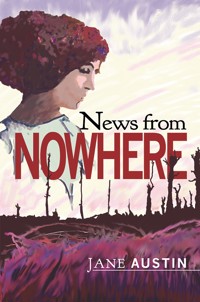
Inspired by letters from family members who served on the Western Front and written home to Bangor, News From Nowhere describes the impact of war on a family, including Bronwyn, the sister coming of age as her brothers and father endure the torments of the trenches and the battlefield. Sometimes we get fed up in these shallow, narrow windings and run around on top, which isn't too bad as this part of the line is comparatively free of corpses. I've learned to control my stomach, but will never overcome my horror of the stench. Dodging bombs is surprisingly easy, when you can see them coming. One of the sentries shouts, coming over Right, or Left, and we clear into dugouts. At first you see a heavy puff of smoke, then the bomb, which looks like a champagne bottle, turning over and over as it flies.
Sie lesen das E-Book in den Legimi-Apps auf:
Seitenzahl: 475
Veröffentlichungsjahr: 2017
Das E-Book (TTS) können Sie hören im Abo „Legimi Premium” in Legimi-Apps auf:
Ähnliche


















Contents
Title page
Copyright
Acknowledgements
Sources
Dedication
Epigram
Chapter 1
Chapter 2
Chapter 3
Chapter 4
Chapter 5
Chapter 6
Chapter 7
Chapter 8
Chapter 9
Chapter 10
Chapter 11
Chapter 12
Chapter 13
Chapter 14
Chapter 15
Chapter 16
Chapter 17
Chapter 18
Chapter 19
Chapter 20
Chapter 21
Chapter 22
Chapter 23
Chapter 24
Chapter 25
Chapter 26
Chapter 27
Chapter 28
Chapter 29
Chapter 30
Chapter 31
Chapter 32
Chapter 33
Chapter 34
Chapter 35
NEWS FROM NOWHERE
JANE AUSTIN
Published by Cinnamon Press
Meirion House, Tanygrisiau, Blaenau Ffestiniog
Gwynedd LL41 3SU
www.cinnamonpress.com
The right of Jane Austin to be identified as author of this work has been asserted by her in accordance with the Copyright, Designs and Patent Act, 1988. © 2017 Jane Austin. ISBN 978-1-910836-54-5
British Library Cataloguing in Publication Data. A CIP record for this book can be obtained from the British Library.
All rights reserved. No part of this publication may be reproduced, stored in a retrieval system, or transmitted in any form or by any means, electronic, mechanical, photocopying, recording or otherwise without the prior written permission of the publishers. This book may not be lent, hired out, resold or otherwise disposed of by way of trade in any form of binding or cover other than that in which it is published, without the prior consent of the publishers.
Designed and typeset in Garamond by Cinnamon Press.
Cinnamon Press is represented by Inpress and by the Welsh Books Council in Wales. Printed in Poland.
The publisher gratefully acknowledges the support of the Welsh Books Council.
Acknowledgements
I would like to thank those who gave me access to: Oxford Brookes University Wesleyan archives; The Queen Mary’s Hospital Sidcup Archives; University of Bangor Library and Archives.
Thanks for permission to quote from Up to Mametz…And Beyond by Llewelyn Wyn Griffith and edited and annotated by Jonathon Riley, published by Pen and Sword Books.
Thanks to my aunt Siriol Chatwin, and cousin Gwen Harbottle, who gave me much encouragement.
Thanks to Rowan Fortune, Sue Orgill and Chris Bridge for their careful reading of the manuscript. And special thanks to York Novelists, who have piloted me through this project.
News from Nowhere is a debut novel inspired by a collection of letters from three of her family as they served on the Western Front. Jane first read this remarkable collection in 1983, when her grandmother, Elizabeth Dewi Roberts, published them in a slim volume, entitled Witness These Letters. Written to the family in Bangor, North Wales from 1915 to 1918, the letters vividly describe the torments of the trenches and the battlefield, and life as a prisoner-of-war.
I have drawn from the following sources in creating a fiction:
Witness These Letters, Letters from the Western Front 1915 – 1918
, G.D. Roberts
Unpublished war poetry,
G.D. Roberts
The University College of North Wales, Foundations 1884 – 1927,
J. Gwynn Williams
Up to Mametz and Beyond, Llewelyn Wyn Griffith
, Pen and Sword
1915 The Death of Innocence
and
The Roses of No Man’s Land,
Lyn Macdonald, Penguin
The Virago Book of Women and the Great War
, Edited by Joyce Marlow, Virago
Anglesey At War,
Geraint Jones, The History Press
Goodbye to All That,
Robert Graves, Penguin
Women at The Hague,
Jane Addams, Emily G. Balch, Alice Hamilton, University of Illinois Press
Not so Quiet,
Helen Zenna Smith, Virago Modern Classics
Evelyn Sharp, Rebel Woman, 1869 – 1955,
Angela V. John, Manchester University Press
Of Arms and the Heroes, The Story of the ‘Birtley Belgians’,
John G. Bygate, The History of Education Project
Refugees and Forced Migrants during the First World War,
Immigrants and Minorities, 26: 1, 82 – 110, 2008, Peter Gatrell
‘A Wave on to Our Shores’: The Exile and Resettlement of Refugees from the Western Front, 1914 – 1918,
Contemporary European History, 16, 4 (2007), pp427 – 444, Pierre Purseigle
Belgian Women Refugees in Britain in the Great War,
Women’s History Magazine, issue 49, Spring 2005, Katherine Storr
Out of The Fire of Hell, The Welsh experience of the Great War 1914 – 1918 in prose and verse,
Edited by Alan Llwyd, Gomer
Across the Blockade; A Record of Travels in Enemy Europe,
Henry Noel Brailsford, General Books.net
The Battle of the Somme,
Imperial War Museum original 1916 film
Comrades in Captivity: A Record of Life in Seven German Prison Camps.
F.W. Harvey
,
Sidgwick and Jackson
My Story of St Dunstan’s,
Lord Fraser of Lonsdale, Harrap
Vogue Magazine,
July 1916
The Women’s Hospital Corps: forgotten surgeons of the First World War.
J. F. Geddes, J. Med Biogr. 2006 May; 14(2): 109 – 17
David Lloyd George 1915 Bangor Speech quotations:
Project Gutenberg
Women as Army Surgeons
, by Flora Murray, London, Hodder and Stoughton, 1920
YR EURGRAWN, June 1923 pp215 - 218, The Rev. Peter Jones Roberts, By the Rev. John Felix
For Trevor and Naomi
‘Go back and be happier for having seen us, for having added a little hope to your struggle. Go on living while you may, striving, with whatsoever pain and labour needs must be, to build up little by little the new day of fellowship, and rest, and happiness.’
News from Nowhere, 1891
William Morris
Chapter 1
August 1914 Bangor, North Wales
It was Bank Holiday Monday and the air was jagged with heat. The family was gathered in the dining room, where the window frames, jammed shut in summer, leaked winter. The atmosphere was close and sticky with the scent of lamb.
Bronwyn looked up as Tada prayed, still miles away from the amen; Glyn’s eyes were closed tight, frowning in concentration; Aubrey looked as though he might be asleep and Huw was inscrutable behind the reflection of his glasses.
A fly buzzed against the window and tried to escape in a rising frenzy, and Bronwyn thought she would die of boredom unless something happened. Almost anything would do, to shake off the torpid air that held them in suspense like shrimps set in aspic. Tada reached the end of his prayer and opened his eyes. He looked mildly surprised at seeing them all round the table.
Mam was already on her feet swatting the fly with her napkin. Her hair was still dark with widening grey streaks at her temples, like bands of silver. Tada said it made her look as distinguished as a Grecian queen, though he generally called her his own dear badger.
‘Would you carve, Aubrey dear? You’re so good at it,’ Mam said, as she liked to make a fuss of him on the rare occasions he came home from Manchester.
‘Of course, Mother, always glad to be useful,’ he said, standing and rolling his sleeves to the elbow. How strong and stocky he looked with his rugby-forward forearms, thought Bronwyn, this big brother who’d been grown up for as long as she could remember.
‘How’s business at the bank, Aubrey?’ Tada’s tone was serious. ‘They must be concerned about all this war talk.’
Aubrey looked from his task for a moment. ‘We have contingency plans, if anything comes of it.’
A bubble of chatter went round the table about Germany, France, Belgium, men joining up, and she felt a jolt at the thought of one of her brothers becoming a soldier.
‘The Kaiser can’t be left to trample all over Belgium,’ Glyn spoke with passion, ‘and if it comes to it, I’d be ready to sign up, we all would, I mean the boys in my year.’ He looked at Tada for approval.
Tada shook his head, ‘Lloyd George won’t support a war, I’m sure of it. There’s a lot of posturing on both sides, it will all blow over in a few weeks.’
She saw a look pass between Glyn and Aubrey and for the first time, doubted Tada’s words. When there was a tragic death or catastrophe he would say that God’s unseen hand was at work, but this didn’t square easily with the idea of war.
Huw’s glasses glinted as he looked up from his plate. ‘But if England does go to war, would you go too, Tada?’
Surely Tada was too old to go, Bronwyn thought, and felt her cheeks go hot. ‘Tada?’ she prompted.
Mam intervened. ‘Enough of this nonsense,’ she rounded on Glyn: ‘and there’ll be no running off to war, you’re going straight to College.’
‘Mam’s right,’ said Aubrey, looking up from his carving, ‘if anyone volunteers it should be me, as the eldest. I imagine the bank would let me go and I’d get a commission soon enough. It might even do my career some good, showing willing, serving one’s country, that sort of thing.’
‘Well, I hope it never comes to that for all our sakes,’ said Mam with a familiar finality.
Bronwyn watched her brothers settle to the serious business of eating as she picked at her plate. Talk bounced: who had scored at this or that rugby match at Kingswood; Tada’s visit to the Llewellyn family after their son drowned; Chapel news and Lizzie had asked to be a daily help instead of living in, because she was needed at home.
‘You’re very quiet today, Bron,’ said Tada, ‘what have you been up to?’
‘I’ve been swimming with Maddy at Siliwen baths and we met a few girls from school there. It’s quite the thing these days.’
‘I remember when I first took you into the sea, just a little tiddler you were. I held your hand and you pulled me into the waves, you couldn’t wait to swim like your brothers. You were quite fearless.’
‘You could be one of those lady Olympic swimmers!’ Huw chimed in.
‘Thanks, Huw, but I think not.’ She got up to fetch dessert. When she came back they were laughing at Huw doing an impression of Kaiser Bill. He had them in stitches so that, briefly, the war was a joke.
As she cleared dishes onto the trolley Bronwyn felt oversized next to Mam’s slight frame, standing at the head of the table and lavishing out servings of gooseberry pie and cream to her boys. The hubbub of male voices rumbled and Bronwyn longed to prise Glyn away for one of their summer walks, or a stone-skimming match on the shore, but she could see he was too taken up with putting the world to rights with Tada and Aubrey.
Instead, she excused herself and walked barefoot across the grass in search of a cool patch to sit and read. Her bedroom was stifling in the sun and she’d felt drawn to the shade of the old sycamore in the corner of the garden. She plumped herself down out of view of the house and fanned out her skirt, enjoying the slightest sensation of air. In one swoop, she coiled her thick hair into a bun, and felt a delicious cool round her neck. Too old for plaits, she longed to have it cut short and wear it in a bob like Madame Duchamp, who’d lent her the novel she opened now. It looked so exotic in its cream paper jacket, utterly French, the mysterious Isabelle, by André Gide. One day she would go to France, she knew that. Just riffling through the rough-cut pages gave her a surge of joy.
She looked up at the rambling house with its sloping garden fringed with trees. The house was one of the better ones they’d lived in on the Welsh Methodist circuit, and she realised how bleak it would feel if they all went away; well, not Huw, he was still too young, but Aubrey, Glyn and even Tada. She sighed with impatience at the unfairness. At the very moment her life was taking off, a wretched war loomed.
How worldly Aubrey had seemed, talking about his work at the bank and hopes for a posting abroad. She smiled thinking of Huw, a dreamer by comparison; then there was Glyn, her childhood champion, who always made sure she wasn’t left out of the boys’ games. All too often Mam was harsh with him, as if to hide what they all knew: he was her favourite.
But for now, she would lose herself in somebody else’s world. She opened the book at the first chapter and Isabelle beckoned her in.
The storm of war broke the following evening. It was after midnight when the paperboys came rushing past the house shouting, England declares war on Germany! Her room was at the back of the house so she didn’t hear them at first, but she heard a commotion in Aubrey’s room and padded across the landing in her nightdress to see what was going on. The three brothers were hanging out of the window as cries of war penetrated the air. They turned around and seeing her dismay, looked sheepish.
‘It’s official,’ said Aubrey, ‘England has gone in; there’s no turning back now. At least we know where we stand.’
Glyn wouldn’t meet her eye, but turned to pull down the sash window to muffle the din. ‘It can’t be helped, Bron,’ he said, and added half-apologetically, ‘it’ll be over in no time.’
She stood in the doorway, not trusting herself to speak. She wanted to take Glyn by his dressing-gown lapels and shake sense into him, but she knew he wouldn’t hear her. She felt like an outsider, the little sister who couldn’t be expected to understand. If she tried to dampen their enthusiasm they’d call her a wet blanket. Better by far to wait until the morning.
On the way back to her room, she passed the top of the stairs, saw a light under the study door and heard raised voices. She had never heard Mam and Tada disagree before and her fear bloomed into panic.
When she came down the following morning newspapers littered the kitchen table; it was written in black and white: Britain is in a state of war with Germany. She sat and turned over the pages: Germany tried to bribe us with peace to desert our friends and duty, but Great Britain has preferred the path of honour. It became inevitable that Britain should stand by a small country facing an invader. Countries need allies as people need friends.
Tada came in looking his usual untidy weekday self, in his reading slippers and old brown cardigan with patched elbows. He hovered, pipe in hand, looking at her over half-moon glasses, and came over to put an arm round her shoulders.
‘It’s a dreadful thing we’re facing, Bron. I really didn’t believe it would happen. I’m afraid it will be a terrible war, and the first time we’ve seen anything so close to home.’
She knew he was trying to help her understand, but her spirit fought against it. ‘But why must they fight? Why don’t they just talk?’
He walked around the table, breathing life into his pipe, as if brewing a sermon. That was what he was doing, working out what he would say to the congregation, to the families facing this calamity. He watched her stack the newspapers into a neat pile and said, ‘God only knows, Bronwyn. I have no easy answers. I just know we must do what is right.’
Do all the good you can…to all the people you can…as long as ever you can…This was his credo, the Wesleyan creed he lived by to a fault where his congregation was concerned. More than once he’d taken in waifs and strays at Christmas against Mam’s better judgement. Such an impractical man, your father,a true Christian.
He was anxious to get back to his study and she felt tender towards him, remembering times he’d comforted her when she’d had nightmares as a child. How much more comforting he would have to do now.
Bronwyn sat reading by the window and looked up at Mam, who was mending sheets and fighting against the dying light, delaying the moment she’d put on the lamps and draw the curtains. Her dark head lifted from her work to address Glyn as he propped himself against the mantelpiece.
‘We’ve been over this a dozen times, Glyn. Aubrey will go first, so there’s absolutely no need for you to volunteer. Your father and I don’t want you to sacrifice your studies, and the war may well be over by Christmas. You’re far too impetuous for your own good.’ She pushed her spectacles back up her nose and carried on with her needle. ‘Now pop, some more coal on the fire, would you dear, or there’ll be no hot water in the back boiler?’
Glyn reached for the coalscuttle, shovelled on too much, and jabbed the smoking embers with the poker in a vain attempt to bring the fire back to life. Watching from the shadows, Bronwyn felt Glyn’s anger and frustration radiate across the room.
‘Mam, nearly all the boys in my year have signed up. Those who haven’t have good reason, like Cunningham who wears leg-irons. I can’t sit and twiddle my thumbs while they go and risk their lives. It would be dishonourable, surely you understand that?’
This time Mam didn’t look up. ‘Reading Classics is hardly idling, Glyn.’
Bronwyn squirmed as she heard her mother’s temper rise and braced herself for the salvo to follow.
‘If you were to sign up, we would insist you get a commission. Anything less would be a complete waste of your talents. I still think you’re far too young, and you should go to College first.’
‘I’m truly sorry to upset you, Mam.’ He searched her face and stood, almost to attention, the poker held stiffly in his hand. ‘You know it would break my heart to go without your blessing, but I have to do the right thing.’ He turned his back for a moment and tended the fire purposefully, looked again at Mam, then withdrew from the room leaving a deathly quiet behind.
Bronwyn had never seen him in this mood. She skirted the room lighting the lamps, casting about for something to say.
‘Don’t be too harsh, Mam,’ was what came out.
‘Speak only of what you know, child,’ her mother replied in Welsh, ‘which is not a great deal at your age, for all your learning.’
Bronwyn knew she’d drawn blood when she’d meant to calm. Mam was diminished in the gloomy room, laden with over-stuffed furniture from another era, worn out by Wesleyan ministers’ families over the years. Bronwyn sat next to her on a footstool and looked at the glass cabinet filled with Mam’s fine china, wedding gifts mostly, which had remained a constant throughout her childhood. On the bottom shelf sat Barbara. She remembered the moment on her thirteenth birthday, when she’d announced she wanted to keep Barbara in the cabinet because she was too old for dolls. Now Barbara stared back at her wide-eyed and vacant from her bland china face.
‘I’m almost sixteen Mam, and I want to help.’ She’d overheard conversations about the work at the Wesleyan Book Room, how difficult it would be if Tada went away. ‘I could do Tada’s accounts and post out the Magazine.’ She even liked the idea of helping with the editing.
‘Now Del, let’s not run ahead of ourselves. Tada may well only be accepted for Home Service, so won’t be going too far away. We’ll manage, whatever happens, don’t you worry.’
Bronwyn knew Tada had applied for a commission abroad and had been refused because he was over age. He was still in London doing his best to change the decision, bending the ear of everyone from Lloyd George to the Chaplain-General, according to Aubrey. She hugged her knees and hoped Mam was right, but knew Tada was quite determined to work amongst the men at the front. There is a call for fathers as well as sons, he’d said, and if there must be soldiers there must be chaplains too.
She stood up to draw the curtains, but stopped for a moment to drop a kiss on her mother’s head.
She looked for Glyn and found him in his room, cleaning up his school army kit.
‘Glyn, please don’t go,’ she pleaded, ‘not yet.’
‘Bron, I have to sooner or later, I must. Please don’t make it harder than it already is. We’ll write to each other as we always do, I promise.’
She held his gaze and felt he’d changed in some indefinable way. It was as if he’d stepped over a threshold into the world of men and left her exiled in girlhood.
‘We’ll go out on our bikes sometime, just us.’
She saw in his eyes his mind was made up.
*
‘He’s put us all in a tight spot, with this talk of Christ versus country!’ Tada was rarely animated.
‘But sometimes war is the lesser evil,’ replied Aubrey.
They were standing by Tada’s desk, Aubrey a head taller. The desk was covered in a plethora of books, bookmarked with a system of coloured ribbons known only to Tada. It was Wednesday, when composing the Sunday sermon reached its peak.
‘Who are you talking about?’ Bronwyn asked.
They both turned, as she stood in the study doorway.
‘Hello, Bron, I didn’t see you. How’s my favourite daughter this morning?’
It was Tada’s way of disarming her, but she wouldn’t be distracted.
‘Well?’
‘It’s Professor Rees, at the Theological College. He’s against the war on religious grounds.’
‘Is he a pacifist?’ She’d heard the term, but wasn’t sure what it meant.
Aubrey raised an eyebrow, ‘Yes. What’s more he’s undermining recruitment and giving Nonconformists a bad name.’
‘It’s a matter of conscience,’ said Tada. ‘The man’s entitled to his views.’
Aubrey frowned. ‘Anyone against the war is a shirker in my book.’
‘Does that mean cousin Alwyn’s a pacifist?’ she asked, entering the room.
There’d been rumblings about him not signing up. She was fond of Alwyn; he’d always taken her side against her brothers’ teasing when they were small.
‘He’s a good sort, but an idealist. If we let the Germans run riot over Belgian borders there will be no stopping them,’ said Aubrey, reddening.
‘And for the best of motives, to defend a small country in its hour of need,’ Tada said, as if to modify Aubrey’s tone.
‘There must be a better way.’ However hard she tried, she couldn’t reconcile the fate of a faraway country with Glyn leaving. ‘If I were a boy, I’d be against violence.’
‘Well, lucky you don’t have to worry your little head over it, Bron. The boys will do the fighting for you,’ said Aubrey.
‘Oh, so the opinion of a mere girl doesn’t count?’ She felt like boxing his ears.
‘Now now,’ said Tada, ‘we all need to pull together. I’d be glad if you’d help out in the Book Room, Bron. Would you give Mam a hand when I’m called away?’
‘Yes, of course, if Mam’s happy about that.’
‘I’ll have a word.’ He adjusted his clerical collar. ‘She mustn’t take everything on herself.’
‘Sorry, if I upset you, Bron, I sometimes forget how grown up you are.’ Aubrey glanced at Tada and down at the threadbare carpet.
‘I’d like to know more about Professor Rees,’ she said, refusing to cave.
Chapter 2
September 1914
The air was delicious, warm with a light breeze and perfect for a day’s cycling. She thought of the bike the boys had clubbed together to buy for her last birthday, and kept a secret until the last minute.
They’d told her to close her eyes and led her to the shed, and after she was allowed to open them it was a few moments before her eyes got used to the dim light. She’d guessed it was something too large to hide in the house, but had no idea what it could be. There it was, shining amongst the old spades and watering cans. Glyn had painted it navy and Huw had found a basket for the handlebars, decked out with roses and sweet peas, which was Mam’s touch. It had made her happier than she could remember, this gift of freedom on wheels.
‘You ready yet, Bron?’ Glyn called out from the hall, as she was loading up the basket with sandwiches and a flask of tea.
‘I will be, when I’ve got this lot stowed away. It weighs a ton.’
He appeared in the kitchen, and laughed. ‘Are you feeding a battalion? Come on, let’s put the flask in my rucksack and leave the cake-tin behind.’ He started rearranging things and tweaked her cheek, so she wouldn’t mind.
‘I can see you’ve done this before,’ she said, admiring his tidy packing, ‘must be what they teach you in the Officers’ Training Corps.’
‘Less lip young lady, on your bike with you.’
They were soon on the road and she watched Glyn speed ahead, shorts flapping, going helter-skelter down the hill and through town. By the time she caught up he was waiting for her at the Menai Bridge.
‘Steady on,’ she complained, breathless. ‘You’ve got long legs and I’m lugging the picnic.’
‘You’re quite strong enough to keep up with me,’ he grinned from under his tweed cap. ‘I’ll carry the picnic on the way back.’
‘Thanks for nothing!’ she retorted, and got back into the saddle, determined to out-distance him. The salt wind blew through her hair and filled her lungs as she swept across the bridge, overtaking a horse and trap and even a slow moving car.
This time he had to catch up with her, on the Anglesey side of the Straits. Skidding to a halt, he chanted playfully:
‘…for I had just
completed my design,
to keep the Menai bridge from rust
by boiling it in wine.
What’s that from?’
‘Through the Looking Glass, but I can’t remember who said it.’
‘The White Knight!’ he said in mock triumph. ‘Can you guess how Telford actually did protect the chains from rust?’
‘No, but I feel sure you’re going to tell me.’
‘He soaked them in linseed oil, though boiling them in wine is more picturesque.’
Without warning he took off ahead, and she just about kept up, feeling her calves working the pedals. Beaumaris was soon in view and they slowed along the streets filled with people and traffic.
They arrived at the ancient fortress and stopped to admire its squat grey turrets, repeated in a broken reflection in the moat as the breeze rippled the surface. There was gaiety in the air, families enjoying a day out and courting couples making the best of summer’s final fling.
‘Quite a few men are in uniform,’ said Bronwyn. ‘They must be in training.’
‘Could be, unless they’re back on leave. Do you remember my friend Gethin? He goes out next month.’
‘Yes, I liked him; he was always nice to me. How about you? Will you be going soon?’
‘It depends. I have to wait for my commission, then I’ll go to Litherland for training. It could be months before I’m sent abroad, and it could be all over by then.
‘Shall we go and sit on the beach? I love the view of Snowdon from this side.’
‘Good idea,’ she said, glad of an excuse to rest her legs.
They leant the bikes against an upturned fishing boat and sat on warm stones next to a stack of lobster pots. Bronwyn looked out to sea, closed her eyes for a minute and cast her mind back a couple of months to when life was normal.
As if reading her thoughts, Glyn said, ‘It must be hard, Bron, being left behind.’ He ran his fingers through dark wiry hair, a shorter version of hers.
She turned and smiled. ‘Not as hard as it must be for you. Shall we stop talking about it? I don’t want to be sad, at least not yet.’
A young couple appeared, holding hands with a fat toddler who was lunging towards the lapping waves. The woman was clearly expecting her next child.
‘Will that be you in a few years’ time?’ Glyn asked, nodding towards the small family.
She felt herself blush. ‘Well, I’m certainly in no hurry. I want to see the world, Glyn; I don’t see myself staying in Bangor after College. And you? Do you still want to teach?’
‘Perhaps. I try not to look too far ahead. I just want to do my bit, without making a fool of myself if possible. Brothers in arms and all that.’ He shaded his eyes to look at a distant trawler, framed by the range of mountains.
‘Joining up means a lot to you, doesn’t it?’
He was lost in thought and they both sat watching the child as he teetered on the wet stones, free of his socks and shoes.
‘I need to know what I’m made of,’ he said eventually.
‘Because fighting for your country is the right thing to do?’
‘Is this an inquisition?’ he said, laughing. ‘If I’m honest, it’s more about proving myself. I’m not as hotly patriotic as Aubrey.’
‘What about Alwyn, is he unpatriotic?’
Glyn looked into the distance. ‘No. And he’s not a coward. I think he’s genuinely against violence. But there are people who are against the war for other reasons, such as the socialists. They say it’s a battle of the Titans, the great powers carving up the world to increase their influence.’
She began to see that the truth was many-layered, not a single nut to be cracked open.
‘I wonder if you want to prove yourself to Tada. I know you’ve had your differences.’
They used to clash about free will and God, and when Mam intervened Tada would insist they were only sparring.
‘I don’t think God has anything to do with it, do you?’ he said with an ironic smile.
Only then did it dawn on her that one of them might not come back; Glyn, Aubrey, even Tada, and she welled up. ‘I’m scared for you,’ she said turning to Glyn. ‘I couldn’t bear it if anything happened.’
He wouldn’t meet her eye. ‘Chances are I’ll come out without a scratch, so let’s not be gloomy. My commission could take months; you haven’t got rid of me yet.’
She looked up as he uncurled his long limbs and sprang upright in one bound. It took her longer to get up. She felt sluggish, half-formed questions preying on her mind.
‘Nice skirt, Bron, I don’t think I’ve seen it before. Is it shorter than your usual?’
She smoothed out the folds of blue and white gingham. ‘Do you like it? I took it up an inch for cycling. Mam says I’m showing too much calf.’
‘She may have a point.’
‘What do you mean?’
‘You don’t want people having a pop at you over trivia.’
‘Well, skirts are a nightmare on a bike, they get caught up.’ She felt mildly irritated.
‘I’ll take your word for it, Bron. Now let’s get to Llanddona in time for lunch. Ladies first.’ He beckoned her forward.
It was hard going in the heat and a good few miles before they saw the sign to the village. When they arrived, she came to a halt and Glyn pulled up alongside, looking collected.
They propped their bikes against a tree and Bronwyn stood, hands on hips, enjoying the rush of blood to every part of her body. Her blouse had come untucked and she flapped it in an attempt to cool off.
‘It’s a steep descent to the beach,’ said Glyn. ‘We could walk it if you prefer.’
‘I don’t mind riding down, if you go first. We can use our brakes.’
‘Right you are,’ he said and took off, progressing fitfully, brakes squeaking.
She set off slowly, eyes fixed ahead, seduced by the notion of letting go. Easing off the brakes, the bike gathered speed and she was soon swerving past Glyn, who shouted something from behind. Now she was whizzing down the narrow track, left with a choice of braking and flying over the handlebars or steering into a hedgerow.
The next thing she knew, the bike went from under her and she landed heavily. When she opened her eyes, everything looked blurred.
‘Bron, are you alright? Talk to me.’ Glyn was leaning over her.
‘My head hurts and I feel a bit sick,’ she said, as the horizon wavered. ‘What happened?’
‘You landed in a bush, thank God, and not on the road. That would have been curtains. Let’s get you onto your feet.’
He helped her stand, and she brushed herself, with only a couple of scratches to show for it; even her skirt was intact. She reached for the bike. ‘Ouch! That’s my knee. I must have banged it.’ She lifted her skirt.
‘That’s a nasty bruise, Bron. Let’s get down to the sea and you can bathe it. I don’t know, what are we going to do with you?’
She smiled weakly. ‘Sorry, Glyn, I didn’t mean to frighten you. I don’t know what got into me.’
Leaning on Glyn’s bike, she limped to the shore, while he took charge of her bike and the picnic.
They found a flattish spot amongst the stones and Glyn spread out the cloth and started to unpack lunch. He handed her a napkin, ‘off you go. It won’t do any harm to walk on it.’
Bronwyn gingerly touched her knee and saw a purple bruise spreading down her shin. Hobbling to the water’s edge, she dipped the napkin into the sea, making a cooling salt-water bandage, which she tied on. She walked back unsteadily and eased herself down on the red-check cloth.
‘Better?’ Glyn asked, handing her a packet of sandwiches and a beaker of sweet tea.
‘I’ll be fine. Thanks for the tea, it’s bliss.’
‘That wasn’t a very clever thing to do, was it? A pretty pointless risk, if I may say so.’ He was definitely ticking her off.
‘I know, it was childish. I said I was sorry. It was the speed, it was so exciting, like leaping into the unknown. By then it was too late to brake.’
‘Mmm…you sound like someone looking for a challenge, but you don’t have to break your neck in the process.’
She decided to ignore the dig. ‘I certainly want to do something interesting with my life, something different. Do you think that’s possible?’
‘Yes, Bron, I do.’ He moved closer, hunkering next to her, nursing his beaker.
She leaned into him. ‘I remember last year when those Suffrage women marched from Bangor to London. Two came to speak to us in school, Charlotte and Mildred. We were on first name terms. They were so happy, laughing as they remembered it all. They wore hats with cockle shell badges, and showed us their battered haversacks, red with white and green straps, the Women’s Suffrage Societies’ colours.’
‘I didn’t know Bangor County Girls held such advanced views.’ He looked amused.
‘Maddy and I said we’d love to do something like that. They marched for weeks, stopping to speak along the way. Quarrymen stopped to cheer, but others threw stones and stopped the meeting. More terrifying were the vile things people shouted.’
It was the first time she’d realised standing up for your rights could attract abuse. Mam had said women like that were asking for trouble. Charlotte and Mildred were different; they were against violence and said their pilgrimage spoke for itself.
‘I like to think of you taking on the world, Sis.’
They settled into a companionable silence allowing the heat of the sun and the emptiness of the beach to bleach their minds of thought. A pair of scavenging seagulls landed nearby and foraged in the pebbles, then soared skyward with disconsolate wails.
‘Little beggars,’ said Glyn, ‘they’ll always remind me of home. By the way, there was something I wanted to ask you,’ and he started fumbling through his pockets until he found a letter. ‘Would you read this, Bron? You’ll see why.’
She unfolded the single sheet written in elegant German script.
August 1914
Dear Glyn,
Thank-you kindly for your letter. Today I write to you as our two countries declare war, something I deeply regret. I will serve my country, as I am sure you will. I truly hope that this will not tarnish our friendship. I look forward to visiting you in Wales and walk in your beautiful mountains of Snowdonia next year, when surely this war is over. One day we will ride together in the Harz.
As a veterinary student I will care for the horses in the war. We will need hospitals for animals as well as for people. I think I will have to leave soon. Do you remember I spoke of my elder sister Gisela? I will give her your address so she can write to you if anything happens to me. Please would you ask your dear sister to do the same, heaven forbid? I will write no more of this and speak of pleasant things.
Today I went for a ride in the forest with my old school friend and we saw deer and foxes and the weather was very fine. Afterwards we stopped at a bier-garten and drank a toast to peace.
I will leave you now and thank you for your friendship.
Yours truly,
Dietrich
‘Your pen-friend?’
He nodded.
‘Of course I would write to him,’ she said handing back the letter. ‘I just pray I won’t have to. This war is seeping into everything.’ She thought of Mam, who dressed with a frown each morning because Tada was doing his utmost to get posted to France, and because Aubrey had decided to join up even though he hadn’t finished his accounting exams. Huw was least smitten by war fever; in fact Aubrey said he wondered if Huw was a pacifist at heart.
The letter made her think of Claudia at school, whose father wanted to fight for Britain even though he was German.
‘I agree with Dietrich,’ Glyn cut into her thoughts, ‘if we lose sight of each other as people and friends, we lose ourselves. Our integrity.’
‘You make it sound as if the war could steal your soul.’
‘It’s true. Whenever governments decide a thing is good for the nation, it will be harmful to the individual.’ He was packing away the picnic as he spoke.
She got to her feet and moved stiffly towards her bike. ‘So, why do you feel you have to go?’
‘As I said, I have to test myself. To know my worth as a man. Sorry if that sounds pompous.’
‘Growing up as a girl is bad enough, but it seems harder for you boys.’
He laughed. ‘I doubt it. It’s much harder for a girl if she’s got anything about her, though I’m sure that won’t hold you back, Bron.’
Wincing, she got onto her bike.
‘Knee still complaining? We can go straight home if you want.’
‘No, let’s keep going, I want to see the dovecote,’ she said, putting on a brave face.
They pushed the bikes up the hill, and set off for the ride to Penmon. It was well into the afternoon by the time they arrived.
‘There it is,’ said Glyn. ‘Let’s leave the bikes by the fence and go inside. You’ll be amazed.’
It was a square windowless stone building with a domed roof. They had to duck to get through the doorway. Bronwyn felt the crunch of ancient bird droppings under her shoe. As her eyes got used to the gloom, she saw an outlet at the top that let in a shaft of light. There were countless nesting holes set into the walls, round a central pillar.
‘It was built in Elizabethan times by Sir Richard Bulkeley; he bred doves for the table.’
Bronwyn smiled. Glyn loved to parade facts and figures.
‘There are a thousand nesting holes,’ he continued. ‘That’s a lot of eggs.’
‘What’s the pillar for?’ she asked.
‘There used to be a revolving ladder. They must have leant it against the pillar to reach the eggs. I’m not sure how they caught the birds.’
‘Shall we press on?’ Glyn said, bending double to step outside. ‘I’d like to drop in at St Tysilio’s on the way back. To pay my respects. Is that alright?’
‘I’d be glad to,’ said Bronwyn.
Glyn rarely mentioned his infant twin and she was touched he did so now.
They cycled steadily on the home run to the Straits; they slowed on the approach to the causeway that took them to St Tysilio’s church, set on an islet.
‘It’s a long time since I’ve been inside,’ said Glyn, opening the low wooden door.
They stepped onto the stone floor, transfixed by the light; vivid reds and greens lit by the low-lying sun streamed in through the stained-glass windows. Slowly the light drained, revealing rustic pews and a plain table that served as an altar.
Outside, they walked among the carved cherubs and angels and Celtic crosses.
Bronwyn noticed a stone book displaying a tender inscription to a wife and mother.
‘Where is his grave, Glyn? I haven’t been here for so long.’
‘Look, it’s right here.’ He pointed to a simple plaque:
Here lies Tomos Peter Roberts, twin brother of Glyn, died aged 6 months on September 19th1895, dearly beloved son of Peter and Sarah Jones Roberts.
‘Goodness, it’s today, Glyn; it’s his anniversary. I’m sorry, I should have known.’
He looked embarrassed. ‘Actually, it’s only in the last few weeks that I’ve been thinking about him. I’ve been wondering how things might have been different if he’d survived. I sometimes feel as if part of me is missing, but then it’s probably just an excuse for my own inadequacies.’ He gave a lopsided smile. ‘As I said, I’ll write to you when I’m away, Bron, maybe let off steam a bit. Could you put up with that?’
She wanted desperately to mother him, as he stood bare-kneed and vulnerable, looking at her with hazel eyes. ‘Of course, Glyn dear,’ she said, and flung her arms round him, gulping back tears.
‘Thanks, Bron old girl,’ he said holding her stiffly, ‘I’m glad that’s alright.’
They cycled back along the Straits, turning at the sound of a train rumbling across the Britannia Bridge and looking up as the harsh-voiced terns swooped above the treacherous Swellies.
The light and warmth of the day had passed and they remarked on a chill in the evening air.
Chapter 3
Winter 1915
After a bleak Christmas Bronwyn found it a relief to return to school. Just the two of them now, Mam and herself left in the sprawling house that echoed with absences.
Tada had got his way, serving amongst new recruits in Manchester, and still hoped to be posted to France. He’d come home in November once Glyn had received his commission and the two of them walked to the station in uniform like any father and son.
Everyone was sucked into this national upheaval, she had to remind herself, but it still left her hollow, the way she always felt when her brothers went back to Kingswood after the holidays. Huw was in his last year there, too young for war, thankfully, and would be home at Easter. She even missed Aubrey, who’d left home a long time ago, now waiting for a posting in Intelligence.
It was freezing cold on the morning that the school boiler broke, as Bronwyn stood next to Maddy in morning assembly. Her heart lifted as Miss Hobson announced that the girls should go home.
Bronwyn felt a nudge in her ribs and knew instantly they would spend the day together. She nudged Maddy back, but daren’t catch her eye or they’d get the giggles. A free day to do whatever they pleased felt as magical as sudden snowfall. Miss Hobson was on the hall platform gesticulating with her glasses, saying, ‘Use the time wisely, girls. School dismissed.’
‘Your house or mine?’ Maddy asked from behind, as they filed out. It was then that Bronwyn remembered the backlog of Methodist Magazines to be dispatched.
She took Maddy’s arm and asked, ‘would you come to the Book Room to help me pack up the magazines? On the promise of tea and scones afterwards?’
Maddy made a shuddering sound, ‘I don’t know, Bron, it’ll be even colder than it is here.’
‘Look on the bright side, we’re missing hockey! There’s a paraffin heater and I’ll have it warmed up in a jiffy, you’ll see.’
‘You’re twisting my arm.’ She mimicked extreme pain. ‘Oh, alright, you win, but only for you!’
A consignment of the Methodist Magazine came directly from the printers each month and each one had to be rolled, labelled and posted to the large subscription list. It was something that Glyn and Huw used to do for pocket money, which Bronwyn had taken upon herself—as well as editing the Handy Hints page.
They arrived at the side-door of the plain redbrick building and Bronwyn produced the key from her coat pocket. The door gave way after a firm twist and push of the handle, and they stepped inside into the musty air.
While Bronwyn tackled the heater, Maddy stood huffing on her fingers then sat with her coat pulled round her. She started to roll magazines in brown paper, slowly, because her fingers were cold, having trouble making them a uniform size before sticking on a label.
‘Does it matter if they’re not all exactly the same?’ She liked to be precise.
‘Not as long as they’re tight enough to go through a letterbox. Then pop them into the sack, the one next to you. Just don’t fill it up, or it won’t fit into the basket on my bike. I have to take them to the Post Office.
‘That’s it, I think I’ve done it.’ Bronwyn looked up from the heater. ‘There should be some warmth coming out of this thing soon, if we haven’t already been overcome by fumes.’ She went to join Maddy at the table.
‘It could be worse,’ said Maddy.
Bronwyn looked at her. ‘How much worse?’
‘We could be sitting in a trench up to our knees in mud. If we were boys, I mean.’ She flicked her auburn hair back over her shoulders and allowed the magazine in her hand to unfurl.
‘You’re right; what a ghastly thought,’ Bronwyn said, rolling and labelling a magazine, which by now she could do almost blindfold.
‘I’m sure I couldn’t face it,’ Maddy continued. ‘Imagine, just because you’re a boy, you’re expected to fight. Particularly for the quieter types, like Rhys.’
‘Have you heard from him lately?’ Bronwyn asked.
Maddy’s brother was a gentle soul, who used to come round to play when they were children.
‘We’ve had a postcard,’ said Maddy, ‘but he never gives much away. The trouble is Da expects him to come back a hero. He keeps harping on about Rhys showing those bullyboys at school what he’s really made of. Poor lamb, it’s the last thing he needs. How’s Glyn surviving?’
‘He seems glad to be out there after all the waiting around in Litherland. Said the boredom might actually kill him before the Germans got a chance. His last letter was more like a shopping list. They don’t seem to give them the basics out there. He needs a Sam Browne belt as well as endless groceries and toiletries.’
She stood up to tie the neck of the already bulging sack, then brought over another pile of magazines to work on. They sat and continued rolling and labelling companionably, stopping only to rub life into their hands.
‘I used to envy boys,’ said Bronwyn, ‘the way they could josh and push each other around and move freely in the world; now I’m not so sure. Maybe all that schoolboy rough and tumble is meant to prepare them for actual killing.’
‘So, we’re left to keep the home fires burning and put Humpty together again.’
‘Don’t, Maddy, that’s terrible!’
They burst into irreverent laughter, lapsing into silence as the paraffin heater coughed and spluttered and gave off a noxious pale-blue smoke.
‘I don’t know about you,’ said Bronwyn, ‘but I find myself avoiding writing to Glyn about certain things. Petty things, like when a pipe bursts, or the extra housework since Lizzie stopped living in.’
‘I’m the same. You’re afraid to say anything in case they worry, but then you wonder what to write about.’
‘I look at some of the men who’ve come back, and I think how grey and battle-worn they look, and I wonder if Glyn and Aubrey will look changed.’
Maddy nodded. ‘Well, our job is to keep them cheerful, isn’t it? We have to carry on as normal or at least keep up appearances. Otherwise the whole pack of cards will come tumbling.’ Into the swing of it now, she looked up and said, ‘Did you know there’s talk of opening a hospital at the University?’
‘No, really?’
‘That’s what I heard at the Post Office. It must mean the war’s going to carry on for a lot longer than we thought.’
‘Or longer than they care to tell us. Some newspapers say they’ve seen this war coming for years. You’d think they’d have found a way of stopping it, if it was so obvious. But that doesn’t seem to be the way of things.’ And she hurled a rolled up magazine into the second sack, already half-full. ‘Enough of this, Mads, it’s freezing in here and I can finish off tomorrow. Let’s go home for tea.’
‘I won’t argue,’ Maddy said, stamping her feet as Bronwyn went to turn off the heater and pick up the key.
It wasn’t noticeably colder as they stepped out into the street, setting off at a brisk pace up the hill and laughing, colour high in their cheeks.
‘It’s all Greek to me,’ said Bronwyn, to a groan of sympathy.
They’d just been released from a Physics lesson and were noisily letting off steam.
‘I thought you were good at languages,’ quipped Edith, and they groaned again.
Claudia arched her perfect eyebrows and said, ‘My father’s an engineer, he’d be able to explain it.’
There was a hush. Claudia had a habit of boasting, but the silent treatment today was because they knew her father was interned.
‘What’s the matter?’ she said, jutting out her chin. ‘Is it because he’s German?’
‘Of course not,’ said Maddy, ‘it must be horrid for you.’
‘I suppose they’re worried about spies,’ Edith blundered on, ‘that’s why they put them in prison.’
Bronwyn knew she should say something, but last week’s incident in the changing rooms still stung. She’d made a clumsy pass during hockey and they’d missed the winning goal. Claudia had said she was worse than useless and the team would be better off without her.
‘That’s absurd,’ Claudia shot back at Edith, nostrils flaring. ‘My father has done nothing but good for this country.’
Pippa, thin lipped and waspish snorted, ‘that’s as may be, but where has your daddy ended up? I’d keep quiet about him if I were you.’
Firm footsteps approached as Miss Hobson appeared round the corner, gown flapping. They fell into single file and chorused, Good morning Miss Hobson, as she swept past, a sheaf of papers clutched to her bosom.
They regrouped round Claudia and Pippa, waiting for feathers to fly.
‘You can talk,’ Claudia hissed, ‘why are your brothers still at home?’
‘They’re farmers,’ Pippa flung back, ‘no farmers, no bread, Dummkopf.’
‘Watch out,’ Maddy warned.
Madame Duchamp came out of her room and stopped, skirts swirling round her ankles. ‘Et bien mes enfants, qu’est ce qui se passe?’
Claudia’s eyes were glassy with tears and Pippa went the colour of beetroot.
‘So, what’s happened?’ She stood holding them in her gaze. ‘Claudia doesn’t cry for nothing.’
When nobody answered she looked directly at Bronwyn and said, ‘I expect you to tell me the truth.’
‘Edith and Pippa were picking on Claudia and none of us tried to stop it,’ said Bronwyn.
Edith and Pippa looked shamefaced.
‘Girls, girls, what sort of nonsense is this at your age? The two of you, come with me to the Head’s office and we’ll get to the bottom of it. No doubt Miss Hobson will speak to the rest of you later.’
Claudia sniffed and allowed the other girls to coo round her, but Bronwyn needed fresh air.
‘Come for a walk round the block?’ she said to Maddy. ‘We could have lunch at second sitting.’
‘Suits me. Anyway, I’m not hungry now.’
‘At least you showed her some sympathy.’
They picked up their coats from the cloakroom that smelt of rotting gym shoes and boiled fish. The ventilation shaft from the kitchen went via the basement and you always knew what was being dished up for lunch.
The morning air was sharp and Bronwyn looked up for signs of a snow flurry; grey clouds scudded a pale sky. It was cold enough for it.
‘What they did was horrible and we should have said something, I should have.’
Maddy nodded. ‘It got out of hand so fast, I don’t know how it happened.’
Bronwyn hugged herself against a biting gust and said, ‘People are saying things they’d have kept to themselves six months ago.’
‘You can understand why. I know it was uncalled for, but you’d think Claudia would have the sense to keep her head down.’
This wasn’t the response she’d expected and it wasn’t the first time. ‘It’s not her fault her father happens to be German.’
Maddy tossed back her curly mop. ‘Excuse me for expressing an opinion. I sometimes wonder whose side you’re on, Bron.’
Bronwyn gave a harsh laugh. ‘Our side, naturally. I certainly don’t want Germany to win. Surely the politicians should be able to find some sort of solution? The Chronicle is spinning a story that German spies are going under cover as Belgians, so the Admiralty has stopped Belgians being housed in Holyhead. Demonising won’t help.’
‘Agreed, we need an end to the war,’ Maddy conceded.
‘Politics is complicated, it’s not like Maths where there’s a proof and that’s that,’ Bronwyn teased.
‘All right, I do tend to see life in black and white, but you can’t solve the world’s problems single handed.’
‘I want to understand what’s going on, that’s all. Lloyd George is speaking at the County Theatre on Sunday; would you come?’
They were almost back at the school gates.
Maddy grinned, ‘Entertainment on a Sunday, well I never. Count me in.’
The unappetising smell of overcooked food wafted down the corridor as they slipped through the side door.
‘I’d better eat after all,’ said Maddy, ‘Mam only cooks for my Da in the evenings.’
In the dining hall, Bronwyn said, ‘Let’s sit next to Claudia, she’s alone.’
By the time they arrived the theatre was packed.
‘We can squeeze in at the back,’ said Bronwyn, hoping they’d see over the Sunday best hats in the row in front.
The Cleo brass band was playing Cwm Rhondda with gusto, one of Tada’s favourites and often sung in Chapel. The mood of the audience quickened, waiting for the great man to appear.
‘The Chancellor of the whole land and one of our own, it makes you proud,’ said one of the hatted ladies.
The bandsmen came to a close and a lectern was positioned centre stage. A hush fell as Mr Lloyd George briskly walked on from the wings. Tall, broad shouldered with silvering hair, he cut a fine figure.
Bronwyn took out pencil and paper to make jottings, determined to follow his reasoning. Increasingly, the papers were at odds with the realities Glyn wrote about, and she hoped today she might glean more truth.
He spoke softly at first, like any good preacher, drawing them in. He said Sunday was the only day open to him and so important were the things he had to say, he felt obliged to break the Sabbath. ‘I am not the hypocrite to say, I will save my own soul by not talking to them on Sunday.’
There was a murmur of acknowledgement.
‘I have come to lay bare the task before us. I do not believe in withholding from our own public information they ought to possess.’
Speaks directly, as an equal, Bronwyn noted.
‘We are conducting a war as if there was no war.’
There was a collective intake of breath, an audible bristling.
Hasn’t he noticed how few men there are? Bronwyn thought. We're closer to the action than he thinks. Only last week the Cambank was torpedoed off Anglesey and the lifeboat men hauled the crew out. Everyone here must know someone connected with the disaster.




