


Erhalten Sie Zugang zu diesem und mehr als 300000 Büchern ab EUR 5,99 monatlich.
- Herausgeber: Cinnamon Press
- Kategorie: Gesellschafts- und Liebesromane
- Sprache: Englisch
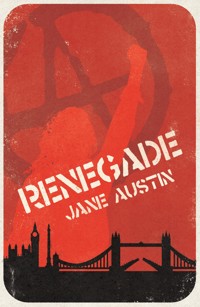
Justin, a popular Leeds professor, seeks redemption in the ashes of youthful idealism. Holding together his family is already a struggle as his son, Sanjay, is drawn into radical politics by his lover Farida, who joins a Kurdish Women's militia to fight ISIS. With nerves already frayed, Justin's wife, Harpreet, is devastated when revelations of his past as an urban bomber come to light, turning his life upside down. Can love and loyalty prevent this family from imploding? Jane Austin's second novel, Renegade is a compelling story of 70s rebellion, revolution in Rojava and a family in a tailspin; a tale that touches the beating heart of our times.
Sie lesen das E-Book in den Legimi-Apps auf:
Seitenzahl: 349
Veröffentlichungsjahr: 2022
Das E-Book (TTS) können Sie hören im Abo „Legimi Premium” in Legimi-Apps auf:
Ähnliche



















Contents
Copyright
Acknowledgements
Author Biography
Dedication
Chapter 1
Chapter 2
Chapter 3
Chapter 4
Chapter 5
Chapter 6
Chapter 7
Chapter 8
Chapter 9
Chapter 10
Chapter 11
Chapter 12
Chapter 13
Chapter 14
Chapter 15
Chapter 16
Chapter 17
Chapter 18
Chapter 19
Chapter 20
Chapter 21
Chapter 22
Bibliography
Renegade
Jane Austin
Published by Leaf by Leaf an imprint of Cinnamon Press,
Office 49019, PO Box 15113, Birmingham, B2 2NJ
www.cinnonpress.com
The right of Jane Austin to be identified as author of this work has been asserted by him in accordance with the Copyright, Designs and Patent Act, 1988. © 2021, Jane Austin
Print Edition ISBN 978-1-78864-934-6
Ebook ISBN 978-1-78864-951-3
British Library Cataloguing in Publication Data. A CIP record for this book can be obtained from the British Library.
All rights reserved. No part of this publication may be reproduced, stored in a retrieval system, or transmitted in any form or by any means, electronic, mechanical, photocopying, recording or otherwise without the prior written permission of the publishers. This book may not be lent, hired out, resold or otherwise disposed of by way of trade in any form of binding or cover other than that in which it is published, without the prior consent of the publishers.
Designed and typeset by Cinnamon Press.
Cover design by Adam Craig © Adam Craig.
Cinnamon Press is represented by Inpress.
Renegade is inspired in part by events surrounding the ‘Angry Brigade’ described by Gordon Carr as Britain’s first urban guerrilla group. In fact there were a number of such groups across the country, but this one attained notoriety in a lengthy court case in 1972. The characters in the novel are entirely fictional.
Acknowledgements
With warm thanks to York Novelists and to Farrell Burnett for reading my early manuscript. Special thanks to my editor Rowan Fortune for his care and patience.
Jane Austin was born in Liverpool, studied French, and lives with her husband in London. In the 1980s she was a political activist. She has since worked in a number of settings including schools, adult education and the University of York. Her debut novel, News from Nowhere (Cinnamon Press 2017), was showcased by New Writing North.
Renegade
For Sarah, Dave and Jim,
my dear sister and brothers.
Chapter 1
Justin lowered himself gently into a sofa at Mellow Vélo Café, trying not to spill a brimming mug. He looked at his son dismantling a bike with ease and Sanjay smiled back. The boy was in his element with likeminded twenty-somethings who’d put together a business plan and were making a go of it. It wasn’t the career he’d imagined for his son, but the world had changed.
There was a scattering of newspapers, for old geysers like you, Sanjay had taken pains to say. He took a scalding sip of Colombian coffee and picked up The Guardian. He flicked through it out of habit, then did a double take…
‘a little-known revolution in northern Syria… the Kurds have created a utopian area based on cooperation… an ecological society committed to women’s liberation… Rojava…’
The background blare from the local radio station was interrupted by a newsflash in a bizarre moment of synchronicity: A South Yorkshire man has died in Rojava, Syria, the first Briton killed while fighting against ISIS… joined a mobile guerrilla unit… hit by a missile launched by Islamic State militants…’
Justin’s heart pounded. His instinct was to get up and warn Sanjay, but he forced himself back into his seat. Rojava stuck like a barb under the skin. It was where Farida planned to volunteer in some women’s group, and Sanjay had talked of a sponsored bike ride—it sounded innocent. Farida was her own woman and Sanjay would follow her to the ends of the earth, Justin knew that. He tried to relax and took a slug of the liquorice-black liquid, then studied the familiar décor with its posters of bikers in colourful flocks, flying up and down improbable gradients.
He could be overreacting given recent events, his own past under scrutiny. The risks he’d taken and decisions he’d made shouldn’t overshadow Sanjay, though age and experience counted for something. Harpreet accused him of being controlling while he blamed her for mollycoddling. This old friction was petty in the greater scheme, particularly if Sanjay was caught up with a cause in a far-flung corner of Syria nobody knew much about—except that people got blown up there.
Sanjay was by his side. ‘Hey Dad, you okay? You look a bit out of it.’
Justin looked through rather than at him and tried to block the inane babble on the radio. ‘I don’t like the idea of Farida going to Rojava—d’you know how dangerous it is?’
‘It’s a lot less dangerous than most parts of Syria. What’s brought this on?’
Justin thrust the newspaper article under his nose. ‘This, for starters. And the lad from South Yorkshire who got himself killed, but I suppose you knew about that. It’s an unholy mess over there, Sanjay, with Turkey, Russia and the US fighting for control. Don’t get mixed up in it—what if Farida wants you to follow her?’
Sanjay looked at his phone. ‘Give over, Dad, I haven’t got time for this. It’s not what you think, believe me. We’ll talk about it more once Mum comes back—where is she?’
‘In a hotel on the Moors where they lock up lawyers for a week and retrain them. She’ll be back next week.’ He examined the floor, despising himself for this half-truth.
Sanjay touched his shoulder. ‘I get why you’re supersensitive about me being involved, but I know what I’m doing, Dad. Anyway, it’s up in the air—Farida hasn’t even been accepted.’
Accepted for what? he wanted to ask. ‘Maybe we could go for a ride sometime?’
Sanjay was already on his feet. ‘Sure thing, Dad. Must get back to work. Thanks for dropping by.’
He watched Sanjay’s bouncing step, sporting leg muscles like knotted rope. He levered himself as his grown-up son got on with his life. He shook his head as if to dislodge the email that kept replaying like an ear-worm and left him spinning.
Dear Professor Caffrey,
My name is Stephen Scott. You knew my father, Max, who died last year. My mum has since found his prison memoirs and he writes quite a lot about you. Could we meet sometime? I’d like to understand more about his life back then. Work sometimes brings me to Leeds…
Harpreet had always known about Max and how he’d been wrongly convicted in the 70s, because Justin had told her about the campaign. You’re the patron saint of Lost Causes, she’d told him, and said she loved him for it. Decades later, the touching obituary by Max’s wife had alerted him to a son and Harpreet had asked if he’d be sending the family condolences. He said he wouldn’t. His evasions opened up a rift between them and this latest intrusion from the past had blown up in his face.
How come you never told me about this? She’d asked, after he’d told her about the email from Stephen and his involvement in the wave of protest and revolution of the day. She’d said, I don’t know who you are any more, and he knew he had to come up with answers, if only for himself.
He dropped a gear on his carbon fibre steed and stood from the saddle in readiness for the hill and the last lap before home. The sight of their house always filled him with warmth, sturdily built in locally quarried stone, impervious to the elements. Autumn was late and the house was screened by a red-gold canopy of copper beech glinting in the early evening sun like fritillary butterflies. He pumped the pedals to the last moment up to the grey flagged drive. The adrenaline carried him through the front door and into the kitchen, then plummeted. He looked around and a prickling ran down his back, like snow stuffed down his shirt as a boy, before his brain could interpret it. Today he felt it as loss and shame.
The kitchen was a memory box, from the pencilled height-marks on the wall he wouldn’t paint over, to the curling holiday photos of the three of them. Sanjay’s fridge magnet from a distant geography trip to Orkney clung on. The dresser was filled with mismatched plates, it was their thing when they were newlyweds, to collect oddments of china. They’d never grown out of the habit.
Normally, he’d put a bottle of Chardonnay in the fridge and cook dinner for when she came home. He’d hear the front door clunk and her heels click on the tiled floor and she’d appear, wearing a navy suit and white shirt, her court uniform as she called it.
He conjured the silken day when he’d proposed, and she’d said yes, but would have to talk to her parents. It took a while. Nothing against you, they’d assured. When we fled Uganda, we knew that Harpreet might fall for an Englishman. They’d tied the knot two years later and Harpreet’s parents had always treated him like a son.
What he hadn’t told Sanjay was that Harpreet had finished her training course and decided to stay on for a few days, to think. Infuriatingly, there was no mobile coverage at the hotel and when he’d reached her on the hotel phone, she’d made it clear she wouldn’t be sitting on a gate in the corner of a field to receive messages. She needed time alone before seeing him again and she couldn’t say when. There was nothing more he could do and now there was this new worry about Farida going to Syria, which he was desperate to talk about.
The fridge leftovers turned his stomach and he resigned to cooking a frozen pizza, leavened by a large glass of red wine. This soon turned into a poisoned chalice as his head seethed with Harpreet’s untethered rage.
‘You were actually a member of The People’s Militia? Is that what you’re telling me? And all these years, I’d believed you were the nice guy fighting for justice and exposing police malpractice.’
‘Corruption,’ he’d corrected, and regretted it.
‘Okay, let’s get this straight. You identified with a group that planted bombs…’
‘…but the bombs were symbolic, we only targeted property...’
‘We!’ Her complexion darkened. ‘You were one of the bombers? Tell me this isn’t true.’
It wasn’t the moment to say that their aim was to show that workers could take power into their own hands, something he might have said to his students. He enjoyed his reputation as a renegade, while remaining opaque about his involvement, buried in the mists of time along with the Second World War, as far as millennials were concerned. Harpreet needed a different story. ‘There was a Miss World Contest in 1970, you were too young to know…’
‘Yes, yes, the one disrupted by feminists at the Albert Hall—what’s that got to do with anything?’
‘I was there, at least I was there the night before, helping to blow up a BBC recording van. I was the lookout. It was to make a political point about the exploitation of women.’
The sky was moonless, pricked with hard bright stars, the pavements gleaming with frost. The comrades’ footsteps rang out in the frozen air and his spine tingled. His task was to raise the alarm as per the pre-op briefing. If you spot anyone, whistle a tune. You can whistle? Good. Keep calm, even if you see the cops. Remember your cover? Calling on a girl you met, she said she lived round here. Nothing too specific.
Harpreet pushed away the bowl of stir-fried vegetables he’d snipped and diced, cooked with juicy orange and cream scallops and cashews for extra crunch. She’d once said she’d married him for his cooking and he suspected she was only half joking. The meal had lost its magic. He met her smouldering eyes. ‘I see,’ she said. ‘We’ve been married for thirty years and this is the first I hear of it? I feel betrayed.’
‘By the time we met, I’d put it all behind me. There were things I preferred to forget.’
He’d interviewed her parents as part of a research project on refugees and there’d been a photo of their daughter in her graduation gown on the mantelpiece. It was Harpreet, and she’d agreed to be interviewed after work. It was love at first sight, at least for him.
‘It’s curious that you married a lawyer, isn’t it? A form of subconscious self-defence, perhaps? You planted bombs and escaped justice, and now there’s a memoir as evidence. What else do I need to know?’ Her lips were curled thin.
There was so much more. Their arguments had always been hot, but today he’d stumbled into hostile territory and floundered. ‘Look, darling, I know this must come as a ghastly shock… I never imagined I’d have to dredge it all up again… I’ve messed up and of course you feel betrayed, I get that. I should have told you long ago. Does that make me a bad person?’ He’d yet to talk about his betrayal of Max, which he couldn’t do without facing his own shame. How could he ever be forgiven?
The acrid smell of burning pizza brought him back to himself and he got up to inspect the damage. He chucked the incinerated object into the bin and ordered a takeaway curry on a mobile app, thanking the gods for modern technology.
Harpreet had impressed on him the importance of meeting Stephen ASAP and finding out what he wanted. A chance to connect with a hidden part of his father’s life? To clear his father’s name? Or revenge. He tried to step into Stephen’s shoes—the email, after all, had been anodyne. I’d like to understand more about his life back then. It suggested a fondness between father and son and he imagined Max would have been good and kind as a father, just as he’d been as a comrade. He did reply, saying he’d be only too pleased to meet and talk about his old friend, Max. It begged the question of why they’d lost touch, which he hoped to avoid. As he pressed send, he realised he urgently needed to talk to someone who knew him back then and the only person left was Sofia, his old flame. His stomach knotted, but what did he have to lose?
Justin had made London his own, a place to reinvent himself. The way he’d met Sofia was something he loved about being in a big city, where a fleeting encounter could become intimate.
The Underground train swayed as he stood holding a leather strap in one hand and a book in the other, when he was thrown bodily against the person behind.
‘Watch yourself,’ a woman cried sharply.
‘I’m so sorry,’ he said, looking apologetically at the book, as if it were to blame. ‘I got carried away.’
‘I suppose one would, reading that,’ she said, smirking.
‘Ah, yes, gripping stuff!’ He offered a lopsided smile and shoved the book into his duffel-coat pocket, not sure if she was mocking him.
‘I’ve read it,’ she said, serious. The train lurched and he grabbed tighter onto the strap for fear of colliding again. This was the moment he truly noticed her. If asked what she was like, he wouldn’t have mentioned chestnut glints in her eyes or dark hair falling down her back. What captivated him was the vibrancy of her presence, which expanded to fill the space around her. He could have sworn other passengers had the same sensation as necks cricked in their direction.
The train jolted to a standstill and she edged towards the door. ‘We can discuss Kropotkin over a cuppa if you like.’
He hurried after her feeling the shape of the book in his pocket.
They had several rendezvous in cheap cafés, over endless mugs of instant coffee. Justin found himself articulating his credo as Sofia teased it out of him.
‘Why Kropotkin?’
‘The whole anarchist thing—I’m fascinated by the notion of propaganda of the deed and doing something to shift the balance of forces.’
‘Really? I can’t make you out, Justin. Tell me more.’
‘Let’s say that on a spectrum from Gandhi to Che Guevara, I’m with Che. There’s no such thing as a peaceful revolution.’
‘So, you’re not squeamish about violence?’ she asked, provocatively.
‘That’s jumping the gun, isn’t it? I believe a better society is possible and that conflict, however undesirable, is unavoidable. Dictatorships never cede power—take Spain, for example.’
Sofia’s features sharpened as she told him how her parents met. ‘Mum escaped Nazi Germany and went to Spain to fight the fascists after her parents were shot. That’s where she met Dad, who was with the anarchists. They brought me up to understand how the world is divided into the powerful and dispossessed. How about you?’
‘Whatever I say is going to make me sound spoilt and privileged, which I suppose I am…’
‘Go on,’ she encouraged, touching his sleeve. ‘We don’t choose our parents, but we can choose how we act in the world. Why have you rejected your advantages? That’s the story I want to hear.’
He felt self-conscious and looked deep into the outsize mug on the table. ‘My father owns an engineering business in Sheffield and expected me to take over. I was an over-sensitive child and he scared me. By eight I had an appalling stammer, made worse when he was anywhere near. Funnily enough he solved the problem by sending me away to school. I realised that to survive, I had to fight back. Something clicked. I started rebelling against petty rules and cruelties and learned that if you stand up for something, things can change. Nothing earth-shattering, obviously,’ he added, glancing from the coffee’s filmy surface and allowing her to look him in the eye.
She acknowledged him with a steady gaze. He’d never spoken to anyone so openly and stripped of bravado; he found he trusted her. He wanted her to know it hadn’t been all plain sailing.
‘So, what happened next? You went to University, got involved in sit-ins and demos and stuff, I imagine.’
‘I was kicked out of school and sent to live with an uncle who let me do my own thing. I went to night class in Scarborough and saw hardship. The lads I met swam against the tide, grappling for opportunities I’d been handed on a platter. That changed me. I realised I didn’t have to work in shipbuilding or fishing to survive, but I could make a difference by exercising my freedom—the freedom to act in the world. We are what we do. So I came to London and studied at the LSE with every intention of getting involved in politics.’
‘Very existential, I’m sure. But who decides whether our actions are good or bad? You could wreak havoc for the sake of having an adventure. Action for its own sake, so to speak.’
He took this as a challenge. ‘I believe if I act in order to be free, it must be so that others can be free.’
She nodded conditionally. ‘You’re on the right road, comrade. Just remember, we don’t act on behalf of the masses, but expose the contradictions of capitalism and its oppressive systems.’
He tried to melt her brittle exterior with a joke. ‘Don’t be daft lass, d’ya tek me forra wasak or summat?’
‘A wasak?’ she giggled. ‘Definitely not, unless that means a dark bearded man with eyelashes to die for.’
‘Now you’re taking the piss,’ he said, catching her wrist, and knew they’d end up in bed sooner or later.
Sofia eventually invited him to visit the squat to meet the comrades. He felt this to be a sort of test. She’d been tantalisingly vague about their activities and said labels were a distraction. They were engaged in conscious communal living, challenging gender stereotypes and the nuclear family. For a horrible moment he’d imagined free love and partner swapping, but no, she reassured him, that’s bourgeois hippy crap. It was then she’d outlined the Miss World gig at the Albert Hall, reeling him in. She spoke of the profits of the Mecca Corporation, sexually exploiting women in the name of entertainment for the gratification of men.
‘Okay, I see where you’re coming from,’ he’d said, ‘but Miss World is pretty popular with women too. My mother will be watching.’
‘Sure, but that’s how they trick us,’ Sofia hit back. ‘Women absorb idealised versions of the female body, which we see plastered on billboards, buses, everywhere, to persuade us to spend our pitiful wages on fashion and makeup. It’s a con, don’t you see?’
She said a lot more, but nothing about bombing the BBC van in the early hours, in an attempt to sabotage the event. He was well established at the squat before he knew about that.
Chapter 2
If he’d had to pinpoint the day he’d joined The People’s Militia, Justin would have cited moving to the squat. He arrived at the stucco-fronted house with a pillared porch and a bright red front door. It was scorching and he was drenched in sweat from shouldering a rucksack and carrying a khaki holdall, relics of his father’s wartime gear retrieved when he first came to London. Somewhere at the back of his head, Pa was telling him that squats are disgusting and squalid, fit only for druggies and dropouts. What was he doing here?
He pressed the buzzer nervously and Sofia opened the door almost immediately as though she’d been waiting. ‘Welcome!’ She flashed her devastating smile.
He followed her neat figure dressed in jeans and t-shirt, bracing himself at seeing the others again. Should he have brought something? A bottle of wine? He’d been tempted by a posy of violets from an old woman in the Portobello Road, violets for your sweetheart, darling, but thought better. Too obvious.
There’d been several meetings in cafés and pubs before he’d been accepted into what Rob called, ‘the revolutionary direct-action movement.’ This was a necessary stage before joining The People’s Militia, he’d been told. They were part of a network, rather than an actual organisation. It was a dizzying leap of faith, harnessing himself to workers and the dispossessed to bring down the capitalist state and topple its leaders. What this would look like he couldn’t imagine, only history would tell.
Rob, a slight and clean-shaven man, stood to shake his hand in a disarmingly old-fashioned gesture. ‘Hi Comrade, good to have you on board.’
It was a homely scene with ragrugs that cheered up bare floorboards, which he’d reckoned must be hellish draughty in winter. There was a stained-glass pendant hanging at the window, glowing warmly that summer’s day. Along one wall was a bookcase made up of planks of wood separated by stacks of bricks. He saw the wood was rough, the width and quality used in scaffolding, which he knew from working on a building site. The neat arrangement of books gave a pleasing order, offset by brilliantly coloured throws over sagging settees. Over the mantlepiece was a charcoal sketch of a reclining nude that captured the curve and heft of full breasts.
This place was unlike his student rooms, which he still hadn’t got round to leaving since graduating. Bins had overflowed, and filthy dishes piled in the sink until somebody cracked and washed the lot—usually him.
Rob’s partner, Vera, showed him a leaflet they were working on. ‘It’s for the dockers’ march for a decent wage. We’re calling miners and railway-workers to come out in support,’ she said, in a Welsh valleys accent. ‘We’ve got to hold our nerve, now there’s a state of emergency…’
‘…And now the army’s been called out,’ Justin chimed in.
‘Too right,’ she said, leaning in. ‘The question is, What is to be done? Lenin tells us the past is a guide to action, we must factor in present day conditions. Today the time is ripe, comrade, time to smash the bastards who got away with leaving children to die under slagheaps, and take power.’ He heard her passion and sensed it was personal.
Jess and Callum were absorbed in sorting boxes of dusty books and barely looked up, as if allowing him to find his place.
Sofia placed a huge teapot on the trestle table and Justin eased himself onto a bench. ‘I hope you take milk and sugar,’ she said, filling his mug with a caramel liquid. ‘We took a vote and now we add condensed milk to the pot to save time.’ The efficiency appealed, but he hoped the principle didn’t extend to sharing bathwater.
Rob was the leader in a non-hierarchical way; a full-time revolutionary, scratching a living translating French articles for political journals. He wore a peaked Lenin cap and a wardrobe of black polo neck sweaters, as Justin soon discovered. A chain-smoker, he indulged a penchant for Gaulloises when he could afford them, but today was absorbed in crafting a thin rollup.
Callum and Jess joined them at the table and Justin learned how Rob and Callum met. ‘We were at Oxford and right royal pains in the arse.’ Callum grinned. ‘We tore up our finals papers in protest at elitism. What a gas! I’d have been doing mathematical modelling in the City by now, but instead I’ve got a second-hand book stall on the Portobello Road—it’s cool—keeps me in grass and Benefits cover the rest.’ His t-shirt bore the slogan, Smash the Patriarchy, and his hair hung in thick coils like unravelling rope.
Jess, his girlfriend, was fast talking with an infectious energy. Bangles jangled at her wrists and she radiated a fragrance Justin couldn’t pin down. Then it came, rosewater, his mother’s favourite scent. ‘We’re involved in the community,’ Jess told him, twirling her beaded braids. ‘We campaign for housing and Social Security rights, as well as on women’s issues.’
There was a great deal of talk about whether the levers of democracy could create change in a system where Parliament and the courts were instruments of the establishment, but he couldn’t recall the detail at this distance in time.
His heart sank when Sofia announced she had to go to her life-drawing class. As she moved across the room and past the charcoal nude, he was thunderstruck to see that the portrait was of her. He was in too deep to not care and it pained him that she held him at arms’ length. This was surely a political test, a ploy to test his commitment. He must live in hope. Jess showed him to his room and pointed out the bathroom. ‘The bath takes an age to fill and uses up all the hot water. I hope you don’t expect to have a bath every day after working on the building site.’
‘I can always use the baths near work, otherwise you’ll have to hose me down on the doorstep.’
‘Callum and I share baths… you and Sofia…’
‘No, we’re not. Nice room, thanks.’ Jess left and he dumped his bags on the floor and saw a stained mattress and sticks of furniture. For the first time he had a misgiving. It had all happened so fast and he’d been swept along by the excitement of building a movement and joining the vanguard, The People’s Militia, a name they hadn’t even used yet, not officially. He knew there’d be no going back if he joined them.
Justin shed his cycling gear in the corner of the office and dragged himself to the refreshment point. He hoped the morning routine would salvage the day after a disturbed night. He would rev the coffee machine, pop in to see Vanessa, and thereby delay emails as long as possible.
The cc habit drove him nuts. It cluttered up his inbox with everything from fun-runs to parking charge notices, which was before he got to students’ emails. These were either pleas for time on assignments or complaints his lecture notes hadn’t been uploaded onto the Virtual Learning Platform.
Vanessa’s china-rose cup rattled in its saucer as he carried it across the corridor. They went back. She was a fellow sociologist and a veteran of Gender Studies.
‘Justin, you’re a sweetheart,’ she said, eyes fixed to the screen as she pressed send. She got up and cleared a pile of papers from the armchair. ‘Make yourself at home!’
‘Thanks, petal.’ He lowered himself, holding steadily to his Today’s The Day Everything Goes to Plan mug and warmed at the prospect of leaving his computer to slumber. His gaze was drawn to Vanessa’s screensaver, which glowed purple and green with images of the Yorkshire Moors, and this morning a painful reminder that Harpreet didn’t want him to see him.
‘So, how did it go with Kyle?’ Vanessa peered over her leopard-print specs.
‘Not great, to be honest,’ he said, gulping coffee and burning his mouth. ‘This management accounting bollocks doesn’t allow flexibility. In the old days, you could put grant money into one pot and borrow from Peter to pay Paul. It all came out in the wash. The thing is, I’ve extended a couple of contracts, to get projects over the line.’
‘Without funding?’ Her eyes widened.
‘It’s in the pipeline.’ He could see she knew this was a fib. ‘I can’t go laying people off for the sake of a few grand. Not when I see millions spent on the new Business School. It’s obscene.’
‘The spending or the building?’ she asked, eyes glinting.
‘Both.’ He looked out of the window to see cranes already in motion. ‘We’re going to end up hot-desking the way things are going. The one advantage of these old prefabs is that the offices are too small to share.’
Sociology was about to be gobbled by the Business School and working in an open-plan office was Justin’s idea of hell.
Vanessa changed the subject. ‘And how’s Sanjay? Still enjoying work at the bike-shop?’
‘Yes, he’s doing grand. I’m a bit worried about his political interest in Syria, it’s such a hotspot. He’s very keen on this girl who wants to volunteer out there....’
‘…like father like son,’ she said with a rippling laugh. ‘You’ve only yourself to blame. Anyway, this thing about Kyle, you should let it go. Tactical retreat and all that. Fess up and get over it. And there’s no point in kicking up about the merger, it’s going to happen whether we like it or not.’ She smiled encouragement.
‘Okay, I get the message. Stop being such an arse and sort it. I wish I had your powers of persuasion.’
‘Nonsense! Now, enough banter, or we’ll both be out of a job.’
He got up to leave. ‘See you later, comrade.’ It was their joke. He’d have suggested meeting for lunch, but these days Vanessa grazed on a box of rabbit food, so wolfing bacon-butties felt uncouth.
Back at his desk he scrolled emails. Did people work all night? Anything with an attachment he dumped into a folder for later and most others he deleted. Spotting Stephen’s name, his heart missed a beat and he double-clicked. The message was cordial and professional, requesting a neutral venue. He’d suggested a Leeds hotel.
Justin was relieved at meeting somewhere anonymous, where there was no danger of bumping into anyone he knew. He would tell Stephen what a great bloke his dad was and discover what Max had said in his memoir. How bad could it be?
One of the few occasions he’d visited Max at Full Sutton in Yorkshire, he’d met Daisy in the prison waiting room, and she’d said, he doesn’t need friends like you. They married soon after Max’s release, he knew. She blamed Justin for Max being sent down and he could only suppose Stephen knew of her bitterness. He hadn’t visited again. He got wrapped up in his PhD, work, marriage, whatever. Life got in the way, or so he’d told himself.
Sometime later, Max had written to him at Leeds University and had the crazy idea of them apologising to Peter Haddon for the distress caused to his family. The letter was seared onto his brain. It would have been suicide for his reputation to agree, so he’d ignored Max’s request. When Harpreet had asked, is there anything else I should know, he knew he ought to have told her about the Peter Haddon affair, however incriminating. Panic bloomed in his chest and he did a few shoulder rolls in the hope that his rational brain would kick in. He got up and peered through the dust-laden blinds and took several deep breaths. Then he remembered forgetting to take his blood-pressure tablets that morning.
He felt his mobile vibrate and pulled it out of his trousers pocket, praying it was Harpreet. It was his sister Molly, and a call during work hours was bad news.
‘Justin, sorry to do this. It’s Pa. He’s in A&E again after a fall. Could you get over? I’m away till tomorrow.’ Molly took charge of Pa’s care and he was emergency backup.
‘He’ll be in good hands, Molly, what more can I do?’
‘Keep him company? He’ll need pyjamas, toothbrush and pills. Could you drop by and pack an overnight bag?’
Talking to Molly was like listening to a satnav. If he went off piste she nudged him back on track and he knew he had to go. He belted back to Headingly, got out the car and headed to Sheffield.
The last time they’d had to rescue Pa, he’d been found by the carer on the bathroom floor, his emergency alarm hanging on the back of the door. There was no question of going into a home. Oh no. Never say die, was Pa’s motto.
He’s ninety, for Pete’s sake,Justin thought, as the speedo inched up eating the miles along the A1. The descent into entropy was depressing: clothes flung onto chairs, socks and underpants on the floor, and heaps of half-read newspapers on every surface.
By now, he realised he’d missed the turn-off to his favourite transport café, but he wasn’t too bothered. The old man was stuck in hospital after all and might even be pleased to see him. Football and family was neutral ground where they could communicate, though Justin didn’t care about football. According to Pa, marrying Harpreet was the best thing he ever did and Pa doted on her. The next best was giving him a grandson. Years ago, there’d been a row over sending Sanjay to a Comprehensive school, culminating in Pa saying he’d pay for a private school. Harsh words were exchanged. Harpreet intervened by declining the offer gracefully, as only she knew how.
He turned off into the suburbs of his childhood and wound the car window. The November air caught the back of his throat with a taste of bonfires. As the old house came into view, he almost expected to see Pa as a younger man sweeping leaves from the drive. He hung to the image as he locked the car and rehearsed the code for the key-safe by the front door.
The glass-roofed porch smelled damp and was full of old coats and redundant walking sticks, now that Pa was confined to the house. Once inside, he made his way up past the stair-lift, hoping to find clean clothes in the airing cupboard. It was the arrangement Molly agreed with the Care Agency, whose badly paid employees were supposed to take washing to the laundry. There’d been the odd mix-up, and on one occasion Pa ended up wearing black and white striped satin pyjamas he’d refused to relinquish. Makes me feel like the bees’ knees and the laundry can go to hell, was what he’d said.
Mercifully, Justin found an overnight bag and the purloined pyjamas were neatly folded in a chest of drawers. There was a whiff of camphor from Ma’s mink stoles, from the days Pa’s business thrived. He remembered the luxury of burying his face in the perfumed fur when she’d kissed him goodnight before going out to a dinner-dance.
He went downstairs to check the kitchen where Pa had fallen. There was an empty peach tin on its side and peaches spilt over the floor. He must have slipped and hit his head. Justin surveyed the mess and set to with a mop and bucket. The floor was filthy, and he cursed the Agency who should have been checking. Half an hour passed before he wrung out the mop and called it a day.
The wood-panelled hallway was embalmed with years of furniture polish. If Ma had lived, would they have moved? Molly thought Pa stayed on because he couldn’t bear to let her go. Not morbidly. It was the garden he’d clung to. When they knew she was dying, they’d walked round together, and he’d taken notes on all the plants. Until then, he’d only been allowed to tend geraniums at the front. After she died, he’d developed a passion for horticulture and flowers bloomed all year round.
The geriatric ward was on the third floor and he mounted the stairs two at a time, Pa’s holdall on his shoulder. The nurse in charge directed him to the bay. ‘Mr Caffrey? He’s at the end on the right and doing nicely. Should be home any day.’
Pa was sitting in a chair next to the bed, dressed in an indecently short hospital-gown. Justin felt his indignity and hurried over to cover his knees with a blanket. ‘Hi Pa, what’s all this then? Got a nasty bump on your face, I see.’ He bent over and squeezed a gnarled fist.
‘I’ve been worse. Where’s your sister?’ He looked up and Justin saw Pa hadn’t been shaved.
‘She’s away a few days. You’ll have to make do with second best. Shall we get you into these pyjamas?’ He said, unzipping the bag. ‘Can you make it over to the bathroom?’
Pa looked at the walker and the distance to be covered and his face fell.
‘Never mind, I’ll call for help.’ He dug into his pocket. ‘Here, I bought a box of your favourite mint chocs from the shop.’
Pa brightened. ‘The shop? You could wheel me down there. I fancy a paper. And fish and chips at the café wouldn’t go amiss.’
Justin’s heart plummeted. This wasn’t going to be a quick hi and bye. ‘Sure, Pa, let’s do it. We’ll get you sorted out first.’
Easier said than done. The male care assistant pulled curtains round the bed and Justin waited on the outside. He heard, like this, hold onto me, steady, spoken with an easy patience he lacked. He heard his father speak in a dialect picked up in Burma, and the man caring for him laughed and answered in kind.
Pa emerged in his satin pyjamas and paisley dressing-gown. ‘You look as if you’ve stepped out of a Noel Coward play,’ said Justin, smiling at them.
‘This is my son, the Professor,’ said Pa, with a lizard smile on his lined face.
‘Pleased to meet you, sir. Your father speaks good Hindustani. Learned under the British Raj.’ There was a tinge of irony in his tone, which put them neatly in their place.
‘Thank you for your assistance,’ Justin said, extending a hand. ‘My name’s Justin.’
‘I’m Murali,’ said the middle-aged man returning his grip. ‘It’s a pleasure to care for your father.’
‘We’re going for a spin to the café, right Pa?’
‘No need to shout, I can hear you. Make yourself useful and bring over that wheelchair. I’ll go to the bathroom first.’
Murali smiled in complicity. ‘Enjoy your lunch, gentlemen.’
The café thronged with health-workers, patients and visitors, and there was plenty of space between tables to accommodate wheelchairs. Justin parked his father at one by the window and joined the queue. Glancing back at the hunched figure with a bruised face, he wondered if Sanjay would have to do the same for him. He hoped not to stick around that long.
The words senescence and obsolescence circled in his mind and he mused on what would remain of him beyond academic footnotes. He caught sight of himself in the mirrored steel of the servery and saw an aging man with wiry grey hair and a rambling beard. He’d let himself go.
‘Here we are,’ he said, returning with a loaded tray, ‘I even got you mushy peas.’ He set down the plates and pulled the table nearer to Pa, to avoid spillage.
‘You’re a good lad. It’s strange, seeing your own son grow old.’
‘Steady on, I’m not that ancient. D’you want a napkin? Best tuck it in.’ Pa had always been rather dapper and it was important to keep up appearances.
His father accepted his attentions. ‘How old are you now?’
‘I’m sixty-five, Pa. And with your genes, good for another thirty.’ He watched his father attempt to open a plastic sachet of ketchup. ‘Can I do that?
Pa handed him the sachet and peered through smudged glasses. ‘Well, you’re not looking too good. What’s up? Trouble at mill?’
‘No, no, work is fine, once you get past the paperwork.’
‘You should have check-ups at your age. I hope you’re looking after yourself.’
‘Hey, what’s this all about? Actually, I’m training for a cycle race in the spring. It’s the Tour de Yorkshire. Sanjay and I have signed up.’ He waited for a howl of derision.
‘The tour de bloody Yorkshire? Give over. It’s the Common Market gone mad.’
‘It’s just a bike ride, Pa.’ The sounds of the café blurred and the snaking anxiety about Stephen crept back. Not just Stephen, but a past whose murky depths had been stirred. He felt an overwhelming desire to unburden and the words tumbled out before he knew it. ‘I was




