


13,99 €
Mehr erfahren.
- Herausgeber: African Space Foundation
- Kategorie: Wissenschaft und neue Technologien
- Sprache: Englisch
This book,
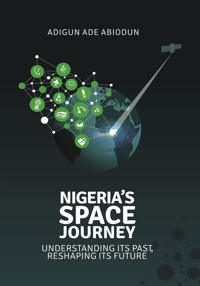
Nigeria’s Space Journey: Understanding its Past, Reshaping its Future, authored by Adigun Ade ABIODUN, is about Nigeria achieving its space and related goals.
To accomplish that objective, it examines and analyses why, to-date, the nation’s space efforts have not delivered as promised. The book proffers a number of long-term solutions which should also find relevance and practical application in other space aspiring countries.
Nigeria’s steadfast commitment to the proposed solutions will enable it to shape its own space and economic future, become a leading partner and voice in determining Africa’s future, and be a reliable collaborator in the resolution of global issues
Das E-Book können Sie in Legimi-Apps oder einer beliebigen App lesen, die das folgende Format unterstützen:
Veröffentlichungsjahr: 2024
Ähnliche



















TESTIMONIALS
“Ade’s book provides a rare opportunity to learn and to have a sober reflection on the many steps already taken by the Nigerian state in her space journey. Drawing from his wealth of experience, Ade Abiodun examines what could have been done differently and makes profound suggestions on how to chart a progressive and sustainable space programme in Nigeria.”
—Peter O. Adeniyi,Emeritus Professor of Geography and Geomatics, University of Lagos, Nigeria & Pioneer President of African Association of Remote Sensing of the Environment
“In this book, Adigun Ade Abiodun presents a candid and somewhat troubling assessment of Nigeria’s current state of space affairs. He also proffers ideas to take the country in a very different direction. His thorough and detailed set of recommendations on space priorities, backed by a robust science and technology foundation, should guide a successful space engagement both in Nigeria and in other developing countries. A very worthwhile prognosis from a person who has immersed himself, for decades, in the subject, both in Nigeria and within the international community.”
Tom Alfoldi, Retired Geoscience Specialist at Canada Centre for Remote Sensing, and Renowned Nature Photographer, Ottawa, Canada
“Adigun Ade ABIODUN’s book, Nigeria’s Space Journey—Understanding its Past, Reshaping its Future, is insightful and prescriptive. As the former United Nations Expert on Space Applications and former adviser on space science and technology to the President of Nigeria, Abiodun gained a unique and compelling perspective which informed his vision for Nigeria’s space future. The book lucidly demonstrates, with rich examples, how space can be harnessed to make a difference in the lives of Nigerians and in Nigeria’s contributions to the solution of global problems. It is an eye-opener, an indispensable guide for building a viable national space programme, and a must read book.”
Yewande Afonja,Co-Founder of STATCO Publishers, Nigeria and Co-Editor of Family meditations over the Internet
Copyright © 2017 by Adigun Ade ABIODUN
All rights reserved. This book, or parts thereof, may not be produced in any form without permission from the publisher; exceptions are made for brief excerpts used in published reviews.
Printed in the United States of America
Library of Congress Control Number: 2016920275
ISBN Paperback: 978-0-9983321-0-9
Interior Design: Ghislain ViauCover Design: Samuel Obadina
To the Youth of Nigeria, its future generations, and their compatriots in Africa and in the emerging economies of the world, in my belief that as He did and continues to do for me, God will guide them, even when they cannot see the path ahead.
I hope that this book will inspire them to strive to make a difference and be agents of change, wherever they are in this world.
CONTENTS
Foreword
Acknowledgements
Introductory Remarks
Space in Human Lives
IHuman Exploration of Outer Space—Why and How?
IIRelevance of Space in Nigeria
Space Efforts in Nigeria
IIIRelated Interactions
IVInitial Efforts
VSpace-Bound Nigeria
VIThe State of Science and Technology Foundation in Nigeria
VII The State of Nigeria’s Space Journey
VIIILessons Learned
Reawakening of Nigeria
IXRebuilding the Science and Technology Foundation
XHarnessing Nigeria’s Potential
Nigeria’s Space Priorities
XINational Priorities (Part One)
XIINational Priorities (Part Two)
Contributions to the Resolution of Global Concerns
XIIIGlobal Warming and Climate Change
XIVThe Outer Space Environment
Moving Ahead
XVThe Way Forward
XVIConclusion
About the Author
Index
FOREWORD
Ade Abiodun is a dear friend and mentor and I am honoured to write the Foreword to this book.
The book is part personal memoire, part historical account and, above all, a call to action. One of the challenges that Ade has faced in writing this book has been to decide to whom it is addressed. Is it for political leaders or officials? Is it just for Nigerians or for Africans or for the developing world, more generally? Is it for professionals or students? In the end, his book speaks to all of these groups and indeed to anybody who seeks a better understanding of Africa’s space journey.
Dr. Abiodun describes Nigeria’s aspirations to participate in global space development and to establish a space programme of its own. He speaks with authority, passion and deep understanding of the Nigerian political and social landscape that has played such an important role in shaping the directions that the space programme has taken. He chronicles successes and disappointments, excitements and frustrations and he does so in the context of the broader development agenda for the nations and peoples of Africa.
He is passionate about science and technology and especially about the potential for space technologies to help Africa and Africans in two ways: to inform public policy decision-making; and to give the peoples of Africa goals to which they can aspire and in which they can take pride.
He has an unshakable conviction that the peoples of Africa can be lifted from the shackles of the various challenges that bedevil development in the continent. Attaining this goal demands that the governments of Africa shall invest systematically and strategically in educational programmes that emphasise science and technology in which facts speak for themselves, and lead to more rigour and accountability in decision-making.
He is very well-aware of the difficulties and the magnitude of this challenge but he is an optimist at heart. And he combines his optimism with a profound belief that, ultimately, leaders and their people will act wisely and do the right thing.
I know of no other Nigerian, or African indeed, who could have written a book such as this. I highly recommend it to every African and all the citizens of the developing world as well as those interested in Africa’s success in space.
Brett Biddington
Principal, Biddington Research Pty Ltd, Canberra, Australia (space and cyber-space policy, security and industry development)
Admitted as a member of the Order of Australia for services to the Australian space sector in 2012
Canberra, Australia,
December 15, 2016
ACKNOWLEDGEMENTS
It took a loving village, called Araromi ABIODUN, to raise this author. I also offer my heartfelt gratitude to those outside the village, particularly Prof. Lubos Perek of the Checz Republic and former Chief of the United Nations Outer Space Division (UN-OSAD), since renamed the United Nations Office for Outer Space Affairs (UN-OOSA), and Ambassadors Dapo Fafowora and George Dove-Edwin, both of Nigeria, for leading me in the path that contributed to the writing of this book.
I also don my hat to all the 24 members of the Nigerian Experts Consultative Group (NECG) and the staff of the office of the Senior Special Assistant (to the President) on Space Science and Technology (SSAP/SST), whose names appear in Chapter V of this book, and who volunteered their time and talent, and worked tirelessly with me, to develop the report we submitted in September 2000, to President Olusegun Obasanjo, titled: “Nigerian Space Programme: A Blue Print for Scientific and Technological Development.” The report served as the foundation document for the first Nigeria’s National Space Policy and Programme that was adopted by the Federal Executive Council on July 4, 2001. Over the years, many friends and compatriots, including the youth of Nigeria and Africa, particularly the Youth Forum of the African Leadership Conference on Space Science and Technology, have also urged me to put on paper a compelling message on space science and technology for the leadership and the youth of Nigeria and Africa. I thank all of them for their encouragement, and I hope that this book inspires them to strive to make a difference and be agents of change in our world. Etim Offiong stands out for his insightful review of a number of chapters, and for his skillful rendition of many of the figures and tables in the book.
You should meet a number of my friends and colleagues who volunteered their time and talent, as readers, and who helped me critique different parts of this book. I sincerely value their outstanding work, their kindness and encouragement—offered to me freely and selflessly. However, I take full responsibility for all its contents. Among the readers are Prof. Peter Olu Adeniyi (Nigeria), Mrs. Yewande Afonja (Nigeria), Tom Alfoldi (Canada), Prof. Ekundayo Balogun (Nigeria), Ms. Frances Brown (United Kingdom), Ms. Carol Rose (USA), Dr. Edward Omotoso (Nigeria/USA), Dennis Stone (NASA-USA) and Brett Biddington (Australia). I am indebted to all of them for their review of the various drafts of my manuscript. Brett, who is among those leading the on-going development of Australia’s national space programme, gave his support and encouragement from the inception of this book. He read and critiqued the entire manuscript; and with a great heart, he kept my toes on the burner until I got the work done. He also wrote the Foreword. I am also very grateful to Samuel Oladimeji Obadina of Feather Consult, Ile-Ife, Nigeria, for his very skillful development of the graphic art design for the book cover, and for his contribution to the rendering of several of the images in the book.
Finally, my family has been supportive in many ways. I salute my dear cousin, Dr. Olajide Bababode Odubiyi, his wife, Marion, and their daughter, Sade. I offer them my heartfelt thanks for their guidance and day-to-day encouragement to ensure that this book comes out the way it should. I depended on their wise suggestions and counsel and I am very grateful for their steadfast support. I am also indebted to my dear partner and spouse, and occasional editor, Judith Burgess Abiodun, for her love and patience, and for her belief in me and in the message of the book; and also to her grandniece, Serene Shirley, who reminded me of the importance of cliff hangers. Lastly, it brought me great joy that I had the support of my dear daughters, Ololade and Olukemi, their children—Joshua and Shavyla, and their spouses—Emanuel and Daryl—respectively. They showered me with love and encouragement during their regular check-up on Daddy/GrandPa and on the progress of the book.
INTRODUCTORY REMARKS
Our ancestors would be dazzled, and certainly be overwhelmed, to see how far we have come today—from a society that once relied on talking drums and the gong to send messages across villages, to one with access to satellite communication technologies and assets to attain the same goal, not only locally but also globally. What a revolution! This particular revolution has a number of inherent challenges, including those associated with the development of a road map—the national space policy and programme—and the building of a vibrant space institution.
These and other unforeseen challenges notwithstanding, a nation’s space programme should attract and engage the right calibre of people that can advance human knowledge of outer space and use that knowledge, not only to improve the wellbeing of the citizenry but also to contribute to the solution of regional and global concerns. Doing so will also require a lesson or two from the earlier space explorers; the latter realised and understood that investment commitments in the space enterprise should be built on a solid science and technology (S&T) foundation and that its growth takes time before the investment can produce a meaningful and bountiful harvest.
In this book, I have focused on Nigeria as a case study and on how some of these challenges have played out in its space programme. It is my hope that these challenges and the manner in which they were addressed would serve as lessons, not only for Nigeria and its people, particularly its decision makers, but also for other countries in similar situations. In writing this book, I drew from (i) my three plus years (March 2000 through June 2003) of service as the Senior Special Assistant (to the President of Nigeria) on Space Science and Technology (SSAP-SST), under President Olusegun Obasanjo’s administration, (ii) my many interactions, with the global space community, as the United Nations Expert on Space Applications (November 1981–September 1999), (iii) my role as the Chairman of the United Nations Committee on the Peaceful Uses of Outer Space—COPUOS—(June 2004–June 2006), and (iv) my role as Adviser to the Nigerian delegation to COPUOS (2000–2004 and 2007–2014).
Since my retirement from the services of the United Nations, I have also had the privilege of participating in and contributing to a number of unique space-related events—some of them are cited here.1 These interactions and others, including my role as the SSAP-SST, have expanded my horizon about what Nigeria’s future activities in space should be. This book thus offers me an opportunity to share with Nigeria and the developing world, my views and The Thinking in other Lands, on how a number of countries are setting out and pursuing their respective space agenda for their own future, to drive home the lessons therein for us, and to offer my own proposals for the way forward. The latter includes the rebuilding of the foundation of science and technology in Nigeria, a major pre-requisite for its attainment of its space aspirations. The book is divided into six main segments, namely: Space in Human Lives; Space Efforts in Nigeria; Reawakening of Nigeria; Nigeria’s Space Priorities; Contributions to the Resolution of Global Concern; and Moving Ahead.
Space in Human Lives
The space revolution that has captured the attention of the global community can perhaps be best understood and appreciated by reflecting on Socrates’ challenge to humanity to:
“…..rise above the surface of the Earth, to the top of the atmosphere and beyond, in order to understand the world in which we live —Socrates.2
Gaining a better understanding of the world we all live in would have to await the1957-58 International Geophysical Year (IGY). That was when the Union of Soviet Socialist Republics (USSR) successfully launched Sputnik-1, the first human artificial satellite, on October 4, 1957, followed by the subsequent launch of Explorer-1, by the United States of America (USA) on January 31, 1958. These two key IGY-related achievements marked the beginning of the space race between the USSR and the USA as well as the beginning of the space age that we know today. To douse the fear of global domination by these two new space powers, the United Nations established, in 1959, its Committee on the Peaceful Uses of Outer Space (COPUOS), an action that brought some global calm. With the fall of the Berlin Wall in 1989 and the subsequent breakup of the USSR, the era of space race eventually ended yielding place to the new era of space enterprise. The latter culminated in the joint development, by 2011, of the International Space Station (ISS) by five partners. Between 1957and today, spacecraft from most of these partners and others have landed on most of the planets in our Solar System. Today, Mars, which, on average, is 140 million miles (225 million km) from Earth, has become the target of the next phase of manned space challenge because, in its evolution and formation, it is comparable to Earth.
Over time, satellites that once served as instruments of war became dual technologies that began to deliver economic benefits to humankind, including the meeting of our basic everyday needs. A few African countries, and others in the developing world, as well as a number of private entities, soon became aware of the apparent opportunities that space offers and the need to be active space players in order to gain the rewards of participation. Such active participation has shed the isolation of many nations and their peoples; it has enabled nations and their citizens to acquire and share knowledge in various areas of human endeavour; and it has made a difference in human lives in many societies.
India led the developing world of the 1970s by being the first to throw its hat into the space ring to test the realities of the space applications possibilities referred to earlier. In 1974, it borrowed an American satellite, ATS 6, for one year and used it to determine whether the satellite could deliver a variety of education programmes that would improve the wellbeing of Indians, particularly those in the rural communities. The project, known as Indian Satellite Instruction Television Experiment (SITE), was an instant success, and it set the stage for the continuing space success India has enjoyed ever since. Other countries soon initiated their own space programmes. They established relevant research institutions, undertook research and development programmes, designed, built, and tested a number of space experiments and in later years, successfully designed and built their first satellites—all of which were launched for them by either the USSR or the United States. In most cases, these goals were attained because of the singular contributions of the research establishments in each country’s universities and the funding support provided to them by their respective national governments.
Space Efforts in Nigeria between 1957 and Today
Chronicled in this section of this book are the events that gave Nigeria its initial space awareness and interactions. For example, the contributions of Nigerian scientists to the study of the ionosphere, in the late 1950s to the early 1960s, a period that coincided with the IGY, introduced Nigeria to the peripheries of outer space, and may have influenced the request to Nigeria, by the USA, to provide local support for America’s initial manned space missions. That support and other factors most likely set the stage for the1963 first ever live satellite telephone conversation between America’s then youngest President, and Nigeria’s first Prime Minister. Less than eight months before this historical phone call, a 40 pound meteorite (rock) from Mars, named Zagami, landed in Zagami, Katsina State, Nigeria. But what eventually happened to the Zagami rock, a national treasure and very important object that is worth more than gold or diamond, in the open market, such as E-Bay, today? The book shows an illustrated diary of Zagami’s known fate since its landing on Earth and its subsequent contact with man; a portion of it is still in Nigeria, today. That notwithstanding, the current Nigerian administration should seek a full account of Zagami’s fate from the Nigerian Geological Survey, since renamed the Nigerian Geological Survey Agency, the Nigerian government entity that became the custodian of the Martian rock a day after it landed in 1962.
The type of national focus that guided the Indian initiative and its SITE project cited above eluded Nigeria’s early space efforts during its long military era of 1966-1979 and 1983-1999. In a parliamentary democracy, issues are discussed and majority or consensus positions often guide the next step(s) of the government. But that is a luxury that a military government, albeit, a unitary one, does not indulge in. Nigeria was no exception. That was when a number of federal government ministries, unilaterally and unchallenged, made their own space-related commitments and purchases or hi-jacked projects that were outside their mandates and for which they had no competence to execute. One could have imagined the outcome of such actions—wrong choice of technologies; acquisition of technologies that were at the teething stage; and abandoned projects. The projects made no national impact and were financial sinkholes for the country. At that time, the national pre-occupation with what a given technology can do for the country and its people overshadowed the critical importance of why and how a given technology works the way it does. That syndrome lingered on for a long time and stuck itself into Nigeria’s psyche, as each ministry dreamt up its own brand of money-gobbling project. At the close of the 20th century, the Federal Ministry of Science and Technology (FMST) came up with its own proposal, a Nigerian Satellite Project, which won the approval of the Federal Executive Council (FEC) on March 5, 1999; at that same sitting, the FEC also established the National Space Research and Development Agency (NASRDA) as the entity to carry the nation’s space mantle. With the Nigerian Satellite Project on track, Nigeria was able to show-case itself and creditably participated, as a budding African space power, in the 1999 Third United Nations Conference on the Peaceful Uses of Outer Space (UNISPACE III).
Although it would have been prudent to think and plan for a national space programme which would have embodied university-led research and development efforts, instead, the nation embarked on a Nigerian Satellite Project without a space policy or programme. Against sound advice from several quarters, the Nigerian government was internally persuaded, with unjustifiable justifications, to go ahead. The nation did, and it subsequently bought a satellite, NigeriaSat-1, from abroad; it was also launched abroad in September 2003. But a critical issue was left unaddressed in the process—the crumbling state of the nation’s science and technology, an indispensable foundation that is needed to power and sustain its space aspiration. Indeed, when the FMST decided that it was time for Nigeria to be space-bound, it followed the same approach taken by the other government ministries that embarked on unilateral space-related projects before it; it side-lined the nation’s universities. Thus, the Nigerian Satellite Project did not benefit from the available local rich scientific talents needed to guide the nation’s space effort at its teething stage.
But no country has become space capable or space faring by first buying or purchasing satellites. A nation will earn that badge of honour by utilizing its S&T capabilities to indigenously develop and build its space tools and ancillaries that can be used to positively impact the lives of its people, and to enhance its economic development, on the ground. That is yet to happen in Nigeria.
Part of the problem has been the very limited understanding and appreciation of the role of science and technology (S&T) in the development process, particularly, since the military incursion into the political life of the nation. Our leaders and others in many developing countries bought into the idea that we should not re-invent the wheel, but that we should leap-frog, jump-start and fast-track our development efforts. Instead of focusing on technology development, we became pre-occupied with technology transfer and the resultant turn-key projects which we continue to heavily pay for, in exchange for foreign manufactured equipment, goods and services. However, by their very nature, turn-key projects do not contribute to intellectual stimulation. Indeed, entrenched embracement of turn-key projects as tools of national development has prolonged the chronic under-funding of S&T and the absence of S&T culture in the nation. Subsequently, it plagued the nation’s S&T capability and crippled its overall growth and development. I have used a number of globally accepted standard indices to illustrate and compare, through several figures, the S&T situation in Nigeria with those in a number of key African and developing countries.
You will also note the variety of reasons why the activities of both NASRDA and NigComSat Ltd have had no appreciable impact on Nigeria’s development and on the wellbeing of Nigerians; their inability to perform as designed have also, on occasions, denied the nation’s leadership the needed input in critical decision making. It is thus not surprising that foreign satellite operators have filled the void and their space assets are supplying the Earth observation and the satellite communications needs of the country and its people. Certainly, there is a lesson in all of these, particularly for those who have Nigeria’s interests at heart, because “those who fail to learn from history are bound to repeat its mistakes.3” The actions and inactions highlighted above and what should be the nation’s next steps dictated the title of this book—Nigeria’s Space Journey: Understanding its Past, Reshaping its Future.
Reawakening of Nigeria
The nation’s science and technology foundation that was decimated by the civil war and by subsequent national inactions must first be rebuilt. Doing so successfully will need a different mindset, one that requires that we recollect what, at one time, were best in/about Nigeria—Nigeria’s productive institutions and those capable Nigerians who used their intellect for the good of the nation. How do we emulate them today? According to an adage, “It is not the strongest that survives, nor the most intelligent, but the one most responsive to change.” Nigeria and most African countries are today enamored by/with innovation. But innovation has been around for a long time; it is the process of translating an idea or invention into goods or services that creates value; it can also mean a change in a business policy and practice to deliver better products or services. Innovation transformed the former colonial powers into industrialised nations through their proven capacity to translate scientific knowledge into economic productivity as they added value to the raw materials they imported from their former colonies; a process that is still in progress today. Nigeria must equally go through such a transformation.
Change also comes in many forms. For example, Nigeria signalled a positive change in its future direction through the collective political decision of its citizens, in March 2015; the leadership brought into power by that 2015 election is now the custodian of the nation’s space journey. How that journey is re-defined and re-designed, and how its programmes are executed will dictate its end result. Because the goal of that journey is to make a positive change in the lives of Nigerians, the nation must understand that science and technology is the overarching tool for Nigeria’s future and that the health of its space activities is inseparable from the health of science and technology in Nigeria. To be sound and effective, the new Nigerian science and technology foundation must be built, as is the practice in progressive countries that are planning for the future, on (i) research and development at the federal and state levels and not on the multiplicity of academic institutions that hand out, annually to their graduating students, paper certificates which may not fetch any meaningful employment, nor on additional layers of bureaucracy, such as ministries of science and technology at the State level; and (ii) on the recognition and enforcement of transparency, accountability and meritocracy in the nation. God already endowed Nigeria, abundantly, in human resources and in material endowments. Our task is to change how we engage these human talents, at the public and private sector levels, to ably manage and harness these rich endowments for the good of all.
Nigeria’s Space Priorities
Nigeria must harness space to meet the basic daily needs of the Nigerian people, within both its urban and rural communities. Space is a proven safety and security tool; it is also a recognised tool for securing and maintaining peace. Nigeria’s space priorities should include an enrichment of our knowledge of the world in which we live and our place in it. In this category belong our greater understanding and effective use of our space-related natural endowments, particularly, the equator. Implementing each of these priorities requires informed decisions on the best nature and level of investment that would impact the nation’s development agenda. Nigeria must also note that not every darling-technology of today will survive the next seven to ten years; some of them have become vulnerable to a variety of problems thus necessitating the search for new ideas and more endurable tools, with Nigeria making its own equitable contributions. Thus a national decision on each recommended priority should be predicated by an appropriate study that takes into consideration its sustainability.
Contributions to the Resolution of Global Concern
The world is anxiously awaiting Nigeria to productively use its human resources and endowments to secure its passport to its own future as a knowledge society and a developed country that is capable of meeting, not only its own needs, but also one that can contribute, assuredly, to the solution of major issues of regional and global concern. The latter include global warming and its attendant climate change and other consequences. As a fossil-fuel producing country, Nigeria is part of the problem; hence, it must be part of the solution. As agreed to at the 2015 Paris Climate Summit, Nigeria should recognise that the abatement of global warming is a shared global responsibility that can only be addressed through its concrete climate research programmes, its commitment to knowledge development and sharing, and its compliance with targeted carbon emission reduction goals. Similarly, in all living memory, humans and other living things have been sitting targets for a hit (man-made or anthropogenic) from space, at any time, and at any place; Nigeria and other equatorial countries went through such a space-related induced panic in April 2003. Thus, through a number of dedicated programmes, Nigeria should also become an active partner in the global space debris and Near Earth Objects (NEOs) tracking and mitigation efforts.
Moving Ahead
Moving ahead on this space journey requires the right compass, the nation’s commitment to a number of action plans, and specific mechanisms for achieving the nation’s space goals and priorities. A key mechanism is a broad-based and space-knowledgeable group of Nigerian experts that are at home and in the Diaspora. Such a group, hereby named The Think-Tank, should be constituted by and accountable to the National Space Council (NSC); it shall assist in enhancing the effectiveness of the Council and shall provide technical oversight for the execution of the nation’s re-defined and re-designed space programme. The Think-Tank shall, inter-alia, ensure that all the stakeholders are part of a united national space effort which shall be reviewed at an annual National Space Dialogue. I have also recommended that a select few of Nigeria’s decision makers and leading members of the nation’s scientific and engineering communities should undertake a genuine study and learning mission to a number of key countries in order to gain a better understanding and appreciation of what it means to be an active player in S&T and in the space enterprise of today and tomorrow.
Finally, the effectiveness of the S&T and space investments by Nigeria and other space aspiring countries in Africa and in the developing world will dictate the extent to which they are able to attract international collaboration and partnerships. Today, the reality is that such partnerships are becoming the norm; they are manifested in the formation of cross-continental multi-national organisations—made-up of diverse groups of nations. Each member State has a stake in the organization which is driven by mutual interests and whose primary objective is cooperation on security, technology, economic development, and issues of global concern. Such partnerships have enabled several of the space-faring and the space-capable nations, as well as the nations in-transition of this world, to take bold steps that have enabled them to overcome their own challenges; they are moving ahead, and are reaping the rewards of their astute space investments. Nigeria must also first overcome its own internal challenges, many of which are elaborated upon throughout this book. Thereafter, it would need to resolutely commit itself to the building of a sound S&T foundation, the backbone of a redefined and redesigned national space programme that will enable it to attain its aspirations. Our actions, as a nation and a people, will tell.
Adigun Ade ABIODUN
SPACE IN HUMAN LIVES
Chapter I
HUMAN EXPLORATION OF OUTER SPACE—WHY AND HOW?
From time immemorial, humans around the globe and in their varying degrees of sophistication have always looked into the heavens for clues for their next steps as they journeyed through planet Earth. The outer space environment has always engaged our untiring attention. For example, on any given day whenever the sky is clear and blue, “Wow! What a beautiful day!” is the commentary on the lips of most city dwellers. However, should the sky be overcast and laden with impending rain showers, these same city dwellers would snipe at Mother Nature and complain that the rains would get them wet and impede their movements around the city. The opposite is the reaction of rural farmers whose livelihood depends on rain-fed agriculture; they would express their joy and thanks to God for the prospects of a rainfall that would water their crops and enhance their harvests. For the stargazers and the astronomers, a clear night sky brings excitement because it offers them some unique opportunities to observe and study the stars and other celestial bodies, using the tools at their disposal.
As each day goes by, we humans are fascinated by the outer space environment and particularly brim with excitement when, at sunrise and at sunset, we see the spectacular colours displayed in the horizon, and just marvel at these wonders of nature. These brilliant colours are brought about as planet Earth rotates on its own axis every 24 hours while orbiting the Sun. In the process, the rays of the Sun filter through the sky to bathe the Earth with its natural light. It is this light that is most resplendent at dawn and at twilight. Our appreciation of these colours, of course, assumes that we take an occasional break from our daily chores to gaze at the sky and experience, with joy, these wonders of nature.
Recorded history tells us that from time to time, visionaries and inquiring minds challenge their societies to seek their place in the Sun. Socrates, the great Greek philosopher, was such a thinker. He was credited to have envisioned an inter-relationship between outer space and the Earth and its human society, not only for the Greeks, but also for all humankind. He went on to challenge humanity when he declared that:
‘Man must rise above the Earth to the top of the atmosphere and beyond, for only thus will he fully understand the world in which he lives’ …Socrates.4
For several centuries thereafter, many serious observers of outer space in different corners of the globe took incremental steps to respond to Socrates’ challenge.5 By the year 1950, newly available tools—such as rockets, radar, cosmic ray recorders, spectroscopes, and radiosonde balloons had opened the upper atmosphere to detailed exploration, while newly developed electronic computers facilitated the analysis of large data sets. But the most dramatic of the new technologies available to the International Geophysical Year (IGY) was the rocket; it rendered a coordinated worldwide study of the Earth’s systems possible. With these new tools, the International Committee of Scientific Unions (ICSU) outlined, in 1952, a new approach to respond to the challenge.6 The availability of these tools also ignited and encouraged a competitive spirit that subsequently translated Socrates’ vision into reality and led ICSU to declare the 18-month period, July 1, 1957 to December 31, 1958, the International Geophysical Year (IGY). ICSU timed the IGY to coincide with the high point of the eleven-year cycle of sunspot activity.7
Figure 1:1 The Three Chief Meridians (i.e., Pole-to-Pole geographic lines) where IGY research stations took measurements, plus a fourth for additional coverage of the Soviet Union and Southeast Asia (Credit: Ron Fraser)8
Over 60,000 scientists from sixty-seven countries and more than 4,000 research stations participated in the IGY. They concentrated their efforts on the Polar Regions, along the Equator, and along several geographic lines, joining the North Pole to the South Pole, and universally referred to as meridians, as shown in Figure 1:1. One such line, at longitude 100E at the Equator, went through Europe and Africa; another, at 750W, went through the Americas; and the third, at 1400E, went through East Asia and Australia; the fourth meridian, at 1100E, was added to provide additional coverage for the then Soviet Union and South East Asia.9 Among the IGY projects, in eleven (11) Earth sciences disciplines, were aurora and airglow, cosmic rays, geomagnetism, glaciology, gravity, the physics of the ionosphere, precision mapping (i.e., longitude and latitude determinations), meteorology, oceanography, seismology and solar activity.
As the IGY progressed, data flowed into the World Data Centres that ICSU had established for the IGY projects as well as into the duplicate centres that it later established in order to avoid a loss of data that could result from any unknown global event(s) such as wars and natural disasters.10 Perhaps the most significant of the rewards from this global effort was the ability of scientists from many nations and from different scientific disciplines to find a common ground and to collaborate on new paths to invention. Hitherto, these scientists had worked in isolation. As of that time, IGY was the largest cooperative international scientific endeavour ever undertaken. Soon, the public began to enjoy the impact of these scientific accomplishments in their daily lives, especially as regards the lessening of international tensions and the increasing opportunities to undertake peaceful collaborative research.
For a very short while, it looked as if politics had receded to the background and that it would not interfere much with all these international collaborative efforts. But not for long! On October 4, 1957, everything changed. That was the day the then Soviet Union launched the Earth’s first artificial satellite named Sputnik-1. Although the launching of Sputnik-1 was a planned part of the IGY, the Soviet Union launched it using a military intercontinental ballistic missile. This was against the protocol that all members of ICSU had agreed upon—to use only non-military satellite designs and deployments to collect data during the IGY.
This violation by the Soviet Union, notwithstanding, the world-wide competition among scientists that ICSU had initiated marked a major turning point in human history. Its highpoint was the successful launch of the first human-made object into space and in the process, gave birth to the space age we know today. Many of the basic motivations that catapulted humankind into space in 1957 are still the same today, namely: the yearnings for discovery, for knowledge generation and for the development of those skills needed to address a variety of problems here on Earth. Fortunately, the government funding of needed scientific research, the contributions of the private sector and the challenges by accredited international organisations (both governmental and non-governmental) continue to fuel the attainment of these objectives.
It is now close to sixty years since the former Soviet Union and the USA began the exploration of outer space. It started off as an international scientific competition between these two nations; however, each of the two participants soon discovered that it could turn the whole exercise into a tool for exploring the opportunities that abound in outer space and that the successful outcome of such an exploration would serve its national interests. This line of reasoning was, of course, in tune with the geopolitical climate of that era. Before long, an aggressive and prolonged competition arose between the two countries and it soon spilled over into the global arena. And the international community soon concluded that the unhealthy rivalry between these two states was equally unhealthy for our world and all its inhabitants. Most nations also saw the emerging space race as a precursor to the domination of the world from outer space. The prevailing view was that should either of these two adversaries gain an upper hand, it could also be bold enough to dictate future developments, not only here on Earth, but also in the space frontier—a dangerous phase that would confirm the African adage that says: When two elephants fight, it is the grass that suffers. This belief engendered fear in the corridors of political power across the globe.
To calm all nerves and in the interest of all humankind for which it was founded, the United Nations stepped in and nurtured the subsequent formal establishment, in 1959, of the United Nations Committee on the Exploration and Peaceful Uses of Outer Space (COPUOS). The United Nations General Assembly (GA) resolution that established COPUOS also mandated the Committee to:
• Review, as appropriate, the area of international co-operation;
• Study practical and feasible means for devising programmes in the peaceful uses of outer space to be undertaken under the auspices of the United Nations; and
• Provide encouragement for national research programmes for the study of outer space, and the rendering of all possible assistance and help towards their realization.11
While the need for peace in our world led to the establishment of COPUOS, the era that immediately followed the launch of Sputnik-1 also had another name—the space race era. That was the time when the United States and the Soviet Union dominated early space efforts with very huge and expensive space assets that focused on multiple manned and unmanned missions undertaken with little or no regard for costs. A number of these efforts had military objectives especially those at the rocket development level; but for what purpose? Table 1:1 gives a glimpse of the competitions that dominated the space race era.
Fortunately for the history of space and that of humankind, the spirit of cooperation between the USA and the Soviet Union was first discreetly displayed in a 1969 American movie titled Marooned. In this movie, Soviet cosmonauts helped rescue three U.S. astronauts stranded in Earth’s orbit.”12 On July 15, 1975, this spirit of cooperation, played out in a movie, was actualized in the first docking of two spacecraft, namely: Apollo, which belonged to the USA, and Soyuz, which belonged to the USSR.
Table 1:1 Competition between the USA and the USSR during the Space Race Era13
This concrete act of cooperation set the stage for the end of the space race that began between these two powers some eighteen years earlier and marked the beginning of the space enterprise.
However, the potential of space cooperation, at an international level, would need to be tested and the essential capabilities in each country would need to be nurtured to ensure that the cooperating partners could work together and share the knowledge and experience needed for the accomplishment of the desired common goals. The 1979 COSPAS-SARSAT programme provided a test for the possibility of such cooperation.
Figure 1:2 The Architecture of COSPAS-SARSAT Operation14(Credit: Cospas-Sarsat)
This programme was based on the coordinated use of the USA-Canadian-French SARSAT and the USSR COSPAS satellites to undertake search and rescue efforts in order to locate airplanes or ships in distress.15Figure 1:2 shows the architecture of Cospas-Sarsat cooperation.
With this initial step, space cooperation at a greater level needed some nurturing of the essential capabilities in each participating country. To enhance its capabilities for such an eventuality, the USSR focused its efforts on a continuing refinement of its Salyut space station that paved the way for the Mir multiple-modular space station, and on long-term research into the problems of living in space. It launched its first Mir module in 1986 and concentrated its efforts on other areas that included the conduct of a variety of astronomical, biological and Earth-resources experiments.
For the United States, a transition period followed between 1973 and 1981, starting with the Apollo programme, to the short-lived Skylab space station, and later to the Space Shuttle. The Shuttle eventually became the space transportation system (STS) that was to serve the Space Station Freedom;16 the latter was authorized in 1984 to be USA’s response to USSR’s Mir space station. The crew of the operational shuttle launched numerous satellites, interplanetary probes and the Hubble Space Telescope (HST) from the Shuttle’s payload-bay and conducted many science experiments while in orbit.
Meanwhile, the fall of the Berlin Wall in 1989 re-united the Germans, tempered the world political climate and marked the end of aggressive competition.17 It also ushered in a new era of cooperation among nations including cooperation in space exploration and utilisation otherwise referred to, in this book, as space enterprise. The reduced tension brought an additional dividend for space enterprise—the latter, at one time a taboo, is today embraced by the leading space-faring and space-capable countries of the world. Such a co-operation, proposed by the USA in 1994, subsequently resulted in the co-development, co-construction and the on-going co-use of space assets, such as the International Space Station (ISS), shown in Figure 1:3.
Economic factors soon became the major drivers of space enterprise and the coincidental budget difficulties in the USA and financial difficulties in the USSR made the continuing independent operation of the two competing stations impracticable. Following appropriate political dialogues, Freedom, Mir-2, and the European and Japanese modules were incorporated into a single International Space Station (ISS) in November 1993. The first element of the ISS was launched into space in 1998 and the assembly of the station as we know it today, was completed in 2011 by its five partners, namely Canada, Europe [ESA], Japan, Russia and the United States.
Figure 1: 3 The International Space Station (Credit: NASA)
The objective of the ISS is to help improve our everyday life here on Earth. Today, research facilities and capabilities on board the ISS are being used by ISS and non-ISS partners for a variety of research activities, including: physical and material sciences, biology and biotechnology, human research, medical and industrial applications; Earth and space sciences, agricultural experiments on hybrid seeds; technology test beds, robotics, communication and ground control, and automotive and transportation. As shown later in Chapter XII, arrangements are in progress to offer similar research opportunities to the developing countries.
In the period between the 1957 launch of Sputnik-1 and today (2017), many countries and private entities have become active in space. Specifically, the space enterprise era has also opened windows of opportunity for some developing countries that include Algeria, Chile, Indonesia, Malaysia and Nigeria, to aim for space via the micro-satellite route. Table 1:2 shows the categories of space activities of member states globally. It should be noted, however, that earth-observation, surveillance, intelligence gathering, disaster mitigation and early-warning tasks in the wilderness and jungle areas and along national borders are among many other objectives, which were once the domain of satellites, but are being achieved today without going to the space altitude. This feat is currently made possible by a variety of unmanned aerial vehicles (UAV) as shown later in Chapter XII of this book.
Table 1:2 Categories of Member States in the Space Arena18
Space Category
Description
1
Space-faring Nations
Countries that have acquired launch capabilities and that continue to successfully develop, build and launch their own satellites, space vehicles & ancillaries.
2
Space-capable Nations
Countries that can independently develop and build their own space assets including satellites. A number of these countries opted to forego the development of launch facilities while others are developing theirs.
3
Space-aspiring Nations
Countries that have sought external co-operation in the co-development and co-building of their satellites. They may also be actively developing launch capabilities with a demonstrable measure of success.
4
Space-aiming Nations
These include (a) those countries that have purchased their own satellites from the open market as turnkey projects; and (b) those countries that may not yet be financially strong enough to embark on satellite technology as a manifestation of their space aspirations. Nevertheless, a number of these same countries are active in astronomical studies, balloon experiments and rocket research. Most countries, in categories (1) to (3) above are far advanced in these fields.
5
Space Users or Supplicant Nations
These are countries that have no plans to invest or participate in any space activity but who actively make use of space-based services.
Today, the old and new entrants into space enterprise are contributing in varying degrees to the growing human knowledge and understanding of the universe and planet Earth, particularly the prevailing status of our life support systems. As of mid-2016, active civilian satellites in space numbered over 1,419, consisting of Earth resources satellites; Oceanographic satellites; Meteorological satellites; Communication satellites; Global positioning satellites (GPS); Search and rescue satellites; and Space and Earth science satellites.19 These ‘eyes and ears’ of humankind in space are collecting a variety of information that each country depends upon today to meet the daily needs of its people. In addition, all the major planets in the Solar System have now been explored, to varying degrees, by spacecraft launched from the Earth.20 Through these unmanned missions, humans have been able to get close-up photographs of these planets and their satellites as well as the photographs of smaller bodies that include comets, asteroids, and dust.
As we expand our presence into the solar system, Mars is proving to be an inviting destination for scientific discovery as well as for robotic and human exploration. Its formation and evolution are comparable to those of planet Earth and this fact is helping us learn more about our own planet’s history and future. Mars had conditions suitable for life in its past. As humankind continues to expand its activities in the new frontier of space, future explorations of that frontier could uncover evidence of life beyond what we know today and this would answer one of the fundamental mysteries of the cosmos: Does life exist beyond Earth?
Meanwhile, humankind continues to find increasing and new ways that satellite technology can serve as well as meet its daily needs. It would be instructive to know, through an annual relevant publication, the impact of space products and services on the development and wellbeing of the people of each space-aspiring nation. Chapter II that follows examines the different areas where space can make a difference in the development of Nigeria and the developing economies, and in the wellbeing of their people.
* * *
Chapter II
THE RELEVANCE OF SPACE TO NIGERIA
Up to the end of the 1990s, the rot and the confusion in the Nigerian communication industry was not only indescribable but also unbelievable. As shown in Figure 2:1, this was the period when telephone subscribers in many parts of the country used coloured tapes to identify their individual telephone lines in a jungle of other telephone lines wrapped around the telephone poles, erected by the Nigerian Telephone and Telegraph Authority (NITEL) in the major cities of the country.
Figure 2:1 Drooping, Wrapped and Hard-to-Distinguish Telephone Lines in the Lagos Metropolis, Nigeria (Credit: Ade ABIODUN, June 1997)
Since the year 2000 and now, we are pleasantly relieved to see how Nigerians, at the individual and corporate levels, have been systematically graduating into the space and information age. They have abandoned the obsolete services of the NITEL and are consuming satellite-derived services and products at a rate never imagined possible. As they do this, they automatically become members of the worldwide Community of Consumers of Space Services and Products, an association they join simply by patronising these services and products and not because of any formal registration.
Similar to experiences in other lands, Nigeria is becoming more dependent on communication satellite-supported services which are now giving Nigerians the opportunity to break out of their global isolation. In the process, its citizens now readily share information among themselves, their immediate African neighbours and the entire global community—something that was not possible a few decades ago. These satellites are owned by a multiple of overseas satellite operators. And as shown in Chapter VII, they provide Nigerians with satellite communications services which include electronic mail and data transfer; telephone and teleconferencing; tele-education and the sharing of information about academic and non-academic performances; radio and TV programmes, and the entertainment industry. Satellite-based information and services needed for accomplishing human daily tasks are becoming fully integrated into government operations, educational systems and establishments, banks and other financial institutions, the newspaper industry, national security establishments, personal safety, and transportation industries (air, land and sea).
Nigeria also uses its own Earth observation satellites and those of other countries, to provide copious data that the nation can use daily, to monitor and manage its environment and natural resources, including land-use, forestry, water resources and the harvesting and management of fisheries and in the high-seas. There are also meteorological and search and rescue satellites in space; they are not owned by Nigeria, but they respectively provide the nation with continuous data needed to forecast the weather over its territory and to aid it in its search and rescue efforts for those in distress, particularly in time of danger, such as in aircraft crashes. Space-based satellite navigation systems (GNSS),21 such as the United States Global Positioning System (GPS), provide location and time information in all weather conditions, anywhere on or near the Earth where there is an unobstructed line of sight to four or more GPS satellites. The system provides critical capabilities to military, civil, and commercial users around the world. With the aid of GPS, Nigeria is gradually reducing the loss of human lives on its roads; the system is also facilitating the quick recovery of vehicles which are stolen in Europe and North America and shipped to other parts of the world including Nigeria.
The five examples of space applications given below illustrate how, with requisite knowledge and understanding, satellite capabilities can:
• Enhance the quality of human health.
• Contribute to the sustainability of the nation’s fisheries resources.
• Provide improved weather surveillance across the country to meet a variety of the daily needs of Nigerians.
• Provide search and rescue support for those in distress situations, and
• Be used to build a culture of peace in Nigeria and in the rest of Africa.
Healthcare
In line with the universal adage that Health is wealth, almost everyone pays much attention to the state of their health. Today, satellite services and spin-off benefits of space exploration are contributing, in practical terms, to the delivery of health-care services in many parts of the world including remote and inaccessible areas including those communities where there is a shortage of health-care personnel. It is worthy of note that a major focus of attention on the International Space Station (ISS) is the development of drugs and vaccines for a variety of human ailments that afflict us here on Earth. To take advantage of such space-related capabilities, many countries are establishing appropriate tele-health/telemedicine policies and related guidelines.22, 23 Telemedicine is now routinely practised in many parts of the world.
Pediatric Advice Service: Doctors-Without-Borders use this service regularly. Located at St. Joseph’s Children’s Hospital, in Paterson, New Jersey, USA, Medical Missions for Children (MMC) is an institution which has established a long and impressive record of using telemedicine tools to provide secondary pediatric advice from specialist hospitals in the US to medical institutions in developing countries and emerging economies.24
Cardiovascular Diseases: In Brazil, for example, by 2006, out of the 5,600 Brazilian cities, 4,300 have been identified as being in need of tele-health services, particularly for the treatment of Cardiovascular Diseases which are the major causes of death and illnesses in that country. Because of the high cost of treatment of these diseases, the Brazilian government has made the prevention and treatment of cardiovascular diseases a national priority in public health25.
Emergency Service for Cardiac Arrest: Students at The Technical University in Delft, The Netherlands, have developed and deployed a drone that can quickly deliver a defibrillator to the emergency scene of a cardiac arrest. This process saves lives and facilitates the early recovery of patients suffering from heart failure, drownings, traumas and respiratory problems. Via a livestream video and audio connection, the drone can also provide direct feedback to the emergency services and the persons on site can be instructed on how to treat the patient. The drone, which weighs 4 kg, can fly at around 100 km/h while carrying an additional 4kg load. It is able to locate the patient via the caller’s mobile phone signal and to make its way to the emergency scene using GPS.26
Monitoring of Diseases and the Spread of Diseases: Health, as an information-intensive sector, also requires extensive data collection, information management and knowledge utilization at all levels and at all times. In addition to aiding tele-health services, satellites are also now indispensable in the monitoring of diseases and disease-spread. Rodents, insects and ants (bugs) are noted not only for being hosts of Hemorrhagic Fever, Hantavirus Pulmonary Syndrome and Dengue fever and other tropical diseases, but also for spreading these same diseases throughout their host communities. Ants and flies also serve as hosts for certain other life-threatening tropical diseases that include Chagas, Malaria, Dengue and Leishmaniasis. These diseases are prevalent in most warm climates including Nigeria. In such rodent/insect/flies/ants/bug-infested communities, understanding the characteristics of the eco-geographical areas where the diseases develop is a national challenge. Fortunately, space technologies are proving useful in this area.27
To control similar diseases and their spread in Argentina, the Argentinian Space Agency (CONAE), in collaboration with the Italian Space Agency and the Cordoba National University in Argentina, has embarked on a mission that addresses the question: “How does a community develop a set of numerical tools, as an early warning system, that is devoted to the surveillance of a population under risk from rodent or insect attacks?”28 These partners have embarked on a four-pronged approach. The first step is the development of plans of action. The second step is the development of a health information system which integrates the use of communication satellites for data transmission with the use of earth observation satellites for data collection in the affected areas. The third step, called the ‘Cartography of Risk Factors,’ is the fusion of epidemiological, biological and remote-sensing data to develop the maps of the affected areas. The fourth and final step, known as the ‘Space-temporal modeling of epidemics,’ models the inter-relationships between the hosts, the vectors, the reservoirs and the ecosystem of the affected areas. Presently, efforts are in progress to build a multi-scale and a multi-factor system based on remote sensing and GIS in order to improve the ability to predict future outbreaks of virological and entomological diseases as well as support Dengue fever control actions in the affected areas.
In the immediate future, projects of this nature will need to take into account the impact of increasing human populations on the population density of these hosts—the rodents, the bugs and the insects. This is necessary because some of these hosts are already adapting to climate change and are migrating to geographical and ecological areas that were at one time alien and/or climatically hostile to them.
Marine Ecosystems and Fisheries
The Atlantic Coast of West and South-West Africa, from Guinea Conakry to Angola, is regarded as one of the most productive marine and coastal areas of the world, with rich fishery resources, oil and gas reserves, precious minerals, and high coastal tourism potential. As shown in Figure 2:2, the coastline is shared by 16 riparian countries29 and is an important global reservoir of marine biological diversity. The total economic value of the environmental goods and services provided by the area’s coastal and marine resources is estimated to be around US$18 billion annually. The environmental goods and services of these shared resources support the livelihoods of approximately 40% of the region’s 350 million peoples.
Figure 2:2 Gulf of Guinea Large Marine Ecosystem (Credit—Global Environmental Facility (GEF))
These people are dependent on fisheries and other coastal and marine resources30 for their livelihoods. Space tools can offer assistance in the resolution of the environmental problems of this sub-region, particularly those that are associated with petroleum exploration and transportation in the Niger Delta region of Nigeria, the destruction of West African mangroves, over-fishing within coastal waters and the pollution of the coastlines.
At the global level, most of the 64 coastal and marine ecosystems of the world, known as Large Marine Ecosystems (LME)31 are suffering from environmental degradation. The degradation is caused by the mismanagement of fisheries resources that include stock depletion, the extinction of mariculture32, industrial and municipal pollution, contamination by ballast water, coastal erosion and the destruction of upstream spawning areas. The exploration, exploitation and transportation of petroleum and gas resources, particularly in the mangroves and along the coastal waters around the world, have contaminated and degraded these ecosystems which, collectively suffer an average of more than 1,000 oil spills and related fires every year.33
In 2008, the Gulf Current Commission (GCC),34 of which Nigeria is a member, reached an agreement on a long-term Strategic Action Plan to address its own prevailing challenges within the Gulf Current Large Marine Ecosystem (GCLME) shown in Figure 2:2. These challenges include the massive depletion of fisheries resources, unending degradation of habitats (mangroves) and land and ship-based major pollution activities that endanger the sustainability of living and non-living




