


Erhalten Sie Zugang zu diesem und mehr als 300000 Büchern ab EUR 5,99 monatlich.
- Herausgeber: JAB Books
- Kategorie: Fantasy und Science-Fiction
- Sprache: Englisch
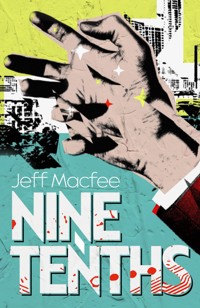
"Dark and moody in the absolute best way." — Peter Clines, New York Times bestselling author of The Broken Room and Paradox Bound Augment phase technology was rare. The last appearance of anything resembling phase technology was fifteen years ago. I knew the date… It was the date of the Doctor Dimension repo. In a world full of "Augments"—humans who use technology to imbue themselves with superpowers of every sort—being an average man would seem a good way to keep out of trouble. Not so for repo man Gayle Harwood. It's his job to seize enhancements from Augments who fall behind on the payments for their high-tech advantages. And they rarely part with them easily. Now an infamous job Gayle was a part of long ago has come back to haunt him. An incredibly powerful piece of tech that was supposed to have been turned over to the government is being used again. People are dying, and those in power are convinced Gayle knows something about it. Unfortunately, they're right. And unless Gayle can uncover the sinister secrets of the past and find whoever has hijacked the lost tech and stop them, no superpower in the world is going to be enough to save him… PRAISE FOR NINE TENTHS "Nine Tenths is a fast-moving, frenetic, first-rate novel about the people with real power." — Simon R. Green, New York Times bestselling author "Nine Tenths is a fantastic blend of the superhero fantasy and the hard-boiled detective. Jeff Macfee is a writer to watch." — Stephen Blackmoore, author of Suicide Kings "Fast-paced, gritty, and suspenseful, Nine Tenths gives a fresh spin to hardboiled detective fiction with a thrill ride into the world of superhero repo." — Meg Gardiner, author of the UNSUB series
Sie lesen das E-Book in den Legimi-Apps auf:
Seitenzahl: 414
Veröffentlichungsjahr: 2022
Das E-Book (TTS) können Sie hören im Abo „Legimi Premium” in Legimi-Apps auf:
Ähnliche


















NINE TENTHS
Copyright © 2022 by Jeff MacfeeAll rights reserved.
Published as an ebook in 2022 by Jabberwocky Literary Agency, Inc.
Cover design by John Fisk.
ISBN 978-1-625675-48-4
This book is a work of fiction. Names, characters, businesses, organizations, places and events are either the product of the author’s imagination or are used fictitiously. Any resemblance to actual persons, living or dead, events or locales is entirely coincidental.
TABLE OF CONTENTS
Title Page
Copyright
Dedication
Chapter 1
Chapter 2
Chapter 3
Chapter 4
Chapter 5
Chapter 6
Chapter 7
Chapter 8
Chapter 9
Chapter 10
Chapter 11
Chapter 12
Chapter 13
Chapter 14
Chapter 15
Chapter 16
Chapter 17
Chapter 18
Chapter 19
Chapter 20
Chapter 21
Chapter 22
Chapter 23
Chapter 24
Chapter 25
Chapter 26
Chapter 27
Chapter 28
Chapter 29
Chapter 30
Chapter 31
Chapter 32
Chapter 33
Chapter 34
Chapter 35
Chapter 36
Chapter 37
Chapter 38
Chapter 39
Chapter 40
Chapter 41
Chapter 42
Chapter 43
Chapter 44
Chapter 45
Chapter 46
Chapter 47
Chapter 48
Chapter 49
Chapter 50
Chapter 51
Chapter 52
Chapter 53
About the Author
The list of people to thank is vast, so a bunch of them get the short stick. If I didn’t mention you, them’s the breaks.
To my wife Karen, who endured numerous claims all the computer time would result in a book, and believed anyway.
To Sean, Rachel, and Riley, who put up with their father’s distraction, as he tried to solve story problems when he should have been parenting.
To my agent Lisa Rodgers, who saw something in my writing and took a bet. May that bet pay off. Also thanks to Richard Shealy for copyediting, John Fisk for cover design, Karen Bourne for editorial notes, Susan Velazquez Colmant for rights work, Patrick Disselhorst for ebook production, and the rest of the JABberwocky team for their support.
To the many writers and writer-friends who read this book in drafts or just supported me. Especially Stephen Blackmoore, Paul Garth, Hector Acosta, and my Viable Paradise crew.
To Mom, who just wanted to buy a book with my name on it.
To Dad, who never got to see this book, but always knew I could write one. I miss you.
CHAPTER ONE
I was sliding mini-jacks under Captain Nietzsche’s jet-car when my phone went off. For half a second, I thought the damn vehicle was vibrating, the modified Firebird ready to blast off. Franklin Nicholas Elmore the Third—AKA Captain Nietzsche—was known to control his vehicle by remote. But the modified ramjets were silent.
My phone buzzed again. I glanced over my shoulder—the Elmore residence was dark. Butt against the curb, I dug out my phone and took the call. No telling when someone from Treasury would spot-check the repo process, looking for holes. When I answered, I didn’t hear some officious bureaucrat. Instead, the voice on the other end shaved ten years from my life.
“Gayle Hardwood. How the hell are you?”
Geographically vague Southern accent. A casual familiarity assumed since our first meeting. And poor timing, always a specialty of the man. Donald Maxwell Spielman. Donny. My old boss and partner. I didn’t answer him right away, and he assumed control of the conversation. “Not much point in ignoring me. You picked up.”
“Donny.” My voice cracked. “Been a long time.”
“Only in dog years.” He chuckled as if required. “Say, you got a minute for an old friend?”
“Kind of busy right now. Maybe we can catch up later.”
“Are you working? Tell me you’re not doing a recovery solo.”
“It’s just Nietzsche—his only power is the car, and that belongs to the bank. Besides, you used to do augment repo jobs by yourself all the time, if I recall.”
“Back in my day, the Augments dressed up like bats and cats. Now they shoot you with armor-piercing rounds from three miles away.”
At the end of the street a truck blew by, orange dome lights flashing. The stubble on my head prickled, my bald noggin sensitive to changes in the wind and Treasury Department entanglements. But the vehicle was just a tow truck.
“What did you need?” I asked.
“Recall when we first met? You were doing a civvie repo. I was after Translucence and the Nowhere Man.”
“Donny, I don’t have time for memory lane. Things to do.”
I could feel him shrug across the miles. “I understand. Guess I’m lucky you even took the call.”
I fished another mini-jack from the grass and squared it with the car, checking the undercarriage for tripwires. Nietzsche knew the bank was after the car—he’d missed three payments, and Liberty Trust had sicced another repo firm on him only last month. Your so-called repossession is the puerile judgment of a moral system, he’d told the bank. I do not recognize it. The other firm had charged in blind, subcontracting the work to chuckleheads who worked augment repo for kicks. One of them went to hook the tow yoke to the front tires, and Nietzsche ignited the liquid fuel. Poor guy suffered third-degree burns on his arms and chest. He was the only one to leave the hospital.
When I’d started in augment repo, I hadn’t known about tripwires or mini-jacks or any other tools of the trade. I only knew what I knew because Donny had taught me.
“I’m listening,” I said.
Across the airwaves, I could hear him crack a smile. “Damn if you aren’t as stubborn as always. Reminds me how much I miss working together.”
I pressed my back against the car and jammed my heels into the curb. Nietzsche had parked his jet-powered mid-life crisis between a Tacoma and a low-slung Caddy. Space wasn’t an issue—the vehicle could take off vertically, and the state had licensed Nietzsche for flight. He’d figured we couldn’t repo the vehicle if we didn’t have room to pull up the tow. Sound logic, if you didn’t consider the mini-jacks I’d used to raise the car and slide the whole shebang out sideways.
“There’s this job,” Donny said. “The players are bigger than I usually care to tangle with. But circumstances make the encounter…unavoidable.”
I pushed. The car started to move. “Didn’t think you were licensed for augment repo anymore.”
“Never claimed I was.”
“Then that’s not repo. That’s theft.”
“If Netherhouse does the repo, it’s not stealing. The firm is still in good standing, I take it?”
Netherhouse Liquidation. My company. Donny’s company, once upon a time. “Since you left, yeah.”
“Then my departure was for the better. As I’ve always said, the good Lord had his reasons.”
The good Lord. As if Donny ever believed in anything but Donny. “What’s the job?”
“It’s interesting you mention my divestment in Netherhouse. Do you remember the Dimension repo?”
I froze. The car almost rolled backwards over me.
“Doctor Dimension is dead,” I said.
“The world believes he’s dead, yes.”
My thigh muscles shook as I replanted my feet and once again slid the car into the street. “A bridge fell on him. That’s been killing Augments since the dawn of time. Believe me—he’s dead.”
Donny kept information close to the vest. He never told you what he was after until he had his gnarled old hands wrapped around it. Ordinarily.
“I think the ring is in play.”
Hitching the jet-car to the tow became more difficult.
“You turned Dimension’s ring over to the Treasury Department. It’s long gone.”
“We executed the repossession paperwork. You know as well as I the ring was never properly recovered.”
A desk lamp glowed on the second floor of the Elmore household. I couldn’t be sure it had been lit a moment before.
“Still. Dimension’s ring was lost. You said it was lost.”
“Nevertheless, this is why I need you. There’s a place on the lake—”
“Stop.”
Saying no to Donny was a tall order. I lived in a world of powerful beings, where women swallowed star systems whole and men birthed suns. But these giants—these near-gods—even they had trouble resisting the heavy drawl of my former partner.
“No,” I said. “I’m sorry, but no.”
He inserted a long, deliberate pause. “Fair enough. Figured I’d ask.”
Another light came on inside Nietzsche’s house, and then another. The place blazed with the angry white light of imminent discovery. “I wish I could, but you know how it is. Can’t risk the business.”
“It’s not a problem. You don’t owe me a thing.”
I hooked the jet-car’s front end to the metal lifts and ignored the stillborn sense of guilt Donny had implanted in me long ago. I pulled open the tow truck door and hopped into the seat. My hand rested on the key as Nietzsche’s front door banged open. Nietzsche himself barged out, black-and-gold suit unzipped and folded over at the waist.
“You know,” Donny said. “I do remember a time you’d have fought to take this gig. For the thrill. To pull one over on the big guys. Government. Augments. Fool them all, good sense be damned.”
Nietzsche tore across the front lawn like a boulder rolling downhill.
“Sometimes,” I said. “The practicalities win out.”
Donny’s final words were lost in the full-throated growl of the tow’s engine. The tires scrabbled at the road as I lurched away from the curb. Nietzsche leapt at the truck and snatched at the mirror as I pulled away, shearing the polymer housing clean off the screws. He was still running when I lost sight of him in the rearview. He clutched the mirror in his meaty fist and hurled it as I spun around the bend. He almost hit me.
Close. Too close. My heart thundered in my chest and I thanked a number of gods both real and imaginary that I had gotten away clean. By the skin of my teeth.
The road flew by. Warm July air blasted through the cracked windows. I sped away from the suburbs and popped on the radio and scanned until I found something released before 1990. Golden Earring. “Radar Love.”
I drove. I felt pretty good about myself. Twenty-five thousand dollars in recovery fees hung from the end of my tow, last month’s rent and payroll covered, and another big repo added to Netherhouse’s resume. Life was looking up.
Still.
Why had Donny called about Dimension?
Why now?
I squashed those thoughts. To hell with it. Donny was always trying to pull someone into his web of lies. Let him jerk someone else around.
I turned up the radio. Let the lyrics wash over me.
Gotta keep cool now, gotta take care.
God damn right.
CHAPTER TWO
Nine AM was early. Repo boom time fell between midnight and five, when augmented debtors were away fighting crime or tunneling under banks or just plain asleep. Luck was found during those in-between hours—the hour of the wolf—and was our best window to swipe the spare laser visor, the jet-car propped on blocks, or the bulletproof suit hung out to dry. Most days, I didn’t roll home until six, and usually I was so keyed up I didn’t nod off until ten. Then I’d sleep until five in the afternoon and start the whole circus over again. This schedule suited the business. But doctors? Doctors’ hours weren’t so flexible. And I had problems that couldn’t keep. Namely, my daughter.
Jamie was seventeen. For a teenage girl dealing with divorced parents, she wasn’t too bad. Attitudinal, to be sure, but she didn’t hate me and didn’t call her mother a bitch, and she concealed her underage drinking to the point I barely noticed. When she raided the liquor cabinet, she refused to pour water in the bottles to disguise her theft. I appreciated the honesty.
It was my week with her, the weeks getting fewer as she contemplated college. I treasured those days, and ordinarily I wouldn’t waste them in a doctor’s office. But Jamie had leukemia. Acute lymphocytic leukemia.
In the waiting room of the Cancer Center, I considered how frustrated Donny made me. In the grand scheme of things, Donny was nothing.
They let me walk back to the infusion room. Banks of padded chairs flanked both sides of the room, the place flooded with bright morning light. Nurses in blue scrubs circulated among the patients, the unfortunates a sampling of Austin’s diversity and proof positive cancer held no prejudice. The patients barely noticed as I passed, their faces buried in paperbacks or television, or their eyes closed, lost in thought. Jamie sat on the end, wrapped around her iPad, a needle and tube running into the portacath below her collarbone. She wore a beige tracksuit and a short haircut, and there were bags under her eyes.
I sat in the lime green guest chair. I watched her read.
“How’s this one?” I asked.
She swiped at the screen. Kept her head down. “Same as the last treatment. I won’t know until tomorrow.”
“I meant the book.”
“Oh. Not bad. Main character is kind of a dick, though. He’s preachy.”
“Hate that.”
“Yeah. Me too.”
I folded my hands in my lap and studied her. “How do you feel?”
“The Thing is being a bitch.” She’d named her tumor. We watched the Carpenter classic as often as we could. Popcorn. Candy. Lights out.
“It’s weird and pissed off, huh?”
She grunted. She didn’t bite on my quote. “I feel bloated.” Swipe, swipe. “I need more sweatpants.”
Last month it had been a private tutor to help raise her math scores. She was retaking her SATs.
“You look great, honey.”
Her eyes flicked up, then returned to her screen. “How’s Mak?”
“Good. Asleep, I assume. We don’t keep banker’s hours.”
“You don’t have to be here, you know.”
“That’s not what I said.”
She shrugged. Tongued a sore blossoming in the corner of her mouth. The silence dragged.
“How’s Larry?” I asked.
“Fine. He’s writing a book about The Cloud, but then, who isn’t?”
I nodded like I followed. Larry and I couldn’t talk. We’d start with sports and inevitably he’d drift into computers and IP and I wouldn’t know if he was talking about intellectual property or something else. Plus the whole fucking my wife thing. His wife. Whatever.
“I got an email from administration, plus some stellar white envelopes.” Jamie took a deep breath. “Apparently, you missed a payment.”
She’d fanned three envelopes on the bedside table. The corners of the envelopes looked sharp enough to poke out an eye.
“What about your mother’s insurance? Charlie used to get everything covered, including her damn back massages.”
Jamie reached up and rubbed a spot between her eyebrows. A gesture of mine—one I used when I wished all life’s hassles would disappear. “Do I really have to get in the middle of this? Now?”
The bills. Money. My ex-wife Charlene—Charlie—worked for the State, and Larry wrote technical books on spec. I co-owned the augmented recovery firm Netherhouse Liquidation, but throughout the years, Mak and I had taken a survivor’s pride in our lack of benefits. A normal doctor’s visit was nearly unaffordable, and as for augmented treatments, those were right out. Lady Laser cost six figures easy, and that’s before you factored in her incidentals. I was closer to buying the Taj Mahal. The good vibes from last night’s repo faded.
It occurred to me—Donny hadn’t said what his repo would pay.
“We’ll figure it out,” I said. “Don’t worry.”
“Yeah. That’s what Mom said.”
The conversation died. Jamie kept her nose in her book and I watched one of the shared televisions and tried to ignore a garlicky stink I associated with the cancer. There was a moment, an earth-tilting I can’t believe this is happening moment where the reality of my daughter’s condition hit me right between the ears. I saw her in the hospital at birth, two days in the NICU, her veins collapsing under a barrage of needles. I saw her the day we learned about the cancer, her face distorted in a silent scream.
My daughter. Never not sick.
But other images bullied their way into my head. Jamie, dragging herself to the Cancer Center treatment after treatment. Religiously attending school. Talking about water polo in the fall.
My daughter. Stubborn as all hell.
Still, I couldn’t make myself linger. I told Jamie I’d see her outside and slunk back to the waiting room. She never looked up from her iPad. I glanced at a clock on my way out and noticed I’d only been in the infusion room for fifteen minutes.
The lobby felt oppressive. All walnut paneling and low-backed wicker chairs and sound-absorbing Berber carpet. Even the grandfather clock had the pendulum muffled. It was the kind of quiet that made me sweat. I fled outside so the Texas heat could remind me I was alive. But clouds boiled on the horizon. Turned the air from a cleansing fire into a simmering stew. Nevertheless, I figured I could endure. Jamie was fighting the cancer by killing her body. The least I could do was suffer a little heat.
And then I saw the woman in the car.
CHAPTER THREE
She was a lump in an ill-fitting suit waiting in an Oldsmobuick the color of a dead elephant. She pitched Swisher Sweets into the potholes. Treasury Agent Barbara Cahill. She appeared to be alone, but a fed with a radio was never wanting for company.
Barb had seen me—there was no use hiding. I approached the car and she smiled, revealing mismatched yellow teeth. Even sitting, she had swagger. She was a pain in the balls, but less uptight than most of her brethren. Fun to drink with, although I wasn’t excited to see her in the daylight hours. But she punched a clock for the Treasury Department, and the Treasury Department regulated augment repo.
“This is bold,” I said. “Even for you. Maybe consider boundaries?”
“Elbridge wants to see you.” She raised her hands like I’d demanded her purse. “Don’t shoot the messenger.”
Government hassling was part of the gig. Had been in Donny’s day. Was du jour in mine. “I’m on a personal matter. Can this wait?”
“You got a hot date? If her name is Destiny, it doesn’t count.” She cackled.
“Respectfully, Barb, you can fuck off. You need contracted repo, call someone else. Netherhouse doesn’t do sanctions.”
Barb cleared phlegm likely percolating since the eighties. “Who mentioned sanction? This isn’t a government contract. You’re a person of interest. Boss asked for Netherhouse quite specifically.”
If she was a cartoon, the alcohol would have radiated off her in waves. She must have started on the Bushmills at sunup. I could be sympathetic to her reasons, but not when she harassed me within spitting distance of Jamie’s chemo.
“What if I say no?”
“Temporary injunction. Boss pulls your paper and you can’t do repo until a judge clears you. Three-week backlog on that.”
I thought about three weeks without any work. And the resultant lack in pay.
I could still smell the garlicky stink of the Cancer Center.
“Where are we going?”
CHAPTER FOUR
Barb drove in a way best described as approximate. Approximately within her lane. Approximately within the speed limit. Her badge excused her disregard for traffic laws. It did not excuse her taste in music. She drove the car with the volume cranked all the way. Bob Seger. “Like a Rock.”
“Seeing as you’re violating my constitutional rights,” I said, “the least you could do is play some good music.”
“Quit your huffing and puffing.” She chuckled and bumped a knob with her finger, changing the volume not one iota. “Constitutional rights. You’re a riot.”
I regretted not staying with Jamie. My daughter claimed she’d call a rideshare—they had augmented rickshaws and stilt-walkers now, if the suburban comfort of a Toyota Avalon wasn’t your speed. My departure had left her unsurprised if not unconcerned.
Bleary-eyed, I stared out the window and watched the grey smear of rain move over the city. Man still endured the whims of Mother Nature. Manhattan’s fleet of weather-control drones was constantly on the fritz. LA’s had gone rogue. As for Austin, we lacked the financial wherewithal and the will. So, instead of scheduled sun, we got another summer rainstorm. It was probably for the best—the politicians never would have kept the project in the black. They’d have owed billions to some corporation or nation-state, and commission aside, I didn’t relish the idea of attempting to repossess several thousand semi-sentient flying machines from the City of Austin.
Once the rain started, Barb turned down the radio. “How’s the family?”
This, after ambushing me at my daughter’s chemo treatment. “They’re great.”
“Still divorced?”
“Yeah. You?”
She grinned into the rear view. “No man can handle me.”
The wipers dragged across the window.
“You hear from your dipshit ex-partner?” she asked.
Barb and Donny. Two cigarette butts floating at the bottom of the same tin can. They shared a love for whiskey and western music, and either hated one another or were secretly fucking. Maybe both. Dipshit and shitstain were commonly exchanged terms of endearment.
“Why would I hear from him? Ex-partner.”
“I thought he was working again.”
I rubbed my chin, covering my lips so she wouldn’t see the twitch. “Not that I’m aware. Why—what did you hear?”
She shrugged. “You know Donny. Man loves to hear himself talk.”
After this revelation, Barb fell quiet for a while. The scenery around us changed, seventies ranch-style homes replacing five-bedroom, four-baths. Barb scrutinized the surroundings as we drove through.
“Didn’t you work a case back in here?” I asked.
“Ladykiller.” Underneath the cashed-out veneer, the cop stirred. “Eighty-one and eighty-two. He hunted and killed Augments. Only women.”
“You caught the guy, right?”
“Nothing that stuck. Although I know it was the husband of the first victim. He never did sit right with me. SOB claimed he could hear what they really thought of him. The women. Like he actually believed it, said it was an augment power. Pushed him off his rocker. Course, none of the good old boys listened.”
“Didn’t you complain? Light a fire under them?”
“I was the only woman in the department. They only involved me in the case to talk emotions with the females.” Her fingers tightened on the steering wheel. “Motherfuckers never gave me a lick of credit.”
“Now they got you driving me around,” I said. “To god only knows where. Like a chauffeur.”
“The fix is in. I get a whiff of a lead, and they take the case away from me.”
“Like this thing today, right?”
“I’m always on the outside. If they put me on the team, I could tell them—” She caught my overly interested face in her rearview. She sneered at me. “Nice try, Harwood. Nice try.”
We didn’t talk much after that.
Barb put us on the highway headed south, bumper-to-bumper traffic made worse by the storm. At the split, she took the upper deck and swung her government-issue sedan off the first exit at MLK. We spiraled toward Royal Memorial Stadium. Huge banks of lights hung overhead, dimmed. The wind had petered out, leaving sad flags wrapped around their poles. There was activity at ground level—cops in rain slickers directing traffic, guys in dark suits pulling over cars and turning aside pedestrians. Barb steered past the bustle and under the shadow of the stadium and halted before a series of chained steel barricades. She flashed her lights. Three hooded figures peeled out of the grey. One stopped at the barricade while the other two approached the car. I zipped down my window.
“Look, officer.” I produced my best concern for authority voice. “Can you tell me what’s going on?”
A human skull appeared. Vacant sockets turned my way, and a gap-toothed jaw unhinged to let loose a low hiss. A giant black fly passed through her bottom teeth. I smelled fertilizer and decay. The threshold of Hell.
Scythe. The living Death.
Scythe was an Augment in the employ of the Treasury Department and rumored to have the power to steal life. She moved slowly, but she moved with purpose. They say if she hadn’t agreed to work for the government, Treasury would have killed her on the spot. If they could manage it. If she could die.
I leaned back and rolled up the window before she could suck my soul into her gaping maw. I turned to Barb for an explanation, but she had her own problems.
Barb’s augmented escort was Donna Holmes. Donna worked freelance, and I’d seen her around. She could replicate herself to a maximum of four copies. One of her watched Barb, and another stood near the barricade. They exchanged looks with each other, and I wondered how they communicated. Did she have one brain or two? Did one copy control them, or were they no more coordinated than a flock of birds?
The copy at the barricade had a nose ring and a pistol. The other did not.
These were the kind of Augments Netherhouse stayed away from. Miles away from. Scythe was a Spectral, an Augment associated with the afterlife. There were supposedly a few Spectrals floating around Austin, like rumors. The flower girl at the Driskell Hotel. Antoinette, the leaping lover at Mount Bonnell. The translucent figure taking potshots at tourists around the Governor’s Mansion. The government took these ghost stories seriously—exhibit any one of the prohibited powers, and you went on a permanent vacation to parts unknown. You didn’t mess with the afterlife. Or invulnerability. Or phasing.
I pushed Donny and his baggage from my mind.
Finally, Barb stumbled upon the magic words. Donna—whichever copy was in charge—approved our passage. She waved us through, her twin unchaining the barricades and dragging them aside. Scythe also pulled away from the car, leaving a dusty contrail in her wake. I felt as if bony fingers had reached for my soul only to stop short at the last moment. I figured that was the point and probably why Scythe was on guard duty in the first place.
Scythe. The living Death. On guard duty.
We drove. As we passed the barricades, I glanced out the window and watched the drizzle cut out as if on a switch, and suddenly the dark stadium blazed to life. Huge overhead lights bathed the pavement in a diamond glow. More standing floods burned white-hot near the stadium entrance and at the edge of the field. The place was lit up like Christmas.
We cruised to the edge of the concession tunnel and jerked to a halt. I sat in the back and waited until Barb came around and opened the door. We walked into the busy tunnel, Treasury agents marching to and fro, none of them acknowledging our presence. The concession stands were shuttered and the restrooms blocked by folding tables covered in paperwork. Standing next to the closest table was a familiar face.
“Hey, Mak,” Barb said. “You ready for the big leagues? Got a desk at Treasury where you might fit.”
Makareta Black flipped through a file she probably wasn’t supposed to have. She was hard to miss. She stood six foot two. Displayed a proud mat of tangled black hair. She had big cheekbones and no makeup and a very direct stare.
And the spider moko. Blue swirls carved into her chin.
“Somebody has to babysit the old man,” she said. “He’d be lost without me.”
She winked at me.
One of the passing agents nearly tripped over his shoes to ogle my partner. As I looked at Mak in her jeans and baggy Cowboys jersey and the heeled boots she didn’t need, I tried to fathom the appeal. She was a good four inches taller than me. A bit broad in the shoulders. She had two left feet. How would we have danced?
Mak felt the same. She’d once compared me to grapefruit juice. Oddly colored and sour.
A pair of agents wheeled a cart laden with tripods and recording equipment up a ramp and onto the field. Another agent came down the ramp cradling glass jars full of black dirt.
“What the hell is going on?” Mak dropped the file back on the table. “You dragged us all the way out here. What’s the fuss?”
Barb nodded at the ramp. “Up there,” she said, like she’d explained everything.
Mak and I exchanged shrugs. We marched up the ramp, Barb trailing in our wake. I smelled ozone and burning motor oil but didn’t hear a drop of rain. Royal Memorial was open-air, not domed. Considering the weather, a layer of fine mist should have coated us from head to toe.
We stepped onto the field and saw the bus driven nose-down into the turf at the forty-five-yard line. Stabbed into the grass like a knife into green cream cheese.
I stared at Barb. She gave me that fuck you grin backed by thirty-plus years of looking at the world through a cop’s eyes. “Still think you can talk your way out of this?”
I didn’t. Think I could talk my way out of it.
God help me if I was right.
CHAPTER FIVE
The floor of Royal Memorial was a madhouse. Agents in blue-and-yellow raid jackets labeled TREASURY swarmed the field. A cluster of them assembled a scaffold under the bus’s rear end, while others lugged oversized garbage bags. More folding tables were arranged beneath the bleachers, their surfaces littered with bagged eyeglasses and phones. A loudspeaker erected at the fifty droned a constant stream of numbers and names. The acrid burning smell was strong. They’d have to bleach the field just to eradicate the stench.
I took it all in. I didn’t know what to say.
“Check it out.” Mak aimed a finger at the sky. “They hired a Bird.”
Augment shorthand appeared not long after the Augments themselves. Instead of describing Contrail as a device Augment with a belt powered by jets of concentrated hydrogen peroxide, Joe Taxpayer said Bird. And there were more nicknames. Gills, Speedsters, Spectrals. A litany of goofball monikers. Boiling the beautifully complex down to cutesy references you’d expect from a four-year-old.
I watched the Bird. He circled the field with his cape snapping in the wind. Behind him, the sky was dark coffee, a blank canvas devoid of stars. I remembered the drive into the stadium. The too-static background, the limp flags, the slightly mismatched sky. There was a reason we couldn’t see the stadium lights from the highway.
“Faraday cloak,” Mak said. “Never seen one this big before.”
“The whole point of a Faraday cloak,” Barb said from behind, “is that you don’t see it.”
Royal Memorial was one of the largest football stadiums in the world. The complex sat one hundred thousand and end-to-end ran nearly a quarter mile. Hiding the stadium was impossible, but augmented devices routinely performed the impossible, and a Faraday cloak was no exception. Woven of charged conducting material, the Faraday cloak protected as much as a typical Faraday cage, and more. Television signals and RFID tags couldn’t broadcast through the curtain’s electrical field. But unlike a Faraday cage, the Faraday cloak blocked external radiation and altered it. A specific pattern of charges could produce images on demand—say the image of a dark and empty football stadium. The curious and the augmented curious were thwarted—no gamma or X radiation penetrated the barrier. The Faraday cloak was the perfect tool for Treasury to throw a blanket over this accident. If that’s what it was.
Barb pushed me between the shoulder blades, in the direction of the bus’s nose. As we walked, she reached into her jacket pocket and found her cigars. She fumbled one between her fingers and lit it with casual disregard, her knuckles disappearing into the flame of her lighter. She projected the air of someone who had seen it all before.
“What is this?” I asked.
“You’ll have to ask the man.” Barb walked through a smoke cloud of her own making. “I just work here.”
As we drew closer, I began to make out details. Oil and brake fluid dripping into the field, seeping through the turf’s fibers and infill. The accordion doors hanging open. Along the sideline, civilians sat with heads in hands, bloodied polos and pantsuits sticking to sweaty skin. A young man poked at his phone and furrowed his brow. The front of his T-shirt was covered in arterial spray.
Farther down the line lay a couple of stretchers and white sheets. What the sheets covered wasn’t large enough to be bodies. Not complete bodies, anyway.
Yellow police tape and a crowd of agents obscured the nose. Barb herded us in their direction. We were stopped, wanded, and patted down. After Barb was cleared, she ducked under the tape and beckoned for us to follow.
“You ever seen anything like this?” Mak asked.
She wanted me to say no, but I was becoming convinced that would be a lie.
I needed to get away.
I needed to call Donny.
We moved through a crowd of agents. Up close, we could see where bus met ground, and the trough was far too shallow for a normal crash. Grey earthen slurry covered the front of the bus and extended outward in a ragged circle for three or four feet. The harsh smell of burning metal flooded my nostrils, again mixed with an ozone-like crispness.
At the circle’s edge knelt a man. I knew him.
Barb put a hand on my arm and squeezed. “Stay here and be quiet,” she said.
Andrew Bradley Elbridge, State Treasury Secretary, squat with his back to us, drawing one long finger through the dirt. Words dribbled from the corner of his mouth and the nearby agents nodded, soaking in his wisdom. The top of Elbridge’s head bobbed as he talked, the combed-over black hair so waxed, it looked plastic. He shook his head at something, then drew his hand through the dirt scribblings and wiped them away.
Elbridge was Sherlock Holmes inspecting cigar ash. Elementary, my dear Watson. He was a giant ass.
The State Treasurer didn’t notice our arrival. Barb was forced to stand behind him and wait.
Inside the circle with Elbridge stood an Augment I didn’t recognize, a young lady wearing a gold-and-glass eyepiece over her right eye. Part of her skull was shaved to expose flashing circuitry, behind which dangled a butter-colored ponytail. The costume she wore was slick, an almost liquid platinum with three discrete gold eyes sewn into the right shoulder. A leather bandolier crisscrossed her chest. She was likely a Modjob, an Augment built with government dollars or by a rogue defense contractor.
Elbridge was talking to her. At her.
“And this will help you identify the man? This…procedure?”
She mumbled a response.
“You better speak up if you expect me to hear.”
“No, sir.”
“Clarity,” Mak muttered. “She’s new.”
Clarity knelt and put a hand to her chest. She pinched the bandolier between her thumb and forefinger and extracted an eyedropper from a slit in the leather. It was clear plastic, not much bigger than my thumbnail. She shook it vigorously, then twisted off the cap. She licked her lips and squinted up at us nervously.
“You’re all safe. I mean, so far.”
I couldn’t see Elbridge’s face, but I could tell he was irritated.
“Right,” she said to herself. “Get going.” She tipped the dropper upside down and squeezed. Three clear drops ploinked into the shallow ditch at her feet. The earth darkened. After a moment, Clarity capped the dropper, pinched the bandolier, and returned the augmented chemicals to their pouch.
“Everyone okay?” she asked.
“You haven’t done anything yet,” Elbridge said.
Clarity nodded, then took a deep breath and put her hands into the damp earth. She kneaded, counting silently. One one thousand. Two one thousand. She recited numbers until she reached seven then spread out the remains, casting the dirt like seeds.
The crowd of agents watched in silence.
Click. Click-click-click. The Augment twisted at her eyepiece, the many sections rotating opposite one another. As the sections rotated, they popped and clicked like a swarm of beetles. I shuddered.
The process continued for a while. Clarity stood and paced, things crunching under her boots. Bones? Old stadium tiles? Clarity remained unfazed. She passed us and I noticed she wore no cape—her shoulder blades stuck through the back of her costume.
“Girl needs a burger,” Mak whispered in my ear.
“We can’t take all day, young lady.” Elbridge said. “Lest you want to practice with the football team.”
A couple of Elbridge’s cronies laughed. Barb was right in there chuckling.
“I’m sorry, Mr. Elbridge,” Clarity said. “I’ll try to go faster.”
“Faster than this shouldn’t be any challenge.”
The girl nodded. Her eyebrows knit together and she continued to pace around the impact zone. She muttered to herself. “Change in water content changes the pressure, changes the gas-exchange.” Two steps. “Twelve-hour period for the biochemical reaction.” Three more steps.
She stopped. She bent to touch the ground. When she spoke, she was a different person. Confident.
“I’ve found a signature. There’s at least one identifiable DNA structure.”
Elbridge smiled his tax collector’s smile. “Go on.”
Barbara Cahill had a hack’s feel for timing. She laughed before the punchline. She arrived at parties too soon and left when the hosts were bleary-eyed. And right as I was about to catch a critical piece of information, she interrupted Elbridge to tell him we had arrived.
Elbridge leveled a stare that would melt steel. “What in the hell are you talking about? You brought Netherhouse here?”
Everyone seemed to notice Mak and me at the same time. Clarity aimed her googly eye in our direction, and the nearby agents stepped away. Elbridge rose, his head angled for the Stetson I’d seen him wear but today was absent. He approached slowly, as if he didn’t trust the ground we stood on.
“Hello, Andy,” I said.
“Hardwood.” He’d always mispronounced my name. The joke stale from the word go. He scratched behind his ear. “I don’t know whether to laugh or to cry.”
“I said hello.”
“I heard you.” Elbridge lifted his chin toward my partner. “How you doin’, Makareta?”
“Just fine.”
I could practically feel Mak ramping up her augment powers. Mak was a Natural. Born with augment ability. She could lower a man’s inhibitions—drop his guard in a mild buzz sort of way. But she wasn’t invisible. In a crowd full of Augments and paranoid Treasury agents, she’d never get away with bamboozling the Secretary. Nevertheless, she furrowed her brow. Dialed in her power and set it on a hair trigger.
In some ways, Naturals were the scariest, as you couldn’t revoke their powers. Not easily.
“You said you wanted to talk to them,” Barb said.
“At the office, I said. At the office.” Elbridge frowned at us, at Clarity and the hole behind him. He shook his head. “Everybody clear out. I need to talk to Netherhouse.”
Clarity attempted to leave. Elbridge put up a hand. “Not you, young lady.”
“How about me?” Barb asked. “Where do you need me?”
“I need you doing anything useful. I don’t know. Go check the perimeter.”
Barb retreated with shoulders hunched. I wondered if I treated her as dismissively as Elbridge. Thirty years of service, only to be shooed away like a stray. Why would you endure it? What would it do to you if you did?
Once the agents departed, Elbridge removed his blazer, making a big show of smoothing the wool and laying it out flat on a square of unchewed turf next to the bus. This was typical Elbridge. He’d spend two minutes fussing with his wardrobe but not two seconds tending to the feelings of those in his employ. He had a cherub’s features, a mouth that wanted to settle into a smile, even as he delivered grim news. But the good humor never took root behind his eyes. He used his trustworthy face and cowboy stance and record of law and order to get elected. Reelected. There was even talk he’d run for governor.
Elbridge pulled reading glasses from the pocket of his dress shirt. The shirt was chalk white, starched, and monogrammed on the cuffs. ABE. Andrew Bradley Elbridge.
Governor.
He unfolded the glasses and hooked them over his ears. He fumbled his phone from his pocket and broadly swiped at the screen until he found what he was after.
“Just after five this morning, two unidentified witnesses observed a Capital Metro bus behaving erratically. The bus missed its stop at Dean Keeton and San Jacinto and continued south, driving over several medians and nearly totaling a guard station. The bus then, and I quote, ‘pulsed in place for approximately five seconds, after which it completely disappeared.’”
Elbridge waved his phone at the bus. Continued reading.
“Metro dispatch confirms they lost contact with a seven-line bus between five and five-thirty. Bus 9805 failed to respond to repeated radio calls, and subsequent buses failed to spot 9805 on that route or any other.”
He stopped and stared at us. When we didn’t react, he unhooked the glasses and waved them at Clarity. “Give them what you found, honey.”
Clarity flared her nostrils, and I wanted her to fight back. Instead, she steadied her eyepiece and took a deep breath. “I can’t be one hundred percent certain, but there are strong indications of phase technology at work.”
My stomach flip-flopped. Augment phase technology was rare, and not a single natural Augment with the power was known to exist. The last appearance of anything resembling phase technology was fifteen years ago. I knew the date. It was the date of the Dimension repo.
“Strong indications?” Mak asked. “You’re not positive?”
“Not one hundred percent. I can only read indications. Patterns in the chemical makeup and vapor results from post-incident breakdown.”
“Wait one minute,” Elbridge said. “An hour ago, you tell me it’s phasing, and now it isn’t? What kind of game are you running?”
I watched Clarity blanch under the stadium lights and the heat of Elbridge’s glare. “My powers don’t work that way, Mr. Elbridge. I only told you what I thought.”
“I wasn’t interested in your opinion. I was interested in results. Law enforcement isn’t a profession of opinions.”
Clarity withered.
“Get out of the hole.” Elbridge jerked his thumb over his shoulder. “Matter of fact, get out of the stadium. Get out of my sight in the entirety. You wander into another one of my crime scenes and I’ll have all your equipment impounded.”
She came topside with color in her cheeks. She walked past me with some pride—her head held high, her back straight as a board. The effort was wasted on Elbridge. He looked at me and shook his head, like I shared his frustration.
“Kind of a dick move, Andy,” Mak said.
Elbridge folded his glasses and slid them back into his breast pocket. “You don’t understand how often this happens. These kids come down here and promise they can do the work, and then we get them where the rubber meets the road and they fold. Media loves these augment types, but nine times out of ten, they’re all flash and no substance.” He looked at Mak and did that thing where he appeared to smile. “Present company excluded, of course.”
“Of course.”
I raised a finger. “Is there a reason we’re still here? Other than the conversation?”
“You’re not supposed to be here at all. I ordered Barbara to question you, not give you a tour. But since that cow is out of the barn.” He moved closer. He smelled like burnt coffee. “Where were you this morning?”
“At five? Sleeping.”
“Anyone verify that? Your wife?”
He knew I was divorced.
“No.”
“What about your kid? You got a daughter, don’t you?”
Mak looked at me.
“She lives with her mother. I don’t see her much.”
“Ah. Well. That’s too bad.” Elbridge shook his head. “Kids are wonderful.”
Jesus.
“I wonder, Hardwood, what your daughter thinks about the work you do. The lies you tell.”
“Again with this?”
“I’m not talking about a single white lie.” His lowered his brow, drill-sergeant-style. “But an entrenched history in your entire industry. Lies and bribery and theft.”
I was uncomfortable, and it wasn’t due to the lights beating down on me. “Those other firms aren’t us. Netherhouse is clean.”
Elbridge licked his lips. Considered. “How about you, Mak? Where were you?”
“At the gym.” She pumped her arms up and down. “Working out.”
“You have witnesses?”
“There’s a guy in a blue tracksuit always checking out my ass. You could ask him.”
“That’s all right.”
“I think he’s straight. More than likely, he won’t check out your ass.”
Elbridge winced. “We’ll confirm with the gym manager. Don’t worry about it.”
“Who’s worried? My ass looks great.”
The Secretary was not amused. He looked like he’d swallowed a bucket of piss. “You know, there’s a marked lack of respect here. This incident—I like you guys for this.”
I kicked at the earth. “For the hole?”
“We’re standing in the middle of phase debris.”
Mak walked the edge, peered down between her feet. “I hate to agree with Gayle, but it looks like your garden-variety hole.”
Elbridge persisted. “Fifteen years ago, Netherhouse repoed Doctor Dimension’s phasing ring. Augment device serial numbers were compared at the site and all sixteen digits of the ADSN matched. But before the ring could be collected by Treasury, Dimension broke loose from holding, and there was that shitstorm down by Lady Bird Lake and the ring was lost.”
Mak shot me a look out the corner of her eye but I didn’t acknowledge it. Couldn’t.
Elbridge continued.
“I wasn’t there, but I remember reading about it. Hell of a thing, Netherhouse cornering Dimension where every government agency failed. I’d always wondered how you guys pulled the thing off him.”
“I didn’t.” The words stuck in my throat. “My partner recovered the ring.”
“Not me,” added Mak. “Before my time.”
“Your partner.” Elbridge stuck his hands on his hips. “You hear from him?”
“Who?”
“Donny. When did you last talk to him?”
The phone in my pocket radiated guilt.
“He’s my ex-partner. And it’s been ten years, easy.”
“We’re pulling his phone records. We’ll know if you’re cooking up a lie.”
“Now you’re just badgering me.”
Elbridge cocked his head. “You seem uncomfortable, son. The question bothering you?”
Pause. It felt like even Mak was waiting for me to answer. “If he calls, I don’t answer. The partnership dissolved. Our relationship was purely professional. There was no reason to talk after.”
“He still in the business?”
“No.” I pictured the turf beneath me as the surface of a frozen pond. Full of cracks. “Not last I knew.”
“The Donny I remember loved repo. Considered it legalized theft. He held a particular contempt for those in public service and delighted in tweaking our noses. No way he quit.”
There was history there. Donny beat a Treasury rap a dozen years back, a case built by Elbridge.
“Not to be a pain”—Mak watched me like a hawk—“but what does all this have to do with Donny?”
It felt like she was asking me the question. Fortunately, Elbridge answered. He waved his hand at the bus jammed into the earth. “Who do you think is responsible for all this hoopla?”
I watched him. Elbridge trying to lawyer me, lead me where he wanted me to go. “You telling me Donny had a hand in all of this?”
“Didn’t he?”
“What makes you think he could move a city bus?”
A dark something flashed in Elbridge’s eyes. “Suppose Dimension’s ring was never destroyed at all. Suppose Donny kept it.”
Not so much as a blink disturbed my face. “That’s nuts. You’re grasping at straws.”
Elbridge produced a genuine smile. He approached the line of tables and flipped through the plastic bags. He found the one he wanted and chucked it into my hands. Inside the bag was an old-style clamshell phone.
“We’ve already checked,” Elbridge said. “The number’s his.”
You remember the Dimension repo?
I think the ring is in play.
A chill raced up my arms but I shrugged and flung the phone back at Elbridge. The cell hit his belly and fell to the ground, forcing him to stoop to retrieve it.
“Maybe he sold the phone,” I said. “You’re familiar with Donny and his schemes.”
Mak played spectator. Her chin swung side to side like she was watching a tennis match.
“I do remember his schemes, now that you mention it,” Elbridge said. “Which is why we put the new girl on forensics. Despite her chickenshit performance tonight, she comes recommended. Puerto Rico sent her. She worked Maria.”
“Worked?”
“After. Recovery and identification of remains.”
I stared blankly.
“DNA,” Elbridge said.
I looked down at the turf. At the dirt on my pants and my shoes. The smudges on Elbridge’s hands.
“Donny was on the bus,” Elbridge said.
CHAPTER SIX
After Elbridge released us, Mak bought a breakfast sandwich. Egg McMuffin with an extra slice of ham. She gnawed on the toasted muffin and dribbled bits of egg between her legs. I nursed a lukewarm cup of coffee and dug fingernail grooves in the Styrofoam.
The clock threatened to turn eleven, and I hadn’t slept in over twenty-four hours. Donny was dead. Dimension’s ring was in play.
“We should have asked for a lawyer.”




