


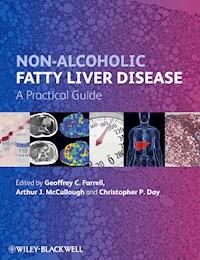
Non-Alcoholic Fatty Liver Disease E-Book
119,99 €
Mehr erfahren.
- Herausgeber: John Wiley & Sons
- Kategorie: Fachliteratur
- Sprache: Englisch
The sharp rise in cases of Non-alcoholic fatty liver disease is fast becoming one of the major concerns for hepatologists worldwide. This comprehensive clinical guide explains how to diagnose NAFLD and manage patients according to the best standards of care. Contributors from the world's leading institutions concentrate on patient care, drawing on their extensive experience.
Sie lesen das E-Book in den Legimi-Apps auf:
Seitenzahl: 762
Veröffentlichungsjahr: 2013
Ähnliche




















Table of Contents
Title page
Copyright page
List of Contributors
CHAPTER 1: What is non-alcoholic fatty liver disease (NAFLD), and why is it important?
What is NAFLD?
What is non-alcoholic?
Steatosis and NASH
Pathological definition of NASH
NASH without inflammation or fat? The special case of cryptogenic cirrhosis
Does NAFLD matter?
Do recent advances allow us to suggest a better name than NAFLD?
What isn’t NAFLD?
A practical (clinical) definition of NAFLD
Need for consensus of definitions
Is NAFLD an epidemic, and how common is NASH?
Risk factors
Presentation, clinical features, and associated disorders
Can we prevent NAFLD?
Reversibility of NASH: perspectives on lifestyle, obesity interventions, and drug therapy
CHAPTER 2: NAFLD in the community
Introduction
Defining NAFLD
Diagnosing NAFLD
Prevalence of NAFLD
Conclusions
CHAPTER 3: Pathology of NAFLD
Introduction
Adult fatty liver disease
Fibrosis patterns
Is NAFLD “identical” to ALD?
NAFLD in children
Evaluation of NAFLD and NASH: staging and grading
Technical liver biopsy considerations
CHAPTER 4: The natural history of NAFLD
Introduction
Long-term prognosis of patients with the whole spectrum of NAFLD
Long-term prognosis of patients with simple steatosis or non-alcoholic steatohepatitis (NASH)
Long-term prognosis of patients with NAFLD with advanced fibrosis and cirrhosis
Fibrosis progression in patients with NAFLD
Conclusions and future directions
CHAPTER 5: Emerging concepts on the pathogenesis of non-alcoholic steatohepatitis (NASH)
Introduction
Part 1: The fatty liver and the metabolic context of obesity
Part 2: Evolution from steatosis to NASH: what do we know about pathogenic determinants?
Concluding comments and agenda for future research
CHAPTER 6: Diabetes and NAFLD: why is the connection important?
Introduction
Fatty liver is a major determinant of insulin resistance and the metabolic syndrome
NAFLD and risk of developing type 2 diabetes
NAFLD, diabetes severity, and microvascular chronic complications
Liver-related morbidity and mortality in type 2 diabetes
Diabetes and hepatocellular carcinoma
Implications for treatment
Conclusion and future perspectives
CHAPTER 7: NAFLD and cardiovascular risk factors: implications for vascular disease
Introduction
NAFLD and CVD risk factors
NAFLD and increased prevalence of CVD
NAFLD and increased incidence of CVD
NAFLD and CVD: causal effect or epiphenomenon?
Conclusions
CHAPTER 8: A primary care perspective of fatty liver: diagnosis, management, prescribing, and when to refer
Introduction: fatty liver and the metabolic syndrome
Diagnosis
Evaluation
When to refer
Management
Conclusions
CHAPTER 9: Imaging of NAFLD
Introduction
Imaging evaluation of hepatic steatosis
Imaging evaluation of fibrosis and cirrhosis
Imaging evaluation of non-alcoholic steatohepatitis
Conclusion
CHAPTER 10: Non-invasive methods to determine the severity of NAFLD and NASH
Introduction
Liver biopsy
Non-invasive assessment of hepatic steatosis
Non-invasive assessment of NASH
Non-invasive assessment of fibrosis
The future
CHAPTER 11: Fatigue, quality of life, and psychosocial issues for people with NAFLD
Functional ability in NAFLD
Symptoms in NAFLD
Fatigue in NAFLD
Excessive daytime sleepiness
Autonomic nervous system dysfunction
Depression in patients with NAFLD
Engagement in physical activity
Management of symptoms experienced by patients with NAFLD
CHAPTER 12: Physical activity and cardiovascular fitness in patients with NAFLD: clinical importance and therapeutic implications
Overview of physical activity, exercise, physical fitness, and energy expenditure
Importance of physical activity for health – being sedentary and/or inactive
Measuring physical activity and assessing physical fitness
Potential metabolic and other benefits of exercise in NAFLD
Physical activity and fitness in NAFLD
Intervention studies in NAFLD
Conclusion
CHAPTER 13: NAFLD, obesity, and bariatric surgery
Severe obesity and bariatric surgery
Non-alcoholic fatty liver disease (NAFLD) and bariatric surgery
Closing comments
CHAPTER 14: Genetic predisposition to NAFLD and NASH: implications for pathogenesis, diagnosis, prevention, and management
Introduction
Genome-wide association studies in NAFLD and NASH research
Genetic modifiers of NAFLD pathogenesis and progression
Conclusions
CHAPTER 15: NAFLD in children
Epidemiology
Natural history
Signs and symptoms
Diagnosis
Liver biopsy
Blood biomarkers
Imaging techniques
Treatment
Nonpharmacological interventions
Medications
Conclusions
CHAPTER 16: The pointy end of the NAFLD iceberg: cirrhosis, portal hypertension, and liver failure
Disclaimer
Introduction
Epidemiology
Progression of NASH to cirrhosis
Cryptogenic cirrhosis
Histopathology of late NAFLD and cirrhosis
Clinical outcomes of advanced NAFLD and cirrhosis
Diagnosis and presentation
Treatment of NAFLD cirrhosis and complications
Transplant considerations
Conclusions and future directions
CHAPTER 17: Non-alcoholic fatty liver disease, hepatocellular cancer, and other cancers
Incidence and epidemiology of HCC
Risk factors for HCC
NAFLD, metabolic syndrome, and HCC
HCC can develop in noncirrhotic NAFLD
NAFLD, the metabolic syndrome, and other cancers
Obesity and cancer
Diabetes and cancer
The pathogenesis of HCC in NAFLD
The management of HCC arising in patients with the metabolic syndrome
Surveillance
The diagnosis of HCC
Staging of HCC
Treatment options for HCC
Medical management of HCC
A modified BCLC algorithm for patients with NAFLD and the metabolic syndrome
Future directions
CHAPTER 18: NAFLD in Chinese and South Asian people
Introduction
Taiwan
India
China
Perspectives
CHAPTER 19: Non-alcoholic fatty liver disease in Japan
Introduction
Epidemiology
Risk factors
Prognosis of NASH cirrhosis and characteristics of NASH-related HCC
Pathophysiology and genetic background
Prevention and management
Conclusion
Acknowledgments
CHAPTER 20: Non-alcoholic fatty liver disease in South America and Hispanic people
NAFLD in South America
Non-alcoholic fatty liver disease in Hispanic people
CHAPTER 21: Alcohol in non-alcoholic fatty liver disease: an oxymoron or a new standard of care?
Introduction
“Non-alcoholic” in non-alcoholic fatty liver disease
Benefits of alcohol
Adverse effects of alcohol in NAFLD
Summary and conclusion
CHAPTER 22: Dietary factors in the pathogenesis and care of patients with fatty liver disease
Introduction
The habitual diet of patients with fatty liver disease
Takeaway and fast- and junk-food consumption
Role of dietary carbohydrates – fructose
Role of dietary fat
Alcohol and wine intake and resveratrol
Micronutrients
Coffee consumption
Dietary-induced and cognitive-behavioral treatment to induce weight loss
Conclusions
CHAPTER 23: Metabolic factors and steatosis in patients with hepatitis B and C
Steatosis, diabetes, and hepatitis B
General considerations on the metabolic interactions in hepatitis C
Hepatitis C and glucose metabolism alterations
Hepatitis C and alterations of lipid metabolism
Glucose and lipid metabolic alterations and hepatitis C: does it matter?
Conclusions and implications for management
CHAPTER 24: Drug therapy for NASH: insulin-sensitizing agents (metformin and thiazolidinediones)
Non-alcoholic steatohepatitis (NASH) and insulin resistance
Insulin signaling
Mechanism(s) of insulin resistance
Mechanism of action of thiazolidinedione
Drug trials
Conclusion
CHAPTER 25: Hepatoprotectants against fatty liver disease: antioxidants, ursodeoxycholic acid, and herbal medicines
Introduction
Vitamin E
Betaine
Pentoxifylline
Ursodeoxycholic acid (UDCA)
Iron depletion
Silybin
Berberine
Perspectives for the future
CHAPTER 26: Lipid modifiers and NASH: statins, ezetimibe, fibrates, and other agents
Introduction
Cholesterol-lowering drugs
Statins
Combination therapy with statins
Ezetimibe
N-3 polyunsaturated fatty acids (PUFAs)
Probucol
Fibrates
Conclusions
Acknowledgments
Supplemental Images
Index
This edition first published 2013 © 2013 by John Wiley & Sons, Ltd. Chapter 3 remains with the U.S. Government.
Wiley-Blackwell is an imprint of John Wiley & Sons, formed by the merger of Wiley’s global Scientific, Technical and Medical business with Blackwell Publishing.
Registered office: John Wiley & Sons, Ltd, The Atrium, Southern Gate, Chichester, West Sussex, PO19 8SQ, UK
Editorial offices: 9600 Garsington Road, Oxford, OX4 2DQ, UK
The Atrium, Southern Gate, Chichester, West Sussex, PO19 8SQ, UK
111 River Street, Hoboken, NJ 07030-5774, USA
For details of our global editorial offices, for customer services and for information about how to apply for permission to reuse the copyright material in this book please see our website at www.wiley.com/wiley-blackwell
The right of the author to be identified as the author of this work has been asserted in accordance with the UK Copyright, Designs and Patents Act 1988.
All rights reserved. No part of this publication may be reproduced, stored in a retrieval system, or transmitted, in any form or by any means, electronic, mechanical, photocopying, recording or otherwise, except as permitted by the UK Copyright, Designs and Patents Act 1988, without the prior permission of the publisher.
Designations used by companies to distinguish their products are often claimed as trademarks. All brand names and product names used in this book are trade names, service marks, trademarks or registered trademarks of their respective owners. The publisher is not associated with any product or vendor mentioned in this book. It is sold on the understanding that the publisher is not engaged in rendering professional services. If professional advice or other expert assistance is required, the services of a competent professional should be sought.
The contents of this work are intended to further general scientific research, understanding, and discussion only and are not intended and should not be relied upon as recommending or promoting a specific method, diagnosis, or treatment by physicians for any particular patient. The publisher and the author make no representations or warranties with respect to the accuracy or completeness of the contents of this work and specifically disclaim all warranties, including without limitation any implied warranties of fitness for a particular purpose. In view of ongoing research, equipment modifications, changes in governmental regulations, and the constant flow of information relating to the use of medicines, equipment, and devices, the reader is urged to review and evaluate the information provided in the package insert or instructions for each medicine, equipment, or device for, among other things, any changes in the instructions or indication of usage and for added warnings and precautions. Readers should consult with a specialist where appropriate. The fact that an organization or Website is referred to in this work as a citation and/or a potential source of further information does not mean that the author or the publisher endorses the information the organization or Website may provide or recommendations it may make. Further, readers should be aware that Internet Websites listed in this work may have changed or disappeared between when this work was written and when it is read. No warranty may be created or extended by any promotional statements for this work. Neither the publisher nor the author shall be liable for any damages arising herefrom.
Library of Congress Cataloging-in-Publication Data
Non-alcoholic fatty liver disease : a practical guide / edited by Geoffrey C. Farrell, Arthur J. McCullough, Christopher P. Day.
p. ; cm.
Includes bibliographical references and index.
ISBN 978-0-470-67317-1 (hardback : alk. paper)
I. Farrell, Geoffrey C. II. McCullough, Arthur J. III. Day, Christopher Paul.
[DNLM: 1. Fatty Liver. WI 700]
616.3'62–dc23
2012044846
A catalogue record for this book is available from the British Library.
Wiley also publishes its books in a variety of electronic formats. Some content that appears in print may not be available in electronic books.
Cover image: First image iStock File #4923036 (brakenj), third image iStock File #14083300 (KT TSUJI) and fourth image iStock File #14271207 (IngramPublishing). Second panel image reproduced with permission of Takeshi Yokoo, An Tang and Claude Sirlin. Fifth panel image and background image reproduced with permission of Elizabeth M. Brunt and David E. Kleiner.
Cover design by Grounded Design
List of Contributors
Leon A. Adams MBBS FRACP PhD
Associate Professor
School of Medicine and Pharmacology
University of Western Australia
Sir Charles Gairdner Hospital
Nedlands, WA, Australia
Deepak Amarapurkar MD
Senior Consultant
Department of Gastroenterology
Bombay Hospital & Medical Research Centre
Jagjivanram Hospital
Mumbai, India
Cristiana Andruccioli MD
Resident
Unit of Metabolic Diseases and Clinical Dietetics
University of Bologna
Bologna, Italy
Paul Angulo MD FACG AGAF
Professor of Medicine and Section Chief of Hepatology
Division of Digestive Diseases and Nutrition
University of Kentucky Medical Center
Lexington, KY, USA
Quentin M. Anstee BSc MB BS PhD MRCP(UK)
Senior Lecturer & Honorary Consultant Hepatologist
Institute of Cellular Medicine
Newcastle University;
Freeman Hospital Liver Unit
Newcastle upon Tyne, UK
Elizabeth M. Brunt MD
Professor of Pathology and Immunology
Department of Pathology and Immunology
Washington University School of Medicine
St. Louis, MO, USA
Elisabetta Bugianesi MD PhD
Associate Professor of Gastroenterology
Department of Medical Sciences
Division of Gastro-Hepatology
San Giovanni Battista Hospital
University of Turin
Turin, Italy
Anne Catherine Bürgi MD
Professor
Department of Visceral Surgery and Medicine
Inselspital;
Hepatology, Department of Clinical Research
University of Bern
Bern, Switzerland
Nuala M. Byrne BHMS MAppSc PhD
Professor of Exercise Physiology and Energy Metabolism
School of Exercise and Nutrition Sciences, and
Institute of Health and Biomedical Innovation
Queensland University of Technology
Brisbane, QLD, Australia
Maurizio Cassader PhD
Professor
Department of Medical Sciences
University of Turin
Turin, Italy
Henry Lik-Yuen Chan MD FRCP
Professor
Department of Medicine and Therapeutics
The Chinese University of Hong Kong
Hong Kong, China
Shivakumar Chitturi MD MRCP(UK) FRACP
Senior Lecturer
Gastroenterology and Hepatology Unit
The Canberra Hospital;
Australian National University Medical School
Canberra, ACT, Australia
Helma Pinchemel Cotrim MD PhD
Associate Professor of Medicine
Gastro-Hepatology Unit
Universidade Federal da Bahia
Salvador, Bahia, Brazil
Carla Daltro MD PhD
Professor of Scientific Methodology
PPgMS – Universidade Federal da Bahia
Salvador, Bahia, Brazil
Ann K. Daly BA PhD
Professor of Pharmacogenetics
Institute of Cellular Medicine
Newcastle University
Newcastle upon Tyne, UK
Srinivasan Dasarathy MD
Staff Physician
Department of Gastroenterology and Hepatology
Digestive Disease Institute;
Department of Pathobiology
Cleveland Clinic Lerner Research Institute;
Cleveland Clinic Lerner College of Medicine at Case Western University
Cleveland, OH, USA
Christopher P. Day MA (Cantab) PhD MD FRCP FMedSci
Pro-Vice Chancellor and Provost of Medical Sciences
Faculty of Medical Sciences
Newcastle University
Newcastle upon Tyne, UK
Silvia Di Domizio R. Diet.
Registered Dietitian
Unit of Metabolic Diseases and Clinical Dietetics
University of Bologna
Bologna, Italy
Jean-François Dufour MD
Professor
Department of Visceral Surgery and Medicine
Inselspital;
Hepatology, Department of Clinical Research
University of Bern
Bern, Switzerland
Jian-Gao Fan MD
Professor
Department of Gastroenterology
Xinhua Hospital
Shanghai Jiao-Tong University School of Medicine
Shanghai, China
Geoffrey C. Farrell MD FRACP
Professor of Hepatic Medicine
Australian National University Medical School;
Senior Staff Hepatologist
The Canberra Hospital
Canberra, ACT, Australia
Ariel E. Feldstein MD
Professor of Pediatrics
Chief, Division of Pediatric Gastroenterology
Hepatology and Nutrition
University of California, San Diego
San Diego, CA, USA
James Frith MB ChB MRCP PhD
Academic Clinical Lecturer
UK NIHR Biomedical Research Centre in Ageing – Liver Theme & Institute for Ageing and Health
Newcastle University
Newcastle upon Tyne, UK
Roberto Gambino PhD
Professor
Department of Medical Sciences
University of Turin
Turin, Italy
Janine Graham BSc(Hons) MB CHb
Physician
Northern Centre for Cancer Care
Freeman Hospital
Newcastle upon Tyne, UK
Stephen A. Harrison MD FACP
Professor of Medicine
Uniformed Services University for the Health Sciences;
Division of Gastroenterology
Department of Medicine
Brooke Army Medical Center
San Antonio Military Medical Center
Fort Sam Houston
San Antonio, TX, USA
Ingrid J. Hickman BHSci(Nut & Diet) AdvAPD PhD
Principal Research Fellow
Departments of Nutrition and Dietetics
Princess Alexandra Hospital;
The Mater Medical Research Institute
Mater Mother’s Hospital
Brisbane, QLD, Australia
Yoshito Itoh MD PhD
Associate Professor of Internal Medicine
Department of Gastroenterology
Faculty of Medicine
Kyoto Prefectural University of Medicine
Kyoto, Japan
Jia-Horng Kao MD PhD
Director and Distinguished Professor
Graduate Institute of Clinical Medicine;
Hepatitis Research Center
National Taiwan University College of Medicine and
National Taiwan University Hospital
Taipei, Taiwan
David E. Kleiner MD PhD
Director, Clinical Operations
Chief, Post-Mortem Section
Laboratory of Pathology
National Cancer Institute
National Institutes of Health
Bethesda, MD, USA
Isabelle A. Leclercq MD PhD
Professor
Laboratory of Hepato-gastroenterology
Institut de Recherche Expérimentale et Clinique
Université catholique de Louvain
Brussels, Belgium
Graeme A. Macdonald MBBS PhD FRACP
Senior Staff Specialist
Department of Gastroenterology and Hepatology
Princess Alexandra Hospital;
Associate Professor of Medicine
The University of Queensland
Brisbane, QLD, Australia
Giulio Marchesini MD
Professor of Medicine
Unit of Metabolic Diseases and Clinical Dietetics
University of Bologna
Bologna, Italy
Rebecca Marzocchi MD
Physician
Unit of Metabolic Diseases and Clinical Dietetics
University of Bologna
Bologna, Italy
Philippe Mathurin MD PhD
Professor of Medicine and Section Chief of Hepatology
Service Maladie de l’appareil Digestif
Université Lille
Hôpital Claude Huriez
Lille, France
Arthur J. McCullough MD
Pier C. and Renee A. Borra Family Endowed Chair
Professor of Medicine
Cleveland Clinic Lerner College of Medicine at Case Western Reserve University;
Consultant, Department of Gastroenterology and Hepatology
Digestive Disease Institute;
Staff, Department of Pathobiology
Cleveland Clinic Lerner Research Institute
Cleveland, OH, USA
Federica Molinaro MD
Professor
Department of Medical Sciences
University of Turin
Turin, Italy
Giovanni Musso MD
Professor
Gradenigo Hospital
Turin, Italy
Francesco Negro MD
Adjunct Professor
Divisions of Gastroenterology, Hepatology and Clinical Pathology
University Hospital
Geneva, Switzerland
Julia L. Newton MBBS FRCP PhD
Professor of Ageing and Medicine
UK NIHR Biomedical Research Centre in Ageing – Liver Theme & Institute for Ageing and Health
Newcastle University
Newcastle upon Tyne, UK
Takeshi Okanoue MD PhD
Professor of Internal Medicine and Director
Center of Gastroenterology and Hepatology
Saiseikai Suita Hospital
Osaka;
Department of Gastroenterology
Faculty of Medicine
Kyoto Prefectural University of Medicine
Kyoto, Japan
Elena Paschetta MD
Professor
Department of Medical Sciences
University of Turin
Turin, Italy
Helen L. Reeves BM BS BMedSci PhD
Senior Lecturer and Honorary Consultant Gastroenterologist
Northern Institute for Cancer Research;
Hepatopancreatobiliary Team
The Freeman Hospital
Newcastle upon Tyne, UK
Arun J. Sanyal MBBS MD FACP
Charles Caravati Professor of Medicine
Chairman, Division of Gastroenterology, Hepatology and Nutrition
Virginia Commonwealth University
Richmond, VA, USA
Anna S. Sasdelli MD
Fellow, School of Nutritional Sciences
Unit of Metabolic Diseases and Clinical Dietetics
University of Bologna
Bologna, Italy
Jonathon W. Schwake MD
Gastroenterology Fellow
Division of Gastroenterology
Department of Medicine
Brooke Army Medical Center
San Antonio Military Medical Center
Fort Sam Houston
San Antonio, TX, USA
Mohammad S. Siddiqui MD
Assistant Professor of Medicine
Division of Gastroenterology, Hepatology and Nutrition
Virginia Commonwealth University
Richmond, VA, USA
Claude B. Sirlin MD
Associate Professor of Radiology
Chief, Body Imaging
Chief, Abdominal MRI
Director, Liver Imaging Research Group
University of California, San Diego
San Diego, CA, USA
Achuthan Sourianarayanane MD MRCP
Assistant Professor of Medicine
Center for Liver Diseases
Division of Gastroenterology, Hepatology and Nutrition
University of Pittsburgh
Pittsburgh, PA, USA
An Tang MD
Assistant Professor
Department of Radiology
University of Montreal
Montreal, QC, Canada
Giovanni Targher MD
Assistant Professor
Department of Medicine
Section of Endocrinology and Metabolism
University of Verona
Verona, Italy
Dawn M. Torres MD
Division of Gastroenterology
Department of Medicine
Walter Reed National Military Medical Center
Bethesda, MD, USA
Vincent Wai-Sun Wong MD FRCP
Professor
Department of Medicine and Therapeutics
The Chinese University of Hong Kong
Hong Kong, China
Kohichiroh Yasui MD PhD
Associate Professor of Internal Medicine
Department of Gastroenterology, Faculty of Medicine
Kyoto Prefectural University of Medicine
Kyoto, Japan
Takeshi Yokoo MD PhD
Assistant Professor
Department of Radiology
University of Texas Southwestern Medical Center
Dallas, TX, USA
CHAPTER 1
What is non-alcoholic fatty liver disease (NAFLD), and why is it important?
Geoffrey C. Farrell1, Arthur J. McCullough2 and Christopher P. Day3
1The Canberra Hospital, Canberra, ACT, Australia
2Cleveland Clinic Lerner College of Medicine at Case Western Reserve University, Cleveland, OH, UK
3Newcastle University & Freeman Hospital Liver Unit, Newcastle upon Tyne, UK
What is NAFLD?
Fatty liver is stainable fat in hepatocytes (steatosis). Among many causes, obesity and type 2 diabetes (T2D) have never been controversial. Despite this, there is no mention of non-alcoholic fatty liver disease (NAFLD) in the current iteration of the International Classification of Disease (ICD-10), developed in 1990. After early Japanese reports [1–3], American authors raised the possibility that obesity and T2D could also be associated with fatty liver disease complicated by liver cell injury and inflammation (“steatohepatitis”), as well as fibrosis or cirrhosis [4–6]. The pathological findings included Mallory hyaline (also termed Mallory–Denk bodies) [5–8], which until the mid-1970s had been regarded as a hallmark of alcoholic hepatitis. In light of this older concept, and to combat the skeptical view that these were likely instances of alcoholic liver disease in persons who had failed to disclose their alcohol dependence, Ludwig in 1980 coined the term “non-alcoholic steatohepatitis (NASH)” [5].
What is non-alcoholic?
While useful in its time, the term NASH has several disadvantages. First, it starts with a negative: “not alcohol.” This immediately raises the issue about what level of alcohol intake allows one to conceptualize liver disease as alcohol related or not, as discussed elsewhere [9]. A pragmatic definition of NAFLD stipulating no more than one standard drink per day (i.e. 70 g ethanol/week) for women and no more than two standard drinks per day (140 g ethanol/week) for men was proposed in the first edition of this book [10] and has been used by the National Institutes of Health (NIH) NASH clinical research network (CRN) [11]; this definition has been widely adopted for clinical studies, except in France where a slightly more liberal cut-off is favored [12, 13].
Lesen Sie weiter in der vollständigen Ausgabe!
Lesen Sie weiter in der vollständigen Ausgabe!
Lesen Sie weiter in der vollständigen Ausgabe!
Lesen Sie weiter in der vollständigen Ausgabe!
Lesen Sie weiter in der vollständigen Ausgabe!
Lesen Sie weiter in der vollständigen Ausgabe!
Lesen Sie weiter in der vollständigen Ausgabe!
Lesen Sie weiter in der vollständigen Ausgabe!
Lesen Sie weiter in der vollständigen Ausgabe!
Lesen Sie weiter in der vollständigen Ausgabe!
Lesen Sie weiter in der vollständigen Ausgabe!
Lesen Sie weiter in der vollständigen Ausgabe!
Lesen Sie weiter in der vollständigen Ausgabe!
Lesen Sie weiter in der vollständigen Ausgabe!
Lesen Sie weiter in der vollständigen Ausgabe!
Lesen Sie weiter in der vollständigen Ausgabe!
Lesen Sie weiter in der vollständigen Ausgabe!
Lesen Sie weiter in der vollständigen Ausgabe!
Lesen Sie weiter in der vollständigen Ausgabe!
Lesen Sie weiter in der vollständigen Ausgabe!
Lesen Sie weiter in der vollständigen Ausgabe!
Lesen Sie weiter in der vollständigen Ausgabe!
Lesen Sie weiter in der vollständigen Ausgabe!
Lesen Sie weiter in der vollständigen Ausgabe!
Lesen Sie weiter in der vollständigen Ausgabe!
Lesen Sie weiter in der vollständigen Ausgabe!
Lesen Sie weiter in der vollständigen Ausgabe!




