


5,49 €
Mehr erfahren.
- Herausgeber: Live For Excellence Productions (LFEP)
- Kategorie: Bildung
- Sprache: Englisch
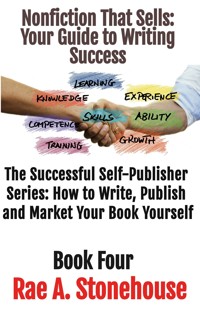
Introducing Nonfiction That Sells: Your Guide to Writing Success, the fourth installment in the Successful Self-Publisher Series by author Rae A. Stonehouse.
With his Successful Self-Publisher Series, he aims to unveil the intricacies of writing that resonate with readers and leaves a lasting impact.
Nonfiction That Sells: Your Guide to Writing Success is not just about stating facts; it's about evoking emotions, offering a fresh perspective, and leaving an indelible imprint on your audience. As we progress through each chapter, you will develop your authenticity, uncover your unique voice, and learn how to establish a profound connection with your readers.
Each chapter of his books serves as a steppingstone, building on the last, and providing fresh insights and newfound skills.
Rae's work is more than a writing guide. It is a journey of discovery, a quest for authenticity, and a vehicle for personal voice development. His books are not just about explaining how to write nonfiction; they're about touching hearts, making connections, and leaving indelible imprints through impactful storytelling.
Rae's dedication to his craft is clear in his books, where he effortlessly combines his knowledge with a unique teaching style. He is a guide, a mentor, and a storyteller whose ultimate goal is to see his reader's name shining on that bestseller list. For Rae, every word is a step closer to success, every chapter a new twist in the journey, and every book a beacon of hope for aspiring writers.
Rae has gathered heaps of knowledge while creating this series and now seeks to share this treasure trove with others. By walking you through the intricate process of nonfiction writing, Rae aims to make this craft accessible, enjoyable, and rewarding.
Join Rae on this exciting adventure into the world of nonfiction writing. Under Rae's guidance, you may just find YOUR name shining on that bestseller list one day. Here's to your writing success, and happy writing!
Das E-Book können Sie in Legimi-Apps oder einer beliebigen App lesen, die das folgende Format unterstützen:
Veröffentlichungsjahr: 2023
Ähnliche







NONFICTION THAT SELLS:
YOUR GUIDE TO WRITING SUCCESS
BOOK IV IN THE SUCCESSFUL SELF-PUBLISHER SERIES
RAE A. STONEHOUSE
LIVE FOR EXCELLENCE PRODUCTIONS
CONTENTS
The Successful Self-Publisher Series:
Introduction to Book Four in the Successful Self-Publisher Series
1. Introduction to Writing Nonfiction: Understanding the Genre, Its Market, & Your Target Audience
2. Choosing the Right Topic: Identifying Your Unique Area of Expertise or Passion and Finding a Subject That Resonates with Readers
3. Tips & Strategies for Conducting Effective Research
4. Developing a Compelling Narrative
5. Creating A Strong Outline: Organizing Your Book's Content in A Logical & Engaging Manner to Keep Readers Invested
6. Writing Engaging Introductions: Techniques for Hooking Readers from The Beginning & Establishing the Book's Purpose
7. Mastering the Art of Persuasion: Tools & Techniques for Presenting Your Ideas Persuasively to Influence Readers
8. Adding Depth with Effective Research Citations: Exploring Different Citation Styles & Utilizing Research to Add Credibility To Your Work
9. Fostering Emotional Connections: Strategies for Eliciting an Emotional Response from Readers to Create a Lasting Impact
10. Keeping Readers Engaged: Techniques for Maintaining Reader Interest Throughout the Book, Including Pacing, Storytelling, & Varying Writing Styles
11. Perfecting Your Writing Style: Tips for Enhancing Your Prose, Refining Your Voice, & Making Your Writing More Compelling
12. Editing and Polishing: A Step-By-Step Guide to Self-Editing & Working with Professional Editors to Refine Your Manuscript
13. Creating Memorable Characters and Personalities: How to Bring the Individuals in Your Nonfiction Story to Life & Engage Readers Through Their Experiences
14. Crafting Powerful Endings: Understanding the Importance of a Strong Conclusion & Leaving A Lasting Impression on Your Readers
15. Navigating the Publishing and Marketing Process: Exploring Traditional Publishing, Self-Publishing, & Marketing Strategies for Successfully Launching Your Book
Conclusion
About the Author
Also, by Rae A. Stonehouse
THE SUCCESSFUL SELF-PUBLISHER SERIES:
How to Write, Publish and Market Your Book Yourself
Book IV
Copyright/Disclaimer:
All rights to this literary work, Copyright © 2023, are reserved to Rae A. Stonehouse. It is expressly prohibited to reproduce any part of this book in any format, including electronic or mechanical, without prior written consent from the author, except for brief quotations used in a book review.
Please be advised that both the publisher and the author are providing this book and its contents “as is,” with no express or implied representations or warranties of any kind, including but not limited to fitness for a particular purpose. Any such representations and warranties are hereby disclaimed. Furthermore, neither the publisher nor the author assumes any responsibility for any errors, inaccuracies, omissions, or inconsistencies contained in this work.
Any information provided in this book should be independently verified and validated before acting upon it.
While this publication is intended to be a valuable source of information for readers, it is not intended to replace the advice and guidance of expert professionals. Should you require a high level of assistance, it is recommended that you seek out a competent professional.
Finally, it should be noted that the publisher and author of this book do not guarantee any level of success or results from following the advice and strategies provided. Any results will vary according to each individual's unique situation.
ISBN - E-book: 978-1-998813-40-7
ISBN – Paperback: 978-1-998813-41-4
ISBN – Audiobook: 978-1-998813-42-1
INTRODUCTION TO BOOK FOUR IN THE SUCCESSFUL SELF-PUBLISHER SERIES
Welcome to Book Four in the Successful Self-Publisher Series: Nonfiction That Sells: Your Guide to Writing Success. Get ready to dive into a world filled with endless possibilities and triumphs!
After wrapping up the first three books in this exciting series, I felt like we'd covered all the bases. But then, a fresh question came my way from a client: "What's the magic ingredient that makes a nonfiction book a hit?" What a fantastic question to ponder!
The secret to making a nonfiction book a bestseller isn't just about having celebrity status or notoriety, but it's about touching people's hearts, communicating something genuine, and significant. This book will guide you through the intricate process of nonfiction writing, unveiling its complexities, and teaching you how to make your work accessible to the public.
You are about to embark on a journey of authenticity, discovery, and personal voice development. As we dive into this venture, remember that nonfiction writing is more than stating facts. It's about resonance, evoking emotions, and offering a fresh perspective.
This journey goes beyond writing; it's about establishing a connection, creating an impact, and leaving an indelible imprint. You're not just an author as you progress through this book; you are a guide, a teacher, and a storyteller, capable of creating a piece that's truthful, impactful, and representative of your unique voice.
Remember, writing is more than a skill—it's a means of touching people's hearts. Embrace this journey with both hands, and you will undoubtedly find the aptitude within you to create compelling nonfiction. Make it authentic, make it truthful, and make it uniquely yours.
This book is all about showing you the way to success. Each chapter builds on the last, offering fresh insights and new skills. It's designed to be a journey, so buckle up and read it from start to finish the first time. Later, come back to it and find the parts that speak to you the most.
As in my previous books, some ideas might come back in different chapters, but each time with a new twist. That's how we grow – by looking at things from various angles.
I've learned heaps putting this book together, and I can't wait to share it all with you. Let's embark on this exciting adventure together. Who knows? Maybe next time, it'll be YOUR name shining on that bestseller list! Here's to your writing success!
Welcome, and happy writing!
Rae A. Stonehouse
August 2023
INTRODUCTION TO WRITING NONFICTION: UNDERSTANDING THE GENRE, ITS MARKET, & YOUR TARGET AUDIENCE
Understanding Nonfiction Writing: Looking at What Makes Nonfiction Different from Things Like Fiction and Poetry
Nonfiction writing refers to a genre that presents factual and real-life information. It encompasses works based on truth, evidence, and research, providing a window into reality rather than representing imaginary stories as found in fiction or evoking emotions through metaphors like poetry. Nonfiction writing encompasses various forms, including essays, biographies, memoirs, news articles, scientific reports, and academic papers, among others.
The fundamental feature of nonfiction writing is its basis in reality. It aims to inform and educate readers about real-world events, people, places, ideas, or concepts. Nonfiction writers conduct extensive research, relying on primary and secondary sources that offer reliable and verifiable information. This research-driven approach ensures accuracy, supports arguments with evidence, and lets readers gain a deeper understanding of a topic.
On the other hand, fiction writing is characterized by its imaginative and creative elements. Authors create fictional worlds, characters, and events that might be inspired by real-life experiences. In fiction, the primary intention is often to entertain, evoke emotions, or explore complex themes through storytelling.
While nonfiction revolves around facts, fiction uses elements of storytelling such as plot development, character arcs, and narrative techniques to engage readers. Fiction writers have the freedom to invent scenarios and characters, enabling them to explore unique perspectives or present thought-provoking ideas without being confined to real-world limitations.
Similarly, poetry distinguishes itself from nonfiction by emphasizing the aesthetics of language, along with evoking emotions and conveying deep meaning through metaphor, symbolism, and imagery. Poets use various techniques, such as rhyme, rhythm, and meter, to create musical and lyrical compositions. The purpose of poetry often extends beyond conveying information, focusing more on personal expression, highlighting emotions, or encapsulating complex ideas in a condensed form.
While both fiction and poetry may have elements of truth or be inspired by real-life experiences, their primary objective lies in artistic expression and the exploration of human experiences through creative means.
Nonfiction writing stands apart from other genres, such as fiction and poetry, through its commitment to truth and reliance on factual information. Nonfiction aims to inform, educate, and provide readers with an accurate understanding of real-world events, people, or ideas. Fiction, on the other hand, focuses on imaginative storytelling to entertain or explore themes, while poetry emphasizes aesthetics and emotional resonance through metaphor and language. Each genre offers its unique approach to engaging readers and enriching our understanding of the world.
DIGGING INTO THE NONFICTION MARKET: GETTING TO KNOW WHAT'S HOT AND WHAT'S NOT FOR NONFICTION BOOKS, LIKE THE BIG HITS AND SPECIAL LITTLE CORNERS OF THE MARKET
Nonfiction books have become increasingly popular in recent years, catering to diverse readers who seek knowledge, inspiration, and personal growth. In this section, we will explore the current market trends and demands for nonfiction books, focusing on popular subgenres and niche markets. Whether you are an aspiring writer, publisher, or book enthusiast, understanding the evolving landscape of the nonfiction market is essential for success.
I. Nonfiction Books: An Ever-Growing Market
A. Rise in popularity and sales of nonfiction books:
Over the past few years, the nonfiction book market has experienced an astonishing rise in both popularity and sales. This surge can be attributed to several factors that have influenced readers to seek factual and informative literature.
One of the major factors contributing to the rise in popularity of nonfiction books is the growing interest in personal development and self-improvement. As people become more concerned about their mental well-being and want to enhance their skills or knowledge, they turn to nonfiction books that offer valuable insights and practical advice. Titles in this genre cover a wide range of topics such as psychology, personal finance, health and wellness, and success strategies. Readers are drawn to these books as they offer actionable steps and methodologies to improve their lives.
Additionally, the rise in popularity of podcasts and documentaries has played a significant role in boosting nonfiction book sales. Many individuals discover fascinating stories or intriguing ideas through these mediums, and they often turn to books to delve deeper into the topic. Nonfiction books provide a more comprehensive exploration of the topics, offering readers a chance to explore the ideas and narratives in greater detail.
The current cultural climate has sparked a growing interest in nonfiction books focused on social issues and historical events. Readers now actively seek books that shed light on marginalized voices, untold stories, and alternative perspectives. As societal movements gain momentum, readers want to educate themselves and gain a better understanding of the world around them, making nonfiction books an invaluable resource.
Technology has also played a crucial role in the rise of nonfiction book popularity. With the advent of e-readers and audiobooks, accessing nonfiction titles has become more convenient and portable. Readers can now easily carry an entire library of nonfiction books on their devices, letting them dive into different topics whenever they desire. This accessibility and convenience have undoubtedly contributed to the surge in sales and popularity.
The increase in book clubs and online reading communities has fueled interest in nonfiction books. These communities provide readers with a platform to discuss, share recommendations, and engage in thought-provoking conversations about nonfiction literature. The sense of camaraderie and intellectual stimulation found within these communities has encouraged more people to explore nonfiction books as a form of leisure and self-enrichment.
The rise in popularity and sales of nonfiction books can be attributed to the growing interest in personal development, the influence of podcasts and documentaries, the exploration of social issues, the convenience of technology, and the rise of book clubs and reading communities. With readers seeking knowledge, personal growth, and a better understanding of the world, nonfiction literature has emerged as a powerful medium to satiate these intellectual needs.
B. Factors contributing to the growth of the nonfiction market:
Several key factors have contributed to the growth of the nonfiction market in recent years. These factors include:
Increased interest in personal development: Nonfiction books related to personal development, self-help, and motivation have seen significant growth in recent years. With a greater emphasis on self-improvement and achieving success, readers are drawn to books that offer practical advice, guidance, and inspiration.
Rising demand for expert knowledge: Readers are increasingly seeking books that provide specialized knowledge and expertise in various fields. Nonfiction books that offer insights, strategies, and solutions in areas such as business, finance, health, science, and technology have become highly popular as people strive to gain a competitive edge and stay informed.
Accessibility of information: The growth of digital platforms, such as e-books and online publications, has made it easier for readers to access nonfiction books. Readers can now download and read books on their smartphones, tablets, or e-readers, making it more convenient and cost-effective to consume nonfiction content.
Expansion of niche markets: Nonfiction books have also seen growth due to the expansion of niche markets. Readers with specific interests or hobbies, such as cooking, gardening, fitness, or travel, can find a wide range of nonfiction books tailored to their interests. Publishers have catered to these niche markets by offering specialized content that appeals to specific target audiences.
Impact of social media and influencers: Social media platforms have played a significant role in promoting nonfiction books and authors. Influencers and thought leaders have leveraged their online presence to recommend and discuss nonfiction works, leading to increased visibility and sales. Online book clubs, newsletters, and podcasts have also emerged, providing platforms for discussions and recommendations focused on nonfiction books.
Change in reading habits: With the popularity of podcasts and audiobooks, many readers are now consuming nonfiction content in audio format. This growth in audiobooks has introduced a new way of experiencing nonfiction books, appealing to those who prefer to listen rather than read. This shift in reading habits has expanded the nonfiction market to include an audio audience.
Overall, factors such as a growing interest in personal development, increased demand for expert knowledge, the accessibility of information through digital platforms, the expansion of niche markets, the impact of social media and influencers, and changes in reading habits have all contributed to the growth of the nonfiction market. As readers continue to seek knowledge, inspiration, and practical advice, the nonfiction genre is likely to continue thriving.
C. Nonfiction books as a way for self-improvement and personal development
Nonfiction books have long been revered as a valuable tool for self-improvement and personal development. These books offer a wealth of knowledge and insights into various aspects of life, letting readers gain a deeper understanding of themselves and the world around them. Here, we explore why nonfiction books serve as an effective way for self-improvement and personal growth.
Practical Advice and Guidance: Nonfiction books often provide practical advice and guidance on a specific topic or skill. Whether it's managing one's finances, cultivating better relationships, or developing effective communication skills, these books offer step-by-step strategies and techniques that can be applied to real-life situations. By implementing the advice offered in these books, readers can make positive changes in their lives and move closer to their goals.
Broadening Perspectives: Nonfiction books also serve as a medium for broadening perspectives. They provide readers with diverse viewpoints and insights into various subjects, such as history, philosophy, science, or culture. By exposing themselves to different perspectives and ideas, readers can challenge their own beliefs, deepen their understanding of the world, and experience personal growth.
Mindset and Emotional Well-being: Many nonfiction books focus on mindset and emotional well-being. They delve into topics like mindfulness, resilience, happiness, and emotional intelligence, helping readers develop a healthier mindset and emotional toolkit. By learning to cultivate a positive mindset, manage stress, and regulate emotions, individuals can enhance their overall well-being, leading to increased self-improvement and personal growth.
Self-Reflection and Self-Awareness: Nonfiction books often encourage self-reflection, prompting readers to examine their thoughts, beliefs, and behaviors. By engaging in introspection and developing self-awareness, individuals can identify their strengths, weaknesses, and areas for improvement. This self-reflection is a catalyst for personal growth, as it enables individuals to make conscious choices and take actions that align with their values and goals.
Inspiring Role Models: Many nonfiction books feature real-life stories of successful individuals who have overcome challenges and achieved greatness. These inspiring role models serve as a source of motivation for readers, showing them that personal growth and success are within reach. By studying the journeys of these individuals, readers can gain insights into their mindset, habits, and strategies, which they can then apply in their own lives.
Nonfiction books are an invaluable resource for self-improvement and personal development. They offer practical advice, broaden perspectives, promote a healthier mindset, encourage self-reflection, and provide inspiring role models. By reading and implementing the wisdom shared in these books, individuals can embark on a journey of self-discovery, growth, and transformation.
II. Popular Subgenres in Nonfiction
A. Memoirs and Biographies: The fascination with real-life stories.
B. Self-help and Motivational Books: Catering to personal growth and empowerment.
C. History and Politics: Insights into our past and present.
D. Science and Popular Science: Making complex subjects accessible.
E. Business and Personal Finance: Practical advice for success.
F. True Crime and Investigative Journalism: Uncovering real-life mysteries.
G. Health and Wellness: The growing interest in physical and mental well-being.
III. Niche Markets and Emerging Trends
A. Environmental and Sustainability: Focus on climate change and conservation.
B. Personal Finance for Millennials: Addressing financial challenges for younger generations.
C. Mental Health and Mindfulness: Coping strategies and fostering well-being.
D. Diverse Voices: Representation and inclusiveness in nonfiction.
E. Social Justice and Activism: Inspiring change and promoting awareness.
F. Travel and Adventure Writing: Exploration and personal experiences.
G. Food and Culinary: The evolving world of gastronomy.
H. Technology and Futurism: Insights into the digital era and innovative advancements.
IV. Publishing and Marketing Strategies for Nonfiction Authors
A. Researching the target audience and identifying market gaps.
B. Building a strong author platform and online presence.
C. Collaborating with traditional publishers or choosing self-publishing.
D. Leveraging social media, blogging, and podcasting for book promotion.
E. Engaging with book clubs, libraries, and niche communities.
The nonfiction market offers a diverse array of subgenres and niche markets, making it a compelling space for writers and publishers. By understanding the current trends and demands, authors can tap into readers' interests and create compelling nonfiction books that resonate with their target audience. As the market continues to evolve, it is essential to stay up to date with emerging trends, engage with readers, and adapt publishing and marketing strategies. May this exploration of the nonfiction market empower you to find your niche and succeed in your nonfiction writing endeavors.
IDENTIFYING YOUR TARGET AUDIENCE: DOING YOUR HOMEWORK TO PINPOINT JUST WHO YOUR READERS MIGHT BE
Identifying your target audience is a crucial step when writing a nonfiction book. By understanding who your readers are, their interests, and their needs, you can tailor your content to meet their expectations and provide value. Conducting thorough research can help you gather the information to pinpoint your specific readership. Here are steps to consider:
Define the purpose of your book: Start by clarifying the purpose of your nonfiction book. What problem does it solve? What information does it provide? Understanding your book's goals will help you determine who would benefit the most from it.
Conduct market research: Begin by conducting market research to gain insights into your potential audience. Look for similar books in your niche and study their readership. Analyze reviews, comments, and social media discussions related to those books to understand what readers liked or disliked about them. This will provide a good starting point for identifying your target audience.
Consider demographics: Demographics play a significant role in understanding your readership. Factors such as age, gender, location, education level, and occupation can significantly influence their preferences and needs. Analyzing data from market research firms, social media platforms, or conducting surveys can provide valuable insights into the demographic composition of your target audience.
Study interests and preferences: Dive deeper into the interests and preferences of your potential readers. Look for online communities, forums, or social media groups related to your book's topic. Engage with these communities to understand what challenges, needs, or interests they are discussing. This can help you tailor your book to address those specific concerns and capture their attention.
Identify specific needs: Nonfiction books typically aim to fulfill a specific need or provide practical knowledge to readers. Identify the specific needs of your target audience related to your book's niche. This could address their pain points, offering solutions, or satisfying their intellectual curiosity. Focusing on these needs will make your book more appealing to your target audience.
Create reader personas: Once you have gathered enough information through research, create reader personas. These fictional profiles represent different segments of your target audience. Include details such as age, occupation, interests, challenges, and needs for each persona. These personas will help you gain a deeper understanding of your readers, enabling you to write with them in mind.
Test your assumptions: While your research and reader personas provide a solid foundation, it is essential to confirm your assumptions. Share your book concept with a small group of individuals representing your target audience and gather their feedback. Use their insights to refine your approach and make sure your book resonates with your readership.
Identifying your target audience is an ongoing process. As you continue to write and promote your book, collect feedback, engage with readers, and adapt to evolve your understanding of your audience. This will make sure your nonfiction book meets the needs and expectations of your specific readership.
MAKING YOUR WRITING FIT THE PEOPLE READING IT: FINDING A WAY TO WRITE THAT HITS HOME WITH THE PEOPLE YOU WANT TO REACH, MAKING SURE WHAT YOU WRITE GRABS THEM AND TALKS ABOUT STUFF THEY CARE ABOUT
When it comes to effective communication, understanding your audience is key. Whether you are writing a blog post, an email, or marketing copy, tailoring your writing to resonate with your target audience is crucial. In this guide, we will explore how to develop a writing style, tone, and structure that will engage and interest your readers.
Define your target audience: The first step in tailoring your writing is to clearly identify your target audience. Consider their demographics, interests, and goals. Are they professionals, students, or hobbyists? What level of knowledge do they have? Understanding your audience will help you craft a message that is specific and relevant.
Use appropriate language: Once you know who you are writing for, adapt your language accordingly. Avoid using jargon or technical terms that might confuse your audience. Instead, choose clear and concise language that your readers will understand. However, if your audience consists of experts or professionals, you may need to use specialized language to cater to their needs.
Establish a tone: Your writing tone refers to the overall mood or attitude you convey through your words. Consider the emotions and feelings you want to evoke in your audience. Are you aiming for a formal and professional tone, or a more casual and friendly one? Your tone should align with both your content and your audience's preferences.
Structure your content: Developing a coherent structure helps your audience navigate your writing effectively. Begin with a compelling introduction that grabs their attention and clearly states the purpose of your piece. In the body, organize your content into logical sections or subheadings. Use bullet points or numbered lists to break down complex information and make it more digestible. Finally, end with a strong conclusion that summarizes key points and encourages action or further reading.
Maintain engagement: To keep your audience engaged throughout your piece, consider incorporating storytelling, anecdotes, or relevant examples. Use descriptive language to paint vivid pictures and create mental images. Vary sentence length and structure to add rhythm and flow to your writing. Additionally, consider using visual aids such as images, infographics, or data charts, if appropriate, to enhance comprehension and engagement.
Personalize your content: Show your audience that you understand their needs and interests by personalizing your content. Address their pain points, desires, or challenges relevant to your topic. Use inclusive language and speak directly to your readers, using words like "you" and "we." This helps build a connection and makes your writing more relatable.
Test and refine: Once you have crafted your writing for your target audience, it's essential to test the effectiveness of your content. Track engagement metrics such as read time, clicks, and comments to gauge how well your writing resonates with your audience. Analyze feedback and make necessary adjustments to continuously refine your writing style.
By tailoring your writing style, tone, and structure to your target audience, you can create content engaging, relevant, and resonates with their interests. Remember to continuously test and adapt your approach based on feedback and analytics to ensure your writing remains effective and impactful.
UNDERSTANDING THE IMPORTANCE OF AUTHENTICITY: THE SIGNIFICANCE OF CREDIBILITY & ACCURACY IN NONFICTION WRITING
In the realm of nonfiction writing, authenticity serves as the cornerstone on which credibility and accuracy are built. Whether crafting an article, essay, or any piece of prose grounded in reality, writers must focus on thorough research, fact-checking, and citing reliable sources. By doing so, they can ensure their work is trustworthy, informative, and impactful.
Proper research lies at the foundation of nonfiction writing. It involves a comprehensive examination of the topic at hand, delving into various primary and secondary sources. Investing time and effort into gathering relevant information lets writers present a well-rounded perspective, thus strengthening the credibility of their work. The deeper the dive into research, the more nuanced and compelling the final piece can become.
Fact-checking is an essential step in the writing process that verifies the accuracy of information. As nonfiction writers, one must strive to provide readers with an accurate representation of reality. By meticulously cross-referencing facts, statistics, and claims, writers safeguard against the dissemination of misinformation and uphold the integrity of their work. Fact-checking acts as a protective shield against inadvertent errors or deliberate manipulation, making sure readers can rely on the information.
Citing reliable sources bolsters the transparency and credibility of nonfiction writing. Using diverse sources, such as peer-reviewed journals, reputable news outlets, and renowned experts, lends weight and authority to the arguments. Additionally, citing sources lets readers continue their own exploration and evaluation of the topic, promoting intellectual growth and fostering an engaged and informed readership. Providing proper citations shows the writer acknowledges the contributions of others and values the collective knowledge that enriches their work.
In today's information age, where the line between fact and fiction can blur, the importance of authenticity in nonfiction writing cannot be overstated. Misinformation can have far-reaching consequences, shaping public opinion and decision-making. By adhering to a rigorous process of thorough research, fact-checking, and citing reliable sources, nonfiction writers can stand as beacons of truth, counteracting the spread of falsehoods and disinformation.
Authenticity lets writers establish themselves as trusted voices in their respective fields. Readers seek authors who focus on accuracy, credibility, and transparency, turning to them as reliable sources of information. This trust can have a lasting impact, fostering a loyal readership and opening doors to further opportunities for writers to create positive change and influence public discourse.
Authenticity serves as the bedrock of nonfiction writing, ensuring credibility and accuracy. Thorough research, fact-checking, and citing reliable sources are essential parts that are the foundation on which impactful and trustworthy nonfiction work is built. By focusing on authenticity, writers can contribute to a healthier, more informed, and critically thinking society.
FINDING YOUR WAY THROUGH THE RIGHT AND WRONG STUFF: NAVIGATING ETHICAL CONSIDERATIONS
Navigating ethical considerations:
Discussing ethical responsibilities as a nonfiction writer, including avoiding plagiarism, respecting privacy, and maintaining transparency with readers.
As a nonfiction writer, it is imperative to have a strong understanding of ethical responsibilities. When crafting content that presents factual information, writers must strive to ensure accuracy, maintain integrity, and uphold the trust of their readers. There are three key ethical considerations to navigate: avoiding plagiarism, respecting privacy, and maintaining transparency.
Avoiding plagiarism is an essential ethical responsibility that nonfiction writers must take seriously. Plagiarism involves presenting someone else's work, ideas, or words as your own without giving proper credit. This unethical practice undermines credibility and intellectual integrity. To prevent plagiarism, it is crucial to always attribute and cite sources accurately. Clearly indicate quotes, paraphrases, and references, citing the original author or source. By doing so, writers respect others' intellectual property while upholding professional standards.
Another important ethical aspect is respecting privacy when writing nonfiction. It is essential to consider the potential impact of revealing personal or private information without consent. This pertains not only to individuals but also to corporations, organizations, or communities. Writers should obtain permission when sharing personal stories, interviews, or sensitive information that could potentially harm someone's reputation or invade their privacy. Respecting boundaries fosters trust and ensures ethical conduct, setting a strong foundation for nonfiction writing.
Maintaining transparency with readers is the backbone of ethical nonfiction writing. Writers have a responsibility to disclose their affiliations, financial interests, or any potential biases that may influence their work. By remaining transparent, readers can make more informed judgments about the information presented to them. Transparency also lets readers evaluate the credibility and potential conflicts of interest. Nonfiction writers should clearly identify any potential biases or vested interests that may affect the accuracy or objectivity of the information they present.
Additionally, maintaining transparency also means accurately representing the scope and limitations of the research or evidence presented. Writers should avoid exaggeration or misrepresentation that could mislead readers. By providing contextual information, acknowledging uncertainties, and being honest about the limits of knowledge, writers make sure readers clearly understand the topic being discussed.
Nonfiction writers bear ethical responsibilities that encompass avoiding plagiarism, respecting privacy, and maintaining transparency. By accurately attributing sources, seeking consent when sharing personal information, and being transparent about affiliations or biases, writers can uphold their integrity, earn trust, and produce content that is both credible and ethical. Striving to navigate these ethical considerations is not only essential for individual writers but also for the overall credibility and trustworthiness of the nonfiction genre.
EMBRACING THE NONFICTION WRITING JOURNEY:
Encouraging writers to embrace the challenges and rewards of writing nonfiction, highlighting the potential impact of their work in educating, inspiring, or informing their readers.
In a world often dominated by fictional narratives, nonfiction writing stands as a powerful medium to educate, inspire, and inform readers. While the path of nonfiction writing may be fraught with challenges, writers must embrace this journey, for the rewards can be transformative.
One of the key aspects of the nonfiction writing journey is the pursuit of knowledge and understanding. Writers delve into a vast array of topics, mining facts and exploring their depths in search of universal truths. Each nonfiction writer becomes a lifelong student, driven by a thirst for knowledge and a desire to share their discoveries with the world. By embarking on such a journey, writers invite readers to join them in their exploration of the intricacies of the human experience and the wonders and mysteries of the world we inhabit.
While pursuing knowledge fuels the nonfiction writing journey, the potential for impact should not be overlooked. Nonfiction writing has the unique ability to educate and inform readers, enabling them to gain a deeper understanding of various subjects. Through well-researched arguments and balanced perspectives, writers can challenge prevailing beliefs, broaden horizons, and present new ways of thinking. By embracing the power of nonfiction writing, writers can become catalysts for change, guiding readers toward alternative viewpoints and inspiring them to question long-held assumptions.
Nonfiction writing has the potential to inspire and ignite a spark within readers. By sharing stories of triumph, resilience, and personal growth, writers can cultivate empathy, foster connections, and give a voice to those who have been silenced. Nonfiction narratives reveal the extraordinary within the ordinary, showing readers that real-life experiences can be as captivating and transformative as the tales spun by fiction. By embracing the emotional part of nonfiction writing, writers can leave an indelible imprint on readers' lives, empowering them to find their own paths and create their own narratives.
However, the nonfiction writing journey comes with its fair share of challenges. Researching complex topics, verifying sources, and maintaining objectivity can require immense dedication and perseverance. Writers must be willing to navigate through the countless sources of information, sifting through contradictory narratives, and discerning between reliable and unreliable sources. The craft of storytelling within nonfiction writing demands precision, as writers strive to create narratives that engage and captivate readers while staying faithful to factual accuracy. Embracing these challenges is crucial for honing the skills necessary to make a lasting impact.
Ultimately, the journey of nonfiction writing allows writers to inform, inspire, and educate. It is a path that requires resilience, curiosity, and a commitment to truth and accuracy. By embracing the challenges and rewards of nonfiction writing, writers can contribute to a more informed and empathetic society. Whether educating readers about historical events, sharing personal struggles and triumphs, or shedding light on societal issues, nonfiction writers have the power to shape the hearts and minds of readers and reshape the world.
Chapter Summary:
Chapter 1 is all about the world of nonfiction writing. Here's what you need to know:
Understanding Nonfiction Writing: It's not like fiction or poetry. Nonfiction is about truth and real-life stuff. It comes in many forms like essays, reports, biographies, and more.
Digging into the Nonfiction Market: Nonfiction books are getting more popular. Subjects like self-help, social issues, and personal development are hot. Technology and changes in how people read are boosting sales.
Identifying Your Target Audience: You've got to know who's going to read your book. Think about what they want and need, do your research, and keep learning about them.
Making Your Writing Fit the People Reading It: Keep it simple and clear. Know your readers and write in a way they'll connect with.
Understanding Authenticity: Spend time researching and checking facts. Keep it real and true.




