


5,49 €
Mehr erfahren.
- Herausgeber: Live For Excellence Productions (LFEP)
- Kategorie: Fachliteratur
- Sprache: Englisch
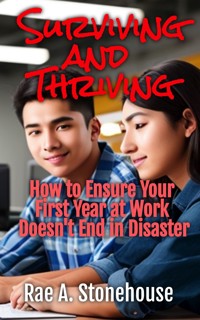
Starting a new job can be an exciting and overwhelming experience. What you don’t know can hurt you. How can you prevent your first year at work from being a disaster? Author Rae A. Stonehouse has the answer in his must-read book, Surviving and Thriving: How to Ensure Your First Year at Work Doesn't End in Disaster.
Drawing on his extensive experience in Occupational Health and Safety, Stonehouse offers practical advice on how to navigate the challenges of a new job, while also avoiding common workplace hazards. From maintaining a positive attitude to establishing healthy communication patterns with colleagues, Surviving and Thriving: How to Ensure Your First Year at Work Doesn't End in Disaster is a comprehensive guide to set yourself up for success.
Stonehouse's book is an essential resource for anyone starting a new job, particularly those in industries with high-risk work environments. His OH&S perspective offers practical tools and expert insights that can help save lives, reduce injuries, and improve mental health in the workplace.
If you want to thrive in your new job and ensure your occupational health and safety, Surviving and Thriving: How to Ensure Your First Year at Work Doesn't End in Disaster is the ultimate guide you've been searching for.
Das E-Book können Sie in Legimi-Apps oder einer beliebigen App lesen, die das folgende Format unterstützen:
Veröffentlichungsjahr: 2023
Ähnliche



















Surviving and Thriving
How to Ensure Your First Year at Work Doesn’t End in Disaster
Rae A. Stonehouse
Live For Excellence Productions
Contents
Introduction
1. A Safe Start To Your First Job
Know Your Rights:
Follow Proper Procedures:
Report Hazards and Incidents:
Take Care of Yourself:
Use Personal Protective Equipment (PPE) Correctly:
Prevent Common Injuries:
Deal with Emergencies:
2. Introduction To Workplace Safety
A Brief History of Workplace Safety Regulations and Their Significance in Protecting Employees:
The Role of Employers in Establishing A Safe Work Environment And Their Legal Obligations In Maintaining Workplace Safety:
An Overview of Government Agencies Responsible for Enforcing Workplace Safety Regulations, Such as OSHA In The U.S.:
The Importance of Employee Training and Education in Identifying And Avoiding Workplace Hazards:
The Potential Risks and Hazards in Various Types of Workplaces, Such As Factories, Construction Sites & Offices:
How Workplace Safety Can Affect Employee Morale, Productivity & Even Job Satisfaction:
3. Understanding Your Rights & Responsibilities
The Legal Framework of Occupational Health & Safety:
The Responsibilities of Employers:
The Responsibilities of Employees:
The Importance of Reporting Incidents and Injuries:
The Consequences of Non-Compliance:
4. Workplace Culture And Safety: Understanding The Role Of Workplace Culture In Promoting Safety
5. Resources For Support
6. Identifying And Assessing Workplace Hazards
Techniques For Identifying Potential Workplace Hazards:
Different Types of Hazards That Can Be Present in A Workplace:
Analysis Of the Likelihood and Severity of Each Identified Hazard:
Strategies For Mitigating Hazards Once They Have Been Identified:
The Importance of Ongoing Hazard Monitoring and Continuous Improvement Processes to Maintain a Safe Work Environment:
Examples Of Successful Hazard Identification and Mitigation Programs in Different Industries:
7. Personal Protective Equipment
Overview Of Personal Protective Equipment (PPE):
Types Of PPE:
Maintenance & Inspection:
Employee Responsibilities & Training:
Choosing The Right PPE:
8. Emergency Preparedness
Understanding The Importance of Emergency Preparedness:
Knowing The Different Types of Emergencies:
Responding To Medical Emergencies:
Reacting To Natural Disasters:
Responding to Fires:
The Role of First Aid:
Planning For Emergencies:
Ergonomics & Injury Prevention:
Strategies For Preventing Injuries:
Importance of Rest and Recovery:
Ergonomic Assessments:
Injury Management and Rehabilitation:
Future Directions in Ergonomics & Injury Prevention:
9. Workplace Violence & Harassment
Workplace Violence and Harassment – Definition & Types:
Understanding The Causes and Effects of Workplace Violence & Harassment:
How To Recognize Warning Signs & Respond to Incidents:
The Importance of Documentation & Reporting Incidents of Violence or Harassment:
Guidelines For Preventing and Addressing Workplace Violence & Harassment:
Resources And Support Available for Employees Who Experience Workplace Violence or Harassment:
Mental Health in the Workplace:
Signs Of Common Mental Health Issues:
Strategies For Promoting Positive Mental Health in The Workplace:
The Role of Managers & Colleagues in Supporting Employees with Mental Health Issues:
Resources For Employees and Employers to Access Mental Health Support:
The Stigma Associated with Mental Health Issues and The Importance of Creating a Safe & Supportive Workplace Culture:
10. Workplace Culture
A Positive Workplace Culture Creates a Safe, Healthy, And Innovative Work Environment That Fosters Team Collaboration & Employee Motivation:
A Toxic Workplace Culture Can Negatively Affect Employees and Their Productivity, Leading to Increased Absenteeism, Turnover & Diminished Workplace Satisfaction:
Staying Safe & Healthy:
The Role of Regular Physical Activity and Exercise in Reducing The Risk Of Chronic Diseases Such As Obesity, Type 2 Diabetes & Hypertension:
The Importance of Eating a Balanced and Nutrient-Rich Diet to Promote Good Health, Prevent Chronic Diseases & Boost Immune Function:
Strategies For Managing Stress and Achieving Work-Life Balance to Reduce The Risk Of Burnout & Associated Health Problems:
Tips For Maintaining Good Sleep Hygiene and Getting Adequate Rest To Improve Overall Health & Well-Being:
Best Practices for Preventing Infectious Diseases and Minimizing the Risk of Exposure In Different Settings, Including At Home, In The Workplace & While Traveling:
The Importance of Regular Health Screenings and Check-Ups to Catch Potential Health Problems Early & Maintain Optimal Health Throughout Life:
11. Work Refusal
Introduction:
Importance of Work Refusal Procedure:
When to Refuse Work:
Work Refusal Process:
Case Studies and Examples of Work Refusal Incidents and Their Resolution Under OH&S Legislation:
Sample Letter Of OH&S Related Work Refusal to Supervisor:
Conclusion
Additional Resources:
About the Author
Also By Rae A. Stonehouse
Copyright
All rights to this literary work, Copyright © 2023, are reserved to Rae A. Stonehouse. It is expressly prohibited to reproduce any part of this book in any format, including electronic or mechanical, without prior written consent from the author, except for brief quotations used in a book review.
Please be advised that both the publisher and the author are providing this book and its contents “as is,” with no express or implied representations or warranties of any kind, including but not limited to fitness for a particular purpose. Any such representations and warranties are hereby disclaimed. Furthermore, neither the publisher nor the author assumes any responsibility for any errors, inaccuracies, omissions, or inconsistencies contained in this work.
Any information provided in this book should be independently verified and validated before acting upon it.
While this publication is intended to be a valuable source of information for readers, it is not intended to replace the advice and guidance of expert professionals. Should you require a high level of assistance, it is recommended that you seek out a competent professional.
Finally, it should be noted that the publisher and author of this book do not guarantee any level of success or results from following the advice and strategies provided. Any results will vary according to each individual's unique situation.
ISBN - E-book: 978-1-998813-20-9
ISBN – Paperback: 978-1-998813-21-6
ISBN – Audiobook: 978-1-998813-22-3
Introduction
Starting your first job can be an exciting and nerve-racking experience. You’re eager to make a good impression and prove yourself to your new colleagues and employer. But before you dive headfirst into your new role, there is one important factor to remember: workplace safety.
Occupational health and safety (OH&S) should be a top priority for any workplace, despite industry or sector. Proper training and equipment, along with a focus on risk prevention, can help prevent accidents, injuries, and fatalities on the job. As a new employee, it’s your responsibility to understand and follow the safety protocols set by your employer.
Here are some startling statistics:
In 2020, there were about 17.3 million workers under the age of 25. These workers represented 11.7% of the total workforce.In 2020, 352 workers under the age of 25 died from work-related injuries. Among these deaths were 29 young workers aged 15 to 24.In 2020, the incidence rate for non-fatal injuries for workers, ages 16–19, was 149.8 per 10,000 full-time employees (FTE) and 141.8 per 10,000 FTE for workers, ages 20–24.According to SafeThink, among injured workers under the age of 25, over 50% of them were hurt in the first six months on the job. Nearly 20% of the injuries and fatalities happen during the first month on the job.
In 2020, the rate of work-related injuries treated in emergency departments for workers, ages 15–24, was 1.5 times greater than the rate for workers 25 years of age and older.
According to the National Institute for Occupational Safety and Health (NIOSH), young workers (ages 15-24) are twice as likely to be injured on the job as older workers. This is largely due to their lack of experience, training, and maturity. In addition, young workers may not be aware of their rights and responsibilities under workplace safety laws and regulations.
In the United States, an average of 358 young workers die each year from work-related injuries, according to the Bureau of Labor Statistics. The most common causes of these fatalities include transportation incidents, slips, trips, and falls, and contact with objects and equipment.
In addition to the risk of fatal injuries, young workers are also at risk of non-fatal injuries that can have long-term consequences for their health and well-being. For example, young workers may be more likely to experience musculoskeletal injuries due to their physical immaturity and lack of conditioning.
Certain industries and occupations pose a higher risk of injury and fatality for young workers. For example, young workers in the construction, agriculture, and manufacturing industries are more likely to be injured on the job than those in other industries. Similarly, young workers in occupations that involve driving or operating heavy machinery are at higher risk of transportation-related injuries.
This book helps you navigate the world of workplace safety as you start your career. We’ll explore the most common hazards you may encounter on the job and provide practical tips for staying safe and healthy in the workplace. Whether you’re working in an office, a factory, or a construction site, this guide will equip you with the knowledge you need to succeed.
And much more!
According to the National Institute for Occupational Safety and Health (NIOSH), young workers have high rates of job-related injury. These injuries are often the result of the many hazards present in the places they typically work, such as sharp knives and slippery floors in restaurants. Limited or no prior work experience and a lack of safety training also contribute to high injury rates.
It’s important for young people to be aware of these risks and take necessary precautions while working.
By following the tips and advice in this book, you can start your job with confidence, knowing that you’re doing everything possible to stay safe and healthy on the job. Remember, workplace safety isn’t just important – it’s essential. Let’s get started!
But before we do, it’s probably a good idea for me to explain who I am and why I wrote this book.
I am a recently retired registered nurse having worked for over four decades in psychiatry/mental health. For most of that time I was actively involved in Occupational Health & Safety in my worksites as a worker representative for three trade unions. I served as a Cochair on my worksite’s JOSH (Joint Occupational Health & Safety Committee).
As a JOSH Committee Cochair I was involved in accident investigation, conducting workplace safety inspections, implementing workplace and wellness programs, and developing policies and procedures.
Working in healthcare exposes the worker to much of the same safety hazards as other industries perhaps with the exception of manufacturing.
As the field of Occupational Health & Safety has evolved, workers are gaining more protection from safety hazards in their worksites and the ability to solve problems backed by legislation. At the same time, Employers also have responsibilities to provide a safe work environment also enforced by legislation.
I started my career long before health and safety issues were being addressed. My first job, before I was in nursing, was working in the Dietary Department in a large community psychiatric hospital.
At the time, I wanted to be a chef and working in a large kitchen seemed to be a good way to enter the field.
As a Porter i.e., Dietary Assistant, I was responsible for all parts of helping the cooks and the chef in preparing meals for close to 400 patients. Many of my duties had risk involved. For example, one day I had to unload a truck of 100, 75-pound bags of potatoes and load them into a walk-in refrigerator. The next day, I had another 35 bags to unload. My back ached for weeks.
On another occasion I recall prying the lid off an 8 ½ gallon stainless steel soup container. All my fingers came in contact with the rim of the container causing me severe pain and to black out. As I was lying on the floor, I recall one cook discovering me and yelling “help, there is a dead man back here!” I was lucky though as when I was collapsing, I had missed some very hot ovens.
My plan to become a chef went sideways. I went from food preparation, to running the dishwasher and then on to operating the pot washer.
At one point I was transferred to work at a nearby maximum-security hospital for the criminally insane in the Dietary Department. Here I worked alongside murderers, kidnappers and basically perpetrators of any heinous crimes you could imagine. I was 19 years old. There was no training or preparation for my role and duties. I spent my days working alongside these criminals.
I recall my first day there being introduced to the dietary crew. There was one young fellow named Bobby. Bobbywas holding a 12-inch butchers’ knife and chopping vegetables on a carving board. He says, “do you know why I’m here?” To which I replied “No.”
Bobby replied “I killed my father with a knife just like this. You look a lot like my father.”
As my career opportunities within the Dietary Department and my aspirations to become a chef were thwarted, I looked elsewhere and enrolled in nursing training.
Working over four decades in healthcare I experienced many critical incidents and safety hazards but those are beyond the scope of this book as they were beyond our framework i.e., your first year at work.
I’ve wanted to write this book for a long time. I shudder every time I read or hear about an accident that has taken a young worker’s life or livelihood.
This book is focused on Occupational Health & Safety for young workers starting a new job. The saying “what you don’t know can hurt you” holds true.
While the field of Occupational Health & Safety is improving, you will find many employers don’t care, don’t know about OH&S matters or who actively ignore regulations in favor of increased profit. OH&S legislation is in place to deal with those employers. Worker’s Compensation boards are gaining more authority and clout in many jurisdictions and have been levying hefty fines for employers who don’t comply.
This book isn’t written to be read linearly i.e., from front to back. As in my other personal/professional self-development books I use what I call an ‘onion’ method. I explore a topic in depth and often peel back a layer and revisit a topic from a different perspective.
My hope is you have the opportunity to read this book in advance and refer to it often as you progress through your first year working.
Onwards and upwards!
Rae A. Stonehouse,
Author
April 2023




