


North American Agroforestry E-Book
104,99 €
Mehr erfahren.
- Herausgeber: John Wiley & Sons
- Kategorie: Fachliteratur
- Serie: ACSESS Books
- Sprache: Englisch
North American Agroforestry
Explore the many benefits of alternative land-use systems with this incisive resource
Humanity has become a victim of its own success. While we’ve managed to meet the needs—to one extent or another—of a large portion of the human population, we’ve often done so by ignoring the health of the natural environment we rely on to sustain our planet. And by deteriorating the quality of our air, water, and land, we’ve put into motion consequences we’ll be dealing with for generations.
In the newly revised Third Edition of North American Agroforestry, an expert team of researchers delivers an authoritative and insightful exploration of an alternative land-use system that exploits the positive interactions between trees and crops when they are grown together and bridges the gap between production agriculture and natural resource management.
This latest edition includes new material on urban food forests, as well as the air and soil quality benefits of agroforestry, agroforestry’s relevance in the Mexican context, and agroforestry training and education. The book also offers:
- A thorough introduction to the development of agroforestry as an integrated land use management strategy
- Comprehensive explorations of agroforestry nomenclature, concepts, and practices, as well as an agroecological foundation for temperate agroforestry
- Practical discussions of tree-crop interactions in temperate agroforestry, including in systems such as windbreak practices, silvopasture practices, and alley cropping practices
- In-depth examinations of vegetative environmental buffers for air and water quality benefits, agroforestry for wildlife habitat, agroforestry at the landscape level, and the impact of agroforestry on soil health
Perfect for environmental scientists, natural resource professionals and ecologists, North American Agroforestry will also earn a place in the libraries of students and scholars of agricultural sciences interested in the potential benefits of agroforestry.
Sie lesen das E-Book in den Legimi-Apps auf:
Seitenzahl: 1895
Veröffentlichungsjahr: 2021
Ähnliche




















EDITORSHarold E. “Gene” Garrett, Shibu Jose, and Michael A. Gold
CONTRIBUTORSJanaki R. R. Alavalapati, School of Forestry and Wildlife Sciences, Auburn University; James A. Allen, School of Forestry, Northern Arizona University; Stephen H. Anderson, School of Natural Resources, University of Missouri; J. Arbuckle, Department of Sociology, Iowa State University; Carla Barbieri, College of Natural Resources, North Carolina State University; Gary Bentrup, USDA National Agroforestry Center, Lincoln, Nebraska; Thomas W. Bonnot, School of Natural Resources, University of Missouri; James R. Brandle, School of Natural Resources, University of Nebraska; Dave Brauer, Conservation and Production Research Laboratory, USDA Agricultural Research Service; Louise E. Buck, College of Agriculture and Life Sciences, Cornell University; Catherine J. Bukowski, Virginia Polytechnic Institute and State University; Dirk Burhans, U.S. Forest Service, University of Missouri; Zhen Cai, School of Natural Resources, University of Missouri; Michaela M. “Ina” Cernusca, North Dakota State University; J. L. Chamberlain, USDA Forest Service; Terry R. Clason, Agricultural Center, Louisiana State University; Brent R. W. Coleman, School of Environmental Sciences, University of Guelph; Dean Current, Center for Integrated Natural Resource and Agricultural Management, University of Minnesota; John Davis, Applied Ecology, North Carolina State University; Daniel C. Dey, U.S. Forest Service, University of Missouri; Stewart A. W. Diemont, College Environmental Science and Forestry, State University of New York; J. H. Fike, School of Plant Environmental Science, Virginia Polytechnic Institute and State University; Cornelia B. Flora, Department of Sociology, Iowa State University; Jie Gao, San Jose State University; Harold E. “Gene” Garrett, School of Natural Resources, University of Missouri; Larry D. Godsey, Division of Business, Missouri Valley College; Michael A. Gold, School of Natural Resources, University of Missouri; Andrew M. Gordon, School of Environmental Sciences, University of Guelph; Stephen C. Grado, College of Forest Resources, Mississippi State University; Robert K. Grala, College of Forest Resources, Mississippi State University; Hannah L. Hemmelgarn, School of Natural Resources, University of Missouri; Eric J. Holzmueller, College of Agricultural Sciences, Southern Illinois University; Thomas M. Isenhart, College of Agriculture and Life Sciences, Iowa State University; Guillermo Jimenez-Ferrer, El Colegio de LA Frontera Sur; Shibu Jose, College of Agriculture, Food and Natural Resources, University of Missouri; Robert J. Kremer, School of Natural Resources, University of Missouri; James P. Lassoie, College of Agriculture and Life Sciences, Cornell University; Teng Teeh Lim, College of Agriculture, Food and Natural Resources, University of Missouri; Chung-Ho Lin, School of Natural Resources, University of Missouri; Sarah T. Lovell, School of Natural Resources, University of Missouri; Robert L. McGraw, College of Agriculture, Food and Natural Resources, University of Missouri; D. Evan Mercer, Southern Research Station, USDA Forest Service; Joshua J. Millspaugh, W.A. Franke College of Forestry & Conservation, University of Montana; John F. Munsell, College of Natural Resources and Environment, Virginia Polytechnic Institute and State University; Joseph N. Orefice, Forest & Agricultural Operations, Yale University School of Forestry & Environmental Studies; Gabriel J. Pent, College of Agriculture and Life Sciences, Virginia Polytechnic Institute and State University; P. K. Ramachandran Nair, School of Forest Resources and Conservation, University of Florida; Richard C. Schultz, College of Agriculture and Life Sciences, Iowa State University; Peter L. Schultz, Target, Inc., Headquarters; John H. Schulz, School of Natural Resources, University of Missouri; Steven H. Sharrow, Oregon State University; William W. Simpkins, Department of Geological and Atmospheric Sciences, Iowa State University; Lorena Soto-Pinto, El Colegio de LA Frontera Sur; Erik Stanek, Balzac Brothers & company, Charlston; Eugene Takle, Department of Agronomy, Iowa State University; Naresh V. Thevathasan, School of Environmental Sciences, University of Guelph; Ranjith P. Udawatta, School of Natural Resources, University of Missouri; Corinne B. Valdivia, College of Agriculture, Food and Natural Resources, University of Missouri; W. D. “Dusty” Walter, College of Agriculture, Food and Natural Resources, University of Missouri; Eric E. Weber, School of Natural Resources, University of Missouri; Kevin J. Wolz, Savannah Institute; Mario Yanez, Overtown Foodworks Office, Inhabit Earth; Lisa Zabek, Interior of British Columbia, Ministry of Agriculture; Xinhua Zhou, Campbell Scientific, Logan, Utah
EDITORIAL CORRESPONDENCEAmerican Society of AgronomyCrop Science Society of AmericaSoil Science Society of America5585 Guilford Road, Madison, WI 53711-5801, USA
SOCIETY PRESIDENTSJeffrey J, Volenec (ASA), P.V. Vara Prasad (CSSA), and April L. Ulery (SSSA)
SOCIETY EDITORS-IN-CHIEFKathleen M. Yeater (ASA), C. Wayne Smith (CSSA), and Craig Rasmussen (SSSA)
BOOK AND MULTIMEDIA PUBLISHING COMMITTEEGirisha Ganjegunte, ChairFugen DouDavid FangShuyu LiuGurpal Toor
DIRECTOR OF PUBLICATIONSMatt Wascavage
BOOKS STAFFRichard Easby, Managing Editor Pamm Kasper, Copy Editor
North American Agroforestry
3rd Edition
Edited by
Harold E. “Gene” Garrett, Shibu Jose, and Michael A. Gold
Copyright © 2022 American Society of Agronomy. All rights reserved.Copublication by American Society of Agronomy and John Wiley & Sons, Inc.
Edition HistoryAmerican Society of Agronomy, Inc. (1e, 2000 and 2e, 2009)
No part of this publication may be reproduced, stored in a retrieval system, or transmitted in any form or by any means electronic, mechanical, photocopying, recording, scanning, or otherwise, except as permitted by law. Advice on how to reuse material from this title is available at http://wiley.com/go/permissions.
The right of Harold E. “Gene” Garrett, Shibu Jose, and Michael A. Gold to be identified as the authors of the editorial material in this work has been asserted in accordance with law.
Limit of Liability/Disclaimer of WarrantyWhile the publisher and author have used their best efforts in preparing this book, they make no representations or warranties with respect to the accuracy of completeness of the contents of this book and specifically disclaim any implied warranties or merchantability of fitness for a particular purpose. No warranty may be created or extended by sales representatives or written sales materials. The publisher is not providing legal, medical, or other professional services. Any reference herein to any specific commercial products, procedures, or services by trade name, trademark, manufacturer, or otherwise does not constitute or imply endorsement, recommendation, or favored status by the ASA, CSSA and SSSA. The views and opinions of the author(s) expressed in this publication do not necessarily state or reflect those of ASA, CSSA and SSSA, and they shall not be used to advertise or endorse any product.
Editorial Correspondence:American Society of Agronomy5585 Guilford Road, Madison, WI 53711‐58011, USAagronomy.org
Registered Offices:John Wiley & Sons, Inc., 111 River Street, Hoboken, NJ 07030, USA
For details of our global editorial offices, customer services, and more information about Wiley products, visit us at www.wiley.com.
Wiley also publishes its books in a variety of electronic formats and by print‐on‐demand. Some content that appears in standard print versions of this book may not be available in other formats.
Library of Congress Cataloging‐in‐Publication Data
Names: Garrett, H. E., editor. | Jose, Shibu, editor. | Gold, Michael Alan, editor. | John Wiley & Sons, publisher.Title: North american agroforestry / edited by Harold E. “Gene” Garrett, Shibu Jose, and Michael A. Gold.Description: 3rd edition. | Hoboken, NJ : Wiley [2022] | Includes bibliographical references and index.Identifiers: LCCN 2021052140 (print) | LCCN 2021052141 (ebook) | ISBN 9780891183778 (hardback) | ISBN 9780891183846 (adobe pdf) | ISBN 9780891183839 (epub)Subjects: LCSH: Agroforestry–United States. | Forest management–United States.Classification: LCC S494.5.A45 N69 2022 (print) | LCC S494.5.A45 (ebook) | DDC 634.9/9–dc23/eng/20211028LC record available at https://lccn.loc.gov/2021052140LC ebook record available at https://lccn.loc.gov/2021052141
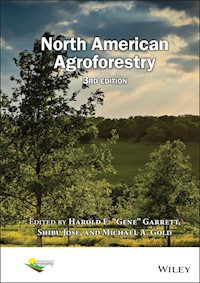
Cover Design: WileyCover Image: Horticulture and Agroforestry Research Farm at the University of Missouri College of Agriculture, Food and Natural Resources in New Franklin, Missouri; © University of Missouri
Preface
Perhaps more so than at any time in the history of mankind, we are faced with problems that threaten our very existence. Climate change, regardless of its cause, is resulting in unprecedented changes in events ranging from dramatic shifts in world weather patterns and the consequences thereof, to the melting of the earth’s glaciers and its ultimate effects on world populations. Humanity has become a victim of its own success. We have conquered the wilderness, and in our attempt to meet the needs of the world’s ever‐growing population, we have endangered many of the ecosystem services upon which our livelihood depends. Our streams and rivers are contaminated with sediment, nutrients and pesticides, mostly products of our success in producing more food at cheaper prices, but also from the privileges success brings such as subdivisions with luxurious lawns requiring large amounts of agrochemicals. Our oceans become the final destination for these and other contaminants, and in combination with the warming of their waters, our oceans too are in a transition towards endangered.
With today’s understanding of the consequences of current land‐use systems, it is time for a new approach—alternatives must be found. One alternative that was quickly adopted in tropical regions in the 1970’s and 80’s but has been slower in gaining support in the temperate regions of the world, is agroforestry. Agroforestry exploits the positive interactions between trees and crops (including livestock) when they are carefully designed and integrated, they bridge the gap between production agriculture and natural resource management. Supported by four decades of research and demonstration agroforestry practices have been found to provide environmentally and economically sound alternatives to many of our unsustainable forestry and agricultural systems. While if offers opportunities for small farms to regain their relevance and viability it also provides humanity the opportunity to heal our planet by constructively addressing climate change, improving the quality of our air, our waters, and protecting and enhancing soil health.
The 3rd edition of North American Agroforestry‐‐An Integrated Science and Practice (now shortened to North American Agroforestry) comes at a critical time as the nations of the world debate the pros and cons of making forestry and agriculture production system decisions based more on economics than on the future health of our planet. In addition to updating the topics found in the 2nd edition, this edition adds to the science with a new 6th practice of “Urban Food Forests” and chapters on: Agroforestry for Air Quality Benefits; Agroforestry for Soil Health; Agroforestry at the Landscape Level; An Overview of Agroforestry and its Relevance in the Mexican Context and Agroforestry Training and Education.
The chapter authors are all recognized authorities. Their writings, when taken collectively, are meant to provide a state‐of‐the‐art understanding of agroforestry. Agroforestry is rapidly becoming recognized as a science that has great merit in helping address many of our nations’ environmental problems while serving to the economic benefit of our nations’ small farms.
Harold E. “Gene” GarrettSchool of Natural ResourcesThe Center for AgroforestryUniversity of MissouriColumbia, Missouri
Shibu JoseCollege of Agriculture, Food and Natural ResourcesUniversity of MissouriColumbia, Missouri
Michael A. GoldSchool of Natural ResourcesThe Center for AgroforestryUniversity of MissouriColumbia, Missouri
Acknowledgments
The 3rd edition of North American Agroforestry would not have been possible were it not for the assistance of two supporting co‐editors in the preparation of the 1st edition. The current editors express their thanks to W. J. “Bill” Rietveld and R. F. “Dick” Fisher for making this 3rd edition possible. Many hours are spent preparing chapters of the nature found in this text, as is also the case for reviewers who give freely of their time. The editors wish to extend a very special thanks to the authors and dedicated reviewers for their contributions. We also are grateful to Caroline Todd at the University of Missouri Center for Agroforestry for the logistical support she provided during this project.
The senior editor would be remiss if he did not acknowledge his wife, Joyce, who provided guidance and computer skills in revising and formatting chapters. Without her very capable assistance and encouragement, his job as a co‐editor would have been many times more difficult. And last but not least, to the many contributors to the temperate zone, agroforestry literature, the editors express acknowledgement and appreciation for a job well done!
This work is partially supported by the University of Missouri Center for Agroforestry and USDA ARS Dale Bumpers Small Farm Research Center, Agreement number 58‐6020‐6‐001 from the USDA ARS.
Section IAgroforestry Fundamentals
1Agroforestry as an Integrated, Multifunctional Land Use Management Strategy
Shibu Jose, Harold E. “Gene” Garrett, Michael A. Gold, James P. Lassoie, Louise E. Buck, and Dean Current
Agriculture is in the midst of a 21st century technological revolution, and we are well into the digital age of farming. The development of agriculture over 10,000 yr, including the technological advancements of the 20th century, has helped push the world population to 7.5 billion, with projections of 9.8 billion by 2050 (Searchinger et al., 2018). While the Green Revolution has helped to feed billions of people, the global environmental footprint of modern agriculture threatens the very existence of the socio‐ecological system in which we live (Funabashi, 2018). The natural resource base, including soil and water, that supports agriculture is experiencing immense pressure. The world is looking for sustainable solutions not only for food security but also for environmental security for the burgeoning population (Searchinger et al., 2018).
The United States led the agricultural revolution with a massive commitment to enhancing food and fiber production capabilities. The overall strategy was to become self‐sufficient with respect to agricultural crops and timber while improving the health and welfare of rural Americans. Obviously, this was successful within well‐defined limits—today, food remains plentiful and relatively inexpensive, the timber famine was averted, and forest and farm lands abound. Such gains, however, did not come without some high environmental costs, and by the 1970s the public was demanding more environmentally benign land use practices (Laurence, 1987).
As a consequence of the environmental transgressions committed during the construction of our industrialized nation, new criteria for defining successful land use management strategies were identified during the late 1980s (Turner, 1988). Sustainability, stability, and equability have now joined increased production efficiency as objectives for agriculture (Conway, 1987), and forestry is developing new management strategies that optimize the yield of many products and multiple uses rather than merely maximizing the production of one—timber (Coufal & Webster, 1996; Gillis, 1990; Maser, 1994). But what about the hybrid between agriculture and forestry that is practiced worldwide—integrative management systems far more common than the developed world’s often myopic approach to the production of a limited number of monocultures? Many professionals believe that agroforestry is a strategy for sustainable land use management that might be useful throughout North America (Garrett et al., 1994; Gold & Hanover, 1987; Kremen & Merenlender, 2018; Wiersum, 1990).
As we have moved into the 21st century, concerns have been raised about our dependence on foreign sources of fossil fuels, and the CO2 emissions from our past and continued use of fossil fuels have increasingly been linked to global warming issues. The production of biofuels and energy from herbaceous and woody biomass has become a major interest with increasing amounts of research funding and private investment. Agroforestry practices combining herbaceous and woody species could play an important role in both the production of biomass for biofuels and energy as well as systems that enhance the ability of agricultural cropping to sequester and store carbon without the ecological problems of currently utilized agricultural systems (Downing, Volk, & Schmidt, 2005; Feliciano, Ledo, Hiller, & Nayak, 2018; Gruenewald et al., 2007; Holzmueller & Jose, 2012; Peichl, Thevathasan, Huss, & Gordon, 2006; Schoeneberger, 2005; Volk et al., 2006; White et al., 2007).
Because of its diversity, defining agroforestry could easily occupy an entire article—in fact on a number of occasions, it has (see Atangana, Khasa, Chang, & Degrande, 2013, pp. 35–47; Elevitch, Mazaroli, & Ragon, 2018; Lundgren, 1982; Nair, Viswanath, & Lubina, 2017). Presently, the concepts and practices of agroforestry in the United States are reasonably well understood within most professional circles to include “… intensive land management that optimizes the benefits (physical, biological, ecological, economic, social) arising from biophysical interactions created when trees and/or shrubs are deliberately combined with crops and/or livestock” (revised from Garrett et al., 1994). In identifying a niche for domestic agroforestry, emphasis must be directed toward a practice meeting the requirements of the four I’s–that is, it must be intentional, intensive, integrative, and interactive. As discussed below, the options available under this definition are many (also see Chapter 2; Gold & Hanover, 1987; Campbell, Lottes, & Dawson, 1991; Schultz, Colletti, & Faltonson, 1995). Agroforestry practices in the North America involve more than the production of single products (e.g., monoculture field crops, livestock feedlots, forest plantations, biomass plantings, etc.), the extensive collection of special forest products (e.g., floral greens, mushrooms, wild game, etc.), or the extensive grazing of livestock in woodlots or on open ranges. This is not to minimize the importance of such land uses, but each one is already well supported by an established knowledge base and a well‐educated group of practicing management professionals. Combining such practices into agroforestry arrangements that are ecologically sound and economically viable is a totally different story!
Intensive production of agricultural and forestry monocultures is found in both advanced, developed countries (e.g., corn [Zea mays L.], soybean [Glycine max (L.) Merr.], pine [Pinus spp.], fruit and nut orchards, vineyards) and many tropical regions in the form of woody perennial tropical tree, shrub, and vine crops including oil palm (Elaeis spp.), rubber [Hevea brasiliensis (Willd. ex A. Juss.) Müll. Arg.], tea [Camellia sinensis (L.) Kuntze], coffee (Coffea spp.), pepper (Piper nigrum L.), and vanilla (Vanilla planifolia Jacks.) (Chambers, Pacey, & Thrupp, 1989; Jha et al., 2014; Liu, Kuchma, & Krutovsky, 2018; Pacheco, Gnych, Dermawan, Komarudin, & Okarda, 2017; Richards, 1985). On the other hand, agroforestry has remained the primary land use approach most common throughout the developing world (King, 1987; Mercer, 2004), where complex indigenous farming systems for food, fiber, and forage production have operated effectively for centuries (Nair, 1993). Not only have such agroforestry systems produced a variety of commodities for home use and/or sale, it is likely that they have offered a level of environmental protection unmatched by most modern land use technologies. Such dual features—production and protection—have become the basis for the concept of sustainability, which is now central to international development activities aimed at breaking the negative feedback relationship between intensive land use and progressive environmental degradation. Similarly, concepts such as “productive conservation” and “multifunctional agriculture,” which combine production agriculture with conservation by introducing more sustainable agricultural practices, are increasingly being discussed as options in more developed countries and could easily incorporate agroforestry principles (Jordan, et. al., 2007). For example, the five principles of sustainable food and agriculture defined by the FAO (2018) include: (a) increase productivity, employment, and value addition in food systems, (b) protect and enhance natural resources, (c) improve livelihoods and foster inclusive economic growth, (d) enhance the resilience of people, communities, and ecosystems, and (e) adapt governance to the new challenges.
About four decades ago, agroforestry was “discovered” by the international scientific community as a practice in search of a science (Steppler, 1987). Since that time, an increasingly extensive research base has been developing to help understand, improve, and apply indigenous agroforestry practices in developing nations of the world (Nair, 1996; Garrity et al., 2010; van Noordwijk et al., 2019). Around the same time, academics started asking how such practices might be applied in more developed countries (e.g., Campbell et al., 1991; Gold & Hanover, 1987; Lassoie, Teel, & Davies, 1991). However, agroforestry practices were not new in the temperate context either. Native Americans, across what is now the United States and Canada, have been practicing indigenous forms of what could be termed landscape‐scale agroforestry for millennia (Rossier & Lake, 2014). In the early decades of the 20th century, agroforestry plantings were done in the United States and Canada in the form of windbreaks and shelter belts as a response to the Dust Bowl of the 1930s. In the temperate zone, science‐based agroforestry biophysical and socioeconomic research and practice gained attention in the1980s and has strongly increased in the past 40 yr. Interest in domestic agroforestry has continued to grow, particularly as the dual needs for enhanced environmental protection and new economic opportunity have increased in importance (Brown, Miller, Ordonez, & Baylis, 2018; Garrett et al., 1994; Jose, 2009; Jose, Gold, & Garrett, 2018). The realization that agroforestry systems are well suited for diversifying farm income while providing environmental services and ecosystem benefits has increased receptivity on the part of landowners (Rois‐Díaz et al., 2018) Agroforestry systems offer great promise for the production of biomass for biofuel, specialty and organic crops, pasture‐based dairy and beef, among others. Agroforestry also offers proven strategies for carbon sequestration, soil enrichment, biodiversity conservation, and air and water quality improvement not only for the landowners or farmers but for society at large (Dollinger & Jose, 2018; Holzmueller & Jose, 2012; Scherr & McNeely, 2007, 2008; Udawatta & Jose, 2012).
In this chapter, we demonstrate the linkages among emerging integrated management systems for agriculture and forestry and indicate possible roles that agroforestry could play in the continuing development of these new land use strategies. Opportunities for the development of domestic agroforestry practices are identified and progress toward meeting them highlighted. Possible approaches to overcoming constraints limiting the development of agroforestry in the United States are suggested. It is our purpose to provide a framework for the chapters that follow and to stimulate creative thinking and proactive behavior by scientists and management professionals responsible for developing and implementing new land use management strategies that are environmentally, socially, and economically sustainable.
Land use Management Systems in North America
Here we provide thoughts on new management systems that are emerging to help account for the complex demands currently being placed on the nation’s rural lands. Specifically, agricultural and forestry land use practices are examined relative to certain biophysical and socioeconomic principles basic to natural resources management. We also provide a historical perspective for the evolution of forest management and agricultural production practices and for the development of domestic agroforestry activities.
Basic Principles Influencing Management Systems
Management can be considered as the planned intervention into natural processes to assure predictable outcomes of benefit to the health and welfare of humans. Hence, sociological factors often become the driving principles determining many land use decisions. For example, a stewardship ethic that places long‐term social good above short‐term personal gain can move people to spend time, effort, and money assuring the ecological integrity of land they currently own. In contrast, a pioneer ethic emphasizing the immediate needs of the individual can promote destructive activities that negatively impact future generations (Nash, 1982). This anthropocentric focus for management has been challenged for decades (Stone, 1996). Obviously, different user groups can hold very different views concerning the utilization, conservation, and preservation of our natural resources, often making the social context in which land use decisions are made highly contentious.
The social context for land use decision‐making is also subject to increasingly rapid change as the pace of social evolution quickens in response to increased knowledge and technological advancements. For example, this century has witnessed major changes associated with the transition from a rural to an urban society, shifts in ethnic and age structures, a move to an information‐based society, and periodic resurgence in the public’s interest and concern about the environment and the use of the nation’s farm and forest lands. Hence, management decisions socially acceptable in one generation may not be accepted in another (e.g., clear‐cutting old‐growth forests, eradicating predators, or indiscriminate pesticide use).
The United States is a capitalistic society, and the economic bottom line continues to drive many decisions concerning the production of food, forage, livestock, and fiber. We have been so successful in creating a higher order of socioeconomic organization through our effective harnessing of energy that subsistence living remains for only a few in North America. Agriculture and forestry are now big businesses operating in a dynamic world economy. Fortunately, there is a sound theory base supporting our understanding of the economic variables driving capitalism, such as cost/benefit ratios, supply–demand interrelationships, and marketplace dynamics. Unfortunately, much of this neoclassical theory simplifies or neglects critical issues, such as the long‐term values associated with externalities arising from sound management practices, often making it inadequate for explaining the current realities of the land use and environmental decision‐making process (Daly & Cobb, 1989; Tisdell, 1990).
Nonetheless, during the past two decades there has been increased interest in internalizing the environmental costs and benefits not necessarily reflected by our market system (Mann & Wustemann, 2008; Wang & Wolf, 2019). Payments for environmental or ecosystem services have entered the discussion of policymakers at both the federal and state levels in the United States (Mercer, Cooley, & Hamilton, 2011; Potter & Wolf, 2014). We have a voluntary market for carbon offsets in the United States and a developing market for water quality credits, both patterned after what has been considered to be a successful cap‐and‐trade system to control sulfur dioxide emissions (Börner et al., 2017; Gordon, 2007; Jack, Kousky, & Sims, 2008; Lowrance, 2007; Palma, Graves, Burgess, van der Werf, & Herzog, 2007b; Wang & Wolf, 2019).
Land use management is inherently interdisciplinary because of the multitude of interrelated factors that must be considered when deciding how best to optimize the use of land for realizing its multiple values (Ferraz‐de‐Oliveira, Azeda, & Pinto‐Correia, 2016; Savory, 1988; Stankey, 1996). The extent to which scientific knowledge is useful in such a decision‐making process depends on its ability to deepen managers’ understanding of complex systems and how to adjust them to achieve specific objectives. An interdisciplinary approach is essential to the development of such knowledge (Chubin, Porter, Rossini, & Connolly, 1986). The study of interdisciplinary land use management systems, while previously overlooked (Stankey, 1996), has become a major topic of interest in the research and development community (LaCanne & Lundgren, 2018). The “tyranny of the disciplines,” while still the norm in creating institutional obstacles to effective integration (Campbell, 1986), is no longer the only paradigm being promoted and is actively being superseded during the past decade by a shift toward increased diversification of landscapes and cropping systems (Geertsema et al., 2016; Liebman & Schulte, 2015). The theoretical base for the management of complex agroecosystems often does not meet the practical needs of the field‐level manager (Wezel & Bellon, 2018). This can result in mismanagement by those owning land or controlling its use—unacceptable behavior in a society that is increasingly demanding sound ecological management of its natural resources.
Evolution of Management Systems
The United States inherited its forest management practices from Europe during the latter part of the 19th century and modified them to accommodate its large, sparsely populated country, which was rich in natural resources (Perlin, 1991; Williams, 1989). Prior to settlement by Europeans, Native Americans derived a variety of food, forage, and fiber products from forests while manipulating them primarily through the use of fire in what could be termed landscape‐scale agroforestry (Carroll, 1973; Cronon, 1983; Rossier & Lake, 2014; Russell, 1982). European pioneers also derived most of their energy and construction materials from the forest (Carroll, 1973).
The Industrial Revolution brought with it new harvesting and milling technologies, which greatly enhanced the efficiency with which the nation’s forest resources were exploited (Williams, 1989). Such forest practices accelerated as the population grew and became more urbanized. Around the turn of the 19th century, continuing over‐exploitation stimulated public concern and the birth of America’s conservation movement (Jordan, 1994), which included the development of professional forestry management agencies and academic institutions (Skok, 1996; Spencer, 1996). In 1905, the U.S. Forest Service was formally established to promote sustained‐yield forestry, designed to provide wood fiber from the nation’s forests forever (Steen, 1976). Conflicts over the single‐purpose use of public forest lands led the U.S. Forest Service to develop its multiple‐use approach to the management of national forests, which assured that, given a large enough and diverse enough land base, a full complement of forest uses could be enjoyed without conflict. Eventually, however, this approach also led to problems once the public began to question decisions being made about individual pieces of land, especially with respect to tradeoffs between wilderness preservation and timber production (Nash, 1982). Such concerns, together with a growing understanding of the impacts that plantation forestry has on biological diversity and the natural functioning of forest ecosystems, have stimulated the forestry profession to consider a new management strategy—ecosystem management—based on a holistic, integrative approach to land use (Coufal & Webster, 1996; Maser, 1994; Nunez‐Mir, Iannonne, Curtis, & Fei, 2015; Probst & Crow, 1991; Stankey, 1996). Parallel to those efforts and because of the growing interest in preserving our national forests free from production activities, national forests are increasingly off limits to harvest, shifting production forestry and harvesting to private lands (Adams, Haynes, & Daigneault, 2006). Simultaneously, there is a growing public cry for less governmental regulation and a return to a conservation ethic embodied in the idea of sound stewardship (Jordan, 1994). Likewise, it took a century and a half for American agriculture to develop to the level of complexity that required an integrated management approach (National Research Council, 1989). Native Americans were hunter‐gatherers, subsistence farmers, and also practiced indigenous forms of landscape‐scale agroforestry (Rossier & Lake, 2014), while early immigrants were primarily hunter‐gatherers and subsistence farmers (Russell, 1982). With population growth and industrial development came a growing need to improve food production capabilities and economic livelihoods of farmers to feed an ever‐increasing urban society. The mid‐1800s brought the development of the land grant university system and the initiation of an agricultural experiment station infrastructure that eventually built the world’s greatest system for the intensive cultivation of commercial food products (National Research Council, 1996; Russell, 1982).
Domestic and global marketing uncertainties, high costs for equipment, seed, chemical and energy inputs, high interest rates, and regional identity and security issues are forcing many modern farmers to develop integrated farming systems involving the production of a variety of products. More recent public concerns about the environmental impacts of modern farming practices and food safety are prompting the development of a new management approach based on agroecology principles: alternative or sustainable agriculture (LaCanne & Lundgren, 2018; Liebman & Schulte, 2015; National Research Council, 1989, 1991, 1996) More recently, eco‐agriculture and regenerative agriculture—integrating production and conservation at a landscape scale with the deliberate inclusion of perennial crops—have been put forth as new paradigms for linking production and conservation in our agricultural landscapes (Elevitch et al., 2018; Scherr & McNeely, 2007, 2008). Perennial trees and shrubs, and hence agroforestry practices, can serve important functions in such sustainable agricultural systems (Elevitch et al., 2018; Prinsley, 1992).
Evolution of North American Agroforestry
Although not defined as such until recently (Garrett et al., 1994; Gold & Hanover, 1987; Gordon & Newman, 1997; Rossier & Lake, 2014; Sinclair, 1999; Torquebiau, 2000), agroforestry‐like practices have been part of North America’s heritage. Native Americans and European pioneers practiced subsistence lifestyles based on integrated land use strategies that were similar in principle to the agroforestry being practiced by indigenous populations in today’s developing countries (Carroll, 1973; King, 1987; Rossier & Lake, 2014; Russell, 1982). The widespread use of these strategies, however, largely disappeared during the last century with the concurrent development of separate agricultural and forestry research and management infrastructures. Today, an integrated, subsistence lifestyle is the chosen standard of living for a few independent, free‐spirited individuals and an unfortunately necessary one for the economically marginalized rural poor. A few agroforestry practices survived into the mid‐20th century associated with long‐established organizations (e.g., the Northern Nut Growers Association) or as culturally acceptable complements to traditional farming enterprises (e.g., maple syrup production).




