


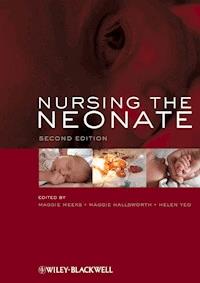
Nursing the Neonate E-Book
43,99 €
Mehr erfahren.
- Herausgeber: John Wiley & Sons
- Kategorie: Fachliteratur
- Sprache: Englisch
Written by a multidisciplinary team of medical and nursing experts, this fully-updated second edition provides evidence-based coverage of all frequently seen neonatal conditions. Divided into chapters based on body-systems, each section includes discussion of relevant embryology, anatomy and physiology.
Designed for real-life practice in the ward, each chapter includes clear guidelines for procedure and discussion of best practice. Case studies are used throughout to aid discussion of specific equipment, conditions, and situations.
An essential resource for neonatal nursing and midwifery students, as well as practicing neonatal nurses, this acclaimed text may also be of use to junior doctors beginning neonatology.
- Evidence-based theory clearly linked to application in the ward with case studies throughout
- Procedure and equipment guidelines included, with specific recommendations for practice
- Accessible format designed for easy reading and reference
- Highly illustrated with relevant diagrams and pictures
Sie lesen das E-Book in den Legimi-Apps auf:
Seitenzahl: 943
Veröffentlichungsjahr: 2013
Ähnliche




















CONTENTS
Preface
Introduction
Contributors
Chapter 1: The Evolution of Neonatal Care
Introduction: historical accounts of neonatal care
The development of modem neonatal care
The development of transport services
Definitions of neonatal care
Analysis of reproductive health services
Using evidence – evolution of research methods
Conclusion
References
Chapter 2: Obstetric Issues Relating to Neonatal Care
Introduction
Preconception care and early counselling
Antenatal care
Maternal medical conditions
Management of the birth and neonatal outcome
Conclusion
References
Chapter 3: Normal Adaptation to the Post-Natal Environment
Introduction
Physiology of intrauterine life
The physiological adaption to birth
Care of the infant to aid successful adaption at birth
Conclusion
References
Chapter 4: The Neonatal Environment and Care of Families
Introduction
Becoming a parent
Social theories
Experiences of parents in neonatal units
Things that help: practical and emotional
Conclusion
References
Chapter 5: The Small Baby
Introduction
Definitions
A brief review of embryology
Intrauterine growth retardation
Preterm infants
Conclusion
References
Chapter 6: Thermoregulation
Introduction
Thermoregulation
Anatomy and embryology relating to temperature control
Mechanisms of heat loss/gain
Hypothermia
Hyperthermia
Maintenance of thermal stability on the neonatal unit
Conclusion
References
Chapter 7: Fluids, Electrolytes and Glucose
Introduction
Fluid and sodium balance
Potassium balance
Application to clinical practice
Glucose metabolism
Hypoglycaemia
Hyperglycaemia
Case studies and suggested management strategies
Conclusion
References
Chapter 8: Respiratory Difficulties and Ventilatory Support
Introduction
Pulmonary embryology
Lung physiology
Respiratory problems in the newborn
Oxygen therapy and ventilatory support
Ventilatory strategies
Interpretation of blood gases
Nursing an infant on conventional ventilation
Other treatments for respiratory problems
Conclusion
References
Chapter 9: Neonatal Surgery
Introduction
Antenatal diagnosis and counselling
Post-natal management
Necrotising enterocolitis
Gastroschisis
Exomphalos
Hirschprung’s disease
Oesophageal atresia and tracheo-oesophageal fistula
Congenital diaphragmatic hernia
Malrotation and volvulus
Anorectal malformation
Conclusion
References
Chapter 10: Congenital Conditions
Introduction
Congenital and/or genetic conditions
Basic principles of genetics
Chromosome abnormalities and karyotyping
Single gene disorders
Multifactorial conditions
Mitochondrial gene alterations
Overview of embryological principles in relation to the genetic consultation
Screening to predict or prevent congenital conditions
Limitations of genetic testing
Management of a neonate with congenital abnormality
Some generic implications for practice
Conclusion
Glossary of genetic terms
Bibliography
Support group information
References
Chapter 11: Nursing Newborn Babies with Congenital Heart Disease
Introduction
Cardiac physiology and clinical assessment of cardiac function
Hypotension
Congenital heart defects
Post-natal care of a baby with congenital heart disease
Cardiac surgery
Common defects seen in the neonatal unit
Acyanotic heart disease
The future outlook for those with congenital heart disease
Persistent ductus arteriosus: Embryology and physiology of the ductus arteriosus
Clinical relevance of the ductus arteriosus
Management decisions
Conclusion
References
Chapter 12: Nutrition of the Term and Preterm Infant
Introduction
Nutritional requirements of term and preterm infants
Part I: Enteral feeding: term infant
Enteral feeding: preterm infant
Formula feeds
Assessing growth and nutrition in term infants
Assessing growth and nutrition in preterm infants
Intrauterine growth retardation (IUGR) in term and preterm infants
Post-discharge feeding interventions
Part II: Parenteral nutrition
Composition of parenteral nutrition solutions
Administration of parenteral nutrition
Complications of parenteral nutrition
Transition to enteral feeds
Conclusion
References
Chapter 13: Neonatal Stabilisation and Transport
Introduction
Type of transfer
Personnel and training
Equipment
Recognition and referral
Documentation
Conclusion
Useful texts
References
Chapter 14: Neonatal Neurology
Introduction
Anatomy and embryology
Neurological assessment
Congenital abnormalities affecting central nervous system
Birth trauma
Seizures
Neonatal abstinence syndrome
Encephalopathy
Preterm brain injury
Meningitis
Conclusion
References
Chapter 15: The Dying Infant
Introduction
The physiology of dying
Institution of palliative care
Religious and cultural considerations
Post-mortem examination
Certification and registration of death
The role of the coroner
Clinical management of death on the NNU
Management of grief
Conclusion
Helpful websites
References
Chapter 16: Infection in the Term and Preterm Infant
Introduction
Development of immunity
Innate immunity
Adaptive immunity
Passive versus active immunity
Immunity, gastrointestinal system and feeding
Neonatal infection: early and late onset neonatal sepsis
Investigation for infection
Treatment of neonatal infection
Prevention of infection: infection control
Congenital infections
Immunisations
Conclusion
References
Chapter 17: Haematology in the Term and Preterm Neonate
Introduction
Components of blood
Blood cell production (haemopoiesis)
Blood group
Anaemia
Blood transfusion
Jaundice
Polycythaemia
Coagulation problems
Conclusion
References
Chapter 18: Developmental Care
Introduction
Models of developmental care
Why does developmental care make sense? Influences on preterm/ newborn development
Strategies for developmental care
Conclusion
Acknowledgements
NIDCAP training
Positive touch
Recommended reading
References
Chapter 19: Neonatal Ethics
Introduction
Fundamental ethical principles
Withholding or withdrawing life-sustaining treatment
Philosophical and religious perspectives
Caring for the dying baby
Conclusion
References
Chapter 20: Discharge Planning and the Community Outreach Service
Introduction
Preparation for discharge
Role of outreach service
Discharge planning
Summary
Conclusion
References
Index
This edition first published 2010
First edition published 1998
© 1998, 2010 by Blackwell Publishing Ltd
Blackwell Publishing was acquired by John Wiley & Sons in February 2007. Blackwell’s publishing programme has been merged with Wiley’s global Scientific, Technical, and Medical business to form Wiley-Blackwell.
Registered office
John Wiley & Sons Ltd, The Atrium, Southern Gate, Chichester, West Sussex, P019 8SQ, United Kingdom
Editorial office
2121 State Avenue, Ames, Iowa 50014-8300, USA
For details of our global editorial offices, for customer services and for information about how to apply for permission to reuse the copyright material in this book please see our website at www.wiley.com/wiley-blackwell.
The right of the author to be identified as the author of this work has been asserted in accordance with the Copyright, Designs and Patents Act 1988.
All rights reserved. No part of this publication may be reproduced, stored in a retrieval system, or transmitted, in any form or by any means, electronic, mechanical, photocopying, recording or otherwise, except as permitted by the UK Copyright, Designs and Patents Act 1988, without the prior permission of the publisher.
Wiley also publishes its books in a variety of electronic formats. Some content that appears in print may not be available in electronic books.
Designations used by companies to distinguish their products are often claimed as trademarks. All brand names and product names used in this book are trade names, service marks, trademarks or registered trademarks of their respective owners. The publisher is not associated with any product or vendor mentioned in this book. This publication is designed to provide accurate and authoritative information in regard to the subject matter covered. It is sold on the understanding that the publisher is not engaged in rendering professional services. If professional advice or other expert assistance is required, the services of a competent professional should be sought.
Library of Congress Cataloging-in-Publication Data
Nursing the neonate.— 2nd ed. / edited by Maggie Meeks, Maggie Hallsworth.
p. ; cm.
Includes bibliographical references and index.
ISBN 978-1-4051-4974-7 (pbk.: alk. paper)
1. Neonatal intensive care. 2. Newborn infants—Care. 3. Newborn infants—Diseases—Nursing. I. Meeks, Maggie. II. Hallsworth, Maggie.
[DNLM: 1. Neonatal Nursing. 2. Infant, Newborn, Diseases—nursing. WY 157.3 N9745 2010]
RJ253.5.N87 2010
618.92’01—dc22
2009012289
A catalogue record for this book is available from the British Library.
1 2010
PREFACE
We were delighted to be asked to produce a new edition of Helen Yeo’s classic text and called upon many of our ex and current colleagues (as well as some people that we have yet to meet) to help us do this. Neonatology continues to expand as a stimulating and emotionally challenging area of medicine and nursing. The commitment of all staff working on a neonatal unit is palpable and we both feel privileged that we have been involved in this speciality.
Our intention is that this text is considered essential reading for neonatal nurses and midwives caring for sick newborn infants. It is also intended to be a valuable resource for junior medical staff, tutors of neonatal and paediatric courses and other health care professionals working within this specialised area of practice. This edition aims to encourage the linking of theory to practice and facilitate the development of knowledge and skills that will continue to challenge and advance management strategies in the care of these infants.
A combined medical and nursing team approach has been used in order to produce an evidenced based text that will be of use for all those caring for sick newborn infants. We hope that this approach will facilitate each health care professional undertaking their own role to have an insight into the individual roles of the other professionals, and of course the parents. By working together in this way a team approach to the care of the infant will be encouraged and our mutual aims of achieving the best outcome for each individual infant on the neonatal unit will be realised.
This edition has been divided into chapters covering body systems, and of course some overlap between chapters is inevitable due to the complexities of the infants’ conditions. Each chapter contains implications for practice which may be used as a quick information resource to reinforce the chapter content. It would be impossible to cover every condition that may be encountered on the neonatal unit and we have made no attempt to do this but we hope we have covered those most frequently seen.
We would like to personally thank the authors who contributed, all of whom are very busy clinical staff, and thank many other clinical colleagues who contributed with stimulating discussions and proof reading for medical content. We are also indebted to Chris Jarvis for her editing comments on the nutrition chapter and Patrick McNamara for his very helpful suggestions about the haemodynamically significant duct. And finally, although we had both written chapters before this is our first foray into editing and if our husbands have anything to do with it, it may be our last!
Maggie MeeksMaggie Hallsworth
INTRODUCTION
When asked, I readily agreed to write a few words of introduction to this edition. Having worked in neonatal nursing for over 20 years I have had the privilege of working alongside both editors during the past five years. I can only admire the depth (and breadth) of their personal knowledge of neonatology and their ability to impart that knowledge to nursing, midwifery and medical colleagues in both the clinical and classroom setting. They have always believed in the value of multidisciplinary education and it is an approach they have used with much success. This philosophy is reflected in the combined medical and nursing approach to the text.
The editors have many years of experience teaching and working alongside medical, nursing and midwifery colleagues and know, first hand, the challenges we face on a daily basis. They understand the imperative of delivering a book which does not provide theory in isolation, but links directly to practice. The learning outcomes identified at the beginning of each chapter and the ‘implications for practice’ points highlighted throughout the text ensure that this emphasis persists throughout the whole of the book.
Although both editors have now moved on to work elsewhere within neonates I look forward to being able to use this text to continue their legacy of a multidisciplinary approach to education that links theory to practice and translates into clinical care of a high standard. I can only reiterate the belief that evidence based, team approach to neonatal care is fundamental to achieving the best outcomes for babies and their families and continuing to improve standards in neonatal care.
Judith FoxonModern MatronNeonatal UnitUniversity Hospitals of Leicester NHS Trust
CONTRIBUTORS
ADAPT (All Dependent And PreTerm)
ADAPT is a support charity for the parents and families of premature and poorly babies needing specialist neonatal care. This support is offered to families while their baby is on the unit and continued once they go home for as long as is necessary. ADAPT was established in 1995 by Rob and Fiona Morris whose son Harry was on the neonatal unit in Leicester for nine months. The organisation now employs four part time workers and runs special ‘In-B-Tweenie’ groups for new mums around Leicestershire.
Belinda Ackerman RM, RN, HV, MA, PGCEA, ADM
Belinda Ackerman is a consultant midwife with a remit for promotion of normal birth. She is the lead for the ‘alongside’ Home from Home Birth Centre at Guy’s & St Thomas’ NHS Foundation Trust (GSTFT). She has a keen interest in the neonate and introduced midwifery-led examination of the newborn within the Women’s Services directorate five years ago. She is a council member of the Royal College of Midwives (RCM) and represented the RCM on the recent DH Child Health Promotion Programme working group that launched its guidance in 2008. She is a member of the RCM Examination of the Newborn working group currently developing a DVD to illustrate the UK National Screening Committee 2008 Newborn and Infant Physical Examination; Standards and Competencies (NIPE) standards.
Eleri Adams MRCP, MRCPCH
Eleri Adams is a neonatal consultant at the John Radcliffe Hospital, Oxford and Honorary Senior Clinical Lecturer at Oxford University. She is also Lead Clinician for the South Central North Neonatal Network and Thames Valley Neonatal Transport Service. As well as supporting medical and nursing student teaching programmes, Eleri is a course director and instructor for NLS, and organises local multidisciplinary study days for the network. As part of her training she worked at the Hammersmith Hospital where she gained valuable knowledge and experience of neonatal neurological conditions, their assessment and management.
Mandy Barry RN, RM, MA, BA Hons, Dip N(Lond)
Mandy Barry is Genetic Counsellor Manager at the Clinical Genetics Unit at Birmingham Women’s Hospital and has over 30 years’ experience as a nurse, midwife and genetic counsellor. Her current role includes both clinical and managerial responsibilities. She is an active member of the Association of Genetic Nurses and Counsellors (AGNC) and was a committee member from 2002 to 2008 and AGNC Chair from 2005 to 2008. She has been a Registered Genetic Counsellor since 2002 and is a regular Assessor for the Registration Board. She is particularly interested in promoting genetic awareness and knowledge in health care in general.
Alison Bedford Russell BSc(Hons), FRCPCH
Alison Bedford Russell joined Birmingham Heartlands in August 2005 and is lead clinician for the SW Midlands Neonatal Network. Previously she was a part-time Consultant and Senior Lecturer at St George’s, London, a training centre for paediatric infectious diseases, for nine years. She sits on the NLS (Newborn Life Support) sub-committee at the Resuscitation Council, having been involved in the evolution of the NLS course. Her ongoing research interest is in infection and immunology of the newborn, and she is the BAPM representative for the National GBS (Group B Streptococcus) sub-committee and is the neonatal advisor to the GBS support charity (GBSS). Her MD thesis was about the potential use of haematological growth factors as adjuvant therapy for neonatal sepsis, and she is currently principal investigator for a multi-centre study of PCR in the diagnosis of early onset GBS and E. coli infection.
Robert Bomont MBChB, MRCPCH
Robert Bomont works as a Consultant Neonatologist and Neonatal Tutor on the Trevor Mann Baby Unit in Brighton. He developed his interest in Neonatal Transport Medicine working with the Acute Neonatal Transport Service for the East of England and now is Operational Manager for the Sussex Transport Service. He is a member of Faculty for the PaNSTaR Course.
Elaine Boyle RGN, MBChB MD(Ed), MSc(Ed)
Elaine Boyle originally qualified as a nurse at Barts in 1982 and then worked as a theatre nurse before deciding to do medical training at Sheffield in 1987. Her MD was in neonatal pain and she had further academic neonatal training in Edinburgh and at McMaster University, Ontario, Canada. Her MSc was in epidemiology and she is currently working towards a PhD looking at feeding in preterm infants. She is currently working as a Senior Lecturer in Neonatal Medicine in Leicester and her research interests include neonatal pain, feeding in preterm infants and the problems of moderate and late prematurity.
Frances Bu’Lock MD, FRCP
Frances Bu’Lock has been a Consultant Paediatric Cardiologist and Training Programme Director at Glenfield Hospital in Leicester for the last ten years. She studied medicine in Cambridge and Oxford and developed her interest in paediatric cardiology as a student on the neonatal unit in Oxford. Her MD research in Bristol was on the echocardiographic assessment of cardiac function. She then worked at Birmingham Children’s Hospital and Alder Hey Hospital, Liverpool, before moving to Leicester. She has particularly relevant expertise in foetal cardiology and the impact of complex heart disease on the newborn period.
Sonji Clarke MBBS, MRCOG, Fellow of HEA
Sonji Clarke is a Consultant Obstetrician Gynaecologist with an interest in maternal medicine and the management of teenage pregnancy. She is a Fellow of the Higher Education Academy and has a passion for teaching undergraduates and postgraduates, as well as a keen interest in exposing schools to role models from the health care professions. Dr Clarke worked for six months in a neonatal unit as part of her training in obstetrics and gynaecology and finds that this experience has been invaluable for decision making in obstetrics.
Yuet Ping Corcoran PGDip Edn, Dip Health Studies, Dip Health Services Management, SCM, SRN, ENB 402, 904, 998 and R23
Yuet Ping Corcoran has over 28 years’ experience as a neonatal nurse working both clinically and within the education field. Ping worked at the Neonatal Unit, Northwick Park Hospital, before joining the Neonatal Unit at Queen Charlotte’s and Chelsea Hospital, Hammersmith Hospitals NHS Trust, now Imperial College Healthcare NHS Trust in London, as a Senior Sister and then as the Practice Educator. She is an active member of the NWLPN Clinical Practice and Education Group as well as the Breastfeeding Group and the CPPD Special and Intensive Nursing Care of the Newborn based at Thames Valley University, London.
Andrew Currie DCH, FRCP(Ed), FRCPCH
Andrew Currie is a Consultant Neonatologist at the University of Leicester Hospitals NHS Trust and has over 20 years’ experience in paediatrics and neonatal medicine. As the lead centre for the central newborn network Leicester neonatal service has close links with the paediatric cardiology service at Glenfield and Andy has had a long-term interest in neonatal echocardiography. Until recently he was the only neonatologist with echocardiographic skills and he still has a major role in the assessment of the significance of the ductus arteriosus. He also has an interest in neonatal transport and in 2007 he was appointed as the lead clinician for the Central Newborn Network Transport Service.
Jonathan Cusack MBChB, MRCPCH, MMedSciClinEd
Jonathan Cusack is a Consultant Neonatologist at the University of Leicester Hospitals NHS Trust with an interest in medical education. He is course director for the Newborn Life Support courses. His current educational interests involve the use of simulation in neonatal teaching and the evolving role of information technology in postgraduate education.
David Field MBBS(Hons), DCH, FRCPCH, FRCP(Ed), DM
David Field is Professor of Neonatal Medicine at the University of Leicester. He is also President of the British Association of Perinatal Medicine, Chair of the Neonatal Clinical Studies Group of the Medicines for Children Research Network and clinical lead for the Neonatal Survey. His research interests include perinatal epidemiology, the organisation of perinatal care and randomised trials in the field of perinatal medicine.
Sylvia Comes BSc(Nursing) RGN, ENB 405, 998
Sylvia Gomes is Matron for Neonatal Services at West Hertfordshire Hospitals. She has over 15 years’ experience as a neonatal nurse working both clinically on the neonatal unit and in the community. Sylvia was instrumental in setting up discharge/community services for the neonatal units at the Royal Free Hospital, London and the University Hospitals of Leicester. In her current role she continues to maintain her interest in early discharges and the extension of neonatal nursing care into the community.
Maggie Hallsworth RSCN, RGN, ENB 405, 904, 998
Maggie Hallsworth has over 30 years’ experience as a neonatal nurse working both clinically and within the education field. Maggie now has a clinical role working on the Neonatal unit at the Simpson Centre for Reproductive Health in Edinburgh, but continues to maintain her education/teaching skills within the clinical area and as an NLS and STABLE instructor. Prior to relocation to Scotland she was course leader for the Neonatal Intensive Care Course at the De Montfort University in Leicester and worked as the Practice Educator for the neonatal services at University Hospitals Leicester
Lucy Hawkes BPharm(Hons), Dip ClinPharm, MRPharmS
Lucy Hawkes is a specialist pharmacist working within the neonatal unit at the Leicester Royal Infirmary. She is actively involved in the postgraduate education of clinical staff working on the neonatal unit as well as improving drug related protocols. She is also involved in the education of undergraduate pharmacy students through her role as a part time senior lecturer in pharmacy practice at De Montfort University, Leicester.
Marie Hubbard BA(Hons), RGN, RNCB, ENB 904, 405, 998
Marie Hubbard has worked in the field of neonatology for more than 20 years. Currently she works for the University Hospitals of Leicester NHS Trust as a neonatal research nurse, both as a study coordinator and principal investigator. Marie has a special interest in neurology following her involvement with the Total Body Cooling (TOBY) trial and is also very involved in developing neonatal guidelines for local use.
Kevin Hugill BSc(Hons) (Zoo), PGCE(FAHE), MSc Public Sector Management, RN, ENB 405, 998
Kevin Hugill is course leader for the neonatal undergraduate programmes at the University of Central Lancashire in Preston. He teaches on a number of undergraduate and postgraduate modules. In the past he has had a variety of neonatal clinical, managerial and educational positions mainly based in neonatal units in the West and East Midlands of the UK and has an interest in family support as well as education. He is currently completing his PhD study which explored the experiences of fathers in neonatal units.
Karissa Jowaheer RN, RM, Neonatal Nursing Certificate, ENB 934
Karissa Jowaheer has been working as a neonatal nurse/educator for the past 32 years. She is currently working as a senior lecturer/neonatal nursing degree pathway leader at Thames Valley University in London. She teaches on the neonatal specific programmes at the university for child branch students, midwifery students and post-registration students who specialise in neonatal intensive care. She is also the link tutor for neonatal nursing education for the North West London Perinatal Network.
Venkatesh Kairamkonda FRCPCH, MD, DNB, DCH, MSc
Venkatesh Kairamkonda has been a Consultant Neonatologist at University Hospitals of Leicester NHS Trusts since 2005. His main interests include the development of a neonatal electronic database and perinatal governance issues. His clinical interests include clinical cardiovascular assessment and echocardiography. His particular research interests include the role of the hormone amylin in neonatal feed intolerance and ambulatory lung function tests in infants surviving with chronic lung disease.
Andy Leslie PhD, ANNP, RSCN, RGN, ENB 405
Andy Leslie is an Advanced Neonatal Nurse Practitioner with Nottingham Neonatal Service. His background is in neonatal transport and his PhD was concerned with both the process and outcome of ANNPs assuming the lead role in transfer of critically ill infants. He has recently completed several years’ post-doctoral research work as the BLISS Neonatal Research Fellow at the National Perinatal Epidemiology Unit, University of Oxford.
Maggie Meeks Dip Ed MB, ChB, MD, FRCPCH
Maggie Meeks has recently moved to Christchurch Women’s Hospital New Zealand, having been educational lead for neonatology at the University Hospitals of Leicester since 2002. She has always enjoyed and prioritised education within her clinical posts of neonatology and in Leicester she was lucky enough to have undergraduate, postgraduate and nursing educational commitments from which she feels she has learnt a great deal. She has particularly enjoyed her role as an NLS Course Director and Course Assessor and Lead Instructor for STABLE. She hopes to continue her educational interest with new challenges in her new post.
Shawqui Nour MD FRCS (Paed), FRCPCH
Shawqui Nour is a Consultant Paediatric Surgeon at the University Hospitals of Leicester, where he was appointed in 1995. He trained in the paediatric surgical units at Sheffield, Leeds and Newcastle. Shawqui has a special interest in neonatal surgery, laparoscopic surgery and gastroenterology. He has done research on gastric emptying using the applied potential tomography method.
Michelle Paterson BSc Dietetics
Michelle Paterson is the Paediatric Dietician for the neonatal unit at the University Hospitals of Leicester NHS Trust. She studied at Stellenbosch University and has eight years’ experience in Dietetics, specialising in Paediatric Dietetics for the last four years. Michelle has gained experience in various paediatric specialities, which include: oncology, respiratory, intensive care, metabolic disorders and neonatology.
Lynda Rafael SEN, RGN, ENB 405, 998, U05
Lynda Rafael is a Sister on the Neonatal Units at University Hospitals of Leicester NHS Trust and is also a member of the Transport Team providing Neonatal Transport for the Central Newborn Network. She has 25 years’ experience nursing in Neonatal Intensive Care Units in the UK and Saudi Arabia. As one of the Senior Sisters, Lynda plays an active part in education within the clinical areas and in respect to the transport of the sick newborn infant. She is also a member of the faculty for the Paediatric and Infant Critical Care Transport Course (PICCTS).
Inga Warren Dip COT, MSc
Inga Warren is Consultant Occupational Therapist in Neonatology and Early Intervention at St Mary’s Hospital, London, part of the Imperial College Healthcare NHS Trust. She has 18 years’ experience specialising in preterm and newborn development and recently set up the UK’s first NIDCAP Training Centre on the Winnicott Baby Care Unit. Inga is working with neonatal services in many countries teaching developmental care, advising on programme development and collaborating with research. She takes an active role in international scientific and educational networks and was a founding member of the Brazelton Centre in the UK.
Tim Watts MBBS FRCPCH MD
Tim Watts is a full-time Consultant on the Neonatal Unit at St Thomas’ Hospital, London. He has an interest in Neonatal Haematology and was awarded an MD from the University of London for his thesis ‘The role of impaired megakaryocytopoiesis in thrombocytopenia in the preterm baby’. He is also involved in undergraduate teaching within the King’s College London (KCL) Medical School, is the Postgraduate Medical Education and Training Lead for Paediatrics at Guy’s and St Thomas’ NHS Foundation Trust and has a key role in teaching neonatal nursing and midwifery staff in KCL and the Trust.
Sue Williams MIPR, CIM Cert FdA
Sue Williams has a wealth of experience in Marketing, PR and Communications and recently completed a degree course in Managing Community & Voluntary Organisations. She is currently working with the baby charity ADAPT, who support parents and families of premature and poorly babies, working in the areas of administration, fundraising and long-term development of the charity.
John Wyatt MBBS, FRCP, FRCPCH
John Wyatt is Professor of Ethics and Perinatology, University College London and Honorary Consultant Neonatologist, University College London Hospitals Foundation NHS Trust. He has undertaken research into the mechanisms, consequences and prevention of perinatal brain injury and has a long-standing interest in the philosophical, social and religious background to ethical dilemmas raised by advances in medical technology.
Zoe Wilkes MSc, BSc(Hons), RN(Child), Independent Nurse Prescriber
Zoe Wilkes is currently working as a Nurse Consultant for Children’s Palliative Care for the Diana Children’s Community Service within Leicester City PCT. She has worked in children’s hospices both as a nurse consultant and a senior nurse practitioner. Her interest and passion for this area of nursing began while working as a staff nurse on Paediatric Intensive Care and within an in-reach pain liaison service in various hospitals across the country.
Chapter 1
THE EVOLUTION OF NEONATAL CARE
David Field and Andy Leslie
Learning outcomes
After reading this chapter the reader will be expected to be able to:
Summarise the history of the development of neonatal careExplain the influences which have lead to the current model of delivery of neonatal careRelate the published mortality rates to the analysis of reproductive health servicesExplain the term ‘evidence based practice’Summarise the origin of the best evidence that guides current practiceExplain the term ‘research governance’The photo in Figure 1.1 shows an intensive care space at a modern well-designed neonatal unit that allows enough space for parental access as well as for the neonatal nurse and clinical team to provide neonatal intensive care comfortably (Christchurch Women’s Hospital, New Zealand).
Introduction: historical accounts of neonatal care
Throughout history there are records of medical interventions focused on babies. In pre-modern societies, as well as in much of the developing world today, pregnancy and childbirth was the main cause of death for women of childbearing age. Infants have always been born preterm and with the other problems commonly seen on neonatal units, but it is only in the last fifty years that there has been sufficient understanding of these problems for significant effective treatments to be developed.
The problem of how to resuscitate infants at birth is a good example of these developments. It has long been recognised that some newly born infants are unresponsive and apparently lifeless. Many interventions for use in this situation were advocated by people with apparently positive experiences of their use. These included such bizarre treatments as applying onion or mustard to the infant’s mouth and nose, blowing smoke into the infant’s rectum and the use of an inhaled brandy mist1. We now understand that the apparent success of some of these treatments was simply due to the fact that most infants who do not breathe immediately at birth will go on to establish spontaneous respirations without any help at all; in other words, these historical infants were getting better despite what the attendants at the birth did, not because of it. As an understanding of the physiology of the establishment of breathing at birth was gained, so it was possible to develop effective tools and procedures to deal with infants who do not breathe immediately, and for these to be incorporated into protocolised teaching programmes that are now widely disseminated to those engaged in newborn care2.
Figure 1.1 This photo shows an intensive care space at a modern well-designed neonatal unit that allows enough space for parental access as well as for the neonatal nurse and clinical team comfortably to provide neonatal intensive care (Christchurch Women’s Hospital, New Zealand).
Similar processes, which could be characterised as a movement away from care that was based on poor understanding of physiology and towards care based on good evidence founded on well-established physiological studies, have occurred in every aspect of the care of sick newborn infants.
Implications for practice
The development of neonatal care can be summarised as occurring because of an improved understanding of the physiology of the newborn with well established physiological studies leading to evidence for the practice of effective care.
Lesen Sie weiter in der vollständigen Ausgabe!
Lesen Sie weiter in der vollständigen Ausgabe!
Lesen Sie weiter in der vollständigen Ausgabe!
Lesen Sie weiter in der vollständigen Ausgabe!
Lesen Sie weiter in der vollständigen Ausgabe!
Lesen Sie weiter in der vollständigen Ausgabe!
Lesen Sie weiter in der vollständigen Ausgabe!
Lesen Sie weiter in der vollständigen Ausgabe!
Lesen Sie weiter in der vollständigen Ausgabe!
Lesen Sie weiter in der vollständigen Ausgabe!
Lesen Sie weiter in der vollständigen Ausgabe!
Lesen Sie weiter in der vollständigen Ausgabe!
Lesen Sie weiter in der vollständigen Ausgabe!
Lesen Sie weiter in der vollständigen Ausgabe!
Lesen Sie weiter in der vollständigen Ausgabe!
Lesen Sie weiter in der vollständigen Ausgabe!
Lesen Sie weiter in der vollständigen Ausgabe!
Lesen Sie weiter in der vollständigen Ausgabe!
Lesen Sie weiter in der vollständigen Ausgabe!
Lesen Sie weiter in der vollständigen Ausgabe!




