


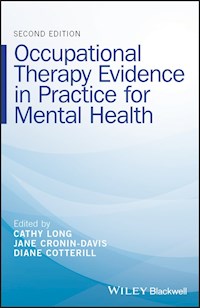
Occupational Therapy Evidence in Practice for Mental Health E-Book
58,99 €
Mehr erfahren.
- Herausgeber: John Wiley & Sons
- Kategorie: Fachliteratur
- Sprache: Englisch
Occupational Therapy Evidence in Practice for Mental Health is an accessible and informative guide to the application of theory and the evidence-base to contemporary clinical practice. Fully updated throughout, chapters cover a range of mental health issues, approaches and settings, including service user and carer involvement, group work, services for older people, interventions, forensic mental health, and managing depression.
Key Features
- Written by an expert author team, drawing on a wide range of evidence, service contexts, national policy and legislation.
- Focus on person-centred practice in mental health services.
- Each chapter also contains a variety of learning features, including task boxes, reflective questions and further readings, to aid understanding and demonstrate the use of evidence to inform clinical decision-making.
The second edition of this easy-to-read and practical textbook is an ideal resource for occupational therapy students, clinical practitioners, and anyone looking for a concise, accessible guide to evidence-based practice and how it informs occupational therapy in mental health.
Sie lesen das E-Book in den Legimi-Apps auf:
Seitenzahl: 388
Veröffentlichungsjahr: 2017
Ähnliche




















Table of Contents
Cover
Title Page
List of Contributors
Preface
How to Use This Book
References
1 An Introduction: Tracking Developments in Mental Health Practice
Mental Health Legislation, Policy and Developments Influencing Occupational Therapy in Mental Health
Mental Health Occupational Therapy Roles and Diversity of Clinical Practice
The Importance of Using and Applying Evidence
Overcoming Barriers to Using Evidence‐Based Practice
Values‐Based Practice
Value of Leadership
The Future for Occupational Therapists in Mental Health
References
2 Service User and Carer Involvement: Co‐production
The Policy Context
Co‐production in Mental Health
Detailed Framework
Successful Strategic Collaborations Between Professional and Service User: A Case Study
Conclusions
References
3 Creativity as a Transformative Process
Background
Supportive Environments
Recovery
Occupational Therapy and Creativity
The Model of Creative Ability
Community Arts Projects
Value of Narrative
Converge – A Community of Learners
Converge Buddy Scheme
Converge Support and Progression Work – Lucy Coleman Case Study
A Sense of Belonging
Identity
Creativity
Challenges Encountered
Conclusions
Acknowledgement
References
4 Group Work in Occupational Therapy: Generic Versus Specialist Practice
The Phoenix Programme
Amy – Expert by Profession or Expert by Experience
Policy
Jenny – Service User Perspective
Theory into Practice
The Relational Model of Group Development
Community Meetings – Generic or Specialist?
Occupation‐Centred Practice
Shop and Cook Group
Occupational Therapy Process
Amy’s Reflections on Learning
Conclusions
References
5 Working with Alice Smith: Services for Older People
Service context
Introduction to Alice Smith
Conclusions
References
6 Occupational Therapy Interventions for Someone Experiencing Severe and Enduring Mental Illness
The Occupational Therapy Pathway
Example of Practice
Exploring the Evidence of Individual Interventions
Cognitive‐Behavioural Family Interventions
Evaluation of Interventions
Conclusions
References
7 Forensic Mental Health: Creating Occupational Opportunities
Framework for Forensic Mental Health Services
Service User Involvement
Multi‐disciplinary Team and Setting
Nathan: A Service User
Occupational Therapy: A Process of Interventions
Conclusions
References
8 Promoting Self‐Efficacy in Managing Major Depression
Improving Access to Psychological Therapy Programme
Nature and Impact of Depression on Occupation
Sean Smith: Case Study
Initial Assessment
Study Assignment 3
Screening for Suitability
Therapy Option 1: Cognitive‐Behavioural Therapy
Therapy Option 2: Behavioural Activation
Core Principles of Behavioural Activation
Style of Therapy in Behavioural Activation
Collaborative Goal Setting
Developing a Case Formulation to Guide Treatment
Levels of Behavioural Activation
Activity Scheduling and Mood Monitoring
Between Session Assignments
Problem‐Solving
Prevention of Relapse
Outcome of Therapy
Clinical Reasoning and the Evidence Base
Conclusions
Supplementary Information
References
9 Veterans: Understanding Military Culture and the Possible Effects on Engagement
Joining the UK Armed Forces
Military Culture
Alcohol and Drug Use
Mental Health
Prosthetics
Transition from Military to Civilian Life
Definition of a Veteran
Ask the Question
Armed Forces Covenant, Community and Corporate Covenants
The NHS Constitution
Reservists
Families
Criminal Justice System
Conclusions
References
Index
End User License Agreement
List of Tables
Chapter 01
Table 1.1 The policy context for evidence‐based practice in the UK (full references are listed in Box 1.1).
Chapter 04
Table 4.1 Jenny’s motor and process skills reflecting diminished quality of occupational performance – shopping and cooking.
Table 4.2 Selecting group members.
Table 4.3 Shop and Cook Group intervention protocol.
Table 4.4 Re‐evaluation of Jenny’s goals.
Chapter 06
Table 6.1 Coping strategies for psychosis.
Table 6.2 An example of a diary entry by Bob.
Table 6.3 List of coping strategies utilised by Bob.
Table 6.4 Summary of family assessments and rationale for use.
Table 6.5 Organisation of family assessment material (family case formulation).
Table 6.6 Specific example of goal planning.
Chapter 07
Table 7.1 Nathan’s ‘My Shared Pathway’ and multi‐disciplinary treatment plan.
Chapter 09
Table 9.1 Transition to Civilian Life: Information Sheet 2. ‘The emotional pathway’.
List of Illustrations
Chapter 06
Figure 6.1 Formulation illustrating distress associated with auditory hallucinations developed from the individual assessments.
Chapter 07
Figure 7.1 Conceptualising the occuptional therapy process and occupational risk factors in forensic psychiatry. (Developed from original work by Stockton Hall Hospital Occupational Therapy Service.)
Guide
Cover
Table of Contents
Begin Reading
Pages
iii
iv
v
ix
x
xi
xii
xiii
xiv
xv
xvi
xvii
xviii
xix
1
2
3
4
5
6
7
8
9
10
11
12
13
14
15
17
18
19
20
21
22
23
24
25
26
27
28
29
30
31
32
33
34
35
36
37
38
39
40
41
42
43
44
45
46
47
48
49
50
51
52
53
54
55
56
57
59
60
61
62
63
64
65
66
67
68
69
70
71
72
73
74
75
76
77
78
79
80
81
82
83
84
85
87
88
89
90
91
92
93
94
95
96
97
98
99
100
101
102
103
104
105
106
107
109
110
111
112
113
114
115
116
117
118
119
120
121
122
123
124
125
126
127
128
129
130
131
132
133
134
135
136
137
139
140
141
142
143
144
145
146
147
148
149
150
151
152
153
154
155
156
157
158
159
160
161
162
163
165
166
167
168
169
170
171
172
173
174
175
176
177
178
179
180
181
182
183
184
185
186
187
188
189
190
191
192
193
194
195
196
197
198
199
200
201
202
203
204
205
206
207
208
209
210
211
212
213
214
215
216
217
218
219
220
221
223
224
225
226
227
228
229
Occupational Therapy Evidence in Practice for Mental Health
Second Edition
Edited by
Cathy Long
Former senior lecturerYork St. John UniversityUK
Jane Cronin‐Davis
York St. John UniversityUK
Diane Cotterill
York St. John UniversityUK
This edition first published 2017 © 2017 by John Wiley & Sons Ltd
First edition published 2006 by John Wiley & Sons Ltd
Registered officeJohn Wiley & Sons Ltd, The Atrium, Southern Gate, Chichester, West Sussex, PO19 8SQ, UK
Editorial offices9600 Garsington Road, Oxford, OX4 2DQ, UKThe Atrium, Southern Gate, Chichester, West Sussex, PO19 8SQ, UK.111 River Street, Hoboken, NJ 07030‐5774, USA
For details of our global editorial offices, for customer services and for information about how to apply for permission to reuse the copyright material in this book please see our website at www.wiley.com/wiley‐blackwell
The right of Cathy Long, Jane Cronin‐Davis and Diane Cotterill to be identified as the authors of this work has been asserted in accordance with the UK Copyright, Designs and Patents Act 1988.
All rights reserved. No part of this publication may be reproduced, stored in a retrieval system, or transmitted, in any form or by any means, electronic, mechanical, photocopying, recording or otherwise, except as permitted by the UK Copyright, Designs and Patents Act W1988, without the prior permission of the publisher.
Designations used by companies to distinguish their products are often claimed as trademarks. All brand names and product names used in this book are trade names, service marks, trademarks or registered trademarks of their respective owners. The publisher is not associated with any product or vendor mentioned in this book. It is sold on the understanding that the publisher is not engaged in rendering professional services. If professional advice or other expert assistance is required, the services of a competent professional should be sought.
The contents of this work are intended to further general scientific research, understanding, and discussion only and are not intended and should not be relied upon as recommending or promoting a specific method, diagnosis, or treatment by health science practitioners for any particular patient. The publisher and the author make no representations or warranties with respect to the accuracy or completeness of the contents of this work and specifically disclaim all warranties, including without limitation any implied warranties of fitness for a particular purpose. In view of ongoing research, equipment modifications, changes in governmental regulations, and the constant flow of information relating to the use of medicines, equipment, and devices, the reader is urged to review and evaluate the information provided in the package insert or instructions for each medicine, equipment, or device for, among other things, any changes in the instructions or indication of usage and for added warnings and precautions. Readers should consult with a specialist where appropriate. The fact that an organization or Website is referred to in this work as a citation and/or a potential source of further information does not mean that the author or the publisher endorses the information the organization or Website may provide or recommendations it may make. Further, readers should be aware that Internet Websites listed in this work may have changed or disappeared between when this work was written and when it is read. No warranty may be created or extended by any promotional statements for this work. Neither the publisher nor the authors shall be liable for any damages arising herefrom.
Library of Congress Cataloging‐in‐Publication Data
Names: Long, C. (Cathy), editor. | Cronin‐Davis, J. (Jane), editor. | Cotterill, Diane, editor.Title: Occupational therapy evidence in practice for mental health / [edited by] Cathy Long, Jane Cronin‐Davis, Diane Cotterill.Description: Second edition. | Chichester, West Sussex ; Hoboken, NJ : John Wiley & Sons, Inc., 2017. | Includes bibliographical references and index.Identifiers: LCCN 2016055401 (print) | LCCN 2016056140 (ebook) | ISBN 9781118990469 (pbk.) | ISBN 9781118990551 (pdf) | ISBN 9781118990544 (epub)Subjects: | MESH: Mental Disorders–therapy | Occupational Therapy–methods | Evidence‐Based MedicineClassification: LCC RC439.5 (print) | LCC RC439.5 (ebook) | NLM WM 450.5.O2 | DDC 616.89/165–dc23LC record available at https://lccn.loc.gov/2016055401
A catalogue record for this book is available from the British Library.
Wiley also publishes its books in a variety of electronic formats. Some content that appears in print may not be available in electronic books.
Cover image: iwanara‐MC/Gettyimages
Cover design: Wiley
This book is dedicated to Lindsay Rigby who gave so much to occupational therapy in mental health.
List of Contributors
Catherine Beynon-Pindar, BSc(Hons), BHSc (Hons) After 4 years of medical school and a BSc in Psychology with relation to Medicine, Catherine decided medicine was not for her. However, she discovered a passion for occupational therapy and qualified in 2005. She specialised in mental health immediately, initially working in forensic mental health. She moved to a specialist post at The Retreat in York in 2007 and has worked for 9 years on the Acorn Programme, an intensive group work programme and an accredited therapeutic community for women who predominantly meet the criteria for Borderline Personality Disorder, Complex Post Traumatic Stress Disorder and/or Dissociative Identity Disorder. She has facilitated a wide range of groups including psychoeducational, occupation‐based and psychotherapeutic. She regularly presents at national conferences and in 2014 completed the Institute of Group Analysis’ National Foundation Course in Group Analysis. She is passionate about student education, group work, trauma and mindfulness.
Lucy Coleman BA(Hons), BHSc(Hons), PGCE Lucy first became involved with Converge Communitas choir in 2010 when she was an occupational therapy student at York St John University. Before starting her occupational therapy programme, she taught music and sang professionally. Lucy qualified in 2013, and was offered the post of Support and Progression Worker with Converge at the university. One of her main roles at Converge is to co‐ordinate support for anyone enrolled on courses who may need this by liaising with course tutors, York St John student buddies and peer mentors. Lucy also works with people to help them achieve their creative goals in different ways. This could mean offering them people to progress in our courses, with application for university places and finding employment opportunities.
Diane Cotterill, Dip COT, Bsc(Hons), MSc, PGAP, PGCHR, FHEA Diane is an occupational therapist who graduated in 1990. Following this Diane worked in a range of psychosocial settings, both inpatient and community, predominantly with working age adults but she also has experience of working alongside older people with complex needs. Diane now teaches on the undergraduate occupational therapy programme and contributes to teaching at postgraduate level at York St John University. Diane maintains a keen interest in mental health services, the care provided for older people in care homes and also from a professional perspective, ethical practice and professionalism.
Jane Cronin‐Davis, PhD, MSc (Crim Psych), BHSc (Hons), BA (Hons), BA, PGCAP, FHEA Jane graduated as an occupational therapist in 1994 from what was then the College of Ripon and York St John (now York St John University). Much of her clinical experience is in mental health, specialising in forensic mental health. She has worked in high and medium secure hospitals. Her last post before moving to work in a university was Head of Occupational Therapy at Broadmoor Hospital in the UK. Her specialist interest is in occupational therapy occupation‐focused assessment and treatment interventions; risk assessment and management; and working with people diagnosed with personality disorder in forensic settings. She currently offers supervision and practice development to practitioners working in secure services. Jane focuses on research related to forensic practice. She was a lead for the College of Occupational Therapists (2012) practice guidelines ‘Occupational Therapists use of occupation‐focused practice in secure settings’. She has worked for National Institute of Clinical Excellence and other national organisations representing occupational therapy. Jane was previously the Chair of the College of Occupational Therapists Specialist Section for Mental and the Forensic Forum.
Cathy Long, SROT, DipCOT, MSc (Applied Psychology), CertHE Until recently Cathy taught at York St John University. She qualified as an occupational therapist in 1982 and has worked in Birmingham and Manchester as a mental health occupational therapist. She has worked in adult community mental health teams, resource centres, acute inpatient services and a unit for group and individual psychotherapy. Immediately prior to teaching she worked within an NHS funded arts and activities centre for people experiencing mental health illnesses.
Cheryl McMorris, BSc(Hons) Cheryl qualified as an occupational therapist in 1997 from the University of Derby. Cheryl’s first post was working in adult mental health in patient services in Gloucestershire, before moving to Scotland where she worked for a year in a Social Work Department for Glasgow City Council. Since then Cheryl has specialised in working in mental health primarily forensic services. She has worked across high, medium and low secure services. In 2004, she took up post as a Clinical Specialist Occupational Therapist for discharge liaison at The State Hospital, Carstairs before taking on her current role as Forensic Care Group OT Lead for the Directorate of Forensic Mental Health & Learning Disabilities in NHS Greater Glasgow & Clyde in 2007. Cheryl has a special interest in vocational rehabilitation and employability in mental health specifically for forensic service users. She has an enthusiasm for the development of others particularly leadership skill developments for occupational therapists and support staff. Cheryl chaired the Scottish subgroup of College of Occupational Therapists Specialist Section Mental Health (COTSSMH) for 4 years before becoming Vice Chair in 2014 and the Chair of COTSSMH in 2015.
Nashiru Momori Nashiru is Founder and Director of Real INSIGHT – an organisation aiming to transform services through user involvement. He has extensive experience of inpatient and community services, drug dependency and the criminal justice system. His experience of his recovery journey has enabled him to recognise the importance of a holistic approach to recovery and the need for meaningful involvement. Since 2011, Nash has been an Expert User Consultant for West London Mental Health Trust providing insight to Senior Management Teams working directly with frontline staff and peers in a recovery oriented practices, and enhancing relationships. From 2013 to 2015, Nash worked with Resolving Chaos to help create and implement the Fulfilling Lives programme in Lambeth, Southwark & Lewisham. He was the National Expert Citizen Group Coordinator for the programme funded by the Big Lottery Fund from 2014 to 2015. He was founder and Chair of the Expert Service User Reference Group, which enables individuals currently using support services, or at the periphery, to participate in the development, management, delivery, monitoring and evaluation of their projects. Nash is a Governor of South London and Maudsley NHS Trust, and part of the development team for its Recovery College, vice chair of their Social Inclusion and Recovery Board, and a regional Ambassador for the Equalities National Council. Currently, Nash is a Trustee for the Blackfriars Settlement and West London Collaborative.
Gabrielle Richards, BAS (OT), MSc, FCOT Gabrielle has worked in mental health all of her career. She is passionate about co‐production and promotes a collaborative and recovery based approach to all her work from practice, organisational and strategic levels working alongside people with lived experience. Gabrielle chairs the Board for the Social Inclusion and Recovery Strategy work of the Trust and leads on several Trust wide projects and initiatives including volunteering and the Recovery College. Gabrielle has been involved in working parties and Boards of the College of Occupational Therapists focusing on mental health. She was the chair of the Colleges Specialist Section for Mental Health. During this time the profile of mental health was raised significantly most notably with the development of the Colleges Strategy for Mental health ‘Recovering Ordinary Lives’. She has contributed to publications and presented at national and international conferences. She is currently Chair of the London Mental Health Occupational Therapy managers group and Professional Head of Occupational Therapy and Lead for Social Inclusion and Recovery at South London & Maudsley NHS Foundation Trust, King’s Health Partners. In 2008 she was awarded the British College of Occupational Therapists Fellowship in recognition of her outstanding contribution to the work of the Specialist Section in mental health and to the profession of occupational therapy.
Gill Richmond DipCot, Grad Dip Counselling, PGDip Cognitive Therapy, BACP accredited CBT practitioner, Gill trained and qualified as an occupational therapist in 1991 at the University College of York St John. She has worked in a range of mental health settings and has primarily worked with adults with complex mental health needs in an NHS setting using CBT for individuals and groups. Gill is BABCP accredited, a CBT practitioner, Supervisor and Trainer.
Lindsay Rigby, SROT, Dip COT, BSc (Hons), MSc Lindsay was employed as a teaching fellow at Manchester University and Manchester Mental Health & Social Care Trust as a practice development practitioner. With over 20 years’ experience in occupational therapy in acute mental health, she spent over 8 years in a Home Treatment Team offering alternatives to hopital admission. She specialised in the development of clinical pathways to provide cognitive‐behavioural therapy and family interventions alongside specific occupational therapy interventions. Her area of specialist interest was with those who experience a first episode of psychosis and the supervision of clinicians.
Alison Williams, BA (Hons) Social Policy with Social Work, BHSc (Hons) Occupational Therapy, Post Graduate Diploma in Management Studies Alison has over 15 years’ experience working as an occupational therapist in older people’s mental health services in a variety of areas including memory clinic, community mental health teams for older people and inpatient care. Her particular areas of interest are working with people with dementia and their carers, dementia‐friendly design/environments and assistive technology.
Ian Wilson, RMN, Dip PSI (Thorn), BSc (Hons), MSc (COPE) Ian works as a Dual Diagnosis Trainer and Clinical Specialist in Dual Diagnosis for Manchester Mental Health & Social Care Trust. He has worked in mental health services in Manchester for 25 years. During that time he has offered evidence‐based psychosocial interventions to many clients, including CBT for individuals and their families. He has trained staff from a wide variety of backgrounds and professions in the delivery of psychosocial interventions, locally, nationally and abroad. He has a particular interest in working with young people experiencing a recent onset of psychosis and their families, and patients with complex ‘dual diagnosis’ presentations. He is currently also a Teaching Fellow at the University of Manchester.
Caroline Wolverson, Dip COT, Dip Therapeutic Horticulture, MSc Professional Practice, Fellow of the Higher Education Academy Caroline is a senior lecturer in the Faculty of Health and Life Sciences at York St John University. An occupational therapist by background, she now teaches on the undergraduate occupational therapy programme and MSc Professional Health and Social Care studies programme. Her particular areas of interest are working with older people, people with dementia and their carers and maintaining well‐being through activity in the care home setting.
Nick Wood, MSc, Fellow of the Higher Education Academy After serving in the Royal Navy and seeing active service (Falklands 1982), Nick joined HM Prison Service in 1986. Working in numerous roles including substance misuse teams and offender management, he created the Veterans In Custody Support model becoming the coordinator for Prisons in England and Wales. He co‐authored the Working with Veterans guide and received the HRH Princess Royal Butler Trust Award for his veterans’ support work in 2010. In his current role, Education and Development Lead (Military Culture & Interventions), Nick delivers the YSJU Veterans (Military Culture) Awareness CPD and is collaborating with colleagues to introduce ‘military culture’ into student’s studies. He sits on local authority and national boards including COBSEO Veterans in the CJS, SSAFA Prison In Reach and NHS Armed Forces Networks in Yorkshire & Humber and the North East. He contributed to the government Phillips Inquiry into Veterans in the CJS and has co‐authored academic publications into veterans in the CJS. Nick’s current projects include a research study to assess the impact on veteran identification and engagement within community support services.
Preface
This, the second edition of Occupational Therapy Evidence in Practice for Mental Health, provides a contemporary perspective of occupational therapy practice. We are proud to welcome both new contributions to the text and updated chapters from the previous edition. We consider all of these to be relevant to current practice, providing clear examples of implementing evidence in practice. All authors have a strong interest in how occupational therapy interventions benefit people who use (or have used) mental health services, and have expertise relevant to the focus of their chapters. Diane Cotterill is welcomed as the third editor. As with the first edition, this text is written for students and new graduates who seek to underpin their practice with the relevant evidence and theory base, consider how to develop skills for practice and question how to move practice forward.
Since the first edition of the book in 2006, the evidence base for occupational therapy has grown, thereby demonstrating how it can address the occupational strengths and needs of the wide range of people using mental health services. Evidence‐based practice is no longer a new phenomenon; it is a routine, everyday component of occupational therapy practice. Studies have shown that occupational therapists have positive attitudes towards evidence‐based practice [1] and the increasing drive for effective practices in the NHS makes a scientific approach to service delivery a continued requirement – whether practising in England, Scotland, Wales or Northern Ireland [2–5].
However, the authors in this book have deliberately and judiciously taken a broad perspective of what constitutes evidence‐based practice. In order to be true to our person‐centred practice, there are no definitive or manualised answers in the chapters; rather, by drawing on a wide range of evidence, the authors have shown how occupational therapy or an occupational perspective makes a difference to individuals who use mental health services. Each contributor has proffered clinical reasoning, service contexts, national policy and legislation in addition to their mental health experience and their unique contributions to mental health occupational therapy. Thus, we hope that each chapter provides not only evidence, but also stimulates readers to consider how they might provide occupational therapy interventions, given that clinical reasoning is influenced by factors such as personal preference, team dynamics, professional experience and training.
How to Use This Book
Each chapter focuses on a different practice setting or approach, but each is based on an individual or individuals with whom the author has worked. Pseudonyms have been used and some relevant detail and information has been altered to prevent the possibility of identification.
Each chapter includes tasks: reflective questions or suggested reading to prompt the reader to look beyond the confines of the book and develop their reasoning skills.
Briefly, the content of each chapter is as follows.
Chapter 1 by Cheryl McMorris sets the scene for the book as a whole, giving a synopsis of current mental health policy and what this means for occupational therapy practice. Cheryl writes with passion of the important of using evidence in our practice and urges us to undertake research in order to demonstrate our effectiveness and to ensure the best quality services.
Gabrielle Richards and Nashiru Momori have worked together for some time as occupational therapist and service user. In Chapter 2 they help us to appreciate the concept of service user involvement in mental health, and moreover, the importance of co‐production. They provide an example of their successful strategic collaboration and offer readers their individual perspectives. Nash outlines his unique model for co‐production.
Chapter 3 explores the impact that engaging in creative occupations can have upon mental well‐being, and how an occupational therapist might facilitate this process. The first half of the chapter highlights the importance of supportive environments and how these can promote engagement and participation and how the Model of Creative Ability contributes to enabling individuals to access their inner resources. It then provides an example of a collaborative community arts project called Converge which is based at York St John University.
Catherine Beynon‐Pindar explores the generic versus specialist practitioner roles in the context of a therapeutic community for women with a variety of self‐defeating behaviours. She writes about the complexity and value of group work in occupational therapy, and describes the stages of group development within the Relational Model of Group Work. Catherine discusses the therapeutic use of self with the women on the residential group therapy programme. She emphasises the use of occupation‐focused, occupation‐based and occupation‐centred practice within both generic and occupational therapy group work. Reference is made to Dialectical Behaviour Therapy (often referred to as DBT), NICE clinical guidance and occupational therapy models of practice and process.
Alice Smith has a recent diagnosis of Alzheimer‐type dementia and lives on her own. In Chapter 5 Caroline Wolverson and Alison Williams discuss the steps involved in working as an occupational therapist with Alice and her family, while remaining closely faithful to the principles of person‐centred practice and multi‐agency working. Consideration of her physical needs (Alice also has osteoarthritis) and what it is like to live with a diagnosis of dementia are explored within the chapter. References to evidence to support suggested interventions are presented with a particular focus on meal preparation, community engagement and carers’ support.
Adhering closely to principles of evidence‐based practice, Chapter 6 gives a detailed account of psychosocial interventions (PSI) for schizophrenia. Training in PSI is usually at the postgraduate level and multi‐disciplinary, and it is becoming increasingly recognised as treatment of choice – hence its inclusion here. Using the Canadian Occupational Performance Measure [6] as a starting point, Lindsay Rigby and Ian Wilson show how the symptoms of schizophrenia affect Bob’s ability to engage with his previous occupations and with his family. They then describe detailed and clearly defined interventions to help Bob and his family meet their goals.
Occupational therapy has now come of age in secure environments in the UK. Chapter 7 considers specifically occupation‐focused practice in a secure setting with reference to national guidance. Jane Cronin‐Davis takes us through the process and considerations of Will, an occupational therapist working with Nathan, a service user in a medium secure unit in the UK. There is an opportunity for readers to recognise the challenges and opportunities which co‐exist for occupational therapy staff in secure environments, and to identify the need and potential for occupation‐focused practice with service users despite the security and environmental restrictions. There is a strong emphasis on the possible evidence‐base for occupational therapy interventions in secure environments.
Occupational therapy in mental health integrates evidence‐based strategies to facilitate a clear understanding of the individual environmental, socio‐cultural, cognitive, emotional and behavioural factors leading to the development and maintenance of depression. This case study in Chapter 8 by Gill Richmond provides opportunity for reflection on strategies that guide the therapist’s clinical reasoning and will assist collaborative implementation of the most suitable and effective therapeutic interventions for the person experiencing depression. Reference is made to guidelines on the treatment of depression formulated by NICE [7].
Since 2008, mental health services have been required to address the mental health needs of veterans living in their area. Chapter 9 gives a detailed background to military culture and armed combat, and their possible impact on health. A key issue is the transition from army to civilian life and the difficulties this poses, in part resulting from social stigma and barriers to seeking help. Nick Wood does not present occupational therapy processes, but encourages the reader to consider these in the light of evidence, policy and guidelines.
In this second edition there are some clear and purposeful omissions from the first edition. We felt that learning disability, and child and adolescent mental health services warranted greater consideration than could be afforded here.
References
1 Upton, D., Stephens, D., Williams, B. and Scurlock‐Evans, L. (2014) Occupational therapists’ attitudes, knowledge, and implementation of evidence‐based practice: a systematic review of published research.
British Journal of Occupational Therapy
,
77
(1), 24–38.
2 Department of Health (2011)
No Health without Mental Health: A cross‐government mental health outcomes strategy for people of all ages
,
https://www.gov.uk/government/uploads/system/uploads/attachment_data/file/213761/dh_124058.pdf
(accessed 28 October 2016).
3 Scottish Government (2012)
The Mental Health Strategy for Scotland 2012–15
,
http://www.gov.scot/Resource/0039/00398762.pdf
(accessed 28 October 2016).
4 Welsh Government (2012)
Together for Mental Health: A Strategy for Mental Health and Wellbeing in Wales
,
http://gov.wales/docs/dhss/publications/121031tmhfinalen.pdf
(accessed 28 October 2016).
5 Department of Health, Social Services and Public Safety (2012)
Delivering the Bamford Vision: The Response of the Northern Ireland Executive to the Bamford Review of Mental Health and Learning Disability Action Plan 2012–15
,
https://www.health‐ni.gov.uk/sites/default/files/publications/dhssps/bamford‐action‐plan‐2012‐15.pdf
(accessed 28 October 2016).
6 Law, M., Baptiste, S., Carswell, A., McColl, M., Polatajko, H. and Pollock, N. (1994)
Canadian Occupational Performance Measure
, 2nd edn, CAOT Publications, Montreal.
7 National Institute for Clinical Excellence (2009) Depression in adults: recognition and management.
Clinical Guideline
90
, NICE, London.
1An Introduction: Tracking Developments in Mental Health Practice
Cheryl McMorris
Historically, there has been much debate and discussion about the difficulty in defining occupational therapy. Personally, occupational therapy is a passion. A passion to enable people to achieve their full potential, to work towards their goals and be all they can and want to be and more. The true aspiration of the occupational therapist is no different in mental or physical health – occupational therapy supports people to develop skills to overcome the challenges that restrict them and to utilise their strengths to enable them to live the lives they want to live.
Despite the significant changes in health and social care systems over the last decade and the current financial challenges we face, I am inspired by the creativity and adaptability of our profession. We actively seek out new scopes of practice, identifying the need for and highlighting the benefit of occupational therapy. We have outstanding clinicians, researchers, educators and managers, all of whom are exceptional leaders – determinedly working to develop, deliver and evidence the best of what occupational therapy can offer in mental health. We are beginning to embrace the requirements to develop and apply evidence that demonstrates our unique contribution to mental health service delivery and show the effectiveness of our interventions.
Occupational therapy in mental health has commenced its journey to adopt an evidence and values‐based approach. The chapters within this book reflect the initiatives, developments and evidence of our profession in mental health practice; however, we have not yet arrived at our destination. To ensure we deliver high quality care, cost effective interventions and that our profession continues to flourish we need to evidence what we know in our hearts: occupational therapy makes a positive contribution to high quality, effective mental health care.
Mental Health Legislation, Policy and Developments Influencing Occupational Therapy in Mental Health
The four countries of the UK, England, Northern Ireland, Scotland and Wales, each have their own mental health legislation and concurrent policies, which are significant in determining the key priorities and agendas for mental health services. Such variations in legislation and mental health policies result in both subtle and major differences in role remit, commissioning and delivery of mental health services across the UK.
The introduction of Chief Allied Health Profession (AHP) Officers or Lead AHP Officers within government departments has had a significant impact upon occupational therapists working in mental health. These roles have instigated the production of key AHP policy and strategic drivers, which have been utilised to influence, evidence and support the work of occupational therapists employed in mental health in driving service change, improving service delivery and demonstrating our vital role within the mental health workforce.
A brief overview of the most recent mental health legislation, policy and AHP policy across the UK is given in Table 1.1 and Box 1.1. Throughout the book there is reference to relevant policy related to the specific area of practice and all efforts have been made to include a UK‐wide perspective.
Table 1.1 The policy context for evidence‐based practice in the UK (full references are listed in Box 1.1).
Country
Mental health legislation
Mental health policy
Allied health professional policy
England
Mental Health Act (1983) (Amended 2007) (Great Britain Parliament 1983, 2007)
DH (2014): Closing the Gap – priorities for essential change in mental health
Public Health England (2015): the role of allied health professionals in public health – examples of interventions delivered by allied health professionals that improve the public health
DH (2011): No Health without Mental Health – a cross‐government mental health outcomes strategy for people of all ages
DH (2009): Living Well with Dementia – a national dementia strategy
Northern Ireland
The Mental Health (Northern Ireland) Order 1986 (Great Britain Parliament 1986)
Department of Health, Social Services and Public Safety (2011): Service Framework for Mental Health and Well‐being
Public Health Agency (2012): Allied Health Professionals Strategy 2012–2017 – improving health and well‐being through positive partnerships
Northern Ireland Association for Mental Health (2009): Flourishing Society – Aspirations for Emotional Health and Well‐being in Northern Ireland
Scotland
Mental Health (Scotland) Act (2015). This Act amends provisions within the 2003 Act and some related provisions in the Criminal Procedure (Scotland) Act 1995
The Scottish Government (2012): Mental Health Strategy for Scotland 2012–2015
The Scottish Government (2013): Allied Health Professions Scotland Consensus Statement on Quality Services Values
The Scottish Government (2013): Scotland’s National Dementia Strategy 2013–2016
The Scottish Government (2010): Realising Potential – action plan for allied health professionals in mental health
The Scottish Government (2012): AHPs as agents of change in health and social care – the National Delivery Plan for the Allied Health Professions in Scotland 2012–2015
Wales
The Welsh Government (2010): Mental Health Measure (Wales)
The Welsh Government (2012): Together for Mental Health – a cross‐government strategy to improve mental health and well‐being for all ages
Box 1.1 The policy context for evidence‐based practice in the UK
Department of Health (2009) Living Well With Dementia: a national dementia strategy, https://www.gov.uk/government/publications/living‐well‐with‐dementia‐a‐national‐dementia‐strategy (accessed 28 October 2016).
Department of Health (2011) No health without mental health: a cross‐government mental health outcomes strategy for people of all ages, https://www.gov.uk/government/uploads/system/uploads/attachment_data/file/213761/dh_124058.pdf (accessed 28 October 2016).
Department of Health (2014) Closing the Gap: priorities for essential change in mental health, https://www.gov.uk/government/uploads/system/uploads/attachment_data/file/281250/Closing_the_gap_V2_‐_17_Feb_2014.pdf (accessed 28 October 2016).
Department of Health, Social Services and Public Safety (2011) Service Framework for Mental Health and Wellbeinghttp://www.scie.org.uk/publications/guides/guide30/files/northern_ireland_mental_health_and_wellbeing_service_framework.pdf?res=true (accessed 28 October 2016).
Great Britain Parliament. Mental Health Act 2007, http://www.legislation.gov.uk/ukpga/2007/12/contents (accessed 28 October 2016).
Great Britain Parliament. The Mental Health (Northern Ireland) Order 1986 (No. 595) (NI 4), http://www.legislation.gov.uk/nisi/1986/595/contents (accessed 28 October 2016).
Northern Ireland Association for Mental Health (2009) A Flourishing Society: Aspirations for Emotional Health and Wellbeing in Northern Ireland, http://www.niamhwellbeing.org/SiteDocuments/compass_flourishing.pdf (accessed 28 October 2016).
Public Health Agency (2012) Allied Health Professionals Strategy 2012–2017: Improving health and well‐being trough positive partnerships, http://www.publichealth.hscni.net/ahp‐strategy‐2012‐2017 (accessed 28 October 2016).
Public Health England (2015) The role of allied health professionals in public health: examples of interventions delivered by allied health professionals that improve the publics’ health, https://www.gov.uk/government/uploads/system/uploads/attachment_data/file/483038/Mapping_the_Evidence_of_impact_of_allied_health_professionals_on_public_health.pdf (accessed 28 October 2016).
Scotland Parliament (2015) Mental Health (Care and Treatment) (Scotland) Act 2015, http://www.legislation.gov.uk/asp/2015/9/contents/enacted (accessed 28 October 2016).
Scottish Government (2010) Realising potential: an action plan for allied health professionals in mental health, http://www.gov.scot/Resource/Doc/314891/0100066.pdf (accessed 28 October 2016).
Scottish Government (2012) AHPs as agents of change in health and social care: The National Delivery Plan for the Allied Health Professions in Scotland, 2012–2015, http://www.gov.scot/Resource/0039/00395491.pdf (accessed 28 October 2016).
Scottish Government (2013) Allied Health Professions Scotland Consensus Statement on Quality Services Values, http://www.gov.scot/Resource/0043/00438291.pdf (accessed 28 October 2016).Welsh Government (2010) Mental Health (Wales) Measure 2010, http://www.legislation.gov.uk/mwa/2010/7/contents (accessed 28 October 2016).
Welsh Government (2012) Together for Mental Health: a cross‐government strategy to improve mental health and wellbeing for all ages, http://gov.wales/consultations/healthsocialcare/mhealth/?lang=en (accessed 22 January 2016).
Over the last 10 years, within the UK there have been leading developments influencing and enhancing the evidence for occupational therapy in mental health services. The Research Centre for Occupation and Mental Health (RCOMH) which until recently was at York St John University set out to develop world class research in occupational therapy and mental health to influence best practice. This was achieved through the core work within the coordinated research programmes: arts and creativity, children and young people’s occupations, occupational and mental health in forensic and prison services, occupation and older people’s mental health and participation and mental health.
The National Institute for Health and Care Excellence (NICE) accredited the College of Occupational Therapists (COT) practice guidelines for occupational therapists’ use of occupation‐focused practice in secure hospitals. As the first practice guidelines for occupational therapists in mental health in the UK, they utilise the evidence to support and inform clinical practice. It is hoped that this will be the foundation for the development of more practice guidelines for occupational therapists in mental health, setting standards for best practice and demonstrating the role of occupational therapy within different clinical areas for other healthcare professionals and service users.
Mental Health Occupational Therapy Roles and Diversity of Clinical Practice
Occupational therapists have become well established as integral members of core teams in mental health services including specialist areas of practice. As a consequence of the changes in health and social care systems, we have begun to develop evidence together with establishing the value of the profession within new clinical areas; as a result the scope of our practice is broadening and our roles are becoming more diverse.
The benefit of role emerging placements for students as well as practitioners moving into non‐traditional areas of practice is well documented. Examples include working with veterans, cooperative developments with third sector and community services including residential and nursing homes, day centres and charities as well as organisations such as schools, youth offending teams and within prison healthcare [1–3]. Emerging areas of practice include occupational therapists working in primary care, linking with general practitioners, utilising short‐term interventions [1] in early access and crisis interventions, recognised as crucial in admission avoidance.
Vocational rehabilitation has been identified as a key practice development area. As a profession occupational therapists are fully aware of the benefits of this intervention; there is strong evidence identifying that work or employment has a positive impact on mental health, promoting recovery, leading to better health, quality of life and well‐being and reducing social exclusion and poverty [4]. There are many current examples of occupational therapists developing vocational rehabilitation roles with employment agencies, individual placement supported employment and within services such as Jobcentre Plus. Williams et al. [5] describe occupational therapists being best placed to provide strong leadership in supporting the introduction of evidence‐based practices in supported employment.
A key priority across the UK is the provision of care and support for people with dementia and their families. Evidence suggests that occupational therapists working within dementia services are delivering improved quality of care and achieving cost savings through the development and evidencing of non‐pharmacological management of symptoms and use of technology [1].
The impact of mental illness on physical health, and the recognition that many people with physical illness experience mental health problems [6], supports the need for experienced mental health practitioners to be involved in other clinical areas such as physical rehabilitation, trauma, cancer care, palliative care and supporting the older people.
Identifying and utilising current evidence highlighting the impact of occupational therapy in developing these emerging roles allows us the opportunity to focus on our core competencies, the exclusive skills we have to offer and to avoid the hazard of occupational therapists taking on generic roles and remits. Creating the evidence to support the development and demonstrate the efficacy of occupational therapy within these emerging settings is key to the expansion in our scope of practice. We need to take advantage of these opportunities, utilising our existing evidence as the foundation to promote what we can contribute [7,8].
The Importance of Using and Applying Evidence
Within the rapidly changing world of health and social care, service reconfiguration, financial challenges and pressure on resources it is essential that we evidence our impact and our unique contribution to recovery if we want occupational therapy to remain a core profession in mental health services. It is imperative that we evaluate the effectiveness of what we deliver as a priority in order to demonstrate clinical and cost effectiveness in comparison to other services and interventions [9].
Occupational therapists working in mental health services have a professional responsibility to establish the effectiveness of interventions, ensure work is based on the best available evidence [10] and validate the quality of our input to mental health service provision. It is essential that, as a minimum, we apply the best available evidence to inform our practice and ensure we are delivering the highest quality service possible.
Hierarchies of evidence are classed in relation to methodological rigour and can be applied within practice: systematic reviews, randomised control trials, non‐randomised intervention/observational/non‐experimental studies and expert clinical opinion. It is important that we have an understanding of what is the best evidence in relation to the clinical questions we are asking and that we are comfortable in locating the evidence, critically appraising it and applying the findings to our everyday practice. Central to this is ensuring that people who have used services are actively participating in research programmes and that these data are integrated with clinical experience so that we always keep the occupational needs and well‐being of our clients as our primary focus and that the research evidence is matched to these needs [11].
The evidence base for the profession has grown over the last 10 years, providing more robust research [12]. While this is a step forward, there are still gaps in the evidence [13] and there is a need for more rigorous methodological research, such as systematic reviews [14,15], to guide clinical decision making and influence best occupational mental health practice.
To implement research, robust evidence outcomes are required to demonstrate the impact of interventions. Choosing the right outcome measure is important. We need to develop measures that are valid, measuring what we are trying to achieve within our interventions and practice. We should use a variety of outcome measures and, where possible, use occupational therapy assessments that have been tested to ensure reliability and clinical utility, as it is these assessment tools that reflect our unique focus upon occupation. There is a requirement for the profession to build research capacity and capability, utilise evidence‐based occupational therapy assessments in order to demonstrate the economic impact of interventions as well as maintaining and ensuring the highest quality of care for service users.
Overcoming Barriers to Using Evidence‐Based Practice
Samuelsson and Wressle [16] identified a number of barriers to occupational therapists working in an evidence‐based way:
Settings:
facilities being inadequate or lack of time to read and implement
Presentation and accessibility to research:
relevant literature not being compiled in one place and implications for practice not being clear [16].




