


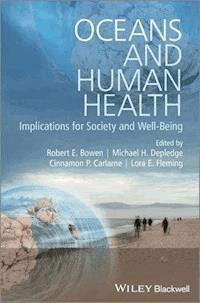
Oceans and Human Health E-Book
58,99 €
Mehr erfahren.
- Herausgeber: John Wiley & Sons
- Kategorie: Wissenschaft und neue Technologien
- Sprache: Englisch
Human health and well-being are tied to the vitality of the global ocean and coastal systems on which so many live and rely. We engage with these extraordinary environments to enhance both our health and our well-being. But, we need to recognize that introducing contaminants and otherwise altering these ocean systems can harm human health and well-being in significant and substantial ways.
These are complex, challenging, and critically important themes. How the human relationship to the oceans evolves in coming decades may be one of the most important connections in understanding our personal and social well-being. Yet, our understanding of this relationship is far too limited.
This remarkable volume brings experts from diverse disciplines and builds a workable understanding of breadth and depth of the processes – both social and environmental – that will help us to limit future costs and enhance the benefits of sustainable marine systems. In particular, the authors have developed a shared view that the global coastal environment is under threat through intensified natural resource utilization, as well as changes to global climate and other environmental systems. All these changes contribute individually, but more importantly cumulatively, to higher risks for public health and to the global burden of disease.
This pioneering book will be of value to advanced undergraduate and postgraduate students taking courses in public health, environmental, economic, and policy fields. Additionally, the treatment of these complex systems is of essential value to the policy community responsible for these questions and to the broader audience for whom these issues are more directly connected to their own health and well-being.
"The seas across this planet and their effects on human society and its destiny are a fascinating subject for analysis and insights derived from intellectual inquiry. This diverse and complex subject necessarily requires a blending of knowledge from different disciplines, which the authors of this volume have achieved with remarkable success."
"The following pages in this volume are written in a lucid and very readable style, and provide a wealth of knowledge and insightful analysis, which is a rare amalgam of multi-disciplinary perspectives and unique lines of intellectual inquiry. It is valuable to get a volume such as this, which appeals as much to a non-specialist reader as it does to those who are specialists in the diverse but interconnected subjects covered in this volume."
(From the "Foreword" written by, R K Pachauri, Director General, TERI and Chairman, IPCC)
Sie lesen das E-Book in den Legimi-Apps auf:
Seitenzahl: 670
Veröffentlichungsjahr: 2014
Ähnliche




















Table of Contents
Cover
Title Page
Copyright
List of Contributors
Foreword
About the Companion Website
Section One: Coastal Seas, Human Health, and Well-Being: Setting the Stage
Chapter 1: Influences of the Oceans on Human Health and Well-Being
1.1 Introduction
1.2 Interactions and routes of exposure
1.3 Risks
1.4 Benefits
1.5 Discussion
Acknowledgments
References
Chapter 2: Integrating Frameworks to Assess Human Health and Well-Being in Marine Environmental Systems
2.1 Introduction
2.2 Integration, complexity, and need for new frameworks
2.3 Background
2.4 Integrating frameworks for human health and well-being
2.5 Assessing the influences on environmental change
2.6 The Driver–Pressure–State–Impact–Response framework
2.7 The Driver–Pressure–State–Exposure–Effect–Action framework
2.8 The DPSIR in the case-study literature
2.9 The DPSEEA in the case-study literature
2.10 Flexibility in applying frameworks
2.11 Conclusion
References
Section Two: Anthropogenic Drivers/Pressures and the State of Coastal Seas
Chapter 3: Coastal Demography: Distribution, Composition, and Dynamics
3.1 Introduction
3.2 Background
3.3 Summary and conclusions: interdisciplinary applications in the decades ahead
Acknowledgments
References
Chapter 4: The Seas, Ecosystem Services, and Human Well-Being
4.1 Introduction
4.2 Background: ecosystem services explained
4.3 Sources of change in marine ecosystem services
4.4 Managing marine ecosystems for human health and well-being
4.5 Summary and conclusions
References
Chapter 5: Measuring Social Value and Human Well-Being
5.1 Introduction
5.2 Background
5.3 Summary and conclusions
References
Section Three: Impacts on Coastal Environments
Chapter 6: The Impact of Climate Change on Coastal Ecosystems
6.1 Introduction
6.2 Background
6.3 Summary and conclusions
Acknowledgments
References
Chapter 7: Coastal Systems and Access to Safe and Potable Water
7.1 Introduction
7.2 Background
7.3 Challenges to society for addressing these concerns and mitigating the consequences
7.4 Rethinking water governance
7.5 Decentralization and participatory decision making in water governance
7.6 Moving forward
References
Section Four: Responses
Chapter 8: Management-Driven Assessments of the Coastal Oceans
8.1 Introduction
8.2 Background
8.3 The global ocean observing system and integrated ecosystem assessments
8.4 Ocean observing for human health and well-being
8.5 Building an integrated system of systems
8.6 Summary and conclusions
References
Chapter 9: Globalization and Human Health: Regulatory Response and the Potential for Reform
9.1 Introduction
9.2 Background
9.3 Rethinking global governance
9.4 Future and conclusions
References
Section Five: Common Conclusions and Horizon Scanning
Chapter 10: Emerging Issues in Oceans and Human Health: Managing Uncertainty and New Knowledge
10.1 Introduction
10.2 Approaches to identifying and tracking emerging issues in oceans and health: horizon scanning
10.3 Some emerging issues in oceans and human health
10.4 Addressing future oceans and human health issues
10.5 Conclusions
References
Chapter 11: Final Thoughts and Future Actions
11.1 Oceans and human health: an epic struggle
11.2 Oceans and human health: Reframing relationships
11.3 Oceans and human health: Lessons learned
11.4 Oceans and human health: Future directions
11.5 Conclusions
Index
End User License Agreement
Pages
vii
viii
ix
xi
xii
xiii
3
4
5
6
7
8
9
10
11
12
13
14
15
16
17
18
19
20
21
22
23
24
25
26
27
28
29
30
31
32
33
34
35
36
37
38
39
40
41
42
43
44
45
49
50
51
52
53
54
55
56
57
58
59
60
61
62
63
66
64
65
67
68
69
70
71
72
73
74
75
76
77
78
79
80
81
82
83
84
85
86
87
88
89
90
91
92
93
94
95
96
97
98
99
100
101
102
103
104
105
106
107
108
109
110
111
112
113
114
115
116
117
118
119
121
122
123
124
125
126
128
129
120
130
131
127
132
133
134
135
136
137
138
141
142
143
144
145
146
147
148
149
150
151
152
153
154
155
156
157
158
159
160
161
162
163
164
166
165
167
168
169
170
171
172
173
174
175
176
177
178
179
180
181
182
183
184
185
186
187
188
189
190
191
192
193
194
195
196
197
198
199
200
203
204
205
206
207
208
209
210
211
212
213
214
215
216
217
218
219
220
221
222
223
224
225
226
227
228
229
230
231
232
233
234
235
236
237
238
239
240
241
242
243
244
245
246
247
248
249
250
251
252
253
254
255
256
257
258
259
260
261
262
263
267
268
269
270
271
272
273
274
275
276
277
278
279
280
281
283
282
284
285
286
287
288
289
291
292
293
294
295
296
297
1
47
139
201
265
299
300
301
302
303
304
Guide
Table of Contents
Section One: Coastal Seas, Human Health, and Well-Being: Setting the Stage
List of Illustrations
Figure 2.1
Figure 2.2
Figure 2.3
Figure 2.4
Figure 3.1
Figure 3.2
Figure 3.3
Figure 3.4
Figure 4.1
Figure 4.2
Figure 4.3
Figure 4.4
Figure 4.5
Figure 4.6
Figure 5.1
Figure 5.2
Figure 5.3
Figure 6.1
Figure 6.2
Figure 6.3
Figure 6.4
Figure 6.5
Figure 6.6
Figure 6.7
Figure 7.1
Figure 7.2
Figure 7.3
Figure 8.1
Figure 8.2
Figure 8.3
Figure 8.4
Figure 8.5
Figure 8.6
Figure 8.7
Figure 8.8
Figure 9.1
Figure 9.2
Figure 9.3
Figure 10.1
Figure 10.2
Figure 10.3
List of Tables
Table 1.1
Table 3.1
Table 4.1
Table 5.1
Table 6.1
Table 6.2
Table 6.3
Table 7.1
Table 8.1
Table 8.2
Table 8.3
Table 8.4
Table 10.1
Oceans and Human Health
Implications for Society and Well-Being
Edited by
Robert E. Bowen, Michael H. Depledge, Cinnamon P. Carlarne, and Lora E. Fleming
This edition first published 2014 © 2014 by John Wiley & Sons, Ltd
Registered office: John Wiley & Sons, Ltd, The Atrium, Southern Gate, Chichester, West Sussex, PO19 8SQ, UK
Editorial offices: 9600 Garsington Road, Oxford, OX4 2DQ, UK
The Atrium, Southern Gate, Chichester, West Sussex, PO19 8SQ, UK
111 River Street, Hoboken, NJ 07030-5774, USA
For details of our global editorial offices, for customer services and for information about how to apply for permission to reuse the copyright material in this book please see our website at www.wiley.com/wiley-blackwell.
The right of the author to be identified as the author of this work has been asserted in accordance with the UK Copyright, Designs and Patents Act 1988.
All rights reserved. No part of this publication may be reproduced, stored in a retrieval system, or transmitted, in any form or by any means, electronic, mechanical, photocopying, recording or otherwise, except as permitted by the UK Copyright, Designs and Patents Act 1988, without the prior permission of the publisher.
Designations used by companies to distinguish their products are often claimed as trademarks. All brand names and product names used in this book are trade names, service marks, trademarks or registered trademarks of their respective owners. The publisher is not associated with any product or vendor mentioned in this book.
Limit of Liability/Disclaimer of Warranty: While the publisher and author(s) have used their best efforts in preparing this book, they make no representations or warranties with respect to the accuracy or completeness of the contents of this book and specifically disclaim any implied warranties of merchantability or fitness for a particular purpose. It is sold on the understanding that the publisher is not engaged in rendering professional services and neither the publisher nor the author shall be liable for damages arising herefrom. If professional advice or other expert assistance is required, the services of a competent professional should be sought.
Library of Congress Cataloging-in-Publication Data
Oceans and human health / edited by Robert E. Bowen, Michael H. Depledge, Cinnamon Piñon Carlarne, Lora E. Fleming.
pages cm.
Includes bibliographical references and index.
ISBN 978-1-119-94131-6 (cloth : alk. paper) 1. Marine biology. 2. Marine plants. 3. Marine biotechnology. 4. Pharmaceutical biotechnology industry. 5. Public health. I. Bowen, Robert E., Ph. D.
QH91.O27 2014
577.7– dc23
2013044782
A catalogue record for this book is available from the British Library.
Wiley also publishes its books in a variety of electronic formats. Some content that appears in print may not be available in electronic books.
List of Contributors
Mel Austen
Plymouth Marine Laboratory, Prospect Place, The Hoe, Plymouth, Devon, UK
Deborah Balk
CUNY Institute for Demographic Research, and School of Public Affairs, Baruch College, City University of New York (CUNY), New York, NY, USA
Sarah Bardsley
Evidence Directorate, Environment Agency, Bath, UK
Nicky Beaumont
Plymouth Marine Laboratory, Prospect Place, The Hoe, Plymouth, Devon, UK
Robert E. Bowen
School for the Environment (SFE), University of Massachusetts Boston, Boston, MA, USA
Virginia Burkett
US Geological Survey, Many, LA, USA
Cinnamon P. Carlarne
Michael E. Moritz College of Law, The Ohio State University, Columbus, OH, USA
John S. Carlarne
Mershon Center for International Security Studies, The Ohio State University, Columbus, OH, USA
Michael H. Depledge
European Centre for Environment and Human Health, University of Exeter Medical School, Knowledge Spa, Royal Cornwall Hospital Trust, Truro, Cornwall, UK
Ellen M. Douglas
School for the Environment (SFE), University of Massachusetts Boston, Boston, MA, USA
Colin Maxwell Finlayson
Institute for Land, Water and Society, Charles Sturt University, Albury, NSW, Australia
Lora E. Fleming
European Centre for Environment and Human Health, University of Exeter Medical School, Knowledge Spa, Royal Cornwall Hospital Trust, Truro, Cornwall, UK
Donald L. Forbes
Geological Survey of Canada, Bedford Institute of Oceanography, Dartmouth, Nova Scotia, Canada
Anamarija Frankic
University of Massachusetts Boston, Boston, MA, USA
Andrea Harvey
European Centre for Environment and Human Health, University of Exeter Medical School, Knowledge Spa, Royal Cornwall Hospital Trust, Truro, Cornwall and Plymouth Marine Laboratory, Plymouth, Devon, UK
Caroline Hattam
Plymouth Marine Laboratory, Prospect Place, The Hoe, Plymouth, Devon, UK
Daniel S. Holland
Conservation Biology Division, Northwest Fisheries Science Center, Seattle, WA, USA
Robert J. Johnston
George Perkins Marsh Institute, Clark University, Worcester, MA, USA
Marin Kress
School for the Environment (SFE), University of Massachusetts Boston, Boston, MA, USA
Jennifer De Lurio
Evidence Directorate, Environment Agency, Bath, UK
Thomas C. Malone
Horn Point Laboratory, Center for Environmental Science, University of Maryland, Cambridge, MD, USA
Gordon McGranahan
International Institute for Environment and Development, London, UK
Mark Montgomery
Population Council, New York, NY, USA
George Morris
Ecological Public Health, NHS Health Scotland, Glasgow, UK
Robert J. Nicholls
School of Civil Engineering and the Environment and the Tyndall Centre for Climate Change Research, University of Southampton, Southampton, UK
Richard Owen
European Centre for Environment and Human Health, University of Exeter Medical School, Knowledge Spa, Royal Cornwall Hospital Trust, Truro, Cornwall, UK and University of Exeter Business School, Exeter, UK
Marco A. Palomino
European Centre for Environment and Human Health, University of Exeter Medical School, Knowledge Spa, Royal Cornwall Hospital Trust, Truro, Cornwall, UK
Carmen Revenga
The Nature Conservancy, Arlington, Virginia, USA
Dale Rothman
Frederick S. Pardee Center for International Futures, Josef Korbel School of International Studies, University of Denver, Denver, CO, USA
James Sanchirico
Department of Environmental Science and Policy, University of California Davis, Davis, CA, USA
Timothy Taylor
European Centre for Environment and Human Health, University of Exeter Medical School, Knowledge Spa, Royal Cornwall Hospital Trust, Truro, Cornwall, UK
Benedict Wheeler
European Centre for Environment and Human Health, University of Exeter Medical School, Knowledge Spa, Royal Cornwall Hospital Trust, Truro, Cornwall, UK
Mathew P. White
European Centre for Environment and Human Health, University of Exeter Medical School, Knowledge Spa, Royal Cornwall Hospital Trust, Truro, Cornwall, UK
Colin D. Woodroffe
School of Earth and Environmental Sciences, University of Wollongong, NSW, Australia
Foreword
The seas across this planet and their effects on human society and its destiny are a fascinating subject for analysis and insights derived from intellectual inquiry. This diverse and complex subject necessarily requires a blending of knowledge from different disciplines, which the authors of this volume have achieved with remarkable success. Human well-being as it relates to the condition of the seas spread across the globe and its nexus with societal issues is very much part of the history of the human race. Very basic and simple concerns relate to food and nutrition that are derived on a large scale from ocean resources. Additionally, the history of the world has itself been shaped essentially by the ability of human beings to master transportation across the seas and the ability to access and utilize a range of resources from marine structures, including hydrocarbons, minerals, and a wealth of other resources, which in a variety ways have become a part of daily human existence. Not only has the power structure of global relationships been directly influenced by the ability of societies and nations to travel far and wide, often extending their military prowess and weaponry to other lands, but also in today's world the ability, for instance, to carry out deep sea drilling for oil and gas provides large economic benefits to those who possess technologies and skills in these areas.
Unfortunately, in today's world human beings are also altering, at an unprecedented rate, the relatively stable relationship that we have lived with in relation to the Earth's oceans and seas. As a result of the rapid increase in emissions of carbon dioxide since the beginning of industrialization and its absorption by the oceans, their acidification is threatening marine life of various forms. The melting of ice across the Arctic is likely to change maritime activities significantly, with the possible emergence of new routes linking east to west. There could also be changes in ocean currents on account of changes in the salinity gradient of some seas where such melting is occurring at a significant level. The impact of climate change has resulted in sea-level rise, which is not only affecting human habitat in several parts of the world where settlements have flourished over thousands of years, but also communities are now facing an increased threat of coastal flooding and storm surges as a consequence. At the same time, with sea-level rise, the intrusion of salinity in areas far away from the coast is becoming a reality. This would undoubtedly affect the quality and availability of groundwater resources to the detriment of people at a distance from the sea, who historically have been immune to these conditions.
The impacts of climate change on coastal ecosystems could have serious consequences not only for those directly affected but also as a result of the emergence of a large number of climate refugees, who with the threat of sea-level rise experienced in the past and anticipated in the future could decide to move away from locations where civilizations and cultures have been able to thrive for thousands of years. Indeed, such a trend could affect societies not only in the immediate vicinity of affected locations but also areas far away that would become attractive destinations for climate refugees threatened with sea-level rise.
Sea-level rise poses a serious threat for ecosystems, with health implications for human beings and all living species in coastal areas and beyond. Species likely to be affected would not only include plant life but other life forms as well. For instance, the low-lying areas of West Bengal and the region that is now Bangladesh form part of the traditional habitat of the Bengal tiger. Indeed, the Sunderban islands still have a small population of Bengal tigers, which with the projections of sea-level rise could become extinct and consigned to history. There also could be increases in the nature and extent of vector-borne diseases in some of these areas, and, of course, once such a trend were to set in, its impact could extend geographically to other areas far from the shore. Serious threats to all forms of life also have been imposed by other human actions that have led to serious problems of pollution. A tragic example of this was the prolonged discharge of methyl mercury in Japan into the Minamata Bay and Shiranui Sea that notoriously has become associated with Minamata disease, which has afflicted thousands of human beings and innumerable numbers of fish and other marine species and animals that consumed contaminated marine food. This serious problem continued for 36 years before effective action was taken to put an end to it. Oil spills also cause incalculable damage to an unknown range of living species. The most recent case of a serious oil spill was that created by the Deepwater Horizon project of BP, where a devastating oil spill stretched far and wide across the Gulf of Mexico.
The following pages in this volume are written in a lucid and very readable style, and provide a wealth of knowledge and insightful analysis, which is a rare amalgam of multidisciplinary perspectives and unique lines of intellectual inquiry. This volume is of great value, and it will appeal as much to a nonspecialist reader as it would to specialists in the diverse but interconnected subjects covered by this volume.
R. K. Pachauri Director General, The Energy and Resources Institute and Chairman, Intergovernmental Panel on Climate Change
About the Companion Website
This book is accompanied by a companion website:
www.wiley.com/go/bowen/oceanshumanhealth
The website includes:
Powerpoints of all figures from the book for downloading
PDFs of all tables from the book for downloading
Section One
Coastal Seas, Human Health, and Well-Being: Setting the Stage
Chapter 1Influences of the Oceans on Human Health and Well-Being
Benedict Wheeler1, Mathew P. White1, Lora E. Fleming1, Timothy Taylor1, Andrea Harvey1,2, and Michael H. Depledge1
1European Centre for Environment and Human Health, University of Exeter Medical School, Knowledge Spa, Royal Cornwall Hospital Trust, Truro, Cornwall, UK
2Plymouth Marine Laboratory, Plymouth, Devon, UK
1.1 Introduction
Oceans have attracted humans to their shores since ancient times. Over thousands of years, they have served as a source of food, provided livelihoods, and generated commerce, as well as being a means of disseminating people, and later, connecting civilizations, near and far. Their importance is reflected in many cultural practices, and is manifest in inspirational art.
Inevitably, the oceans influence our health and well-being. Damaged marine ecosystems arising from natural disasters or as a result of human exploitation, lead to negative consequences for human health and well-being [1–10].
“Health” in this context is usually defined as physical and physiologic health, which is lost or damaged following the emergence of disease or after injury. The impact of the oceans on health is typically assessed in relation to changes in the incidence of acute and chronic diseases. For instance, acute poisonings and infections associated with the consumption of seafood containing harmful algal bloom (HAB) toxins and microbial organisms result in acute disease episodes, while chronic diseases such as diabetes and cancer may occur after long-term exposure to persistent organic pollutants consumed in contaminated seafood. Drowning is, of course, also a well-recognized health threat associated with activities in or on our seas.
Unlike human health, the term “human well-being” is not one with a consensus definition. It is a concept used in a broad-ranging set of literatures without a precise, consensus definition. Rather, the term “well-being” is a concept or abstraction used to refer to whatever is assessed in an evaluation of a person's “life situation” or “being [11].” Within the pages of this book, the term is used in the following ways:
economic vitality built upon the foundations of ecosystem service value and sustainable development practices;
social and cultural integrity;
Lesen Sie weiter in der vollständigen Ausgabe!
Lesen Sie weiter in der vollständigen Ausgabe!
Lesen Sie weiter in der vollständigen Ausgabe!
Lesen Sie weiter in der vollständigen Ausgabe!
Lesen Sie weiter in der vollständigen Ausgabe!
Lesen Sie weiter in der vollständigen Ausgabe!
Lesen Sie weiter in der vollständigen Ausgabe!
Lesen Sie weiter in der vollständigen Ausgabe!
Lesen Sie weiter in der vollständigen Ausgabe!
Lesen Sie weiter in der vollständigen Ausgabe!
Lesen Sie weiter in der vollständigen Ausgabe!
Lesen Sie weiter in der vollständigen Ausgabe!
Lesen Sie weiter in der vollständigen Ausgabe!
Lesen Sie weiter in der vollständigen Ausgabe!
Lesen Sie weiter in der vollständigen Ausgabe!
Lesen Sie weiter in der vollständigen Ausgabe!




