


30,99 €
Mehr erfahren.
- Herausgeber: John Wiley & Sons
- Kategorie: Wissenschaft und neue Technologien
- Sprache: Englisch
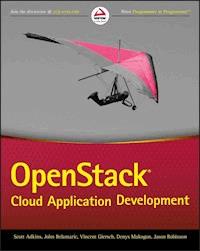
Leverage the power of OpenStack to develop scalable applications with no vendor lock-in OpenStack Cloud Application Development is a fast-paced, professional book for OpenStack developers, delivering comprehensive guidance without wasting time on development fundamentals. Written by experts in the OpenStack community from Infoblox, Gigaspaces, GoDaddy, and Comcast, this book shows you how to work effectively and efficiently within the OpenStack platform to develop large, scalable applications without worrying about underlying hardware. Follow along with an OpenStack build that illustrates how and where each technology comes into play, as you learn expert tips and best practices that make your product stronger. Coverage includes OpenStack service primitives, networking within the OpenStack Ecosystem, deployment of Virtualized Network Functions for Enterprises, containers, data protection, and much more. If you need to get on board quickly, this professional book is your ideal roadmap to OpenStack development. * Understand all aspects of OpenStack technologies * Follow an example build to drill down into critical elements * Learn the OpenStack best practices and insider tips * Leverage the full capability of IaaS at a professional pace OpenStack is supported by dozens of major technology companies, compatible with Amazon Web Services, and can be used alongside or on top of VMWare vSphere and other similar technologies. It frees developers from the confines of hardware and vendor lock-in while providing a reliable, fast, and easy platform for developing scalable cloud applications. OpenStack Cloud Application Development is an expert-led guide to getting the most out of OpenStack, designed specifically for the professional developer.
Sie lesen das E-Book in den Legimi-Apps auf:
Seitenzahl: 299
Veröffentlichungsjahr: 2015
Ähnliche




















CONTENTS
INTRODUCTION
WHO THIS BOOK IS FOR
WHAT THIS BOOK COVERS
HOW THIS BOOK IS STRUCTURED
WHAT YOU NEED TO USE THIS BOOK
CONVENTIONS
SOURCE CODE
ERRATA
P2P.WROX.COM
PART I OPENSTACK OVERVIEW
1 INTRODUCING OPENSTACK
WHAT IS CLOUD COMPUTING?
WHY SHOULD I CARE?
UNDERSTANDING THE ARCHITECTURE
SUMMARY
2 UNDERSTANDING THE OPENSTACK ECOSYSTEM: CORE PROJECTS
IDENTITY
COMPUTE
STORAGE
IMAGING
DASHBOARD
NETWORKING
BRINGING IT ALL TOGETHER
SUMMARY
3 UNDERSTANDING THE OPENSTACK ECOSYSTEM: ADDITIONAL PROJECTS
OPENSTACK HEAT
OPENSTACK DATABASE AS A SERVICE: TROVE
DESIGNATE: DNS AS A SERVICE
MAGNUM
MURANO: APPLICATION AS A SERVICE
CEILOMETER: TELEMETRY AS A SERVICE
SUMMARY
PART II DEVELOPING AND DEPLOYING APPLICATIONS WITH OPENSTACK
4 APPLICATION DEVELOPMENT
CONVERTING A LEGACY APP TO AN OPENSTACK APP
BUILDING APPS FROM SCRATCH
OPENSTACK APP DESCRIPTION AND DEPLOYMENT STRATEGIES
SUMMARY
5 IMPROVING ON THE APPLICATION
FAILURE SCENARIOS
HOSTNAME AND IP ADDRESSING
SCALING
IMPROVING OUR APPLICATION
SUMMARY
6 DEPLOYING THE APPLICATION
BARE METAL, VIRTUAL MACHINES, AND CONTAINERS
ORCHESTRATION AND CONFIGURATION MANAGEMENT
MONITORING AND METERING
ELASTICITY
UPDATING AND PATCHING
SUMMARY
BOOK WRAP UP
TITLE PAGE
COPYRIGHT
ABOUT THE AUTHOR
ABOUT THE TECHNICAL EDITORS
CREDITS
ACKNOWLEDGMENTS
EULA
List of Illustrations
Chapter 1
Figure 1.1
Figure 1.2
Figure 1.3
Figure 1.4
Figure 1.5
Figure 1.6
Chapter 2
Figure 2.1
Figure 2.2
Figure 2.3
Figure 2.4
Figure 2.5
Figure 2.6
Figure 2.7
Figure 2.8
Figure 2.9
Figure 2.10
Figure 2.11
Figure 2.12
Figure 2.13
Chapter 3
Figure 3.1
Figure 3.2
Figure 3.3
Figure 3.4
Figure 3.5
Figure 3.6
Figure 3.7
Figure 3.8
Figure 3.9
Figure 3.10
Figure 3.11
Figure 3.12
Figure 3.13
Chapter 4
Figure 4.1
Figure 4.2
Figure 4.3
Figure 4.4
Figure 4.5
Figure 4.6
Chapter 5
Figure 5.1
Figure 5.2
Figure 5.3
Figure 5.4
Figure 5.5
Figure 5.6
Figure 5.7
Figure 5.8
Figure 5.9
Figure 5.10
Chapter 6
Figure 6.1
Figure 6.2
Figure 6.3
Figure 6.4
Figure 6.5
Guide
Cover
Table of Contents
Chapter
Pages
xi
xii
xiii
xiv
1
3
4
5
6
7
8
9
10
11
12
13
14
15
16
17
18
19
20
21
22
23
24
25
26
27
28
29
30
31
32
33
34
35
36
37
38
39
40
41
42
43
44
45
46
47
48
49
50
51
52
53
54
55
56
57
58
59
60
61
62
63
64
65
66
67
68
69
70
71
72
73
74
75
76
77
79
80
81
82
83
84
85
86
87
88
89
90
91
92
93
94
95
96
97
98
99
100
101
102
103
104
105
106
107
108
109
110
111
112
113
114
115
116
117
118
119
120
121
122
123
124
125
126
127
128
129
130
131
132
133
134
135
136
137
138
139
140
141
142
143
144
145
146
147
148
149
150
INTRODUCTION
OpenStack is a set of software packages that manage virtualized resources, including computing, networking, and storage. It enables you to create and destroy virtual machines, connect them together with private networks, provide network-based storage, and make them available to the rest of your network and the world. OpenStack provides consistent, uniform API services for all of this, hiding hypervisor and vendor specific details from the applications that are using the APIs. It also provides a user interface, built on top of the same APIs, that allows users to see and manage their virtual resources.
WHO THIS BOOK IS FOR
This book is for application developers that are interested in learning more about OpenStack and how it will transform the application design and development process. It is for someone who is new to the cloud environment, who wants a broad understanding of that environment, as well as a deep enough knowledge to make practical use of OpenStack.
WHAT THIS BOOK COVERS
This book will provide a broad understanding of cloud concepts and how they fit into the life of an application developer. It will drill in deeply to the OpenStack services that are most important to an application developer, and show you how these services will change not only how you deploy applications, but also how you design them. It will provide detailed information on each service, and provide examples of how each service may be used by an application developer.
HOW THIS BOOK IS STRUCTURED
This book was written in two parts. Part 1 provides an overview of OpenStack. The purpose of this part is to lay the groundwork, covering all of the OpenStack technologies and what is most important.
Part 2 takes the reader through developing and deploying applications with OpenStack. In this part you will build an example on top of OpenStack that drills down much deeper on the technologies, provides tips, and helps you learn about OpenStack through the lens of these same technologies.
Here is a list of the chapters:
Part I: OpenStack Overview
Chapter 1: Introduction to OpenStack
Chapter 2: Understanding the OpenStack Ecosystem: Core Projects
Chapter 3: Understanding the OpenStack Ecosystem: Additional Projects
Part II: Developing and Deploying Applications with OpenStack
Chapter 4: Application Development
Chapter 5: Improving on the Application
Chapter 6: Deploying the Application
WHAT YOU NEED TO USE THIS BOOK
You should understand the basics of application development - how applications are composed of multiple servers like web servers, application servers, and database servers. You do not need any cloud-specific knowledge, though you should be aware of what virtualization and virtual machines are, and have a basic understanding of networks.
CONVENTIONS
To help you get the most from the text and keep track of what’s happening, we’ve used a number of conventions throughout the book.
Examples that you can download and try out for yourself generally appear in a box like this:
EXAMPLE TITLE
This section gives a brief overview of the example.
Source
This section includes the source code.
Source code Source code Source code
Output
This section lists the output:
Example output Example output Example output
NOTENotes indicates notes, tips, hints, tricks, or and asides to the current discussion.
As for styles in the text:
We
highlight
new terms and important words when we introduce them.
We show code within the text like so:
persistence.properties
.
SOURCE CODE
As you work through the examples in this book, you may choose either to type in all the code manually, or to use the source code files that accompany the book. All the source code used in this book is available for download at www.wrox.com. Specifically for this book, the code download is on the Download Code tab at:
www.wrox.com/go/openstackcloudappdev
and at:
https://github.com/johnbelamaric/openstack-appdev-book
You can also search for the book at www.wrox.com by ISBN (the ISBN for this book is 978-1-119-19431-6) to find the code. And a complete list of code downloads for all current Wrox books is available at www.wrox.com/dynamic/books/download.aspx.
NoteBecause many books have similar titles, you may find it easiest to search by ISBN; this book’s ISBN is 978-1-119-19431-6.
Once you download the code, just decompress it with your favorite compression tool. Alternately, you can go to the main Wrox code download page at www.wrox.com/dynamic/books/download.aspx to see the code available for this book and all other Wrox books.
ERRATA
We make every effort to ensure that there are no errors in the text or in the code. However, no one is perfect, and mistakes do occur. If you find an error in one of our books, like a spelling mistake or faulty piece of code, we would be very grateful for your feedback. By sending in errata, you may save another reader hours of frustration, and at the same time, you will be helping us provide even higher quality information.
To find the errata page for this book, go to
www.wrox.com/go/openstackcloudappdev
And click the Errata link. On this page you can view all errata that has been submitted for this book and posted by Wrox editors.
If you don’t spot “your” error on the Book Errata page, go to www.wrox.com/contact/techsupport.shtml and complete the form there to send us the error you have found. We’ll check the information and, if appropriate, post a message to the book’s errata page and fix the problem in subsequent editions of the book.
P2P.WROX.COM
For author and peer discussion, join the P2P forums at http://p2p.wrox.com. The forums are a Web-based system for you to post messages relating to Wrox books and related technologies and interact with other readers and technology users. The forums offer a subscription feature to e-mail you topics of interest of your choosing when new posts are made to the forums. Wrox authors, editors, other industry experts, and your fellow readers are present on these forums.
At http://p2p.wrox.com, you will find a number of different forums that will help you, not only as you read this book, but also as you develop your own applications. To join the forums, just follow these steps:
Go to
http://p2p.wrox.com
and click the Register link.
Read the terms of use and click Agree.
Complete the required information to join, as well as any optional information you wish to provide, and click Submit.
You will receive an e-mail with information describing how to verify your account and complete the joining process.
NOTEYou can read messages in the forums without joining P2P, but in order to post your own messages, you must join.
Once you join, you can post new messages and respond to messages other users post. You can read messages at any time on the Web. If you would like to have new messages from a particular forum e-mailed to you, click the Subscribe to this Forum icon by the forum name in the forum listing.
For more information about how to use the Wrox P2P, be sure to read the P2P FAQs for answers to questions about how the forum software works, as well as many common questions specific to P2P and Wrox books. To read the FAQs, click the FAQ link on any P2P page.
PART IOpenStack Overview
CHAPTER 1: INTRODUCING OPENSTACK
CHAPTER 2: UNDERSTANDING THE OPENSTACK ECOSYSTEM: CORE PROJECTS
CHAPTER 3: UNDERSTANDING THE OPENSTACK ECOSYSTEM: ADDITIONAL PROJECTS
1Introducing OpenStack
WHAT’S IN THIS CHAPTER?
Models of cloud computing
Relevance of cloud computing to application developers
Why OpenStack is a good cloud platform choice
How OpenStack is put together
WHAT IS CLOUD COMPUTING?
There is so much hype around cloud computing that it is often difficult to get a clear sense of what anyone means by those words. Is it just virtualization? Is it Software-as-a-Service (SaaS), such as Microsoft’s Office 365 and Salesforce.com? Or is it the ability to get a virtual machine instantly from Amazon Web Services (AWS) or Azure? And what about online storage such as Dropbox?
Lesen Sie weiter in der vollständigen Ausgabe!
Lesen Sie weiter in der vollständigen Ausgabe!
Lesen Sie weiter in der vollständigen Ausgabe!
Lesen Sie weiter in der vollständigen Ausgabe!
Lesen Sie weiter in der vollständigen Ausgabe!
Lesen Sie weiter in der vollständigen Ausgabe!
Lesen Sie weiter in der vollständigen Ausgabe!
Lesen Sie weiter in der vollständigen Ausgabe!
Lesen Sie weiter in der vollständigen Ausgabe!
Lesen Sie weiter in der vollständigen Ausgabe!
Lesen Sie weiter in der vollständigen Ausgabe!
Lesen Sie weiter in der vollständigen Ausgabe!
Lesen Sie weiter in der vollständigen Ausgabe!




