


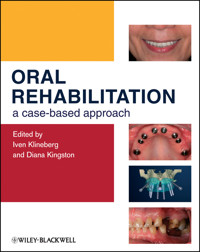
Oral Rehabilitation E-Book
73,99 €
Mehr erfahren.
- Herausgeber: John Wiley & Sons
- Kategorie: Fachliteratur
- Sprache: Englisch
This book provides its readers with a structured approach to decision-making and case management in oral rehabilitation. It is built around actual patient cases from simple prosthodontics to complex full-mouth reconstructions, demonstrating a formal process by which a diagnosis and treatment plan is reached. Grounded firmly in evidence-based principles, the book also includes a chapter on literature searching in dentistry, which is critical for acquiring a knowledge-base for informed decisions in clinical treatment. Featuring an approach to prosthodontics and oral rehabilitation that is both instructional and practical, Oral Rehabilitation: A Case-Based Approach will help clinicians to develop the necessary skills to make consistent, evidence-based clinical decisions. KEY FEATURES * Presents a case-based process showing how diagnosis and treatment is achieved * Covers a range of clinical scenarios from simple to complex presentations * Illustrates each case fully, with stages documented by colour photographs * Emphasises inter-disciplinary management in prosthodontics * Accompanied by a website containing illustrative video clips
Sie lesen das E-Book in den Legimi-Apps auf:
Seitenzahl: 583
Veröffentlichungsjahr: 2012
Ähnliche




















Table of Contents
Cover
Title page
Copyright page
Contributors
Foreword
Acknowledgements
The Prosthodontics Specialty programme
The present publication
Abbreviations
Section 1: Introduction and Literature Searching
1 Introduction
2 Searching the Literature: An Evidence-Based Approach
Sample topic: Longevity of single tooth implants
1. Needs identification
2. Selection of information sources
3. Concepts and their relationships
4. Terminology for concepts and relationships
5. Search design elements and launch points
6. Refinement and choice of search designs
7. Search history and display of references (records)
8. Evaluation of results
9. Conclusion and caveats
10. Further assistance (information/ help/tutorials)
Section 2: Treatment Planning
3 Consent and Clinician–Patient Relationships
1. Bioethics and consent
2. Clinical decision-making
3. Consent and the law
4. Clinical confidentiality and privacy
5. Consent, autonomy and competence
6. Negligence and standards of care
7. Dentist–patient relationship
4 An Approach to Treatment Decision-Making
1. Treatment philosophy
2. Treatment planning – a comprehensive strategy for optimising outcomes
3. Treatment sequencing
5 Orofacial Pain and Temporomandibular Disorders
1. Introduction
2. Orofacial pain and temporomandibular disorder classification
3. Orofacial pain and temporomandibular disorder assessment
4. Orofacial pain and temporomandibular disorder management
Section 3: Management
6 Diagnostic Planning and Tooth Preparation Technique: A Biological Approach
1. Introduction
2. Tooth preparation technique
7 Provisionalisation in Fixed Prosthodontics
1. Introduction
2. Short-term provisional fixed dental prostheses
3. Long-term provisional fixed dental prostheses as interim restorative treatment
4. Conclusion
8 Maintenance and Long-Term Outcomes
1. Considerations in the planning stage
2. The recall programme
3. The recall visit
4. Documentation
5. Routine maintenance versus retreatment
Section 4: Cases and Case Presentations
Introduction
Navigation guide for case templates
9 Single Tooth Restoration
Case 9.1 Mrs Kathryn H
Presenting complaints
History
Extraoral examination
Intraoral examination
Special tests
Radiographs
Study casts
Problem list
Treatment options
Treatment plan
Treatment sequence
Review at 3 years
Discussion
10 Tooth Wear
Case 10.1 Mr Michael M
Presenting complaint
History
Extraoral examination
Intraoral examination
Special tests
Radiographs
Study casts
Diagnosis
Problem list
Treatment goals
Treatment options
Treatment plan and discussion
Treatment sequence
Informed consent
Review at 1 year
Case 10.2 Mr Graeme S
Presenting complaint
Other complaints
Patient’s expectations
History
Extraoral examination
Intraoral examination
Special tests
Aesthetic evaluation (teeth analysis)
Radiographs
Study casts
Clinical and radiographic examinations and prognostic ratings of remaining teeth
Provisional diagnosis
Treatment objectives
Treatment options
Treatment sequence
Discussion
Review at 18 months
Case 10.3 Mr Nicholas H
Presenting complaints
History
Extraoral examination
Intraoral examination
Special tests
Radiographs
Study casts and diagnostic wax-up
Provisional diagnosis
Problem list
Treatment goals
Treatment options
Treatment discussion
Treatment sequence
Review at 3 months
Case 10.4 Ms Carmen P
Presenting complaints
History
Extraoral examination
Intraoral examination
Special tests
Radiographs
Study casts
Problem list
Treatment options
Discussion
Treatment sequence
Review at 1 year
11 The Broken Down Dentition
Case 11.1 Mr Divo C
Presenting complaints
Other complaints
Patient’s expectations
History
Extraoral examination
Intraoral examination
Radiographs
Study casts
Clinical and radiographic examination findings
Provisional diagnosis
Treatment objectives
Treatment options
Treatment plan accepted
Treatment sequence
Discussion
Risk analysis of the preferred treatment options
Rationale for the treatment plan
Maintenance and definition of treatment success
Review at 18 months
Case 11.2 Mrs Lehong H
Presenting complaint
Subsidiary complaints
History of complaints
Patient’s expectations
History
Extraoral examination
Phonetics
Temporomandibular assessment
Intraoral examination
Radiographs
Special tests
Study casts and diagnostic wax-up
Provisional diagnosis
Problem list
Treatment goals
Treatment options
Treatment discussion
Treatment sequence
Procedural complication
Review at 1 year
Case 11.3 Ms Cynthia B
Presenting complaints
History
Extraoral examination
Intraoral examination
Special tests
Radiographs
Problem list
Treatment options
Treatment plan
Treatment sequence
Treatment discussion
Review at 1 year
Case 11.4 Ms Pamela C
Presenting complaints
History
Extraoral examination
Intraoral examination
Radiographs
Study casts
Problem list
Treatment options
Treatment plan
Treatment sequence
Treatment discussion
Review at 4 years
12 Complete Edentulism
Case 12.1 Mr Arthur T
Presenting complaints
History
Extraoral examination
Intraoral examination
Special tests
Radiographs
Study casts
Problem list
Treatment options
Treatment plan
Treatment sequence
Treatment discussion
Review at 2 years
Case 12.2 Mr Atilla G
Presenting complaints
History
Extraoral examination
Intraoral examination
Radiographs
Study casts
Problem list
Treatment options
Treatment plan
Treatment sequence
Treatment discussion
Review at 1 year
13 Developmental Complications: Cleft Lip and Palate
Palatal development
Classification of clefts
Incidence
Aetiology
Rehabilitation/management
Case 13.1 Mr Louis S
Presenting complaints
History
Extraoral examination
Intraoral examination
Occlusion
Special tests
Radiographs
Study casts
Provisional diagnosis
Problem list
Treatment goals
Treatment options
Treatment plan
Further diagnostic phase
Treatment discussion
Treatment sequence
Review at 15 months
14 Congenital Malformations (Tooth Agenesis)
Case 14.1 Mr Grant H
Presenting complaints
History
Extraoral examination
Intraoral examination
Special tests
Radiographs
Study casts
Diagnosis
Problem list
Treatment goals
Treatment options
Advantages and disadvantages of different options to replace missing teeth
Treatment plan and discussion
Treatment sequence
Informed consent
Review at 1 year
Case 14.2 Mr Tobiah J
Presenting complaints
History
Extraoral examination
Intraoral examination
Special tests
Radiographs
Study casts
Problem list
Treatment options
Treatment plan
Treatment sequence
Treatment discussion
Review at 1 year
15 Rehabilitation after Tumour Surgery
Case 15.1 Mrs Beryl K
Presenting complaint
Other complaints
Patient’s expectations
History
Extraoral examination
Intraoral examination
Special tests
Radiographs
Study casts
Provisional diagnosis
Treatment goals
Treatment options
Treatment plan accepted
Treatment sequence
Treatment discussion
Risk analysis for the selected treatment plan
Maintenance and definition of clinical success
Rationale for the treatment plan
Conclusion
The concept of oral health management
Breadth of clinical responsibility
Oral health
Form and function
Section 5: Appendices
Appendix 1 Programme Overview
Prosthodontics Specialty Programme, Faculty of Dentistry, the University of Sydney: Doctor of Clinical Dentistry (Prosthodontics)
1. Historical background
2. Course information
Further information
Appendix 2 Evidence Base for Case 10.2 (Mr Graeme S)
1. Outcome of direct composite restorations
2. Outcome of single crowns and fixed dental prostheses
Appendix 3 Evidence Base for Case 11.1 (Mr Divo C)
1. Clinical outcomes of implant-retained overdentures
2. Patient satisfaction with implant-retained fixed prostheses, implant-retained overdentures or conventional prostheses
3. Clinical outcomes of mandibular fixed prostheses with differing techniques and loading protocols
4. Clinical outcomes of implant-supported mandibular fixed prostheses: conventional loading (delayed) protocol
5. Clinical outcomes of implant-supported mandibular fixed prostheses: early loading protocol
6. Clinical outcomes of implant-supported mandibular fixed prostheses: immediate loading protocol
7. Criteria for immediate loading with DIEM protocol
8. Material options for the implant-supported fixed prostheses
Appendix 4 Case Summary Template
Presenting complaints
History
Extraoral examination
Intraoral examination
Special tests
Radiographs
Study casts
Problem list
Treatment options
Treatment plan
Treatment sequence
Treatment discussion
References
Index
This edition first published 2012
© 2012 by Blackwell Publishing Ltd
Wiley-Blackwell is an imprint of John Wiley & Sons, formed by the merger of Wiley’s global Scientific, Technical and Medical business with Blackwell Publishing.
Registered office: John Wiley & Sons, Ltd, The Atrium, Southern Gate, Chichester, West Sussex, PO19 8SQ, UK
Editorial offices: 9600 Garsington Road, Oxford, OX4 2DQ, UK
The Atrium, Southern Gate, Chichester, West Sussex, PO19 8SQ, UK
2121 State Avenue, Ames, Iowa 50014-8300, USA
For details of our global editorial offices, for customer services and for information about how to apply for permission to reuse the copyright material in this book please see our website at www.wiley.com/wiley-blackwell.
The right of the author to be identified as the author of this work has been asserted in accordance with the UK Copyright, Designs and Patents Act 1988.
All rights reserved. No part of this publication may be reproduced, stored in a retrieval system, or transmitted, in any form or by any means, electronic, mechanical, photocopying, recording or otherwise, except as permitted by the UK Copyright, Designs and Patents Act 1988, without the prior permission of the publisher.
Designations used by companies to distinguish their products are often claimed as trademarks. All brand names and product names used in this book are trade names, service marks, trademarks or registered trademarks of their respective owners. The publisher is not associated with any product or vendor mentioned in this book. This publication is designed to provide accurate and authoritative information in regard to the subject matter covered. It is sold on the understanding that the publisher is not engaged in rendering professional services. If professional advice or other expert assistance is required, the services of a competent professional should be sought.
Library of Congress Cataloging-in-Publication Data
Oral rehabilitation : a case-based approach / edited by Iven Klineberg, Diana Kingston.
p. ; cm.
Includes bibliographical references and index.
ISBN 978-1-4051-9781-6 (hard cover : alk. paper)
ISBN 978-1-4443-6110-0 (epdf)
ISBN 978-1-4443-6111-7 (epub)
ISBN 978-1-4443-6112-4 (mobi)
I. Klineberg, Iven. II. Kingston, Diana.
[DNLM: 1. Oral Surgical Procedures, Preprosthetic–methods–Case Reports. 2. Prosthodontics–methods–Case Reports. WU 500]
617.6'9–dc23
2011038021
A catalogue record for this book is available from the British Library.
Wiley also publishes its books in a variety of electronic formats. Some content that appears in print may not be available in electronic books.
Contributors
Dr Johnson P.Y. Chou
BDS Otago, DClinDent Sydney, FRACDS, MRACDS
Prosthodontist, Private Practice, Department of Oral Restorative Sciences, Westmead Centre for Oral Health, Westmead, NSW 2145, Australia
Dr Tuan Dao
BDS (Hons), MDSc (Pros) Sydney
Prosthodontist, Private Practice, Maroubra, NSW 2035, Australia
Associate Professor Max Guazzato
DDS (Hons) Milan, PhD, DClinDent (Pros) Sydney, MRACDS, FRACDS, DT
Associate Professor in Oral Rehabilitation, Prosthodontist, Private Practice, Faculty of Dentistry, University of Sydney, Westmead Centre of Oral Health, Westmead, NSW 2145, Australia
Adjunct Associate Professor Robin Hawthorn
OAM, BDS (Hons), MDS Sydney, FICD
Prosthodontist, Private Practice, Tutor and Mentor, Sydney, NSW 2000, Australia
Dr Ken Hooi
BDS, GradDipClinDent (Oral Implants), MDSc Sydney
Prosthodontist, Private Practice, The Dental Specialists, Sydney, NSW 2000, Australia
Dr Diana Kingston
BA Sydney, MLib, PhD UNSW
Information Consultant (Dentistry & Medicine), Oatley, NSW 2223, Australia
Professor Iven Klineberg
AM, RFD, BSc, MDS Sydney, PhD London, MRACDS, FRACDS, FDSRCS Eng and Edin, FICD
Chair, Nobel Biocare Centre of Oral Rehabilitation, Prosthodontist, Faculty of Dentistry, University of Sydney, Westmead Centre of Oral Health, Westmead, NSW 2145, Australia
Dr Agnes T.C. Lai
BDS, DClinDent Sydney, MRACDS
Lecturer in Oral Rehabilitation, Prosthodontist, Faculty of Dentistry, University of Sydney, Westmead Centre of Oral Health, Westmead, NSW 2145, Australia
Dr Michael Lewis
BDS (Hons), DClinDent (Pros) Sydney, MRACDS
Prosthodontist, Private Practice, Bondi, NSW 2026, Australia
Dr Glen Liddelow
BDSc, MScD WA, DClinDent Sydney, MRACDS, FRACDS
Prosthodontist, Private Practice, The Branemark Center, West Perth, WA 6005, Australia
Professor Chris Peck
BDS, MSc (Dent), GradDipScMed (Pain) Sydney, PhD UBC
Professor and Dean, Faculty of Dentistry, University of Sydney, NSW 2006, Australia
Dr Robert Santosa
BDS Adelaide, MDSc Sydney
Prosthodontist, Private Practice, Sydney, NSW 2000, Australia
Dr Christine Wallace
BDS, MDSc Sydney, CertMaxFacPros (Iowa), GradCertSocSc (HEd) Sydney, MRACDS, FRACDS
Head, Department of Oral Restorative Sciences, Clinical Senior Lecturer, Lane Cove, NSW 1595, Australia
Clinical Professor Terry Walton
AM, BDS, MDSc Sydney, MS Michigan, FRACDS, FICD
Prosthodontist, Private Practice, Sydney, NSW 2000, Australia
Dr Alan Yap
BDS, MDSc (Pros) Sydney, MRACDS
Lecturer, Prosthodontist, Private Practice, Killara, NSW 2071, Australia
Foreword
Dental education has routinely sought to initiate and nurture the special relationship that should exist between dentist and patient. Hence our profession’s ethical code and commitment to behave according to the highest standards. Yet current dental practice has never seemed as vulnerable as it is today to commercial pressures to sell restorative interventions. This is probably because so much of today’s continuing education culture seems to encourage a professional health-care approach that is more responsive to consumer choice. Far too many meetings, commercial initiatives and web-based information seem to convey the message that dental care is no different from a commercial transaction, such as buying a suit or an expensive household appliance.
The resultant and increasingly blurred demarcation line between patient care and consumerism remains a pervasive challenge in prosthodontic practice – an even more serious one keeping in mind the biotechnological breakthrough of osseointegrated implants and the inflated promise of cosmetic solutions. It is therefore reassuring to find a book of this calibre. It underscores old principles and values as it seeks to reconcile erudition with prudence, scrupulous analysis with much wisdom. It is clearly the coherent result of over three decades of clinical scholarship that went into its conception, with the authors providing sensible understanding and context for assessing patients’ oral rehabilitative needs in a manner that marries common sense with best available clinical evidence.
In the book’s first half, review chapters cover essential determinants of diagnosis, treatment planning and patient management – strong reminders that even traditional basic principles need to be refined as better understanding of form and function yield clearer treatment considerations, as well as acknowledging more unanswered questions. The second half offers a spectrum of well-argued and described case histories that may be regarded as reflecting the broad range of prosthodontic expertise. This is the contributors’ impressive and successful way of reaching across the dental disciplines that underpin so much of the oral rehabilitative effort. These case histories are an exemplary collection of teachable information within a methodological framework that connects them to the real clinical world. The result is a reliable and necessary blend of best available evidence and the sort of theory and empiricism that clinical expertise continues to depend on. This is a particularly insightful way to teach dentists how to approach the challenge of oral rehabilitation, always having, as an integral part, a patient-centred approach.
The authors and contributors have done the profession, and the discipline of prosthodontics in particular, an outstanding service by writing this book. It certainly deserves the widest possible readership.
George A. Zarb, CM, BChD, MS, DDS, MS, FRCD(C), PhD, DSc, MD, LLD (HC)
Emeritus Professor University of Toronto,
Editor-in-Chief International Journal of Prosthodontics
Acknowledgements
The Prosthodontics Specialty Programme
This work would not have been contemplated without the important contributions from many colleagues, some of whom assisted in the early development of the programme some 30 years ago. Of these colleagues, some have continued to contribute and support the academic and/or clinical aspects of the coursework. Not surprisingly, the programme has required ongoing revisions, restructuring and upgrading of seminars and lectures, embracing new developments and contemporary technologies. The refocusing of patient care as patient centred and evidence based has been crucially important with the evolution and availability of electronic information and the internet. This is transforming every aspect of communication, community awareness, health management and education – all of which lead to a more informed community and one that is often prepared to challenge the knowledge base of the generalist as well as the specialist clinician.
The initial core group of clinical prosthodontists who assisted the academic and clinical programme include Robin Hawthorn and Terry Walton, who are to be especially acknowledged, as well as the first graduate from the programme Keith Baetz, who joined the teaching team after completing the programme. This core group was joined by other colleagues, including sequentially: Cyril Thomas, Christine Wallace, Dan Brener, Catherine Collins, Geoff Cook, Greg Charlesworth, David Sykes, Geoff Borlase, Chris Peck, Matthew McLaughlin, Suhas Deshpande, Norton Duckmanton, Peter Hell, Anthony Au, Sunny Hong and Neil Peppitt.
The programme was built around a principle of shared decision-making through a Planning Committee, which has in general met every 3 months to discuss and plan new developments and review all aspects of the programme. This has proven to be especially valuable and is a model that can be recommended for developing a new initiative. Those members of the Planning Committee must be recognised, as meetings take place early evening, requiring members to travel to the meeting and contribute to a planned agenda after a busy clinical day. Meetings are informal, but are built around a specific agenda, and are minuted with action items being progressed to ensure continuity of input and engagement of members. The development of electronic communication has greatly facilitated this. Those who have contributed to Planning Committee meetings since 1983 include: Bruce Burns, Roland Bryant, Robin Hawthorn,* Peter Howell, Michael Kafalias, Cyril Thomas, Terry Walton,* Keith Baetz, George Hewitt, Jim Ironside, Christine Wallace,* Catherine Collins, Melissa Kah, Sybille Lechner, Greg Murray, Neil Peppitt, Brian Roberts, David Roessler, Stephen Travis, Dan Brener,* Greg Charlesworth,* Geoff Cook,* David Sykes,*Geoff Borlase,* Norton Duckmanton,* Chris Peck, Suhas Deshpande,* Matthew McLaughlin,* Stefan Scholz and Max Guazzato.*
The Present Publication
This book would also not have been possible without the specific material prepared for the chapters and cases.
Section 1 to Section 3
We acknowledge the contributors to the first three sections of the book who were selected to prepare material of special importance to prosthodontic education, clinical assessment, diagnosis and treatment planning. These chapters cover a small aspect of clinical prosthodontics but are included to emphasise their relevance: literature searching as a key element of evidence-based practice; consent and clinician–patient relationship as a crucial aspect of patient management and gaining pretreatment agreement; treatment decision-making that underpins each case progression; orofacial pain and temporomandibular disorders as an important aspect of pretreatment for oral rehabilitation; diagnostic planning for a biological approach to tooth preparation; provisionalisation as an important aspect of management of dental, periodontal and patient needs; and maintenance and long-term outcomes. We are indebted to the chapter authors who are recognised for their special contribution to this work including: Chris Peck, Robin Hawthorn, Max Guazzato, Robert Santosa, Johnson Chou, Terry Walton, in addition to the editors. Special appreciation is acknowledged of the assistance of Daniel Klineberg for his critical and helpful comments for Chapter 3.
Section 4
The cases and case presentations are the core element of this text, as those selected are a representation of the case types managed by candidates in the specialty programme. They showcase the work of the programme and the level of clinical expertise expected at the conclusion of each candidature. Although only a small number of clinicians were selected, and often with more than one case each, their work reflects the standard approach to treatment planning and delivery that has been developed and followed. The authors – Ken Hooi, Johnson Chou, Max Guazzato, Agnes Lai, Glen Liddelow, Michael Lewis, Alan Yap and Tuan Dao – are to be congratulated for having completed the programme and for agreeing to provide the material for the case chapters. Others from the programme had also provided cases, but the word size and continual interaction required in preparation limited the author contributions.
In addition, each chapter has an introduction to define the case material to follow. Those colleagues who prepared these introductions, in addition to the editor, are Christine Wallace and Alan Yap who are to be acknowledged for their expertise in the specific clinical area.
Preparation for Publication
The oversight provided throughout the project by our publisher Wiley-Blackwell has been constructive and supportive. We wish to thank Sophia Joyce, our Senior Commissioning Editor, and also Project Managers James Benefield and Catriona Cooper. Our sincere thanks go to members of other teams involved in the book’s production including: Nick Morgan (production editor), Lucy Nash (editorial assistant), Ruth Swan (project manager), Maggie Beveridge (copyeditor), the typesetters at Toppan, the proofreaders and the indexer Allison McKechnie. Finally, the assistance with preparation provided by our local administrative group led by Natasha Pavic, and assisted initially by Alison Reid and Catherine Sperling, has been meticulous. Special acknowledgement is made of the ongoing support of Natasha, which has been indispensable and without which this work would not have been possible.
Iven Klineberg and Diana Kingston
Sydney, August 2011
Note
* Denotes current members.
Abbreviations
Section 1: Introduction and Literature Searching
1
Introduction
Iven Klineberg and Diana Kingston
During the past decade in particular, dental education and clinical practice in contemporary prosthodontics have progressively embraced biological principles and evidence-based decision-making. They have distanced themselves from prosthodontics’ mechanical beginnings. This emphasis on the biological basis of case assessment, including an empathetic history, a patient-centred treatment plan and emphasis on explicit and judicious patient consent to support clinical decision-making, allows the careful and meticulous delivery of treatment as a confident and predictable process. Each patient is entitled to, expects and depends on such an approach.
These fundamental changes in philosophy arose as a function of interprofessional dialogue and were influenced significantly by a comprehensive review of dental education presented in Dental Education at the Crossroads – Challenges and Change (Field 1995). There has also been a recognition of the importance of evidence-based dentistry. These factors have stimulated a review of core values in education and practice, as has been the case in medical education and practice (Sackett et al. 2000).
In recognition of these changes, the authors aim to provide the reader with a contemporary approach based on available evidence to define prosthodontic treatment planning and clinical application. The authors recognise that this is a requirement of educational programmes and are mindful of the need for applying this knowledge in clinical practice.
Restorative dentistry and prosthodontics involve tooth restoration and recognition of the importance of occlusal form to provide improved aesthetics as well as stable tooth contacts at an appropriate occlusal vertical dimension for optimising jaw function. This has a significant bearing on tooth mobility, is relevant for orthodontic treatment and is an important consideration in treatment planning for maxillofacial reconstruction. Enhancing jaw function, defining lower face height and satisfying aesthetic needs, are key issues in optimising oral health. This needs to be appreciated as a global construct, where crucial elements of psychosocial well-being and self-confidence are facial appearance and orofacial integrity as a patient-specific need.
Clinical studies in dentistry are now addressing long-term outcomes which represent major advances in evidence to support clinical decision-making. It is recognised that in the past there was no uniformity in clinical study design to allow meaningful data comparison. Study design has not consistently addressed issues of patient numbers, long-term follow-up, blinding of clinical treatment options, bias and critical assessment of outcome measures. In the absence of appropriate clinical trials and long-term studies on outcomes, clinical practice continues to be primarily based on clinical experience and may be tempered by clinical convenience (operator bias). However, more carefully designed clinical trials of an expected standardised and validated design are now emerging, which are beginning to provide treatment guidelines based on biological research and long-term outcomes of treatment.
An Oral Health Group has been established within the Cochrane Collaboration to coordinate the production of systematic reviews of the literature on interventions in dental and oral health care. The Cochrane Collaboration website provides access to training and resources for authors, such as a glossary and the Cochrane Handbook for Systematic Reviews of Interventions. It is possible to browse and search online for completed systematic reviews, reviews in progress (known as Protocols) and clinical trials in the Cochrane Library. The website of the Centre for Evidence-Based Medicine provides documents on levels of evidence and other training tools. Within the dental literature we find periodical articles on the topic (e.g. see in the serial publications Evidence-based Dentistry and the Journal of Evidence-based Dental Practice). For monographs on evidence-based dentistry, see Clarkson et al. (2002), Hackshaw et al. (2006), Chiappelli (2007), Richards et al. (2007) and Forrest et al. (2009).
Evidence-based practice is important for medicine and dentistry to provide a standardised approach to optimise treatment outcomes as the cornerstone of best practice. Although it may sometimes appear to be conceptually difficult to implement, it is important to recognise that evidence-based practice includes several components:
high-quality scientific and long-term clinical trials that provide objective evidence to support a particular clinical decision;clinical experience to ensure a full understanding of each patient’s needs and to meet those expectations in the care delivered;the ability to ask specific questions in searching for the information required in the assessment and preparation of each case;the ability to search for and interpret the information so that it may be applied to each patient’s particular clinical situation and explicit needs.In the past, clinical experience exclusively directed the path of clinical treatment. The acknowledgement of a patient-centred and evidence-based approach is a welcome development for advancing both the clinical science and psychosocial foundation of successful clinical management.
This book arose from a desire to share the philosophy of case assessment, treatment planning and case delivery for a range of patient treatments offered by representative postgraduate students in the specialty programme in prosthodontics at the University of Sydney. It is written to provide a structured approach to decision-making for treatment planning and restoration in oral rehabilitation as an evidence-based process; there is a focus on interdisciplinary interaction to support prosthodontics.
This approach is targeted at those students wishing to advance their learning through a formal approach to clinical decision-making, whether they are beginning their learning or are at an advanced level.
The programme has matured progressively since its commencement by the Faculty of Dentistry at the University of Sydney in 1980. It includes formal coursework and supervised clinical practice in removable, fixed and maxillofacial prosthodontics, involving the use of implants as an integral part of prosthodontic care. It also includes diagnosis and management of orofacial pain and temporomandibular disorders.
The programme is offered as a 3-year full-time coursework programme with the academic and clinical component representing 60–70% and the research component 30–40%. Clinical coursework is primarily based at the Westmead Hospital Centre for Oral Health, a teaching hospital of the University of Sydney and the majority of the postgraduates are full-time in the hospital as Prosthodontic Registrars. Since 2005, provision has been made for selected candidates with extended clinical practice experience and an additional qualification to complete aspects of the clinical requirements in practice with clinical mentor guidance.
The programme is accredited by the Australian Dental Council. Since 2008, the qualification of Doctor of Clinical Dentistry (Prosthodontics), formerly Master of Dental Science (Prosthodontics), has been recognised for specialist description of Prosthodontist by the Australian State Dental Registration Boards and by the Australian Registration Board since 2010. The programme is designed for international equivalence. Postgraduates undertake teaching of undergraduate (predoctoral) students as an educational requirement, and many prosthodontic graduates contribute to the undergraduate and sometimes the postgraduate programme as clinical tutors. They make uniquely important contributions to prosthodontic education and gain significant personal benefits in the process. The strength of the undergraduate programme depends on there being a well-structured postgraduate programme to provide the necessary teaching support.
This book presents cases varying from less complex to more advanced and is designed for undergraduate and postgraduate students and prosthodontic educators. The cases represent the range of complexity presented to a tertiary referral centre as a specialist clinic of a teaching hospital. This demographic may be different from that of a specialist prosthodontic practice but the varied degree of complexity of cases managed ensures that graduates are well prepared for the requirements of specialist practice. Undergraduates will appreciate what is possible in oral rehabilitation and may be encouraged to consider postgraduate education, while postgraduates will become more aware of management options.
Case reports have a regular format and, although each presentation is not identical, they follow an approach that has been developed from evidence-based data to guide clinical decisions: they have a patient-centred focus. The latter defines the uniquely individual nature of each case and recognises that there is a range of treatment options that needs to be considered for each patient’s specific needs.
The cases selected are from more recent graduates but are representative of the types of cases that have characterised the programme since its beginning. The cases are from those graduates who wished to contribute and their willingness to share this information is gratefully acknowledged.
Websites
Centre for Evidenced-Based Medicine. EBM tools (http://www.cebm.net, accessed 18 August 2010).
Cochrane Collaboration. Homepage (http://www.cochrane.org, accessed 24 August 2010).
Cochrane Library. Homepage (http://www.thecochranelibrary.com or http://www.cochrane.org, accessed 18 August 2010).
Cochrane Oral Health Group. Homepage (http://www.ohg.cochrane.org, accessed 18 August 2010).
References
Chiappelli, F. (ed.) (2007) Manual of Evidence-based Research for the Health Sciences: Implication for Clinical Dentistry. Nova Science, Hauppauge, NY.
Clarkson, J., Harrison, J., Ismail, A. et al. (eds) (2002) Evidence Based Dentistry for Effective Practice. Martin Dunitz, New York.
Cochrane Handbook for Systematic Reviews of Interventions (http://www.cochrane-handbook.org, accessed 24 August 2010).
Evidence-based Dentistry (1998– ) British Dental Journal, London.
Field, M.J. (ed.) (1995) Dental Education at the Crossroads: Challenges and Change. Committee on the Future of Dental Education, Division of Health and Services, Institute of Medicine; Marilyn J. Field (ed.) National Academy Press, Washington, DC.
Forrest, J.L., Miller, S.A., Overman, P.R. et al. (2009) Evidence-based Decision Making: A Translational Guide for Dental Professionals. Wolters Kluwer Health, Philadelphia.
Hackshaw, A.K., Paul, E.A. & Davenport, E. (2006) Evidence-based Dentistry: an Introduction. Blackwell Munksgaard, Oxford.
Journal of Evidence-based Dental Practice (2001- ) Mosby, St Louis.
Richards, D., Clarkson, J., Matthews, D. et al. (2007) Evidence-based Dentistry: Managing Information for Better Practice. Quintessence, London.
Sackett, D.L., Straus, S.L. & Richardson, W.S. et al. (2000) Evidence-based Medicine: How to Practice and Teach EBM, 2nd edn. Churchill Livingstone, Edinburgh.




