


157,99 €
Mehr erfahren.
- Herausgeber: John Wiley & Sons
- Kategorie: Wissenschaft und neue Technologien
- Sprache: Englisch
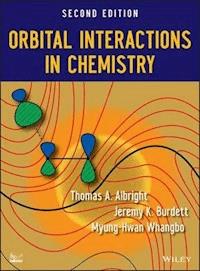
Explains the underlying structure that unites all disciplinesin chemistry Now in its second edition, this book explores organic,organometallic, inorganic, solid state, and materials chemistry,demonstrating how common molecular orbital situations arisethroughout the whole chemical spectrum. The authors explore therelationships that enable readers to grasp the theory thatunderlies and connects traditional fields of study withinchemistry, thereby providing a conceptual framework with which tothink about chemical structure and reactivity problems. Orbital Interactions in Chemistry begins by developingmodels and reviewing molecular orbital theory. Next, the bookexplores orbitals in the organic-main group as well as in solids.Lastly, the book examines orbital interaction patterns that occurin inorganic-organometallic fields as well as clusterchemistry, surface chemistry, and magnetism in solids. This Second Edition has been thoroughly revised andupdated with new discoveries and computational tools since thepublication of the first edition more than twenty-five years ago.Among the new content, readers will find: * Two new chapters dedicated to surface science and magneticproperties * Additional examples of quantum calculations, focusing oninorganic and organometallic chemistry * Expanded treatment of group theory * New results from photoelectron spectroscopy Each section ends with a set of problems, enabling readers totest their grasp of new concepts as they progress through the text.Solutions are available on the book's ftp site. Orbital Interactions in Chemistry is written for bothresearchers and students in organic, inorganic, solid state,materials, and computational chemistry. All readers will discoverthe underlying structure that unites all disciplines inchemistry.
Sie lesen das E-Book in den Legimi-Apps auf:
Seitenzahl: 1599
Veröffentlichungsjahr: 2013
Ähnliche



















Contents
Cover
Title Page
Copyright
Preface
About the Authors
Chapter 1: Atomic and Molecular Orbitals
1.1 Introduction
1.2 Atomic Orbitals
1.3 Molecular Orbitals
Problems
References
Chapter 2: Concepts of Bonding and Orbital Interaction
2.1 Orbital Interaction Energy
2.2 Molecular Orbital Coefficients
2.3 The Two-Orbital Problem—Summary
2.4 Electron Density Distribution
Problems
References
Chapter 3: Perturbational Molecular Orbital Theory
3.1 Introduction
3.2 Intermolecular Perturbation
3.3 Linear H3, HF and the Three-Orbital Problem
3.4 Degenerate Perturbation
Problems
References
Chapter 4: Symmetry
4.1 Introduction
4.2 Symmetry of Molecules
4.3 Representations of Groups
4.4 Symmetry Properties of Orbitals
4.5 Symmetry-Adapted Wavefunctions
4.6 Direct Products
4.7 Symmetry Properties, Integrals and the Noncrossing Rule [6–8]
4.8 Principles of Orbital Construction Using Symmetry Principles [1–9]
4.9 Symmetry Properties of Molecular Vibrations
Problems
References
Chapter 5: Molecular Orbital Construction from Fragment Orbitals
5.1 Introduction
5.2 Triangular H3
5.3 Rectangular and Square Planar H4
5.4 Tetrahedral H4
5.5 Linear H4
5.6 Pentagonal H5 and Hexagonal H6
5.7 Orbitals of Cyclic Systems
Problems
References
Chapter 6: Molecular Orbitals of Diatomic Molecules and Electronegativity Perturbation
6.1 Introduction
6.2 Orbital Hybridization
6.3 Molecular Orbitals of Diatomic Molecules
6.4 Electronegativity Perturbation
6.5 Photoelectron Spectroscopy and Through-Bond Conjugation
Problems
References
Chapter 7: Molecular Orbitals and Geometrical Perturbation
7.1 Molecular Orbitals of AH2
7.2 Geometrical Perturbation
7.3 Walsh Diagrams
7.4 Jahn–Teller Distortions
7.5 Bond Orbitals and Photoelectron Spectra of AH2 Molecules
Problems
References
Chapter 8: State Wavefunctions and State Energies
8.1 Introduction
8.2 The Molecular Hamiltonian and State Wavefunctions [1]
8.3 Fock Operator [1]
8.4 State Energy
8.5 Excitation Energy
8.6 Ionization Potential and Electron Affinity
8.7 Electron Density Distribution and Magnitudes of Coulomb and Exchange Repulsions
8.8 Low versus High Spin States
8.9 Electron–Electron Repulsion and Charged Species
8.10 Configuration Interaction [9]
8.11 Toward More Quantitative Treatments
8.12 The Density Functional Method [18, 19]
Problems
References
Chapter 9: Molecular Orbitals of Small Building Blocks
9.1 Introduction
9.2 The AH System
9.3 Shapes of AH3 Systems
9.4 π-Bonding Effects of Ligands
9.5 The AH4 System
9.6 The AHn Series—Some Generalizations
Problems
References
Chapter 10: Molecules with Two Heavy Atoms
10.1 Introduction
10.2 A2H6 Systems [2]
10.3 12-Electron A2H4 Systems
10.4 14-Electron AH2BH2 Systems
10.5 AH3BH2 Systems
10.6 AH3BH Systems
Problems
References
Chapter 11: Orbital Interactions through Space and through Bonds
11.1 Introduction
11.2 IN-Plane σ Orbitals of Small Rings
11.3 Through-Bond Interaction
11.4 Breaking a C–C Bond
Problems
References
Chapter 12: Polyenes and Conjugated Systems
12.1 Acyclic Polyenes
12.2 Hückel Theory
12.3 Cyclic Systems
12.4 Spin Polarization
12.5 Low- versus High-Spin States in Polyenes
12.6 Cross-Conjugated Polyenes
12.7 Perturbations of Cyclic Systems
12.8 Conjugation in Three Dimensions
Problems
References
Chapter 13: Solids
13.1 Energy Bands
13.2 Distortions in One-Dimensional Systems
13.3 Other One-Dimensional Systems
13.4 Two- and Three-Dimensional Systems
13.5 Electron Counting and Structure
13.6 High-Spin and Low-Spin Considerations
Problems
References
Chapter 14: Hypervalent Molecules
14.1 Orbitals of Octahedrally Based Molecules
14.2 Solid-State Hypervalent Compounds
14.3 Geometries of Hypervalent Molecules
Problems
References
Chapter 15: Transition Metal Complexes: A Starting Point at the Octahedron
15.1 Introduction
15.2 Octahedral ML6
15.3 π-Effects in An Octahedron
15.4 Distortions From An Octahedral Geometry
15.5 The Octahedron in the Solid State
Problems
References
Chapter 16: Square Planar, Tetrahedral ML4 Complexes and Electron Counting
16.1 Introduction
16.2 The Square Planar ML4 Molecule
16.3 Electron Counting
16.4 The Square Planar-Tetrahedral ML4 Interconversion
16.5 The Solid State
Problems
References
Chapter 17: Five Coordination
17.1 Introduction
17.2 The C4v ML5 Fragment
17.3 Five Coordination
17.4 Molecules Built UP From ML5 Fragments
17.5 Pentacoordinate Nitrosyls
17.6 Square Pyramids in the Solid State
Problems
References
Chapter 18: The C2v ML3 Fragment
18.1 Introduction
18.2 The Orbitals of a C2v ML3 Fragment
18.3 ML3-Containing Metallacycles
18.4 Comparison of C2v ML3 and C4v ML5 Fragments
Problems
References
Chapter 19: The ML2 and ML4 Fragments
19.1 Development of the C2v ML4 Fragment Orbitals
19.2 The Fe(CO)4 Story
19.3 Olefin–ML4 Complexes and M2L8 Dimers
19.4 The C2v ML2 Fragment
19.5 Polyene–ML2 Complexes
19.6 Reductive Elimination and Oxidative Addition
Problems
References
Chapter 20: Complexes of ML3, MCp and Cp2M
20.1 Derivation of Orbitals for a C3v ML3 Fragment
20.2 The CpM Fragment Orbitals
20.3 Cp2M and Metallocenes
20.4 Cp2MLn Complexes
Problems
References
Chapter 21: The Isolobal Analogy
21.1 Introduction
21.2 Generation of Isolobal Fragments
21.3 Caveats
21.4 Illustrations of the Isolobal Analogy
21.5 Reactions
21.6 Extensions
Problems
References
Chapter 22: Cluster Compounds
22.1 Types of Cluster Compounds
22.2 Cluster Orbitals
22.3 Wade's Rules
22.4 Violations
22.5 Extensions
Problems
References
Chapter 23: Chemistry on the Surface
23.1 Introduction
23.2 General Structural Considerations
23.3 General Considerations of Adsorption on Surfaces
23.4 Diatomics on a Surface
23.5 The Surface of Semiconductors
Problems
References
Chapter 24: Magnetic Properties
24.1 Introduction
24.2 The Magnetic Insulating State
24.3 Properties Associated with the Magnetic Moment
24.4 Symmetric Spin Exchange
24.5 Magnetic Structure
24.6 The Energy Gap in the Magnetic Energy Spectrum
24.7 Spin–Orbit Coupling
24.8 What Appears versus what Is
24.9 Model Hamiltonians Beyond the Level of Spin Exchange
24.10 Summary Remarks
Problems
References
Appendix I: Perturbational Molecular Orbital Theory
1.1 Matrix Representation
1.2 Correlation Between the MOs of Perturbed and Unperturbed Systems: Exact Relationships
1.3 Correlation Between the MOs of Perturbed and Unperturbed Systems: Approximate Relationships
1.4 The Special Case of an Intermolecular Perturbation
1.5 Degenerate Perturbations
References
Appendix II: Some Common Group Tables
Appendix III: Normal Modes for Some Common Structural Types
Index
Copyright © 2013 by John Wiley & Sons, Inc. All rights reserved
Published by John Wiley & Sons, Inc., Hoboken, New Jersey
Published simultaneously in Canada
No part of this publication may be reproduced, stored in a retrieval system, or transmitted in any form or by any means, electronic, mechanical, photocopying, recording, scanning, or otherwise, except as permitted under Section 107 or 108 of the 1976 United States Copyright Act, without either the prior written permission of the Publisher, or authorization through payment of the appropriate per-copy fee to the Copyright Clearance Center, Inc., 222 Rosewood Drive, Danvers, MA 01923, (978) 750-8400, fax (978) 750-4470, or on the web at www.copyright.com. Requests to the Publisher for permission should be addressed to the Permissions Department, John Wiley & Sons, Inc., 111 River Street, Hoboken, NJ 07030, (201) 748-6011, fax (201) 748-6008, or online at http://www.wiley.com/go/permission.
Limit of Liability/Disclaimer of Warranty: While the publisher and author have used their best efforts in preparing this book, they make no representations or warranties with respect to the accuracy or completeness of the contents of this book and specifically disclaim any implied warranties of merchantability or fitness for a particular purpose. No warranty may be created or extended by sales representatives or written sales materials. The advice and strategies contained herein may not be suitable for your situation. You should consult with a professional where appropriate. Neither the publisher nor author shall be liable for any loss of profit or any other commercial damages, including but not limited to special, incidental, consequential, or other damages.
For general information on our other products and services or for technical support, please contact our Customer Care Department within the United States at (800) 762-2974, outside the United States at (317) 572-3993 or fax (317) 572-4002.
Wiley also publishes its books in a variety of electronic formats. Some content that appears in print may not be available in electronic formats. For more information about Wiley products, visit our web site at www.wiley.com.
Library of Congress Cataloging-in-Publication Data:
Albright, Thomas A.
Orbital interactions in chemistry / Thomas A. Albright, Jeremy K. Burdett, Myung-Hwan Whangbo. – 2nd edition.
pages cm
Includes index.
ISBN 978-0-471-08039-8 (hardback)
1. Molecular orbitals. I. Burdett, Jeremy K., 1947- II. Whangbo, Myung-Hwan. III. Title.
QD461.A384 2013
541′.28–dc23
2012040257
ISBN: 9780471080398
Preface
Use of molecular orbital theory facilitates an understanding of physical properties associated with molecules and the pathways taken by chemical reactions. The gigantic strides in computational resources as well as a plethora of standardized quantum chemistry packages have created a working environment for theoreticians and experimentalists to explore the structures and energy relationships associated with virtually any molecule or solid. There are many books that cover the fundamentals of quantum mechanics and offer summaries of how to tackle computational problems. It is normally a straightforward procedure to “validate” a computational procedure for a specific problem and then compute geometries and associated energies. There are also prescriptions for handling solvation. So, does it mean that all a chemist needs to do is to plug the problem into the “black-box” and he or she will receive understanding in terms of a pile of numbers? We certainly think not.
This book takes the problem one step further. We shall study in some detail the mechanics behind the molecular orbital level structures of molecules. We shall ask why these orbitals have a particular form and are energetically ordered in the way that they are, and whether they are generated by a Hartree–Fock (HF), density functional, or semiempirical technique. Furthermore, we want to understand in a qualitative or semiquantitative sense what happens to the shape and energy of orbitals when the molecule distorts or undergoes a chemical reaction. These models are useful to the chemical community. They collect data to generate patterns and ideally offer predictions about the directions of future research. An experimentalist must have an understanding of why molecules of concern react the way they do, as well as what determines their molecular structure and how this influences reactivity. So too, it is the duty and obligation of a theorist (or an experimentalist doing calculations on the side) to understand why the numbers from a calculation come out the way they do. Models in this vein must be simple. The ones we use here are based on concepts such as symmetry, overlap, and electronegativity. The numerical and computational aspects of the subject in this book are deliberately de-emphasized. In fact there were only a couple of computational numbers cited in the first edition. People sometimes expressed the opinion that the book was based on extended Hückel theory. It, in fact, was and is not. An even more parochial attitude (and unfortunately common one) was expressed recently “I imagine that there are still people that do HF calculations too. But these days they cannot be taken too seriously.” In this edition, computational results from a wide variety of levels have been cited. This is certainly not to say that computations at a specific level of theory will accurately reproduce experimental data. It is reassuring to chemists that, say, a geometry optimization replicates the experimental structure for a molecule. But that does not mean that the calculation tells the user why the molecule does have the geometry that it does or what other molecules have a similar bonding scheme. The goal of our approach is the generation of global ideas that will lead to a qualitative understanding of electronic structure no matter what computational levels have been used.
An important aim of this book is then to show how common orbital situations arise throughout the whole chemical spectrum. For example, there are isomorphisms between the electronic structure of CH2, Fe(CO)4, and Ni(PR3)2 and between the Jahn–Teller instability in cyclobutadiene and the Peierls distortion in solids. These relationships will be highlighted, and to a certain extent, we have chosen problems that allow us to make such theoretical connections across the traditional boundaries between the subdisciplines of chemistry.
Qualitative methods of understanding molecular electronic structures are based on either valence bond theory promoted largely by Linus Pauling or delocalized molecular orbital theory following the philosophy suggested by Robert Mulliken. The orbital interaction model that we use in our book, which is based on delocalized molecular orbital theory, was largely pioneered by Roald Hoffmann and Kenichi Fukui. This is one of several models that can be employed to analyze the results of computations. This model is simple and yet very powerful. Although chemists are more familiar with valence bond and resonance concepts, the delocalized orbital interaction model has many advantages. In our book, we often point out links between the two viewpoints.
There are roughly three sections in this book. The first develops the models we use in a formal way and serves as a review of molecular orbital theory. The second covers the organic main group areas with a diversion into solids. Typical concerns in the inorganic–organometallic fields are covered in the third section along with cluster chemistry, chemistry on the surface, and magnetism in solids. Each section is essentially self-contained, but we hope that the organic chemist will read on further into the inorganic–organometallic chapters and vice versa. For space considerations, many interesting problems were not included. We have attempted to treat those areas of chemistry that can be appreciated by a general audience. Nevertheless, the strategies and arguments employed should cover many of the structure and reactivity problems that one is likely to encounter. We hope that readers will come away from this work with the idea that there is an underlying structure to all of chemistry and that the conventional divisions into organic, inorganic, organometallic, and solid state are largely artificial. Introductory material in quantum mechanics along with undergraduate organic and inorganic chemistry constitutes the necessary background information for this book.
The coverage in the second edition of this book has been considerably expanded. The number of papers that contain quantum calculations has exploded since the first edition 28 years ago and, therefore, more examples have been given especially in the inorganic–organometallic areas. We have emphasized trends more than before across the Periodic Table or varying substituents. A much fuller treatment of group theory is given and the results from photoelectron spectroscopy have been highlighted. Each self-contained chapter comes with problems at the end, the solutions to which are located at ftp://ftp.wiley.com/public/sci_tech_med/orbital_interactions_2e. Finally, two new chapters, one on surface science and the other on magnetism, have been added.
It is impossible to list all the people whose ideas we have borrowed or adapted in this book. We do, however, owe a great debt to a diverse collection of chemists who have gone before us and have left their mark on particular chemical problems. Dennis Lichtenberger graciously provided us with many of the photoelectron spectra displayed here. The genesis of this book came about when the three of us worked at Cornell University with Roald Hoffmann. This book is dedicated to the memory of our old friend and colleague, Jeremy Burdett, who passed away on June 23, 1997. We would like to thank our wives, Janice and Jin-Ok, as well as our children Alex, Holly, Robby, Jonathan, Rufus, Harry, Jennifer and Albert, for their patience and moral support.
Thomas A. AlbrightJeremy K. Burdett∗Myung-Hwan Whangbo
April 2012
Note
∗. Deceased
About the Authors
Thomas Albright is currently Professor Emeritus at the Department of Chemistry, University of Houston. He has been awarded the Camille and Henry Dreyfus Teacher Scholar and Alfred P. Sloan Research fellowships. He is the author and coauthor of 118 publications. He has been elected to serve on the Editorial Advisory Board of Organometallics and the US National Representative to IUPAC. His current research is directed toward reaction dynamics in organometallic chemistry. He received his PhD degree at the University of Delaware and did postdoctoral research with Roald Hoffmann at Cornell.
Jeremy Burdett1 was a Professor and Chair in the Chemistry Department, University of Chicago. He was awarded the Tilden Medal and Meldola Medal by the Royal Chemical Society. He was a fellow of the Camille and Henry Dreyfus Teacher Scholar, the John Gugenheim Memorial, and the Alfred P. Sloan Research foundations. He has published over 220 publications. He received his PhD degree at the University of Cambridge and did postdoctoral research with Roald Hoffmann at Cornell.
Myung-Hwan Whangbo is a Distinguished Professor in the Chemistry Department at North Carolina State University. He has been awarded the Camille and Henry Dreyfus Fellowship, the Alexander von Humboldt Research Award to Senior US Scientists, and the Ho-Am Prize for Basic Science. He is the author and coauthor of over 600 journal articles and monographs. His current research interests lie in the areas of solid-state theory and magnetism. He has been elected to the editorial advisory board of Inorganic Chemistry, Solid State Sciences, Materials Research Bulletin, and Theoretical Chemistry Accounts. He received his PhD degree at Queen's University and did postdoctoral research with Roald Hoffmann at Cornell.
1. Deceased June 23, 1997.
Lesen Sie weiter in der vollständigen Ausgabe!
Lesen Sie weiter in der vollständigen Ausgabe!
Lesen Sie weiter in der vollständigen Ausgabe!
Lesen Sie weiter in der vollständigen Ausgabe!
Lesen Sie weiter in der vollständigen Ausgabe!
Lesen Sie weiter in der vollständigen Ausgabe!
Lesen Sie weiter in der vollständigen Ausgabe!
Lesen Sie weiter in der vollständigen Ausgabe!
Lesen Sie weiter in der vollständigen Ausgabe!
Lesen Sie weiter in der vollständigen Ausgabe!
Lesen Sie weiter in der vollständigen Ausgabe!
Lesen Sie weiter in der vollständigen Ausgabe!
Lesen Sie weiter in der vollständigen Ausgabe!
Lesen Sie weiter in der vollständigen Ausgabe!
Lesen Sie weiter in der vollständigen Ausgabe!
Lesen Sie weiter in der vollständigen Ausgabe!
Lesen Sie weiter in der vollständigen Ausgabe!
Lesen Sie weiter in der vollständigen Ausgabe!
Lesen Sie weiter in der vollständigen Ausgabe!
Lesen Sie weiter in der vollständigen Ausgabe!
Lesen Sie weiter in der vollständigen Ausgabe!
Lesen Sie weiter in der vollständigen Ausgabe!
Lesen Sie weiter in der vollständigen Ausgabe!
Lesen Sie weiter in der vollständigen Ausgabe!
Lesen Sie weiter in der vollständigen Ausgabe!
Lesen Sie weiter in der vollständigen Ausgabe!
Lesen Sie weiter in der vollständigen Ausgabe!




