


Erhalten Sie Zugang zu diesem und mehr als 300000 Büchern ab EUR 5,99 monatlich.
- Herausgeber: Crown House Publishing
- Kategorie: Bildung
- Sprache: Englisch
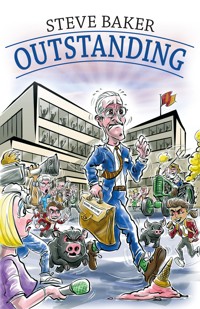
What do you get if you blend a downtrodden head teacher, a hostile school inspector, an incompetent reality TV film crew, an ice cream factory and a load of unruly pigs? A hilarious novel from the pen of Steve Baker, a brilliant writer and school behaviour specialist. Outstanding tells the story of a school inspection set against the backdrop of a struggling school in a semi-rural setting. Educating Norfolk have been invited in to film the cash strapped school and just happen to arrive at the same time as the inspectors - with hysterical results. Meanwhile, a war erupts between the neighbouring ice cream factory and a local pig farmer in which the school is collateral damage. Plus, an idealistic recently appointed inspector, confronted with the reality of his judgements and their consequences, is forced to make a life-changing decision. Steve skilfully weaves these elements together and leads the unhappy protagonists towards a magnificent and heartwarming climax. As a teacher, behaviour specialist and award winning education non-fiction author, Steve Baker brings insider knowledge and sharp wit to this brilliantly crafted debut novel. Combining satire and social commentary, this hilarious book captures the heart of the chaos and pressures of modern-day teaching. A highly entertaining read for teachers of all levels seeking a light-hearted escape from the pressures and stresses of their day job.
Sie lesen das E-Book in den Legimi-Apps auf:
Seitenzahl: 320
Veröffentlichungsjahr: 2025
Das E-Book (TTS) können Sie hören im Abo „Legimi Premium” in Legimi-Apps auf:
Ähnliche



















Praise for Outstanding
Outstanding by Steve Baker is witty, engaging, and blends comedy with biting social commentary. With a cast of vividly drawn characters, Baker captures the chaos and pressures of modern education with humour and insight. The story is both amusing and touchingly poignant, offering thought-provoking moments amidst the hilarity. Educators and former students alike will feel right at home in Baker’s world of larger-than-life personalities and brilliantly crafted satire. A thoroughly enjoyable read from start to finish!
Isabella Wallace, education author and keynote speaker
At one level this is a fabulous well-crafted, fast-paced, humorous story filled with intricate twists and turns and very many laugh-out-loud moments. At another level it might reflect what will be left behind if politicians and the media continue to fuel a recruitment and retention crisis in schools, caused by rushed and badly thought-out policies, biased and disparaging media reports, and a deteriorating inspectorate. Either way, please read this book; I loved it.
Will Ryan, passionate educationalist, teacher, head teacher, writer, consultant, and associate of Independent Thinking LtdB
C
Preface
I began writing Outstanding in 2014 and it has undergone endless revisions during the years that have elapsed. However, the roots of Outstanding go back much further. When my brother, Tim, and I were kids, our dad treated us to an education in comedy. His record collection included the Goons, Bob Newhart, Stan Freburg, and the great Flanders and Swann, and our bedtime reading might be anything from the Moomins to Spike Milligan’s Silly Verse for Kids. On Saturday nights, Tim and I sat down with mum and dad to watch the Two Ronnies, Morecambe and Wise, and many other classic comedy acts. None of this was wasted on me. Much later, it was my partner, Sian, who introduced me to the novels of the late, great Tom Sharpe. I owe him a debt, and I hope his readers will feel at home with the larger-than-life characters and absurd situations that abound throughout my humble effort.
I hope you will enjoy the ride!
Steve Baker
Angleseyii
Acknowledgements
Firstly, I would like to thank David Bowman for the faith he has shown in this book. Getting Outstanding published has been my dream for some years and I am forever indebted to David and the team at Crown House for making this happen. David’s thoughtful suggestions have greatly improved the book. I would also like to say a special thank you to Louise Penny, my copy editor, whose tireless expertise has enabled me to deliver a more coherent and readable manuscript.
I would also like to thank my friends John Parry and Phil Kendall, who read early versions of this book. Their encouragement and their feedback were invaluable.iv
Contents
Part I
The run up to the inspection2
1
Palmer’s Inn Grammar School, Crockenham Tuesday, 3rd September
14 days to go …
Crockenham was a surprising omission from the book of crap towns that infuriated the residents of Stockport and Skelmersdale. Was it too good to be included? Or too bad? Perhaps it was simply overlooked? The town possessed nothing much to speak of: no weekly market, no famous forebears, no monument to stir a sense of civic pride or purpose, only pawn shops, pound stores, and finger-lickin’ takeaways. The Old King’s Head, fenced off and boarded up, spewed weeds across its neighbours, though the Good Vibrations sex shop and the Pierced Off tattoo parlour seemed entirely unaware. Beyond the high street? Nothing much but half-dead starts and half-dead endings, grassy squares with ‘No Ball Games’ and rows of silent bungalows waiting for The End. A year ago, the last remaining bank had closed its doors and then the ATM clammed up, so finding legal tender now meant queuing for cash back at Norman Pott’s Post Office after rooting through his yellowing stock for something worth your purchase. After all, how many royal mugs and highlighters could one life accommodate?
Your best chance of employment lay at Farnley’s ice cream factory, a fifteen-acre compound of metal, stone, and glass that was prone to dazzle onlookers on sunny days, while a mile upwind stood Allsop’s pig farm, a rustic facility whose assault 4on the senses was every bit as crippling. Trapped between the two lay Palmer’s Inn Grammar school, a crumbling red-brick disappointment that somehow managed to embody Crockenham’s every failing. At one end of its staffroom on this warm September morning stood the perspiring figure of head teacher Harry Flanagan, a man for whom the word ‘failing’ might have been invented. Flanagan, in his mid-fifties, had been married to the job until he met and married Sheila Perkins. Life thereafter had temporarily brightened, but in recent years he found himself diminished. The school was drifting, and he was drifting with it, like a man on a thin ice-sheet, carrying him who knows where. Flanagan’s hair was long gone except for the tufts around each ear and his trouser size was the only statistic in his orbit that was moving in an upwards direction, except for his weight. His rosy cheeks and startled demeanour betrayed a man who had once been leading but felt increasingly out of breath in the effort to catch up. His relationship with Sheila had suffered accordingly and that was before his ‘little indiscretion’, as he had once dared to call it. Flattered by the attentions of another woman, he had strayed, and Sheila was as furious as she had every right to be. Harry Flanagan was in the doghouse – professionally and personally – and had only himself to blame.
‘Right everybody, er … shall we make a start?’ Flanagan was poised to pronounce his welcome on this first day of the new academic year, but the teaching staff were oblivious to his presence as they milled about, grabbing coffee jars from lockers and swapping stories about their summer respite. He raked a palm across his comb-over and attempted a smile.
The previous incarnation of Palmer’s Inn, built in 1927, 5with its gothic stone porticos and wood-panelled interiors, had possessed character in spades but admitted only boys and, subsequently, only those who passed the eleven-plus examination. This was in stark contrast to the current comprehensive Palmer’s Inn, a grammar school in name only, which cast its net blindly, accepting children of every possible background, ability, and temperament. Desperate to impose himself on this yawning canvas, Harry Flanagan had commissioned a huge piece of art overlooking the foyer, proclaiming the new school motto: Never Stop Flying. An airborne carpet soared skywards beneath a grinning, turbaned figure who bore a troubling resemblance to the head teacher. Last June, in Sheffield, a one-day course on character had fired Harry Flanagan’s imagination, so now this grotesque piece of ‘art’ was flanked by inspirational quotes from Mahatma Gandi, Michelle Obama, and Kirstie Allsopp.
Flanagan glanced down at the lectern. Where were his notes? He turned to Sheila Flanagan, his PA and life partner, who was busy pinning up the new timetable. ‘Sheila, love, can you go and get the notes for my welcome to the staff? I’ve left them in the office.’
Sheila fixed him with a glare, before turning back and setting off through the crowd; more staff had arrived, and this annual event was now standing room only. Three weeks later, when the dust, both real and metaphorical, had died down, some swore they had heard Sheila mutter, ‘Call me love? You bastard!’ as she squeezed by them, though others heard only, ‘Can I get past?’ The truth may never be known, but there is one thing that everyone who was present that morning agrees upon: Sheila Flanagan did not look happy. 6
‘Please, colleagues, can we? Can we make a start?’ Flanagan’s plea for attention was inaudible over the chatter. A bead of sweat scurried down his arm, like a wet rat spilling down a drain. How had it come to this? Ofsted had not telephoned today to announce their imminent arrival – or, at any rate, not yet – but fear that they might would possess Flanagan’s mind until close of play on Wednesday, as it had every week since October half-term – when the school entered the window for inspection – and would continue so to do until an HMI finally made the call. Sheila might put them through at any moment. A dozen words declaring doom: ‘My colleagues and I will arrive tomorrow morning to commence our inspection.’
He might be reading a prayer in assembly or crossing the yard at break; he might be holding a meeting with the leadership team, or eating a sandwich, or wiping his backside. There was no way of knowing when, but one thing was certain: it was coming.
Just then, fettling about with loose change and car keys in his trouser pocket, Flanagan realised that he had left his reading glasses at home, and the knot in his stomach tightened. He peered about the staffroom: still heaving, still full of chatter. In a desk drawer in his office was a baton, a relic of his days as a music teacher and conductor of the Fakenham brass band. Perhaps he should wave it now?
‘Thank you, everyone. Everyone? Welcome back to Palmer’s Inn. I hope you’ve all had an enjoyable and restful break!’ Flanagan cleared his throat and tried again. ‘Thank you, colleagues!’
The last few chatterers fell reluctantly quiet. Someone 7sneezed, setting off a ripple of titters, which eddied and slowly died. At long last, the room was silent. Where was Sheila with those notes? Flanagan squinted at his lectern. Still empty. There was nothing for it but to improvise. A brief history lesson would do the trick, even if most had heard it all before. Flanagan gripped the lectern.
‘It seems appropriate, colleagues, as we face a new school year, to consider the legacy of our great benefactor, Ignatius Palmer. As many of you know, this school stands on the site of the original Palmer’s Inn, an eighteenth-century coaching house which, although frequented by all manner of rogues and reprobates, generated a substantial income that the heroic Mr Palmer used for the benefit of the poor and needy of the parish. It is our challenge, blessed as we are with our own rogues and reprobates,’ he paused for laughter, but none was forthcoming, ‘to – to live up to the passion and commitment of the great phil … um. Philan … er … philanderer? … No … philanthro … oh heck … philanthro—’
‘Pist!’
Heads turned.
Rob Jones, English teacher and self-appointed staffroom wit, looked very pleased with himself. Flanagan’s fondness for a tipple was no secret, and there were stifled sniggers from the back of the room.
‘Philanthro-pist, yes. Thank you, Robert.’ Flanagan forced a smile and made a mental note to watch the smug little bastard more carefully.
‘Ignatius Fortescue Palmer dedicated his good fortune to the destitute, the sick and—’ 8
Sheila reached over and shoved a document under his nose.
‘Oh, thank you, that’s great. Now then, I had some words prepared to share with you.’ He blinked, adjusted a pair of spectacles that were not on his face, and lurched on. ‘Now then, we are joined by some new colleagues this year. Mr Lampeter will be teaching maths. Where is he? Stand up. Go on, take a bow. Thank you.’ He moved on. ‘And Miss Tempest … she’s hiding. Where is she? Oh, yes, Miss Tempest will be joining the PE department. Go on, stand up, love, thank you!’
Sally Mills, recently appointed Flanagan’s deputy head teacher, stood watching this horror show with eyes like saucers.
‘Now then, boys and girls, would you like the good news or the other news?’
Josie Charlesworth, head of RE, spoke up. ‘Give us the good news, for God’s sake, Harry.’
‘Right you are. The good news.’ Flanagan paused. ‘Ah yes. As you know, colleagues, last term I put us forward to take part in Educating Norfolk, the splendid documentary series about life in schools. Well, the selection process has finally run its course and I’m delighted to tell you that we have been chosen! I’m sure you’ll agree, colleagues, that this is a wonderful opportunity to show off our many fantastic qualities. The cameras will be rolling soon!’
Absorbing this blow, across the room, heads hung a little lower and eyes closed a little tighter. Only the drama teacher punched the air.
‘Finally, I’m sure I don’t need to remind you, colleagues, that we are in the Ofsted window.’ He paused. The room was silent now. ‘It has been four years, and the judgement last time 9was “requires improvement”, so an inspection this term is very likely indeed. We need to show ourselves off at our best, so let’s get the basics right, okay? Get to your lessons on time, turn up for break duty, and make sure your marking is up to date.’ Some staff swapped meaningful glances. Rob Jones spilled his coffee.
Flanagan forced a grin. ‘That’s all, boys and girls. Have a good day now. Thank you all!’ and with that, he picked up his papers and left the staffroom.
The warning bell sounded. Registration would begin in five minutes. Most of the staff wandered off but two figures remained in their seats. Jack Holt was Norfolk born and bred, taught physics and lived on his parents’ smallholding. At thirty-nine years of age, he remained the chair of the local young farmers’ association but was already an old man. Sitting alongside him was the elfin Julie Peabody, who had joined the school last year as a student teacher of health and social care and was now an early career teacher. Holt, whose Year 11 registration group seemed unaware of his presence at the best of times, was not about to be rushed. He sighed expansively, ‘Of course, I knew him in Fakenham.’
‘You did?’
‘Aye. We were living there. The Flanagans moved down from Sheffield; we lived on the same street.’
‘Oh really! What was he like?’
‘What were he like?’ Holt snorted. ‘He were a daft bugger, like he is now. He taught music there, and in his spare time he held baton for Fakenham brass band. I went once or twice, to competitions, just to be neighbourly like. Then he started getting all political.’ 10
‘What do you mean political?’
‘Other brass bands used to play popular tunes, you know, middle o’ road, stuff you can whistle: “Floral Dance”, “Birdie Song”, “Can’t Take My Eyes off You”, stuff like that. What did this pillock play? “There is Power in a Union”, “Street Fighting Man”!’
‘So how did you end up following him here?’
‘Well, they might be queueing up to teach health and whatever-you-call-it, but good physics teachers are like rocking horse shit – rare! Flanagan made me an offer only a fool would refuse.’
There was an awkward silence. Julie Peabody appeared to be counting carpet tiles. Just then Marian Kerslake, the attendance officer, appeared, ‘What’d he say? They’re all muttering like mad out there.’
‘Not much. I were telling young Julie here about our esteemed leader and his shady past.’
Julie Peabody shifted in her seat. ‘I wouldn’t say shady exactly?’
Marian sighed. ‘How did we get in this mess, Jack?’
‘Fair question.’ He raised his eyebrows and exhaled. ‘The Harry Flanagan I knew in Fakenham had some bloody daft ideas, but he had, I don’t know, energy, there were fire in that belly of his. Of course, he were only deputy head then.’
‘You think he’s out of his depth, Jack?’
‘Could be. He just seems a bit lost to me. And look what happens when he does get fired up! I mean, look at that bloody mural.’
Julie Peabody frowned. ‘Hmm. The turban? The flying carpet? Some might call it cultural appropriation.’ 11
‘Professional bloody suicide, more like.’
Marian stood up. ‘Anyway. I’d better go.’ She paused and lowered her voice. ‘But before I do, there’s another thing keeping our great leader’s eye off the ball.’
For the first time that morning, Jack Holt leant forward, causing his chair to creak.
‘Oh aye?’
‘Him and Sheila. On the rocks. They say he’s been sleeping on the sofa for weeks.’
Just then the staffroom door opened; Sally Mills stood hands on hips. ‘Come on, folks, let’s be on our way.’ Holt remained seated. Marian grinned. ‘Well, I’d best be off. There’ll soon be missing registers to chase up. I’ll see you folks later.’
Sally Mills cleared her throat, and this time Jack Holt took the hint, announcing, ‘All right, it’s a fair cop,’ as he lumbered through the staffroom door, with Julie Peabody close behind.
Meanwhile, upstairs, Sheila Flanagan strode into the head teacher’s office and found her husband staring into space. ‘Do you know something?’ she said. ‘I can’t wait to put that call through. It’ll serve you bloody well right if you ask me.’
Harry Flanagan turned to face her. ‘How many times do you need to hear me say I’m sorry?’
‘I don’t want to hear it, Harry.’
He sighed. ‘Look, I know it’s been hard.’
‘Hard? Are you serious? The humiliation of it, and then having to practically run the school, while you let things slide!’
‘I know it’s not been ideal, you know, living and working together, what with—’
‘Not been ideal? Well, that’s the understatement of the 12year!’ she snorted. ‘But it’s not “working” is it? I mean you’re not working; you’ve given up!’
Flanagan finally looked up. ‘How do we get out of this one?’
‘We?’ She laughed. ‘What do you mean we? It’s not me that’ll be out of a job when the inspectors fail this place, and anyway, Harry,’ she paused in the doorway, ‘you and I are hardly a “we” anymore, since—’
‘I know, I know!’ Flanagan turned away, while Sheila left the room, shaking her head.
2
Martin Fisher’s house, Belmont Drive, Shenfield Wednesday, 4th September
Thirteen days to go …
Martin Fisher blinked awake. Not again! The sharp stink of TCP filled his nostrils. Two towels and a shower cap hung from pegs on his left, and above them a bright yellow duck and a green alligator gazed from a shelf, as if asking, what are you doing in the bathroom? He slumped forward on the toilet seat with his heads in his hands, until a door slammed downstairs, and Marianne’s voice filled the house. ‘But Mummy, I’m a socialist!’ Then came her trademark stamp of the foot.
‘That’s terrific, darling, and I’m proud of you, I really am,’ he heard Suzy reply, ‘but you’re six years old and, socialist or not, I’m afraid you do have to go to school.’ A pause, then Suzy’s voice again, only louder this time: ‘Martin? Martin?! I could do with another pair of hands down here!’
‘Hang on!’ Martin grasped the door handle, dragged himself out into the hallway, grabbed his pyjamas from the bedroom floor, pulled them on, and lifted his dressing gown from the peg behind the door.
‘Sorry!’ he padded downstairs and into the kitchen. Suzy was crouching eye to eye with Marianne, affording Martin a clear view of their daughter’s comical pout. The little socialist stomped off. Suzy stood up and turned to face her husband.
‘Honestly, love, it’s enough of a pantomime down here without you hiding in the Gods!’
14‘I’m sorry, love,’ Martin re-tied the cord of his dressing gown. ‘It happened again.’
‘I know,’ she said, looking over her shoulder. ‘That’s why I’m getting James changed down here, or I was until Marianne kicked off. Shouldn’t your new employers know about the sleepwalking?’
‘Do you want me to lose my job?’ He reached for the porridge.
‘Of course not. But if you sleepwalk into a classroom that’s not going to go down well, is it?’
‘You’re overlooking the fact that I have to be asleep to sleepwalk.’
‘Not just dozy?!’ she laughed, and they kissed, then Martin lifted James into his highchair and the two-year-old began elbowing his way through a bowl of Weetabix.
‘James will be at school in a couple of years. Maybe you can go back to work?’
‘Oh, thank you! How kind of you to give your permission.’
‘I didn’t mean it that way.’
‘I know, but it’s a thought, going back into publishing would be—’
A shrill voice filled the kitchen. Husband and wife turned to see their daughter marching up and down, chanting, ‘Ofsted, Ofsted! Bugger, bugger Ofsted!’
‘Marianne!’ Martin crouched, intercepting his daughter, and adopting his most serious parent face. ‘You must never use words like that!’
The six-year-old pointed at her father. ‘You did! You said it last year when Uncle Paul’s school got inspected.’
‘Well, maybe Daddy did,’ said Suzy, bending down to wipe 15Marianne’s face, ‘but that was before Daddy changed sides.’ She glanced at her husband. ‘Daddy was very cross at the time because Uncle Paul was so sad. He isn’t cross now though, are you, Daddy? And anyway, even if he were, Daddy is right: that is not the sort of language I expect to hear in this house. Got it?’
Marianne dropped her shoulders melodramatically and stomped off to the front door in search of her school shoes, chiming a singsong ‘O-kayyyy!’over her shoulder.
James had finished his Weetabix and was brandishing his spoon. Grinning from ear to ear, he took up the chant. ‘Bugger bugger bugger! Bugger bugger bugger!’
Five minutes later, Martin prised open the garden gate and shot off down Belmont Drive. His induction had left no room for doubt: Ofsted inspectors are clear, precise, and impeccable. They have to be. Their ties are straight, their hair is in place, and they turn up on time. It’s all about standards, Martin. That’s what Arthur Nally had told him. Standards. Martin was fretting about this, and about the porridge stain on his left lapel, as he turned into Hope Street, when a raised flagstone tripped his foot, sending his face into a tree and his briefcase to the kerbside, where it opened, spewing paperwork into the road. Martin rubbed his cheek and cursed his bad luck. More haste, less speed. You’re with Ofsted now. Don’t bother your superiors with ‘leaves on the line’ or ‘the wrong kind of snow’; just get there and get there on time. You must catch the 7.45. He dodged an old lady, sashayed around a bus stop, and wove between two texting teenagers. A small man walking a Cocker 16Spaniel tutted as Fisher, now sprinting down Lavender Road, caught the leash with his foot.
‘Oi! Look where you’re going!’
‘Sorry!’
On he ran, panting heavily, until the station finally came into view, and he glanced at his watch: 7.44! Martin barged through the barrier, dragged his feet up every one of the twenty-four steps to the footbridge, and dashed across and down to Platform 2, just in time to squeeze between the closing doors of the very last carriage of the train and collapse onto a seat. Then, as the train creaked and banged off towards London, he happened to glance down, and noticed a bad scuff on his shoe.
3
Ofsted HQ, London Wednesday, 4th September
Forty minutes later, Martin Fisher stepped into the air-conditioned foyer of Ofsted headquarters. Standing inside this building was always a blessed relief, as one no longer needed to suffer its outside. The Department for Education had somehow managed to commission two architects, and though the Secretary of State fought like an alley cat to scrap her way out of both contracts, this had proved impossible. Both men had signed on the dotted line, were backed by high-powered legal teams, and possessed towering egos. Sir Terence Curtis’s brutalist vision made the National Theatre look like a sweet shop, while Henri Le Beouf’s open-plan vistas were its polar opposite. The resulting compromise was hideous but not entirely inappropriate. On the oddly numbered floors of the building, megatons of concrete encased tiny portholes, while on the even floors great swathes of glass fanned around; thus the inspectorate inhabited a home that spoke in alternate layers of aspiration and authority, community and control. It raised the spirits and it stamped on them. For every window that opened, a door slammed shut. The structural engineer received a knighthood, while Curtis and Le Boeuf signed gagging clauses in exchange for sky-scraping fees. The Foreign Secretary did not help, being overheard at a state banquet referring to the place as a ‘shit sandwich’, and when a photograph was emailed to Clarence House, the King almost choked on a Duchy biscuit.
18Martin pushed the door of room 6.13 open slowly. The room offered a wide vista, framing the Gherkin, The Tower, St Paul’s and Big Ben within the sprawling London skyline. Senior Ofsted inspector Arthur Nally was on his feet, speaking to a PowerPoint presentation. Wire-framed spectacles sat on his nose. Every greying hair was in place.
‘Ah, Martin. Glad you could join us. Eastern Trains up to their usual tricks?’
‘Something like that.’
Martin’s colleague, Jo Forrest, pulled back a chair. ‘We were just looking at the new standards for inspection,’ said Nally. ‘What do you make of them?’
Martin unbuttoned his raincoat. ‘Demanding. Schools will say we’ve moved the goalposts again.’ He sat down.
‘Ah yes. One does hear that form of words being used. As Ofsted inspectors, we don’t talk about moving the goal posts; we call it raising the bar!’
‘And when we say “jump”, schools say “how high”?’ Martin turned and grinned at Jo, who widened her lips into something approximating a smile.
Nally’s eyes narrowed.
An hour later, Martin and Jo escaped into a breakout area by the lift. Regulation black sofas, white walls, and cheese plants were punctuated by modern prints exhibiting a splash of colour, if not any discernible skill. There were coffee machines, biscuits, and – since this was lunchtime – bacon sandwiches for those who had booked meeting rooms. Queuing for food, Martin noticed Jo rooting through her handbag. He went to speak but she held out a palm: ‘Hello? Frances? How are you, darling? Oh good, good. Yes, I’m fine, fine, thanks. God this 19Peace Carnival though! What were we thinking? Yes, I know! Have we got a decent celeb for the opening ceremony? Who? Richard Madeley? I was hoping for someone a bit more edgy, if you know what I mean? Michael Barrymore? Not that kind of edgy, for Christ’s sake. How about an actor? Tom Hardy would be nice. No, not that kind of nice, do be serious, Frances. What about the one from Star Wars. No, not Harrison Ford, silly. John … whatsisname? John Boyega! That’s it. I’m sure I read somewhere that he’s from Peckham. Near enough. Call his agent. It’ll be online. Lewisham won’t know what’s hit it! Anyway, must dash. Take care, Fran. Cheers!’
The phone disappeared.
‘Goes on a bit, doesn’t he?’ Fisher approached, paper plate in hand.
‘Martin! Please! Take that … thing away!’ she winced, pointing at his bacon sandwich. ‘Meat is murder, remember?’
‘Sorry!’ He swallowed the sandwich and, wiping his fingers, headed off in the direction of the coffee machine, hoping a caffeine jolt would wake him up. Over recent weeks, Martin had begun to piece together his new colleague’s career, from sit-ins and walkouts at Essex University to a spell teaching English in Newham, and beyond. She was certainly hot on the rights of children; perhaps she would prove to be an ally?
Just then he heard a drill in the distance, raised voices, and the clatter of a large object landed by a crane. This building work was endless; traffic cones strangled the roads while cranes sprang up like great towering weeds, forcing pedestrians to glance up at regular intervals. After all, one never knew what was coming down, or how quickly. London and Ofsted had this much in common; as soon as one adapted to change, they 20changed again. Returning with two coffees, Martin slumped back onto a sofa. ‘I thought this morning was murder.’
‘Debriefs with Arthur always are. Thank you. He loves the data. You wait until you see him in action!’
Martin took a sip of coffee. ‘What’s he like?’
‘Like?’ She laughed. ‘I think that’s something you should see for yourself. I wouldn’t like to colour your view.’
He put his mug down. ‘I just hope he’s open to new ideas. It’s like I said at my interview, I want to make a difference, Jo. I want to show schools that we’re on their side. We must hold them to account, of course, but I want to work with head teachers, build alliances, help schools cooperate so they can improve.’
Jo raised an eyebrow. ‘I think you might find Arthur a challenge. Let’s leave it at that.’
Fisher looked thoughtful for a moment. ‘I see.’
‘Look,’ Jo touched his arm, ‘I want to help schools improve just as much as you do. Better outcomes for kids, staff, communities, the whole bit. I get to join inspections led by other senior inspectors, not just Arthur, thank God, as will you, in time. I love working with talented heads and leadership teams to raise standard and help kids thrive. I really do! I’ve read about your achievements at your schools before you went through the change,’ she chuckled. ‘It’s fantastic. But, believe me, it isn’t like that everywhere! There’s some poor practice out there and, like it or not, it’s our job to shine a light on it. If you want to know what really presses my buttons, it’s the charlatans; the ones that talk a good game, pull massive salaries, and feather their own nests. They’re the ones I’d be happy to load the torpedoes for, and I’d happily fire them too.’
21Martin nodded, and Jo brightened. ‘What’s the agenda this afternoon?’
‘It’s the school we’re doing the week after next. Palmer’s Inn, I think it’s called.’
‘Know anything about it?’
‘Well, according to my friend Jayne who works for the local authority, the head drinks and the data looks terrible. Arthur will be in his element.’
Nally’s head appeared around the door of room 6.13. ‘Are you two ready to crack on?’22
4
Harry Flanagan’s office, Palmer’s Inn Grammar School Thursday, 5th September
Twelve days to go …
Harry Flanagan raised his right hand to silence the senior leadership team, though as he surveyed the faces gathered around the table, ‘team’ seemed a generous description, and silence looked well-nigh impossible. The snippets he heard above the hubbub did not auger well: ‘TV cameras? Bloody ridiculous …’ ‘Can’t trust these people …’ ‘Good publicity? I don’t think so …’ ‘Special measures here we come!’
Flanagan glanced at his recently appointed deputy, Sally Mills, who cleared her throat.
‘Er … thank you … er … everyone?’ She announced. ‘Thank you?’
The chatter slowed but did not entirely stop, until Inga Strafen thumped the table, and the room came instantly to order. Strafen, raised in rural East Germany, had enjoyed an idyllic childhood, frolicking on the farm, milking the herd, and yodelling her heart out, until one summer’s day in 1989, when a party member spied her, aged 15, leaping a gate in pursuit of a wayward goat. Honed and toned, fed and fuelled by the Fatherland, Olympic gold in the 400m hurdles seemed a foregone conclusion, until the Soviet Union collapsed, and the Wall came down. Starved of the supplements that pumped her with power, Inga could not compete and her fall from sporting grace was as sudden as it was traumatic. Life was a struggle in 24the new Germany; two decades passed in a string of dead-end jobs and failed relationships. When her younger sister, Helga, married an Englishman and opened a vintage sweet shop in Great Yarmouth, Inga followed them to Britain. For a while she was happy selling blackjacks and sherbet fountains to men of a certain age, but she soon tired of it. ‘I am so bored!’ she told Helga one afternoon. ‘I must go, or I become first immigrant to hang herself with liquorice bootlace!’ Inga saw the Palmer’s Inn post advertised in the Courier, and soon the job was hers.
The Amazonian blonde retained her youthful athleticism and a certain directness of purpose. When she thumped a table, it stayed thumped: a quality that Flanagan found most convenient. Difficult parents were dispatched with alacrity, and sales reps who might once have bothered Palmer’s Inn, hoping to flog new textbooks, now stayed on the bypass and tried their luck elsewhere. Inga’s arrival had not helped the state of Harry Flanagan’s marriage. Desperate to please, he had invited both women to attend senior leadership meetings. ‘Inga is just there to take notes,’ he had told Shelia. ‘You are present as my PA, with all your experience in scheduling and human resources, and holding the diary. Inga is just there to er …’
‘To put the shits up anyone who disagrees?’
‘Not exactly.’
‘Oh, come off it, Harry, no one’s going to rock the boat with the Iron Lady sitting there, are they?’
‘Thank you, Inga.’ Harry Flanagan put both hands on the table as if about to contact the spirit world, but before he could address the now silent gathering, Sally Mills raised her biro.
‘Is there an action plan resulting from the last inspection, 25Harry? Ofsted like to see the impact of their reports, don’t they?’
Flanagan forced a smile. Martha Farnley, his chair of governors and owner and CEO of the local ice cream factory, had championed the high-flying twenty-nine-year-old, believing that her experience in the capital would benefit the school. Sally was an excellent teacher and had a proven track record of improving other staff. Her appointment at Palmer’s Inn certainly provided plenty of scope in that field. She had acquired 3,000 followers on social media for her thoughts on education and was engaged to Henry, who owned a business selling tractors parts. The work she took home each evening and the content she found to keep her account on the boil ate deep into her evenings, but then Henry was online until all hours, sourcing banjo bolts and crankshaft seals, so they were well matched. Flanagan had been impressed by Sally’s references from St Winifred’s but now it was all he ever heard about.
‘At my old school in Brixton, we—’
‘Thank you, Sally! I’d love to hear about your experiences in London, again, but we must press on, I’m afraid. I’m hoping this meeting will give birth to our plan, as it happens. The verdict last time was “requires improvement”. What we need today is an honest conversation about where we are and where we need to get to.’
Inga snorted. ‘You want honest conversation? Really? School is, um, how you say, going down plughole?’
Flanagan forced a smile. ‘That’s a rather colourful metaphor, Inga.’
‘Thank you!’ she beamed. ‘Please tell Sylvia. She teach me 26English good! This week lesson: metaphor. School is … how you say? Biting the dust? Going up spout? Up in fla—’




