


16,99 €
Mehr erfahren.
- Herausgeber: John Wiley & Sons
- Kategorie: Geisteswissenschaft
- Sprache: Englisch
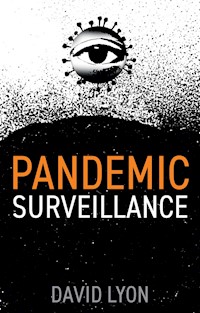
The COVID-19 pandemic has disrupted life as we knew it. Lockdowns, self-isolation and quarantine have become a normal part of everyday life. Pandemic surveillance allows governments and corporations to monitor and surveil the spread of the virus and to make sure citizens follow the measures they put in place. This is evident in the massive, unprecedented mobilization of public health data to contain and combat the virus, and the ballooning of surveillance technologies such as contact-tracing apps, facial recognition, and population tracking. This can also be seen as a pandemic of surveillance. In this timely book, David Lyon tracks the development of these methods, examining different forms of pandemic surveillance, in health-related and other areas, from countries around the world. He explores their benefits and disadvantages, their legal status, and how they relate to privacy protection, an ethics of care, and data justice. Questioning whether this new culture of surveillance will become a permanent feature of post-pandemic societies and the long-term negative effects this might have on social inequalities and human freedoms, Pandemic Surveillance highlights the magnitude of COVID-19-related surveillance expansion. The book also underscores the urgent need for new policies relating to surveillance and data justice in the twenty-first century.
Sie lesen das E-Book in den Legimi-Apps auf:
Seitenzahl: 250
Veröffentlichungsjahr: 2021
Ähnliche


















Table of Contents
Cover
Title Page
Copyright Page
Dedication
Acknowledgments
1 Defining Moments
What is “pandemic surveillance?”
Context is critical
Pandemic and tech-solutionism
The burden of this book
Road-map to
Pandemic Surveillance
Notes
2 Disease-Driven Surveillance
Contact tracing and location-tracking apps
Contrasting contact tracing systems
Centralized contact tracing
Decentralized contact tracing
Problems with platforms
Beyond contact tracing
Public health information systems
Surveillance surge
Notes
3 Domestic Targets
Work “place” monitoring
School-at-home monitoring
Online shopping from home
Where from here?
Notes
4 Data Sees All?
A cautionary tale about data-handling
Dubious assumptions about data
Data makes people visible
Data represents people in particular ways
Data helps to determine how people are treated
Notes
5 Disadvantage and the Triage
Pandemic disadvantage and healthcare surveillance
Surveillance and inequality in pandemic times
Notes
6 Democracy and Power
Hastily established initiatives
Surveillance capitalism, pandemic power
Civil liberties, human rights and privacy at risk
Emerging issues
No sunset for pandemic projects?
Notes
7 Doorway to Hope
A tale of two countries
Beyond apocalypse
Pandemic as portal
Notes
Index
End User License Agreement
List of Illustrations
Chapter 5
Figure 1. Reproduced with permission from David Leslie, and the
BMJ
, April 2021.
Guide
Cover
Table of Contents
Begin Reading
Pages
iii
iv
v
vi
viii
ix
x
1
2
3
4
5
6
7
8
9
10
11
12
13
14
15
16
17
18
19
20
21
22
23
24
25
26
27
28
29
30
31
32
33
34
35
36
37
38
39
40
41
42
43
44
45
46
47
48
49
50
51
52
53
54
55
56
57
58
59
60
61
62
63
64
65
66
67
68
69
70
71
72
73
74
75
76
77
78
79
80
81
82
83
84
85
86
87
88
89
90
91
92
93
94
95
96
97
98
99
100
101
102
103
104
105
106
107
108
109
110
111
112
113
114
115
116
117
118
119
120
121
122
123
124
125
126
127
128
129
130
131
132
133
134
135
136
137
138
139
140
141
142
143
144
145
146
147
148
149
150
151
152
153
154
155
156
157
158
159
160
196
197
198
199
200
201
202
203
204
Pandemic Surveillance
David Lyon
polity
Copyright Page
Copyright © David Lyon 2022
The right of David Lyon to be identified as Author of this Work has been asserted in accordance with the UK Copyright, Designs and Patents Act 1988.
First published in 2022 by Polity Press
Polity Press
65 Bridge Street
Cambridge CB2 1UR, UK
Polity Press
101 Station Landing
Suite 300
Medford, MA 02155, USA
All rights reserved. Except for the quotation of short passages for the purpose of criticism and review, no part of this publication may be reproduced, stored in a retrieval system or transmitted, in any form or by any means, electronic, mechanical, photocopying, recording or otherwise, without the prior permission of the publisher.
ISBN-13: 978-1-5095-5030-2
ISBN-13: 978-1-5095-5031-9 (pb)
A catalogue record for this book is available from the British Library.
Library of Congress Control Number: 2021940596
by Fakenham Prepress Solutions, Fakenham, Norfolk NR21 8NL
The publisher has used its best endeavors to ensure that the URLs for external websites referred to in this book are correct and active at the time of going to press. However, the publisher has no responsibility for the websites and can make no guarantee that a site will remain live or that the content is or will remain appropriate.
Every effort has been made to trace all copyright holders, but if any have been overlooked the publisher will be pleased to include any necessary credits in any subsequent reprint or edition.
For further information on Polity, visit our website: politybooks.com
Dedication
In memory of Bob Pike, faithful colleague; Saudager Jagdev, friend; and Chris Osborne, brother-in-law. COVID claimed their lives.
Acknowledgments
Many thanks to the kind people who have made this somewhat ambitious task more manageable, and even, at times, enjoyable. Those generous and patient souls who read my work and commented, sharing their expertise in computing, communications, law, medicine, public health, sociology and life experience, are Samantha Buttemer, Juanne Clarke, Tommy Cooke, Rodrigo Firmino, Martin French, Griffin Lyon-Wicke, Neil McBride, Benjamin Muller, Midori Ogasawara, Teresa Scassa, Sachil Singh, Emily Smith, Valerie Steeves, plus three perceptive anonymous readers recruited by Polity. Those who patiently offered ideas, stories, references and guidance include Rafael Evangelista, Rui Hou, Reetika Khera, David Leslie, Liza Lin, Jay Meehan, Nurhak Polat, Vidya Subramanian and Elia Zureik. Those giving support and encouragement include Mary Savigar, my editor at Polity, who helped to ease my early doubts; Jennifer Whitaker, who made the index; Emily Smith, who, despite her own pandemic-prompted domestic disruptions, still stood strong; Sylvia Andrychuk, go-to surveillance librarian at the Stauffer; and of course – now after 50 years by my side – Sue, whose partnership and love are unwavering.
1Defining Moments
It all happened very quickly. After some mildly worrying small-print news in January 2020, about a new virus in a Wuhan sea-food market in China, by February, news that the “novel coronavirus” was spreading quickly around the world became headlines. There was the predictable scramble to stock up on toilet paper, and less predictable advice to sanitize groceries. In March, a steel fence was erected round the climbing frame and swing sets in our local park, making it look like a crime scene, and masks started to appear on the faces of passers-by in the street. Not long afterwards, smartphones were sought for pandemic service and I also found myself being called up for conversations about the use of personal data for public health platforms, so that the pandemic’s path could be followed, and future developments modeled and predicted.
In the same month, news media started commenting on the sudden burgeoning of surveillance. Its main feature at that time was the rollout of the first digital contact tracing systems, using smartphones to identify contacts who may have been exposed to the virus. By April, tech giants Google and Apple had joined forces to support Bluetooth-based apps, a signal that platforms and governments were collaborating in such surveillance. Cautions about “false positives” and the need for accompanying testing and treatment facilities, plus fears regarding privacy intrusion, discrimination and marginalization were downplayed by those confident in the capacities of the silver bullet.
Surveillance was also sought for documenting where people are, where they’d been and their health status; data-modeling to track the spread of COVID-19; as well as identifying people who, potentially, had been exposed to infected others. Warnings were issued that there may well be civil liberties consequences as everyday technologies used for commerce, communication and convenience were marshaled for keeping close tabs on everyone, in the name of controlling the contagion. What is built for today may be normalized, worried some, such that they would persist after the virus is contained.
Now, the idea of using surveillance to get to grips with an outbreak of disease has a long history. Some salute John Snow, a London doctor who tried to discover the cause of the 1854 cholera epidemic, as a pioneer data scientist. At that time, a ‘miasma’ theory reigned, suggesting that bad air was to blame. A few years before, Snow had a new hypothesis that the “blue death” could be caused by cesspools, lack of sanitation and contaminated water in poor neighborhoods.
Scorned at the time, when the cholera came, Snow knocked on doors, inquiring about the source of each family’s drinking water. The collected data pointed to a specific pump on Broad Street, Soho. This was confirmed by Reverend Henry Whitehead, initially skeptical of the polluted water idea, who checked further to see who had and had not used that pump. The pair removed the handle, effectively shutting off the water supply, and the cholera cases quickly dwindled.1 The conviction that such data collection from infected people could aid the task of getting a grip on the germ is basic to epidemiology, a key discipline in public health.
What is “pandemic surveillance?”
This book is about pandemic surveillance. So, what is meant by each of these terms, and the two together? As it happens, each part of the word-duo is hard to define and is understood differently by different experts. The first term is “pandemic,” generally referring to the widespread incidence of disease affecting “all” (pan) “people” (demos) and in use – as “pandemick” – since the 1660s. The fourteenth-century Black Death killed more than 100 million people in Asia and Europe – estimates vary – and the misnamed “Spanish Flu” (it did not originate in Spain) of 1918–20 infected half a billion and killed tens of millions. With improved transportation by railways and steamships, and the movement of troops after the First World War, the flu spread over a wider world. The COVID-19 pandemic is often qualified by the word “global,” signaling that, with air transport, cruise ships and complex long-distance haulage, few around the globe are untouched.
But what makes COVID-19 or any other disease a “pandemic?” Is it, for example, its explosive transmissibility, or the severity of infection, or both, perhaps with other features as well? Medical experts disagree and debate this. After the outbreak of the H1N1 influenza virus in 2009, an article in the Journal of Infectious Diseases debated various options, concluding that “simply defining a pandemic as a large epidemic may make ultimate sense in terms of comprehensibility and consistency.”2 Yet the same article makes many points about how pandemics relate to other factors such as urban population size, modes and ease of transportation, the state of medical knowledge, the actions of public health officials and the role of disease in domesticated animals. These point clearly toward social, technical, economic and political aspects of pandemics.
Indeed, one factor that connects “pandemic” with “surveillance” is that pandemics, however widely distributed, are far from evenly distributed. Even a nuanced reading of the Greek word demos hints at this, suggesting a social division between elites and the “common people” or “the crowd.” While in the early 2020s no one in the world is untouched by the pandemic, at least as a social condition, people are affected with differing degrees of severity, often relating to social class, gender, race and other decidedly social factors. This became more marked as surveillance “solutions” appeared.
So, what is meant by “surveillance?” According to the World Health Organization (WHO), surveillance in relation to public health is the “ongoing, systematic collection, analysis and interpretation of health-related data essential to the planning, implementation and evaluation of public health practice.”3 It is undertaken to inform disease prevention and control measures. Understood this way, it has clear human benefit and should thus be a priority among the available tools for confronting a pandemic, especially a global one. As we shall see, however, the WHO also notes the social and other dimensions of such surveillance, and warns that surveillance tools are not neutral and may be used in ways that challenge other priorities such as human rights and civil liberties.
More generally, we may think of surveillance as any purposeful, focused, systematic and routine observation and attention to personal details. Those “personal details” are sought, today, in digital data, made available in multiple formats that can snowball in some contexts. For instance, the data for contact tracing depends on location-tracking possibilities embedded in the smartphone. If, say, police obtain access to the public health data, as has occurred in several places, including Singapore, the same data could be used for crime investigations as well as contagion control.
In the case of public health surveillance, then, the purposes are those mentioned by the WHO: disease prevention and control. Inevitably, this also includes control of people – who and where they are, who they are with and how close, physically. Another way of thinking about this is to say that surveillance occurs to make people visible in specific ways, then to represent them in those ways so that they can be treated appropriately for whatever purposes the surveillor has in mind. Thus, what sorts of data are collected, how they are analyzed, and what assessments and judgments are made from them are matters of moment – especially as the data is so sensitive, touching on matters of health and the body.
Public health data, then, might make people visible in terms of their relative ages – elderly people are generally more likely to become seriously ill or die if they contract COVID-19, for instance – or where they live – postcodes are often used as proxy for lifestyles by any and all of police, marketers and healthcare scientists – so that testing or vaccines can be targeted appropriately. Equally, public health agencies may wish to know who has been in contact with infected people, or whether those people are isolating or quarantining themselves, and surveillance may be sought for that quest.
Of course, several of these schemes turned out to be quite controversial, whether used for contact tracing or quarantine-policing or, on a large scale, for monitoring the progress of the mutating virus through large populations. Understandably, it is smartphone apps or wearables such as wristbands that directly affect individuals which raise most concern. For instance, a cluster of gay men was “outed” in South Korea when a number of COVID-19 cases came to light in a Seoul district well known for its gay bars. Also, a Minnesota law official appeared to claim that the state was using “contact tracing” to identify connections between Black Lives Matter protesters in May 2020.4 But often the technologies used for surveillance have effects that are hard to discern by those whose data is in use, not least because their impact may be indirect.
As an example, in February 2020, South Korean citizens found that the government was publishing on websites and in texts the details of the exact movements of unidentified individuals for all COVID-19 cases. One could read, “Patient No. 12 had booked Seats E13 and E14 for a 5:30 pm showing of the South Korean film, ‘The Man Standing Next.’ Before grabbing a 12:40 pm train, patient No. 17 dined at a soft-tofu restaurant in Seoul.”5 Doubtless, the aim was to see whether undiscovered contacts could be traced and tested. But such data, in the wrong hands, could also be misused.
As well, cultural differences are significant – seen also, for instance, in the willingness to wear masks in public – in relation to allowing authorities to think that they can impose certain behavioral requirements or post personal details publicly. How people respond – for instance, by stigmatizing or even attacking those who fail to wear masks or who appear to have been contagion carriers – is another matter.
Context is critical
Although the H1N1 pandemic occurred in a world of information technology, the COVID-19 pandemic was the first to occur in a context of surveillance capitalism,6 and this is crucially important. So-called Big Data had made its appearance in the early years of the twenty-first century, prompted by developments in distributed computing, data analytics and statistics. But its value for commerce, especially in rapidly expanding platform companies, following its signal success for Google and then several social media giants, was unprecedented.
Surveillance capitalism had discovered how to make profit from apparently inconsequential data exuded by these platforms, prompted by everyday users of platforms like Facebook and WeChat. But, crucially, that data could also be repurposed by, for example, police and security agencies. Governments found ways of using that data, too, and often sought to attract those large corporations to set up shop in their countries. An example is the attempt by Alphabet, Google’s parent company, to plant a smart city in Toronto – “Sidewalk Labs.”7 The “smartness” lay in the data-dependence of the project, a high-tech “utopia” with sensors embedded everywhere. As the Atlantic put it, “The city is literally built to collect data about its residents and visitors.”8 The plan was aborted during the pandemic in May 2020.
It is clear that platforms were seeking yet other openings for obtaining valuable – and sensitive – data. Google’s Deep Mind, an Artificial Intelligence (AI) company, built an app called Streams, for example, to give alerts to people with kidney injuries. But the Royal Free London National Health Service (NHS) Foundation Trust gifted 1.6 million patient-identifiable records to it in 2015, an act that contravened four data protection principles enshrined in British law, not to mention patient confidentiality.9 It shows that platforms are keen to get their hands on such sensitive data and that some government-related bodies – in this case, the UK’s NHS – seem willing to embed the likes of a Google subsidiary within their system, apparently without precautions.
Well before the pandemic, governments in many countries realized that they did not have the capacity to develop technologies deemed “necessary” for a digital era. Leaders such as IBM or some enterprising start-ups would engineer advances and then make agreements with governments. The Apple–Google collaboration, which followed this model, centered on an API – Application Programming Interface – that allows two applications to “talk” to each other. Used in several digital tracking apps for contact tracing, it does rely on “Privacy-Preserving” protocols, but this in itself does not mean that platforms such as Google would not like to obtain access to health data. As would governments. Contact tracing apps provide another government-sanctioned reason to have your phone send data over networks. This means more time-on-device which, as Shoshana Zuboff shows, is the raw material for platform companies.
The pandemic arrived in a context where (big) data was already prized for its apparent value in providing “solutions” in many areas of life, including in government. This is clear in other aspects of the pandemic context besides health and medicine. As lockdowns occurred, businesses, schools, stores – and doctors’ offices, for that matter – went remote. There was a sudden massive demand for technology platform companies to continue work and education online. Zoom and others went into a boom phase, from 10 to 300 million users per day, between December 2019 and June 2020. Millions of people who were otherwise isolated from friends and family were thankful for the many video communication platforms that at least offered a chance for electronic connection. Surveillance capitalism – profiting from user attention data – was in its ascendance when the pandemic hit. The pandemic is a multi-faceted phenomenon.
This point is vital for any understanding of the COVID-19 pandemic. As an undergraduate student in the late 1960s, I read Albert Camus’s La Peste,10 a novel about a plague that broke out in Oran, Algeria in the 1940s. Although based on histories of a cholera epidemic that hit Oran in 1849, it describes in great detail the measures taken to try to contain the disease, firstly through the eyes of Bernard Rieux, the doctor who, when his building concierge caught a fever, first alerted the city to what was happening. Rats were dying in the streets and city workers had to clean them away and burn them – but that activity itself spread the infection. I never imagined, when I read the book as a student, that one day I would see something like this, only on a massive, international scale.
But what did I “see” as I watched the COVID-19 pandemic develop? I saw the effects of the pandemic in the context of an already existing set of public health practices learned most recently from SARS and H1N1, and of nationally varying on-the-ground activities. The latter depend heavily on the way in which governments-in-power work with technology platforms. This is surveillance capitalism, again. But Camus’s tale also rings bells today.
In Oran, as during COVID-19, the authorities were slow to grasp the seriousness of the situation, bickering over their response. Optimism was expressed in the official announcements, which led citizens to take the plague less seriously than was appropriate. Gradually, distancing was required and movement beyond the city restricted; hospital beds were set aside for victims but proved to be hopelessly insufficient. Likewise, when a serum was finally produced, supplies were far too small. In other words, La Peste is about a social, political and economic situation in a time of health crisis – with current resonance.
Interestingly, there are several epidemic accounts that are not dissimilar. Laura Spinney’s 2017 book11 about the “Spanish Flu” of 1918 – Pale Rider – describes the twentieth century’s most devastating killer. This is a fine journalistic reconstruction of surprisingly underexplored terrain. The flu pandemic was caused – gene-sequencing showed, decades later – by a virus that mutated and jumped to humans from birds, something not understood until the 1990s. But here too, the social and geopolitical context is crucial. War had weakened soldiers, returning from several fronts, and lack of supplies meant widespread under-nourishment. The fatal flu outbreak killed more than 50 million across many countries worldwide, causing unimaginable and dire distress, and although several cordons sanitaires, restricting movement in specific areas, were established, they were too little, too late for many. Also, those most vulnerable were between the ages of 20 and 40.
The phenomena associated with the eruption of a highly contagious virus cannot be understood merely by scientific health and medical knowledge. The historical, geographical and cultural context, described by Spinney and by Camus – among many others – shows the importance of the multiple social dimensions of pandemics. And as Nurhak Polat rightly argues, in the early 2020s one cannot but examine the role of digital technologies in any attempt to understand COVID-19’s manifold impacts. Therefore, she suggests – using “viral” in both actual and virtual senses – “Pandemics in the 21st century are inevitably embedded in the digital context. This also includes the digital and biometric surveillance technologies that track ‘viral footprints’ of COVID-19 across bodies, homes, streets, and borders.”12 In what follows, we shall consider the wearable trackers, phone apps, drones, remote body temperature checkers that have been sprung into service since COVID-19 began.
However, it is not enough just to discuss those digital technologies as they are applied to formal systems of surveillance, where all the emphasis is on how those systems bear down on “us,” the objects of surveillance. This is because we, those surveillance objects, are also subjects of surveillance. While the apps, the cameras, the wearables “watch” us, we also glance slyly at each other – checking for masks, for 2-meter distance on sidewalks, for signs that neighbors are meeting with others beyond family. Moreover, the way we are classified – “no symptoms,” “has received vaccine,” “was exposed to a carrier” – may affect the way we see ourselves and watch, assess, interact with others, including how we measure our relationships with them. This is because today we develop new cultures of surveillance,13 such that there’s a “looping effect”14 between the classifications and the people classified. Those classified not only classify others, but may modify their own activities due to their surveillance classification.
Pandemic and tech-solutionism
Almost all the proposed ways of dealing with the pandemic address only the symptoms, not the causes. They are Band-Aids, intended to contain and control the virus. At the time of writing, the original causes are not known to science, so the Band-Aid approach is understandable. Knowledge gleaned from many historical epidemics and pandemics informs how public health officials respond when new outbreaks occur. It is doubtful how much could be learned – except perhaps negatively – from the fourteenth-century Black Death, which killed huge swathes of the population around the Mediterranean. A wide variety of sometimes exotic treatments were proposed, from herbalism to blood-letting to self-flagellation, although doctors did learn to lance the bodily buboes that gave the disease its other name, “Bubonic Plague.”
But – as in the case of the nineteenth- and, especially, twentieth-century epidemics such as the “Spanish Flu” – isolation and segregation of patients, along with the search for a serum, became common patterns. They worked with what was available in their day. So today, we work with what’s available now. Keeping a physical distance – often misleadingly called “social distancing” – became commonplace, as did the need for mask-wearing and quarantine. And because ours is an era loaded with digital devices and systems – not to mention global corporations successfully selling these – data and data analysis, plus Machine Learning and Artificial Intelligence, are seen as key COVID-containing contrivances.
Thus, in the early twenty-first century, the pressures pushing “technological solutionism”15 are strong, and pandemic panic only adds further propulsion. As Rob Kitchin notes, those pressures include intense lobbying of governments by technology companies, their already-existing technocratic practices and their desire to stimulate high-tech innovation.16 This was already visible in the rush to find “solutions” after the 2001 attacks on New York and Washington known as “9/11,” when companies hastily used their home pages to offer simultaneous condolences to bereaved families and advertisements for their “anti-terrorism” products. And governments acceded, using techniques ranging from biometric tests to Artificial Intelligence to trace and impede terrorism.17
The same kind of response follows in other similar situations. It also happened, for instance, following the terrorist attacks on Mumbai – centring on the Taj Mahal Palace Hotel and the Railway Terminus – in 2008. Very quickly, both maritime security and hotel security – scanners, maritime identification systems, biometric IDs for fishermen – were enhanced with new surveillance measures, and new National Security Guard (NSG) units were deployed in major cities. These were “required” because the attack was mounted from the ocean, and due to delays with the NSG, which at the time was based only near New Delhi.18 Today, in a global pandemic, such solutionism has a seductively powerful pull.
Why the haste to set up government security agencies and massive surveillance arsenals? Part of the answer is that citizens rightly demand adequate responses to emergencies and crises, by government. But Naomi Klein notes that another factor kicks in – the “shock doctrine.”19 She shows how governments frequently take advantage of both “natural” disasters and human conflicts to bring about major changes that consolidate their power. Klein now speaks of a “pandemic shock doctrine,” clearly visible in New York Governor Andrew Cuomo’s vision for a new New York, with Google and Microsoft “permanently integrating technology into every aspect of civic life.”20 Surveillance capitalism rides again.
Now, the point is emphatically not that high-tech products have no place in pandemic responses. It is, rather, that any such responses deserve to be checked for their fitness-for-purpose and their compliance with other priorities than health, such as privacy and civil liberties. Each digital offering has strict limits on what it can achieve, and each brings with it challenges as well as benefits to human life. Beyond this, it should also be acknowledged that such products are unlikely to solve pandemic problems. Rather, they are potential contributions to a tool-box of practices that, it is hoped, will mitigate some effects of the pandemic.
“Solutions” are considered in relation to dealing with causes more properly than merely with symptoms. As the “cause” of the COVID-19 pandemic is as yet unknown, dealing with that is more than moot. However, one of the likely contributory factors relates to the fact that COVID-19, like many contemporary diseases, is zoonotic. That is, the virus jumps from animals to humans, as seems to have occurred in Wuhan. A 2020 UN conference on loss of biodiversity hinted strongly that the COVID-19 virus may be linked with – perhaps accelerated by – species depletion, itself related to, among other things, deforestation.21 It is systemic. In contrast with the rapid rollout of new platforms, devices and apps, dealing with species depletion is a long-term, massive, planetary project. One might also continue the comparison with 9/11, in that the high-tech “solutions” introduced for national security purposes also ignored the deeper problems of the cause of terrorism in 2001.
The burden of this book
The burden of this book is that COVID-generated tech solutionism is creating digital infrastructures that tend to downplay negative effects on human life and are likely to persist into the post-pandemic world, endangering human rights and data justice. Many of the proposals and products that have circulated since early in 2020 are highly surveillant. That is, they depend on data that makes people visible in particular ways, representing them to other agents and agencies in those ways, so that those people can be treated accordingly.22
This is why “pandemic” and “surveillance” belong together. Indeed, the drive behind tech-solutionism suggests that at least two meanings may be given to “pandemic surveillance.” One is the obvious existence of a range of surveillance initiatives prompted by the pandemic that invite critical investigation. The other is that these forms of surveillance have grown and mutated so rapidly that their spread might be thought of as “viral.” In other words, there is a pandemic of




