


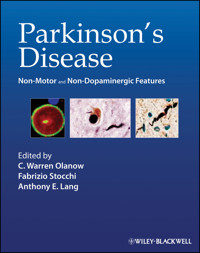
Parkinson's Disease E-Book
140,99 €
Mehr erfahren.
- Herausgeber: John Wiley & Sons
- Kategorie: Fachliteratur
- Sprache: Englisch
Parkinson's Disease has traditionally been seen as a movement disorder, and diagnosed by the development of tremor. However, we are beginning to understand that the disease manifests itself in many ways, and that earlier diagnosis might be possible through non-tremor symptoms. This textbook aims to tell the full story of non-motor and non-dopaminergic features of Parkinson's Disease.
Sie lesen das E-Book in den Legimi-Apps auf:
Seitenzahl: 1695
Veröffentlichungsjahr: 2011
Ähnliche




















Contents
Cover
Title Page
Copyright
List of Contributors
Chapter 1: The Dopaminergic and Non-Dopaminergic Features of Parkinson's Disease
The dopamine story
Levodopa-induced motor complications
The non-motor and non-dopaminergic features of PD
Conclusions
Chapter 2: Neuropathologic Involvement of the Dopaminergic Neuronal Systems in Parkinson's Disease
Introduction: the neuroanatomy of the dopaminergic system
Anatomic/functional considerations
Morphometric quantitative studies of substantia nigra (A9) in normal aging
Involvement of various dopaminergic neuronal groups in Parkinson’s disease
Clinicopathologic correlations
Understanding selective vulnerability
Chapter 3: Non-Dopaminergic Pathology of Parkinson's Disease
Introduction
Lewy pathology
Selective vulnerability
α-Synuclein
Incidental Lewy disease
Progression of the pathologic process
Acknowledgments
Chapter 4: Functional Anatomy of the Motor and Non-Motor Circuitry of the Basal Ganglia
Introduction
Basal ganglia components and general circuitry
Striatum: main entrance of extrinsic information to the basal circuits
The corticostriatal system: the main source of extrinsic information to the basal ganglia
The dual thalamostriatal systems: two major extrinsic sources of striatal excitability
The striatal dopaminergic systems: major modulators of basal ganglia networks
The direct and indirect basal ganglia circuits: “a simplified model that brought us a long way”
The segregation of direct and indirect striatofugal pathway neurons: an ongoing dilemma?
The hyperdirect corticosubthalamic system: anatomic and functional significance
The pedunculopontine nucleus: an intricate component of the basal ganglia circuitry
Basal ganglia outflow to the thalamus and brainstem
Concluding remarks
Acknowledgments
Chapter 5: Functional Organization of the Basal Ganglia: Dopaminergic and Non-Dopaminergic Features
Introduction
Functional organization of the basal ganglia
The origin of sensory features in Parkinson's disease
Somatosensory projections to the basal ganglia
Pathophysiologic mechanisms and clinical relevance of sensory manifestations
Non-dopaminergic motor manifestations
Conclusions
Chapter 6: Anatomy and Physiology of Limbic System Dysfunction in Parkinson's Disease
Introduction
Anatomy of the dopamine system
Physiology of the dopamine system
Dopamine actions on postsynaptic targets
Alteration of limbic system circuitry in Parkinson's disease: potential disruption by L-DOPA
Other potential alterations within limbic circuits in Parkinson's disease
Parkinson's disease and impulse-control disorders
Conclusion
Chapter 7: Animal Models of Parkinson's Disease: the Non-Motor and Non-Dopaminergic Features
Parkinson's disease
Classic PD models
Use of animal models to assess the non-motor and non-dopaminergic features of PD
Therapy-induced non-motor features of PD
Conclusion
Chapter 8: The Emerging Entity of Pre-Motor Parkinson's Disease
Prologue
Introduction
REM sleep behavioral disorder (RBD) – the concept of pre-motor PD comes of age
Olfactory dysfunction
Constipation
Cardiac autonomic denervation
Pure autonomic failure
Depression
Dementia
Where do we go from here? The need for prospective cohorts
Conclusion
Epilogue
Chapter 9: Functional Imaging Studies in Parkinson's Disease: the Non-Dopaminergic Systems
Introduction
Changes in the DA system in PD
Changes in monoamine transmitters other than DA
Other neurotransmitters
Neurotransmitter expression in the peripheral nervous system
Network activity in Parkinson's disease
Clues from functional imaging into etiology of PD and pathogenesis of complications
Conclusion
Chapter 10: Assessment of Non-Motor Features of Parkinson's Disease: Scales and Rating Tools
Introduction: principles of scale development and usage
Global PD scales
Multi-dimensional assessment tools
Focal non-motor scales
Future perspectives: other specific scale critiques in development
Chapter 11: Clinical Trial Measures of the Non-Motor Features of Parkinson's Disease
Introduction
Parkinson's disease pathology and clinical features
Measures of impairment (see Table 11.1)
Measures of function and health-related quality-of-life
New Study Designs (see Table 11.2)
Conclusion
Chapter 12: Clinical Features of Dementia Associated with Parkinson's Disease and Dementia with Lewy Bodies
Introduction
The interface between PDD and DLB
Descriptive epidemiology
Predicting dementia in PD
Cognitive features
Neuropsychiatric features
Motor, sleep, and other neurologic features
Diagnosis of PDD and DLB
Natural history and determinants of prognosis
Future directions
Conclusion
Chapter 13: Neuropsychologic Features of Parkinson's Dementias
Introduction
Parkinson's disease dementia
Dementia with Lewy bodies
Chapter 14: Neuropathology of Dementia in Parkinson's Disease
Introduction
Neuropathology of PD
Distribution of Lewy-related pathology
Staging Lewy-related pathology
Neuropathologic correlates of dementia in PD: a historical perspective
Significance of cortical Lewy-related pathology in PDD
Significance of Alzheimer-type pathology in PDD
Subcortical pathology in PDD
Cortical synaptic pathology in PDD
Acknowledgment
Chapter 15: Treatment of Dementia Associated with Parkinson's Disease
Introduction
General considerations on the treatment of PDD
Conclusion
Chapter 16: Psychosis in Parkinson's Disease
Introduction
Definitions
Clinical syndrome of Parkinson's disease psychosis (PDP)
Delusions
Differential diagnosis of psychosis (Box 16.2)
Clinical course
Measuring psychosis
Risk factors
Pathophysiology
Treatment
Patients with primary psychosis and Parkinson's disease
Conclusions and treatment recommendations
Chapter 17: Depression in Parkinson's Disease
Introduction
Diagnosis
Phenomenology
Epidemiology
Etiology
Depression and deep brain stimulation
Management and prognosis
Conclusion
Chapter 18: Anxiety Syndromes and Panic Attacks
Introduction
Epidemiology
Correlates and risk factors
Presentation
Etiology and pathophysiology
Assessment and diagnosis
Treatment
Chapter 19: Dopamine Dysregulation Syndrome
Introduction
Phenomenology of DDS and associated behaviors
Epidemiology of the DDS and associated behaviors in PD
DDS as a substance dependence disorder or addiction
Risk factors for dopamine dysregulation
Chronic dopaminergic treatment subverts brain reward systems
Management of DDS
Conclusion
Acknowledgments
Chapter 20: Neurobiology of Impulse Control Disorders in Parkinson's Disease
Introduction
Definitions and classifications
ICDs in PD
Epidemiology of ICDs in PD
Conceptualizing the ICDs
Models of behavioral addiction: theory and neurobiology
Functional anatomic substrates of addiction
Potential roles for dopamine in ICDs and addiction
A role for non-dopaminergic neurotransmitter systems in ICDs
Pathophysiology of ICDs in PD: potential roles for individual susceptibility, Parkinson's disease, and dopamine agonists
Potential roles of dopaminergic medications in the development of ICDs
Preferential stimulation of the DA D3 receptor subtype
DA receptor stimulation altering the assignment of salience
Priming effects of dopaminergic agents associated with craving
Implications for management
Conclusion
Chapter 21: Sleep Disorders in Parkinson's Disease
Introduction
Pathophysiologic aspects
Clinical symptoms
Disorders of initiating and maintaining sleep
Nocturnal akinesia
Periodic leg movements in sleep (PLMS)
Sleep benefit
REM sleep behavior disorder (RBD)
Nocturnal respiratory disorders
Excessive daytime sleepiness (EDS)
Diagnostic work-up
Video-based polysomnography and multiple sleep latency (MSLT)
Treatment of sleep disorders
Conclusion
Chapter 22: Neuronal Mechanisms of REM Sleep and Their Role in REM Sleep Behavior Disorder
Introduction
Overall control of wake–sleep switching
REM sleep state switching
REM atonia systems
Pathologic conditions of the REM atonia system
Is the hypertonia and gait disorder of Parkinson's disease caused by disinhibiting the LPT?
Chapter 23: REM Sleep Behavior Disorder and Neurodegenerative Disorders
Introduction
Demographics
Clinical features
Case example: RBD and parkinsonism
Pathophysiology
Epidemiology and associated conditions
Diagnosis (clinical and laboratory evaluation)
Differential diagnosis
Treatment
RBD variations
Perspectives
Conclusion
Chapter 24: Gastrointestinal and Swallowing Disturbances in Parkinson's Disease
Introduction
Basic mechanisms of swallowing and GI function
Pathology of GI dysfunction in PD
Clinical features
Conclusion
Chapter 25: Bladder Dysfunction in Parkinson's Disease and Other Parkinsonism
Introduction
Symptoms and pathophysiology
Genetic and atypical parkinsonisms
Diagnosis: urological assessment
Treatment
Conclusion
Chapter 26: Orthostatic Hypotension in Parkinson's Disease
Introduction
Pathophysiologic basis of OH in PD
Definition of OH and clinical manifestations of OH
Investigation of OH
Associated factors to consider in OH associated with PD
Management of OH in PD
Conclusion
Acknowledgment
Chapter 27: Sexual Dysfunction
Introduction
Sexual dysfunction and PD
Hyposexual behaviors
Hypersexual behaviors
Conclusion
Chapter 28: Olfactory Dysfunction
Introduction
Assessing smell loss in PD
The development of olfactory dysfunction as a biomarker of early PD
The neuropathology of olfactory dysfunction in PD
The role of olfactory system pathology in PD pathophysiology
Conclusion
Chapter 29: Pain and Paresthesia in Parkinson's Disease
Introduction
Epidemiology of sensory symptoms in PD
Clinical features
Mechanisms of PD-related pain
Diagnosis and management
Acknowledgments
Chapter 30: Restless Legs Syndrome and Akathisia in Parkinson's Disease
The restless legs syndrome (RLS)
Akathisia
Chapter 31: Speech and Voice Disorders in Parkinson's Disease
Incidence and impact of speech and voice disorders in Parkinson's disease
Origin of speech and voice disorders in PD
Treatment of speech and voice disorders in PD
Behavioral speech and voice treatment for PD
Intensive voice treatment (LSVT LOUD) for PD
LSVT LOUD: target, mode, and calibration
Technology-enhanced accessibility
When to refer for speech treatment
Conclusion
Acknowledgment
Disclosure
Chapter 32: Gait, Postural Instability, and Freezing
Introduction
Clinical assessment of balance and gait
Falls
Cognitive deficits
Treatment
Conclusion
Acknowledgment
Chapter 33: Orthopedic Complications of Parkinson's Disease
Introduction
Primary orthopedic complications
Secondary orthopedic complications
Parkinsonism complicating orthopedic surgery
Conclusion
Chapter 34: Other Non-Motor Symptoms of Parkinson's Disease
Visual disturbances
Salivation
Fatigue
Sweating
Skin disorders
Chapter 35: Overview of the Medical Treatment of the Non-Motor and Non-Dopaminergic Features of Parkinson's Disease
Introduction
Neuropsychiatric disorders
Sleep disorders
Autonomic dysfunction
Sensory disturbances
Bulbar disorders
Respiratory disturbances
Orthopedic problems
Conclusion
Chapter 36: Surgery for Non-Dopaminergic and Non-Motor Features of Parkinson's Disease
Introduction
Challenges in the non-motor and non-dopaminergic aspects of PD
Psychiatric symptoms
Future therapy in psychiatric aspects of PD
Conclusion
Chapter 37: Effects of Exercise on Basal Ganglia Function in Parkinson's Disease and Its Animal Models
Introduction
Effects of exercise on the normal brain
Exercise in animal models of Parkinson's disease
Physical therapy and exercise in Parkinson's disease
Conclusion
Acknowledgments
Chapter 38: Non-Dopaminergic Approaches to the Treatment of Parkinson's Disease
Introduction
Anti-cholinergics
Adenosine A2A antagonists
Glutamate antagonists
Noradrenaline
Serotonin
Endocannabinoid system
Opioid system
Histamine
Conclusions
Chapter 39: Prospects for Neuroprotective Therapies That Can Modulate Non-Dopaminergic Features in Parkinson's Disease
Introduction
Etiopathogenesis of PD
Animal models of PD
Outcome measures and study designs to detect disease-modification
Optimal population to study in disease-modifying trials
Conclusions
Plate
Index
This edition first published 2011, © 2011 by Blackwell Publishing Ltd
Blackwell Publishing was acquired by John Wiley & Sons in February 2007. Blackwell’s publishing program has been merged with Wiley’s global Scientific, Technical and Medical business to form Wiley-Blackwell.
Registered office: John Wiley & Sons, Ltd, The Atrium, Southern Gate, Chichester, West Sussex PO19 8SQ, UK
Editorial offices: 9600 Garsington Road, Oxford OX4 2DQ, UK The Atrium, Southern Gate, Chichester, West Sussex PO19 8SQ, UK 111 River Street, Hoboken, NJ 07030-5774, USA
For details of our global editorial offices, for customer services and for information about how to apply for permission to reuse the copyright material in this book please see our website at www.wiley.com/wiley-blackwell
The right of the author to be identified as the author of this work has been asserted in accordance with the UK Copyright, Designs and Patents Act 1988.
All rights reserved. No part of this publication may be reproduced, stored in a retrieval system, or transmitted, in any form or by any means, electronic, mechanical, photocopying, recording or otherwise, except as permitted by the UK Copyright, Designs and Patents Act 1988, without the prior permission of the publisher.
Designations used by companies to distinguish their products are often claimed as trademarks. All brand names and product names used in this book are trade names, service marks, trademarks or registered trademarks of their respective owners. The publisher is not associated with any product or vendor mentioned in this book. This publication is designed to provide accurate and authoritative information in regard to the subject matter covered. It is sold on the understanding that the publisher is not engaged in rendering professional services. If professional advice or other expert assistance is required, the services of a competent professional should be sought.
The contents of this work are intended to further general scientific research, understanding, and discussion only and are not intended and should not be relied upon as recommending or promoting a specific method, diagnosis, or treatment by physicians for any particular patient. The publisher and the authors make no representations or warranties with respect to the accuracy or completeness of the contents of this work and specifically disclaim all warranties, including without limitation any implied warranties of fitness for a particular purpose. In view of ongoing research, equipment modifications, changes in governmental regulations, and the constant flow of information relating to the use of medicines, equipment, and devices, the reader is urged to review and evaluate the information provided in the package insert or instructions for each medicine, equipment, or device for, among other things, any changes in the instructions or indication of usage and for added warnings and precautions. Readers should consult with a specialist where appropriate. The fact that an organization or Website is referred to in this work as a citation and/or a potential source of further information does not mean that the author or the publisher endorses the information the organization or Website may provide or recommendations it may make. Further, readers should be aware that Internet Websites listed in this work may have changed or disappeared between when this work was written and when it is read. No warranty may be created or extended by any promotional statements for this work. Neither the publisher nor the authors shall be liable for any damages arising herefrom.
Library of Congress Cataloging-in-Publication Data Parkinson’s disease : non-motor and non-dopaminergic features / edited by C. Warren Olanow, Fabrizio Stocchi, Anthony E. Lang. p. ; cm. Includes bibliographical references and index. ISBN 978-1-4051-9185-2 (hardcover : alk. paper) 1. Parkinson’s disease–Diagnosis. 2. Parkinson’s disease–Pathophysiology. I. Olanow, C. W. (Charles Warren), 1941- II. Stocchi, F. III. Lang, Anthony E. [DNLM: 1. Parkinson Disease–complications. 2. Dopamine–physiology. 3. Parkinson Disease–physiopathology. WL 359] RC382.P2657 2011 616.8′33–dc22 2010047397
A catalogue record for this book is available from the British Library.
This book is published in the following electronic formats: ePDF 9781444397956; Wiley Online Library 9781444397970; ePub 9781444397963
List of Contributors
Garnik Akopian MD Andrus Gerontology Center, University of Southern California, Los Angeles, CA, USA
Karen Anderson MD Department of Neurology, University of Maryland Medical Center, Baltimore, MD, USA
Kailash P. Bhatia MD, FRCP Sobell Department of Motor Neuroscience and Movement Disorders, Institute of Neurology, University College London, Queen Square, London, UK
Bastiaan R. Bloem MD Department of Neurology and Parkinson Centre Nijmegen, Donders Institute for Brain Cognition and Behaviour, Radboud University Nijmegen Medical Centre, Nijmegen, The Netherlands
Heiko Braak MD Clinical Neuroanatomy, Department of Neurology, Center for Clinical Research, University of Ulm, Ulm, Germany
Jonathan M. Brotchie PhD Toronto Western Research Institute, Toronto Western Hospital, Toronto, ON, Canada
David J. Burn FRCP, MD, MA Professor of Movement Disorders Neurology and Honorary Consultant Neurologist, Clinical Ageing Research Unit, Campus for Ageing and Vitality, Newcastle upon Tyne, UK
Antonio Carbone MD Institute of Urology, University “La Sapienza”, Rome, Italy
Cynthia L. Comella MD Professor, Department of Neurological Sciences, Rush University Medical Center, Chicago, IL, USA
Michel A. Cramer Bornemann MD Minnesota Regional Sleep Disorders Center and Hennepin County Medical Center, University of Minnesota Medical School, Minneapolis, MN, USA
Leonardo Cruz de Souza MD Department of Neurology, Salpêtrière University Hospital, Paris, France
Virginie Czernecki PhD Department of Neurology, Salpêtrière University Hospital, Paris, France
Kelly Del Tredici MD, PhD Clinical Neuroanatomy, Department of Neurology, Center for Clinical Research, University of Ulm, Ulm, Germany
Dennis W. Dickson MD Department of Neuroscience, Mayo Clinic, Jacksonville, FL, USA
Bruno Dubois MD Professor of Neurology, Department of Neurology, Salpêtrière University Hospital, Paris, France
John E. Duda MD Parkinson’s Disease Research, Education and Clinical Center (PADRECC), Philadelphia Veterans Affairs Medical Center and Department of Neurology, University of Pennsylvania School of Medicine, Philadelphia, PA, USA
Mark J. Edwards PhD Sobell Department of Motor Neuroscience and Movement Disorders, Institute of Neurology, University College London, Queen Square, London, UK
Murat Emre MD Professor of Neurology, Istanbul Faculty of Medicine, Department of Neurology, Behavioral Neurology and Movement Disorders Unit, Istanbul University, Çapa Istanbul, Turkey
Andrew H. Evans MD, FRACP Department of Neurology, Royal Melbourne Hospital, Parkville, Victoria, and Department of Medicine, University of Melbourne, Australia
Beth E. Fisher MD Division of Biokinesiology and Physical Therapy, Department of Neurology, Keck School of Medicine, University of Southern California, Los Angeles, CA, USA
Cynthia M. Fox PhD, CCC-SLP Research Associate, Department of Speech, Language and Hearing Science, University of Colorado–Boulder and the National Center for Voice and Speech–Denver, CO, USA
Susan H. Fox BSc, MB, ChB, MRCP (UK), PhD Assistant Professor of Neurology, Movement Disorders Clinic, Division of Neurology, University of Toronto, Toronto, ON, Canada
Jospeh H. Friedman MD Movement Disorders Program, Butler Hospital and Department of Neurology, Warren Alpert Medical School of Brown University, Providence, RI, USA
Christopher G. Goetz MD Professor of Neurological Sciences and Professor of Pharmacology, Rush University Medical Center, Chicago, IL, USA
Anthony A. Grace PhD Departments of Neuroscience, Psychiatry, and Psychology, University of Pittsburgh, Pittsburgh, PA, USA
Yvette Grimbergen MD Department of Neurology, Leiden University Medical Centre, Leiden and Department of Neurology, Sint Franciscus Gasthuis, Rotterdam, The Netherlands
Staci Hoops BA Department of Psychiatry, University of Pennsylvania, Philadelphia, PA, USA
Alex Iranzo MD Neurology Service, Hospital Clinic and Institut d’Investigació Biomèdiques August Pi i Sunyer (IDIBAPS), Barcelona, Spain
Michael Jakowec MD Department of Neurology, Keck School of Medicine and Division of Biokinesiology and Physical Therapy, University of Southern California, Los Angeles, CA, USA
Joseph Jankovic MD Professor of Neurology, Director, Parkinson’s Disease Center and Movement Disorders Clinic, Baylor College of Medicine, Houston, TX, USA
Carlos Juri MD Clinica Universitaria and Medical School, Neuroscience Division, CIMA and Centro de Investigacion Biomedica en Red sobre Enfermedades Neurodegenerativas (CIBERNED), University of Navarra, Pamplona, Spain
Karl Kieburtz MD, MPH Professor of Neurology and Community and Preventive Medicine, Department of Neurology, University of Rochester Medical Center, Rochester, NY, USA
Jeffrey H. Kordower PhD Department of Neurological Sciences, Rush University Medical Center, Chicago, IL, USA
J. William Langston MD Scientific Director and CEO, Parkinson’s Institute, Sunnyvale, CA, USA
Andrew J. Lees FRCP Director of Research, Reta Lila Weston Institute of Neurological Studies, Institute of Neurology, University College London, London, UK
Shen-Yang Lim MD, FRACP Faculty of Medicine, University of Malaya, Kuala Lumpur, Malaysia
Andres W. Lozano MD, PhD, FRCSC, FRS Professor and Dan Family Chairman of Neurosurgery, University of Toronto and Senior Scientist, Toronto Western Research Institute, Canada Research Chair in Neuroscience, Toronto, ON, Canada
Jun Lu MD, PhD Department of Neurology, Program in Neuroscience and Division of Sleep Medicine, Harvard Medical School and Beth Israel Deaconess Medical Center, Boston, MA, USA
Mark W. Mahowald MD Director, Minnesota Regional Sleep Disorders Center and Hennepin County Medical Center, University of Minnesota Medical School, Minneapolis, MN, USA
Christopher J. Mathias DPhil, DSc, FRCP, FMedSci Autonomic and Neurovascular Medicine Unit, Imperial College London at St Mary’s Hospital and Autonomic Unit, National Hospital for Neurology and Neurosurgery, Queen Square and Institute of Neurology, University College London, London, UK
Charlie K. Meshul MD Department of Behavioral Neurosciences, Oregon Health Sciences University, Research Services, Portland VA Medical Center, Portland, OR, USA
Janis Miyasaki MD, FRCPC Toronto Western Hospital (Movement Disorders Centre), University Health Network (UHN), University of Toronto, Toronto, ON, Canada
Uday Muthane DM, FNASc Parkinson and Aging Research Foundation, Bangalore, India
Jose A. Obeso MD, PhD Clinica Universitaria and Medical School, Neuroscience Division, CIMA and Centro de Investigacion Biomedica en Red sobre Enfermedades Neurodegenerativas (CIBERNED), University of Navarra, Pamplona, Spain
Carolyn F. Orr FRACP, PhD Department of Neurology, Mayo Clinic, Rochester, NY, USA
Sean S. O’Sullivan MRCPI Clincial Research Fellow, Reta Lila Weston Institute of Neurolgical Studies, Institute of Neurology, University College London, London, UK
Giovanni Palleschi MD Institute of Urology, University “La Sapienza”, Rome, Italy
Kimberly Pargeon MD Department of Neurology, University of Maryland Medical Center, Baltimore, MD, USA
Daniel P. Perl MD Professor of Pathology (Neuropathology), Uniformed Services University of the Health Sciences, Bethesda, MD, USA
Giselle Petzinger MD Department of Neurology, Keck School of Medicine and Division of Biokinesiology and Physical Therapy, University of Southern California, Los Angeles, CA, USA
Ronald F. Pfeiffer MD Department of Neurology, University of Tennessee Health Science Center, Memphis, TN, USA
Shilpa Ramaswamy PhD Department of Neurological Sciences, Rush University Medical Center, Chicago, IL, USA
Lorraine Ramig PhD, CCC-SLP Professor, University of Colorado–Boulder, Senior Scientist, National Center for Voice and Speech–Denver, CO, and Adjunct Professor, Columbia University, New York, NY, USA
Irene Hegeman Richard MD Department of Neurology, University of Rochester School of Medicine and Dentistry, Rochester, NY, USA
Maria C. Rodriquez-Oroz MD, PhD Clinica Universitaria and Medical School, Neuroscience Division, CIMA and Centro de Investigacion Biomedica en Red sobre Enfermedades Neurodegenerativas (CIBERNED), University of Navarra, Pamplona, Spain
Jospeh Rudolph MD Department of Neurology, Mount Sinai School of Medicine, New York, NY, USA
Cristina Sampaio MD, PhD Professor of Clinical Pharmacology and Therapeutics, Laboratory of Clinical Pharmacology and Therapeutics, Instituto de Medicina Molecular, Faculdade de Medicina de Lisboa, Lisbon, Portugal
Clifford B. Saper MD, PhD Department of Neurology, Program in Neuroscience and Division of Sleep Medicine, Harvard Medical School and Beth Israel Deaconess Medical Center, Boston, MA, USA
Shimon Sapir PhD, CCC-SLP Associate Professor, Communication Sciences and Disorders, Faculty of Social Welfare and Health Sciences, University of Haifa, Haifa, Israel
Carlos H. Schenck MD Minnesota Regional Sleep Disorders Center and Hennepin County Medical Center, University of Minnesota Medical School, Minneapolis, MN, USA
Yvonne Schoon MD Department of Geriatrics, Radboud University Nijmegen Medical Centre, Nijmegen, The Netherlands
Friederike Sixel-Döring MD Paracelsus-Elena-Klinik, Center for Parkinsonism and Movement Disorders, Kassel and Philipps University, Marburg, Germany
Yoland Smith PhD Professor of Neurology, Yerkes National Primate Research Center and Department of Neurology, Emory University, Atlanta, GA, USA
Brian J. Snyder MD Division of Neurosurgery, Toronto Western Hospital, University of Toronto, Toronto, ON, Canada
Katherine E. Soderstrom BA Department of Neurological Sciences, Rush University Medical Center, Chicago, IL, USA
Arlène D. Speelman MSc Department of Neurology and Parkinson Centre Nijmegen, Donders Institute for Brain Cognition and Behaviour, Radboud University Nijmegen Medical Centre, Nijmegen, The Netherlands
Mark Stacy MD Division of Neurology, Duke University Medical School, Durham, NC, USA
Thomas D.L. Steeves MD, FRCPC Toronto Western Hospital (Movement Disorders Centre), University Health Network (UHN), University of Toronto, Toronto, ON, Canada
Matthew B. Stern MD Parkinson’s Disease Research, Education and Clinical Center (PADRECC), Philadelphia Veterans Affairs Medical Center, and Department of Neurology, University of Pennsylvania School of Medicine, Philadelphia, PA, USA
A. Jon Stoessl CM, MD, FRCPC Pacific Parkinson’s Research Centre, University of British Columbia, Vancouver, BC, Canada
Antonio P. Strafella MD, PhD, FRCPC Associate Professor, Department of Medicine/Neurology, Movement Disorders Centre, Toronto Western Hospital and Senior Scientist, Division of Brain, Imaging and Behaviour–Systems Neuroscience, Toronto Western Research Institute and Associate Scientist, PET Imaging Center, Center for Addiction and Mental Health, University of Toronto, Toronto, ON, Canada
Michele Tagliati MD, FAAN Vice Chairman, Department of Neurology, Director, Movement Disorders, Cedars-Sinai Medical Center, Los Angeles, CA, USA
Margherita Torti MD Institute of Neurology, IRCCS San Raffaele Pisana, Rome, Italy
Claudia Trenkwalder MD Paracelsus-Elena-Klinik, Center for Parkinsonism and Movement Disorders, Kassel and University of Göttingen, Göttingen, Germany
Marjolein A. van der Marck MSc Department of Neurology and Parkinson Centre Nijmegen, Donders Institute for Brain Cognition and Behaviour, Radboud University Nijmegen Medical Centre, Nijmegen, The Netherlands
Tiffini Voss MD Department of Neurology, University of Rochester School of Medicine and Dentistry, Rochester, NY, USA
John P. Walsh MD Andrus Gerontology Center, University of Southern California, Los Angeles, CA, USA
William J. Weiner MD Professor and Department Chairman, Department of Neurology, University of Maryland Medical Center, Baltimore, MD, USA
Daniel Weintraub MD Assistant Professor of Psychiatry, University of Pennsylvania and Parkinson’s Disease Research, Education and Clinical Center (PADRECC) and Mental Illness Research, Education and Clinical Center (MIRECC), Veterans Affairs Medical Center Philadelphia, PA, USA
Chapter 1
The Dopaminergic and Non-Dopaminergic Features of Parkinson's Disease
C. Warren Olanow1, Fabrizio Stocchi2, & Anthony E. Lang3
1Departments of Neurology and Neuroscience, Mount Sinai School of Medicine, New York, NY, USA
2Institute of Neurology, IRCCS San Raffaele Pisana, Rome, Italy
3Division of Neurology, University of Toronto, Toronto, ON, Canada
The dopamine story
Parkinson's disease (PD) is a common age-related neurodegenerative disorder, second only to Alzheimer's disease (AD). It is named in honor of James Parkinson, who provided a description of the disorder in his classic monograph written in 1817 [1]. Clinically, the disease is characterized by a series of cardinal motor features which include resting tremor, rigidity, bradykinesia, and gait impairment with postural instability. The hallmark pathologic features of the disease were described in the early twentieth century and are highlighted by degeneration of neurons in the substantia nigra pars compacta (SNc) coupled with proteinaceous Lewy bodies [2]. The presence of the brainstem dopaminergic system was first described by Dahlström and Fuxe [3]. The importance of dopamine depletion in the pathophysiology of PD was suggested in the late 1950s by Carlsson and colleagues, who showed that inhibition of dopamine uptake by reserpine led to a Parkinson-like syndrome in rabbits that could be reversed with the dopamine precursor levodopa [4]. Shortly afterwards, Ehringer and Hornykiewicz identified that there was a profound dopamine deficiency in the striatum of patients with PD [5]. It was subsequently established that dopamine is not simply a precursor in the norepinephrine pathway, but is itself a neurotransmitter that is manufactured in SNc neurons and transported to the striatum by way of the nigrostriatal tract.
Based on these observations, it was hypothesized that dopamine replacement might be an effective treatment strategy for PD. Dopamine itself does not cross the blood–brain barrier, so interest focused on the dopamine precursor levodopa, which can gain entry into the brain via the large neutral amino acid transport pathway and can then be decarboxylated to form dopamine. Initial studies in the early 1960s reported a dramatic benefit with small doses of levodopa [6], but these results were surprisingly difficult to confirm in early trials. It was not until the reports by Cotzias and co-workers in 1967 and 1969 that it was appreciated that consistent benefits could be obtained with relatively higher doses of levodopa [7,8]. These results were subsequently confirmed in double-blind trials [9], and the levodopa era had begun. Although levodopa provided benefit for the vast majority of PD patients, therapy was complicated by nausea and vomiting and could not be tolerated by as many as 50% of individuals. This problem was found to be due to the peripheral accumulation of dopamine and activation of dopamine receptors in the nausea and vomiting center of the brain (area postrema) that are not protected by the blood–brain barrier. This problem was resolved by administering levodopa in combination with a peripherally acting dopamine decarboxylase inhibitor [10], and levodopa today is routinely administered in combination with the decarboxylase inhibitor carbidopa (Sinemet) or benserazide (Madopar). Since its introduction, levodopa has been the standard of care for PD and has benefited millions of patients throughout the world. Virtually all patients improve, and benefits have been noted with respect to the classic motor features of the disease, quality of life, independence, employability, and mortality [11].
Lesen Sie weiter in der vollständigen Ausgabe!
Lesen Sie weiter in der vollständigen Ausgabe!
Lesen Sie weiter in der vollständigen Ausgabe!
Lesen Sie weiter in der vollständigen Ausgabe!
Lesen Sie weiter in der vollständigen Ausgabe!
Lesen Sie weiter in der vollständigen Ausgabe!
Lesen Sie weiter in der vollständigen Ausgabe!
Lesen Sie weiter in der vollständigen Ausgabe!
Lesen Sie weiter in der vollständigen Ausgabe!
Lesen Sie weiter in der vollständigen Ausgabe!
Lesen Sie weiter in der vollständigen Ausgabe!
Lesen Sie weiter in der vollständigen Ausgabe!
Lesen Sie weiter in der vollständigen Ausgabe!
Lesen Sie weiter in der vollständigen Ausgabe!
Lesen Sie weiter in der vollständigen Ausgabe!
Lesen Sie weiter in der vollständigen Ausgabe!
Lesen Sie weiter in der vollständigen Ausgabe!
Lesen Sie weiter in der vollständigen Ausgabe!
Lesen Sie weiter in der vollständigen Ausgabe!
Lesen Sie weiter in der vollständigen Ausgabe!
Lesen Sie weiter in der vollständigen Ausgabe!
Lesen Sie weiter in der vollständigen Ausgabe!
Lesen Sie weiter in der vollständigen Ausgabe!
Lesen Sie weiter in der vollständigen Ausgabe!
Lesen Sie weiter in der vollständigen Ausgabe!
Lesen Sie weiter in der vollständigen Ausgabe!
Lesen Sie weiter in der vollständigen Ausgabe!
Lesen Sie weiter in der vollständigen Ausgabe!
Lesen Sie weiter in der vollständigen Ausgabe!
Lesen Sie weiter in der vollständigen Ausgabe!
Lesen Sie weiter in der vollständigen Ausgabe!
Lesen Sie weiter in der vollständigen Ausgabe!
Lesen Sie weiter in der vollständigen Ausgabe!
Lesen Sie weiter in der vollständigen Ausgabe!
Lesen Sie weiter in der vollständigen Ausgabe!
Lesen Sie weiter in der vollständigen Ausgabe!
Lesen Sie weiter in der vollständigen Ausgabe!
Lesen Sie weiter in der vollständigen Ausgabe!
Lesen Sie weiter in der vollständigen Ausgabe!
Lesen Sie weiter in der vollständigen Ausgabe!




