


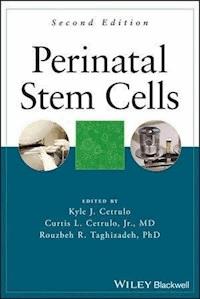
Perinatal Stem Cells E-Book
144,99 €
Mehr erfahren.
- Herausgeber: John Wiley & Sons
- Kategorie: Wissenschaft und neue Technologien
- Sprache: Englisch
Perinatal Stem Cells, 2nd Edition builds on the first edition to provide an updated tutorial on perinatal stem cells, including stem cells harvested from the amniotic fluid, placenta, maternal blood supply, umbilical cord and Wharton's Jelly. As in the first edition, coverage includes the underlying biology of each of the sources of pregnancy related stem cells, cell culture, and potential therapeutic uses, as well as insights on the impact of these stem cells from obstetricians and gynecologists, cardiologists, hematologists, tissue engineers, and cord blood bankers. Normally discarded as medical waste, perinatal stem cells offer a powerful therapeutic tool box alternative to the controversial embryonic stem cells. Since publication of the first edition, a burgeoning commerical industry has developed around various sources of perinatal cells, and the second edition now includes an overview of this growing industry. With contributions from some of the top academic stem cell laboratories in the United States as well as new chapters from international stem cell scientists, Perinatal Stem Cells presents an update on the cutting-edge research in the field while maintaining its signature clinical focus.
Sie lesen das E-Book in den Legimi-Apps auf:
Seitenzahl: 697
Veröffentlichungsjahr: 2013
Ähnliche




















Table of Contents
TITLE PAGE
COPYRIGHT PAGE
CONTRIBUTORS
INTRODUCTION
INDUSTRY REVIEW
1 AMNIOTIC FLUID STEM CELLS
INTRODUCTION
DEVELOPMENT OF GESTATIONAL STEM CELLS
ISOLATION AND CHARACTERIZATION OF AMNIOTIC FLUID STEM CELLS
MULTIPOTENCY OF AMNIOTIC FLUID STEM CELLS
CLINICAL APPLICATION OF AMNIOTIC FLUID STEM CELLS
CONCLUSION
2 CORD BLOOD TRANSPLANTS: PERINATAL STEM CELLS IN CLINICAL PRACTICE
INTRODUCTION
HEMATOPOIETIC STEM CELL TRANSPLANTS: ADULT DONOR COLLECTION
HEMATOPOIETIC STEM CELL TRANSPLANTS: HLA MATCHING
COLLECTION AND PROCESSING OF CORD BLOOD UNITS
HEMATOPOIETIC STEM CELL TRANSPLANTS: RECIPIENT ISSUES
BONE MARROW VERSUS SINGLE CORD BLOOD: PEDIATRIC
BONE MARROW VERSUS CORD BLOOD: ADULTS
CORD BLOOD TRANSPLANT: ADVANTAGES AND DISADVANTAGES
DOUBLE CORD BLOOD TRANSPLANTS: ABLATIVE REGIMENS
DOUBLE CORD BLOOD TRANSPLANT: NON-MYELOABLATIVE REGIMENS
ARE TWO CORDS BETTER THAN ONE?
CHIMERISM
PREDICTING THE WINNER
OTHER EXPERIMENTAL STRATEGIES
SUMMARY
3 HEMATOPOIETIC STEM CELL DEVELOPMENT IN THE PLACENTA
INTRODUCTION
THE HEMATOPOIETIC SYSTEM
HISTORICAL PERSPECTIVE ON PLACENTAL HEMATOPOIESIS
THE DEVELOPMENT AND STRUCTURE OF THE MOUSE PLACENTA
HEMATOPOIETIC ACTIVITY IN THE MOUSE PLACENTA
IDENTIFICATION OF PLACENTAL HSCs
THE ORIGIN AND LOCALIZATION OF PLACENTAL HSCs
HEMATOPOIETIC ACTIVITY IN THE HUMAN PLACENTA
HEMATOPOIETIC MICROENVIRONMENT IN THE PLACENTA
CONCLUSIONS AND PERSPECTIVES
4 PERINATAL MESENCHYMAL STEM CELL BANKING FOR UMBILICAL CORD BLOOD TRANSPLANTATION AND REGENERATIVE MEDICINE
INTRODUCTION
HEMATOPOIESIS
HEMATOPOIETIC TRANSPLANTATIONS
UMBILICAL CORD: SOURCE OF PERINATAL HSCs AND MSCs
HEMATOPOIETIC TRANSPLANTATIONS OF UMBILICAL CORD BLOOD
STRATEGIES TO OVERCOME THE TRANSPLANT-RELATED LIMITATIONS OF UMBILICAL CORD BLOOD
UMBILICAL CORD TISSUE MSC BANKING
5 MAKING ORGAN AND STEM CELL TRANSPLANTATION SAFER: THE ROLE OF MESENCHYMAL STEM CELLS
INTRODUCTION
MSC TO PREVENT REJECTION AFTER SOLID ORGAN TRANSPLANTATION
MSC IN THE TREATMENT OF GRAFT-VERSUS-HOST DISEASE
MSC TO SUPPORT HEMATOPOIETIC RECOVERY OF STEM CELLS AFTER STEM CELL TRANSPLANTATION
6 WHARTON’S JELLY MESENCHYMAL STEM CELLS AND IMMUNE MODULATION: REGENERATIVE MEDICINE MEETS TISSUE REPAIR
INTRODUCTION
EXPRESSION OF RELEVANT IMMUNOMODULATORY MOLECULES IN VITRO BY MSCs
TOLERANCE INDUCTION BY MSCs: REDISCOVERING THE EMBRYO IMMUNE EVASION MECHANISMS
IMMUNE MODULATION IN VIVO: CONTRASTING DATA ON THE IMMUNE PRIVILEGE OF MSCs
WJ-MSC IN IN VIVO MODELS: ENHANCING THE IMMUNOMODULATORY FEATURES OF ADULT MSC POPULATIONS
CONCLUSIONS AND FUTURE PERSPECTIVES
7 IMMUNOGENICITY VERSUS IMMUNOMODULATION OF PERINATAL STEM CELLS
INTRODUCTION
MECHANISMS OF IMMUNOMODULATION BY UMBILICAL CORD- AND BONE MARROW-DERIVED MSCs
INNATE IMMUNE SYSTEM
ADAPTIVE IMMUNE SYSTEM
NATURAL TOLERANCE AND UMBILICAL CORD TISSUES
TOLERANCE VERSUS IMMUNOGENICITY: THE YIN AND YANG OF HOST RESPONSES TO UMBILICAL CORD-DERIVED CELLS
CONCLUSIONS
8 THE TRANSLATIONAL POTENTIAL OF PERINATAL STEM CELLS IN CLINICAL MEDICINE: MESENCHYMAL STEM CELLS
INTRODUCTION
GRAFT-VERSUS-HOST DISEASE
ACUTE GVHD
CHRONIC GVHD
GVHD PREVENTION
HEMATOPOETIC RECOVERY AND HCT ENGRAFTMENT
HEMATOPOIETIC RECOVERY
HCT ENGRAFTMENT
MSC POTENTIAL USES
9 NEWBORN STEM CELLS: IDENTITY, FUNCTION, AND CLINICAL POTENTIAL
INTRODUCTION
THE NEWBORN OFFERS AN ENORMOUS OPPORTUNITY FOR STEM CELLS
AMNION
ISOLATION AND PHENOTYPIC CHARACTERIZATION OF AMNION CELLS
THERAPEUTIC POTENTIAL OF AMNION MEMBRANE
MECHANISMS OF AEC-ENHANCED WOUND REPAIR
THERAPEUTIC POTENTIAL OF AMNION AS SINGLE CELLS
AMNION IMMUNOGENICITY AND IMMUNOSUPPRESSIVE PROPERTIES
AMNION-DERIVED MESENCHYMAL STROMAL CELLS
UMBILICAL CORD MESENCHYMAL STROMAL CELLS
CHORION MSCs
10 BIOMEDICAL POTENTIAL OF HUMAN PERINATAL STEM CELLS
ROLE OF STEM CELLS IN REGENERATIVE MEDICINE
PERINATAL STEM CELL SOURCES
PROPERTIES OF PERINATAL MESENCHYMAL STEM CELLS
PROPERTIES OF PERINATAL HEMATOPOIETIC STEM CELLS
BIOMEDICAL APPLICATIONS OF HUMAN PERINATAL STEM CELLS
PERSPECTIVES AND OBSTACLES
11 PROGENITOR CELL THERAPY FOR THE TREATMENT OF TRAUMATIC BRAIN INJURY
INTRODUCTION
CELLULAR THERAPY FOR THE TREATMENT OF TBI
NEURAL STEM PROGENITOR CELLS
HUMAN MULTIPOTENT ADULT PROGENITOR CELLS
MESENCHYMAL STEM CELLS
UMBILICAL CORD BLOOD
WHARTON’S JELLY
AMNIOTIC FLUID-DERIVED STEM CELLS
THE INFLAMMATORY REFLEX
CONCLUSION
12 THE HUMAN AMNIOTIC MEMBRANE: A TISSUE WITH MULTIFACETED PROPERTIES AND DIFFERENT POTENTIAL CLINICAL APPLICATIONS
INTRODUCTION
STRUCTURE AND HISTOLOGY OF THE HUMAN AMNIOTIC MEMBRANE
PREPARATION, PRESERVATION, AND STERILIZATION OF THE HUMAN AMNIOTIC MEMBRANE
BIOLOGICAL AND STRUCTURAL PROPERTIES OF THE HUMAN AMNIOTIC MEMBRANE GENERALLY INVOKED TO EXPLAIN ITS EFFECTS IN VIVO
ESTABLISHED CLINICAL APPLICATIONS OF THE HUMAN AMNIOTIC MEMBRANE
PROSPECTIVE APPLICATIONS OF THE HUMAN AMNIOTIC MEMBRANE: LESSONS FROM PRECLINICAL STUDIES
CONCLUSIONS AND PERSPECTIVES
13 ADVANCES AND POSSIBLE APPLICATIONS OF HUMAN AMNION FOR THE MANAGEMENT OF LIVER DISEASE
INTRODUCTION
HUMAN AMNION FOR THE MANAGEMENT OF LIVER FIBROSIS
AMNION-DERIVED HEPATOCYTES AND THEIR POSSIBLE APPLICATIONS
CONCLUSIONS
14 AMNION-DERIVED CELLS FOR STROKE RESTORATIVE THERAPY
INTRODUCTION
STEM CELL THERAPY: BEYOND STROKE NEUROPROTECTION
THERAPEUTIC POTENTIAL OF ADULT STEM CELLS
THE BIOLOGY OF AMNION-DERIVED CELLS
AMNION-DERIVED CELLS FOR CELL THERAPY
CONCLUSION
15 PREGNANCY-ACQUIRED FETAL PROGENITORS AS NATURAL CELL THERAPY
INTRODUCTION
FETAL CELL MICROCHIMERISM, A WIDESPREAD PHENOMENON
THE KINETICS OF FETAL CELL DETECTION
FACTORS MODIFYING THE LEVEL OF MICROCHIMERISM
DETECTING FMC
HOMING AND PLASTICITY OF FMC
HEMATOPOIETIC CAPACITY OF FMC
EPITHELIAL, NEURONAL AND HEPATIC CAPACITY OF FMC
MESENCHYMAL CAPACITY OF FMC
FMC INCLUDES FUNCTIONAL ENDOTHELIAL PROGENITOR CELLS THAT CONTRIBUTE TO TISSUE REPAIR
FMC LIKELY INCLUDES CELLS OF PLACENTAL ORIGIN
CONCLUSIONS
INDUSTRY REVIEW
16 PERINATAL STEM CELLS: AN INDUSTRY PERSPECTIVE
INTRODUCTION
THE PUBLIC CORD BLOOD BANKING INDUSTRY
THE PRIVATE BANKING INDUSTRY
RESEARCH AND CORD BLOOD CLINICAL TRIALS
THE MESENCHYMAL STEM CELL REGENERATIVE MEDICINE INDUSTRY
WHARTON’S JELLY/CORD TISSUE
PLACENTAL STEM CELLS AND PLACENTAL TISSUE
AMNIOTIC FLUID
CONCLUSION
17 PATENT PROTECTION OF STEM CELL INNOVATIONS
THE ROLE OF PATENTS IN COMMERCIALIZATION
BACKGROUND OF THE PATENT SYSTEM
PATENTABLE SUBJECT MATTER
STATUTORY REQUIREMENTS FOR A PATENT
WRITTEN DESCRIPTION/ENABLEMENT/BEST MODE
IMPORTANT FUTURE CHANGES
18 INTERVIEW WITH FRANCES VERTER, FOUNDER OF PARENT’S GUIDE TO CORD BLOOD FOUNDATION
19 UMBILICAL CORD BLOOD BANKING: AN OBSTETRICIAN’S PERSPECTIVE
INDEX
Copyright © 2013 by Wiley-Blackwell. All rights reserved.
Wiley-Blackwell is an imprint of John Wiley & Sons. formed by the merger of Wiley’s global Scientific, Technical, and Medical business with Backwell Publishing.
Published by John Wiley & Sons, Inc., Hoboken, New Jersey.
Published simultaneously in Canada.
No part of this publication may be reproduced, stored in a retrieval system, or transmitted in any form or by any means, electronic, mechanical, photocopying, recording, scanning, or otherwise, except as permitted under Section 107 or 108 of the 1976 United States Copyright Act, without either the prior written permission of the Publisher, or authorization through payment of the appropriate per-copy fee to the Copyright Clearance Center, Inc., 222 Rosewood Drive, Danvers, MA 01923, (978) 750-8400, fax (978) 750-4470, or on the web at www.copyright.com. Requests to the Publisher for permission should be addressed to the Permissions Department, John Wiley & Sons, Inc., 111 River Street, Hoboken, NJ 07030, (201) 748-6011, fax (201) 748-6008, or online at http://www.wiley.com/go/permissions.
Limit of Liability/Disclaimer of Warranty: While the publisher and author have used their best efforts in preparing this book, they make no representations or warranties with respect to the accuracy or completeness of the contents of this book and specifically disclaim any implied warranties of merchantability or fitness for a particular purpose. No warranty may be created or extended by sales representatives or written sales materials. The advice and strategies contained herein may not be suitable for your situation. You should consult with a professional where appropriate. Neither the publisher nor author shall be liable for any loss of profit or any other commercial damages, including but not limited to special, incidental, consequential, or other damages.
For general information on our other products and services or for technical support, please contact our Customer Care Department within the United States at (800) 762-2974, outside the United States at (317) 572-3993 or fax (317) 572-4002.
Wiley also publishes its books in a variety of electronic formats. Some content that appears in print may not be available in electronic formats. For more information about Wiley products, visit our web site at www.wiley.com.
Library of Congress Cataloging-in-Publication Data:
Perinatal stem cells / edited by Kyle J. Cetrulo ... [et al.]. – 2nd ed.
p. cm.
Includes bibliographical references and index.
ISBN 978-1-118-20944-8 (cloth)
1. Stem cells. 2. Placenta. 3. Amniotic liquid. I. Cetrulo, Kyle J.
QH588.S83P47 2013
616.02'774–dc23
2012028583
CONTRIBUTORS
Rita Anzalone, PhD Sezione di Anatomia Umana, Dipartimento di Biomedicina Sperimentale e Neuroscienze Cliniche, Università degli Studi di Palermo, Palermo, Italy
Anthony Atala, MD W. Boyce Professor and Director, Wake Forest Institute for Regenerative Medicine, Wake Forest University Health Sciences, Winston-Salem, NC
Karen K. Ballen, MD Division of Hematology/Oncology, Department of Medicine, Massachusetts General Hospital, Boston, MA
Supinder S. Bedi, PhD Department of Pediatric Surgery, University of Texas Medical School at Houston, Houston, TX
Christian Breymann, MD Feto Maternal Haematology Research Group, Obstetric Research, University Hospital Zurich and Swiss Perinatal Institute Zurich, Zurich, Switzerland
Cesar V. Borlongan, PhD Center of Excellence for Aging and Brain Repair, Department of Neurosurgery and Brain Repair, University of South Florida College of Medicine, Tampa, FL
Richard Boyd, PhD Monash Immunology and Stem Cell Laboratories, Monash University, Clayton, Victoria, Australia
Maddalena Caruso, PhD Centro di Ricerca E. Menni, Fondazione Poliambulanza—Istituto Ospedaliero, Brescia, Italy
Curtis L. Cetrulo, Jr., MD, FACS, FAAP Division of Plastic Surgery, Department of Surgery, Massachusetts General Hospital, Boston, MA
Kyle J. Cetrulo, BS AuxoCell Laboratories, Inc., Cambridge, MA
Louis Chan, MBBS, MMedSc, MPH Hong Kong Reproductive Medicine Centre, ProStemCell Ltd., Kowloon Bay, Hong Kong
Akanksha Chhabra, BS University of California Los Angeles, Los Angeles, CA
Ann Chidgey, PhD Monash Immunology and Stem Cell Laboratories, Monash University, Clayton, Victoria, Australia
Simona Corrao, PhD Istituto Euro Mediterraneo di Scienza e Tecnologia, Palermo, Italy
Tiziana Corsello, MS Istituto Euro Mediterraneo di Scienza e Tecnologia, Palermo, Italy
Charles S. Cox, Jr., MD Department of Pediatric Surgery, University of Texas Medical School at Houston, Houston, TX
Raimon Duran-Struuck, DVM, PhD Transplantation Biology Research Center, Massachusetts General Hospital, Harvard Medical School, Boston, MA
Katrin E.R. Ericson, BS University of California Los Angeles, Los Angeles, CA
Felicia Farina, MD Sezione di Anatomia Umana, Dipartimento di Biomedicina Sperimentale e Neuroscienze Cliniche, Università degli Studi di Palermo, Palermo, Italy
Nicholas M. Fisk, MBBS, PhD, MBA University of Queensland, Centre for Clinical Research; Royal Brisbane & Women’s Hospital, Brisbane, Queensland, Australia
Loren E. Glover, MS Center of Excellence for Aging and Brain Repair, Department of Neurosurgery and Brain Repair, University of South Florida College of Medicine, Tampa, FL
Mayur Danny I. Gohel, PhD, MPhil, BS, CChem MRSC, FIBMS Tung Wah College, Kowloon, Hong Kong
Roberto Gramignoli, DSc Department of Laboratory Medicine, Karolinska Institute and Hospital, Stockholm, Sweden
Marc C. Hansel, BS Department of Pathology, University of Pittsburgh, Pittsburgh, PA
Richard L. Haspel, MD, PhD Department of Pathology, Beth Israel Deaconess Medical Center, Boston, MA
Robert A. Hetz, MD Department of Pediatric Surgery, University of Texas Medical School at Houston, Houston, TX
Kiarash Khosrotehrani, MD, PhD University of Queensland, Centre for Clinical Research; Royal Brisbane & Women’s Hospital, Brisbane, Queensland, Australia
Hans Klingemann, MD, PhD Tufts University Medical School, Boston, MA
Ezio Laconi, MD, PhD Department of Biomedical Sciences, University of Cagliari, Cagliari, Italy
Giampiero La Rocca, PhD Sezione di Anatomia Umana, Dipartimento di Biomedicina Sperimentale e Neuroscienze Cliniche, Università degli Studi di Palermo and Istituto Euro Mediterraneo di Scienza e Tecnologia, Palermo, Italy
Melania Lo Iacono, PhD Istituto Euro Mediterraneo di Scienza e Tecnologia, Palermo, Italy
Bram Lutton, PhD Endicott College, Beverly, MA
Christopher A. Mallard, BS Transplantation Biology Research Center, Massachusetts General Hospital, Boston, MA
Ursula Manuelpillai, PhD Centre for Reproduction and Development, Monash Institute of Medical Research, Monash University, Clayton, Victoria, Australia
Fabio Marongiu, PhD Department of Biomedical Sciences, University of Cagliari, Cagliari, Italy
Hanna K.A. Mikkola, MD, PhD University of California Los Angeles, Los Angeles, CA
Sean Vincent Murphy, PhD Wake Forest School of Medicine, Institute for Regenerative Medicine, Winston-Salem, NC
Alex Bryan Olsen, MD Department of Pediatric Surgery, University of Texas Medical School at Houston, Houston, TX
Anthony Park, BS Monash Immunology and Stem Cell Laboratories, Monash University, Clayton, Victoria, Australia
Ornella Parolini, PhD Centro di Ricerca E. Menni, Fondazione Poliambulanza—Istituto Ospedaliero, Brescia, Italy
Jordan H. Perlow, MD Banner Good Samaritan Medical Center, Phoenix, AZ; University of Arizona School of Medicine, Tucson, AZ
Oleg V. Semenov, PhD Blood Transfusion Service of the Swiss Red Cross, Berne, Switzerland
Elke Seppanen, BS University of Queensland, Centre for Clinical Research, Brisbane, Queensland, Australia
Maria Paola Serra, PhD Department of Biomedical Sciences, University of Cagliari, Cagliari, Italy
Antonietta Silini, PhD Centro di Ricerca E. Menni, Fondazione Poliambulanza—Istituto Ospedaliero, Brescia, Italy
Marcella Sini, PhD Department of Biomedical Sciences, University of Cagliari, Cagliari, Italy
Kristen J. Skvorak, PhD Department of Pathology, University of Pittsburgh, Pittsburgh, PA
Stephen C. Strom, PhD Department of Laboratory Medicine, Karolinska Institute and Hospital, Stockholm, Sweden
Rouzbeh R. Taghizadeh, PhD AuxoCell Laboratories, Inc., Cambridge, MA
Naoki Tajiri, PhD Center of Excellence for Aging and Brain Repair, Department of Neurosurgery and Brain Repair, University of South Florida College of Medicine, Tampa, FL
Radbeh Torabi, MD Transplantation Biology Research Center, Massachusetts General Hospital, Boston, MA
Frances Verter, PhD Parent’s Guide to Cord Blood Foundation, Brookeville, MD
Vincenzo Villani, MD Transplantation Biology Research Center, Massachusetts General Hospital, Boston, MA
John R. Wetherell, PhD, JD National Life Science Group, Pillsbury Winthrop Shaw Pittman LLP, San Diego, CA
Giovanni Zummo, MD Sezione di Anatomia Umana, Dipartimento di Biomedicina Sperimentale e Neuroscienze Cliniche, Università degli Studi di Palermo, Palermo, Italy
INTRODUCTION
Stem cells continue to inspire the imagination of the entire world, as almost every day, a new breakthrough highlights the healing and curing power of these amazing cells. In my lifetime, I fully expect that stem cells will play a major role in treatments and possibly even cures for cancer, Alzheimer disease, Parkinson disease, and other debilitating diseases and disorders that currently have limited treatment options and no cures. One of the most profound scientific questions of our time is what source of stem cells will be the most effective and utilized in future medical settings.
Embryonic stem cells (ESCs) and induced pluripotent stem cells (iPSCs) generate significant media attention and hype for their potential but we have yet to see any real cures or treatments from these cell sources. The main reason for the lack of therapeutic options with these two cell sources is that ESCs and iPSCs have been shown to form tumors in many studies [Knoepfler, 2009]. Since we do not currently understand how tumors form, this is a gigantic barrier to overcome before real therapies can be developed. However, it is critically important that research continue in both academic and industry settings on both ESCs as well as on iPSCs. ESC research and iPSCs research should be funded, if for no other reason than to provide tools for the scientific community to learn more about stem cells and the mechanism of action of stem cells. Furthermore, we may potentially learn how or what causes tumors through the study of ESCs and iPSCs. ESCs and iPSCs are especially powerful tools for the study of stem cells because ESCs are the earliest stem cells, forming around day 3 or 4 of embryonic life, and the potential of iPSCs deals with the ability to be reprogrammed into earlier cell lines. By understanding the earliest formation of life through the study of ESCs and also how cellular life subsequently develops into more complex cell systems through the study of iPSCs, the scientific community will learn volumes about how to better utilize stem cells for treatments and eventually cures.
Mesenchymal stem cells (MSCs) have recently begun to garner the support and interest from the scientific community that they deserve. MSCs have many properties that suggest that they are the ideal cell for regenerative medicine applications. The MSC can form all three germ layers and has been shown to be immune privileged, which means that these cells can be used without human leukocyte antigen (HLA) matching and are suitable for allogeneic or “off the shelf” therapeutic applications [Weiss et al., 2008]. Many of the regenerative medicine companies utilize MSCs for their therapeutic stem cell products. The majority of the MSC regenerative medicine products that are being developed derive stem cells from bone marrow or from adipose tissue. Although bone marrow-derived MSCs have shown regenerative medicine potential, they do have drawbacks. Bone marrow MSCs have been shown to senescence around passage 10 or 12 [Karahuseyinoglu, 2007; Zimmermann et al., 2003]. Because of senescence around passage 10, some regenerative medicine companies pool donor MSCs to develop products with enough stem cells to be effective in treatments that require billions of cells. Obviously, pooling donors opens up a Pandora’s box and raises significant questions about the stem cell product. Another drawback is that the recruitment of qualified donors is expensive and requires the donor to undergo a painful bone marrow aspirate. Usually, a donor also has to be in his early twenties in order to have MSCs in his bone marrow that are potent enough to be expanded for a large number of passages or doublings. This suggests that as a person ages, the MSCs present in their bone marrow become less potent [Campagnoli et al., 2001; Clarke and McCann, 1989]. As many autologous bone marrow MSC products are developed for diseases and disorders that usually occur later in life, such as cardiac disease, the question can be raised as to the effectiveness of autologous bone marrow-derived MSC regenerative medicine treatments.
Stem cells from perinatal tissue sources, such as the umbilical cord tissue/Wharton’s jelly, umbilical cord blood, placental blood and placental tissue, amnion and amniotic fluid, represent the most primitive sources of MSCs. In contrast to bone marrow-derived MSCs, MSCs from perinatal sources do not have the same challenges to overcome. MSCs from perinatal stem cell sources express markers such as OCT-4, Nanog, and SOX-2. These markers are commonly associated with ESCs [Carlin et al., 2006; La Rocca et al., 2009]. These markers are generally believed to indicate greater expansion potential [Karahuseyinoglu et al., 2007; La Rocca et al., 2009; Weiss et al., 2006]. MSCs from the Wharton’s jelly have faster and greater expansion potential than bone marrow MSCs [Baksh et al., 2007]. Additionally, MSCs from perinatal stem cell sources can easily be collected postdelivery and offer an abundant resource for developing large donor banks, as the perinatal tissues are simply thrown away in 99% of all deliveries. It is for these reasons as well as many others that are highlighted throughout Perinatal Stem Cells, Second Edition, that I believe perinatal stem cell sources represent the ideal starting point for regenerative medicine therapeutic applications. Perinatal Stem Cells, Second Edition showcases the enormous therapeutic potential of perinatal stem cells.
Perinatal Stem Cells, Second Edition is a selection of chapters that feature a wide array of research topics and reviews written by some of the world’s leading scientists working in the perinatal stem cell field. It is patently clear in the second edition that in the last 3 years since Perinatal Stem Cells, First Edition was published, the perinatal stem cell field has made great strides towards the clinic.
In Chapter 1, Atala and Murphy focus on stem cells found in the amniotic fluid (AFSC). The authors discuss isolation techniques as well as review the literature and accomplishments of others working in the field with a particular emphasis on the differentiation potential of AFSC and the future clinical applications of AFSCs.
In Chapter 2, Haspel and Ballen describe the clinical practice of cord blood transplantation. The authors provide a review of the collection, processing, and utility of cord blood in comparison with adult hematopoietic sources, such as bone marrow and peripheral blood, as well as present the challenges and the advantages of single and double cord blood transplantation. They also provide an extensive bibliography on the subject.
In Chapter 3, Mikkola provides an update to her chapter in the first edition of Perinatal Stem Cells, and describes hematopoietic stem cell (HSC) development in the placenta. This chapter provides evidence that the placenta is capable of de novo hematopoiesis and protects the HSCs from premature differentiation, a unique concept that suggests a novel role of the placenta as a fetal HSC niche.
In Chapter 4, Taghizadeh provides a review of the challenges faced in hematopoietic transplantation and discusses a novel strategy of utilizing the cord tissue/Wharton’s jelly-derived stem cells in a co-transplantation model.
In Chapter 5, Klingemann discusses the use of MSCs to prevent and treat complications after transplantation of both HSCs as well as transplantation of solid organs. His extrapolated results suggest that early MSCs such as found in umbilical cord tissue/Wharton’s jelly may have a similar spectrum of events to bone marrow MSCs.
In Chapter 6, La Rocca and coworkers provide a report on the regenerative medicine properties of cord tissue/Wharton’s jelly-derived stem cells, with special emphasis on the immune regulation features from MSCs from cord tissue.
In Chapter 7, Lutton and Duran-Struuck discuss the current literature surrounding the immunogeniocity and immunomodulary effects of MSCs from perinatal stem cell sources.
In Chapter 8, Cetrulo and coworkers discuss the use of MSCs to treat and prevent graft-versus-host disease in hematopoietic transplantation, as well as provide a review of the future possible uses of MSCs in regenerative medicine.
In Chapter 9, Boyd and coworkers provide a comprehensive overview of the amnion and the regenerative medicine applications. This chapter includes discussion of the amnion membrane as well as amnion cells and MSCs derived from the amnion.
In Chapter 10, Semenov and Breymann present an overview of the role of stem cells in regenerative medicine and then narrow in on the potential role stem cells from perinatal sources will play in regenerative medicine via cell therapy and tissue regeneration.
In Chapter 11, Cox and coworkers provide a thorough review of cellular therapy for the treatment of traumatic brain injury and the use of perinatal stem cell sources in this field.
In Chapter 12, Parolini and coworkers provide an excellent overview of the amniotic membrane. This chapter includes isolation techniques, current established clinical uses of the amniotic membrane, as well as discusses preclinical studies that are ongoing that may lead to new clinical applications.
In Chapter 13, Strom and coworkers discuss the use of the human amnion to manage liver disease and provide an update to the research they presented in the first edition of Perinatal Stem Cells.
In Chapter 14, Borlongan and coworkers discuss the use of amnion-derived cells for treatments for stroke therapy.
In Chapter 15, Khosrotehrani and coworkers describe the phenomenon of fetal stem cells (fetal microchimeric) in maternal circulation and the possibility of these cells acting as a naturally occurring stem cell therapy.
INDUSTRY REVIEW
In Chapter 16, Cetrulo provides insight on the stem cell banking industry, as well as the regenerative medicine industry.
In Chapter 17, Wetherell provides an explanation of how patents can and are used to protect stem cell innovations.
In Chapter 18, Cetrulo interviews Frances Verter, the founder of the nonprofit organization, Parents Guide to Cord Blood.
In Chapter 19, Perlow provides a perspective from a practicing OB/GYN on the cord blood banking industry.
It is with great excitement that I head to work each day knowing that the scientific community is on one of the most exciting journeys in the history of mankind. We are learning about the most fundamental building blocks of our species and of life. With this edition of Perinatal Stem Cells, Second Edition, it is the goal of the editors to provide a snapshot in time of what we currently know about perinatal stem cells in 2012. The most amazing aspect of working with these cells is that although we know a great deal, the full potential of these perinatal stem cells may never be fully reached or realized.
KYLE CETRULO
REFERENCES
Baksh D, Yao R, Tuan RS. 2007. Comparison of proliferative and multilineage differentiation potential of human mesenchymal stem cells derived from umbilical cord and bone marrow. Stem Cells. 25:1384–1392.
Campagnoli C, Roberts IAG, Kumar S, Bennett PR, Bellantuono I, Fisk NM. 2001. Identification of mesenchymal stem/progenitor cells in human first-trimester fetal blood, liver, and bone marrow. Blood. 98(8):2396–2402.
Carlin R, Davis D, Weiss M, Schultz B, Troyer D. 2006. Expression of early transcription factors Oct-4, Sox-2 and Nanog by porcine umbilical cord (PUC) matrix cells. Reprod Biol Endocrinol. 4(1):8–20.
Clarke E, McCann SR. 1989. Age dependent in vitro stromal growth. Bone Marrow Transplant. 4:596–597.
Karahuseyinoglu S, Cinar O, Kilic E, Kara F, Akay GG, Demiralp DO, Tukun A, Uckan D, Can A. 2007. Biology of stem cells in human umbilical cord stroma: In situ and in vitro surveys. Stem Cells. 25(2):319–331.
Knoepfler P. 2009. Deconstructing stem cell tumorigenicity: A roadmap to safe regenerative medicine. Stem Cells. 27(5):1050–1056.
La Rocca G, Anzalone R, Corrao S, Magno F, Loria T, Lo Iacono M, Di Stefano A, Giannuzzi P, Marasà L, Cappello F, Zummo G, Farina F. 2009. Isolation and characterization of Oct-4+/HLA-G+ mesenchymal stem cells from human umbilical cord matrix: Differentiation potential and detection of new markers. Histochem Cell Biol. 131(2):267–282.
Weiss M, Medicetty S, Bledsoe A, Rachakatla R, Choi M, Merchav S, Luo Y, Rao M, Velagaleti G, Troyer D. 2006. Human umbilical cord matrix stem cells: Preliminary characterization and effect of transplantation in a rodent model of Parkinson’s disease. Stem Cells. 24(3):781–792.
Weiss ML, Anderson C, Medicetty S, Seshareddy KB, Weiss RJ, VanderWerff I, Troyer D, McIntosh KR. 2008. Immune properties of human umbilical cord Wharton’s jelly-derived cells. Stem Cells. 26(11):2865–2874.
Zimmermann S, Voss M, Kaiser S, Kapp U, Waller CF, Martens UM. 2003. Lack of telomerase activity in human mesenchymal stem cells. Leukemia. 17(6):1146–1149.
1
AMNIOTIC FLUID STEM CELLS
Sean Vincent Murphy, PhD, and Anthony Atala, MD
Wake Forest Institute for Regenerative Medicine, Wake Forest University Health Sciences, Winston-Salem, NC
INTRODUCTION
Human amniotic fluid can be obtained during amniocentesis at the second trimester. This procedure is already performed in many pregnancies in which the fetus has a congenital abnormality or to determine characteristics such as sex [Hoehn et al., 1975]. Amniotic fluid may have more utility than only as a diagnostic tool and may be a source of a powerful therapy for a multitude of congenital and adult disorders.
Gestational tissues, such as the placenta, amniotic fluid, and umbilical cord, are a rich source of highly multipotent stem cells with potent immunosuppressive properties. These stem cell sources are providing the field of regenerative medicine with an exciting new tool for the treatment of disease [De Coppi et al., 2007; Friedman et al., 2007; Murphy et al., 2011; Serikov et al., 2009]. Gestational tissue offers a considerable advantage as a stem cell source over “traditional sources,” such as bone marrow or embryo-derived cells. Such tissue is often discarded following birth so is readily available without an invasive biopsy or the destruction of a human embryo [Murphy et al., 2010; Serikov et al., 2009; Troyer and Weiss, 2008]. This means that there are minimal ethical and legal considerations associated with their collection and use.
Recently, researchers have isolated and characterized highly multipotent cells from the amniotic fluid, called amniotic fluid-derived stem cells (AFSCs) [De Coppi et al., 2007]. Cell culture experiments with these types of cells have demonstrated that they have the potential to differentiate into various cell lineages, including hematopoietic, adipogenic, osteogenic, myogenic, endothelial, hepatogenic, chondrocytic, pulmonary, cardiac and neurogenic [De Coppi et al., 2007; in `t Anker et al., 2003]. The highly multipotent and anti-inflammatory properties of these cells suggest potential clinical applications of these cells to treat diseases, such as bone defects, lung disease, neurological disorders, kidney disease, and heart disease [Delo et al., 2008; Furth and Atala, 2009; Murphy et al., 2011, 2012; Perin et al., 2007; Shaw et al., 2011].
DEVELOPMENT OF GESTATIONAL STEM CELLS
Shortly after fertilization, the zygote undergoes a series of cell divisions to form a solid ball of cells known as the morula [Swartz, 1983]. The morula develops into a fluid-filled sphere (the blastocoel), which then compacts, forming an inner cell mass, which subsequently forms the embryo, and the outer cell mass (the trophoblast), which develops into placental tissue. At embryonic day 4–5, the inner cell mass becomes differentiated into two tissues: the hypoblast, which will form most extraembryonic structures, and the epiblast, from which the embryo will develop. The hypoblast and epiblast form a bilayered disk, dividing the blastocyst into two chambers: a yolk sac and a fluid-filled amniotic cavity. Originally, this fluid is isotonic, containing proteins, carbohydrates, lipids, phospholipids, urea, and electrolytes. Later, urine excreted by the fetus increases its volume and changes its composition [Bartha et al., 2000; Heidari et al., 1996; Sakuragawa et al., 1999; Srivastava et al., 1996].
Lesen Sie weiter in der vollständigen Ausgabe!
Lesen Sie weiter in der vollständigen Ausgabe!
Lesen Sie weiter in der vollständigen Ausgabe!
Lesen Sie weiter in der vollständigen Ausgabe!
Lesen Sie weiter in der vollständigen Ausgabe!
Lesen Sie weiter in der vollständigen Ausgabe!
Lesen Sie weiter in der vollständigen Ausgabe!
Lesen Sie weiter in der vollständigen Ausgabe!
Lesen Sie weiter in der vollständigen Ausgabe!
Lesen Sie weiter in der vollständigen Ausgabe!
Lesen Sie weiter in der vollständigen Ausgabe!
Lesen Sie weiter in der vollständigen Ausgabe!
Lesen Sie weiter in der vollständigen Ausgabe!
Lesen Sie weiter in der vollständigen Ausgabe!
Lesen Sie weiter in der vollständigen Ausgabe!
Lesen Sie weiter in der vollständigen Ausgabe!
Lesen Sie weiter in der vollständigen Ausgabe!
Lesen Sie weiter in der vollständigen Ausgabe!
Lesen Sie weiter in der vollständigen Ausgabe!
Lesen Sie weiter in der vollständigen Ausgabe!




