


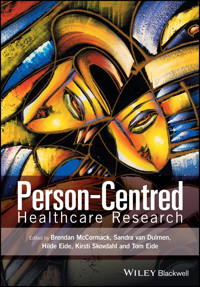
Person-Centred Healthcare Research E-Book
48,99 €
Mehr erfahren.
- Herausgeber: John Wiley & Sons
- Kategorie: Fachliteratur
- Sprache: Englisch
Person-Centred Healthcare Research
Person-Centred Healthcare Research provides an innovative and novel approach to exploring a range of research designs and methodological approaches aimed at investigating person-centred healthcare practice within and across healthcare disciplines.
With contributions from internationally renowned experts in the field, this engaging resource challenges existing research and development methodologies and their relevance to advancing person-centred knowledge generation, dissemination, translation, implementation and use. It also explores new developments in research methods and practices that open up new avenues for advancing the field of person-centred practice.
Person-Centred Healthcare Research:
- Enables students, practitioners, managers and researchers to gain a solid understanding of the complexity of person-centred thinking in research designs and methods
- Explores the theories and practices underpinning a topical subject within current healthcare practice
- Is edited by an internationally recognised team who are at the forefront of person-centred healthcare research
For more information on the complete range of Wiley nursing publishing, please visit: www.wileynursing.com
To receive automatic updates on Wiley books and journals, join our email list. Sign up today at www.wiley.com/email
This new title is also available as an e-book. For more details, please see www.wiley.com/buy/9781119099604
Sie lesen das E-Book in den Legimi-Apps auf:
Seitenzahl: 534
Veröffentlichungsjahr: 2017
Ähnliche




















Person‐Centred Healthcare Research
Edited by
Brendan McCormack
Queen Margaret University, Edinburgh, Scotland, UK
Sandra van Dulmen
NIVEL (Netherlands Institute for Health Services Research), Utrecht and Radboud University Medical Centre, Nijmegen, The Netherlands
Hilde Eide
University College of Southeast Norway, Drammen, Norway
Kirsti Skovdahl
University College of Southeast Norway, Drammen, Norway
Tom Eide
University College of Southeast Norway, Drammen, Norway.
This edition first published 2017 © 2017 by John Wiley & Sons Ltd.
All rights reserved. No part of this publication may be reproduced, stored in a retrieval system, or transmitted, in any form or by any means, electronic, mechanical, photocopying, recording or otherwise, except as permitted by law. Advice on how to obtain permission to reuse material from this title is available at http://www.wiley.com/go/permissions.
The right of Brendan McCormack, Sandra van Dulmen, Hilde Eide, Kirsti Skovdahl and Tom Eide to be identified as the authors of the editorial material in this work has been asserted in accordance with law.
Registered Office(s)John Wiley & Sons, Inc., 111 River Street, Hoboken, NJ 07030, USAJohn Wiley & Sons Ltd, The Atrium, Southern Gate, Chichester, West Sussex, PO19 8SQ, UK
Editorial OfficeThe Atrium, Southern Gate, Chichester, West Sussex, PO19 8SQ, UK
For details of our global editorial offices, customer services, and more information about Wiley products visit us at www.wiley.com.
Wiley also publishes its books in a variety of electronic formats and by print‐on‐demand. Some content that appears in standard print versions of this book may not be available in other formats.
Limit of Liability/Disclaimer of WarrantyThe contents of this work are intended to further general scientific research, understanding, and discussion only and are not intended and should not be relied upon as recommending or promoting scientific method, diagnosis, or treatment by physicians for any particular patient. In view of ongoing research, equipment modifications, changes in governmental regulations, and the constant flow of information relating to the use of medicines, equipment, and devices, the reader is urged to review and evaluate the information provided in the package insert or instructions for each medicine, equipment, or device for, among other things, any changes in the instructions or indication of usage and for added warnings and precautions. While the publisher and authors have used their best efforts in preparing this work, they make no representations or warranties with respect to the accuracy or completeness of the contents of this work and specifically disclaim all warranties, including without limitation any implied warranties of merchantability or fitness for a particular purpose. No warranty may be created or extended by sales representatives, written sales materials or promotional statements for this work. The fact that an organisation, website, or product is referred to in this work as a citation and/or potential source of further information does not mean that the publisher and authors endorse the information or services the organisation, website, or product may provide or recommendations it may make. This work is sold with the understanding that the publisher is not engaged in rendering professional services. The advice and strategies contained herein may not be suitable for your situation. You should consult with a specialist where appropriate. Further, readers should be aware that websites listed in this work may have changed or disappeared between when this work was written and when it is read. Neither the publisher nor authors shall be liable for any loss of profit or any other commercial damages, including but not limited to special, incidental, consequential, or other damages.
Library of Congress Cataloging‐in‐Publication Data
Names: McCormack, Brendan, editor. | Dulmen, A. M. van, editor. | Eide, Hilde, editor. | Skovdahl, Kirsti, 1964– editor. | Eide, Tom, editor.Title: Person‐centred healthcare research / edited by Brendan McCormack, Sandra van Dulmen, Hilde Eide, Kirsti Skovdahl, Tom Eide.Description: Hoboken, NJ : Wiley, 2017. | Includes bibliographical references and index.Identifiers: LCCN 2017026324 (print) | LCCN 2017026723 (ebook) | ISBN 9781119099611 (pdf) | ISBN 9781119099628 (epub) | ISBN 9781119099604 (pbk.)Subjects: | MESH: Patient‐Centered Care | Health Services ResearchClassification: LCC R727.3 (ebook) | LCC R727.3 (print) | NLM W 84.7 | DDC 362.1–dc23LC record available at https://lccn.loc.gov/2017026324
Cover image: © CYCV/GettyimagesCover design by Wiley
Contributors
Rigmor C. Baraas PhD, BSc (Hons)ProfessorFaculty of Health and Social SciencesUniversity College of Southeast NorwayDrammen, Norway
Chyrell Bellamy PhD, MSWAssistant ProfessorDepartment of PsychiatryYale School of MedicineNew Haven, Connecticut, USA
Stian Biong DrPH, MPH, RNProfessorFaculty of Health and Social SciencesUniversity College of Southeast NorwayDrammen, Norway
Marit Borg PhDProfessorFaculty of Health and Social SciencesUniversity College of Southeast NorwayDrammen, Norway
Espen Brembo MA, RNAssistant Professor/LecturerDepartment of Nursing and Health SciencesUniversity College of Southeast NorwayDrammen, Norway
Kristin Briseid MA (Political Science)Assistant ProfessorFaculty of Social StudiesVID Specialized UniversityNorway
Catherine Buckley PhD, MSc(Nursing), BSc (Hons), PGCert. Narrative Research, RGNPractice Development LecturerNorthridge House Education and Research Centre, St Luke’s HomeCork, Ireland
Shaun Cardiff PhD, MSc, BEd, RGNSenior LecturerSchool of People and Health StudiesFontys University of Applied SciencesThe Netherlands
Larry Davidson PhD, MA(Psy), MA(Phil)Professor of PsychologySchool of Medicine and Institution for Social and Policy StudiesYale UniversityNew Haven, Connecticut, USA
Jan Dewing PhD, MA, MN, BSc, Dip Nurs Ed, Dip Nurs, RNSue Pembrey Chair in Nursing, Director of The Centre for Person‐Centred Practice ResearchQueen Margaret UniversityEdinburgh, Scotland, UK
Janne Dugstad MSc, BSc(Hons)Director, The Science Centre Health and TechnologyFaculty of Health and Social SciencesUniversity College of Southeast NorwayDrammen, Norway
Sandra van Dulmen PhDProgramme Coordinator of Communication in HealthcareNIVEL (Netherlands Institute for Health Services Research)Utrecht, the Netherlands
Professor of Communication in HealthcareRadboud University Medical CenterNijmegen, the Netherlands
Professor IIFaculty of Health SciencesUniversity College of Southeast NorwayDrammen, Norway
Hilde Eide PhD, MA (Psy), RNProfessor in Communication and Health Counselling, Research Director, the Science Centre Health and Technology Faculty of Health and Social SciencesUniversity College of Southeast NorwayDrammen, Norway
Tom Eide PhDProfessor of Leadership, Ethics and Literature, and affiliated with the Science Centre Health and TechnologyFaculty of Health and Social SciencesUniversity College of Southeast NorwayDrammen, Norway
Lisbeth Fagerström PhDProfessorFaculty of Health and Social SciencesUniversity College of Southeast NorwayDrammen, Norway
Åbo Akademi UniversityVaasa, Finland
Elizabeth Flanagan PhD, MSResearch ScientistYale Program for Recovery and Community HealthYale UniversityNew Haven, Connecticut, USA
Elisabeth Fosse PhDProfessorFaculty of Health and Social SciencesUniversity College of Southeast NorwayDrammen, Norway
University of BergenNorway
Jon V. B. Gjelle MSc, BScPhD CandidateFaculty of Health and Social SciencesUniversity College of Southeast NorwayDrammen, Norway
Kimberly Guy CNAPeer Support Supervisor and TrainerYale Program for Recovery and Community HealthYale UniversityNew Haven, Connecticut, USA
Linda Hafskjold MA (Clinical Health Care), BSc (Radiography)PhD StudentFaculty of Health and Social SciencesUniversity College of Southeast NorwayDrammen, Norway
Lene A. Hagen MPhil, BScPhD CandidateFaculty of Health and Social SciencesUniversity College of Southeast NorwayDrammen, Norway
Gaby Jacobs PhD, MSc, PGCE, BScProfessor in Person‐Centred PracticeSchool of People and Health StudiesFontys University of Applied SciencesEindhoven, the Netherlands
University for Humanistic StudiesUtrecht, the Netherlands
Famke van Lieshout PhD, MAsc, RNLecturer and ResearcherSchool of People and Health StudiesFontys University of Applied SciencesThe Netherlands
Sylvia Määttä PhD, RNHead, Department of Quality in HealthcareWestern Region/Associate ProfessorInstitute of Health and Care SciencesUniversity of GothenburgSweden
Brendan McCormack DPhil(Oxon), RGN, RMNProfessor of Nursing/Head of The Division of Nursing and Associate DirectorThe Centre for Person‐Centred Practice ResearchSchool of Health SciencesQueen Margaret UniversityEdinburgh, Scotland, UK
Faculty of Health SciencesUniversity College of Southeast NorwayDrammen, Norway
Ottar Ness PhDProfessorFaculty of Health and Social SciencesUniversity College of Southeast NorwayDrammen, Norway
Maria O’Connell PhD, MAAssociate Professor of Psychiatry and Director of Research and EvaluationYale Program for Recovery and Community HealthYale UniversityNew Haven, Connecticut, USA
Stina Öresland PhD, RNTAssociate ProfessorDepartment of Nursing and Health SciencesUniversity College of Southeast NorwayDrammen, Norway
Hilde R. Pedersen MSc, BScPhD CandidateFaculty of Health and Social SciencesUniversity College of Southeast NorwayDrammen, Norway
Astrid Skatvedt PhDAssistant ProfessorFaculty of Social Science, Department of Sociology and Social WorkUniversity of Agder, Norway
Kirsti Skovdahl PhD, MA, BSC, RNProfessor, Programme Director of the PhD Programme in Person‐Centred HealthcareFaculty of Health and Social SciencesUniversity College of Southeast NorwayDrammen, Norway
Ingun Stang PhDAssociate ProfessorDepartment of Health, Social and Welfare StudiesUniversity College of Southeast NorwayDrammen, Norway
Vibeke Sundling PhD, MSc, BSc (Hons)Associate ProfessorFaculty of Health and Social SciencesUniversity College of Southeast NorwayDrammen, Norway
Angie Titchen DPhil(Oxon), MSc (Rehabilitation Studies), Visiting ProfessorInstitute of Nursing and Health ResearchUlster UniversityNorthern Ireland, UK
Steffen Torp PhDProfessorFaculty of Health and Social SciencesUniversity College of Southeast NorwayDrammen, Norway
Caroline Williams MSc(Nursing), PGDip(Facilitation), PGCE(FE), BSc(Nurse Practitioner), RNProfessional and Practice Development NurseHywel Dda University Health BoardWales, UK
Teatske van der Zijpp PhD, MScProgramme Lead, Technology in CareSchool of People and Health StudiesFontys University of Applied SciencesThe Netherlands
Introduction
Person‐centred healthcare research is needed for service improvement and change. The world’s first PhD programme in person‐centred healthcare has run from autumn 2014 at the Faculty of Health Sciences at the University College of Southeast Norway (previously Buskerud University College). This was the start of a journey of international collaboration at our faculty, exploring different perspectives on what person‐centred research presupposes and implies.
Patients and service users can feel vulnerable as they journey through the health system. Persons living with long‐term health conditions, like mental health, substance abuse, dementia, stroke, chronic pain or diabetes have complex care needs that challenge health systems to respond in ways that keep the person at the centre of planning and decision‐making. This challenge to person‐centredness in healthcare is global. In Norway and beyond, the political vision is to create a health service that places the person, as the user of health services, in the centre of decision‐making. The slogan is: ‘No decision about me, without me’. In order to realise such a vision, our research needs to be interdisciplinary, informed by different perspectives and pluralistic regarding methodology, theory, and philosophy.
The Editors of this book reflect such a pluralistic approach to research. They are all leaders of and contributors to the PhD programme in person‐centred healthcare at the University College of Southeast Norway. They are each passionate about research and whilst they each bring different methodological perspectives to their writing, what they share in common is a passion for ‘the person’ in health services research. The Editors, having brought together researchers from different fields and environments, encouraged new joint authorships, and together they have turned the writing of the book into an innovation process. Marvellous!
Person‐centred healthcare research is a complex phenomenon. The book stimulates reflection and may serve as a guide for researchers at all levels. The PhD programme at the University College of Southeast Norway has a growing number of students studying person‐centred healthcare from different perspectives using different methodologies. We are confident that this programme will have a significant influence on the advancement of new approaches to person‐centred research and to our understanding of person‐centredness itself – what I am sure is the beginning of a global community of person‐centred doctoral researchers and post‐doctoral researchers of the future. I am sure this book will be of great benefit to them and to all other researchers aiming at creating new knowledge to improve person‐centredness in healthcare.
Dr Heidi KapstadDean of the Faculty of Health and Social SciencesUniversity College of Southeast Norway
Foreword
International recognition is growing that person‐centred healthcare offers a remedy to a continuing crisis in healthcare – a crisis in which clinicians and patients struggle to co‐produce personalised and compassionate healthcare informed by, rather than based on, restricted scientific knowledge. Person‐centred healthcare responds positively to this problem. It puts persons first in healthcare that bridges humanism and the sciences, including research. This book shows how health research on person‐centred care can be person‐centred. The Editors – world leaders in postgraduate education on person‐centred healthcare – have unified international authors around the axial notion that research on person‐centredness is fundamentally important, yet is insufficient unless it takes place in a person‐centred manner.
Through conceptualising person‐centredness and its foundations, the book first makes the case for conducting research to rehumanise modern healthcare in ways that balance the different warrants for healthcare decision‐making. The book then suggests how to infuse this research – and, in turn, teaching, policy and practice – with assumptions, values and methodologies faithful to the philosophy of person‐centredness. Examples of person‐centred research are provided to bring to life this movement from research on person‐centredness to such research being person‐centred. Critical to the latter development is the guidance offered on using person‐centred research designs and methodologies to deepen understanding and respect the personhood of research participants and researchers alike. Thus, the book helps to fill a gap within literature on health research methods and person‐centredness. I enthusiastically commend this much‐needed and highly original volume as an interdisciplinary resource for everyone producing or using person‐centred research for health.
Associate Professor Stephen BuetowFaculty of Medical and Health SciencesUniversity of AucklandNew ZealandAssociate‐Editor, European Journal for Person‐Centered Healthcare
Introduction to Section 1
PERSON‐CENTREDNESS AND FOUNDATIONS OF PERSON‐CENTRED RESEARCH
This section of the book is concerned with the philosophical and theoretical location of person‐centred healthcare and person‐centred research. It explores the importance of person‐centred healthcare globally as well as the need for research that is undertaken through the philosophy of person‐centredness. The case for person‐centred research is made by drawing on a variety of theoretical and methodological perspectives, debating the relevance of existing methodologies and exploring research methods through a person‐centred lens. Chapters in this section also illustrate examples of these theoretical and methodological perspectives and enable the reader to consider how these can be operationalised.
1Person‐Centredness in Healthcare Policy, Practice and Research
Brendan McCormack, Sandra van Dulmen, Hilde Eide, Kirsti Skovdahl and Tom Eide
INTRODUCTION
Twentieth century (western) societies are increasingly individualised. This is not only reflected in general politics, opinions and lifestyles but also in healthcare. Partly this is a result of an increased knowledge about the human genome, allowing for more individualised treatment plans (‘personalised or precision medicine’), and partly because of scarce healthcare resources resulting in increased self‐management and more patient responsibility for their own health. A welcome side effect of this individualisation is an increased attention to the person behind the patient and, related to this, more attention to individual needs and preferences in treatment and care. This person‐centred movement is not new, but has so far been captured through discourses of patient‐centredness (in contrast to doctor‐ or disease‐centredness) and patients’ rights, which already represent important paradigm shifts in healthcare. Person‐centredness has, however, continued to develop and also incorporates concepts like positive health, well‐being and individualised care planning as well as the inclusion of the person of the healthcare provider. Person‐centredness can thus be summarised as promoting care of the person (of the totality of the person’s health, including its ill and positive aspects), for the person (promoting the fulfilment of the person’s life project), by the person (with clinicians extending themselves as full human beings with high ethical aspirations) and with the person (working respectfully, in collaboration and in an empowering manner) (Mezzich et al., 2009). Person‐centredness implies recognition of the broad biological, social, psychological, cultural and spiritual dimensions of each person, their families and communities. The person‐centred approach is closely linked to Carl Rogers’ humanistic psychology and person‐centred therapy (Rogers, 1961) with a focus on the fulfilment of personal potentials including sociability, the need to be with other human beings and a desire to know and be known by other people (the origins of person‐centredness will be further explored in Chapter 2). It also includes being open to experience, being trusting and trustworthy, being curious about the world, being creative and compassionate. This perspective has been particularly influential in the field of dementia care.
Person‐centredness has permeated all fields in healthcare. For example, person‐centred nursing has been defined as an approach to practice that is established through the formation and fostering of healthful relationships between all care providers, patients/clients/families and significant others (McCormack and McCance, 2017). It is underpinned by values of respect for persons, individual right to self‐determination, and mutual respect and understanding. Person‐centred nursing practice is about developing, coordinating and providing healthcare services that respect the uniqueness of individuals by focusing on their beliefs, values, desires and wishes, independent of age, gender, social status, economy, faith, ethnicity and cultural background and in a context that includes collaborative and inclusive practices. In addition, person‐centred nursing practice aims to plan and deliver care that takes account of the person’s context including their social context, community networks, cultural norms and material supports. Person‐centred medicine is anchored in a broad and holistic approach that is critical of the modern development of medicine, which has been dominated by reductionism, attention to disease, super‐specialisation, commoditisation and commercialism (Mezzich et al., 2009). These authors argue that this has resulted in less attention being paid to ‘whole‐person needs’ and reduced focus on the ethical imperatives connected to promoting the autonomy, responsibility and dignity of every person involved.
Changes in the delivery of healthcare services have been significant over the past 25 years. The increasing demands on emergency services, reduction in the number of available hospital beds, shorter lengths of stay, increased throughput and the erosion of Health Services’ commitment to the provision of continuing healthcare have all impacted on the way healthcare services are provided and the practice of healthcare professionals. In addition, the prevailing culture of consumerism has enabled a shift away from society’s collective responsibility for the provision of an equitable and just healthcare system to one that is based on individual responsibility, increasingly more complex models of insurance‐based services and a growth in healthcare as a private for‐profit business.
The combined effects of these strategic changes to healthcare globally, major changes to the organisation of services, a dominant focus on standardisation and risk reduction with associated limits on the potential for creative practice have all had an impact on the ability of healthcare practitioners to develop person‐centred approaches. McCormack (2001) suggested that there was a need for ‘a cultural shift in philosophical values’ in healthcare if authentic person‐centred healthcare is to be realised for all persons. The following quote from one of the participants in McCormack’s research highlighted the need for this shift:
…people need to be able to take on a different view of things and able to see a different kind of potential when the whole system is kind of set up in a particular way and how do you change it? Because you’ve got teachers and educators and you’ve got role models and supervisors and people in clinical settings who have all been socialised in this system and what I think it needs is actually a complete culture shift, a shift in philosophical values, to see people as people who have responsibility for their own health and come into a system that should not totally remove that, that kind of ownership…
Since then there have been significant developments globally in advancing person‐centred healthcare within a dominant philosophy of people as persons who have responsibility for their own health.
PERSON‐CENTREDNESS IN HEALTHCARE
The use of the term ‘person‐centred’ has become increasingly common in health and social care services at a global level. While a cynical view would argue that the term is being used as a ‘catch‐all’ for anything concerning high quality health and social care, an alternative perspective would suggest that it is representative of something more significant than this, i.e. a movement that has an explicit focus on humanising health services and ensuring that the person using health and social care services is at the centre of care delivery decision‐making. This global focus on person‐centredness has, as a consequence, resulted in a growing body of evidence supporting the processes and outcomes associated with person‐centredness in health and social care.
Holding the person’s values central in decision‐making is essential to a person‐centred approach to practice. Talking with patients and families about values and using the outcomes from these discussions as a means of evaluating how well their autonomy and self‐determination is being respected is a useful vehicle for exploring the processes of care‐giving as opposed to a focus on how well the care outcomes were achieved using, for instance, PROMS (Patient Reported Outcome Measures) and PREMS (Patient Reported Experience Measures). For example, the focus on achieving a short length of stay may not always be consistent with the values of the patient or family. In such situations, without the practitioner, patient and family clarifying their values base and its relationship to the goal of care, there is potential for conflict. The skill involved in balancing a duty of care to the patient while at the same time maintaining a focus on working with the ‘best’ evidence in care decisions is a significant challenge in person‐centred healthcare. Maintaining the person’s identity as central to care decisions and helping to maintain that in the sense of who they are in the context of their lives, i.e. their biography is a key pillar of person‐centred practice (see Chapter 9 in this book for example). Rather than removing people from their biographies which has been the dominant ideology underpinning evidence‐based practice (EBP), holding values as central allows a variety of possible ‘futures’ to emerge.
Of course, practising in this way poses challenges to healthcare practitioners who are largely educated and trained in a culture that emphasises professional control and expertise derived from autonomous decision‐making. By controlling the outcome of care, healthcare practitioners are protected from needing to face the many difficulties and challenges associated with working with the patient’s agenda – for example balancing the need for early discharge in order to maintain throughput, with the actual needs of the person. In addition, practitioners often lack the ability to appreciate the life skills that the person has because the patient is unable to demonstrate these skills in a hospital context, due to the attitudinal, organisational and socialisation constraints of healthcare organisations. Healthcare practitioners sometimes struggle to accept the choices that people might make, that is, if they had the choice to do so. Person‐centred risk‐taking is one of the biggest challenges that practitioners face in working in a person‐centred way. The challenge in accepting person‐centred risk assessment is that of balancing professional knowledge and personal knowledge, or, the blending of the professional with the personal. Healthcare practitioners need to be able to balance their technical competence and expertise and their professional caring roles with the patient’s understanding of their own well‐being and their potential future. This supports the central tenet of person‐centredness being operationalised through an interconnected relationship between practitioner and patient.
Working in a person‐centred way requires both personal bravery and supported development to make the necessary changes. Personal bravery arises from individual recognition of the need for change, often in organisational structures that do not support such openness or ongoing support of a learning culture. The healthcare educational system also needs to facilitate this development by including principles of person‐centredness in education models, creating person‐centred learning environments and developing collaborative practices between students and educators.
THE EVOLUTION OF PERSON‐CENTREDNESS
There has been a proliferation of policy‐ and strategy‐focused publications supporting the need for and development of person‐centred cultures in healthcare. The Health Foundation has been instrumental in influencing many of these strategies and for ensuring that at least at the level of health systems, people are at the centre of care:
We want a more person‐centred healthcare system, where people are supported to make informed decisions about and to successfully manage their own health and care, and choose when to invite others to act on their behalf … We want healthcare services to understand and deliver care responsive to people’s individual abilities, preferences, lifestyles and goals.
(The Health Foundation, 2015a)
The Health Foundation has produced a range of resources to enable an increased understanding of person‐centred care and to support its development in organisations (The Health Foundation, 2015b). However, despite its dominant focus on person‐centredness, the focus continues to be on ‘care’ and less on how organisations create person‐centred cultures.
The World Health Organization (WHO) has also promoted a person‐ and people‐centred approach, with a global goal of humanising healthcare by ensuring that healthcare is rooted in universal principles of human rights and dignity, non‐discrimination, participation and empowerment, access and equity, and a partnership of equals:
The overall vision for people‐centred health care is one in which individuals, families and communities are served by and are able to participate in trusted health systems that respond to their needs in humane and holistic ways…
(World Health Organization, 2007, p. 7)
Despite these notable advancements in the area of person‐centredness there is much still to be done in developing health and social care cultures towards ones that truly place people at the centre of their care in order to achieve effective and meaningful outcomes. Richards, Coulter and Wicks (2015, p. 3) suggest that it is ‘time to get real about delivering person‐centred care’ and argue that it requires a sea change in the mindset of health professionals and patients/clients alike. We would argue that a significant part of this sea change is the need to shift the discourse away from person‐centred ‘care’ per se and to promote a unified discourse of person‐centred ‘cultures’. Person‐centredness can only happen if there is a person‐centred culture in place in care settings that enables staff to experience person‐centredness and work and communicate in a person‐centred way. With a focus on person‐centred culture, we adopt the following definition of person‐centredness:
… an approach to practice established through the formation and fostering of healthful relationships between all care providers, service users and others significant to them in their lives. It is underpinned by values of respect for persons, individual right to self‐determination, mutual respect and understanding. It is enabled by cultures of empowerment that foster continuous approaches to practice development.
(McCormack and McCance, 2017, p. 3)
Developing person‐centred cultures in organisations requires a sustained commitment to practice development, service improvement and ways of working that embrace continuous feedback, reflection and engagement methods that enable all voices to be heard. This also has relevance for (person‐centred) diagnosis and clinical care. However, it is still the case that this kind of culture change is slow to be achieved and there continues to be little evidence of wide‐scale changes in health systems towards ways of working that privilege the person over organisational conformity. As Richards, Coulter and Wicks (2015, p. 3) argue, ‘the challenge remains one of overcoming “system” inertia and paternalism’. However, even though wholescale shifts in systems may be slow, it is clear that person‐centredness as a concept plays a significant role in shaping the thinking of policy makers and strategic planners in the way that health systems are evolving globally.
GLOBAL DEVELOPMENTS1
Reviewing person‐centredness, person‐centred practice and person‐centred care developments around the world, it is fair to say that there has been an abundance of activity at the micro (e.g. practice initiatives and power shifts in the consulting room) and meso (e.g. support resources and education) levels of care delivery. We also note considerable developments at a macro level (e.g. national standards) most of which focus on informing strategic developments to inform the organisation of healthcare systems. However, it is also fair to say that there is a gap (or even a gulf!) between the strategic rhetoric of person‐centredness and the realities of experience for patients, families, communities and staff.
Person‐centredness as a concept has an intuitive ‘fit’ with the thinking of most healthcare practitioners, who despite everyday challenges have an overarching desire to ‘do the right thing’ for service users, families and communities. Being person‐centred in a healthcare system that is dominated by business models of efficiency is a challenge for most practitioners. Holding the person at the centre of decision‐making, when systems increasingly focus on productivity, places person‐centredness in a precarious position in the minds of many practitioners. The mixed messages they receive about ‘what matters’, results in contradictions in determining priorities and ultimately an erosion of the quality of person‐centredness experienced by service users. As a consequence, there has been a proliferation of developments and initiatives to improve the quality of care and make it more person‐centred. Although there are ‘pockets’ of person‐centred practice developments appearing in all fields of practice, there is still a tendency to view person‐centred care as an approach that is most relevant to people living with dementia and those residing in residential care facilities. While there have been increasing developments in acute care, person‐centredness here tends to be presented either fairly generically by teams of practitioners as core to shared values and beliefs or as part of a team philosophy, or as a technical approach to designing individualistic approaches to care planning and goal achievement. However, some significant examples of positive developments can be seen around the world and these need to be celebrated and encouraged.
In Australia, Perth Home Care Services (Western Australia) and Quality Healthcare (New South Wales) take a person‐centred approach to providing homecare services for a range of clients such as those with disability or requiring dementia care, while in Tasmania a person‐centred approach is used in delivering consistent palliative and end‐of‐life care (Tasmanian Department of Health and Human Services, 2014). The Essentials of Care is a state‐wide nursing and midwifery programme in New South Wales (NSW) aimed at improving person‐centred practice using a practice development approach (New South Wales Government Health, 2015) while Victoria Health has led the way in developing a guide and toolkit for implementing and evaluating person‐centred approaches in caring for older people (Victoria State Government Department of Health and Human Services, 2012).
In Sweden, The University of Gothenburg Centre for Person‐centred Care (GPCC) has developed a model based on three ‘routines’ in practice: Routine 1, initiating a partnership – patient narrative; Routine 2, working in partnership – shared decision‐making; Routine 3, safeguarding the partnership – documenting the narrative (Ekman et al., 2011). The approach has been applied in a range of settings with evidence of improved outcomes for patients and improved system efficiencies (Ekman et al., 2011).
In The Netherlands, Vilans Dutch Expertise Centre for Long‐Term Care has produced two Whitepapers on person‐centred care in the last 2 years. The centre’s goal is to help professionals improve care for people living with long‐term conditions, vulnerable older people and people with disabilities, by providing practical guidelines and toolkits for person‐centred care as well as offering advice and workshops/training programmes for staff. They focus on stimulating self‐management, care plan development and models of shared decision‐making. The Radboud University Medical Centre model for personalised care also places the patient central by customising care so that it fits the specific biological (including genetic), psychological and social make‐up of the person. In the context of providing community nursing and supporting people to live independent lives in their own homes, the Dutch ‘Buurtzorg model’ of community nursing has achieved major international profiling. The model focuses on working in small teams of 6–12 nurses, working autonomously, working independently and having effective ICT support. Significant outcomes for patients, families and staff have been demonstrated (www.buurtzorgnederland.com). The model continues to grow and the underpinning principles are being adopted in many other countries.
The development of person‐centredness in Norway lies in the series of challenges that are faced by health and welfare services, particularly the changes in population demographics and citizens with long‐term health needs. Recommendations in several national policy documents in the mental health and substance abuse fields, in health promotion, rehabilitation, and innovation of healthcare services during the last decades have supported person‐centredness. As in other western countries, the Norwegian health and social care services have been influenced by the global economic down‐turn, being remodelled, redesigned and with an overall focus on primary care and public health. These reforms have been driven by the Norwegian Government Strategy – Coordination Reform (Norwegian Ministry of Health and Care Services, 2009). There are two central tracks for developing person‐centredness and person‐centred care in Norway; services for older people and services for persons with mental health and substance abuse problems. Within care for older people, the context has primarily been nursing homes and secondly community services. In nursing homes, nursing staff have increasingly integrated the principles and practices of person‐centred care in collaboration with other professionals. There has also been a greater focus on person‐centredness in the curriculum frameworks for nurses and other health professionals. Over the last decade, research around person‐centredness and older people has increased, with the MEDCED‐study (Testad et al., 2015) at The Centre for Care Research, Western Region as an ongoing example. Advances in more person‐centred mental health services have also emerged. In Norway, within mental health and substance abuse services, there is an increasing emphasis on person‐centredness and person‐centred practice. Human rights, recovery, empowerment and collaborative partnerships have been central areas of theoretical and practice development. The focus has been on user involvement, community support and tailored services. This new focus has influenced practice development, the curriculum frameworks for health and welfare professionals and the areas and contexts of research. In developing person‐centredness and person‐centred mental health and substance abuse care, three foci have emerged: (1) the perspective and involvement of service users; (2) recovery orientation of services; and (3) a multiprofessional and interdisciplinary context. In addition, The University College of Southeast Norway offers a PhD programme in Person‐centred Healthcare, which is the first PhD programme of this kind in the world.
In the USA, most of the developments in person‐centred care have been with older adults in long‐term care but without dementia. This seems to be because of the focus on personal choice and preference and the difficulty of translating those values into the care of the person living with dementia. However, with the mandating of person‐centred care in all Medicare and Medicaid funded nursing homes and the passing of the National Alzheimer’s Plan Act (NAPA) in 2010 (Department of Health and Human Services, 2015) it is hoped that a more consistent change will be possible. Although with only limited resources allocated to care and advocacy in NAPA, there is greater emphasis on developing person‐centredness for all older adults including those living with dementia. Unfortunately, there is a general belief amongst some providers that person‐centred approaches are not good for the financial ‘bottom line’ with the concomitant impact on the adoption of person‐centred practices. Several models of person‐centred care have developed in the USA supported and coordinated by the Pioneer Network (2012), a cooperative network of state‐ or region‐based coalitions of service providers. The Eden Alternative, Well‐Spring, and the Green House models for communal long‐term care facilities are probably the most well known and the ones that have conducted some evaluative research on outcomes for residents and staff. These models have focused a great deal on the importance of environment and in particular the arrangement of care in small groups, e.g. households within traditional nursing homes with Eden and Well‐Spring, and purpose‐built homes for small numbers of older adults. A promising research programme focused on person‐centred communication in dementia care is developing models that aim to improve the overall quality of care (Williams et al., 2016a,b,c).
At a macro level, person‐centred thinking can be seen to influence a range of national developments and initiatives. Significant investment into strategic initiatives has been made in many countries around the world focusing on breaking down barriers that prevent people from accessing services, streamlining care delivery systems, nationalising evidence to underpin practices and make care safer. Key drivers in these strategic developments have been a universal commitment to ensuring the efficiency and effectiveness of services and minimising risk. For example, in South Australia a strategic state‐wide approach has been undertaken with the release of Caring with Kindness: The Nursing and Midwifery Professional Practice Framework (South Australia Health, 2014) in September 2014. The framework aligns with the National Safety and Quality Health Service Standards (NSQHSS) (Australian Commission on Safety and Quality in Health Care, 2012), especially Standard 2 which highlights patients being placed at the centre of their own care and working in partnership. In Canada, The Alzheimer Society of Canada has initiated a ‘culture change initiative’ aimed at improving the experience of long‐term care for people living with dementia and their families, and working with others to provide useful strategies, tools and tips that can help put the principles of person‐centred care into practice (Alzheimer Society Canada, 2014). The work includes federally and provincially funded collaborative projects focused on education and training related to the principles and practices of person‐centred care within home care and residential long‐term care settings. In England the ‘personalisation agenda’ (Department of Health, 2010) in health and social care is a driving force for person‐centred developments. In Northern Ireland, within nursing and midwifery, there has been an explicit focus on person‐centredness at a strategic level (Department of Health and Social Service and Public Safety, 2010). The theoretical development of a model for person‐centred practice, which emerged from original research undertaken in Northern Ireland (McCormack and McCance, 2006, 2010, 2017), has influenced the discourse on developing person‐centredness in practice. This has been further enhanced through a strategic shift in the country to an increased focus on improving the patient experience. One key initiative that has shaped this agenda was development of a set of standards aimed at improving the patient and client experience and a framework for measurement (Department of Health and Social Service and Public Safety, 2008). The focus on improving the patient experience is now recognised within the national commissioning directions as a priority for care delivery. This has provided increased impetus to embed a positive care experience at organisation and practice levels that reflects principles of person‐centredness.
Person‐centredness and person‐centred care are at the heart of government health and social care policy in Scotland. The Healthcare Quality Strategy for NHS Scotland (Scottish Government, 2010) set out a clear vision and strategy for the development of a health service that is world leading and built on principles of care and compassion:
…What will make Scotland a world leader will be the combined effect of millions of individual care encounters that are consistently person‐centred, clinically effective and safe, for every person, all the time…
(Scottish Government, 2010, p. 1)
This strategy set the direction for an ongoing programme of work that has focused on developing services that meet the needs of patients as persons and ensuring that care systems prioritise individual need. The ‘Person‐Centred Health and Care Collaborative’ has been a key platform of this activity managed through Healthcare Improvement Scotland (the government organisation responsible for healthcare improvement). This is a key part of a Scotland‐wide programme of work aimed at improving health and care services so that they are focused on people, their families and carers. A variety of activities have happened through the Collaborative including learning events, online communities for discussion and debate, conferences and innovation ‘cafés’ as well as the development of a number of tools for person‐centred care, such as the ‘Five Must Do With Me Areas’. The Person‐Centred Health and Care Collaborative has been a significant driving force behind many changes across the health system, including patient/client feedback systems, the development of quality standards, the education of all staff about person‐centred approaches and of course influencing policy and everyday practices. In 2015, Scotland moved towards a fully integrated health and social care system and while this change is in itself a person‐centred one, it also creates a range of new opportunities for extending the significance and reach of person‐centred programmes of work.
In Malaysia, informed by the WHO policy framework for people‐centred healthcare, services are being re‐organised around people’s need and expectations to make them more socially relevant and responsive, while producing better outcomes (World Health Organization, 2007). The Malaysian approach focuses on patients being empowered to and engaged in making decisions about their own healthcare with a particular focus on determining their own health outcomes. The Ministry of Health, Malaysia aims to ‘help people to take individual responsibility and positive action for their health’ and health providers are urged to enable people to participate in their own healthcare management, for example, by giving people treatment information and choices. The mission of the Ministry of Health, is to build a partnership for health, to facilitate and support people to attain fully their potential in health, motivate them to appreciate health as a valuable asset and take positive action to improve further and sustain their health status to enjoy a better quality of life. The translation of these strategies and policies into everyday practice is at a very early stage of development, but the potential of these developments to influence other countries of low to mid‐range economic standing is significant.
The Institute of Health Improvement has been a significant player in promoting a strategic person‐centred agenda and its focus on person‐ and family‐centred care includes:
developing care pathways that are co‐designed and co‐produced with individuals and their families;
ensuring that people’s care preferences are understood and honoured, including at the end of life;
collaborating with partners on programmes designed to improve engagement, shared decision‐making, and compassionate, empathic care; and
working with partners to ensure that communities are supported to stay healthy and to provide care for their loved ones closer to home (
http://www.ihi.org/Topics/PFCC/Pages/Overview.aspx
).
However, evidence of sustainability of strategic initiatives to improve patient and family experiences continue to be lacking after 10 years of developments in this field. This lack of evidence of the sustainability of strategic developments highlights the challenges of translating person‐centred policy and strategy into everyday practice. The extent to which the world of person‐centredness has learned from other areas of work such as knowledge translation and implementation science is questionable, and it appears that in many cases the same mistakes continue to be made regarding ‘how to get evidence into practice’. Some commentators have suggested that the service improvement and patient safety strategies have over‐relied on ‘data’ to inform developments and neglected the importance and potential impact of relationships (cf. Martin, McKee and Dixon‐Woods, 2015). Given the significance of relationships in person‐centred theory this is indeed a significant ‘oversight’ and highlights the mismatch that sometimes exists between the conceptual and theoretical underpinnings of person‐centredness and strategic developments in the field.
RESEARCH AND PERSON‐CENTREDNESS
These global developments in person‐centredness pose high demands on patients as well as healthcare providers. Research is needed to find the best and most effective ways to practise person‐centredness. Research into person‐centredness has increased significantly over the past 15 years. This is also noticeable in the launch of new scientific journals in this field, e.g. the International Journal of Person Centered Medicine (IJPCM) and the European Journal for Person Centered Healthcare. In these and other journals, published evidence has offered clarity to the meaning of the terms personhood and person‐centredness (Dewing, 2004; Slater, 2006; Leplege et al., 2007; Edvardsson, Fetherstonhaugh and Nay, 2010; McCormack and McCance, 2017) and offered insights into the cultural and contextual challenges associated with implementing a person‐centred approach (McCormack et al., 2008; McCormack and McCance, 2010; McMillan et al., 2010; McCance et al., 2013; Yalden et al., 2013), the development of frameworks such as the Authentic Consciousness Framework (McCormack, 2003), the Senses Framework (Nolan et al., 2004), the Person‐Centred Nursing Framework (McCormack and McCance, 2010), The Person‐centred Practice Framework (McCormack and McCance, 2017) and Person‐Centred Leadership Frameworks (Lynch, McCormack and McCance, 2011; Cardiff, 2016) alongside the application and testing of these frameworks in practice (Ryan et al., 2008; McCance et al., 2010; McCormack et al., 2010a,b; McCormack, Dewing and McCance, 2011; Lynch, 2016). In addition, much more emphasis has been placed on outcome evaluation, including the development of tools to evaluate the relationships between person‐centred processes and outcomes (Slater, McCormack and Bunting, 2009; McCormack et al., 2010a; Smith et al., 2010; Denford et al., 2014; Slater, McCance and McCormack, 2015) and the relationship between person‐centred care and particular health outcomes (van Dulmen, 2011; Ekman et al., 2012; Olsson, 2014; Hansson et al., 2015). There is, however, still much to be achieved in furthering outcome evaluation and this need was highlighted by the Health Foundation (de Silva, 2014) when the existence of 176 validated tools for evaluating person‐centred care were reported, few of which were direct measures and all of which were proxies for person‐centredness. Noteworthy too is the recently published state‐of‐the‐art report from the Health Foundation, titled ‘The State of Play in Person‐Centred Care: A Pragmatic Review of How Person‐Centred Care is Defined, Applied and Measured’ (Harding, Wait and Scrutton, 2016).
The examples of research that have an explicit focus on person‐centredness reflect a growing movement in healthcare that has been generally referred to as ‘the humanising of healthcare’. This is particularly significant in the world of medical practice, where the discourse of person‐centred medicine is being given greater voice in the literature. Person‐centred medicine places a particular focus on the centrality of the person and a challenge to the dominant Cartesian philosophy of reductionism and duality that has so heavily influenced medical teaching, research and practice throughout history – and as a consequence has influenced healthcare more generally. The focus on humanising medicine and healthcare is a challenge to such dualistic perspectives and instead places the significance of the person as a holistic being as the point of departure for decision‐making, engagement and practice. Paying attention to the being of the person requires a more eclectic knowledge base by practitioners and an ability to contextualise knowledge in the life‐world of the person. Shahar (2014) argues that while there is a growing focus on person‐centredness and the centrality of the person, the reality is that many clinicians have lost the ability to connect with the personhood of persons and lose what they have learned about this in the transfer from the classroom to daily clinical care. While this is a particularly pessimistic perspective that Shahar offers, it is our contention that increasing numbers of doctors and other healthcare professionals are committed to a person‐centred approach to their practice and are trying to find creative solutions to the challenges that Shahar poses. As we have already identified, there is a growing evidence base to guide us towards approaches to being person‐centred in practice.
Person‐centred practitioners do not focus on the resolution of individual and disconnected problems. Instead, they focus on the individual person’s overall condition and coping resources through processes of ‘negotiation’ and ‘informed flexibility’ (McCormack and McCance, 2017). Focusing on their agendas rather than those of the practitioner or system facilitates person‐centred decision‐making (cf. Ekman et al., 2011). This can be supported by eHealth and patient participatory designs (cf. van Bruinessen et al., 2014). Engagement happens at a pace appropriate to the coping resources of individual patients and their perspectives on care practices. They further articulate an ability to engage at a level appropriate to the individual patient and are open to deal with the circumstances presented in the particular




