


193,99 €
Mehr erfahren.
- Herausgeber: John Wiley & Sons
- Kategorie: Wissenschaft und neue Technologien
- Sprache: Englisch
Phloem: Molecular Cell Biology, Systemic Communication, Biotic Interactions is a timely collection of research on the cellular and molecular biology of this plant vascular tissue. Recent advances in phloem research have revealed the centrality of this plant tissue to whole plant development and physiology. Building on advances made through developments of new analytical technologies, this book will provide readers with a current and comprehensive reference on the role of phloem in plant growth and development. Collecting the work of a global team of leading researchers, Phloem will provide the reader with a valuable synthesis of the latest research in a single volume.
Sie lesen das E-Book in den Legimi-Apps auf:
Seitenzahl: 949
Veröffentlichungsjahr: 2012
Ähnliche




















Contents
Cover
Title Page
Copyright
Contributors
Section A: Introduction
Chapter 1: Phloem, the Integrative Avenue
Chapter 2: Cell Biology of Sieve Element–Companion Cell Complexes
Development of the Sieve Element–Companion Cell Complex
Symplastic Connections to and within the Phloem
Other Specialized Features of Sieve Elements
Transport between Sieve Element and Companion Cell
Future Directions
Chapter 3: Fundamentals of Phloem Transport Physiology
What's In?—Constituents and Their Concentrations in Sieve-Tube Sap
Propulsion of a Nutrient Enriched Sap through Sieve Tubes—Pressure Flow and Its Physiological Implications
Phloem Loading in Collection Phloem
Transport Phloem—the Multitasker
Release Phloem—Letting Go of the Translocation Stream
Pressure Flow—Integrating Collection, Transport, and Release Phloem Functions
Future Directions
Acknowledgments
Section B: Functional Aspects of Structural SE Components
Chapter 4: Roles of Plasma Membrane Transporters in Phloem Functions
Membrane Transporters and Loading of Resources in Collection Phloem
Transport Phloem: A Plurality of Membrane Transport Functions
Letting Go: Membrane Transporters Participate in Phloem Unloading of Resources
The Dark Side: Ferrymen Transporting Toxic Elements or Compounds
Phloem Transporters Engaged in Signal Transmission
Future Directions
Acknowledgments
Chapter 5: Regulation of Sucrose Carrier Activities
Functional Characteristics of Sucrose Transporters
Cellular and Subcellular Localization of Sucrose Transporters Involved in Sucrose Uptake by Sieve Tubes
Subcellular Localization of Sucrose Transporters
Regulation of Sucrose Transporters
Sucrose Sensing and Signaling
The Role of Sucrose Transporters Outside the Phloem: Sucrose Transport and Pollen Development
Future Directions
Chapter 6: Cellular Basis of Electrical Potential Waves along the Phloem and Impact of Coincident Ca2+ Fluxes
Electrical Long-Distance Signals in Higher Plants
EPWs Trigger Ca2+ Influx via Diverse Ca2+ Permeable Channels into Sieve Elements
Electropotential Waves, Sieve-Element Cell Biology and Whole-Plant Responses
Future Directions
Chapter 7: Sieve Element Occlusion
Callose
P-Proteins
Sieve Plate Pore Occlusion: A Concerted Effort?
Future Directions
Section C: Long-Distance Signaling
Chapter 8: Sieve Elements: Puzzling Activities Deciphered through Proteomics Studies
Methods Used to Collect Sieve-Tube Sap
Overview of Sieve-Tube Sap Composition
Sieve-Tube Sap Proteome: An Integral Component of the Plant Communication System
Metabolic Activities Reveal Oxygen Status of Phloem Tissues
The Phloem Plays a Key Role in Plant Defense
Structural Components of Sieve Elements
Future Directions
Acknowledgments
Chapter 9: Endogenous RNA Constituents of the Phloem and Their Possible Roles in Long-Distance Signaling
Methods for Identifying Phloem RNAs
RNAs Identified in Sieve-Tube Sap
Methods for Studying RNA Transport in Sieve Tubes
Evidence for RNA Movement and Possible Functions of Phloem-Mobile RNAs
Import and Transport Mechanism of Phloem-Mobile RNAs
Future Directions
Acknowledgments
Chapter 10: The Effect of Long-Distance Signaling on Development
The Protein of FLOWERING LOCUS T Functions as the Mobile Floral Signal
Full-Length mRNA as a Long-Distance Signal
Mobile GAI RNA
The Long-Distance Transport of a BEL1-like mRNA Regulates Tuber Development
Future Directions
Acknowledgments
Chapter 11: Plant Defense and Long-Distance Signaling in the Phloem
Responses to Long-Distance (Systemic) Signaling
Phloem-Mobile Defense Signals
Future Directions
Acknowledgments
Section D: Biotic Interactions with the Phloem
Chapter 12: Role of Phloem Metabolites in Plant Defense
Sieve-Tube Sap Provides Both Food and Fight
Defense Strategies and Specialized Phloem Anatomy
Polyphenolic Phloem Parenchyma Cells
Multicell Models for the Biosynthesis and Accumulation of Defense Compounds
Glucosinolates
Alkaloids
Future Directions
Chapter 13: Viroids and Phloem-Limited Viruses: Unique Molecular Probes of Phloem Biology
Plant Viruses: Parasites of the Host Plant Translational Machinery
Closteroviridae and Luteoviridae: Phloem-Limited Viruses
Virus Interaction with Phloem Cells
Molecular Biology of Virus Movement
Phloem-Limited Viruses and Symptom Development
Viroids, Parasites of the Host Plant Transcriptional Machinery
Viroid Interaction with Phloem Cells
Future Directions
Chapter 14: Phytoplasmas and Spiroplasmas: The Phytopathogenic Mollicutes of the Phloem
Biology of Spiroplasmas and Phytoplasmas
Spiroplasmas and Phytoplasmas: Expert Colonizers of the Phloem
Molecular Mechanisms Underlying the Virulence of Spiroplasmas and Phytoplasmas in Plants
Future Directions
Acknowledgments
Chapter 15: Breaching the Sieve Element—The Role of Saliva as the Molecular Interface between Aphids and the Phloem
Aphid Saliva—Production, Secretion, and Composition
Aphids Manipulate Sieve Element Occlusion
Salivary Proteins: Modifiers of Ingestion and the Sieve Element Environment
Future Directions
Chapter 16: Behavioral and Molecular-Genetic Basis of Resistance against Phloem-Feeding Insects
Immunity, the Basis of Insect Resistance in Plants
Electropenetration Graph Analysis: A Tool to Define Host Plant Resistance Mechanisms Against Phloem-Feeding Insects
Genetic Resistance against Phloem-Feeding Insects
Whitefly Resistance
Future Directions
Acknowledgments
Index
This edition first published 2013 © 2013 by John Wiley & Sons, Inc.
Wiley-Blackwell is an imprint of John Wiley & Sons, formed by the merger of Wiley's global Scientific, Technical and Medical business with Blackwell Publishing.
Editorial offices: 2121 State Avenue, Ames, Iowa 50014-8300, USA The Atrium, Southern Gate, Chichester, West Sussex, PO19 8SQ, UK 9600 Garsington Road, Oxford, OX4 2DQ, UK
For details of our global editorial offices, for customer services and for information about how to apply for permission to reuse the copyright material in this book please see our website at www.wiley.com/wiley-blackwell.
Authorization to photocopy items for internal or personal use, or the internal or personal use of specific clients, is granted by Blackwell Publishing, provided that the base fee is paid directly to the Copyright Clearance Center, 222 Rosewood Drive, Danvers, MA 01923. For those organizations that have been granted a photocopy license by CCC, a separate system of payments has been arranged. The fee codes for users of the Transactional Reporting Service are ISBN-13: 978-0-8138-0349-4/2012.
Designations used by companies to distinguish their products are often claimed as trademarks. All brand names and product names used in this book are trade names, service marks, trademarks or registered trademarks of their respective owners. The publisher is not associated with any product or vendor mentioned in this book. This publication is designed to provide accurate and authoritative information in regard to the subject matter covered. It is sold on the understanding that the publisher is not engaged in rendering professional services. If professional advice or other expert assistance is required, the services of a competent professional should be sought.
Library of Congress Cataloging-in-Publication Data
Phloem: molecular cell biology, systemic communication, biotic interactions / edited by Gary A. Thompson, Aart J.E. van Bel. p. cm. Includes bibliographical references and index. ISBN 978-0-470-95860-5 (hardcover : alk. paper) 1. Phloem. 2. Sieve elements. 3. Plant molecular biology. 4. Plant cell interaction. 5. Plant-pathogen relationships. 6. Growth (Plants) 7. Plants–Development. I. Thompson, Gary A. (Gary Allen), 1955– II. Bel, Aart Jan Eeuwe van, 1943– QK725.P44 2012 575.4′52–dc23 2012010722
A catalogue record for this book is available from the British Library.
Wiley also publishes its books in a variety of electronic formats. Some content that appears in print may not be available in electronic books.
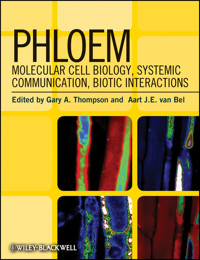
Cover images: False-color confocal laser scanning images of phloem cells in intact plants. Upper left: CMEDA/CMFDA-stained sieve element (reddish) and two companion cells, Upper right: At the right-hand side of the picture, two consecutive sieve elements (blue) each with a companion cell in a staggered position. The lower sieve element contains an arrowhead-shaped forisome (green colored) near the sieve plate (not visible). The other longitudinal cells are phloem parenchyma cells. Lower left: ER-Tracker Green-stained intact phloem tissue. At the left-hand side of the picture a sieve element (black with blue traces of ER near the sieve plate) and a companion cell (blue and green). At the right-hand side, the ends of two adjacent phloem parenchyma cells with a broad margin of cytoplasm (green and white). Lower right: Same picture as upper right with a different false-color setting. Courtesy of Dr. Jens B. Hafke Cover design by Matt Kuhns: [email protected]
Contributors
Anja BuhtzCentro de Biotecnología y Genómica de Plantas (CBGP), UPM-INIA, SpainJames C. CarolanDepartment of Biology, National University of Ireland Maynooth, IrelandSylvie DinantInstitut Jean-Pierre Bourgin, INRA-AgroParisTech, FranceBiao DingDepartment of Molecular Genetics, The Ohio State University, USAPeter J. FacchiniDepartment of Biological Sciences, University of Calgary, CanadaBryce W. FalkDepartment of Plant Pathology, University of California, USAFrank GaupelsInstitute of Biochemical Plant Pathology, Helmholtz Zentrum München, GermanyJens B. HafkeInstitut für Allgemeine Botanik, Justus-Liebig-University, GermanyJillian M. HagelDepartment of Biological Sciences, University of Calgary, CanadaDavid J. HannapelDepartment of Horticulture, Iowa State University, USASaskia A. HogenhoutCell and Developmental Biology, The John Innes Centre, UKJulia KehrCentro de Biotecnología y Genómica de Plantas (CBGP), UPM-INIA, SpainMichael KnoblauchSchool of Biological Sciences, Washington State University, USAChristina KühnInstitut für Biologie, Pflanzenphysiologie, Humboldt Universität, GermanyWilliam J. LucasDepartment of Plant Biology, University of California, USAAllyson M. MacLeanCell and Developmental Biology, The John Innes Centre, UKDaniel MullendoreSchool of Biological Sciences, Washington State University, USAAkpevwe OnoyovwiDepartment of Biological Sciences, University of Calgary, CanadaJohn W. PatrickSchool of Environmental and Life Sciences, The University of Newcastle, AustraliaYong-Ling RuanSchool of Environmental and Life Sciences, The University of Newcastle, AustraliaLucy R. StewartUSDA-ARS, Department of Plant Pathology, The Ohio State University, USAMechthild TegederSchool of Biological Sciences, Washington State University, USAGary A. ThompsonCollege of Agricultural Sciences, Pennsylvania State University, USAAart J.E. van BelInstitut für Allgemeine Botanik, Justus-Liebig-University, GermanyA. Corina VlotInstitute of Biochemical Plant Pathology, Helmholtz Zentrum München, GermanyLinda L. WallingDepartment of Botany and Plant Sciences, University of California, USARosemary G. WhiteCSIRO Plant Industry, AustraliaTorsten WillDepartment of Applied Entomology, Justus-Liebig-University, GermanyThomas L. WilkinsonSchool of Biology and Environmental Science, University College Dublin, IrelandEdward C. YeungDepartment of Biological Sciences, University of Calgary, CanadaSection A
Introduction
1
Phloem, the Integrative Avenue
Aart J.E. van Bel1 and Gary A. Thompson2
1Institut für Allgemeine Botanik, Justus-Liebig-University, Germany 2College of Agricultural Sciences, Pennsylvania State University, USA
By the end of the nineteenth1 century, plant biologists recognized the paramount importance of phloem transport for plant growth. They suspected that plant growth strongly relies on the phloem-mediated supply of photosynthates and other organic compounds. These initial studies culminated in 1930 with the pressure flow hypothesis proposed by Ernst Münch, which offered a solid theoretical and unifying platform to understand the fundamental mechanism of phloem translocation. For decades following the general acceptance of Münch's concept, phloem research predominantly focused on the movement and distribution of photoassimilates. Source supply and sink demand combined with the concepts of donor and receiver organs were seen as key factors in determining plant productivity and, hence, the agricultural yield.
The field of phloem physiology became well established as new tools were developed that allowed researchers to quantifiably measure translocation and to visualize the phloem tissue at high resolution. Many studies of photoassimilate movement throughout the plant were conducted using 14C-labeled carbohydrates. These approaches were widely used in the 1970s and early 1980s to learn about carbohydrate metabolism and sugar carrier activities in source and sink tissues. From the 1960s, transmission electron microscopy provided views unparalleled at the time into the ultrastructure of phloem cells. Great strides were made in detailing the variation and development of sieve element–companion cell complexes and other phloem cell types in different plant taxa. However, the challenges associated with cellular preservation were recognized as limiting factors in obtaining a reliable view of this dynamic tissue.
New tools associated with molecular biology and genomics combined with significant advances in real-time microscopy rejuvenated phloem physiology. Identifying and manipulating the genes encoding phloem-specific proteins were only initial steps leading to comprehensive cataloging of genes, proteins, and metabolic components of the phloem. Advances in cell biology, such as development of molecular makers combined with new fluorescent tagging technologies, micromanipulation, and confocal microscopy, have provided new levels of resolution that continue to contribute to our understanding of this tissue.
The discoveries enabled by molecular approaches are now being combined with the tools of physics and chemistry to address the complex physiological questions that have been posed by investigators for many decades. Understanding physical forces such as the thermodynamics of membrane transport and quantification of parameters such as the transporter density and their turnover rates relies on integrated approaches. Unraveling complex signaling and metabolic networks within the phloem during plant development, and as plants interact with the environment, will only be resolved by using all available tools and continually developing new analytical approaches.
This book is intended to showcase the advances in our understanding of phloem biochemistry, molecular biology, physiology, and interactions with other living organisms as we continue in the second decade of the twenty-first century. One notable feature of the book is the considerable and intended overlap that occurs among the chapters, which is further demonstration of the integrated nature of the topics and the work that is ongoing at this point in time.
The text is divided into four sections: the first section is an introductory overview composed of three chapters designed to provide a contextual framework for chapters in the subsequent sections. Chapter 2 (White) focuses on the intimate relationships that occur between sieve elements and companion cells. Sieve element–companion cell (SE–CC) complexes are the modular components of sieve tubes that are symplasmically connected to one another, yet relatively isolated from surrounding cells along most of the transport path. Plasmodesmata (PD) in the nascent sieve plates located between successive SEs transform into sieve pores with large functional diameters, establishing a contiguous, living conducting sieve-tube conduit. Simultaneously, SEs detach fully from the surrounding cells with exception of the companion cells, to which they become linked by pore–plasmodesma units (PPUs). CCs have a reduced connectivity to phloem parenchyma cells by a low number of optically conventional plasmodesmata. This plasmodesmal configuration is thought to create an exclusive trafficking system for a diversity of substances between SEs and CCs. In the relatively short stretches of collection and release phloem, plasmodesmal connectivity between CCs and phloem parenchyma cells strongly varies among species. In collection phloem, the symplasmic connectivity varies by a factor of 1000; in release phloem, there is abundant symplasmic connection between SEs and surrounding cells.
Chapter 3 (Patrick) reflects on the diverse structural frameworks in which SE–CCs are embedded and, in which, SE–CC specialization gives rise to different functions in the successive collection, transport, and release phloem sections. In sources (mostly green leaves), the collection phloem accumulates an arsenal of biochemical substances among which carbohydrates predominate. In main veins of stems and roots, balanced accumulation and release by SE–CCs in transport phloem facilitates development of cambial tissues, maintenance of mature cells in transport organs, and exchange of compounds with the surrounding cells. In terminal sinks (e.g., shoot and root apices, flowers, fruits, seeds), release phloem delivers materials to the target organs. This general structure and organization of the phloem is responsible for mass flow and concerted action among the organs.
The second section explores the structural and functional relationships of SE components. Revealing the diversity and nature of associated and integral membrane proteins along with mapping their location has tremendously contributed to the fundamental understanding of phloem physiology. Chapter 4 (Tegeder, Ruan, and Patrick) provides an overview of the progress in understanding membrane transporters. A wealth of carriers facilitates the transfer of sucrose, the primary carbohydrate transported in many plant species, in particular fast-growing herbaceous plants of the temperate zones. Moreover, membrane-bound translocators for hexoses, raffinose-related sugars and sugar alcohols are responsible for distribution of carbohydrates and are part of a plant-wide carbohydrate-controlled communication network. Because sucrose is the principal energy-carrying compound for long-distance transport, the control mechanisms behind sucrose processing could be more elaborate than those for other compounds. Chapter 5 (Kühn) discusses the machinery behind the membrane transfer of sucrose and the complicated regulatory mechanisms, of which details are beginning to emerge, that appear to be responsible for fine-tuning of sucrose carrier activities.
Plasma membrane ion channels also play a pivotal role in phloem function. Chapter 6 (Hafke and van Bel) shows that a large variety of ion channels are involved in ion uptake and release as well as counterbalancing the electrical consequences of carbohydrate uptake and in propagating electrical signals. Electrical signaling in plants largely diverges from that in animals. In plants, the ions involved are K+, Cl−, and Ca2+ rather than K+ and Na+, and energy for ion exchange is provided by proton pumps rather than Na+/K+ pumps. In contrast to animals, moreover, where minor amounts of ions are exchanged along the path to influence targets at the end of the propagation pathway, electrical propagation in plants displaces large amounts of ions along the pathway. In particular, Ca2+ ions are presumed to trigger a variety of intracellular cascades.
The cellular basis of sieve pore occlusion and its effect on mass flow is discussed in Chapter 7 (Knoblauch and Mullendore). Mass flow calculations are still not entirely conclusive, in particular for low-concentration solutes. One reason for the inaccuracies could be the exchange of solutes between sieve tubes and adjacent cells. Their exchange rates determine the amount of each individual solute in the solvent flow. Partial occlusion of sieve pores in intact plants as well as the nonuniform diameters of sieve tubes and sieve pores could also invalidate mass flow calculations. Furthermore, inconsistencies in the calculations could be linked to lateral exchange between parallel sieve tubes, possibly via lateral sieve plates, transporting in opposite directions.
The third section of the book focuses on long-distance signaling via the phloem. Work in the past decade revealed the phloem as the key integrator of genetic, developmental, and physiological responses that are conveyed over long distances throughout the plant. Signaling molecules, including proteins and RNAs, transported in the sieve-tube sap appear to be distributed over long distances. Chapter 8 (Dinant and Lucas) presents a comprehensive overview of the soluble proteins identified in sieve tubes and their potential functions. A surprisingly large proteome composed of hundreds of proteins has been identified in sieve-tube exudates. Important classes of proteins appear to assist in PPU-trafficking of both proteins and RNAs and have roles in maintaining protein stability as well as degradation. Proteins impact a variety of putative signaling pathways and regulate the oxidative status of the phloem. Sieve-tube sap appears to be replete with proteins involved in responses to biotic and abiotic stresses. Classical structural phloem proteins are joined by structural components of the translational machinery that perform puzzling functions in the highly modified conducting elements that by all accounts seem to lack ribosomes.
The transformative discovery of RNA in sieve-tube exudates along with putative large protein–RNA complexes that could bind and convey RNA species over long distances emphasize the integrated nature of macromolecules in the phloem. Chapter 9 (Kehr and Buhtz) critically reviews recent developments in the rapidly expanding area of RNA biology within in the solute stream. Several RNA species have been detected, each with a specific spectrum of tasks. Messenger RNAs (mRNA) in sieve-tube sap could intervene in metabolism and protein synthesis in distant cells. Nonprotein coding RNAs including ribosomal RNAs (rRNA) and transfer RNAs (tRNAs) also have been identified in sieve-tube exudates. Regulatory small RNAs (smRNA), including short-interfering RNAs (siRNA) and micro RNAs (miRNA) appear to be common and can have diverse roles in affecting plant development and responses to biotic and abiotic stresses.
The elaborate signaling system, composed of proteins and RNAs translocated from source organs via the phloem, impacts differentiation of growing zones to mediate developmental processes. Several case studies are presented in Chapter 10 (Hannapel) describing how phloem transport of macromolecules affects development in remote meristems. Flower induction has been a prominent and long-standing example of this mechanism. The identity of the enigmatic floral activator, florigen, was discovered to be a protein expressed by FLOWERING LOCUS T. A second case study examines the evidence for a phloem–mobile ribonucleoprotein complex that mobilizes mRNAs, affecting the gibberellic acid signaling pathway. The final case study reveals that mRNA encoding the BEL5 transcription factor is transported from leaves to the tips of stolons to activate the formation of potato tubers.
Chapter 11 (Gaupels and Vlot) provides an in-depth view into the challenging world of unraveling stress responses that are perceived locally, yet enhance systemic resistance in distant tissues by transmitting signaling compounds through the phloem. Topics such as the systemic wound response, systemic acquired resistance, and systemic acquired acclimation are coupled with an analysis of their associated systemic signals in response to biotic or abiotic stresses. Given the enormous diversity of candidates, the quest to identify more than a few stress signaling compounds continues to challenge researchers. Signaling can depend upon cell-specific information cascades operating in parallel or antagonistically that can be intertwined by reciprocal amplification and weakening along the phloem pathway.
The fourth and final section of the book demonstrates that sieve tubes not only provide avenues for integrative signaling but also offer rich resources and a transport system that is often exploited by other living organisms. The spectrum of organisms that successfully interact with plant vascular systems have evolved complex biochemical, structural, and in some cases behavioral mechanisms to exploit this nutrient-rich resource while coping, often unsuccessfully, with plant defense responses. Chapter 12 (Hagel, Onoyovwi, Yeung, and Facchini) sheds light on the secondary metabolism of phloem, which is a largely unexplored yet intriguing field in plant biology. In many plant species, sieve tubes contain repellents or toxic substances to combat animal predators. The cooperation between various cell types in phloem and intercellular trafficking among associated tissues is often required to synthesize these chemical deterrents. Specialized phloem structures such as latex-exuding laticifers and resin ducts provide physicochemical barriers as a significant line of defense against herbivores.
Many of the interactions that occur among phloem cells and associated tissues were initially revealed by studying phloem-mediated virus movement during systemic infections. Chapter 13 (Stewart, Ding, and Falk) focuses on the interrelations of viruses and viroids with the phloem in higher plants. Plant viruses utilize sieve tubes for systemic movement. Viruses that replicate in parenchyma cells encode specialized viral movement proteins that modify plasmodesmata to facilitate their intercellular movement into sieve tubes. In contrast, phloem-limited viruses are injected directly into sieve tubes or companion cells by phloem-feeding insects and multiply exclusively in phloem cells. Why these viruses remain confined to the phloem is not understood but indicates that PPUs and PDs between SE–CC and phloem parenchyma are of a different molecular nature. Specialization of these cellular connections is further demonstrated by viroids that also interact with the phloem but are able to pass this barrier during systemic infections.
Phytoplasms and spiroplasms are two fascinating groups of microbes that were recently discovered in sieve tubes. Chapter 14 (MacLean and Hogenhout) is one of the first reviews on the relationships between these fascinating bacterial organisms and the phloem. These unusual prokaryotes are inserted by phloem-feeding insect vectors directly into sieve tubes where they are transported into sink tissues to establish systemic infections. Several key metabolic pathways are lacking in these organisms and as a consequence, they rely heavily on the assimilate stream in the phloem to provide adequate nutrition. While effector proteins secreted directly into sieve tubes by these miniscule bacteria have significant effects in altering plant development and morphology, host plants appear to have defense mechanisms that can limit the development of the disease.
Phloem-feeding insects are a spectacular example of structural, biochemical, and physiological adaptation to parasitize the vascular tissues of plants. Most of these insect taxa utilize their highly modified mouthparts, called stylets, to penetrate through the weak pectin lamellae inside cell walls, puncturing and ultimately feeding from the sieve tubes. Chapter 15 (Will, Carolan, and Wilkinson) discusses the integral role of aphid saliva as the molecular interface between the insect and plant. Two types of saliva are involved aphid probing: gel saliva forms a flexible, lubricating, protective tube around the stylet tip during cell wall penetration, whereas aqueous saliva is secreted after cell puncture. Both saliva types are likely responsible for molecular interactions with host plants. Components of the aqueous saliva are only now becoming fully characterized; some molecules aid in establishing an effective feeding environment, while others could serve as a likely source of molecular effectors that trigger plant resistance.
The coevolution of plants and phloem-feeding insects has resulted in sophisticated biochemical and genetic mechanisms that govern their interactions. Genetic mechanisms that confer resistance to phloem-feeding insects are reviewed in Chapter 16 (Walling and Thompson). Insects inject virulence factors contained within their saliva that overcome the plant's innate immune response to establish a compatible interaction. Plant resistance (R) proteins are able to perceive and counteract the virulence factors allowing the perception of the insect and activating defenses that confer resistance to the phloem-feeding insect. Significant advances have been made in understanding R gene-mediated resistance against phloem-feeding insects and the deployment of signaling cascades to induce defense molecules.
In conclusion, phloem research has made a quantum leap forward since the publication of the classic phloem textbooks. While some of the questions in phloem physiology have been solved, new challenges continually emerge. Novel developments in research show that the phloem provides a plant-wide communication system that unites the capabilities of nervous, hormonal, and blood systems in animals.
1.Abbreviations:14C, carbon-14; Ca2+, calcium; CC, companion cell; Cl−, chloride; K+, potassium; miRNA, micro RNA; Na+, sodium; PD, plasmodesmata; PPUs, pore-plasmodesma units; R, resistance; rRNA, ribosomal RNA; SE, sieve element; SE-CC, sieve element-companion cell complex; siRNA, short-interfering RNA; smRNA, small RNA; tRNA, transfer RNA
Lesen Sie weiter in der vollständigen Ausgabe!
Lesen Sie weiter in der vollständigen Ausgabe!
Lesen Sie weiter in der vollständigen Ausgabe!
Lesen Sie weiter in der vollständigen Ausgabe!
Lesen Sie weiter in der vollständigen Ausgabe!
Lesen Sie weiter in der vollständigen Ausgabe!
Lesen Sie weiter in der vollständigen Ausgabe!
Lesen Sie weiter in der vollständigen Ausgabe!
Lesen Sie weiter in der vollständigen Ausgabe!
Lesen Sie weiter in der vollständigen Ausgabe!
Lesen Sie weiter in der vollständigen Ausgabe!
Lesen Sie weiter in der vollständigen Ausgabe!
Lesen Sie weiter in der vollständigen Ausgabe!
Lesen Sie weiter in der vollständigen Ausgabe!
Lesen Sie weiter in der vollständigen Ausgabe!
Lesen Sie weiter in der vollständigen Ausgabe!
Lesen Sie weiter in der vollständigen Ausgabe!
Lesen Sie weiter in der vollständigen Ausgabe!




