


15,99 €
Mehr erfahren.
- Herausgeber: John Wiley & Sons
- Kategorie: Wissenschaft und neue Technologien
- Sprache: Englisch
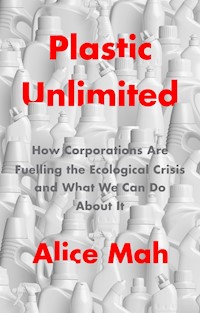
Despite the global movement to tackle plastic pollution, demand for plastics continues to rise. As the world transitions away from fossil fuels, plastics are set to be the biggest driver of oil demand. Single-use plastics - deemed essential in the fight against COVID-19 - have been given a new lease of life. In a world beset with crisis fatigue, what can we do to curb the escalating plastics crisis? In this book, Alice Mah reveals how petrochemical and plastics corporations have fought relentlessly to protect and expand plastics markets in the face of existential threats to business. From denying the toxic health effects of plastics to co-opting circular economy solutions to plastic waste and exploiting the opportunities offered up by the global pandemic, industry has deflected attention from the key problem: plastics production. The consequences of unfettered plastics growth are pernicious and highly unequal. We all have a part to play in reducing plastics consumption but we must tackle the problem at its root: the capitalist imperative for limitless growth.
Sie lesen das E-Book in den Legimi-Apps auf:
Seitenzahl: 286
Veröffentlichungsjahr: 2022
Ähnliche


















Table of Contents
Cover
Praise for
Plastic Unlimited
Title Page
Copyright Page
Abbreviations
Acknowledgements
1 Plastic Unlimited
The Plastic Facts
Origin Stories
Unlimited Plastics
Corporations Across the Plastics Value Chain
Confronting Crisis
Notes
2 Manufacturing Toxic Wants and Needs
Overcoming Limits
Creating Markets
Protecting Markets
Expanding Markets
Corporate Responsibility and ‘Wishcycling’
Notes
3 The Corporate Alliance to (Never) End Plastic Waste
The Marine Plastics Crisis
The Circular Economy Solution
The Promise and Peril of Chemical Recycling
Plastics and Waste Colonialism
The Trials of the Alliance
The Real Value of Plastic Waste
Notes
4 Hedging Against Climate Risk
Is Plastic Pollution a Global Heating Problem?
Degrees of Denial
The Plastics Exception
The Reluctant Race to Net Zero
Poised for a Downturn?
Notes
5 Plastics in the Pandemic
Weathering the Storm
Ballooning Plastic Facts
Top Polluters
The Regulatory Front of Green Recoveries
Notes
6 How Can We Curb the Plastics Crisis?
A Paris Agreement for Plastics
Holding Corporations Accountable
Challenging the Enablers
The Trouble with Growth
Rethinking Systems
Halfway Optimism
Notes
Selected Readings
The History and Politics of Plastics – General
Corporations and Sustainability – General
Plastics Industry and Corporate Power
Plastics and Health
Plastics, Fossil Fuels, and Climate
Plastics and the Circular Economy
Marine Plastics Crisis
Plastics, Waste, and Recycling
Environmental Justice and Plastic Pollution
Plastics and the Pandemic
Plastic-Free Lifestyles
Degrowth and the Limits to Growth
Index
End User License Agreement
Guide
Cover
Table of Contents
Begin Reading
Pages
I
II
iii
iv
vi
vii
viii
ix
x
1
2
3
4
5
6
7
8
9
10
11
12
13
14
15
16
17
18
19
20
21
22
23
24
25
26
27
28
29
30
31
32
33
34
35
36
37
38
39
40
41
42
43
44
45
46
47
48
49
50
51
52
53
54
55
56
57
58
59
60
61
62
63
64
65
66
67
68
69
70
71
72
73
74
75
76
77
78
79
80
81
82
83
84
85
86
87
88
89
90
91
92
93
94
95
96
97
98
99
100
101
102
103
104
105
106
107
108
109
110
111
112
113
114
115
116
117
118
119
120
121
122
123
124
125
126
127
128
129
130
131
132
133
134
135
136
137
138
178
179
180
181
182
183
184
185
186
187
188
189
190
191
192
193
194
195
196
197
198
199
200
201
202
Praise for Plastic Unlimited
‘Timely, engaging, comprehensive. Mah delivers the book I’ve been waiting for – a power-and-geopolitics analysis of the multifaceted plastics crisis, past and present.’
Rebecca Altman, writer and environmental sociologist
‘Plastic Unlimited uncovers the driving forces behind the global problem of plastic waste that is damaging ecosystems, undermining public health, and widening inequalities. Alice Mah’s incisive analysis shows that the current plastics predicament is not mainly a problem of weak waste management or poor consumer choices, but instead is driven by powerful corporations that dominate plastics production and use.’
Jennifer Clapp, University of Waterloo
‘With breathtaking originality, Alice Mah exposes why plastics are poisoning our planet. Governance is failing. And corporations are out of control. Everyone should rush to read this incisive, fiery analysis. These companies must be held accountable.’
Peter Dauvergne, University of British Columbia
‘Tracing plastics back to their petrochemical source, Plastic Unlimited presents an unflinching investigation into corporate responsibility for the plastics crisis. Mah convincingly argues that plastics consumption and climate change are interlinked, and offers strategies for confronting these fossil-fuelled crises through multiscalar activism.’
Jennifer Gabrys, University of Cambridge and author of Citizens of Worlds: Open-Air Toolkits for Environmental Struggle
‘This fantastic book is extremely informative, well written, and a must-read for anyone interested in the deeper roots of the plastics crisis.’
Frank Geels, University of Manchester
‘Plastic Unlimited is a vitally important book. It provides a cogent, nuanced, and resounding critique of the fossil fuel industry’s strategy to turn plastics into a saviour of global health, renewable energy technology, but, most of all, the industry’s bottom line. Read this book to understand how the climate emergency and plastics production go hand in hand.’
Josh Lepawsky, Memorial University of Newfoundland
‘Plastic Unlimited is an exquisitely useful book and a must-read for anyone interested in plastic pollution. Pulling back the curtain on concepts like lifecycle assessments (LCAs), the circular economy, net zero, and chemical recycling, Alice Mah reveals how each one has specific ingredients that align with the continued growth of plastic production. Academia has lagged behind NGO research and investigative journalism on the plastics industry, but Plastic Unlimited decisively ends that trend. It’s the book I’ve been waiting for!’
Max Liboiron, Memorial University of Newfoundland and author of Pollution Is Colonialism
‘Mah’s brilliant analysis reveals how the continuous growth of the petrochemical industry draws upon an imaginary circular economy of plastics that leaves aside “waste colonialism” and environmental injustices.’
Joan Martínez-Alier, Autonomous University of Barcelona (ICTA)
Plastic Unlimited
How Corporations Are Fuelling the Ecological Crisis and What We Can Do About It
Alice Mah
polity
Copyright Page
Copyright © Alice Mah 2022
The right of Alice Mah to be identified as Author of this Work has been asserted in accordance with the UK Copyright, Designs and Patents Act 1988.
First published in 2022 by Polity Press
Polity Press
65 Bridge Street
Cambridge CB2 1UR, UK
Polity Press
101 Station Landing
Suite 300
Medford, MA 02155, USA
All rights reserved. Except for the quotation of short passages for the purpose of criticism and review, no part of this publication may be reproduced, stored in a retrieval system or transmitted, in any form or by any means, electronic, mechanical, photocopying, recording or otherwise, without the prior permission of the publisher.
ISBN-13: 978-1-5095-4945-0
ISBN-13: 978-1-5095-4946-7 (pb)
A catalogue record for this book is available from the British Library.
Library of Congress Control Number: 2021948544
by Fakenham Prepress Solutions, Fakenham, Norfolk NR21 8NL
The publisher has used its best endeavours to ensure that the URLs for external websites referred to in this book are correct and active at the time of going to press. However, the publisher has no responsibility for the websites and can make no guarantee that a site will remain live or that the content is or will remain appropriate.
Every effort has been made to trace all copyright holders, but if any have been overlooked the publisher will be pleased to include any necessary credits in any subsequent reprint or edition.
For further information on Polity, visit our website: politybooks.com
Abbreviations
AAP
American Academy of Pediatrics
BP
British Petroleum
BPA
bisphenol A
CCS
carbon capture and storage
CIEL
Centre for International Environmental Law
COP26
UN Climate Conference (2021)
COTC
crude-oil-to-chemicals
DEHP
di(2-ethylhexyl) phthalate
EPR
Extended Producer Responsibility
ESG
environmental, social, and governance
EuPC
European Plastics Converters
FMCG
fast-moving consumer goods
GFANZ
Glasgow Financial Alliance for Net Zero
GtCO
2
e
gigatons of carbon dioxide equivalent
HDPE
high-density polyethylene
IEA
International Energy Agency
IP
International Petroleum
IPCC
Intergovernmental Panel on Climate Change
IRENA
International Renewable Energy Agency
ISSB
International Sustainability Standards Board
LCAs
lifecycle assessments
LDPE
low-density polyethylene
LLDPE
linear low-density polyethylene
LNG
liquefied natural gas
NPRA
National Petroleum Refiners Association
OECD
Organization for Economic Cooperation and Development
OSHA
Occupational Safety and Health Administration
PET
polyethylene terephthalate
PFAS
per- and polyfluoroalkyl substances
PFOA
perfluorooctanoic acid
PLASTICS
Plastics Industry Association
PP
polypropylene
PVC
polyvinyl chloride
SBTI
Science-Based Target Initiative
UNEA
United Nations Environment Assembly
UNEP
United Nations Environment Programme
WBCSD
World Business Council for Sustainable Development
Acknowledgements
The idea for this book was sparked by reflecting on the continual expansion of global plastics production despite international efforts to tackle plastic pollution, the climate crisis, and the COVID-19 pandemic. I am grateful to Louise Knight at Polity Press for encouraging me to pursue this project and for working with me to help it take shape. I also thank the whole Polity team, particularly Inès Boxman and Justin Dyer for editorial guidance. From the beginning, I was filled with a sense of urgency at the invitation to delve deeper into the corporate roots and toxic consequences of the escalating plastics crisis.
I thank the Leverhulme Trust for providing funding to research and write this book through the Philip Leverhulme Prize. Some parts of chapter 3 are revised versions of work that was originally published in my article ‘Future-Proofing Capitalism: The Paradox of the Circular Economy for Plastics’, Global Environmental Politics, 21(2) (2021): 121–42, available open access, which received funding from the European Research Council (ERC) under the European Union’s Horizon 2020 research and innovation programme (grant agreement 639583) and the Leverhulme Trust.
Many thanks to two anonymous readers of the manuscript who provided generous and constructive feedback, particularly on nuancing the early history of plastics, the analysis of corporations, and the discussion of waste colonialism. I also thank two readers of the book proposal for their valuable advice on refining the corporate focus of the project. I gratefully acknowledge Nerea Calvillo and Sandra Eckert for offering helpful comments on early drafts, and David Brown for excellent research assistance. A big thanks to the Toxic Expertise research team for collaborative insights over the years into different aspects of the complex global petrochemical industry: David Brown, Thom Davies, Lorenzo Feltrin, Patricio Flores Silva, India Holme, Calvin Jephcote, Alexandra Kviat, Loretta Lou, Thomas Verbeek, Chris Waite, and Xinhong Wang. I am also thankful for the intellectual encouragement from all of my wonderful colleagues at the Department of Sociology at the University of Warwick. The final manuscript benefited from my participation in the conference ‘Global Governance of Plastic Pollution: Transforming the Global Plastics Economy’ hosted by the Global Governance Centre at the Graduate Institute in Geneva and the United Nations Conference on Trade and Development (UNCTAD) in August 2021. Thanks to Diana Barrowclough, Luisa Cortat, and Carolyn Deere Birkbeck for the invitation to this timely and important event.
Thanks so much to Eric and Kathy Mah for all the support and encouragement, and to Alex, Erica, and Jennifer Mah for inspiring me through living and thinking ecologically. Thank you to Manuela Galetto, Mouzayian Khalil-Babatunde, and Nirmal Puwar for helping to get me through the intensive months of writing during the pandemic with socially distanced walks. Special thanks to Colin Stephen, who read many drafts closely and supported me and my writing in more ways than words can express. This book is dedicated to our son, Lucian, who has some great ideas about how to save the planet.
1Plastic Unlimited
The world woke up to the global plastics crisis in 2017 and to the climate emergency in 2018. On the eve of the COVID-19 pandemic, sustainability issues were dominating plastics industry discussions due to the groundswell of public backlash. However, by spring 2020 single-use plastics were back in favour, seen as necessary to fight the virus. Plastic recycling programmes ground to a halt, their viability thrown into question as the price of crude oil plummeted. People despaired over the piles of takeaway containers and facemasks strewn over public spaces, but global attention to the wider issue had shifted. After all, plastic pollution paled in comparison with the more immediate global health crisis. The climate emergency, by contrast, gained considerable political momentum during the pandemic, as governments around the world resolved to accelerate the transition away from fossil fuels through green recoveries.
The plastics crisis is inextricably linked to crises of global heating, toxic pollution, biodiversity loss, and global inequality. It exemplifies an existential planetary threat of overconsumption beyond the sustainable limits of the earth. There are serious social and ecological consequences of sidelining plastic pollution as a lesser kind of crisis competing for bandwidth in a crisis-saturated world. The toxic impacts of plastic pollution compound existing social inequalities concentrated in climate-vulnerable coastal communities and in disadvantaged fenceline communities (i.e. communities immediately adjacent to polluting companies) around the planet. If current policies continue, plastic waste is projected to rise from 11 million tons of plastic entering the ocean per year in 2020 to 29 million tons per year by 2040. In the same period, global plastics production is forecast to use 19% of the world’s total remaining carbon budget to keep global heating within the limit of 1.5 degrees.1 Combined with the deadly heat waves, floods, mass extinctions, and pandemics that come with climate catastrophe, the world will be smothered in toxic plastic waste within the span of one generation.
This book argues that corporations across the plastics value chain are fuelling the ecological crisis through the pursuit of unlimited plastics growth, and what is more, they are getting away with it. Since the dramatic rise of plastics production after the Second World War, petrochemical and plastics corporations have fought to expand and protect plastics markets through manufacturing demand, denying risk, and co-opting solutions. Over the years, they have faced existential threats to business, first in a number of toxic scandals linking plastics to cancer and other illnesses, and later in relation to marine plastic waste and the climate crisis. Often, industry leaders have resorted to blatant deception to deny toxic risks in their quest to retain market control. Another industry tactic has been to shift blame to individual consumers and to poor infrastructure in Southeast Asia and Africa. Recently, corporations have become more sophisticated in their sustainability strategies, for example through adopting the circular economy agenda, appearing to embrace green initiatives while pursuing unsustainable growth. They have also played one crisis off against the other, proclaiming plastics in wind turbine blades and electric vehicles as the solution to climate change. Their aim has been to deflect public attention from the key problem: plastics production.
While waste is the most obvious manifestation of plastic pollution, the root of the plastics problem is not waste but production. Even at the height of the storm of public outrage over marine plastic litter, amid all the single-use plastics bans and corporate-sponsored beach clean-ups, global demand for plastics was on the rise. The largest market for plastics is for packaging, accounting for approximately 40% of global end markets. The second largest market is for building and construction at 20%.2 New plastics markets are also rapidly proliferating in green technologies. According to the International Energy Agency (IEA), plastics will be the biggest driver of oil demand in the energy transition, reaching close to half of global oil demand by 2050.3 Yet the increasing demand for plastics cannot keep up with the insatiable corporate drive for petrochemical expansion.
The petrochemical industry makes plastics from raw material ‘feedstocks’, which are derived from fossil fuels and other hydrocarbons through a process known as ‘cracking’, applying heat and pressure to break down heavy hydrocarbons into lighter molecules. Petrochemical expansion relies on (1) access to cheap and abundant ‘virgin’ (fossil fuel-based) feedstocks; and (2) continual growth in new plastics markets to absorb expanding production. The petrochemical industry is a cyclical industry, with boom-and-bust cycles of expansion and overcapacity.4 In the decade leading up to the COVID-19 pandemic, there was a surge of petrochemical project investments around the world, linked to a range of factors including the availability of cheap liquefied natural gas (LNG) from fracking in the United States, the drop in oil prices in 2014, diversification into plastics from oil-producing countries (anticipating the energy transition), and strong GDP growth in China.5 By the end of 2019, the petrochemical industry was heading into a downcycle. However, the COVID-19 pandemic delayed the predicted crisis of overcapacity.6 The price of crude oil hit historic lows, new petrochemical projects stalled, and recycled plastic feedstocks became more expensive. Meanwhile, corporations used the health crisis to reverse single-use plastic bans and to roll back sustainability commitments. Demand for single-use plastics in packaging and personal protective equipment rocketed, offsetting short-term losses in other plastics markets, such as automotive products and appliances.7 ‘Looking forward, we’re looking at fat margins,’ a US industry executive commented in 2021. ‘Not just in North America but around the world.’8
What can we do to stop the escalating plastics crisis? Despite the global momentum to address plastic pollution, policymakers have failed to challenge the capitalist imperative for unlimited plastics growth. We need to tackle this challenge head on. As a first step, let’s take a closer look at the plastic facts.
The Plastic Facts
Within just a few years, the media landscape has become filled with facts about plastic. In December 2018, the fact that ‘9% of all plastic ever made has been recycled’ was named the ‘statistic of the year’ by the British Royal Statistical Society.9 Between 1950 and 2015, 8.3 billion metric tonnes of plastic were produced globally, 6.5 billion metric tonnes of which became plastic waste. Of that waste, 79% went to landfill or was leaked into the environment, 12% was incinerated, and 9% was recycled. Half of all plastic ever manufactured has been made since 2000.10 The cumulative total of plastics production is expected to increase to the staggering amount of 34 billion metric tonnes by 2050, by which point plastic is predicted to outweigh fish in the oceans.11 It is almost impossible to grasp these numbers, even with handy infographics about how many times around the earth we could line up all the plastic bags and bottles.
All plastics are polymers, meaning ‘many parts’ in Greek, made up of long chains of molecules with repeated units. Plastic polymer chains are composed of strong carbon bonds that can be combined with chemical additives to make just about anything. Petrochemicals derived from fossil fuels are used to make 99% of plastics,12 and plastics markets account for 80% of petrochemical production.13 Five main polymers make up 90% of all single-use plastics: polypropylene (PP); high-density polyethylene (HDPE); low-density polyethylene (LDPE); linear low-density polyethylene (LLDPE); and polyethylene terephthalate (PET).14 The material qualities that make plastics so useful also make them flawed: everlasting, hydrocarbon-dependent, and easily fused with other substances. Instead of breaking down on a molecular level, plastics fragment into tiny pieces and persist in the environment. Our bodies and ecosystems are filled with petrochemicals and microplastics. Every stage of the plastics lifecycle, from extraction to refining to consumption and waste, poses significant risks to human health.15 Plastics production releases toxic substances that are linked to cancer, neurological damage, and reproductive and developmental problems.16 Toxic plastic pollution disproportionately impacts low-income and minority ethnic communities around the world.17 Millions of animals are killed by plastics every year, primarily through starvation and entanglement.18 The global environmental, health, and economic costs of plastic pollution are incalculable.
The list of facts goes on, all available with the tap of a finger on the Web. Unlike with global heating, there are no deniers of the plastics crisis. It is too tangible and traceable. Big brands Coca-Cola, PepsiCo, and Nestlé have been singled out by ‘Break Free From Plastic’ activists as the world’s worst plastic polluters, based on an annual audit of hundreds of thousands of plastic items collected by volunteers.19 Further upstream along the plastics value chain, a report by the Minderloo Foundation revealed that twenty major plastics producers (led by ExxonMobil, Dow, and Sinopec) accounted for more than half of all single-use plastic waste generated globally in 2019, and 100 accounted for more than 90%.20 Instead of deniers, there are detractors: people who dismiss the plastics crisis as a distraction from the climate crisis, or who insist that it is eminently solvable through improving recycling and waste management systems.
Many plastic facts are widely accepted, while some are more contested. Researchers have pointed out that predictions of how many fish or plastics will be in the sea in the future, for example, are speculative and uncertain.21 The petrochemical and plastics industries have taken advantage of public uncertainty about plastic facts to repeatedly cast doubt on scientific evidence about plastic toxicity in order to protect their markets.22 They also claim that plastic packaging is more environmentally friendly than alternative materials, relying on assumptions about single-use packaging markets and consumer behaviour.23 Other plastic facts are open to selective interpretation, such as the finding in 2018 that 90% of plastic waste in the ocean comes from just ten rivers, eight in Asia and two in Africa.24 This led industry representatives to say: ‘We know where the source of the problem is,’ pointing to inadequate waste management infrastructure in these regions.25 However, their framing occludes another fact: the highly unequal global trade in contaminated plastic waste. The largest exporters of plastic waste are the United States, Germany, and Japan. Since China announced a ban on plastic waste imports in 2017, global waste exports have been redirected to countries in Southeast Asia, which have struggled to cope with the inundation.26 Several of these countries have returned contaminated shipments, and Thailand and Vietnam have announced plans to ban all plastic imports, but the traffic continues.27 The global plastic waste trade is the latest frontier of ‘waste colonialism’, a term that politicians and activists have used to describe the unjust international trade in hazardous waste.28
After a deluge of depressing facts, the majority of books, films, and reports about the plastics crisis reach the same wilfully hopeful conclusion: that you can make a difference, by reducing your consumption of single-use plastics, recycling and reusing, and, if you’re really keen, going on beach clean-ups and raising community awareness. Some anti-plastic campaigners have taken this mission to heart, writing detailed guidelines about how to live plastic-free within plastic-filled societies.29 Other activists have taken aim at corporations. For example, the environmental NGO Greenpeace, the Break Free From Plastic movement, and the Changing Markets Foundation (which works in partnership with NGOs) have added plastic pollution to their long list of fossil fuel company sins and highlighted the ‘false solutions’ and ‘paper promises’ promoted by industry.30 However, these claims tend to be dismissed by policymakers and the public as ideological, following a predictable script of naming and shaming the ‘top polluters’. This book makes a different kind of intervention. Rather than laying bare the contours of the crisis or lambasting the top polluters, the book asks: how did we get to this point, and what can we do about it? To begin with, where did the drive to make so much plastic come from?
Origin Stories
‘I’m glad we have the Tupperware lady with us,’ our instructor said to a room of twenty-five participants, mostly male, at a workshop on petrochemical markets in London.31 The instructor was a former petrochemical manager with decades of experience in the industry, and his material was showing signs of ageing. He fetched some tatty-looking plastic containers from his satchel and laid them out on the corporate boardroom-style table, before launching into a discussion of polyethylene. ‘Tupperware was the first commercial product from polyethylene, and the beginning of home-selling,’ he began. Most of his plastic origin stories started with some kind of anecdote. Another one was about men using epoxy resins to fix their wives’ broken teacups: ‘Guys, this might work at home, but not in industry.’ The ‘Tupperware lady’ and I made eye contact after this comment, and we shook our heads together.
The plastics industry is used to ‘tired old jokes about plastic’, as the industry’s trade magazine referred in 1986 to the famous line from the 1968 film The Graduate: ‘I just want to say one word to you … just one word … plastics. There’s a great future in plastics.’32 Today, plastics still carry associations with stereotypical images of post-war American life. Other old quotes have resurfaced from this period, acquiring ironic status with the benefit of hindsight. For example, there is the brazen remark from Lloyd Stouffer, the editor of Modern Packaging Magazine, that the ‘future of the industry is in the trash can’.33 This quote is from a speech that Stouffer gave to a plastics industry conference in 1956, where he argued that industry needed to switch from making reusable plastics to making single-use plastics, in order to increase their profits. It echoes the theme of the 1955 photo in Life Magazine captioned ‘Throwaway Living’, which has done rounds on social media, of a family celebrating amidst a swirling array of disposable household products, which promise to cut down on household chores.
One of the most prescient quotes circulating about plastic is by the French cultural theorist Roland Barthes, from his 1957 book Mythologies (translated into English in 1972). Barthes observed that ‘more than a substance, plastic is the very idea of its infinite transformation’, and reached an ominous conclusion: ‘The hierarchy of substances is abolished: a single one replaces them all: the whole world can be plasticized, and even life itself since, we are told, they are beginning to make plastic aortas.’34 This sounds like both a self-fulfilling prophecy and a dare. Indeed, industry realized the tantalising prospects of playing God with nature, and predictably ignored the Faustian implications. As a plastics executive exclaimed towards the end of the Second World War: ‘[V]irtually nothing was made from plastic and anything could be.’35
It’s difficult to imagine the world before it became plasticized. The proliferation of plastics around the planet has been exponential, from the first plastics of the nineteenth century, to 2 million metric tonnes of plastics produced annually in 1950, to 368 million tonnes of annual plastics production in 2019.36 Most histories of plastic begin with the invention of Parkesine in the mid-nineteenth century, a semi-synthetic plastic derived from cellulose that was used as a cheap substitute for ivory and tortoiseshell accessories.37 According to environmental sociologist Rebecca Altman, a less-known story about celluloid is the fact that it ‘accelerated the demand for camphor, a tree product used as a solvent and plasticizer’, due to the rapid expansion of the celluloid market in the late nineteenth century for use in photographic and cinematic film.38 Altman contends that the early history of bioplastics (plastics made from trees and plants) anticipated many of the environmental health and labour injustices that followed. For example, the extraction of tree resins, gums, and latex for rubber and celluloid production led to the violent displacement of Indigenous communities, deforestation, environmental destruction, and workplace hazards. The expression ‘to be gassed’ originated in nineteenth-century vulcanized rubber factories, where low-wage workers suffered from a range of neurological problems due to toxic exposures.39 Viscose rayon, or ‘fake silk’, a fabric derived from cellulose, was also deadly to workers, leading to ‘acute insanity in those it poisoned’.40
We touched on the early history of rubber at the workshop on petrochemical markets, as part of the C4 (four carbon bonds) butadiene value chain. Our instructor showed us a slide about the first rubber boom from 1879 to 1912, casually observing that ‘natural rubber was Indigenous to Brazil, but all of the rubber trees in Brazil were killed off’.41 Then he described how the British explorer Henry Wickham ‘borrowed’ 70,000 rubber seeds from Brazil, brought them to Kew Gardens in London, and set up plantations in Sri Lanka and Malaysia. However, the violence of this colonial history was only implied, as a taken-for-granted backdrop to the key story behind all plastic origin stories: chemical innovation, exemplified by the scientific achievement of duplicating nature in synthetic form.
The first fully synthetic plastic, Bakelite, was produced in 1907, a thermoset plastic that was hard and strong, but could not be remelted or remoulded. During the polymer science revolution of the 1920s and 1930s in Western Europe and the United States, a vast array of thermoplastics (mouldable at high temperatures) were synthesized for commercial use: polyvinyl chloride (PVC) in 1926; polystyrene in 1930; polyethylene in 1933; nylon in 1935; and polytetrafluoroethylene (later known as Teflon) in 1938. Historians of science and business typically focus on the key inventors and company rivalries during this period of intensive scientific innovation, with the interwar period as a backdrop.42 It was the advent of the Second World War, though, that catapulted plastics onto the world stage of mass consumption.
The Second World War brought unprecedented demands for synthetic rubber, high-octane gasoline (using polymerized chemical additives), parachutes, aircraft components, bazooka barrels, mortar fuses, helmet liners, radar insulation, and a wide range of other military plastics uses.43 Plastics were even crucial for the atom bomb: fluorocarbon plastics (related to polytetrafluoroethylene) were used to contain the volatile gases.44 The war sparked the rapid growth of the petrochemical industry, which began using the by-products of oil (rather than coal) to create plastic resins, the building blocks of plastic products. Massive petrochemical plants sprang up next to oil refineries in the United States and Europe. Anticipating the glut of petrochemical capacity after the war, major chemical companies began to search for new uses for petrochemical products. DuPont started designing prototypes of plastic houseware products that could be marketed to consumers, with the advertising slogan ‘Better Things for Better Living … through Chemistry’.45
The petrochemical and plastics industries, like many modern capitalist industries, grew out of war. Yet there is an even darker side to this origin story. In the interwar period, the German chemical conglomerate IG Farben, one of the main players in the polymer science revolution, led an international cartel of corporations that restricted global trade in synthetic oil and rubber. During the Second World War, IG Farben operated a concentration camp using slave labour on one of its industrial sites, conducted medical experiments on prisoners, and supplied the toxic gas Zyklon B to the concentration camps.46 In 1941, the United States conducted an anti-trust investigation into Standard Oil (now Exxon) and its six subsidiaries for conspiring with IG Farben to restrict trade, indicting three corporate leaders, who resigned.47 Twenty-three of IG Farben’s directors were tried by the US Military Tribunal sitting at Nuremberg between 1947 and 1949 for war crimes and crimes against humanity, thirteen of whom were convicted. This was a hallmark international case for holding business leaders responsible for corporate crimes.48
In the aftermath of the Second World War, the petrochemical cartels dissolved. In 1951, IG Farben was broken up into different companies, including BASF, Bayer, and Hoechst, which each gained their own legal identities. However, tacit cooperation continued between the leading American and European petrochemical companies.49 This laid the historical foundations of industrial collaboration and collusion that continued in the toxic scandals of later years. The exponential growth of plastics in the post-war period was not an inevitable outcome of material innovation, as it is often framed, but a legacy of war.
Unlimited Plastics
The European plastics industry celebrated ‘100 Years of Plastics’ in December 2020 with the launch of a website about how plastics make life better and more sustainable. The tagline: ‘Unlimited Possibilities for the Future’.50 The hallmark achievement in 1920 was the publication of a ground-breaking research article by the German scientist and Nobel Prize winner Hermann Staudinger, which formed the basis for modern polymer science. A collaboration between the Macromolecular Chemistry Division of the Association of German Chemists and Plastics Europe Deutschland (the German branch of the Plastics Europe industry association), the website features monthly articles that showcase ways that plastics help society. The first article, ‘Plastics During the Pandemic’, singles out five plastics applications as making material contributions to COVID-19: protective clothing; plastics machinery (for making masks and other equipment); protective walls (transparent partition walls); medical sector materials; and the transport of vaccines (in insulated frozen boxes).51 Notably absent from this list are plastic bags and disposable food and beverage containers, which the industry had so actively promoted as the ‘sanitary choice’ at the beginning of the pandemic.52 Despite its centennial theme, the ‘100 Years of Plastic’ website avoids any mention of the wartime origins of modern plastics. Instead of reflecting on the past, it speculates on the future, using the occasion to capture the celebratory mood of the plastics revival of the pandemic. The unlimited possibilities for the future of plastics, naturally, are all about perpetual growth.
The capitalist pursuit of unlimited growth is the key problem underlying the plastics crisis. It is not unique to the plastics industry, but rather the defining feature of all corporations within modern capitalism. Publicly traded corporations are legally obliged to act in the ‘best interests’ of shareholders, which most people interpret to mean maximizing profits and growth. However, as anti-trust lawyer Michelle Meagher argues, the powerful norm of shareholder value exists only weakly in law and is unenforceable. In other words, according to Meagher: ‘Shareholder value is not the law – or it does not have to be, if we collectively agree that it is not.’53 Meagher notes that when corporations were first created in England in the seventeenth century to fund public projects, ‘the norm of accountability was not limited liability but actually unlimited




