


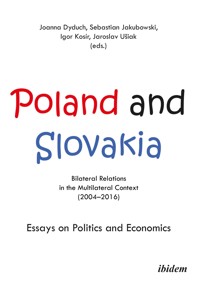
Poland and Slovakia: Bilateral Relations in a Multilateral Context (2004–2016) E-Book
26,99 €
Mehr erfahren.
- Herausgeber: ibidem
- Kategorie: Geisteswissenschaft
- Sprache: Englisch
This timely book investigates the complex relations between the Republic of Poland and the Slovak Republic in the context of ongoing processes in the European Union’s political and economic system. The basic assumption of the study is that Polish-Slovak relations are affected and shaped not only by the interaction between the two of them but also by the dynamics of the European and global international environment. The authors explore different aspects of the interconnectedness of Warsaw and Bratislava. This includes the analysis of political, economic, and social dimensions of bilateral relations in the multilateral context. One of the goals of this volume is to define areas and spheres of Poland’s and Slovakia’s common interest, as well as to point out those areas with the highest potential for development. It also defines and analyzes problematic issues in common relations that could be seen as obstacles in developing cooperation in specific areas and politically strategic areas like foreign and security policy. Moreover, the book seeks to measure the extent to which Polish-Slovak relations are affected by the European integration process.
Das E-Book können Sie in Legimi-Apps oder einer beliebigen App lesen, die das folgende Format unterstützen:
Seitenzahl: 452
Veröffentlichungsjahr: 2017
Ähnliche




















ibidem Press, Stuttgart
This book has resulted from the projects supported by the Faculty of Social Sciences at the University of Wrocław, the Faculty of Political Science and International Relations at Matej Bel University and the International Visegrad Fund.
Table of Contents
List of abbreviations
Notes on contributors
Chapter one Analyzing the bilateral relations between the European Union member states
Introduction
Historical determinants of Polish-Slovak relations
Theoretical and methodological foundations and the origins of the book
Organization of the book (overview of chapters)
Chapter two Polish-Slovak political cooperation
Introduction
Dynamics of the relations in the bilateral context
Brief assessment of the development of Poland and Slovakia’s political environment (2004-2016)
Analysis of strategic documents pertaining to foreign policy
Conditions and circumstances of Polish-Slovak bilateral political relations
Most important achievements and developments in Polish-Slovak political relations
Dynamics of the relations in the multilateral context
Polish-Slovak relations in the context of European integration and both states EU membership
Visegrad Group as a sub-regional, multilateral platform for Polish-Slovak political relations
Polish-Slovak relations in the light of global system dynamics (between US and Russia) Pan-Slavism vs. Euro-Atlanticism
Final summary of the political cooperation between the Slovak Republic and the Republic of Poland
Chapter three Slovak-Polish cooperation in the field of defense and security
Introduction
Dynamics of the relations in the bilateral context
Brief assessment of the development of the security environment between 2004 and 2016
Analysis of the strategic documents of the Slovak Republic and the Republic of Poland
The overview of bilateral cooperation between the Slovak Republic and the Republic of Poland
Dynamics of Polish-Slovak relations in the multilateral context
Cooperation within the Visegrad Group
Polish-Slovak cooperation within international organizations (NATO, EU, OSCE, UN)
Final summary of Polish-Slovak cooperation in the area of security and defense
Chapter four Economic relations between Poland and Slovakia
Introduction
Poland and Slovakia—economic relations in bilateral context
Mutual investments between Poland and Slovakia
Mutual trade between Poland and Slovakia
Poland and Slovakia—economic relations in the sub-regional context
Poland and Slovakia—economic relations in the multilateral European context
Slovak-Polish support for the development of the internal market
Cooperation for the development of transport infrastructure
Missed opportunities in Slovak-Polish cooperation
Final remarks on economic relations between Slovakia and Poland
Chapter five Polish-Slovak cooperation in other fields of neighborhood relations
Introduction
Dynamics of the relations in the bilateral context
Brief assessment of the legal framework for bilateral relations in the sectors of education, science, culture and regional cooperation
Overview of Polish-Slovak relations in the areas of education, science, culture and cross-border cooperation
Summary of development trends in the bilateral Polish-Slovak cooperation
Dynamics of the relations in the multilateral context
Importance of the European integration processes for the Slovak-Polish-Slovak neighborhood relations development
Poland and Slovakia’s role in multilateral regional cooperation within the framework of Euroregions
Final summary of Polish-Slovak cooperation in the areas of education, science, culture and cross-border cooperation
Summary and conclusions
Combined references
Documents, official statements and data
Reports, Analyses
Books, journal articles
Other: newspaper articles, internet resources, miscellaneous sources.
List of abbreviations
Agency for the Cooperation of Energy Regulators (ACER)
Association of European Border Regions (AEBR)
Bologna Follow-up Group (BFUG)
Carpathian Euroregion (CER)
Central European Free Trade Agreement (CEFTA)
Central European Initiative (CEI)
Common Agricultural Policy (CAP)
Common Foreign and Security Policy(CFSP)
Common Security and Defence Policy (CSDP)
Council for Mutual Economic Assistance (CMEA)
Cross-Border Operation (CBO)
Deep and Comprehensive Free Trade Agreement (DCFTA)
Digital Single Market (DSM)
Eastern Partnership (EaP)
Economic and Monetary Union (EMU)
European Association of Development Agencies (EURADA)
European Commission (EC)
European Endowment for Democracy (EEfD)
European Free Trade Association (EFTA)
European Grouping of Territorial Cooperation (EGTC)
European Higher Education Area (EHEA)
European Neighborhood Policy (ENP)
European Security and Defence Policy (ESDP)
European Union (EU)
European Union Force in Bosnia and Herzegovina (EUFOR)
European University Association (EUA)
Foreign Direct Investment (FDI)
International Security Assistance Force (ISAF)
International Monetary Fund (IMF)
International Visegrad Fund (IVF)
Liquified Natural Gas (LNG)
NATO Response Force (NRF)
North Atlantic Treaty Organization (NATO)
Organization for Economic Cooperation and Development (OECD)
Organization for Security and Co-operation in Europe (OSCE)
Office for Democratic Institutions and Human Rights (ODHIR)
Purchasing Power Standards (PPS)
Polish Press Agency (pol. Polska Agencja Prasowa) (PAP)
Polish Central Statistical Office (pol. Główny Urząd Statystyczny) (GUS)
Trans-European Energy Network (TEN-E)
Trans-European Transport Network (TEN-T)
Treaty on the European Union (TEU)
Treaty on the Functioning of the European Union (TFEU)
World Economic Forum (WEF)
Visegrad Group (V4)
United Nations (UN)
Notes on contributors
Dr. Joanna Dyduch—Assistant Professor at the Department of European Studies at the University of Wrocław (Poland). Author of several scientific articles devoted to foreign policy analysis and energy policy. Author, editor and co-editor of books (e.g. Selected Policies of the European Union. Evolution in the context of the Lisbon Treaty and the Europe 2020 Strategy, Publishing House: ASPRA, Warszawa 2012; European Union Development. Challenges and Strategies, Publishing House: ASPRA, Warszawa 2013; European Union as a Global Actor. Political integration: identity issues and foreign policy, Publishing House: ASPRA, Warszawa 2014). Member of the Executive Committee of the European Association of Israel Studies at the School of Oriental and African Studies / University of London. Visiting scholar at various universities (e.g. SOAS University of London; Ben Gurion University of Negev Beer Sheva, Israel; Universidad CEU Cardenal Herrera in Valencia, Spain; Matej Bel University in Banská Bystrica, Slovak Republic).
Prof. Igor Kosír—Professor at the Department of International Relations and Diplomacy at the Matej Bel University in Banská Bystrica (Slovakia), responsible for the University’s international cooperation as its Vice Rector (2010-2014). Author of several scientific articles devoted to world economy development, international economic integration and the European Union’s external relations. Author, editor and co-editor of books (e.g. Foreign Trade Policy of European Union, Publishing House: Ekonóm, Bratislava 2007; International Economic Integration: from Autarky to Global Economic Integration, Publishing House: MBU, Banská Bystrica 2010; European Perspectives of Western Balkans countries, Publishing House: ABB, Prishtina 2015; Alternatives of European Integration Development, Publishing House: Ekonóm, Bratislava 2015). Visiting scholar at various universities (e.g. University of Reims Champagne-Ardenne in Reims, France; University of Sarajevo, Bosnia and Herzegovina; University of Batumi, Georgia).
Dr. Sebastian Jakubowski is a graduate of the University of Wrocław (Faculty of Law, Administration and Economics). Since 2005 he has been working at the University’s Institute of Economic Sciences. Today he holds the position of an Assistant Professor. His research interests are focused on economic policy and structural changes that shaped Central and Eastern Europe after the collapse of communism. Dr Sebastian Jakubowski is also an organizer of a biannual International Wroclaw Symposiums of Economic Policy. His academic career is filled with numerous visits to foreign universities, such as the University of California (Santa Barbara, US), Leipzig University, the University of Latvia, the Vilnius Gediminas Technical University, the Šiauliai University, as well as the Fraunhofer MOEZ Institute in Leipzig.
Doc. Mgr. Jaroslav Ušiak, PhD—Associate Professor at the Faculty of Political Sciences and International Relations, Matej Bel University in Banská Bystrica (Slovak republic) and, since 2013, Editor-in-Chief of a scientific journal Politické vedy (Political Sciences) devoted to political sciences, international relations, modern history and security studies. He is an author and co-author of several books: Bezpečnosť ako kategória (Security as a category); Security Policy of the Slovak Republic—Development, Cornerstone and Implications. He has authored several articles devoted to international relations and security studies, focusing on regional security, mainly in Central Europe. He is a member of the Editorial Board of several scientific journals: Současná Evropa and Defense and Strategy. He has undertaken many research and lecture stays and participated in various conferences, both in his native Slovakia and a number of other countries, such as the Czech Republic, Poland, Hungary, Belgium, Slovenia, France, Ukraine and others.
Joanna Dyduch
Chapter oneAnalyzing the bilateral relations between the European Union member states
Introduction
Despite their geographical closeness and similar socio-political experiences in the past, it seems that Poles and Slovaks know little about each other. Similarly, Polish-Slovak relations are, at best, only moderately dynamic given how many areas offer the two governments good opportunities for intensive cooperation. The existing, fairly narrow literature on Polish-Slovak bilateral relations characterizes them as good and friendly, but it is often noted that the potential for their further development is not being utilized. This is so for several reasons. First of all, priorities of national foreign policies basically put the relations between the two countries in the multilateral context (European Union, NATO, Visegrad Group). Secondly, the development of contacts is hindered by problems such as an unsatisfactory transport infrastructure (especially on the Polish side). Thirdly, compared to the importance attributed to ties with other neighbors, the topic of Polish-Slovak relations is almost absent from the socio-political discourse held in both countries. Moreover, unlike in the case of Polish-Russian or Slovak-Hungarian relations, the last two decades have not seen any controversial issues that would dictate the tone of conversation between Warsaw and Bratislava. Further still, not once has the narrative referring to common history been used for political purposes. All this results in a paradoxical situation where the ties between Poland and Slovakia are almost entirely overlooked not only by the media, but also by the academia. For Poles, Slovakia and its inhabitants remain relatively unknown neighbors.
Despite the above-mentioned considerations, a close look at Poland and Slovakia’s bilateral relations and international activity reveals several interesting phenomena and a number of crosscutting interests relevant to the effectiveness of both countries’ foreign and security policies. This warrants an attempt at describing and analyzing Polish-Slovak relations, and so filling the gap evident in the current academic discourse. Hopefully, research presented in this book will lead to pointing out key processes and phenomena that have affected the state of affairs between Warsaw and Bratislava.
The analysis will be focused on the period between 2004 and 2016. In 2004, both countries acceded to the European Union (EU)—a milestone that has had a huge impact on their strategies and approaches toward different policies (including foreign and neighborhood policies). The same year saw Slovakia join the North Atlantic Treaty Organization (NATO). Poland, along with Hungary and the Czech Republic, has been a full NATO member since 1999. The analysis reaches as far as 2016–12 years after the biggest enlargement in the EU’s history. 2016 is also a time of serious challenges for both organizations, as several opportunities and threats have recently affected the European system as a whole and its individual actors.
The project that led to writing this book entailed research aimed at describing and diagnosing the evolution of Polish-Slovak relations from 2004 until 2016. It was focused on three dimensions: political, economic and social. It was also designed to reveal aspects and spheres in which Poland and Slovakia’s interests coincide, as well as those that hold the highest potential for future development. Furthermore, the research was directed towards defining and analyzing issues that may hinder relations in specific areas—be it politically strategic problems of foreign and security policy or cooperation between regions. Finally, by using methodological principles of liberal intergovernmentalism and the theoretical framework of the discourse on Europeanization, the authors attempted to measure the extent to which Polish-Slovak relations are affected by the European integration process. As an additional aim, the research enabled verification of the Visegrad Group’s effectiveness in pursuing its members’ individual and collective interests.
The aims specified above provided the basis for the formulation of mutually complementary research questions that would guide the authors through the analysis of collected materials. The first of the questions concerned the state of Polish-Slovak relations throughout the relevant time period, taking into account their dynamic nature in both the bilateral and the multilateral dimension. The authors have tried to identify crucial areas in bilateral relations (i.e. where both countries have certain defined interests and whether these interests are shared or opposing) and main factors shaping them. It is worth noting that early in the research phase it became clear how much Polish-Slovak relations depend not only on both parties’ motivations and interactions, but also on external influences. The importance of international interdependence has been considered at four complementary levels: local, sub-regional, regional (European) and global (see: Table 1).
Table 1. Planes of analysis with regard to the impact of international interdependence on Polish-Slovak relations.
Plane of analysis
Type of cooperation
Dominant issues
local
trans-border cooperation
cultural cooperation
social issues (including e.g. environment protection)
sub-regional
cooperation among the V4
social issues
political issues (including security)
economic issues
regional (European)
Cooperation within the EU
Global
Cooperation within NATO
Cooperation with other global players (e.g. Russia, US)
security
political issues (including security)
economic issues
Source: own work.
The last question concerned how the international environment affects bilateral relations between Poland and Slovakia. One particularly important reference point was both countries’ membership in various multilateral structures, from Euroregions and the Visegrad Group (V4) to the EU and NATO. The authors have assumed that such multilateral cooperation is legitimized on the premise that it allows governments to effectively (or, perhaps, even optimally) manage not only issues of common concern and those in which national interests coincide, but also those that could potentially lead to disagreements and conflicts. From this perspective, it can be said that Polish-Slovak cooperation and coordination of political activities on the international scene results primarily from increasing interdependencies inherent in the European system.
What follows from the above considerations is that the analysis of bilateral relations between any two EU member states (MS) requires researchers to account for the multilateral context. In this case, processes and phenomena that are particularly important stem from the European system which in its legal, institutional and socio-political form can be largely equated with the European Union. Such systemic perception of the EU should be coupled with the understanding of its internal complexity. One also needs to remember that the Union is increasingly intertwined with and affected by its international surroundings. The MS and EU institutions are, therefore, elements of the European system which, like every other entity of this kind, has its borders, outside which lies its external environment. The system has a two-ways communication with its environment—it influences and is influenced by it.
Historical determinants of Polish-Slovak relations
The set of historical circumstances shaping Polish-Slovak relations to this day has obviously been developing over the previous several decades. In general, the ties between Bratislava and Warsaw had for a long time been affected by the interests of nearby great powers more than by direct contacts between the two governments. The very beginning of contemporary Polish-Slovak relations came after World War I, when Poland and Czechoslovakia were reborn as independent states. Poland’s restoration was famously included in Woodrow Wilson’s Fourteen Points and was initially supported by the Soviet government which, in the Decree on Peace published in 1917, acknowledged the right of all nations to self-determination. The Brest-Litovsk Treaty and the Polish-Soviet peace treaty led to the final delimitation Poland’s borders. Although Slovakia emerged as an independent state only in 1993, tracing the roots of its relations with Warsaw requires us to consider earlier historical developments between Poland and the Czechoslovak Republic formed in the aftermath of World War I. The emergence of Czechoslovakia was the first opportunity for the emancipation the Slovak nation. Slovaks’ participation in the Austro-Hungarian army increased the awareness of the armed forces’ role in national liberation and ultimately led to the formation of the Czechoslovak legion. National resistance constituted an important prerequisite for declaring ambitions to build a nation-state—a development that materialized as a result of the Versailles Treaty which stipulated the establishment of Czechoslovakia.
It was in the inter-war period when Poles and Slovaks began to interact, with both positive and negative consequences. The latter resulted from unresolved territorial disputes over Orava, Spiš and Tešínsko. The disagreement continued throughout the inter-war period (in 1938 Polish army attempted an occupation of the disputed lands, seizing the opportunity that presented itself when parts of Czechoslovakia were annexed by the Nazi Germany as a result of the Munich Treaty) and only ended in 1958, when the Czecho-Slovak-Polish treaty on the matter was signed by the communist governments. The brighter episodes included efforts to create anti-Nazi Czechoslovak divisions in several occupied countries, including Poland. The units participated in the defense of Tobruk and assisted Poles in their ultimately doomed resistance against the German invasion in September 1939. Polish soldiers participated in the Slovak national uprising during World War II, while Slovaks supported the Poles during the 1944 Warsaw uprising (Segeš 2015).
Geopolitical incorporation of both states into the Soviet sphere of influence after World War II represented a significant landmark. Interestingly, it quickly became apparent that the two societies differed in the extent to which they accepted or rejected the communist ideology. Consequently, they adopted different strategies of resistance. In Poland, the formation of the Solidarity movement and the involvement of the Catholic Church represented the rejection of communism in its political dimension. Meanwhile, Czechoslovakia chose the professional realm as one of its battlegrounds by keenly maintaining contacts with foreign (also Western) businesses. The society also employed a declaratory form of resistance, especially after the bloody events of 1968. While Western Europe pursued détente in the 1970s, Czechoslovak intellectuals released the Charter 77—a document that introduced a new concept of reforming the political and social reality by focusing on liberalization, democratization and gradual removal of the communist party’s leading role in national politics.
Processes that were started by the dissolution of the Soviet Bloc and the democratic transition of Central and Eastern Europe were unquestionably crucial to Polish-Slovak relations as they are today. The division of Czechoslovakia was important for the shaping of the identity of the entire region, with societies and groups within them beginning to express their interests more freely. Pro-transformation sentiments and hopes for closer ties to Western Europe harbored by the citizens were translated into foreign policy priorities adopted by the governments. These circumstances can be seen as the reasons for forming the Visegrad Triangle in 1991. After Slovakia was established as an independent country in 1993, the organization was renamed the Visegrad Group. Shortly after Czechoslovakia, Hungary and Poland signed the Visegrad declaration, the European Communities invited the three states to negotiate Europe Agreements on Association (EAA)1—a move that constituted a very tangible token of support for the Euro-Atlantic strategic orientation adopted by Central European states (Kosír 2010). The name of the documents symbolized a historic return to Europe for the former members of the Soviet Bloc. The pro-European attitude all Visegrad states shared at that time changed the dimension and quality of bilateral ties in most areas. However, in the case of Poland and Slovakia, the perception of such relations was from the very first moments asymmetrical. While Bratislava considered Warsaw as its strategic partner and a natural regional leader, the Polish side attached considerably less importance to its southern neighbor.
As an active participant of the revolutionary changes that effectively eradicated the post-war bipolar order, Poland was able to quickly determine its strategic goals and oriented itself towards full participation in all important transatlantic structures. The country’s position in European and global economy changed dramatically within a relatively short period of time. Apart from aspiring to Western political and economic bodies, Warsaw also supported the new quality of regional cooperation among Central European states.
In Slovakia, the domestic discourse was temporarily influenced by Slovenia’s original effort to become a full EFTA member (the parallel wave of European integration)2 and Russia’s offer to negotiate bilateral free trade agreements with former CMEA states. Ultimately, Slovak political elites reached an informal agreement that would provide the basis for a pro-Western foreign policy. From then on, the government was committed to ensuring comprehensive security and development opportunities by joining NATO and the mainstream model of European integration.
At the December 1997 summit in Luxembourg, the EU decided to open the accession negotiations with six candidate countries: Cyprus, the Czech Republic, Estonia, Hungary, Poland and Slovenia. The process formally began in March 1998. Slovakia, alongside Bulgaria, Latvia, Lithuania, Malta and Romania, was included in the second group (so-called Helsinki group) of candidates to be admitted to the negotiation phase. The decision to start the procedure was made in December 1999.
For the purpose of determining accession terms, the EU adopted a “differentiation strategy”—i.e. it chose to approach each candidate on an individual basis. This meant that the prospective members had very limited possibilities to cooperate on the matter—a circumstance that was not conducive to building a regional solidarity and made it easier for the Union to exert pressure on each government. At the same time, however, some EU MS supported the Visegrad cooperation that occurred within the Central European Free Trade Agreement (CEFTA) concluded in 1992. In essence, CEFTA was not a political initiative. Moreover, its beneficiaries included states such as Germany which were keen to expand their export and investments in Central Europe. As it turned out, the desire to join the Union, visible particularly in the actions of all V4 members, spurred a surprising amount of competition that complicated the strengthening of genuine cooperation.
The accession negotiations determined the condition on which each candidate would join the EU. Upon acceding to the Union, application were expected to adopt its acquis, i.e. detailed laws and rules based on the existing European treaties (Rome, Maastricht, Amsterdam and Nice Treaties). The negotiating process often focused on how exactly a given candidate would adopt, implement and enforce the acquis communautaire. This included the possibility of agreeing on certain transitional arrangements, necessarily limited in scope and duration. Such solutions had previously been employed with regard to other states joining the Communities. Ten candidates (namely Cyprus, the Czech Republic, Estonia, Hungary, Latvia, Lithuania, Malta, Poland, Slovakia and Slovenia) completed their negotiations in December 2002.
One factor that hindered the post-communist states in their pursuit of individual and collective interests during the pre-accession talks was the asymmetry in potentials and capabilities between the wealthy, integrated Western Europe and the underdeveloped, newly emancipated prospective members (Moravcsik & Vachudova 2003). Moreover, in their determination to join the European structures, countries such as Poland and Slovakia exposed themselves to Europeanization stimuli emanating from Brussels. At the same time, they had practically no instruments and possibilities to influence the political, legal and institutional developments within the Communities. Still, one needs to remember that the citizens and governments of the candidate countries consciously agreed to undertake far-reaching, often difficult and costly political, economic and social reforms so as to adjust to European standards. From their perspective, full EU membership was a reward worthy of such effort.
The results of the negotiations were incorporated in the accession treaties, submitted to the Council and the European Parliament for approval. Subsequently, the documents were returned to the candidate governments to undergo ratification procedures (including, in some cases, national referenda). In Slovakia, the turnout in the referendum proved relatively low at 52.1%, but an overwhelming majority (93.7%) of those who showed up at the polls said „yes“ to EU membership. In Poland, the turnout was sligthly higher (58.9%), with 77.6% voting in favor of ratifying the accession treaty. Both referanda delivedered valid results and allowed the two countries, along with eight other candidates, to formally accede to the Union on 1st May 2004.
In one final remark, it should be noted that the patterns of relations between the new and old EU MS, based on “asymmetrical interdependence” (Moravcsik & Vachudova 2003: 46-52), remained in place after the 2004 enlargement.
Theoretical and methodological foundations and the origins of the book
The basic theory upon which the analytical process and its resulting conclusions are founded is liberal intergovernmentalism. This concept combines the liberal logic (used for explaining how preferences within states are shaped) with a realism-derived mechanism of intergovernmental negotiations, where a state’s power is the decisive factor (see: Table 2). According to Moravcsik, ‘the relationship between states and the surrounding domestic and transnational society in which they are embedded critically shapes state behavior by influencing the social purposes underlying state preferences — can be restated in terms of three core assumptions’ (1997: 516). The assumptions mentioned here describe and explain the character of actors in international relations, their motivations and the nature of interactions between them. Moreover, they refer to the complexity of the international system, as well as its multidimensional structure.
Table 2. Core assumptions of the intergovernmental theory.
Assumption 1:
The Primacy of Societal Actors. The fundamental actors in international politics are individuals and private groups who, generally, are rational and risk-averse, and who organize exchange and collective action to promote differentiated interests under constraints imposed by material scarcity, conflicting values, and variations in societal influence.
Assumption 2:
Representation and State Preferences. States (or other political institutions) represent some subset of their domestic societies, on the basis of whose interests state officials define state preferences and act purposively in world politics.
Assumption 3:
Interdependence and the International System. The configuration of interdependent state preferences determines state behavior.
Source: Moravcsik (1997: 516-521).
Another concept that proved helpful in operationalizing the research was Europeanization. As a process-centered idea, it takes account of the dynamics of the phenomena to be examined. For the purpose of this analysis, Europeanization is understood as a multidimensional process / phenomenon. It involves ‘construction, diffusion and institutionalization of formal and informal rules, procedures, policy paradigms, styles, “ways of doing things” and shared beliefs and norms which can be first defined and consolidated in the EU policy process and then incorporated in the logic of domestic (national and subnational) discourse, political structures and public policies’ (Radaelli 2004: 3). At the same time, Europeanization is also about the bottom-up dimension: how the MS (acting either individually or in groups) influence the creation of common EU rules, norms, politics and policies. Both processes take place simultaneously and continuously. Literature on Europeanization recognizes two other phenomena: the so-called ‘cross-loading’ and ‘ad extra’ Europeanization (the latter is also known as ‘Europeanization beyond Europe’) (Schimmelfennig 2009). Each dimension influences all others and thus contributes to the overall structure of the European system (see: Table 3). Europeanization occurs in every aspect of European integration—economic, social and political. It also affects every realm of bilateral relations between EU MS.
Table 3. Dimensions of Europeanization.
bottom up (uploading)
top-down(downloading)
ad extra
(beyond-Europe)
cross-loading
Influence of MS on the EU and its institutions.
In case of foreign policy, the vital factor is the actual or desired impact of MS on EU institutions and the Union’s overall agenda.
By Europeanizing their national interests, MS (consciously or not) affect each other’s foreign policies, not only through bilateral contacts but also through their actions at the EU level.
Vertical process.
Influence of the EU and its institutions on the MS
Goals, strategies and directions of MS’ foreign policies are affected by the EU and its institutions.
Vertical process.
EU’s influence on its immediate and more distant environment, exerted by exporting its governance models and values.
This dimension of Europeanization may affect European states remaining outside the EU, non-European states maintaining relations with the EU, as well as international organizations.
Vertical-horizontal process.
Transfer of solutions between EU MS.
The process may occur with or without the involvement of supranational institutions.
Horizontal process.
Source: (Dyduch 2016: 53).
Although each state tries to preserve its ability to shape the relations with other actors independently, bilateral relations between the EU MS are affected and influenced by their status as members of the Union. Therefore, while governments (including the ones in Warsaw and Bratislava) declare they are determined to preserve their prerogatives with regard to foreign policy, the ever-increasing interdependence within the European system calls for new methodologies and theories that would allow us to better explain how bilateral relations among EU MS are shaped in the context of dynamic integration processes.
One way to approach this challenge is to juxtapose the two previously mentioned theories. The task of finding common denominators for liberal intergovernmentalism and the concept of Europeanization forced the authors to focus on several key issues. First of all, both these approaches were developed to enable modelling and theorizing on the causes, course and consequences of European integration. The process is examined from several different perspectives, including that of the citizens, substantial social groups, states and supranational institutions. Hence, identifying crucial actors and describing relations among them is of vital importance. In liberal intergovernmentalism, the primary subjects of international relations are individuals and private groups that operate mostly within single states. Their preferences are the main driving force behind strategies developed by governments for operating at the supranational level. The theory assumes that in representing the interests of primary actors, states act rationally (at least to a certain minimal extent). The interests in question are considered to be mainly material, rather than abstract and ideological, in nature. Such rationalism means that actors calculate costs and benefits of undertaken actions—in other words, they wish to maximize their gains while avoiding risks. For Moravcsik, ‘European integration is a series of rational choices made by national leaders in response to the international interdependence’ (1998: 18). Hence, if at the national level there is belief that international cooperation will bring more benefits than unilateral actions or rivalry with other actors, governments are more willing to cooperate. By doing so, they reduce costs, maximize gains and avoid risks associated with being on the losing side of a political conflict. Additionally, as Moravcsik points out, ‘most international interactions, (…) have a positive-sum component in which the interests, and thus the increasing influence, of more than one country or region are complementary, resulting in positive-sum or mixed-motive interactions’ (2009: 407-408). The above considerations can be complemented by conceptual principles of the research agenda known as Europeanization. While theorists of Europeanization do not address the nature and goals of actors, they assume that the European integration, as a progressive process resulting from decisions made by political elites, needs to yield tangible benefits to the citizens of EU MS if it is to be continuously legitimized. The process is only functional if it guarantees the achievement of goals and interests endorsed by its participants while, at the same time, preserving a relative balance within the whole system. Such balance, in turn, results from a certain symmetry of various processes that Europeanization entails. In other words, it is maintained as long as the actors of integration are both recipients and creators of solutions to be adopted at the European level. It cannot be sustained if the role of some MS comes down to adopting solutions forced upon them, while others are free to shape the reality according to their own desires.
Secondly, the analysis presented in this book concerns phenomena and processes occurring within the European system. Both theories utilized here envision them as resulting from interactions between EU MS, as well as between MS and EU institutions. The latter form of contacts may take on a bilateral or multilateral (several governments negotiating with, for example, the European Commission) variant. By acting together, MS try to strengthen their positions vis-à-vis other actors in the European system. Governments can form coalitions not only among themselves, but also with European institutions: for instance, if they want to justify and legitimize their actions in the eyes of other countries or even their own societies (Czaputowicz 2008: 334). The varied (in terms of both form and content) dynamics of the European system affect foreign policies of MS and, consequently, bilateral relations among them. Both the intergovernmental approach and Europeanization perceive foreign policy as a purposeful activity aimed at increasing a given country’s potential for socio-economic development and enhancing its security, both internal and external. However, as noted by Moravcsik, ‘understanding of domestic policies is a precondition for (…) the analysis of the strategic interaction among states’ (1993: 481).
After interests and preferences are generated at the national level, state institutions tasked with representing their societies carry those interests onto the supranational plane in the form of specific political strategies (Pollack 2005: 361). Given this model of how international preferences are shaped, the institutions at the national level (particularly governments) are not only actors of the system—they also constitute something of a transmission belt through which national-level actors (individuals and private groups) communicate with those at the supranational level (EU institutions).3The position held by national governments in the European system can be used for the purpose of legitimizing political decisions, security measures or economic cooperation initiatives. This is so because decision-making elites communicate with their domestic public opinion to justify their political agendas, particularly those aspects that are unpopular. To do so, they present some solutions as adopted at the European level as a result of difficult negotiations and collective decisions (Moravcsik 1993: 494-95, 507). This mechanism of diffusing responsibility for certain actions relieves national political elites of the strong pressure originating from interest groups within their societies. Moreover, the EU’s peculiar political and institutional structure allows governments to reduce costs and increase the effectiveness of international cooperation aimed at managing both economic and political interdependence.
The optimization of the way interdependence is governed and managed occurs through the institutionalization of cooperation. The process entails ‘formal and informal rules, procedures, policy paradigms, styles, “ways of doing things” and shared beliefs and norms’ created at the supranational level (Radaelli 2004: 3). It structures the European system and, therefore, limits the MS’ leeway and independence. Paradoxically, though, European integration strengthens the state’s position vis-à-vis internal interest groups by redistributing the sources of power and enabling governments to control internal matters more efficiently (Czaputowicz 2008: 337).
The distinction between the domestic and the international level of governments’ activities is another common feature inherent in liberal intergovernmentalism and Europeanization. The concept of a ‘two-level game’, utilized by Moravcsik, links states’ internal policies to their external relations. At the domestic level, governments strive to garner support for their actions by building coalitions based on existing social groups that then become their political base. When interacting with other actors at the international level, they aim to pursue interests and preferences expressed by their domestic supporters. However, as noted by Czaputowicz, many proponents of liberal intergovernmentalism (e.g. William Coleman and Geoffrey Underhill) believe that contemporary states are actually engaged at three levels (domestic, regional—i.e. the EU—and global) rather than two, and that rules governing political behavior at each of these levels are somewhat different (Czaputowicz 2008: 334). The concept of an at-least-two-level game is also present in the theoretical discourse on Europeanization, which recognizes the multidimensional nature of interactions between the actors of the integration process. The dichotomy of down-loading and up-loading, focused on the impact of integration at the domestic and supranational level, is complemented by a more complex construct that includes the ad extra and cross-loading dimensions. The former corresponds to states’ activity at the global level, while the latter—particularly interesting in the context of this book—refers to relations between countries within the EU. Balancing various dimensions of Europeanization, previously mentioned as a pre-condition for the continued functioning of the European system, is not a goal per se. It merely serves the purpose of optimizing the environment so as to allow all relevant actors (i.e. those perceived as legitimate subjects of international politics) to express and pursue their interests.
MS are both subjects and objects of the multidimensional Europeanization process. Similarly, supranational institutions constitute both objects and subjects of actions undertaken by governments. In liberal intergovernmentalism, the position and legitimacy of these institutions is the result of conscious decisions made by states that choose to delegate some of their prerogatives from the national to the supranational level. The scope and extent of European governments’ readiness to transfer competences to EU institutions reflects calculations made at the national level (see: Moravcsik 1998: 486-487). Therefore, although EU bodies were established as stand-alone actors in the European system only through autonomous decisions of MS, their existence has led to a new order and distribution of power within the system. Furthermore, it has redefined patterns according to which bi- and multilateral relations between MS are shaped.
Theorists of Europeanization also claim that the process they examine has allowed actors other than states to generate and accumulate power (Saurugger & Radaelli 2008: 214). These newly empowered players are the EU’s supranational institutions, collectively referred to by some authors as ‘Brussels’ (Pomorska 2011; Alecu de Flers & Müller 2012; Dyduch 2016). However, their emergence does not mean that all MS have relinquished their external sovereignty to the same extent. Instead, governance-related competences typically attributed to subjects of international politics are redistributed in a new, different way. At the same time, the process can affect the balance of power among domestic actors. It ‘can (…) increase the power of (a) some actors such as the core executive in relations to other domestic actors and /or (b) the overall power of the state in relation to the civil society and the EU itself’ (Saurugger & Radaelli 2008: 215). Ultimately, the phenomena described here can solidify a specific type of relations (which the proponents of liberal intergovernmentalism have termed ‘asymmetric interdependence’) between the actors of the European system. As Frank Schimmelfennig notes, according to the intergovernmental concept ‘actors seek policy integration if they are convinced to reap higher net benefits than from unilateral, autonomous or only loosely coordinated national policies (…). Among the various forms of integration and substantive rules that produce such net benefits, actors strive to realize those that maximize their gains’ (2015: 180). One example of this logic is the 2004 EU enlargement. For countries such Poland and Slovakia, it meant a substantial improvement of their position in the system. It also allowed dynamic socio-economic growth and enhanced political as well as strategic security. The so-called old EU MS were, in turn, ‘promoting accession because they considered enlargement to be in their long-term economic and geopolitical interest’ (Moravcsik & Vachudova 2003: 43).
The extent to which an EU member state can pursue its interests at the European level depends on the preferences, behaviors and willingness to cooperate on the part of other governments, as well as supranational institutions. This means that the dynamics of Polish-Slovak relations will be shaped not only by preferences and interactions between Warsaw and Bratislava, but also by the actions of other actors within the European system (e.g. other members of the V4) and subjects from outside the system (e.g. Russia or the USA).
Supranationalization of the decision-making process and the establishment of increasingly advanced governance mechanisms for the European system have some further consequences for the way bilateral relations between MS are shaped. Certain political actions, including bi- and multilateral relations between governments, are no longer a purely international affair. Foreign policy (particularly its European dimension) is somewhat internalized—a fact that has changed the nature of relations between the EU MS. While governments of other European countries are still considered foreign entities, their status is different from that of governments of non-EU states. This is so because certain areas of bilateral relations within the Union are now regulated at the supranational level. In matters not regulated by the European law, bi- and multilateral agreements still hold their traditional function, but their stipulations cannot go against any provisions of the acquis communautaire.
Moreover, it has to be kept in mind that EU membership is generally conducive to the intensification and systematization of contacts between MS, both logistically / organizationally and in terms of the socialization process. Regular meetings of national representatives, particularly in the EU Council and the European Council, create a specific organizational culture characterized by consensual, pluralistic and collective approach to decision-making.
The model described above allows the authors to analyze Polish-Slovak relations in the context adequate to their dynamics. It is clear that these relations are dictated by social preferences stemming from geographical, social, cultural and political closeness, as well as by international interdependence, both economic and geopolitical. The sole fact that Poland and Slovakia are neighbors (with all the complexity of social, cultural and political factors this entails) generates certain problems and needs, many of which can be met only through international coordination. The aforementioned interdependence is both the cause and consequence of Polish-Slovak cooperation, be it in a bilateral formula or within multilateral structures.
The third element common to liberal intergovernmentalism and Europeanization is the category of international interdependence. In the discourse on the latter theory, it is seen as both the determinant and the outcome of the Europeanization process. Meanwhile, the proponents of the intergovernmental theory define it as the link between phenomena, processes and subjects of the international system, and consider the impact all these elements have on one another. The process whereby states influence each other within the European system is driven by their domestically created preferences. Intergovernmentalists maintain that interdependence is a constant feature in relations between various participants of the European system, and that it can be managed effectively through ‘negotiated policy coordination’ (Moravcsik 1993: 474). Moreover, ‘costs and benefits of international economic interdependence are the primary determinants of national preferences’ (Moravcsik 1993: 480). This means that all behaviors exhibited by states at the international level, including their readiness to form coalitions or, more broadly, their approach to shaping bi- and multilateral relations, result from preferences formulated domestically. The perception of European integration and preferences based on that perception are also ‘national and issue specific’—‘they result from a domestic process of preference formation and are oriented towards increasing (and possibly maximizing) national welfare in the issue-area at hand’ (Schimmelfennig 2015: 179). In liberal intergovernmentalism, domestic groups articulate preferences, while governments aggregate them through a process that entails internal convergence of identities, perceptions and calculations on the part of various relevant social groups and public bodies. Next, such aggregated interest, often referred to as ‘national interest’, is brought to the agenda of issues that actors of the European (or international) system need to face. The outcomes of interactions between these actors influence the process of national preference formation through a feedback mechanism.
As noted by several researchers, Europeanization can also encompass domestic interest groups and social movements. Although European integration has affected the way these subjects act and organize themselves, their nature as actors linked primarily to the domestic policy network remains unchanged. Nonetheless, as Reiner Eising notes, ‘European integration has promoted extensions and modification of established practices and, for the most part, reaffirmed the power of the organization that had built up capacities to articulate, aggregate and represent the interest of their constituencies’ (Eising 2007: 180). In other words, Eising indicates that domestic groups have strengthened their position in the public sphere as a result of the integration process. This, in turn, has given them the possibility to develop ‘persuasive policy concepts’ (Eising 2007: 181) that can be discussed and included at the supranational level (e.g. in EU legal regulations). Mindful of this phenomenon, decision-makers in EU MS are now more likely to cooperate with their counterparts in other countries, while effective social movements and interest groups are encouraged to internationalize their activities. This is visible in how MS include the European legal, political, economic and social context in their operational strategies.
When analyzing relations between two neighboring EU MS (such as Poland and Slovakia) that share some historic and political experiences, one would be well advised to use Moravcsik’s category of ‘international policy externalities’ which arise where ‘the policies of one government create costs and benefits for politically significant social groups outside its national jurisdiction’ (Moravcsik 1993: 485). In a sense, this concept corresponds to the cross-loading category of Europeanization, whereby one member state uses the EU’s legal and institutional structures to influence other MS. This happens because governments, being rational actors, believe that their ability to pursue their interests is affected by policies adopted by their foreign counterparts. In other words, interdependence can be considered as a vital feature of bi- and multilateral relations between states operating in the international system. This is particularly significant given the advanced stage of European integration. In some policy areas, the lack of unanimity can completely paralyze the decision-making process and thus prevent the achievement of goals which some actors consider beneficial, but others see as undesirable. This is true for political issues (such as foreign and security policy), as well as tax and social policies. In those areas where the process of integration is most advanced—namely, the European Single Market—the existence of EU regulations not only affects, but practically determines bilateral relations between MS. The greatest extent of communitization occurs in agricultural, trade, competition, regional and cohesion policies. It is worth noting that strong incentives for cooperation are present also in some areas that are currently less communitized, but exhibit a clear trend of progressing integration: e.g. consumer protection and energy policies. The latter is linked to MS’ internal security and will serve here as an important case study confirming the assumptions of liberal intergovernmentalism.
Conclusions from the above considerations point to the fact that economic interdependence implies the need for strictly political cooperation. Underpinned by issues of security, political integration is justified on the grounds that it contributes to the stability of the European system and reduces threats generated by the external environment. This, in turn, calls for enhancing institutional mechanisms of governance at the supranational level, which is not possible without transferring competences previously held by states to Brussels.
To summarize, it can be said that this volume utilizes a model version of ‘common grounds’ on which Poles and Slovaks meet. The ‘meetings’ occur in the conditions of European integration. They result (and are often caused by) in an increasing interdependence that can be examined through the lens of a multidimensional Europeanization process. The model distinguishes four interaction levels: local, sub-regional, regional (European) and global (international).
Table 4. Intergovernmentalism and Europeanization: an attempt at synthesis.
Intergovernmentalism
Europeanization
Level of cohesion
H-high, M-medium, L-low, I –inconsistent
C- complementary
Character of the analysis
Systems analysis
Systems analysis
H
Subjects of the analysis
Primary actors: individuals and private groups
Secondary actors:
State institutions (governments and other public bodies)
EU institutions (supranational and intergovernmental institutions)
EU MS
EU Institutions
C
Scope of the analysis
Actors’ preferences
The impact of
integration on a state’s
behavior
C
Nature of interactions
Voluntary / rational
Voluntary / rational
H
Key analytical concepts
Two-level game (domestic and international)
Two-level system transforming into {MISSING SYMBOL Wide-headed rightwards arrow} multi-level system
H/C
Dimensions of processes and interactions
Multidimensional—unspecified
Bottom-up: EU MS seek to influence (co-create)
EU policies;
Top-down: MS are subjected to influence and stimuli from the EU;
Cross-loading: EU MS seek to influence policies and political behavior of
other MS;
Ad-extra: the EU exports the European model
of governance and
management outside and tries to spread European
values
C
Source of interdependence
Globalization
European integration
European integration Globalization
H
Form of
interactions between
participants
Bilateral as well as multilateral relations
Bilateral as well as multilateral relations
H
Mechanism and instruments of crucial processes
Intergovernmentalism is not focused on mechanisms and instruments utilized in the international relations
Socialization,
learning,
adaptation
C
Source: own work.
Finally, when juxtaposing liberal intergovernmentalism and Europeanization, one needs to address key processes and their mechanisms (depending how exactly they refer to a given research agenda). While the intergovernmental theory does not really cover this aspect, the discourse on Europeanization gives it substantial attention. Moravcsik and some of his fellow theorists (e.g. M. Vachudova and F. Schimmelfennig) merely mention mechanisms such as cooperation (as the antithesis of rivalry) which in an international system, particularly one as structured as the EU, usually take the form of negotiations or bargaining—activities that intergovernmentalism sees as the expression of actors’ rationality. Meanwhile, scholars dealing with Europeanization4 consider the analysis of mechanisms as one of the key elements in their research template (Moumoutzis & Zartaloudis 2016). Typically, the literature provides the following categories of mechanisms within Europeanization: socialization, learning and adaptation (Smith 2000; Ladrech 2010; Moumoutzis 2011; Alecu de Flers & Müller 2012). Socialization is defined as a process in the course of which actors in a given community are introduced to common rules, norms and political paradigms. This results in the development of supranational attitudes toward common European goals (Alecu de Flers & Müller 2012: 25). The phenomenon is a consequence of continuous interactions between actors of the integration process. These interactions, in turn, increase interdependence and lead to further socialization.
The mechanism of learning is closely linked to the existence and functioning of the European institutional system. The organization and work of EU institutions is characterized by a tendency to seek consensus and the practice of sharing information. According to Ladrech, the intensity and regularity of cooperation in certain (sometimes interconnected) policy areas ‘provides structured patterns of interaction, based on principles and norms’ (2010: 201). Such situation is conducive to promoting specific values. The EU and its administrative-bureaucratic apparatus can be compared to a platform that presents MS with a chance to express and act on their preferences at the European level. This enables mutual learning and pooling of resources required to achieve common goals.
The third mechanism mentioned by researchers of Europeanization is adaptation—it occurs particularly in the period directly preceding a country’s accession to the Union. In the case of those MS that wield less power and possess fewer resources, the trend of adjustment may continue even after they join the EU. The process entails adaptation to norms, standards and expectations stemming from the membership status or regular contacts with the Union. The pressure to adapt has various underpinnings and determinants—it is usually based on the strategy of conditionality. In essence, ‘international organization promises rewards (such as financial assistance or membership) to target a state on the condition that the state fulfils one or more conditions (such as policy adjustment or institutional change) set by the international organization’ (Schimmelfennig & Sedelmeier 2007: 88-89).
If one accepts the notion that Europeanization results in a specific pattern of political power distribution (and, hence, the distribution of costs and gains from integration), one has to determine which actors control the Europeanization process. In the case of foreign policy, it can be a state or a group of states. Such assertion, together with conclusions regarding mechanisms of Europeanization, naturally opens the door to a dialogue between theorists of Europeanization and proponents of liberal intergovernmentalism. Both Moravcsik and other authors who employ the intergovernmental theory (Moravcsik & Vachudova 2003; Schimmelfennig 2015) emphasize the importance of adaptation, socialization and learning for cooperation between rational actors that understand the positive and negative aspects of international interdependence.
It seems, therefore, that complementing liberal intergovernmentalism with assumptions from the concept of Europeanization is an effort that will serve to optimize further analysis. The tenets of both these approaches, although frequently convergent, are not identical. They can, however, be treated as complementary.
Organization of the book (overview of chapters)
The book consists of five main chapters, of which this one, focused on theoretical and methodological issues, is the first. Subsequent chapters encompass the most important realms of Polish-Slovak bilateral relations in the multilateral context. The main purpose of the second chapter is to present the development of Polish-Slovak political relations under the conditions of deep international interdependence, shaped by (among other factors) the process of European integration. The author assesses how both countries’ participation in multilateral cooperation (which clearly dominated their political relations) affected their effectiveness in pursuing both shared and individual interests and goals. In order to identify crucial factors that determined the overall shape of cooperation between Warsaw and Bratislava, the author has reviewed a substantial volume of both primary and secondary sources. This has led to distinguishing spheres (or, sometimes, single issues) that were the focus of bilateral relations.
Chapter three, entitled ‘Slovak-Polish cooperation in the field of defense and security’, is centered around observations on the extent to which national interests of both states shaped their joint attitudes and positions at the bi- and multilateral level during the analyzed period. Its first part presents the development of bilateral relations based on evolutionary tendencies observed in both states’ security environment and the analysis of their strategic documents and contractual agreements establishing mutual bilateral cooperation, along with meetings at various levels between the representatives of the two governments. The second part outlines Polish-Slovak cooperation within the framework of international organizations—the Visegrad Group (V4), North Atlantic Treaty Organization (NATO), European Union (EU) and Organization for Security and Cooperation in Europe (OSCE), as well as the United Nations (UN).
The main goal of the fourth chapter is to analyze economic relations between the Slovak Republic and Poland. In the opening pages, the author examines direct bilateral economic cooperation. The second part is focused on strong economic ties between Germany, Slovakia and Poland. Berlin’s dominance in Central Europe is the most important factor that shaped Polish-Slovak cooperation at the sub-regional level. The analysis also encompasses the European context of bilateral cooperation. The last pages are devoted to how Poland and Slovakia worked together to improve the absorption of European funds, develop the energy sector and transport infrastructure, as well as support the EU’s internal market. The analysis is concluded by pointing out missed opportunities in Polish-Slovak cooperation.
Finally, the fifth chapter analyzes significant progress in various areas of neighborhood cooperation made within the larger framework of European integration. It scrutinizes to what extent national interests, resulting from social preferences formulated in the two states, have shaped the governments’ attitudes and positions with regard to both bi- and multilateral cooperation in areas such as science, culture, as well as preservation of heritage and folklore. The chapter also includes the analysis of bilateral regional cross-border cooperation, as well as multilateral cooperation within the broader formula of Euroregions.
The book makes use of a very rich, diverse research material, including primary and secondary sources. Research and knowledge contained in already existing, fairly broad literature has also been employed. Materials used for this monograph include sources written in native languages of the authors, as well as in English.
The authors hope this volume becomes of interest to the academia and students of European studies, economics and related sciences, as well as any person interested in issues related to Polish-Slovak cooperation.




